
In this guide
Arbed has closed. The Welsh Government's area-based energy efficiency programme, which ran in phases across selected communities, installed measures in 4,453 homes between October 2018 and November 2021, and there is no application route for it now1. Households in Wales looking for help today are directed to the Nest scheme, the demand-led half of the same Warm Homes Programme2.
The programme's record is mixed and worth stating plainly. Of the homes it improved, 2,599 (58%) received a new heating system and 2,834 (64%) received solar panels, but 98% of the main heating systems it installed were fossil fuel based1. For 2019/20 the Welsh Government reported £18.1m of investment across 1,945 households, an average of £9,305 per household, an average improvement of 16 SAP points per property and average bill savings of £2893.
What follows is a record of what Arbed was, what it paid for, how it was delivered, where it fell short, and what a Welsh household can actually apply to now.
Arbed has closed: what ended and what replaced it
Arbed was one of two schemes inside the Welsh Government's Warm Homes Programme, alongside Nest1. It was area-based: rather than responding to individual applications, it worked through selected communities, which is why its numbers are counted in homes improved rather than households helped. The last phase delivered measures between October 2018 and November 2021, and the Welsh Government's own review of the programme's next iteration treats it as finished1.
The closure was not clean. The review records that even before the pandemic there were substantial delays, and that around £7.5 million of EU grant funding had not been used1. Arbed had been part-funded by European Regional Development funding, with a further £8.7m made available for the scheme in 2021/22, and projections for it were included only until October 2021, when the current contract may end3. That is the practical answer to what replaced Arbed: nothing replaced it under that name. Its functions were absorbed into the wider Warm Homes Programme and into separate Welsh schemes.
Two successor arrangements matter for households. The first is Nest, which continues as the demand-led route and is described below. The second is the Optimised Retrofit Programme, which is aimed at the social housing sector rather than at owner-occupiers5. For a household in a privately owned home, the realistic route is Nest, plus the GB-wide schemes that operate in Wales.
Arbed and Nest: the two halves of the Welsh Warm Homes Programme
The Warm Homes Programme consisted of the Welsh Government's Nest and Arbed schemes1. Understanding the split explains almost everything about how help in Wales works, and why a household cannot simply "apply for Arbed".
Nest is the demand-led side. It is the Welsh Government Warm Homes Nest scheme, and its stated purpose is to make Welsh homes warmer and more energy efficient places to live2. A household makes contact, is assessed, and support follows. Nest is separate to ECO4 and the Great British Insulation Scheme, the GB-wide obligations, which means a Welsh household is not choosing between Nest and those schemes so much as being routed through one or the other7.
Arbed was the area-based side. It selected communities and installed measures at scale, which allowed it to reach streets where take-up of a demand-led scheme might have been low, but also meant that a household in an untreated area had no route in. The two schemes were counted together in Welsh Government projections: more than 5,400 households were expected to benefit in 2021/22, split as 1,080 Arbed and 4,420 Nest3.
The distinction has a quality dimension too. Nest includes an independent quality assurance service, in which experts check the quality of scheme designs and visit installers' work, with issues corrected before the installer is paid7. That structure is a direct response to the delivery problems that affected area-based retrofit, and it is the part of the Welsh model most worth understanding.
What Arbed paid for: heating systems, solar panels and insulation
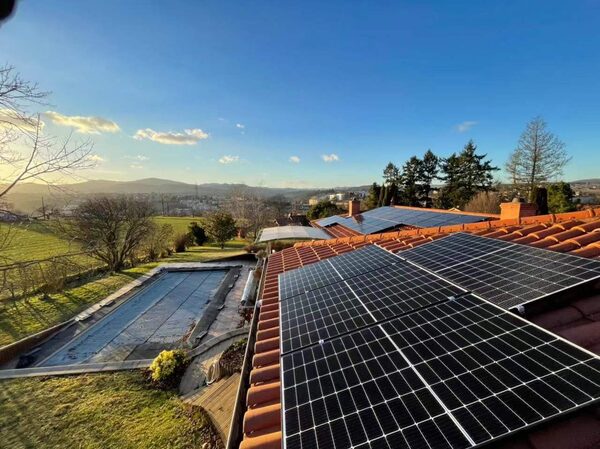
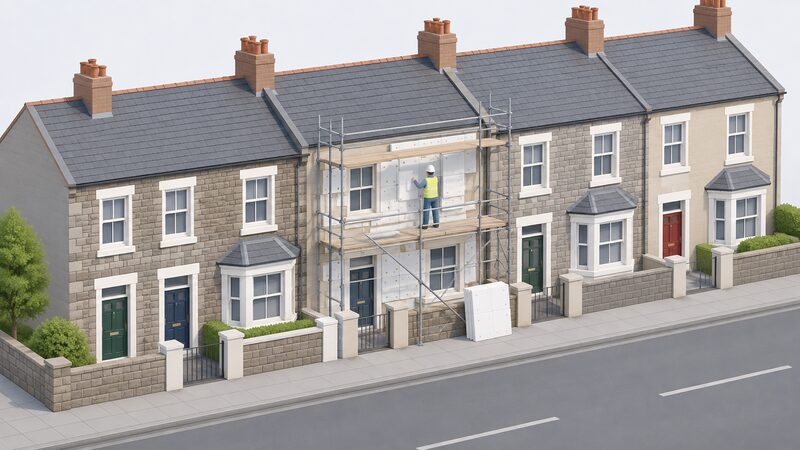
The measure mix is the clearest picture of what Arbed actually did. Across the 4,453 homes improved between October 2018 and November 2021, 2,599 (58%) received a new heating system, 2,834 (64%) received solar panels, and 718 (16%) received loft insulation1. The percentages overlap because most homes received a package rather than a single measure.
That package approach is characteristic of area-based retrofit. A household in a selected street might have had a boiler replaced, solar panels fitted and the loft topped up in one visit, which is cheaper per property than three separate visits and produces a bigger jump in the energy rating. The Welsh Government's own figures for 2019/20 show an average improvement of 16 SAP points per property, at an average cost of £581 per SAP point3.
Solar was the single most common measure by count. For context on what solar thermal contributes at national scale, Ofgem's Renewable Heat Incentive annual report for 2023/24 records 3.3 GWh of heat generated by solar thermal in scheme year 10, and 98.3 GWh since the start of the scheme8. Those are GB-wide RHI figures, not Arbed figures, but they show the order of magnitude that domestic solar thermal operates at.
Later Welsh schemes have moved further. The Optimised Retrofit Programme's funded projects include external wall insulation, solar PV and battery storage, intelligent energy systems and environmental sensors9. That is a materially different specification from Arbed's, and it points to where Welsh retrofit funding has gone since.
| Measure | Homes | Share of 4,453 |
|---|---|---|
| New heating system | 2,599 | 58% |
| Solar panels | 2,834 | 64% |
| Loft insulation | 718 | 16% |
The numbers: 4,453 homes, £9,305 per household and £289 saved a year
The headline figures come from two different documents and cover two different periods, which is why they should be read separately rather than averaged.
The programme total is 4,453 homes improved between October 2018 and November 20211. The financial detail is for 2019/20: £18.1m of investment, 1,945 households, an average of £9,305 per household, an average improvement of 16 SAP points per property, an average cost of £581 per SAP point, and average bill savings of £2893. The £9,305 figure is the one most often quoted, and it is a per-household average for that year, not a cost per measure.
For comparison, the Nest scheme's modelled average bill savings have risen with energy prices: £300 per year in 2021 to 2022, £422 per year in 2022 to 2023, and £595 per year in 2023 to 202410. The Nest annual report for 2024 to 2025 gives a modelled average saving of around £578 a year for home energy efficiency packages delivered through crisis referral4. Those two figures for the same period, £578 and £595, come from different official documents and are not reconciled; both are modelled averages rather than metered savings.
Average spend per package under Nest in 2024 to 2025 was highest in the Vale of Glamorgan at £19.7k, followed by Ceredigion at £17.5k4. Those are current costs for current packages, and they are well above Arbed's 2019/20 average, which reflects both inflation and a broader measure mix.
Who Arbed was for: area-based targeting of deprived communities
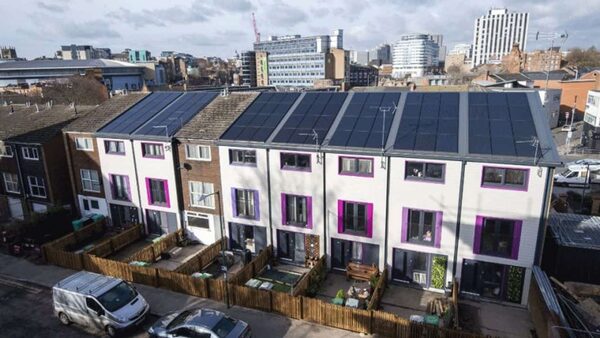
Arbed was not open to individual application. It targeted areas, and the Welsh Government's wider fuel poverty work has consistently assessed its recommendations as likely to increase opportunities and funding for people and communities in the most deprived areas of Wales compared with business as usual11. That is the logic of area-based targeting: reach the streets where the housing is worst and the incomes lowest, rather than the households most able to find and complete an application.
The trade-off is coverage. A household in a street that was not selected had no route into Arbed at all, however cold the home. Nest, by contrast, is available across Wales, and all households in Wales have access to free, impartial advice through it, covering how to reduce energy bills and maximise income6. Nest is also the Welsh Government's demand-led scheme designed to tackle fuel poverty in Wales, a description that has held since its evaluation was published in 201512.
For owner-occupiers, the current Welsh route is Green Homes Wales, which is designed to support eligible homeowners and is delivered in conjunction with the Development Bank of Wales13. It works in conjunction with collective purchasing schemes being organised by a number of local authorities in Wales, which is a partial return to the area-based idea, though through purchasing power rather than direct grant13. Private landlords cannot currently apply to that scheme, and it does not currently support homes that are listed15.
The targeting question also runs through the successor arrangements. The Minister intends the Nest replacement scheme to focus first on the least thermally efficient low-income households in Wales5. That is a sharper version of Arbed's area logic: instead of selecting places, select the worst-performing homes among low-income households, wherever they are.
How delivery worked: local authorities, surveys and Wales-based installers
Delivery under the Warm Homes Programme ran through a network of Wales-based installers, providing installation services under the management of the Nest team4. That local supply chain requirement is a deliberate feature rather than an accident: it keeps the spend and the skills inside Wales, and it gives the managing team a smaller, more accountable set of contractors to inspect.
Local authorities were the other delivery channel, and they remain involved. Green Homes Wales works alongside collective purchasing schemes organised by a number of local authorities in Wales13. Councils also publish their own energy efficiency guidance for residents, which is often the first place a household encounters the Welsh schemes16.
The survey stage is where area-based delivery lives or dies. A street-by-street programme needs a physical assessment of each property before measures can be specified, and the quality of that assessment determines whether the right measure goes into the right house. Nest's independent quality assurance service, with design checks and installer work inspections and issues corrected before the installer is paid, is the control that addresses this7. Arbed's delays and the £7.5 million of unused EU grant funding suggest that the earlier programme did not manage that pipeline as tightly1.
For a household, the practical difference is who initiates contact. Under an area-based scheme, the household is approached. Under a demand-led scheme, the household makes the call. That single difference determines how much effort falls on the resident, and it is the main reason area-based schemes reach people who never apply for anything.
Where Arbed fell short: fossil fuel heating, mapping gaps and quality concerns
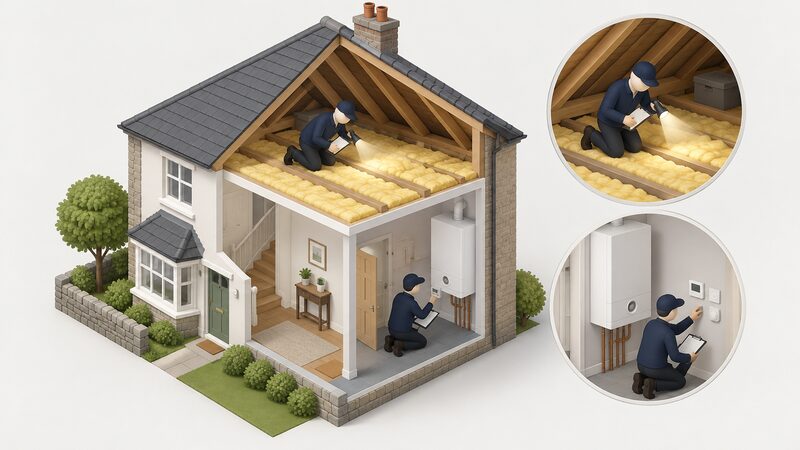
The central criticism of Arbed is in the Welsh Government's own review: at the time, 95% of the main heating systems installed in properties by Nest and 98% by Arbed were fossil fuel based1. A programme that replaced old gas and oil boilers with new gas and oil boilers improves comfort and running costs, but it does not reduce the home's dependence on imported fuel or on the gas grid. That is a legacy problem, not a marginal one.
The delays and the unused EU grant funding compound it. Around £7.5 million of EU grant funding had not been used, and there were substantial delays even before the pandemic1. For a household, an unused grant is a measure that was never installed.
There are also gaps in the wider Welsh evidence base that affect how any area-based scheme can be targeted. The Climate Change Committee's 2023 progress report on reducing emissions in Wales is the independent assessment of the wider picture17. On the technical side, the Welsh Government's own impact assessment for the Part L building regulations review priced an air source heat pump at £6,000 per unit, and roof insulation at £170 per square metre at 0.11 W/m².K and £166 per square metre at 0.13 W/m².K18. Those are the costs against which any retrofit specification has to be judged.
Renewable heat in Wales has been growing from a low base. 67 MW of new heat technologies were installed during 2023, and 67.5 MW of renewable heat capacity was installed in 202319. At the end of 2021 the total installed renewable heat capacity in Wales was 742 MW, with over 40 MW of locally owned renewable energy capacity commissioned in 2021, consisting of 18 MW electrical and 22 MW heat20. Approximately 94% of renewable heat projects commissioned in Wales in 2021 were heat pumps, from over 2,000 individual projects20. Those numbers describe a market that was still small when Arbed closed.
Nest: the scheme Welsh households can apply to now

Nest is the route that exists. It is the Welsh Government Warm Homes Nest scheme, and its purpose is to help households facing an immediate risk to their health and wellbeing due to a lack of essential heating or hot water4. That includes repairs to boilers or electric storage heaters to restore heating or hot water as quickly as possible4.
The application route is a phone call. The Welsh Government's guidance says to check eligibility for help by calling Nest free on 0808 808 22444. If a household is not eligible, the scheme helps find other schemes that suit its circumstances2. That referral function matters in Wales because the GB-wide schemes, ECO4 and the Great British Insulation Scheme, operate alongside Nest rather than instead of it7.
Nest's scale in the most recent reported year is modest relative to the need. Between April 2024 and March 2025, 2,341 households in Wales were assessed under the health route4. Between October 2024 and March 2025 it delivered energy efficiency improvements to 348 households21. Mid-terraced homes accounted for 30% of recipients in the October 2024 to March 2025 period4. Over £30 million has been allocated next year to fund energy efficiency, renewables and clean heat measures22, and since 2011 the Welsh Government has invested more than £251 million to improve home energy efficiency through the Warm Homes Programme10.
Advice is available separately from installation. All households in Wales have access to free, impartial advice through Nest6, and there is a free and impartial energy saving advice service for households in South, Mid and West Wales16. Green Homes Wales offers fully funded expert advice alongside its finance, and is delivered with the Development Bank of Wales13.
For a household thinking about independence rather than only about bills, the honest position is this. Nest can improve a home's thermal efficiency and restore heating, which reduces how much energy is needed and how much of the household budget goes to a supplier. It does not, on its own, remove the home from the gas grid or from electricity supply. The renewable heat capacity figures for Wales, 742 MW installed by the end of 2021 and 67.5 MW added in 2023, show a system still building from a low base19. The Welsh Government's mine water heat opportunity map, covering all local authority areas and categorising coal mine workings as good, possible and challenging opportunities, is one of the longer-term routes being explored for heat that does not depend on imported gas23. Planning rules for home energy equipment differ in Wales from England, and the Planning Portal's guidance on solar thermal states plainly that the policy in Wales may differ and that households in doubt should contact their local planning authority24.
Sources24 cited
- Next iteration of the Warm Homes Programme: review and recommendations, GOV.WALES, 2023-06-13
- Nest Warm Homes Programme, GOV.WALES, 2026-09-18
- Tackling fuel poverty 2020 to 2035: outcome summary, GOV.WALES, 2021-03-02
- Warm Homes Nest scheme annual report 2024 to 2025, GOV.WALES, 2026-03-26
- Decarbonising private housing: the net zero elephant in the energy inefficient room, Senedd Research, 2026-09-20
- Home energy efficiency, Bridgend County Borough Council, 2026-09-17
- Written statement: Housing Cabinet Secretary responds to UK Government action on GBIS and ECO4, GOV.WALES, 2025-01-23
- Domestic Renewable Heat Incentive annual report 2023-24, Ofgem, 2024-07
- Optimised Retrofit Programme 3: funded projects, GOV.WALES, 2023-04-26
- Tackling fuel poverty: priority actions, GOV.WALES, 2025-06-23
- Preparing Wales for a renewable energy 2050, GOV.WALES, 2023-10
- Evaluation of the Nest energy efficiency scheme: summary, GOV.WALES, 2015-03-10
- £5 million to help Welsh households invest in greener homes, GOV.WALES, 2026-03-05
- Written statement: Green Homes Wales scheme, GOV.WALES, 2024-10-17
- Green Homes Wales, Development Bank of Wales, 2026-09-17
- Energy costs, Swansea Council, 2022-12-14
- 2023 progress report: reducing emissions in Wales, Climate Change Committee, 2023
- Part L Wales impact assessment: domestic existing and new build, GOV.WALES, 2022-05
- Energy generation in Wales 2023, GOV.WALES, 2023
- Energy generation in Wales 2021, GOV.WALES, 2021
- Research briefing CBP-9889, House of Commons Library, 2026-09-17
- Written statement: Support available to help with the cost of living, GOV.WALES, 2026-03-18
- Written statement: Publication of Wales's Mine Water Heat Opportunity Map, GOV.WALES, 2024-08-29
- Solar thermal water heating, Planning Portal, 2026-09-17
 Housing Stock Data for WalesHow energy efficient are Welsh homes, and how many have a rating?
 Check Which Energy Grants ApplyWhich energy grants can you actually get right now, and which have closed?
 Energy Policy in WalesWhat help can you get in Wales to make your home warmer and cheaper to run?
 Closed Energy PoliciesIf a scheme you used has closed, do you still get paid?
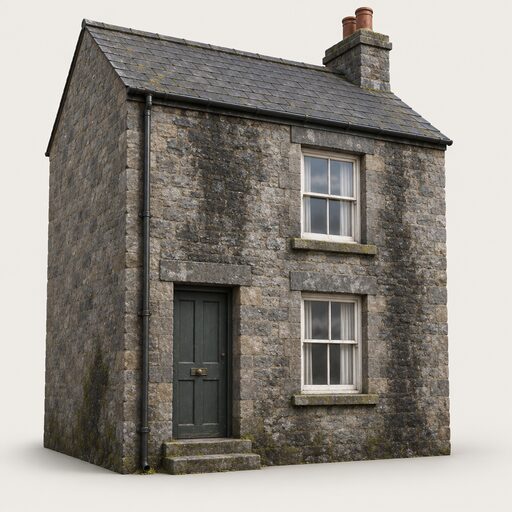 Housing Stock and EPCsWelsh homes are among the oldest and least energy efficient in the UK, so what does that mean for yours?
 Home HeatingMost Welsh homes still run on mains gas, so what are the alternatives in rural areas?