
In this guide
The HEEPS Equity Loan was an area-based pilot launched by the Scottish Government in January 2017, allowing homeowners, and private landlords in certain circumstances, to borrow up to £40,000 for eligible works covering energy efficiency measures, heat loss reduction measures and repairs, repayable when the home was sold or ownership transferred1. It was never a national scheme. It ran in eight local authority areas only: Perth and Kinross, Stirling, Dundee, Glasgow City, Inverclyde, Renfrewshire, Argyll and Bute and the Western Isles2.
It is closed. The pilot was stated to remain open to those who qualified until March 20211. There are no new applications, and a household in one of those eight areas today is directed to the same national route as everyone else in Scotland: the Home Energy Scotland Grant and Loan Scheme, introduced in December 20223. What remains live is the loan itself for those who took one out, because an equity loan is not discharged when the scheme that issued it closes. It sits on the property until sale or transfer.
The distinguishing feature was the repayment structure. Funding was borrowed against the asset value of the property and there were no ongoing repayments; the householder paid back what had been borrowed when the property was sold or when the last applicant for the loan died2. That made it a route for asset-rich, income-poor households who could not service a monthly loan, and it is the reason the pilot attracted a formal call for evidence on whether it should be rolled out nationally.
What the HEEPS Equity Loan was
The pilot sat within the Home Energy Efficiency Programmes for Scotland (HEEPS), the Scottish Government's long-running suite of domestic energy programmes, alongside the area-based delivery model that had earlier received £55 million of Scottish Government funding allocated specifically to it in 2013-146. Where the area-based schemes worked street by street through councils, the equity loan worked property by property, and it attached the funding to the building rather than to the household's monthly income.
The Scottish Government's description of the pilot is direct: homeowners, including private landlords in certain circumstances, could borrow up to £40,000 for eligible works, meaning energy efficiency measures, heat loss reduction measures and repairs, and repay when the home was sold or ownership was transferred1. That third category, repairs, is what separated it from almost every other energy scheme in Scotland. Most schemes will not touch a roof. This one would, because a leaking roof or penetrating damp makes insulation pointless.
For a household's energy independence, the logic was sound: a one-off release of capital locked in the home, used to cut the heat the building loses, with no new monthly outgoing to service. The dependence it created is equally plain. The loan is a charge against the property, so the household gives up a slice of its future equity, and the sum falls due at the point of sale or on the death of the last applicant, which is a decision that lands on the household or on its heirs rather than at a moment of the borrower's choosing4.
A closed scheme, and what that means for borrowers

The pilot was stated to remain open to those who qualified until March 20211. Nothing in the Scottish Government's later programme documents reopens it. The Home Energy Scotland Grant and Loan Scheme that succeeded the earlier national loan offer was introduced in December 2022 and sits within the Heat in Buildings Programme3.
Two practical points follow for anyone still holding one. The first is that the amount owed is fixed by the loan agreement, not by the availability of the scheme. The second is that the administration of closed schemes has been contracted out centrally, so the correspondence address a borrower used in 2018 is not necessarily the one that applies now.
The pilot years and how it was delivered
The pilot ran from January 20171 and was open to qualifying applicants until March 20211, a four-year window. It was area based, which in this context meant that eligibility was tied to living in one of eight participating local authority areas rather than to a national application process2.
| Element | Detail |
|---|---|
| Launch | January 20171 |
| Open to qualifying applicants until | March 20211 |
| Participating areas | Perth and Kinross, Stirling, Dundee, Glasgow City, Inverclyde, Renfrewshire, Argyll and Bute, Western Isles2 |
| Applicant types | Homeowners and private rented sector landlords2 |
| Maximum | Up to £40,000 for eligible works1 |
The spread of areas is worth noting. It mixes a dense urban authority (Glasgow City), post-industrial west of Scotland authorities (Inverclyde, Renfrewshire), a city with a large pre-1919 tenement stock (Dundee), and two of the most rural and island-heavy authorities in the country (Argyll and Bute, Western Isles). That is a deliberate test of whether a single product works across very different housing stock and very different construction costs, and it is the kind of spread that makes the resulting evidence usable for a national decision. For how rural and island costs diverge, see energy costs in Scotland's islands and remote areas.
Loan size and what £40,000 bought
The headline cap was up to £40,000 for eligible works1. Against the Scottish alternatives of the time this was generous: the Home Energy Scotland loan and cashback offer then provided up to £15,000 of loan with up to £6,000 cashback for energy efficiency improvements, and up to £17,500 with £7,500 cashback for renewables measures8. The cashback element was calculated as up to 40 per cent of the loan, to a maximum of £6,000, for certain energy efficiency improvements1.
The reason for the higher equity loan cap is the repairs category. The eligible works were not confined to measures that save energy. The pilot's own scheme material lists, under repairs:
- Roof structure, coverings and flashings
- Rainwater goods
- Chimney stacks and heads, including removal
- Work to eradicate rising and penetrating damp
- External wall repairs including finishes
- Active and passive ventilation systems
- Wet and dry rot
- Repairs considered essential to allow an approved measure to be carried out, for example if re-wiring is needed to allow electrically powered energy efficiency measures to be installed
- Other repairs considered on a case by case basis, not including purely cosmetic work9
On the energy side the eligible measures included heating controls9 and draught proofing10. Those are small-ticket items beside a new roof, which tells you where most of a £40,000 loan was likely to go in a tenement or a rural stone-built house: making the fabric sound first, then reducing the heat it loses.

Who was eligible, and why an equity loan is not a grant
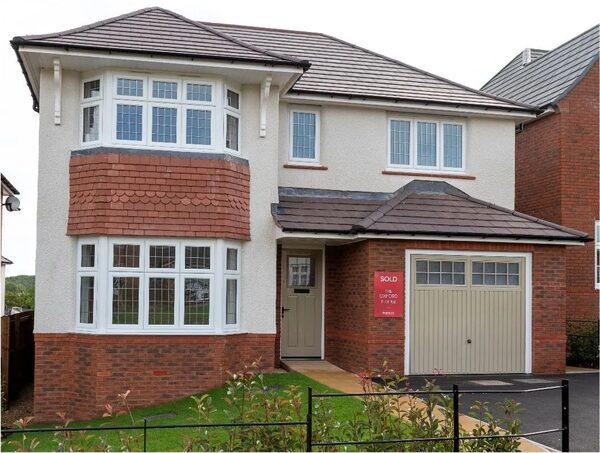
There were two routes in. The loan was available for properties in Council Tax bands A to C, or for properties in all council tax bands where the owner was in receipt of qualifying benefits1. The scheme material broadens the second route further: if any of the permanent occupiers, including the homeowner, their children or partner, or their tenants, received one of the qualifying benefits, an application could be made9.
That design targets two distinct groups. Bands A to C capture lower-value housing stock regardless of who lives in it. The benefits route captures low-income households living in higher-band property, which is precisely the asset-rich, income-poor profile that conventional lending fails.
The difference from a grant is not a technicality:
- A grant is not repaid and leaves the household's equity untouched.
- An equity loan is borrowed against the asset value of the property, carries no ongoing repayments, and is repaid when the property is sold or when the last applicant for the loan is deceased4.
The absence of monthly repayments is the benefit. The reduction in the equity available on sale, or to an estate, is the cost. Private landlords could also apply in certain circumstances1, which mattered because the private rented sector faced tightening energy efficiency expectations in Scotland at the time the pilot was designed.
Administration: Energy Saving Trust holds the contract
Energy Saving Trust was awarded a new contract, following a competitive tender exercise, to administer and manage Scottish Government heat and energy efficiency grant and loan schemes, both live and closed. The contract started on 1 December 2023 and its initial term runs until November 20265.
That phrase, live and closed, is the one that matters to a former pilot applicant: closed schemes are explicitly inside the scope of the administration contract5. The amount the Scottish Government pays Energy Saving Trust for administering the Home Energy Scotland grant and loan work from December 2023 onwards has been withheld under Regulation 10(5)(e) of the Environmental Information Regulations, covering the confidentiality of commercial or industrial information5. So the cost of administration is not in the public domain for that period.
Energy Saving Trust is not a new entrant to this role. It administered the Renewable Heat Premium Payment scheme11, it administers Thermal Comfort 2 in Northern Ireland with oversight provided by the Utility Regulator12, and it is described in UK tax guidance as a grant-awarding body13. It provides free and impartial advice on how to reduce carbon emissions, how to use water more sustainably and how to save money on energy bills, and operates a helpline on 0300 123 123414.
Delivery partners and the local advice role
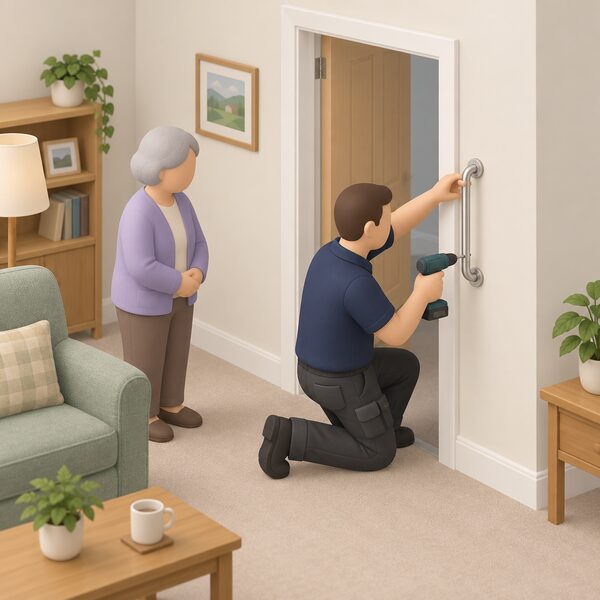
The equity loan pilot depended on local intermediaries to reach the households it was designed for: older owners, disabled owners and people in poor-condition property who do not respond to a national marketing campaign. The Scottish Government has described the Care and Repair and Handyperson service model as one which continues to prove its effectiveness in reaching and helping elderly and disabled people to secure improvements and adaptations to their homes and quality of life15.
With administration of live and closed schemes now sitting under a single national contract held by Energy Saving Trust from 1 December 20235, the practical consequence for a borrower is that scheme correspondence runs nationally rather than through whichever local officer originally handled the application. For the household, that trades local face-to-face support for a single point of contact, and it means an enquiry about an existing loan does not depend on a local service still being in place.
What the pilot reports covered
Two published Scottish Government analyses document the pilot: an analysis of responses to a call for evidence on the potential national rollout of the home energy efficiency equity loan pilot9, and an analysis of responses to a homeowner feedback survey from the pilot10. Between them they set out the eligible energy measures, the eligible repairs and the two eligibility routes described above.
Separately, the Scottish Government's retrofit assessment review carries a clear statement about the standing of independent evidence commissioned in this policy area:
"The information presented in this report has been produced independently on behalf of the Scottish Government"
The pilot was not rolled out nationally in equity loan form. What replaced the national loan offer was a grant-led scheme, and the direction of travel since has been away from repayable finance secured on the home and towards grants with an optional interest-free loan attached17.
Where the scheme sits among today's Scottish options

The Home Energy Scotland Grant and Loan Scheme was introduced in December 20223, sits within the Heat in Buildings Programme7, and provides grants and loans to all domestic owner-occupiers in Scotland to install clean heat and energy efficiency measures19. It is open to all domestic owner-occupiers in Scotland20, with no eligibility criterion based on age or any other protected characteristic, and homeowners access it on an equal basis, as funds last7. A parallel Private Rented Sector Landlord Loan Scheme provides grant or loan funding to private registered landlords for their rented properties6.
| Feature | HEEPS Equity Loan pilot | Home Energy Scotland Grant and Loan |
|---|---|---|
| Status | Closed, open to qualifying applicants until March 20211 | Introduced December 20223 |
| Geography | Eight local authority areas2 | All domestic owner-occupiers in Scotland20 |
| Maximum support | Up to £40,000 for eligible works1 | £7,500 heat pump grant, £7,500 maximum energy efficiency grant, plus £7,500 optional interest-free loan for both17 |
| Repayment | On sale or transfer, or on death of last applicant1 | Grant not repaid; optional interest-free loan, standalone grant available without credit checks17 |
| Repairs covered | Yes, extensive repairs list9 | Clean heat and energy efficiency measures19 |
Two further differences bear on independence. The current scheme offers eligible owner-occupiers across Scotland, including in the islands, a standalone grant without credit checks17, which removes the credit barrier that repayable finance imposes. And Scottish Government funding for replacement oil and LPG heating systems ceased on 6 September 2021, with gas heating systems and their components still eligible for the loan component; a cashback grant has been available since 201819. The earlier loan and cashback scheme it replaced ran at modest volume: 54 agreed loan funding offers in 2017-18 and 191 in 2019-2021.
A household comparing the two should read them as different instruments rather than better and worse. The equity loan released a larger sum and would pay for fabric repairs, at the price of a charge on the home. The current scheme gives smaller, non-repayable grants for clean heat and efficiency, with no charge and no credit test, but will not re-roof a house. Further detail sits on the Home Energy Scotland grant and loan page, the closed loan and cashback scheme page and the HEEPS area based schemes page, and the wider picture of how support differs across the UK is set out in the guide to home energy across the UK nations.
The independence question
For the households it reached, the pilot did something the rest of the Scottish system did not: it funded the building's condition, not just its energy measures, and it did so without adding a monthly bill. A sound roof and dry walls are the precondition for insulation working at all, and for a heat pump being viable later. In that narrow sense it bought genuine long-term independence from heat loss.
The dependence it left is on the asset. The household continues to owe the sum, and it surfaces at sale or at the death of the last applicant4, which is a constraint on moving, downsizing or passing on the property. There is also an administrative dependence: the scheme is closed and its administration now runs through a single national contract with an initial term to November 20265, so borrowers deal with whoever holds that contract rather than with the authority that first offered the loan. And nothing about the pilot touched the household's exposure to grid electricity or gas prices except through the measures installed. It reduced demand. It did not create supply.
Sources21 cited
- Update on Renewable Heat Target and Action, Scottish Government, 2021-10-07
- Energy Efficiency (Private Rented Property) (Scotland) Regulations 2019: interim island communities impact assessment, Scottish Government, 2019-06-17
- Home Energy Scotland Grant and Loan scheme introduction date, Scottish Government, 2025-01-20
- Energy Efficiency (Private Rented Property) (Scotland) Regulations 2019: consultation, Scottish Government, 2019-06-17
- Scheme administration contract details, FOI release, Scottish Government, 2025-07-22
- Warmer Homes Scotland business case and HEEPS funding, Scottish Government, 2025-02-20
- Home Energy Scotland Grant and Loan Scheme, FOI release, Scottish Government, 2024-05-15
- Heat in Buildings Strategy 2022 update: progress, Scottish Government, 2022-10-31
- Home energy efficiency equity loan pilot: call for evidence on potential national rollout, analysis of responses, Scottish Government, 2022-03-14
- Home energy efficiency equity loan pilot: homeowner feedback survey, analysis of responses, Scottish Government, 2022-03-14
- Detailed analysis of data from heat pumps installed via the Renewable Heat Premium Payment scheme, GOV.UK, 2017-04-07
- NISEP Annual Report 2023-24, Utility Regulator, 2025-07
- VAT: energy saving materials and grant-funded heating supplies, HMRC, 2026-09-17
- Energy efficiency advice and helpline, Torridge District Council, 2026-09-17
- Action plan to deliver affordable warmth in rural Scotland, Scottish Government, 2016-10-24
- Review of retrofit assessment in Scotland: policy report, Scottish Government, 2025-06-06
- National Islands Plan annual report 2022, Scottish Government, 2023-03-31
- Scotland's Climate Change Plan 2026-2040, Scottish Government, 2025-11-06
- Heat in Buildings progress report 2024, Scottish Government, 2024-10-10
- Heat in Buildings progress report 2025, Scottish Government, 2025-10-02
- Home Energy Scotland Loan and Cashback Scheme offers, FOI release, Scottish Government, 2024-01-16
 Housing Stock and EPCsHow energy efficient are Scottish homes, and how many reach a good rating?
 Suppliers in ScotlandWho do you contact in Scotland when something goes wrong with your supplier, whether that is British Gas, ScottishPower, SSE or another big name?
 MEES for Rented HomesCovers the minimum EPC standards that apply to private rented homes, the cost caps and exemptions, and how exemptions are registered.
 Closed Energy PoliciesIf a scheme you used has closed, do you still get paid?
 The Full Grants and Schemes GuideWhich grants can you actually get right now, and how do you apply for them?
 Community Wind and HydroExplains how community-owned wind and hydro projects are organised, financed and shared with local households, and the scale of installed community capacity across the UK.