
In this answer
Short answer
Energy costs in Scotland's islands and remote areas run higher than the national picture, and the reasons are structural rather than incidental. Research for the Scottish Government found evidence of additional living costs for households in remote rural Scotland of 15 to 30% added to a household budget compared to urban areas of the UK1. Around 6% of households in Scotland rely on alternative fuels, with rural and island areas disproportionately affected2. Home heating and hot water accounts for over half of a typical Scottish household's energy bill3.
The gap is not only about fuel. Consumers in the Scottish Islands and Highlands already experience higher energy prices, areas of low or no mobile signal and internet connection, delays in the smart meter rollout and lower choice of energy suppliers4. Renewable energy generated in the Scottish islands is cheaper for mainland households rather than those local to it5. That combination, higher input costs, weaker infrastructure and fewer suppliers, is what shapes the household experience.
For a typical household in England, Scotland and Wales, energy bills were around £1,862 a year under the price cap period running 1 July to 30 September 20266. Island and remote households sit above that benchmark in practice, and the sections below set out why, what support exists, and what energy independence can and cannot mean in a remote island context.
Why energy costs run higher on Scotland's islands and remote areas
The cost premium on the islands has several drivers, and they compound. The first is the fuel mix. Around 6% of households in Scotland rely on alternative fuels, with rural and island areas disproportionately affected2. Off-gas-grid households use a range of fuels to heat their homes including heating oil, liquefied petroleum gas (LPG), solid fuels, mains electricity and microgeneration10. Each of those carries a different cost profile, and none benefits from the scale of the mains gas network.
The second driver is market structure. Consumers in the Scottish Islands and Highlands already experience higher energy prices, areas of low or no mobile signal and internet connection, delays in the smart meter rollout and lower choice of energy suppliers4. Fewer suppliers means less competitive pressure on tariffs, and weaker connectivity makes it harder to switch, manage an account online or take up time-of-use products that depend on reliable smart metering.
The third is the direction of benefit from local generation. Renewable energy generated in the Scottish islands is cheaper for mainland households rather than those local to it5. Island households therefore host or sit near generation that does not translate into a local price advantage.
The fourth is the wider cost of living in remote areas. Research for the Scottish Government found evidence for additional living costs for households in remote rural Scotland of 15 to 30% added to a household budget compared to urban areas of the UK1. Energy is one line within that broader premium, but it is a significant one, because home heating and hot water accounts for over half of a typical Scottish household's energy bill3.
Recent wholesale volatility has added to the total. The latest gas price spikes in the last six months have added £440 million to Scottish energy bills9. That figure is Scotland-wide, but it lands hardest on households already paying more per unit and using fuels with volatile prices.
What households actually pay: electricity, heating and transport fuel
The headline benchmark for a typical household in England, Scotland and Wales is around £1,862 a year on energy bills, for the price cap period 1 July to 30 September 20266. That figure is a national average and does not capture the island premium, which comes from fuel choice, unit rates and standing charges rather than from the cap itself.
Prepayment customers see regional variation directly in the cap tables. For 1 July to 30 September 2026, the gas benchmark for Northern Scotland prepayment is £101.58 standing charge and £730.70 annual bill at 9,500 kWh, while Southern Scotland prepayment is £101.64 standing charge and £730.78 annual bill at 9,500 kWh11. The two Scottish regions are priced separately, which matters for any household comparing its own bill against a published figure.
Heating fuel choice drives the rest. Around 9% of dwellings on the gas grid use an alternative fuel, such as electricity, as their main heating fuel, so even homes with a gas connection do not all use it12. Households that use heating oil or electricity as their main energy source for heating their home are more likely to find keeping up with bills difficult, with 36% of such households in Scotland reporting difficulty13.
The Scottish Government's heat in building programmes are supporting over 20,000 households to save up to £5014. That is a Scotland-wide figure and indicates the scale of public support in circulation, not a guarantee for any individual household.
Transport fuel sits alongside heating in the remote cost picture. The Energy Saving Trust published its response to Transport Scotland's consultation on the Draft Electric Vehicle Public Charging Network Implementation Plan on 19 February 2026, which is the network that remote households depend on where charging infrastructure is thin15.
Off-gas-grid heating: the options and their running costs
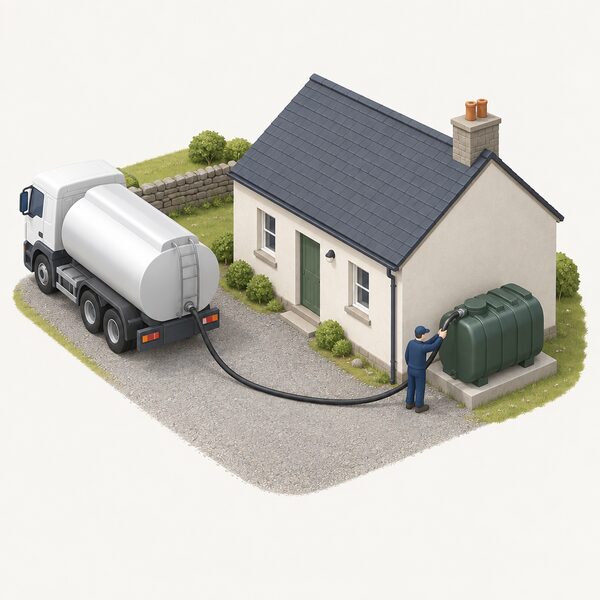
Off-gas-grid households use a range of fuels to heat their homes including heating oil, liquefied petroleum gas (LPG), solid fuels, mains electricity and microgeneration10. The running cost of each depends on unit price, system efficiency and how well the property retains heat.
Electric heating carries a specific penalty. The Energy Saving Trust states that electricity is around four times more expensive than gas per unit7. Direct electric heating typically has high running costs because standard rate electricity is more expensive than gas or oil7. That does not make electric heating unusable, but it means the cost of a kilowatt hour of heat from a resistive system is high relative to mains gas.
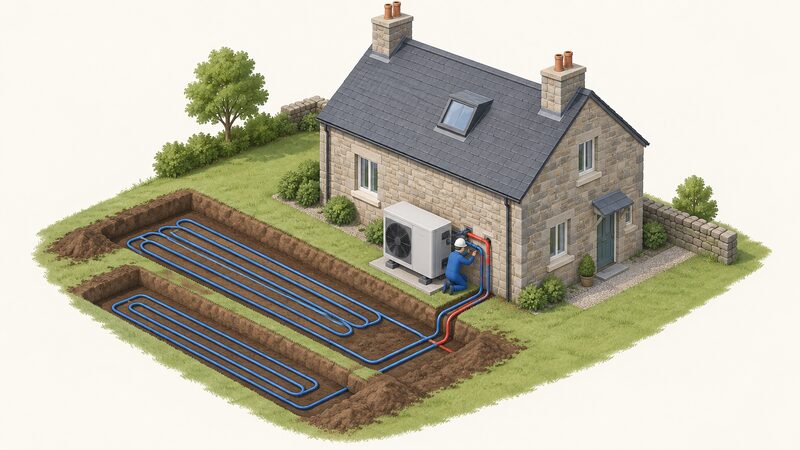
Heat pumps change the calculation because they move heat rather than generate it. The Boiler Upgrade Scheme offers £9,000 for air-to-water or ground source heat pumps in off-gas grid properties replacing a heating system fuelled by oil or LPG8. Off-gas grid households use a range of other fuels to heat their homes including heating oil, liquefied petroleum gas (LPG), solid fuels, mains electricity, and microgeneration14. In Scotland, Home Energy Scotland offers free and impartial advice on saving energy, making your home warmer, exploring heating options for off-gas homes, and finding funding for energy-saving home improvements16. The Scottish Government's Heat in Buildings regulation proposals note a risk that cost-based exemptions for owner-occupiers, where clean heating costs significantly more than fossil-fuelled heating, could be exploited to justify the continued use of fossil-fuelled heating systems17.
For social housing, the Warm Homes: Social Housing Fund Wave 3 provides an additional £7,500 of grant funding if the Grant Recipient installs low carbon heating measures in homes off the gas grid17. That uplift sits on top of the base cost cap and is aimed at the additional cost of low carbon heating where there is no gas connection.
Home Energy Scotland can help households explore options like installing a heat pump or other home energy upgrades which can reduce energy costs18. It offers free and impartial advice on saving energy, making a home warmer, exploring heating options for off-gas homes, and finding funding for energy-saving home improvements19.
There is a regulatory risk worth noting for the longer term. Analysis of Scottish Government Heat in Buildings regulation proposals found there is a risk that cost-based exemptions for owner-occupiers, where clean heating costs significantly more than fossil-fuelled heating, could be exploited to justify the continued use of fossil-fuelled heating systems20. In other words, the cost gap between clean and fossil heating on the islands is a live policy question, not a settled one.
Support available: Home Energy Scotland and UK-wide schemes
Home Energy Scotland is the main advice route for Scottish households, and it is free. You can contact Home Energy Scotland free by phone, email or WhatsApp, and all its advice is free and impartial19. It provides free impartial advice on energy efficiency and renewable energy in Scotland21, and free advice on improving the energy efficiency of your home22.
The service is funded by the Scottish Government and provides free and impartial advice and support23. It also acts as a referral partner for some eligibility enquiries, including for area-based schemes23. For households in rural areas specifically, it offers free and impartial advice on saving energy, making your home warmer, exploring heating options for off-gas homes, and finding funding for energy-saving home improvements19.
On the UK-wide side, the Scottish Government provides help with home energy bills for people living in Scotland24. Ofgem directs households to the Scottish government route for home energy bill support where they live in Scotland25. If you live in Scotland, you might be able to get an interest-free loan or a grant to make your home more energy efficient26.
Local authority routes also exist. Argyll and Bute Council, for example, signposts Home Energy Scotland as the funded advice service for home energy efficiency23. That pattern, national advice service plus local authority signposting, is common across island authorities.
For complaints and supply problems, Ofgem sets out the process for complaining about your energy supplier or network operator27. Where a household cannot afford its bills, Ofgem also publishes guidance on getting help25.
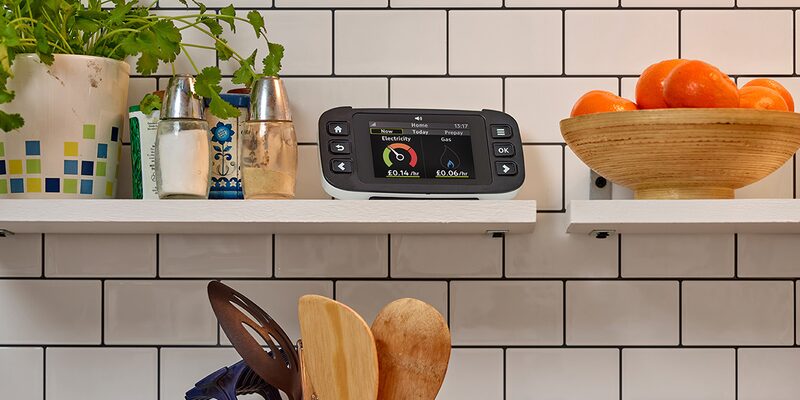
Smart meters and metering on the islands
Smart meters are free to install in both homes and businesses by the energy companies29. ScottishPower states that smart meters are being installed in homes across Great Britain at no extra cost to customers30. On the face of it, that suggests island households should be able to get one on the same terms as anywhere else.
In practice, the rollout has been uneven. Consumers in the Scottish Islands and Highlands have experienced delays in the smart meter rollout, alongside areas of low or no mobile signal and internet connection and lower choice of energy suppliers4. Smart metering depends on communications infrastructure, and where signal is weak or absent, installation and reliable operation are harder.
That matters beyond convenience. Time-of-use and dynamic tariffs depend on smart metering to function, and households that cannot get a working smart meter are effectively excluded from those products. The same connectivity gap that delays metering also limits access to the digital account management and switching tools that competitive suppliers rely on.
For households in Northern Ireland, metering arrangements differ, and the NIE Networks meter replacement programme operates separately31. Scotland's island households sit within the Great Britain framework, but the practical experience of installation timing varies by location and supplier.
What energy independence means in a remote island context
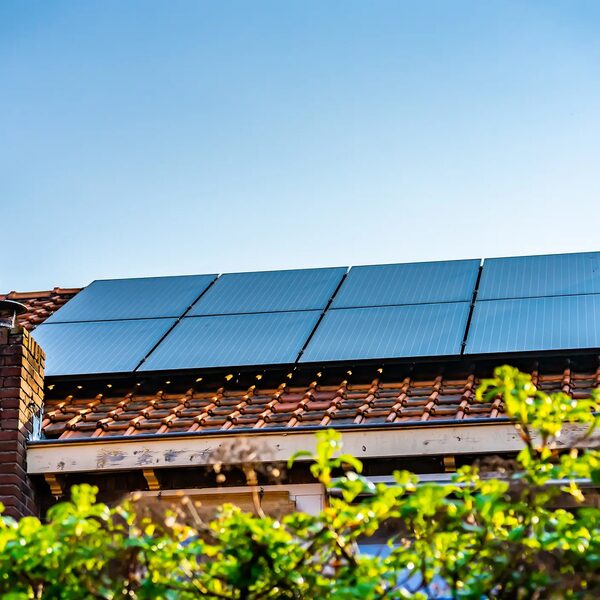
Energy independence for an island household is partial by nature, and it is worth being precise about what it can and cannot cover. A home can generate its own electricity through microgeneration, and off-gas-grid households already use microgeneration as one of their heating and energy options10. That reduces reliance on imported fuel for part of the load.
What remains is substantial. Most Scottish households heat their properties with gas, at 81%, so the national system is built around a fuel that island households largely cannot access32. An island home off the gas grid depends on delivered fuels, heating oil, LPG or solid fuels, each of which involves a supplier, a delivery chain and a price the household does not control10. Electricity from the grid still comes through a network operator and a supplier, and the choice of supplier is narrower than on the mainland4.
The policy framework recognises island distinctiveness. The Islands Act defines an island community as a community that consists of two or more individuals, all of whom permanently inhabit an island, and is based on common interest, identity or geography33. The Affordable Housing Supply Programme applies higher baseline benchmarks for homes delivered in island authorities, recognising additional costs34. The Scottish Government committed to developing its approach to heat in islands and remote rural contexts in a forthcoming Islands Energy Strategy in 202235.
That recognition matters because it acknowledges that island costs are structural. A household can improve its position through insulation, heating system choice and advice, and Home Energy Scotland can help explore options like installing a heat pump or other home energy upgrades which can reduce energy costs18. But full independence from external fuel, suppliers and networks is not achievable for most island homes on the current evidence. The realistic goal is reduced exposure: lower demand, a heating system suited to the property, and access to the support that exists.
For how island and rural fuel poverty compares with the rest of Scotland, see fuel poverty in Scotland and how fuel poverty differs between rural and urban areas in Scotland. For the wider national picture, see home energy across the UK nations.
Sources35 cited
- National Islands Plan Annual Report 2022, Scottish Government, 2022
- Help for households using heating oil, Scottish Government, 2026
- Make your home warmer, Home Energy Scotland, 2026
- Supporting vulnerable consumers to access dynamic time-of-use tariffs, Changeworks, 2023
- Tackling fuel poverty in rural communities, British Gas Energy Trust, 2024
- Save money on energy bills, Energy Saving Trust, 2026
- Electric heating, Energy Saving Trust, 2026
- Boiler Upgrade Scheme guidance for installers, Ofgem, 2026
- News, End Fuel Poverty Coalition, 2026
- Research briefing on off-gas-grid households, House of Commons Library, 2026
- Energy price cap levels, 1 July to 30 September 2026, Ofgem, 2026
- Scottish House Condition Survey 2024: key attributes, Scottish Government, 2024
- Energy tracker: insights from latest survey, autumn 2023, Consumer Scotland, 2023
- Helping households to manage their bills, Scottish Government, 2025
- Electric Vehicle Public Charging Network Implementation Plan response, Energy Saving Trust, 2026
- Delivering net zero for Scotland's buildings consultation, Scottish Government, 2023
- Warm Homes: Social Housing Fund Wave 3 scheme guidance addendum, UK Government, 2026
- Support for people in rural homes, Home Energy Scotland, 2026
- Easy ways to save energy, Home Energy Scotland, 2026
- Providing flexibility in heat and energy efficiency regulations, ClimateXChange, 2024
- Who to contact, Ofgem, 2026
- Financial help for energy efficiency and low carbon heating, City of Edinburgh Council, 2026
- Home energy efficiency advice, Argyll and Bute Council, 2026
- Get help with your energy bills, Ofgem, 2026
- Getting help if you can't afford your energy bills, Ofgem, 2026
- Get help for your home or business energy bills, Ofgem, 2026
- Complain about your energy supplier or network operator, Ofgem, 2026
- Water really worth saving, Home Energy Scotland, 2026
- Smart metres, Energy Systems Catapult, 2025
- Smart meters, ScottishPower, 2026
- The NIE Networks meter replacement programme, Energy Security, 2026
- Scottish House Condition Survey 2024: key findings, Scottish Government, 2026
- Heat in Buildings national scheme: island communities impact assessment, Scottish Government, 2022
- New Build Heat Standard 2024: island communities impact assessment, Scottish Government, 2023
- Heat in Buildings Strategy, Scottish Government, 2021
 Energy Supply in ScotlandScotland makes far more low-carbon electricity than it uses and sends the rest south.
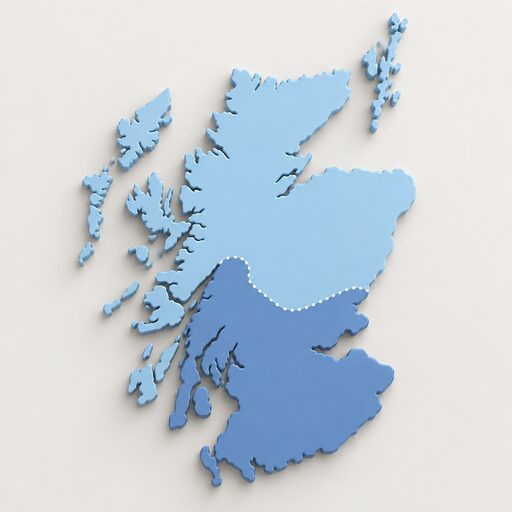 Tariffs in ScotlandWhy do Scottish electricity bills differ from the rest of Great Britain, and why do standing charges cost more in the north?
 Housing Stock Data for ScotlandScotland's housing is measured differently from England's, so the numbers you see may not compare directly.
 Community Energy in ScotlandCommunity energy in Scotland lets you join a local scheme for cheaper, greener heat and power, or get advice and funding to make your own home warmer and cheaper to run.
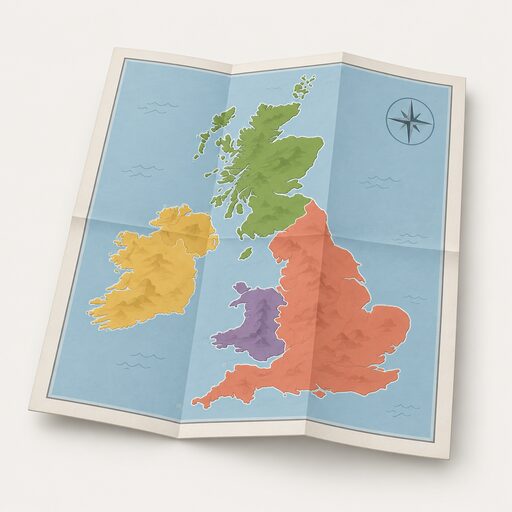 The Full Scotland, Wales and Northern Ireland GuideWhy a householder in Glasgow, Cardiff or Belfast faces different schemes, standards, targets and markets from one in England.
 Energy Policy in ScotlandWho decides how your home in Scotland is heated and improved?