

In this answer
Short answer
Scotland is bringing in its own minimum energy efficiency standard for privately rented homes, separate from the regime that applies in England and Wales. The proposed level is an Energy Performance Certificate heat retention rating of band C, and the draft Energy Efficiency (Domestic Private Rented Property) (Scotland) Regulations 2026 describe a prohibition on letting domestic properties that do not meet it1. The Scottish Government's stated aim is all privately rented properties reaching the equivalent of EPC C under the reformed EPC, as far as possible2.
The dates matter more than the band. The Heat in Buildings Bill consultation proposed that landlords meet a minimum energy efficiency standard by the end of 2028, and that properties failing it could not be leased to a new tenant3. The draft 2026 regulations describe the standard applying to all privately rented homes by the end of 20334. Those two figures come from different documents and have not been reconciled, so a landlord reading only one of them will get a different deadline.
The case for the standard rests on a single finding repeated across government papers: homes in the private rented sector are the least energy efficient of all housing tenures in Scotland5. The policy aim is to improve the energy efficiency of the worst performing private rented sector housing, to help reduce energy consumption and the emission of greenhouse gases6.
The standard, and the legal route behind it
The short answer is that Scotland is legislating a minimum energy efficiency standard for domestic privately rented properties, expressed as a heat retention rating of band C, with the letting of properties below that level prohibited once the rules are in force1. The Scottish Government consulted on proposals for a Minimum Energy Efficiency Standard for the private rented sector, and the draft regulations were published for consultation on 6 June 20257.
The legal route is different from the route used for owner occupiers. Minimum energy efficiency standards will initially be introduced under Section 55 of the Energy Act 2011, the same enabling power used for the English and Welsh regime9. That matters because it means the Scottish standard can be brought forward through regulations rather than primary legislation, and it explains why the private rented standard is being progressed separately from the Heat in Buildings Bill.
The Bill itself carries provision for energy efficiency standards for owner occupier and non-domestic properties, with those for private rented accommodation introduced through existing regulations10. The Scottish Government has confirmed that separate regulations will be progressed to introduce a minimum energy efficiency standard for homes in the private rented sector during this session of Parliament, consulted on alongside the technical suitability assessment consultation11.
The policy intent has been consistent for years. The 2019 regulations were aimed at improving the energy efficiency of the worst performing private rented sector housing, to help reduce energy consumption and the emission of greenhouse gases6. The proposed minimum standards were described as improving the energy efficiency of the poorest performing homes in the private rented sector12.
What this does for a household's energy independence is real but partial. A home brought up to band C loses less heat, so it needs less bought-in gas or electricity to stay warm, and the tenant is less exposed to price movements on the units they still consume. It does not remove the gas connection, the electricity supplier or the grid, and it does not make the home self-sustaining. The dependence that remains is the same as for any grid-connected home: a supplier, a network, and a fuel that is bought in.
Which properties the standard covers

The standard is aimed at domestic privately rented properties in Scotland. The draft regulations set out a prohibition on the letting of domestic properties which do not meet EPC HRR band C1, and the Scottish Government's stated aim is all privately rented properties, as far as possible, reaching the equivalent of EPC C under the new reformed EPC2.
Earlier consultation described the standard applying to privately rented properties covered by the repairing standard13. The 2020 regulations set out how property owners may go about confirming an exemption for their property with the relevant local authority6, which is the mechanism a landlord uses where a property genuinely cannot be brought up to the standard.
Minimum standards for energy efficiency in homes in the private rented sector will affect landlords and tenants, and owners responsible for making improvements required to meet the minimum standard6. The Scottish Government's wider framework covers minimum energy efficiency standards for private-rented, owner-occupier and social housing14, but the three are not on the same timetable or the same legal footing.
| Tenure | Standard and route | Source |
|---|---|---|
| Private rented (Scotland) | EPC heat retention rating band C, via regulations under Section 55 of the Energy Act 2011 | 1 |
| Owner occupier (Scotland) | Provision in the Heat in Buildings Bill | 10 |
| Non-domestic (Scotland) | Provision in the Heat in Buildings Bill | 10 |
| Social rented (Scotland) | Energy Efficiency Standard for Social Housing, encouraging landlords to improve energy efficiency | 15 |
The social housing standard is a separate instrument with its own review timetable, aligned with the 2040 target for low-carbon heat in homes16. A tenant in the social sector is not covered by the private rented regulations, and a landlord with stock in both sectors faces two different sets of rules.
For a household, the practical effect is that the property they rent should become cheaper to heat over time, because the fabric of the building is the thing being regulated. The dependence that remains is on the landlord to carry out the work and on the tenancy continuing. A tenant cannot compel the upgrade themselves, and the standard attaches to the property, not to the occupier.
Conditions, letting restrictions and exemptions
The most important condition is that a clean heating system does not exempt a property. The Heat in Buildings Bill consultation stated that private rented properties would still be required to meet the minimum energy efficiency standard even if a clean heating system had already been installed3. Insulation, glazing and draught-proofing are assessed on their own terms, so fitting a heat pump does not by itself satisfy the efficiency standard.
The second condition is the letting restriction. Properties in the private rented sector which do not meet the energy efficiency standard by the end of 2028 would not be allowed to be leased to a new tenant3. That is a restriction on new lets rather than an immediate ban on existing tenancies, and it is the mechanism that gives the standard teeth.
Exemptions run through the local authority. The 2020 regulations set out how property owners may go about confirming an exemption for their property with the relevant local authority6. The categories used in the parallel English and Welsh regime give a sense of the kind of property that can be exempted: listed or officially protected properties where requirements would unacceptably alter them, temporary buildings used for two years or less, places of worship, low-energy industrial sites, workshops or non-residential agricultural buildings, detached buildings under 50 m2 total floor space, buildings occupied less than four months a year with expected energy consumption under 25% of all-year use, properties due for demolition with consents, and certain HMOs not sold or let as a single rental in the past ten years17.
There is a historical caution here. A 2017 Scottish consultation proposed that, by a backstop date of 31 March 2022, all private rented properties would need to meet the standard18. That date passed without the standard being brought into force in that form, and the current proposals carry later dates. A landlord relying on an announced deadline should treat it as a proposal until the regulations are in force.
How the work is done, and what pays for it
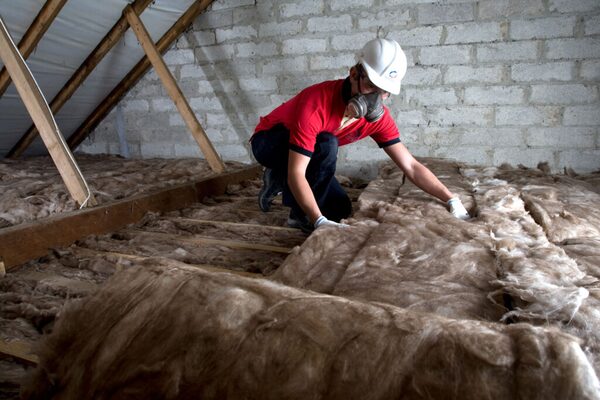
The work itself is fabric first: the measures that raise a heat retention rating are insulation, glazing, draught-proofing and heating controls, assessed through the EPC. The draft regulations require landlords to install energy efficiency measures to reach EPC heat retention rating band C, as far as possible, before letting a property8. The phrase "as far as possible" is doing real work, because it is what connects the standard to the exemption route.
Funding exists to support the work. Energy Efficient Scotland Area Based Schemes provide home owners and landlords with access to grant funding which meets the Scottish Government's future minimum energy efficiency standards20. The Great British Insulation Scheme also operates in Scotland, and where local authorities and Governments in Scotland and Wales refer households for the scheme, they must issue a Statement of Intent and a declaration21.
The rating system itself is changing, which affects how a landlord demonstrates compliance. The Scottish Government has consulted three times on EPC reform prior to laying the new Regulations, in 2021, 2023 and 202522. The new rating system, a reduced validity period and increased lodgement fees come with the Energy Performance of Buildings (Scotland) Regulations 202524. Lodgement fees are scheduled to rise from £2.60 to £6.00 for domestic properties and from £12.10 to £15.50 for other properties25.
The consultation route for the standard itself ran through the Scottish Government consultation on the proposed regulations, with responses by email to PRSMEESConsultation@gov.scot8. The wider direction of travel is set: the Scottish Government has committed to decarbonising heat in buildings by 204526, and has set a target to decarbonise heating systems by 2045, so far as reasonably practicable27.
For a household, the sequence is: the property is assessed, measures are installed, a new EPC records the rating, and the landlord either meets band C or confirms an exemption with the local authority. The independence gained is a warmer home for less bought-in energy. The dependence that remains is on the landlord to act, on the EPC regime to record it accurately, and on the grid and a supplier for whatever heat and power the home still uses.
Sources27 cited
- Consultation on draft energy efficiency (domestic private rented property) (Scotland) regulations, Scottish Government, 2025
- Heat in Buildings progress report 2025, Scottish Government, 2025
- Delivering net zero for Scotland's buildings: Heat in Buildings Bill consultation, Scottish Government, 2023
- Consultation on draft energy efficiency (domestic private rented property) (Scotland) regulations, Scottish Government, 2025
- Energy efficiency programme consultation, Scottish Government
- Equalities impact assessment: private rented sector regulations, Scottish Government, 2020
- Decarbonising heating in homes and buildings, Scottish Government, 2026
- Energy Efficiency (Domestic Private Rented Property) (Scotland) Regulations 2026: partial business regulatory impact assessment, Scottish Government, 2025
- Private rented property consultation, Scottish Government, 2026
- Scotland risks falling behind on clean heat, Solar Energy UK, 2025
- Heat and Energy Efficiency Technical Suitability Assessment scoping consultation, Scottish Government, 2025
- Energy Efficiency (Private Rented Property) (Scotland) Regulations 2019: children's rights and welfare impact assessment, Scottish Government, 2019
- Energy Efficiency (Private Rented Property) (Scotland) Regulations 2019 consultation, Scottish Government, 2019
- Heat in Buildings Strategy: fairer Scotland duty assessment summary, Scottish Government, 2021
- Energy Efficiency Standard for Social Housing: guidance for social landlords, Scottish Government, 2019
- Scottish emission targets: progress in reducing emissions in Scotland, Climate Change Committee
- Trading standards guidance: other consumer problems, Isle of Anglesey County Council, 2026
- Minimum standards of energy efficiency in private rented sector housing, Scottish Government, 2017
- Minimum standards of energy efficiency in private rented sector housing: partial business and regulatory impact assessment, Scottish Government, 2017
- Area Based Schemes, Glasgow City Council, 2026
- Great British Insulation Scheme: local authorities, Ofgem
- Energy Performance of Buildings (Scotland) Regulations 2025 update: government response to EPC reform consultations, Scottish Government, 2025
- Energy Performance of Buildings (Scotland) Regulations 2025 update: government response to EPC reform consultations, Scottish Government, 2025
- Energy Performance of Buildings (Scotland) Regulations 2025: building regulatory impact assessment, Scottish Government, 2025
- Energy Performance Certificate reform updates, Scottish Government, 2026
- Heat in Buildings plans, Scottish Government, 2026
- Scottish Government response to the Green Heat Finance Taskforce, Scottish Government, 2025
 Housing Stock Data for ScotlandScotland's housing is measured differently from England's, so the numbers you see may not compare directly.
 Housing Stock and EPCsHow energy efficient are Scottish homes, and how many reach a good rating?
 Social and Rented Home StandardsWhat condition is your landlord legally required to keep your home in?
 MEES for Rented HomesCovers the minimum EPC standards that apply to private rented homes, the cost caps and exemptions, and how exemptions are registered.
 Overheating StandardsScotland and Northern Ireland handle overheating in new homes differently from England and Wales.
 Scottish Building StandardsBuilding or extending in Scotland means meeting Scottish rules on insulation, glazing and ventilation.