
In this guide
Scotland has its own funding landscape for home energy work, separate from the schemes that operate in England and Wales. The main route is the Home Energy Scotland Grant and Loan Scheme, which offers homeowners in Scotland a grant, an interest free loan or a combination of both to install clean heating systems and energy efficiency measures1. Grant funding of up to £7,500 is available for clean heating systems such as heat pumps, and rural households can claim extra, with the Scottish Government stating that rural households can claim up to £18,000 in grant funding1.
Alongside that sits Warmer Homes Scotland, a national fuel poverty programme launched in September 2015 and relaunched in 2023 with increased funding for clean heating systems1. It helps households in, or at risk of fuel poverty improve their heating and energy efficiency, and the Scottish Government describes it as fully funded support, with energy efficiency measures and a heat pump installed with all the work planned and carried out for the household2. A third route, Area Based Schemes, delivers non repayable grants through local authorities in the areas with the highest fuel poverty4.
The gateway to all of it is Home Energy Scotland, a free independent advice and referral scheme funded by the Scottish Government6. It provides free impartial advice on energy efficiency and renewable energy in Scotland and acts as the referral partner for eligibility enquiries7. What follows sets out what each scheme pays for, who qualifies, how the application process runs, and where Scottish policy is heading.
The grants available in Scotland at a glance
Scotland's funding is not a single scheme but a set of programmes with different administrators, different eligibility rules and different pots of money. The Home Energy Scotland Grant and Loan Scheme is the broadest, offering homeowners in Scotland a grant, interest free loan or a combination of both to support the installation of clean heating systems and energy efficiency measures1. Loans have also been available to cover additional costs beyond the grant element6.
Warmer Homes Scotland is the fuel poverty route. It is funded by the Scottish Government and offers funding and support to eligible households struggling to stay warm and keep on top of energy bills4. It has a strong focus on heating and insulation measures1. The Scottish Government has allocated £1.3 billion of funding through its Heat in Buildings schemes this Parliamentary Session, excluding 2025/2611.
Area Based Schemes are the third strand, delivered by councils rather than by a national agency. Through the Scottish Government's Energy Efficient Scotland: Area Based Scheme, non repayable grants are available5. The scheme is supported by funding from the Scottish Government in partnership with a range of advice providers and energy companies, and supported by Glasgow City Council and other local authorities9.
A fourth, smaller route is the Community and Renewable Energy Scheme, which provides advice and funding to communities across Scotland looking to develop renewable energy, heat decarbonisation and energy efficiency projects, including shared ownership projects12. This is aimed at community groups rather than individual households, but it matters for households considering a shared or collective approach.
The dividing line to understand is that these are devolved programmes. Schemes funded and run by the government of Scotland sit alongside the reserved supplier obligations that operate across Great Britain, and the two can interact. Area Based Schemes, for instance, explicitly aim to lever in Energy Company Obligation funding alongside Scottish Government money9. For a household, that means the Scottish schemes are the starting point, and supplier obligation funding may be layered on top where a project qualifies.
Home Energy Scotland: free advice and the gateway to funding

Home Energy Scotland is the single entry point that most Scottish households will use, whether they end up on a grant, a loan, a council scheme or a supplier obligation. It is described in official guidance as a free independent advice and referral scheme6. It provides free, independent and impartial energy advice to householders, community groups and businesses throughout Scotland9, and it can offer free advice on improving the energy efficiency of your home15.
The service is funded by the Scottish Government and provides free and impartial advice and support5. Its advice scope covers energy efficiency and renewable energy in Scotland16. That combination of funding and independence matters: the advice is not tied to a particular installer or product, and the referral function means a household can be pointed towards whichever scheme fits rather than having to work out the eligibility rules alone.
Contact is straightforward. Home Energy Scotland can be reached on 0808 808 2282, with phone lines open Monday to Friday 8am to 8pm, and 9am to 5pm on Saturdays7. For the grant and loan scheme specifically, there is also an email address, heesgl@gov.scot, for scheme enquiries13.
The referral role is formal in some schemes. Home Energy Scotland is the referral partner for Area Based Scheme eligibility enquiries, providing free and impartial advice funded by the Scottish Government5. In practice this means a household that contacts the advice line about a cold home may be routed towards a council scheme if their area has been prioritised, or towards the national grant and loan scheme if they own their home and want to install clean heating.
"Home Energy Scotland provides free, independent and impartial energy advice to householders, community groups and businesses throughout Scotland"
For a household's energy independence, the advice service is the piece that turns a scattered set of programmes into a route. It does not remove dependence on the grid or on a supplier, and it does not fund everything, but it is the mechanism by which a Scottish home finds out what it can actually get.
Home Energy Scotland Grant and Loan: up to £7,500, plus £1,500 extra in rural areas
The Home Energy Scotland Grant and Loan Scheme is the main national funding stream for clean heating and efficiency work. It provides homeowners in Scotland a grant of £7,500 for clean heating systems6. For clean heating systems such as heat pumps, grant funding of up to £7,500 is available1. The scheme provides grants and loans to install clean heat and energy efficiency measures17, and it is open to all domestic owner-occupiers in Scotland18.
Rural households get more. People living in rural areas can apply for extra grant funding and could get up to £1,500 extra for energy-efficiency improvements and up to £1,500 extra for clean heating systems19. The Scottish Government states that this means rural households can claim up to £18,000 in grant funding1. The additional £1,500 of grant funding is available to those that qualify for the rural uplift8.
There is a conflict in the published figures that households should be aware of. One independent scheme guidance source gives the clean heating grant as £7,500, while another independent scheme-rules source gives the figure as up to £18,00010. The safest reading is that £7,500 is the standard clean heating grant and £18,000 is the ceiling for a rural household combining the maximum uplifts.
| Element | Amount | Who it applies to |
|---|---|---|
| Clean heating grant | up to £7,500 | Homeowners in Scotland1 |
| Rural uplift, energy efficiency | up to £1,500 extra | Rural areas19 |
| Rural uplift, clean heating | up to £1,500 extra | Rural areas19 |
| Combined rural ceiling | up to £18,000 in grant funding | Rural households1 |
Loans sit alongside the grant. Loans have also been available to cover additional costs6, and the Scottish Government's Home Energy Scotland Loan and Cashback scheme has offered interest-free loans with cashback grant for renewable heating systems, including heat pumps20. The scheme provides grants and loans to help people install clean heat and energy efficiency measures in their homes21.
For independence, the grant reduces the upfront cost of moving a home off a fossil fuel heating system, but it does not remove the running cost of the new system or the connection to the electricity network. The scheme is a capital contribution, not an ongoing subsidy.
Warmer Homes Scotland: £10,000 or more of funded measures for fuel-poor households
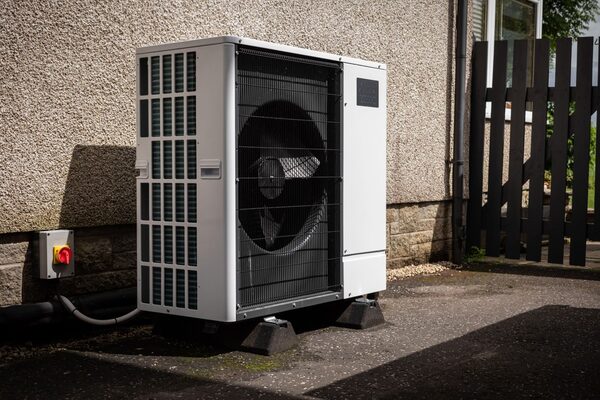
Warmer Homes Scotland is the devolved fuel poverty programme, and it works differently from the grant and loan scheme because nothing is repaid. The Scottish Government's own description is that under the current Warmer Homes Scotland scheme, energy efficiency measures and a heat pump can be installed with all the work planned and carried out for the household, fully funded by the Scottish Government3. Fully funded support is also available to eligible homeowners through the fuel poverty schemes, Warmer Homes Scotland among them20.
The scheme helps households in, or at risk of fuel poverty improve their heating and energy efficiency2. It was originally launched in 2015 and relaunched in 2023 with increased funding for clean heating systems2. It has a strong focus on heating and insulation measures1. The scheme mainly supports owner occupiers, but it also covers tenants in private rented homes18.
Fuel poverty in Scotland has a defined meaning for these purposes. A household is in fuel poverty if it would be required to spend more than 10% of its income on all household fuel use22. That threshold is what the scheme's eligibility assessment works from, alongside the measures needed in the property.
Gas boilers remain part of the programme. The programme continues to install new gas boilers, because gas boilers can currently be cheaper to run due to high electricity costs and are able to be installed quicker18. The Scottish Government has said that in the short term it will continue to support the installation of replacement gas boilers under the Warmer Homes Scotland scheme for households where zero emissions heating would worsen fuel poverty23.
The scale of delivery is worth noting. Through investment in the programme and Area Based Schemes, nearly 10,000 households at risk of fuel poverty were supported to make their homes warmer in the 2023-24 financial year18. For a household, the significance is that this is the route that reaches homes which cannot take on a loan, and it is the one that can install a full package rather than a single measure.
Who qualifies for which scheme
Eligibility differs sharply between the three main routes, and the differences are about tenure, income and location rather than about the property alone.
The Home Energy Scotland Grant and Loan Scheme is open to all domestic owner-occupiers in Scotland18. The scheme provides grants and loans to all domestic owner-occupiers in Scotland to install clean heat and energy efficiency measures18. The detailed rule is that the property must be an existing property located in Scotland and the applicant must be the homeowner, owning the home they live in, and it must be their only or primary private residence10. These schemes provide grant and/or loan funding directly to owner occupiers, as well as private registered landlords for their rented properties24.
Warmer Homes Scotland is narrower. It is a national fuel poverty programme helping households living in or at risk of fuel poverty, and it mainly supports owner occupiers but also covers tenants in private rented homes18. The test is the fuel poverty threshold rather than a simple benefit check.
Area Based Schemes are narrower still, and are geographic. They are for private homeowners and landlords in Scotland to help with the cost of certain energy efficiency measures7. To qualify, a household must be a homeowner or a privately rented landlord or tenant and be in Council Tax Band A, B or C5. The council prioritises areas where improvements can have the greatest impact on reducing fuel poverty and carbon emissions7.
| Scheme | Tenure | Key condition |
|---|---|---|
| Home Energy Scotland Grant and Loan | Owner occupiers, private registered landlords | Existing property in Scotland, only or primary residence10 |
| Warmer Homes Scotland | Owner occupiers, private rented tenants | In or at risk of fuel poverty18 |
| Area Based Schemes | Private homeowners, private landlords and tenants | Council Tax Band A, B or C, in a prioritised area5 |
One further distinction matters for public sector housing. The Scottish Central Government Energy Efficiency Grant scheme is targeted at public bodies with no borrowing powers18, which is a separate stream from the household-facing programmes.
For independence, the eligibility rules show where the limits sit. A private tenant in a property above Council Tax Band C, or a household just above the fuel poverty threshold, may find that none of the devolved routes apply, and the remaining option is the reserved supplier obligation. That is a real gap, not a technicality.
Area Based Schemes (HEEPS:ABS): council-led upgrades in fuel-poor areas

Area Based Schemes are the local delivery arm of Scottish energy efficiency funding, and they work on a street-by-street basis rather than household by household. The Scottish Government's Energy Efficient Scotland: Area Based Schemes 2020 is a successor to the Home Energy Efficiency Programme (HEEPs) Programme9. The original Home Energy Efficiency Programme for Scotland: Area Based Schemes was introduced in April 20139.
The mechanism is that local authorities design and deliver the programmes. Area-based energy efficiency programmes enable local authorities to design and deliver energy efficiency programmes in areas with high levels of fuel poverty and vulnerable families6. The scheme was supported by funding from the Scottish Government and was delivered by local authorities9.
The funding is grant-based and does not need repaying. Through the Scottish Government's Energy Efficient Scotland: Area Based Scheme, non repayable grants are available5. Each year, once funding for the Area-Based Scheme has been successfully secured, eligible homeowners in the most fuel-poor areas identified through the Scottish Government's application process receive a formal letter of offer7. That letter is the trigger: a household does not apply in the ordinary sense, it is identified and offered.
The objectives are broad. Energy Efficient Scotland continues to build on the key objectives of the area-based approach, which are to upgrade Scotland's housing stock, tackle fuel poverty, reduce carbon emissions, lever in Energy Company Obligation funding, support the local economy and sustainable local economic development, and provide home owners and landlords with access to grant funding which meets the Scottish Government's future minimum energy efficiency standards9.
For a household, the practical implication is that the Area Based Scheme is not something to apply for directly in the way the national grant is. It arrives through the council, and the way to be considered is to be in a prioritised area and, where relevant, to have made contact through Home Energy Scotland, which is the referral partner for eligibility enquiries5.
What each scheme pays for: insulation, clean heating and renewables
The measures funded across the Scottish schemes fall into three groups: fabric improvements, clean heating, and renewable generation.
Fabric and efficiency measures are the common thread. The Home Energy Scotland Grant and Loan Scheme provides grants and loans to install clean heat and energy efficiency measures17, and it supports the installation of clean heating systems and energy efficiency measures1. Warmer Homes Scotland has a strong focus on heating and insulation measures1. Area Based Schemes help with the cost of certain energy efficiency measures7.
Clean heating is the second group. The Home Energy Scotland Grant and Loan Scheme offers grants to homeowners to install heat pumps21, and grant funding of up to £7,500 is available for clean heating systems such as heat pumps1. The scheme provides homeowners in Scotland a grant, interest free loan or a combination of both to install clean heating systems and energy efficiency measures10.
Renewables at community scale are the third. The Community and Renewable Energy Scheme provides advice and funding to communities across Scotland looking to develop renewable energy, heat decarbonisation and energy efficiency projects, including shared ownership projects12. This is not a household grant, but it is the route by which a community can develop generation that households then share in.
| Scheme | Fabric and insulation | Clean heating | Renewables |
|---|---|---|---|
| Home Energy Scotland Grant and Loan | Yes, energy efficiency measures1 | Yes, up to £7,500 for clean heating1 | Not a household route |
| Warmer Homes Scotland | Yes, insulation measures1 | Yes, including heat pumps and replacement gas boilers18 | No |
| Area Based Schemes | Yes, certain energy efficiency measures7 | Not the primary focus | No |
| Community and Renewable Energy Scheme | Yes, energy efficiency projects12 | Yes, heat decarbonisation projects12 | Yes, including shared ownership12 |
The published data on the grant and loan scheme covers the number of grants and loans provided, the types of energy efficiency measures and clean heating systems installed, total funding distributed, and installations by local council area by financial year25. That is the record of what has actually been funded, as opposed to what is available.
For independence, the mix matters. Insulation reduces demand, clean heating changes the fuel, and community renewables change where the energy comes from. Only the third touches supply, and it is the one route on this page that is not aimed at individual households.
How to apply, and who does the work
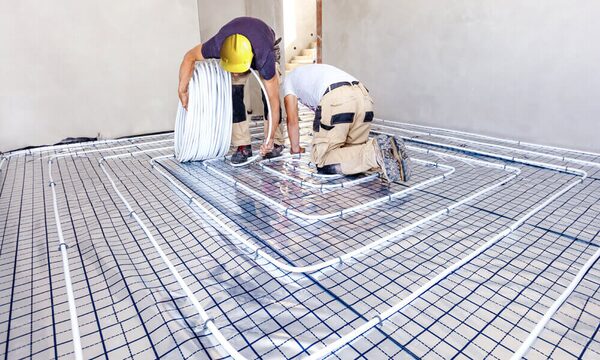
The Home Energy Scotland Grant and Loan Scheme runs in two stages. First, an applicant submits an application to request funding before any work takes place; once the work has been completed, they submit a claim13. The scheme is run by the Energy Saving Trust on behalf of the Scottish Government13. The statutory basis for grant applications in this area is that an application for a grant shall be made to the administering agency26.
The sequence for a household is:
- Contact Home Energy Scotland for advice and a referral6.
- Submit an application to request funding before any work begins13.
- Receive the referral email, usually sent within two working days of the initial call10.
- Sign the funding agreement and have the work installed by approved suppliers10.
- Complete installation and submit the final funding claim within 9 months of signing10.
- Receive payment by BACS transfer, which can take between three and five working days after claim approval10.
The installer requirement is specific. Applicants to the Home Energy Scotland loans and cashback scheme must use approved suppliers through Scotland's new TrustMark scheme for energy efficiency work27. That is a condition of funding, not a recommendation.
Processing times are published. The Energy Saving Trust aims to process all applications and claims within 10 working days of receiving all required documents13. Claims are processed within 10 working days after submitting all required claim documentation10. Payment is made by BACS transfer, which can take between three and five working days10. Households are also required to submit proof of payment within 10 working days of receiving funding, such as a bank statement or receipt from the installer10.
For Warmer Homes Scotland, the work is planned and carried out for the household rather than commissioned by it, with all work fully funded by the Scottish Government3. For Area Based Schemes, the local authority delivers the programme9.
The Heat in Buildings Strategy: where Scottish policy is heading
The Heat in Buildings Strategy is the framework that sits behind the grant programmes, and it explains why the funding exists in its current shape. The strategy focuses on energy demand for space and water heating in homes, workplaces and community buildings23. It encompasses an update to the 2018 Energy Efficient Scotland Route Map and the 2015 Heat Policy Statement28.
The stated purpose is to reduce harmful climate change emissions from Scotland's buildings and help people save energy and reduce heating bills30. The strategy also commits to funding heat network projects across Scotland30.
The targets are the part households should note, because they set the direction of travel for regulation and for future funding rounds:
- Over 1 million homes in Scotland to convert to zero emissions heating by 20303
- The equivalent of 50,000 non-domestic buildings to convert by 20303
- Emissions from heat in buildings to fall by 68% by 2030 compared with 20203
- A large majority of homes to reach at least the equivalent of an EPC Band C by 2030, with all homes meeting at least this standard by 20333
- A transition to zero emissions by 2045 for Scotland's buildings and heat systems29
The published deadlines differ. One official guidance source gives the energy efficiency deadline as 2033, while another gives 20283. The Heat in Buildings Strategy, published in October 2021, sets a target for over 1 million homes in Scotland to convert to zero emissions heating by 2030, the equivalent of 50,000 non-domestic buildings, and for emissions from heat in buildings to fall by 68% by 2030 compared with 20203.
The Scottish Government has allocated £1.3 billion of funding through its Heat in Buildings schemes this Parliamentary Session, excluding 2025/2611. The Heat in Buildings Strategy consultation is administered by the Heat Strategy unit of the Scottish Government28.
For independence, the strategy is the clearest statement that the direction is away from fossil fuel heating. The grant schemes are the mechanism for the early movers; the standards are the mechanism for everyone else.
Timelines and deadlines households should know

The deadlines that matter to a Scottish household fall into two kinds: the deadlines attached to a funding application, and the regulatory deadlines that will eventually require work regardless of grant availability.
On the funding side, the clock starts when the funding agreement is signed. After signing, a household has 9 months to complete all the installation of funded measures and submit a final funding claim10. The referral email is usually sent within two working days of the initial call10. Claims are processed within 10 working days after submitting all required claim documentation, and payment takes between three and five working days by BACS10. Proof of payment must be submitted within 10 working days of receiving funding10.
Processing performance has been reported against a 10 working day target, with the Energy Saving Trust aiming to process all applications and claims within that period of receiving all required documents13. An earlier reporting period used a 15 working day target, and 92% of applicants had their applications processed within 15 working days in the period from the start of October 2023 to the end of November 202331. The published monthly data on the scheme covers April 2025 to January 202613.
On the regulatory side, the direction is set out in the strategy targets. A large majority of homes are to reach at least the equivalent of an EPC Band C by 2030, with all homes meeting at least this standard by 20333. Emissions from heat in buildings are to fall by 68% by 2030 compared with 20203. The transition to zero emissions for Scotland's buildings and heat systems is targeted for 204529.
For a household, the practical reading is that the funding deadlines are tight and administrative, while the regulatory deadlines are long and directional. The grant schemes are worth using while they exist, because the standards they are designed to meet will apply to the property eventually in any case.
Sources31 cited
- Energy Saving Home Improvements, Scottish Government, 2026-09-17
- Warmer Homes Scotland Scheme Headline Data, Scottish Government, 2025-10-29
- Heat in Buildings Strategy: Fairer Scotland Duty Assessment, Scottish Government, 2021-11
- Home Energy Efficiency, Argyll and Bute Council, 2026-09-17
- Area Based Schemes, Glasgow City Council, 2026-06-08
- Heat in Buildings Progress Report 2025, Scottish Government, 2025-10-02
- Energy Efficient Scotland: Area Based Schemes, West Lothian Council, 2026-09-17
- Heat Pump Sector Deal Expert Advisory Group: Scottish Government Response, Scottish Government, 2026-03-25
- Energy Efficient Scotland Area Based Schemes, Glasgow City Council, 2026-09-20
- Funding: Grants and Loans, Home Energy Scotland, 2026-09-17
- Tackling Fuel Poverty in Scotland: Periodic Report 2021-2024, Scottish Government, 2025-04
- Local and Small Scale Renewables, Scottish Government, 2026-09-17
- Home Energy Scotland Grant and Loan Scheme Application and Claim Processing Times, Scottish Government, 2026-03-12
- Heat in Buildings Progress Report 2024, Scottish Government, 2024-10-10
- Financial Help for Energy Efficiency and Low Carbon Heating Improvements, City of Edinburgh Council, 2026-09-20
- Research Briefing CBP-9585, House of Commons Library, 2026-09-17
- Heat in Buildings Progress Report 2025, Scottish Government, 2025-10-02
- Heat in Buildings Progress Report 2024, Scottish Government, 2024-10-10
- Research Briefing CBP-9585 (PDF), House of Commons Library, 2026-05-13
- Delivering Net Zero for Scotland's Buildings, Scottish Government, 2023-11
- The Heat in Buildings Programme, Scottish Government, 2026-09-17
- Warmer Homes Scotland Annual Review 2017-2018, Scottish Government, 2019-06-28
- Heat in Buildings Strategy, Scottish Government, 2021-10
- FOI 202500448310, Scottish Government, 2025-02-20
- Home Energy Scotland Grant and Loan Scheme Awards, Scottish Government, 2025-05-12
- The Home Energy Efficiency Scheme (Scotland) Regulations 2006, legislation.gov.uk, 2006-11-29
- Domestic Quality Assurance: Heat Buildings Programme, Scottish Government, 2023-02-10
- Heat in Buildings Strategy Consultation, Scottish Government, 2026-09-17
- Heat in Buildings Strategy Consultation: View, Scottish Government, 2026-09-20
- Heat in Buildings Strategy: Easy Read, Scottish Government, 2022-03-07
- FOI 202300388119, Scottish Government, 2024-04-03
 Community Energy in ScotlandCommunity energy in Scotland lets you join a local scheme for cheaper, greener heat and power, or get advice and funding to make your own home warmer and cheaper to run.
 Home Energy Planning ScotlandDo you need planning permission for solar panels or a heat pump in Scotland?
 The Full Grants and Schemes GuideWhich grants can you actually get right now, and how do you apply for them?
 Energy Policy in ScotlandWho decides how your home in Scotland is heated and improved?
 Grants and Energy IndependenceCan you get a grant for solar panels or a battery?
 Tariffs in ScotlandWhy do Scottish electricity bills differ from the rest of Great Britain, and why do standing charges cost more in the north?