
In this guide
Scotland has its own planning system, and for household energy equipment that matters more than most householders expect. The Town and Country Planning (General Permitted Development) (Scotland) Order 1992 already provides fairly extensive permitted development rights for domestic and non-domestic renewables technologies, such as solar panels, wind turbines and heat pumps1. That means a great deal of household solar and heat pump work can proceed without a planning application, provided the installation meets the criteria and thresholds in the legislation.
The dividing line is straightforward in principle. Development that meets the criteria is permitted development; development which does not meet the criteria or thresholds within the legislation will not be considered to be permitted development and requires a planning application2. Solar PV and solar thermal on a dwelling sit under Class 6HA, and on a building within the curtilage of a dwelling under Class 6HB3. A single domestic air source heat pump sits under Class 6H of Part 1A of Schedule 1, and must comply with MCS Planning Standards or equivalent standards4.
What follows is the householder's map of that system: what is permitted, what is not, where listed buildings and conservation areas change the answer, and how the planning rules sit alongside Building Regulations and the reform of Energy Performance Certificates that is under way in Scotland.
Planning permission for solar panels in Scotland: the general rule
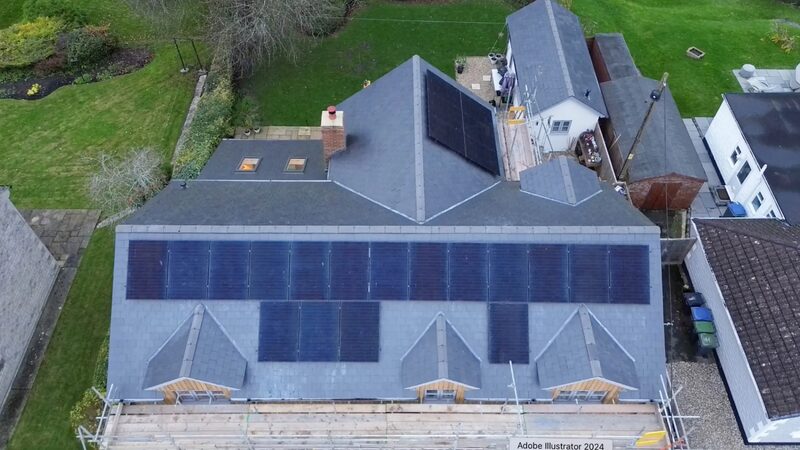
The general rule for a Scottish dwelling is that solar photovoltaic and solar thermal equipment is permitted development. Class 6HA of the Scottish permitted development rights covers the installation, alteration or replacement of solar PV or solar thermal equipment on a dwelling, and Class 6HB covers the same equipment on a building situated within the curtilage of a dwelling3. A garden outbuilding, a garage or a similar structure in the grounds therefore has its own route, separate from the roof of the house itself.
The Scottish Government's own review of permitted development rights describes the position as generous by design: the General Permitted Development Order already provides fairly extensive PDR for domestic and non-domestic renewables technologies, such as solar panels, wind turbines and heat pumps1. For non-domestic solar panels, permitted development rights exist up to 45kW electricity or 50kW thermal7. That figure is a useful reference point for scale, though it applies to non-domestic installations rather than to a house.
The historical route to this position is worth knowing because it explains the shape of the current rules. The Town and Country Planning (General Permitted Development) (Non-Domestic Microgeneration) (Scotland) Amendment Order 2011 allows for solar photovoltaic and solar thermal equipment8. Domestic microgeneration was dealt with separately, through the Town and Country Planning (General Permitted Development) (Domestic Microgeneration) (Scotland) Amendment Order 20109. The two instruments together produced the split between domestic and non-domestic solar that still structures the rules.
For a household, the practical consequence is that a roof-mounted solar array on an unlisted dwelling in an area without an Article 4 Direction normally needs no application. The independence gain is real but partial: the panels generate behind the meter, while the connection, export arrangements and any backup remain tied to the grid and a supplier. The planning system governs whether the equipment may be installed, not how independent the household becomes once it is.
Permitted development rights for solar equipment
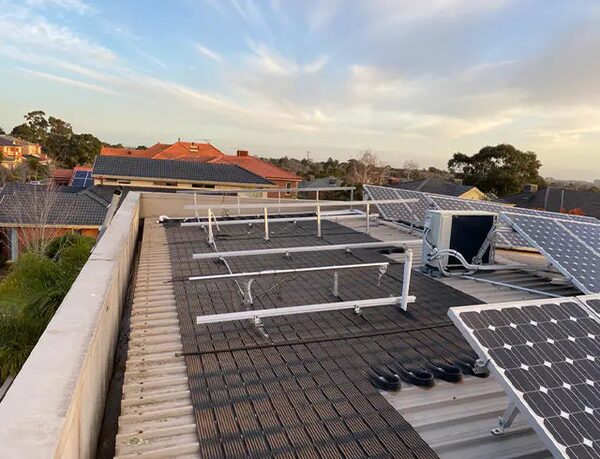
Permitted development rights are not a blanket permission. They are a set of classes, each with its own scope, and the equipment must fall inside the class that applies to it. For solar, the two domestic classes are 6HA and 6HB, covering the dwelling and buildings within its curtilage respectively3. For non-domestic solar, the existing rights run to 45kW electricity or 50kW thermal7.
The Scottish Government has published guidance on permitted development rights for householders, which is the natural first reference for anyone checking whether a proposed installation falls inside a class10. The underlying legislation is the General Permitted Development (Scotland) Order 1992, and changes to the rights are made by amending that Order rather than by creating a separate regime. The 2015 proposals for non-domestic solar panels and domestic air source heat pumps, for example, were to be implemented through an amendment to the Town and Country Planning (General Permitted Development) (Scotland) Order 19928.
Two features of the Scottish approach are worth noting. First, the rights have been reviewed with an explicit parity objective: Scottish Ministers want to ensure that there is parity in permitted development rights between Scotland and England8. That aim was stated in the 2015 consultation on air source heat pumps and solar panels, and it explains why the Scottish classes resemble the English ones in structure while differing in detail11. Second, permitted development rights can be withdrawn. Rights may be removed through a planning condition, an Article 4 Direction or other restriction12. A householder checking a specific address therefore needs to look at the site, not only at the national rules.
Planning permission for heat pumps in Scotland
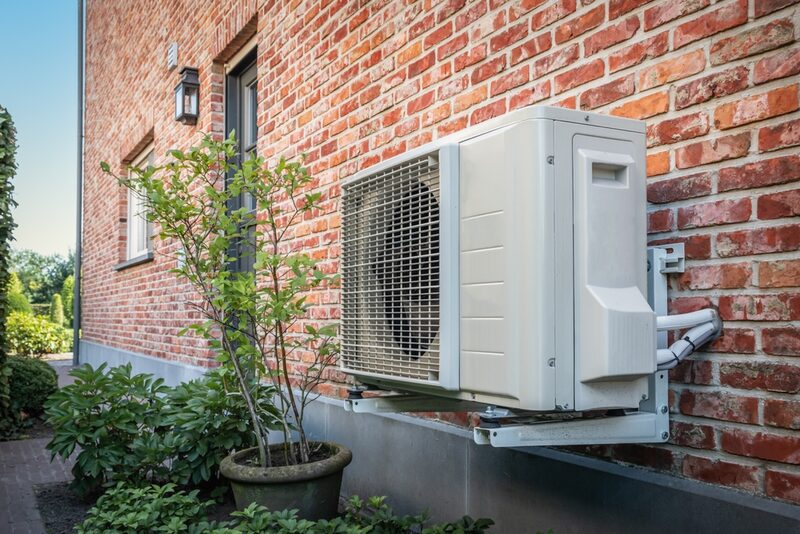
A single domestic air source heat pump is permitted development in Scotland. Class 6H of Part 1A of Schedule 1 of the Town and Country Planning (General Permitted Development) (Scotland) Order 1992 covers the installation, alteration or replacement of an air source heat pump on a dwelling or within the curtilage of a dwelling, and the unit must comply with MCS Planning Standards or equivalent standards4. The MCS condition is the mechanism that keeps noise and siting within bounds without a case-by-case assessment.
The route to that position ran through consultation. The Scottish Government consulted in 2010/11 on permitted development rights for microgeneration equipment including air source heat pumps and solar panels11. The 2015 consultation then set out options, and the preferred approach was Option 6: adopt the principles of the provisions from England but apply them in a way that is consistent with existing approaches to permitted development rights in Scotland8. The stated objective was to provide enhanced permitted development rights for non-domestic solar panels and domestic air source heat pumps8.
One element of the older regime is worth flagging because it explains why householders sometimes encounter a notification step. Domestic air source heat pumps were subject to prior notification to the planning authority on siting and design2. Prior approval had to be sought from the planning authority 28 days before installation happened under the rights as they then stood9. The 2015 proposals included removing the requirement for the step of asking the planning authority if prior approval of the equipment is needed8. The conditions were applied to ensure noise emissions could be suitably controlled in the absence of an agreed noise threshold and measurement methodology11.
Ground source heat pumps follow a different path again. Installing a ground source heat pump is typically considered permitted development13. Installation within the curtilage, meaning the garden or grounds, of a house or block of flats does not require planning permission, though listed building consent may be required if the property is listed14.
When permission is needed: size, placement and noise limits
Permission is needed when an installation falls outside the permitted development class, and the triggers are specific. For air source heat pumps, planning permission is required where the installation does not meet permitted development rules, where the property is a listed building, in a conservation area with restrictions, in a prominent position such as the front of the property, or where there is an unacceptable impact on neighbours such as noise or visual impact15. The permitted route assumes the unit is located within your property and meets permitted development size and location limits15.
Noise is the condition most likely to bite. If the noise level is exceeded, planning permission approval is needed16. The Scottish consultation record is explicit that noisier installations would require planning permission, and that the method includes a maximum noise level in order for air source heat pumps to be considered permitted development11. That is why the MCS Planning Standards condition in Class 6H carries so much weight: it is the agreed noise and siting benchmark that replaces a discretionary judgement4.
Conservation areas add a layer. Planning permission is required for air source heat pumps in conservation areas subject to certain restrictions on size and location17. The restrictions are about where the unit sits and how large it is, rather than a blanket ban, but they mean the address matters.
Ground-mounted solar has its own thresholds, and they are the clearest numbers in the system. Planning permission is required where any part of the equipment is taller than 4 metres, where any part of the equipment is within 5 metres of the boundary of the property's grounds or gardens, or where there is already a stand-alone ground-mounted solar equipment installation within the grounds or gardens of the property5. A ground array in a large garden, well inside the boundary and under 4 metres, can fall within permitted development; one close to a fence line or a second array in the same grounds will not.
| Equipment | Permitted development position | Trigger for a planning application |
|---|---|---|
| Solar PV or thermal on a dwelling | Class 6HA3 | Listed building; rights removed by condition or Article 4 Direction12 |
| Solar PV or thermal on a curtilage building | Class 6HB3 | Listed building; rights removed12 |
| Ground-mounted solar | Permitted within limits5 | Over 4m tall, within 5m of boundary, or a second stand-alone installation5 |
| Air source heat pump, single, domestic | Class 6H, MCS Planning Standards or equivalent4 | Fails the criteria; listed; conservation area restrictions; prominent position; noise or visual impact15 |
| Ground source heat pump | Typically permitted development13 | Listed building consent may be required14 |
Building Regulations: the recommendation to pair solar PV with a heat pump
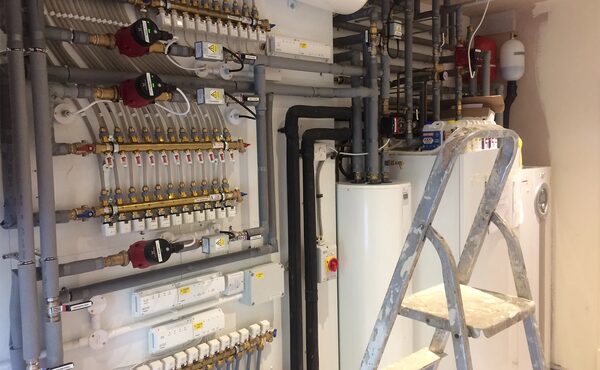
Planning permission and Building Regulations are separate regimes, and a household project usually touches both. The planning question is whether the equipment may be installed where it is proposed; the building standards question is whether the installation is technically compliant.
The Scottish Government's own advisory group has linked heat pump deployment to fabric efficiency. The Heat Pump Sector Deal Expert Advisory Group recommended that support for increased heat pump deployment should be accompanied by support for fabric energy efficiency measures, and that the Scottish Government should maintain or increase its current support for energy efficiency18. The reasoning given is that heat pumps are much more cost-effective in well-insulated dwellings18. That is a recommendation about policy design rather than a rule a householder must satisfy, but it explains why grant funding and advice in Scotland tend to treat insulation and clean heat as a package.
The same advisory group recommended that the Scottish Government should issue guidance to local authorities to ensure that the planning system plays a fully strategic and proactive role in encouraging and supporting heat pump deployment18. That points to a planning system that is expected to smooth the path rather than obstruct it, while still applying the criteria.
For ground source and water source systems, the compliance requirement is explicit. All ground source or water source heat pump installations serving a building must comply with the requirements of the Building (Scotland) Regulations 2004, as amended, including the functional standards in Regulation 9, Schedule 519. A building warrant is not always necessary, but it is always required when a heat pump system is installed in or on an existing flat or a building containing flats, and for freestanding installations around flats19.
EPCs in Scotland: the domestic methodology behind the rating
Energy Performance Certificates in Scotland are being rebuilt, and the change matters to any householder planning a heat pump or solar installation because the certificate is the document that records the result. The provision of an EPC in Scotland can be summarised as a four-part process: assessment by an accredited person, calculation using an approved methodology, lodgement on a national register, and production of a certificate to an agreed Scottish format20. Dwelling owners are legally required, under the Energy Performance of Buildings (Scotland) Regulations 2008, to provide an EPC on construction, sale or rental of a building to a new tenant21. Those regulations established two types of EPC, one used for dwellings and one for all other building types21.
The reform introduces a new rating system for domestic and non-domestic properties to give improved information on a property's energy efficiency and the emissions and performance of the heating system, plus a new heat retention rating considering installed energy efficiency measures22. For domestic certificates specifically, the reformed set is three ratings: a Heat Retention Rating, a Heating System Type Rating covering emissions category, thermal efficiency and running cost, and an Energy Cost Rating23. The Heat Retention Rating is based on the annual heat demand in kWh/m2 of the building, the Heating System Rating shows the home's current heating system, and the Energy Cost Rating is a standardised rating to reflect the cost of running the home6.
The Scottish Government has also signalled that the reformed certificate would include signposting to a Technical Suitability Assessment (HEETSA) and potential sources of funding23. That is a notable shift in purpose: the certificate becomes a route into advice and support, not only a label.
For non-domestic certificates, the reformed ratings are an Energy Efficiency Rating based on modelled emissions from regulated energy use, a Direct Emissions rating based on modelled direct emissions from regulated energy use, and an Energy Demand rating under standardised conditions23. Scottish non-domestic EPCs also provide information about the rating that would be obtained if the methodology used in England and Wales was applied, with Scottish climate data, presented in the Comparative assessment section24. That comparative element is a reminder that the four nations do not measure the same building in the same way.
How does the Home Energy Model affect my EPC rating?
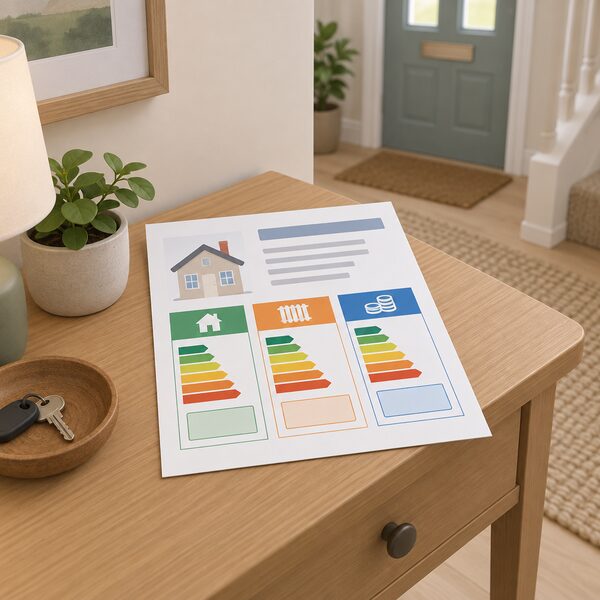
The Energy Performance of Buildings (Scotland) Regulations 2025 adopt the UK Government's new Home Energy Model as the calculation methodology for producing domestic EPCs in Scotland25. The Home Energy Model will replace the current Standard Assessment Procedure methodology in autumn 20266. The Scottish Government's plan was to introduce revised Energy Performance of Building regulations in 2025, to bring reformed EPCs into effect in 2026, pending confirmation from the UK Government that the Home Energy Model will become available in the second half of 202623.
The reformed format for domestic buildings is expected to include a Heat Retention Rating, a Heating System Rating and an Energy Cost Rating, as well as carbon dioxide emissions associated with the building and the type of heating system used25. The practical effect for a householder is that the same physical installation can produce a different certificate once the methodology changes, because the calculation behind the rating changes. The rating is a modelled output, not a measurement.
That has a direct bearing on planning and building decisions. A householder weighing a heat pump against a gas boiler, or adding solar alongside either, is working with a certificate whose underlying method is in transition. The Scottish Government's own progress reporting on heat in buildings sits alongside this reform, and the Home Energy Scotland Grant and Loan Scheme provides grants and loans to all domestic owner-occupiers in Scotland to install clean heat and energy efficiency measures26. The funding route and the certificate route are being reformed in parallel.
"These provisions will adopt the UKG's new Home Energy Model ( HEM ) as the calculation methodology for producing domestic EPCs in Scotland"
How planning and building rules fit together for a household project
The two regimes answer different questions, and a household project normally needs both answered before work starts. Planning permission or permitted development determines whether the equipment may be installed at that address. Building Regulations determine whether the installation itself is compliant, and for some heat pump systems a building warrant is the mechanism.
The legislative machinery behind the planning side is deliberately ordinary. The regulations are implemented through an amendment to the Town and Country Planning (General Permitted Development) (Scotland) Order 1992, and would be approved by a negative parliamentary procedure8. The 2015 proposals for domestic air source heat pumps were to be implemented through an amendment to that Order, as secondary legislation approved by negative parliamentary procedure2. The permitted development rights would become secondary legislation through the laying of a Scottish Statutory Instrument before the Scottish Parliament11. Changes to the rights are therefore made by amending the Order, which is why the class numbers, 6H, 6HA and 6HB, are the practical reference points.
The scope of the 2015 exercise is worth noting for anyone reading older guidance. At that time the proposals related to solar panels on non-domestic buildings and air source heat pumps on domestic properties10. The domestic solar classes and the non-domestic solar limits were dealt with through separate instruments, and the two strands have not always moved together.
For a householder, the sequence is: check the class that applies to the equipment, check whether the site has had rights removed by a condition or Article 4 Direction, check the listed building position if relevant, and check the building standards position, including whether a warrant is needed. The local planning authority is the body that can confirm whether any approvals apply to a particular site or proposal27. The Scottish Government has published guidance on permitted development rights for householders as the national reference point10.
On independence, the honest position is that planning permission is a gate, not a source of autonomy. A permitted solar array or heat pump reduces the household's reliance on imported gas and on a supplier for the energy it generates or captures, but the grid connection, the export arrangement and, for a heat pump, the electricity supply all remain external dependencies. The planning system determines whether the equipment can be installed; it does not determine how self-sufficient the household becomes afterwards. For the wider picture of how the four nations differ, see Home Energy in Scotland, Wales and Northern Ireland and the comparison of planning rules for home energy equipment in Wales and Northern Ireland.
Sources27 cited
- Scottish Government review of permitted development rights: phase 3 consultation, Scottish Government, 2023-05-31
- The Town and Country Planning (General Permitted Development) (Scotland) Order 1992: explanatory note, legislation.gov.uk, 2016
- Circular 1/2024: Householder permitted development rights, Scottish Government, 2024-05
- The Town and Country Planning (General Permitted Development) (Scotland) Order 1992, Class 6H, legislation.gov.uk, 2016
- Solar panels and planning permission, Cornwall Council, 2026-09-17
- Heat in Buildings progress report 2025, Scottish Government, 2025-10-02
- Permitted development rights for non-domestic solar panels and domestic air source heat pumps, Scottish Government
- Permitted development rights consultation: non-domestic solar panels and domestic air source heat pumps, Scottish Government, 2015-06
- Permitted development rights: non-domestic solar panels and domestic air source heat pumps, page 1, Scottish Government, 2015-06-22
- Permitted development rights: non-domestic solar panels and domestic air source heat pumps, page 2, Scottish Government, 2015-06-22
- Permitted development rights consultation: supporting document, Scottish Government, 2015-06
- Air source heat pumps, Cornwall Council, 2026-09-17
- Air source heat pumps, Westmorland and Furness Council, 2026-09-17
- Heat pumps, New Forest District Council, 2026-09-17
- Air and ground source heat pumps, Croydon Council, 2026-09-17
- Building regulations and renewables guidance, Bedford Borough Council, 2026-09-17
- Planning and listed building consent requirements, West Northamptonshire Council, 2023-12-14
- Heat Pump Sector Deal Expert Advisory Group: interim report, Scottish Government, 2021-06-14
- Low carbon equipment and building regulations: ground source and water source heat pumps, Scottish Government, 2010-03
- Review of domestic and non-domestic Energy Performance Certificates in Scotland, Scottish Government, 2019-02-07
- Domestic EPC reform consultation, Scottish Government, 2021-07-23
- Scoping consultation: HEETSA partial business regulatory impact assessment, Scottish Government, 2025-06-06
- EPC reform consultation: government response, Scottish Government, 2025-01
- Energy Performance of Buildings (Scotland) Regulations 2025: impact assessment, Scottish Government, 2025-10-10
- Permitted development rights: support and provision of new homes consultation, Scottish Government, 2025-09
- Heat in Buildings progress report 2024, Scottish Government, 2024-10-10
- Generating your own energy: heat pumps, Welsh Government, 2018
 Planning Permission in ScotlandDo you need planning permission for a heat pump in Scotland?
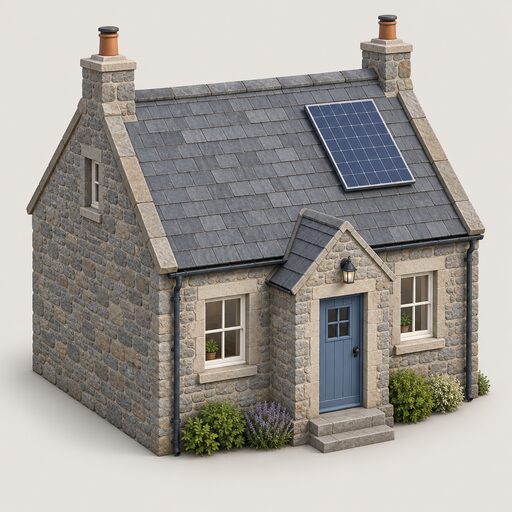 Planning Permission ScotlandMost solar panels on Scottish homes go ahead without planning permission, but flats, conservation areas and listed buildings change that.
 Permitted Development by HomeCan you put up solar panels or a heat pump without asking the council?
 Planning Permission in ScotlandDo you need planning permission for a home battery in Scotland?
 Using an Installer in ScotlandYou live in Scotland and want solar panels or a heat pump fitted.
 Planning Permission in EnglandDo you need planning permission for an air source heat pump?