
In this guide
The Boiler Replacement Scheme in Northern Ireland is closed. It ended with effect from 21 September 2023, and the Department for Communities stated at the time that it "has ended due to budgetary constraints, and applications will no longer be accepted"1. Over its life, from 2012-13 to 2023-24, 42,169 replacements were completed across Northern Ireland2.
The scheme was the Housing Executive's boiler grant: it was delivered across Northern Ireland on behalf of the Department by the Northern Ireland Housing Executive, and it helped owner occupiers whose gross annual income was less than £40,000 to replace boilers over 15 years old1. It was a grant towards the cost of the work rather than a fixed payment to every household, and no new awards are being made.
For a household in Northern Ireland today, the practical question is not how to apply to a closed scheme but what stands in its place. The Affordable Warmth Scheme is the current route for heating and insulation help, including boiler replacement in defined circumstances, and it pays up to £7,500, or up to £10,000 where solid wall insulation is needed3. This page records what the Boiler Replacement Scheme was, who qualified, what it achieved, and what a householder is directed to now.
The Boiler Replacement Scheme is closed to new applications
The closure was announced by the Department for Communities and took effect on 21 September 2023. The Department's statement was unambiguous: the scheme "has ended due to budgetary constraints, and applications will no longer be accepted"1. The official housing statistics for Northern Ireland record the same date from the other direction, noting that "The scheme ended with effect from 21 September 2023"2.
The reason given was money, not a change of policy on boiler efficiency. A grant scheme that had run for more than a decade was stopped because the budget supporting it was no longer there. That matters for how the closure should be read: it was not a judgement that the work was finished, nor a replacement of the scheme by a better one at the same moment. It was a funding decision, and the households that would have used the scheme in 2023-24 and afterwards were left to other routes.
One commitment survived the closure. The Housing Executive "will continue to replace boilers for those customers who have already received formal approval"1. That is a narrow undertaking. It covers households already inside the process, with approval in hand, at the point the scheme stopped. It does not cover anyone who had applied but not been approved, and it does not reopen the scheme to new applicants.
For a household's energy independence, the closure is a straightforward loss of one lever. A grant towards a new boiler reduces the capital cost of a more efficient appliance, and a more efficient appliance reduces the fuel a household must buy. Removing the grant does not remove the dependence on bought fuel, and in Northern Ireland that fuel is very often oil, delivered by a supplier and priced by a market the household does not control. The scheme never changed that; it only lowered the cost of the equipment that burns it.
What the scheme offered: help with an inefficient boiler
The Boiler Replacement Scheme provided owner occupiers, whose gross annual income was less than £40,000, with help for the cost of replacing boilers over 15 years old2. Those are the two defining features of the offer: a means test on the household, and an age test on the appliance.
The age test is the part that connects the scheme to efficiency. A boiler over 15 years old is, by the standard the scheme used, old enough that replacement is worth supporting. That threshold recurs elsewhere in Northern Ireland's energy efficiency landscape. The Affordable Warmth Scheme applies its boiler replacement measure where a boiler is at least 15 years old3, and the Northern Ireland Sustainable Energy Programme has treated old oil fired central heating systems of 15 years or more as a priority group characteristic5. Fifteen years is the working definition of an inefficient boiler in this jurisdiction.
The income test set the scheme's reach. A gross annual income below £40,000 is a broad band by the standards of means-tested support, and it is wider than the £23,000 total annual gross income limit that now governs the Affordable Warmth Scheme3. That difference is worth stating plainly, because it explains why the closure was felt beyond the poorest households: the Boiler Replacement Scheme was available to a slice of Northern Ireland owner occupiers who would not qualify for the current scheme on income.
The scheme was a grant towards cost, not a fixed sum paid to every successful applicant. The published record describes it as help with the cost of replacing an old boiler rather than as a flat rate, so the amount a household received depended on the work agreed. What can be said with confidence is the shape of the offer: owner occupiers, under an income ceiling, replacing a boiler past 15 years, with the Housing Executive delivering the work1.

Who qualified: the income and boiler-age rules as they stood
Two rules governed entry to the Boiler Replacement Scheme, and both had to be met.
- Tenure and income. The householder had to be an owner occupier, with a gross annual income of less than £40,0002.
- Boiler age. The boiler being replaced had to be over 15 years old2.
The tenure condition is significant in Northern Ireland, where the private rented sector and social housing sit alongside a large owner occupied stock. The scheme was aimed at owners. Social housing tenants had their heating maintained through their landlord rather than through this grant, and private renters were not the target group.
The income figure is gross, not net, and it is a household figure rather than an individual one. That distinction matters where a household has more than one earner or a pension in payment: the test was applied to the total, and the ceiling was £40,000.
The boiler age rule was applied to the appliance being removed, not to the property. A household in an older house with a recently fitted boiler would not have qualified on that limb, however inefficient the building itself might be. This is a common feature of boiler grant schemes: they target the appliance because the appliance is what the grant replaces, and the building fabric is dealt with by separate insulation measures.
For comparison, the current Affordable Warmth Scheme sets its income limit at a total annual gross income of less than £23,000, and its boiler replacement measure applies where the boiler is at least 15 years old and the householder is over 65, has a child in receipt of Child Benefit or Kinship payments, or receives Disability Living Allowance, Personal Independence Payment, Attendance Allowance or Industrial Injuries Benefit3. The boiler age threshold is unchanged; the income ceiling is lower; and an additional personal circumstance test now applies to boiler replacement specifically.
Who ran the scheme and how it was funded
The Boiler Replacement Scheme was delivered across Northern Ireland on behalf of the Department for Communities by the Northern Ireland Housing Executive1. That division of labour is the standard one in Northern Ireland energy efficiency policy: the Department sets the scheme and provides the funding, and the Housing Executive administers and delivers it. The same pattern holds for the Affordable Warmth Scheme, which is funded by the Department for Communities and delivered in partnership with the Housing Executive, local councils and a range of local installers6.
The Housing Executive's role explains several features of how the scheme worked in practice. Applications were handled through a Grants Office, technical assessments were carried out on the property, and the work was arranged with contractors. The Housing Executive is also the body that carried the closure commitment, continuing to replace boilers for customers who had already received formal approval1.
Funding came from the Department for Communities, and the closure was a funding decision. The Department's statement attributed the end of the scheme to budgetary constraints1. That is the whole of the explanation given: the scheme was not replaced by a successor boiler grant at the point of closure, and no new boiler-specific scheme was announced in its place.
The wider context is that Northern Ireland's energy efficiency support has been consolidated rather than expanded. The Affordable Warmth Scheme, introduced in September 2014, is targeted at fuel poor households in the private sector2, and it has absorbed the role of the main domestic energy efficiency grant. Its budget has been set annually: £14m was available in 2023-24 for energy efficiency works to the homes of fuel poor households7, and improvements were made to 2,746 homes at a cost of £14.4 million in that year2.
What the scheme achieved: 42,169 boiler replacements
The headline figure is 42,169 replacements completed in Northern Ireland between 2012-13 and 2023-242. That is the scheme's lasting record, and it is a substantial one: more than four decades of a single grant programme's worth of boiler replacements compressed into eleven years.
The figure is best read alongside the scheme's duration. It ran from 2012-13, and it ended in September 2023, partway through the 2023-24 statistical year. The 42,169 total therefore includes work completed in the final months, including replacements carried out for households already approved when the scheme closed1.
What the scheme did not do is as important as what it did. It replaced boilers. It did not install heat pumps, and it did not move households off oil or gas. A replacement boiler is a more efficient version of the same appliance, burning the same fuel, bought from the same supplier. The carbon and the running cost both fall, but the household's dependence on a delivered fuel and on the market that prices it remains exactly where it was.
That is the honest reading of the scheme's achievement. It improved the efficiency of tens of thousands of Northern Ireland homes, and it did so at a scale that no current Northern Ireland scheme has matched for boiler replacement specifically. It did not change what those homes burn.
For the household, the practical consequence is that a boiler fitted under the scheme is now somewhere between new and a decade old. A boiler installed in the scheme's final years is still well inside its working life; one installed in its early years is approaching or past the 15-year threshold that both this scheme and the Affordable Warmth Scheme treat as the point at which replacement becomes worth supporting2.
Why the scheme closed and what replaced it
The scheme closed because the budget for it was withdrawn. The Department for Communities said it "has ended due to budgetary constraints, and applications will no longer be accepted"1. No successor boiler grant was created in its place.
What replaced it, in the sense of the route a household now uses, is the Affordable Warmth Scheme. That scheme predates the closure by nine years: it was introduced in September 2014 and is targeted at fuel poor households in the private sector2. It was not created to replace the Boiler Replacement Scheme, but it is now the main domestic energy efficiency grant in Northern Ireland, and boiler replacement is one of the measures it can fund3.
The two schemes differ in reach. The Boiler Replacement Scheme was open to owner occupiers with a gross annual income under £40,0002. The Affordable Warmth Scheme is directed at low-income households, with a total annual gross income limit of less than £23,0003. A household that would have qualified for the closed scheme on income alone may not qualify for the current one.
There is also a difference in what the schemes were for. The Boiler Replacement Scheme existed to replace old boilers. The Affordable Warmth Scheme exists to improve the energy efficiency of fuel poor homes, and it does so through a priority order of measures: insulation, ventilation and draught-proofing first; then heating, including boiler replacement and system upgrades; then windows; then solid wall measures3. Boiler replacement sits second in that order, behind fabric measures, which means a household entering the scheme may have insulation installed before, or instead of, a new boiler.
The Affordable Warmth Scheme: the current route for heating and insulation help
The Affordable Warmth Scheme is where a Northern Ireland householder is directed for heating and insulation help now. It is directed at low-income households, and it is not available for tenants living in social housing: a Housing Executive or housing association tenant is not eligible3.
The core eligibility conditions are these:
- Income. A total annual gross income of less than £23,0003.
- Residency. The household must live in Northern Ireland3.
- Occupancy. The applicant must own and occupy the property as their main home, or have a life interest arrangement in the home3.
- Tenure. Owner occupiers and private renters are eligible; private tenants need the landlord's consent for the work3.
- Property type. The property must not be a holiday home, bed and breakfast or commercial establishment3.
The grant levels are up to £7,500 for energy efficiency upgrades, and up to £10,000 where the home is of solid wall construction and needs insulation3. The scheme states that a householder "should not have to contribute to the work agreed through the Scheme", though if the Grants Office does not agree to pay for extra items and the householder still wishes to proceed, the difference must be paid3.
Boiler replacement under the scheme applies where the boiler is at least 15 years old and the householder is over 65, has a child in receipt of Child Benefit or Kinship payments, or receives Disability Living Allowance, Personal Independence Payment, Attendance Allowance or Industrial Injuries Benefit3. The heating measures the scheme can fund include replacing solid fuel, LPG or Economy 7 with natural gas or oil central heating, converting Economy 7 to a high efficiency electrical storage system where gas and oil are not available, and boiler replacement or system upgrade3.
Two conditions are worth stating firmly. Work must not start until written confirmation of grant aid is received, and the scheme will not pay for any work started or finished before that written permission3. Grant aid work is usually expected to be completed within three months of the date of approval3. Where a gas boiler is installed, a registered Gas Safe Engineer must be used3.
The scheme's record is substantial. It has installed more than 56,000 energy efficiency measures in over 31,000 low-income households since its introduction in September 20149. By 2021, over £85m had been invested to improve energy efficiency for more than 19,500 low income households6. The income threshold was raised from £20,000 to £23,000, and certain benefits, namely Disability Living Allowance, Personal Independence Payment, Carer's Allowance and Attendance Allowance, were disapplied from the calculation of income6.
Where Northern Ireland householders stand now for boiler replacement
For a householder in Northern Ireland with an old boiler and no grant, the position is this. The Boiler Replacement Scheme is closed and will not reopen on any published plan. The Affordable Warmth Scheme is the current route, it can fund boiler replacement, and it is means-tested at a lower income threshold than the closed scheme used1.
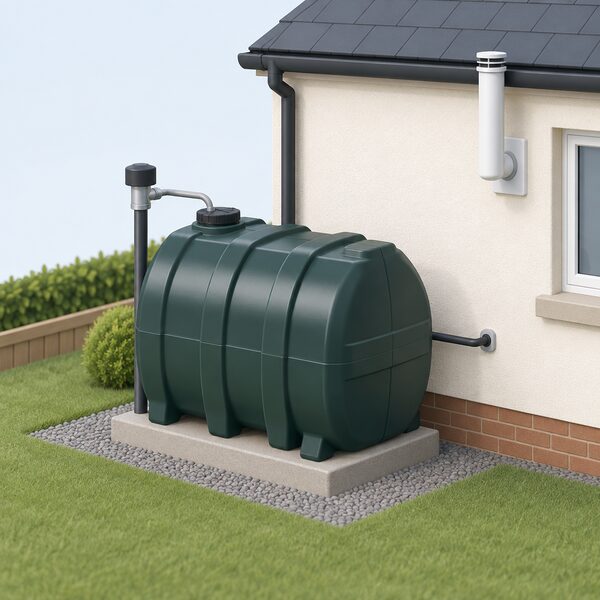
The dependence that remains is worth naming. A replacement boiler, whether funded by a grant or paid for outright, burns a fuel that is bought from a supplier. In Northern Ireland that is frequently oil, delivered by tanker, priced by a market the household does not set, and stored on the property. A grant lowers the capital cost of the appliance; it does not lower the running cost, and it does not change where the fuel comes from. The Home Heating Oil Scheme in Northern Ireland is the separate support that exists for households using oil as their primary heating source, and it is open to households who use oil as their primary source of heating, are resident in Northern Ireland, and are in receipt of a qualifying benefit or have an annual income of less than £30,000 net of allowable deductions10.
Other routes exist alongside Affordable Warmth. The Northern Ireland Sustainable Energy Programme funds energy efficiency measures for priority group customers, including homes without existing heating or with electric, solid fuel, LPG or old oil fired systems, and it treats age, disability or chronic illness, rurality and the property's SAP rating as intensifying characteristics11. The Northern Ireland Sustainable Energy Programme is funded through a levy and administered separately from the Department's grant schemes.
For households outside Northern Ireland looking at the equivalent support in Great Britain, the Boiler Upgrade Scheme is a different instrument entirely: it provides upfront capital grants of up to £7,500 towards replacing fossil fuel heating systems with a heat pump or biomass boiler, and it operates in England and Wales13. It is not available in Northern Ireland, and it funds low carbon heating rather than a replacement fossil fuel boiler. The Boiler Upgrade Scheme is the closest thing in Great Britain to a national boiler grant, and its existence is one of the clearest illustrations of how far Northern Ireland's support has diverged since 2023.
The wider picture for Northern Ireland households is set out in the guide to home energy across the UK nations and in the Northern Ireland fuel poverty strategy. The Affordable Warmth Scheme in Northern Ireland carries the full eligibility detail, and the Northern Ireland housing stock and EPC ratings page sets out what the housing stock looks like. For households weighing up what to do with an old boiler, the comparison of oil and gas heating in Northern Ireland covers the fuel question directly.
Sources15 cited
- Closure of Boiler Replacement Scheme, Department for Communities, 2023-09-21
- Northern Ireland Housing Statistics 2023-24, Northern Ireland Statistics and Research Agency, 2024-09-25
- Affordable Warmth Scheme, Northern Ireland Housing Executive, 2026-09-17
- Research Briefing CBP-9585, House of Commons Library, 2026-05-13
- NISEP Framework Document, Utility Regulator, 2009-09
- Minister Hargey announces improvements to Affordable Warmth eligibility criteria, Department for Communities, 2021-06-09
- Changes to Affordable Warmth Scheme, Department for Communities, 2023-09-08
- Change in delivery of Affordable Warmth Scheme, Department for Communities, 2023-06-02
- Warm Healthy Homes Fund consultation, Department for Communities, 2026-05
- Home Heating Oil Support Scheme, Department for Communities, 2026-09-17
- NISEP List of Schemes 2026-27, Utility Regulator, 2026-04
- Stay Warm at Winter, Belfast City Council, 2026-09-20
- Apply for the Boiler Upgrade Scheme, GOV.UK, 2026-09-17
- Boiler Upgrade Scheme, Find Government Grants, 2026-09-18
- Boiler Upgrade Scheme: grant categories and values, GOV.UK, 2026-07-21
 Closed Energy PoliciesIf a scheme you used has closed, do you still get paid?
 Check Which Energy Grants ApplyWhich energy grants can you actually get right now, and which have closed?
 Housing Stock Data for NIMost homes in Northern Ireland heat with oil, so why are the grants and help different from the rest of the UK?
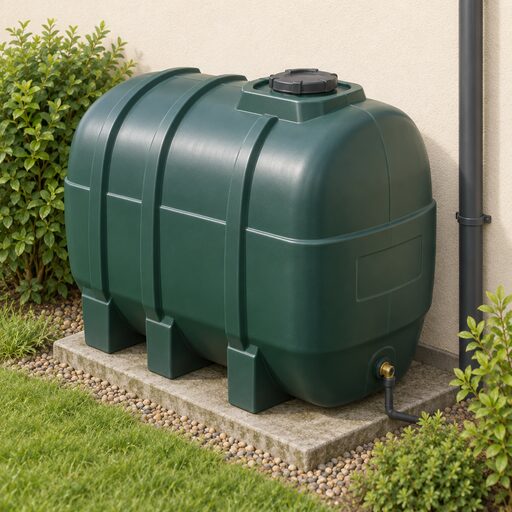 Fuel PovertyWhy does Northern Ireland have such a high rate of fuel poverty, and how many households are affected?
 Home HeatingWhy do so many homes in Northern Ireland run on heating oil, and will that ever change?
 Building RegulationsReplacing a boiler or heating system usually needs building regulations approval, and the rules differ across England, Scotland, Wales and Northern Ireland.