In this guide
Public charging in the UK is not one network but several, and the differences between the nations are structural rather than cosmetic. As of 1 July 2026 there were 121,171 public EV chargers in the United Kingdom, of which 12% were rated rapid, meaning 50kW to less than 150kW1. Scotland had 231.6 chargers per 100,000 population and 59.1 rapid or above chargers per 100,000, while Northern Ireland had 60.0 and 19.3 respectively1. That gap is the single most important fact for a householder weighing up an electric vehicle outside the south east of England.
The reason the gap exists is partly geography and partly governance. Non-motorway charge points in Scotland are operated by ChargePlace Scotland, a public charging network, and Ofgem has recorded that the public charging experience is significantly different in Scotland to the rest of Britain, with a greater variety of charge point operators and processes in Great Britain outside Scotland2. Wales and Northern Ireland have neither a single national network of that kind nor the charger density, and Northern Ireland currently has the fewest public EV charge points per capita of any of the UK nations3.
For a household, the practical question is what charging at home covers and what it does not. Home charging removes most day to day dependence on a public network, but it does not remove dependence on the grid, on a supplier, or on the electricity price in your region. Public charging is what remains for longer journeys, for homes without off-street parking, and for the rural and island areas where provision is thinnest.
How public EV charging differs across Scotland, Wales and Northern Ireland
The three nations diverge on density, on who runs the network, and on how quickly provision is growing. Scotland leads on both measures in the July 2026 statistics, with 231.6 total chargers and 59.1 rapid or above chargers per 100,000 population1. Northern Ireland trails on both, at 60.0 and 19.31. A year earlier, in the July 2025 statistics, Northern Ireland recorded 35.8 devices per 100,000 population and 9.8 devices at 50kW and above per 100,000, against Wales at 112.4 and 24.07. The two datasets use different measures, so they are not directly comparable, but both point the same way: Northern Ireland is the least served of the four nations.
Growth is also uneven. Between 1 April and 1 July 2025, Northern Ireland recorded the smallest quarterly increase in charging devices at 1.8%, and a decrease of 1.1% in devices at 50kW and above7. A network that is not adding rapid capacity is a network where a householder cannot assume that a long journey will be straightforward.
The Committee on Climate Change has stated plainly that Northern Ireland currently has the fewest public EV charge points per capita of any of the UK nations3. That is an independent assessment, not a government target, and it is the clearest single statement of the problem.
Wales sits between the two. The Welsh Government's own 2020 charging strategy consultation accepted that Wales was behind England and Scotland in terms of the number of chargers available and electric vehicle ownership8. That was a self-assessment made at the point the strategy was written, and it set the direction for the funding and building regulations work that followed.
Scotland: ChargePlace Scotland and a national network model
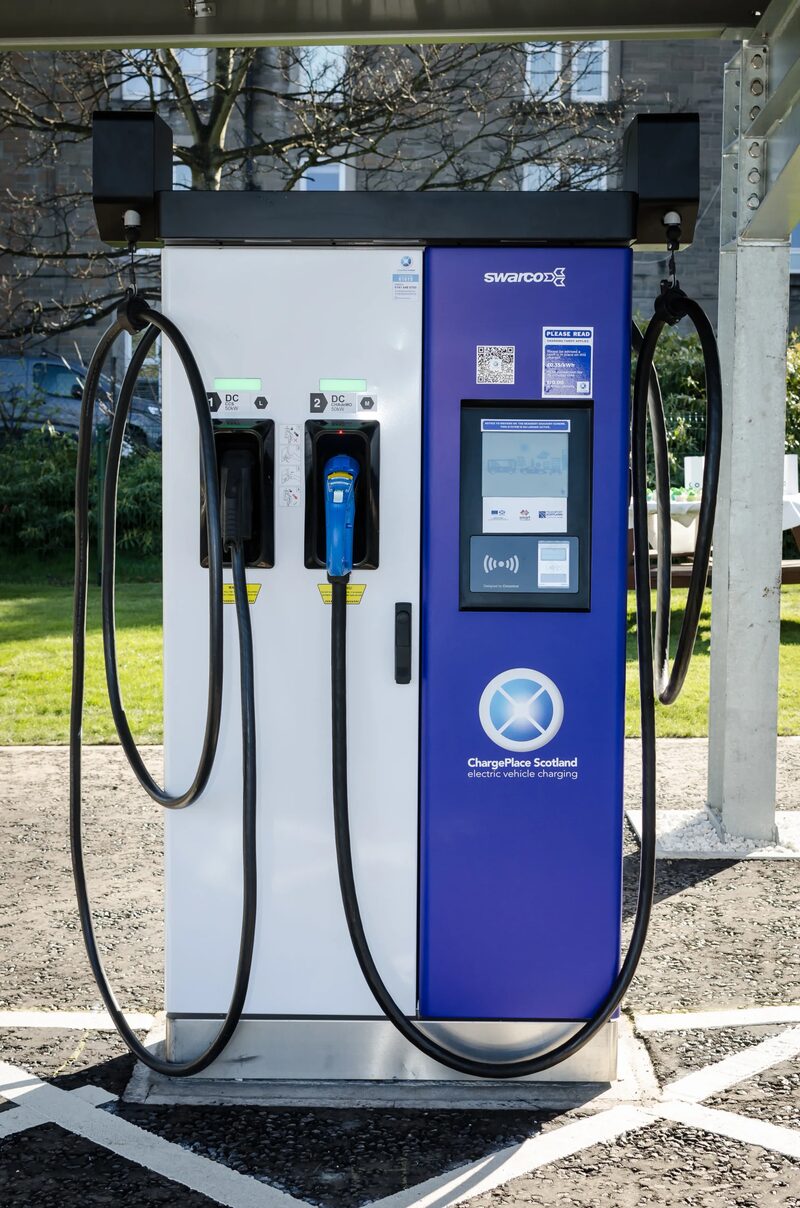
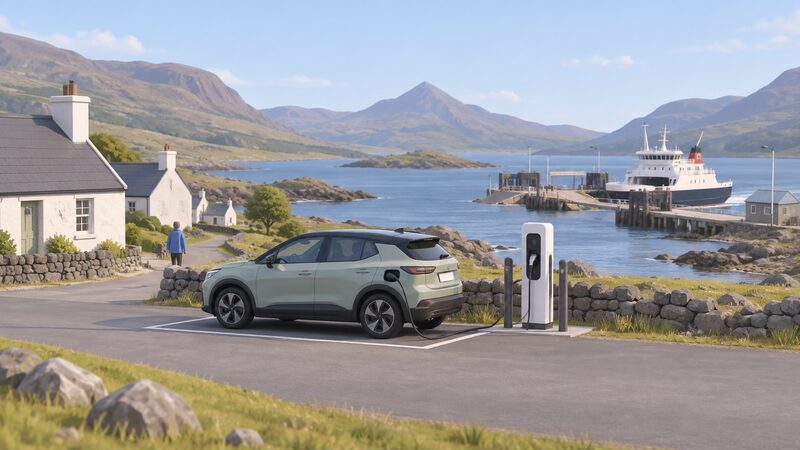
Scotland's distinguishing feature is that its non-motorway charging sits on a single public network. Non-motorway charge points in Scotland are operated by ChargePlace Scotland, a public charging network2. That is unusual in Great Britain, where Ofgem found a greater variety of charge point operators and processes2. For a driver, one network means one account, one app and one set of processes for most non-motorway charging north of the border.
The network was built with public money attached to a condition. The Scottish Government's Local Authority Installation Programme offered funds to all local authorities in Scotland with a condition of the grant that chargepoints are on the ChargePlace Scotland network10. That condition is what produced a single network rather than a patchwork, and it is the mechanism by which a devolved government shaped provision that is otherwise a market.
The Scottish Government has stated that two thirds of public EV charging in Scotland is already funded and delivered by the private sector11, and that by the end of 2024, with private sector investment fuelling rapid growth, over half of all public EV charging in Scotland was owned and funded by the private sector6. Those two statements describe the same shift at different points: the public network is no longer the main source of new capacity. The Scottish Government also states that its funding has enabled the delivery of 6,000 public charge points11.
Scotland's density advantage is real but it is not evenly spread. The 231.6 chargers per 100,000 population is a national figure, and the rural and island picture is covered below.
Wales and Northern Ireland: coverage, key routes and expansion
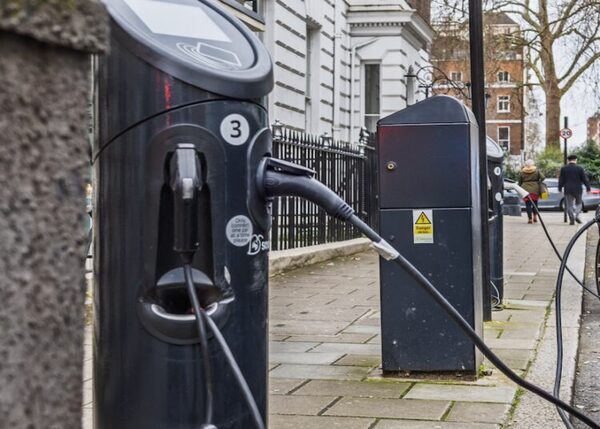
Wales has pursued its expansion through funding and through building regulations rather than through a single network. The Welsh Government allocated £30m to be spent by 202510. Its charging strategy set an ambition of installing on average one charge point for one in every three electric vehicles that cannot charge at home, across on-street locations in villages, towns and cities in Wales8. That ratio is a planning target, not a record of delivery, and it is the clearest statement of how the Welsh approach differs: it is aimed specifically at households without off-street parking.
Wales has also moved on the building stock. The Welsh Government consulted on draft amendments to Building Regulations in Wales to ensure electric vehicle charging points are included in new residential buildings, new non-residential buildings, and buildings undergoing major renovations or material change in use where car parking is part of the development12. Separately, Welsh public charge points must be added to the National Chargepoint Registry13. That registry requirement matters to a householder because it is what makes a chargepoint findable in mapping tools rather than only in the operator's own app.
Northern Ireland's network has a different structure again. All public chargepoints in Northern Ireland were operated and maintained by a single private provider, Electricity Supply Board (ESB), which was in the process of upgrading older chargepoints10. A single provider is simpler to navigate but concentrates risk: the pace of upgrade and expansion rests with one company rather than with competing operators.
Northern Ireland also has a route for households that cannot charge on their own property. If you live in Northern Ireland, own an electric vehicle and need a way to charge it at home across a pavement, you can apply for electric vehicle cross-pavement charging14. That is a specific Northern Ireland provision and it addresses a problem that on-street charging grants address elsewhere.
How many chargepoints the UK has, and where they are
The headline UK figure is 121,171 public EV chargers as of 1 July 2026, of which 12% were rated rapid at 50kW to less than 150kW1. That is a substantial increase on the over 71,000 public chargepoints recorded in December 202416. The growth is real, and it is the main reason the charging picture has changed faster than most households expect.
The distribution is the problem. In England and Wales, 83.3% of public EV chargers were located in urban areas, compared to 82.4% of the population that lives there, and 16.7% were in rural areas against 17.5% of the population1. On those figures rural areas are only slightly under-served relative to population, but population share is the wrong benchmark for charging: a rural household drives further and has less alternative transport, so its need per head is higher than an urban household's.
England alone has over 50 chargepoint operators and charging networks10. That fragmentation is the counterpart to Scotland's single network, and it is what Ofgem was describing when it found a greater variety of operators and processes in Great Britain outside Scotland2.
The Committee on Climate Change modelled the requirement for the major roads network: the number of rapid chargers located near the major roads network needs to expand from 460 in 2016 to 1,170 by 2030, and overall nearly 29,000 charging points are needed across Great Britain by 2030 to meet future EV charging needs17. Those are modelled requirements, not forecasts of what will be built.
| Measure | Figure | Date | Source |
|---|---|---|---|
| UK public EV chargers | 121,171 | 1 July 2026 | 1 |
| Share rated rapid (50kW to under 150kW) | 12% | 1 July 2026 | 1 |
| Scotland, chargers per 100,000 population | 231.6 | 1 July 2026 | 1 |
| Scotland, rapid or above per 100,000 population | 59.1 | 1 July 2026 | 1 |
| Northern Ireland, chargers per 100,000 population | 60.0 | 1 July 2026 | 1 |
| Northern Ireland, rapid or above per 100,000 population | 19.3 | 1 July 2026 | 1 |
| North East England, rapid or above per 100,000 population | 37.1 | 1 July 2026 | 1 |
| Average distance between charging stations | 3.8 miles | 25 June 2025 | 4 |
Rural and island areas: the risk of being left behind
Rural provision is thinner than urban provision, and the gap is larger than the headline percentages suggest. In England, the rural classification with the largest proportion of charging devices was rural village and dispersed, at 7.8% of all devices, as of 1 July 20257. That is a single classification holding under a tenth of the national total.
The reasons are structural rather than a matter of will. Charging requirements differ between regions, determined by local parking arrangements, commuting distances, expected use of chargers and existing electricity grid capacity9. In a rural area, all four of those factors work against rapid deployment: more off-street parking but longer distances, lower expected use per charger, and weaker grid capacity at the point where a charger would go.
Scotland's rural definition is set out in the ECO4 delivery guidance, where classifications 6, 7 and 8 classify as rural areas: Accessible Rural, Remote Rural and Very Remote Rural18. Those categories matter because they are the ones used to direct support, and a household in a Very Remote Rural area is treated differently from one in a small town.
For a household in the Highlands, the islands or rural Wales, the practical position is that home charging carries more of the load than it does in a city. A home chargepoint removes the daily dependence on public infrastructure, but it does not remove dependence on the grid connection to that property, and it does not help on a long journey. The public network is what covers the journey, and in rural areas it is the part that is least developed.
Who pays for the network: public funding and private investment
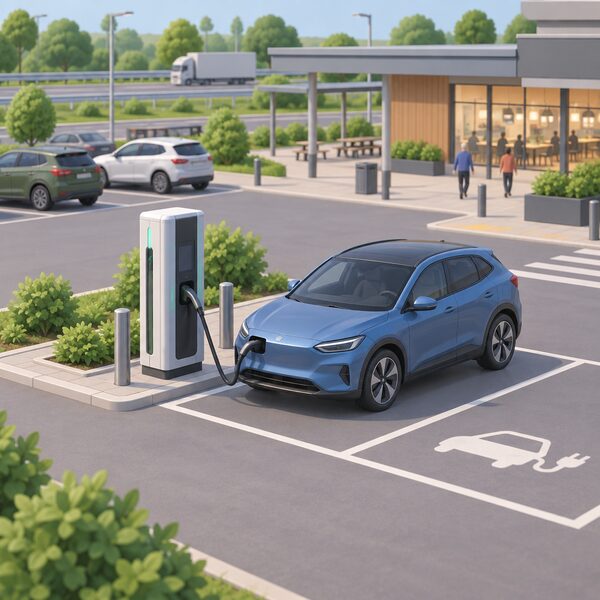
The money behind public charging has shifted from public to private, and the shift is now well advanced in Scotland. The Scottish Government has provided over £65 million since 2011 to support the development of public EV charging infrastructure, including £30 million for the EV Infrastructure Fund6. Against that, the private sector invested approximately £25 million to £35 million in expanding public EV charging infrastructure in Scotland in 2023 and between £40 million and £55 million in 20246. Private investment in a single year now exceeds the entire public programme since 2011.
At UK level, the October 2024 Budget confirmed funding of over £200 million in 2025 to 2026 to accelerate chargepoint rollout16. The Workplace Charging Scheme had delivered £6m+ in value to date as recorded in 202110. The Welsh Government allocated £30m to be spent by 202510. The Scottish Government funded more than £12 million of charging infrastructure at the point recorded in a 2021 consultation19.
Private funding has a long history in this market. POLAR was described as the UK's first privately funded nationwide electric vehicle charging network in 201120. The direction of travel since then has been consistent: public money builds the early network and sets conditions, private money scales it.
For a household, the funding mix determines what kind of network exists. A publicly funded network built on a grant condition, as in Scotland, tends to be uniform. A privately funded network tends to be concentrated where usage is highest, which is why motorway service areas and cities are well served and rural areas are not.
What makes a good public chargepoint: tariffs, payment and access
The features that matter to a driver are whether a chargepoint is findable, whether it takes a payment method they hold, and what it costs. On findability, Welsh public charge points must be added to the National Chargepoint Registry13. A chargepoint that is not on a registry is effectively invisible to route planning tools.
On cost, the position has changed substantially since the early network. Most public chargepoints in Scotland were currently free to use at the point recorded in 2021, and all public chargepoints in Northern Ireland were currently free to use at the same point10. Those statements describe a period when public charging was funded as an incentive rather than as a service, and they should not be read as the current position.
On access for households without driveways, the grant structure is the relevant fact. The Electric Vehicle Chargepoint Grant for Households with On-Street Parking requires the property to be located in England, Wales, Scotland or Northern Ireland22. The equivalent grant for residential landlords requires the property to be located in England, Wales, Scotland or Northern Ireland23. Both are UK-wide in extent, which means the on-street charging problem is addressed by a reserved grant rather than by devolved provision.
The ratio of vehicles to chargers has been a long-standing concern. The Society of Motor Manufacturers and Traders recorded a ratio of 1:30 electric cars to standard public chargers in the south of England as of 31 December 202124. That figure is dated and regional, and it illustrates the pressure that charger rollout has been under rather than the position today.

Smart charging, booking systems and monitoring the network
Smart charging depends on smart metering, and smart metering is not uniform across the UK. The smart meter rights and expectations guidance applies to England, Scotland and Wales25. Northern Ireland sits outside that framework, and the Consumer Council has stated that initial installations of smart electricity meters are expected to begin in early 202826. A household in Northern Ireland therefore cannot assume that time-of-use charging tariffs, which depend on a smart meter, will be available on the same timetable as in the rest of the UK.
Where smart metering does apply, the legislation has moved to align treatment across nations. The 2023 regulations on the installation of energy-saving materials align the treatment of the supply of installation of energy-saving materials in Northern Ireland with that in England and Wales and Scotland27. Alignment of this kind reduces the administrative differences that would otherwise make a UK-wide charging product harder to offer.
The consultation record shows that cross-border consistency is a recognised concern. Respondents to the Scottish Energy Efficiency Programme consultation raised the need to minimise differences between the schemes in Scotland, England and Wales, particularly in relation to administration and reporting arrangements, to minimise costs to suppliers and not impact on their competitiveness28. That was an energy sector respondent's view recorded in 2017, and it describes the pressure that pushes toward uniformity.
Monitoring the network is the weakest link. A chargepoint that is listed but not working is worse than one that is absent, because it costs a journey. The registry requirements in Wales and the single-network model in Scotland both make monitoring more tractable than a fragmented market does, but neither guarantees that a given unit is operational when a driver arrives.
Grants and support: the Workplace Charging Scheme across all four nations
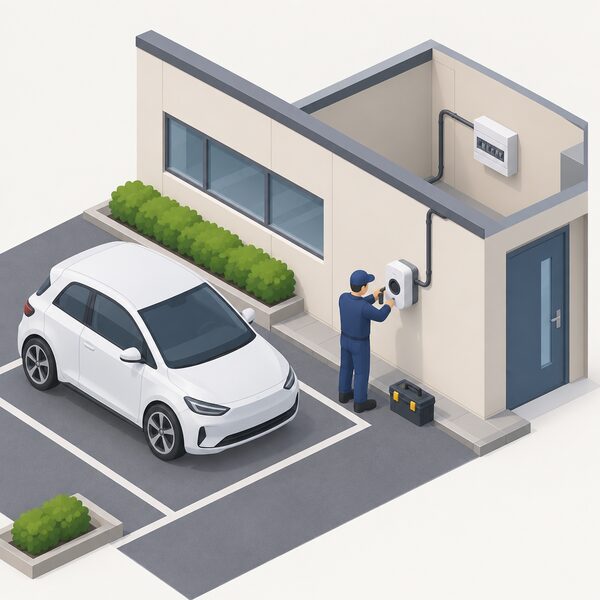
The Workplace Charging Scheme is the main UK-wide grant for charging infrastructure, and it applies in all four nations. It is available in England, Wales, Scotland and Northern Ireland; institutions in the Channel Islands or the Isle of Man are not eligible5. It covers up to 75% of the total costs of the purchase and installation of EV chargepoints including VAT, capped at £500 per socket5. The scheme provides support for organisations towards the cost of installing up to 40 electric vehicle chargepoint sockets at their sites29.
Delivery is substantial. Workplace charging grant schemes have funded 85,547 installations since 2016, of which there were 12,489 in the last 12 months, as of 1 July 202630. The statistics on charging devices funded through grant schemes are published as official statistics in development, which means the figures carry a lower status than fully accredited official statistics31.
Northern Ireland has additional grant routes. The Department for Infrastructure states that DfT and OZEV have numerous grants available in Northern Ireland towards the installation of EV charge points and infrastructure5. That includes the Electric vehicle chargepoint grant for renters and flat owners, which has territorial extent in Northern Ireland5.
| Scheme | Extent | Support | Source |
|---|---|---|---|
| Workplace Charging Scheme | England, Wales, Scotland, Northern Ireland | Up to 75% of purchase and installation including VAT, capped at £500 per socket, up to 40 sockets | 5 |
| Electric Vehicle Chargepoint Grant for Households with On-Street Parking | England, Wales, Scotland, Northern Ireland | Grant for households without off-street parking | 22 |
| Electric vehicle chargepoint grant for residential landlords | England, Wales, Scotland, Northern Ireland | Grant for landlords | 23 |
| Electric vehicle chargepoint grant for renters and flat owners | Northern Ireland | Grant for renters and flat owners | 5 |
Planning rules and permitted development for chargepoints
Planning and building rules for chargepoints are devolved, and the differences are material. The Planning Portal's EV charging guidance relates to the planning regime for England, and it states that the policy in Wales may differ32. A householder in Wales therefore cannot rely on English permitted development guidance.
Wales has been moving toward mandatory provision in new buildings. The Welsh Government consulted on draft amendments to Building Regulations in Wales to ensure electric vehicle charging points are included in new residential buildings, new non-residential buildings, and buildings undergoing major renovations or material change in use where car parking is part of the development12. If made, those amendments would put charging provision into the building standards rather than into a grant scheme.
Scotland has taken a comparable route through its building regulations. The Building (Scotland) Regulations from 5 June 2023 are cited as an example of devolved regulations with a similar effect to the English Part S Regulations23. That date matters because it is the point from which chargepoint installation in certain new and renovated buildings became a mandatory requirement rather than an optional one, which in turn excludes those installations from grant funding.
The UK-wide consultation on solar on car parks and electric vehicle charging applies to England, Northern Ireland and Wales33. Its stated scope is electric vehicle charging infrastructure, planning and the UK's wider energy security and net-zero commitments33. That framing is worth noting: charging infrastructure is treated as an energy security question, not only a transport one.
For a household, the practical consequence is that the rules that apply to a home chargepoint installation depend on which nation the property is in, and in Wales and Scotland the building regulations route has been used to make provision mandatory in defined circumstances. The planning pages for each nation set out the detail.
Where the household's independence ends
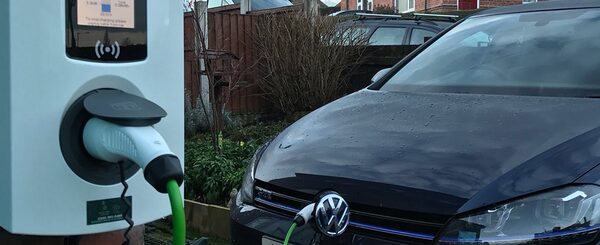
Home charging is the part of EV ownership that a household controls. A chargepoint on a driveway or in a garage draws from the grid connection to that property, and the electricity comes from a supplier at the regional price. The Energy Price Cap level for Northern Scotland for 1 October to 31 December 2025 was £212.04 at nil consumption and £1,010.86 at 3,100 kWh on a single-rate tariff21. Regional price differences of that kind are outside a household's control.
The dependence that remains is therefore threefold. On the grid, because a home chargepoint is only as reliable as the connection to the property. On a supplier, because the price is set by the market and the cap. And on a public network, because any journey beyond the vehicle's range depends on infrastructure the household does not own.
The public network itself is unevenly governed. Scotland's non-motorway charging sits on a single public network2, England has over 50 operators and networks10, Northern Ireland's public chargepoints were operated by a single private provider10, and Wales requires charge points to be added to the National Chargepoint Registry13. Each model produces a different experience for a driver and a different set of risks.
The direction of travel is toward more private funding and more chargers. The Scottish Government has stated that two thirds of public EV charging in Scotland is already funded and delivered by the private sector11, and UK funding of over £200 million was confirmed for 2025 to 202616. What that does not resolve is the rural gap, which is driven by grid capacity and expected usage rather than by the availability of capital.
"the charging infrastructure for EVs needs to be deployed rapidly and at scale"
Sources33 cited
- Public electric vehicle charging infrastructure statistics, 1 July 2026, GOV.UK, 1 July 2026
- Phase 1 EV publication, Ofgem, 6 July 2021
- Northern Ireland's fourth carbon budget, Committee on Climate Change, 19 March 2025
- Electric vehicle charging, Society of Motor Manufacturers and Traders, 25 June 2025
- Electric vehicle chargepoint and infrastructure grants, Department for Infrastructure, 18 September 2026
- Scotland's Climate Change Plan 2026 to 2040, Scottish Government, 6 November 2025
- Electric vehicle public charging infrastructure statistics, July 2025, GOV.UK, July 2025
- Electric vehicle charging strategy consultation document, Welsh Government, 2 December 2020
- Electric vehicle charging infrastructure and planning, Business, Energy and Industrial Strategy Committee, 20 September 2026
- Electric vehicle charging market study final report, GOV.UK, 23 July 2021
- Scotland's Climate Change Plan 2026 to 2040, Scottish Government, 6 November 2025
- Electric vehicle charging in residential and non-residential buildings, Welsh Government, 6 September 2024
- Electric vehicle infrastructure national standards, Welsh Government, June 2023
- Apply for electric vehicle cross-pavement charging, nidirect, 17 September 2026
- Barcud Solar Panel Installation Scheme specification, Sell2Wales, 15 June 2026
- Accelerating to net zero: responding to the CCC progress report, GOV.UK, 2024
- Plugging the gap: assessment of future demand for Britain's EV public charging network, Committee on Climate Change
- ECO4 delivery guidance, Ofgem, 3 February 2023
- Scottish building regulations: proposed changes to energy standards, Scottish Government, 23 July 2021
- Chargemaster announces launch of UK's first privately funded nationwide EV charging network, Society of Motor Manufacturers and Traders, 20 July 2011
- Energy price cap levels, 1 October to 31 December 2025, Ofgem, 2025
- Electric vehicle chargepoint grant for households with on-street parking, Find government grants, 17 September 2026
- Electric vehicle chargepoint and infrastructure grants for landlords, Find government grants, 18 September 2026
- UK automotive calls for EV chargepoint mandate governed by independent regulator, Society of Motor Manufacturers and Traders, 31 December 2021
- Smart meters: your rights and expectations, GOV.UK, 8 August 2025
- Smart electricity meters fact sheet, Consumer Council for Northern Ireland, April 2026
- The Installation of Energy-Saving Materials (Rate of Value Added Tax) Order 2023, legislation.gov.uk, 28 March 2023
- Analysis of responses to the consultation on Scotland's energy, Scottish Government, 14 November 2017
- Home and business grants, schemes and advice, East Herts Council, 17 September 2026
- Grant schemes for electric vehicle charging infrastructure statistics, 1 July 2026, GOV.UK, 1 July 2026
- Electric vehicle charging device grant scheme statistics, October 2025, GOV.UK, 26 November 2025
- Electric vehicle charging: building regulations, Planning Portal, 17 September 2026
- Solar on car parks and electric vehicle charging, GOV.UK, 7 May 2025
 Public EV ChargingWhat does public charging really cost when you cannot plug in at home, and how do you pay for it?
 Tariffs in ScotlandWhy do Scottish electricity bills differ from the rest of Great Britain, and why do standing charges cost more in the north?
 Microgeneration UptakeScotland has more solar panels and heat pumps per household than England, while Wales has built larger solar schemes and Northern Ireland lags behind.
 The Full EV Charging GuideCharging an electric car at home usually means a wallbox, but do you need one, and what will it cost to fit and run?
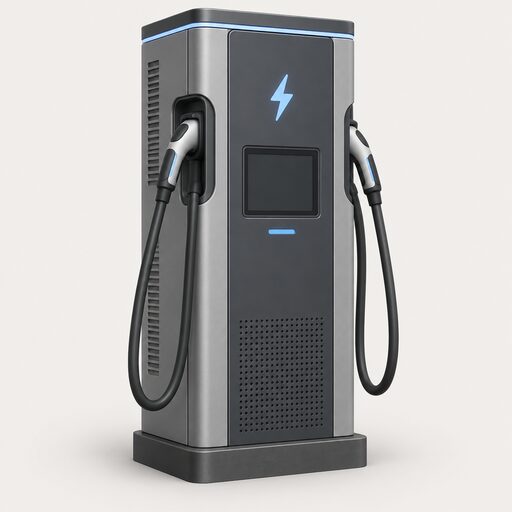 EV Charging Device StatisticsHow many public charging points are there in the UK, and why do different sources give different totals?
 Electric Vehicle TariffsCharging an electric car at home can cost far less overnight, but only on special electricity plans.