

In this guide
The Home Energy Efficiency Programmes for Scotland Area Based Schemes, usually shortened to HEEPS:ABS, are Scottish Government funded energy efficiency projects that councils design and run in neighbourhoods with high levels of fuel poverty. The programme exists to develop and deliver energy efficiency work, mainly solid wall insulation, in areas with high levels of fuel poverty, and the Scottish Government has maintained its annual investment in local ABS projects at £64m in 2025/26, the same level as in 2024/251. The area-based schemes are designed and delivered by councils with local delivery partners, and they target fuel-poor areas to provide energy efficiency measures to a large number of Scottish homes2.
The distinctive feature of HEEPS:ABS is that it is geographic rather than personal. Grants for insulation measures are non means tested3. A council selects streets, blocks and estates using evidence about the housing stock and local deprivation, then offers help to the eligible owner occupied and private landlord owned properties inside that boundary. Over the life of the programme, ABS projects have benefitted over 100,000 households living in or at risk of fuel poverty across Scotland4.
For a household, the schemes reduce the energy a home needs rather than changing where that energy comes from. Insulation lowers demand permanently and without a contract, which is the most durable form of independence available to most homes. What remains is dependence on the council's annual funding round, on the Scottish Government's budget, and, for heating and microgeneration measures added under the whole-house approach, on the grid and on a supplier as before.
What Area Based Schemes are and who runs them
The purpose set out by the Scottish Government is to develop and deliver energy efficiency programmes, mainly solid wall insulation, in areas with high levels of fuel poverty1. Area Based Schemes are delivered by local authorities targeting fuel poor areas and communities7. The Scottish Government does not knock on doors itself: it funds the schemes, issues the guidance under which project areas are identified, and leaves design and delivery to the 32 councils and their partners8.
Those partners matter to how a scheme feels on the ground. Area Based Schemes are described as local schemes which are designed and delivered by councils, often with utility companies and other local partners such as housing associations9. In Glasgow, for example, the scheme is supported by funding from the Scottish Government in partnership with a range of advice providers and energy companies, and supported by the city council and other local authorities8. A household typically deals with a council officer or a managing agent, not with a national body.
The aims the programme works to are broader than insulation alone. The objectives of the area-based approach are to upgrade Scotland's housing stock, tackle fuel poverty, reduce carbon emissions, lever in Energy Company Obligation funding, support the local economy and sustainable local economic development, and provide home owners and landlords with access to grant funding which meets the Scottish Government's future minimum energy efficiency standards8. Levering in supplier money is central: the scheme is designed to attract obligated energy company spend into streets that commercial schemes would otherwise skip.
From HEEPS to Energy Efficient Scotland and today's Area-Based Scheme
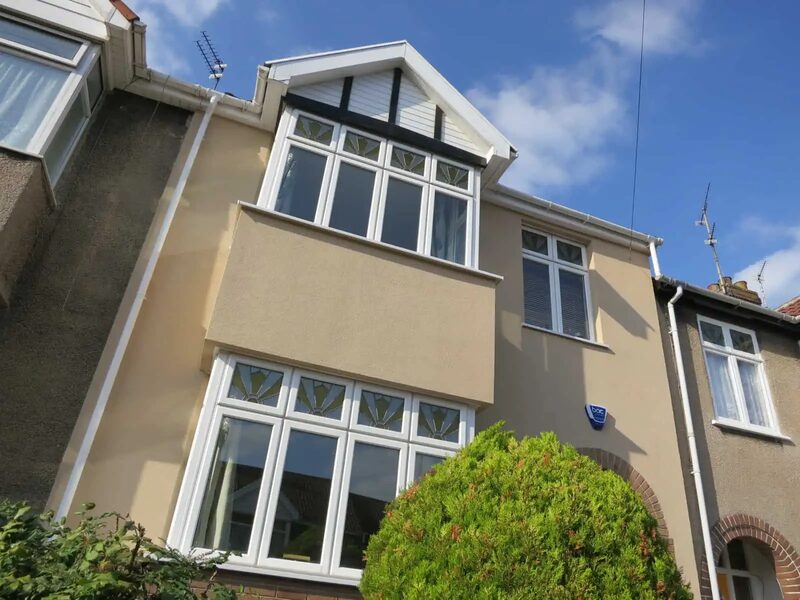
The naming has changed more than the substance. The Scottish Government's Home Energy Efficiency Programme for Scotland: Area Based Schemes was introduced in April 2013 as a successor to the Universal Home Insulation Scheme, supported by funding from the Scottish Government and delivered by local authorities, using an area-based approach to deliver insulation measures to owner-occupied and private landlord-owned properties6. Energy Efficient Scotland: Area Based Schemes 2020 was in turn a successor to the HEEPS programme8. More recent council material uses the label Heat and Energy Efficient Scotland: Area Based Scheme, while Scottish Government publications now refer simply to Area Based Schemes within the Heat in Buildings framework10.
The practical consequence is that a householder may meet four names for what is recognisably the same funding stream, depending on which council page or which year's report they are reading. The underlying model, national money, local design, geographic targeting, non means tested insulation grants, has held throughout.
| Name used | Period or context | Delivery |
|---|---|---|
| Universal Home Insulation Scheme | predecessor to ABS6 | local authorities6 |
| HEEPS: Area Based Schemes | introduced April 20136 | local authorities6 |
| Energy Efficient Scotland: Area Based Schemes | 2020 programme, successor to HEEPS8 | councils with partners8 |
| Area Based Schemes under Heat in Buildings | current Scottish Government reporting1 | councils with local delivery partners2 |
Who qualifies: households in or at risk of fuel poverty
Area Based Schemes are for private homeowners and landlords in Scotland, to help with the cost of certain energy efficiency measures11. The programme has delivered to owner occupied and private landlord owned properties since its inception8. Social housing is improved through other routes.
The depth of support differs by tenure. Local schemes meet most or all of the cost of improvements for owner occupiers and eight out of ten private landlords5. A landlord should therefore expect a contribution; an owner occupier in a targeted area may not face one at all, depending on the measure and the council's scheme rules.
Councils layer their own conditions on top. In Argyll and Bute, to qualify an applicant must be a homeowner or a privately rented landlord or tenant and be in Council Tax Band A, B or C, properties must be occupied and lived in on a full-time basis and be the main place of residence, and second home and holiday let properties are not eligible3. Those specific conditions belong to that council's scheme and other authorities set their own.
The Scottish Government has also said it would seek to ensure that eligibility criteria for Area Based Schemes and the new scheme replacing Warmer Homes Scotland are aligned with the updated fuel poverty definition and target those that need it most12. That is a statement of direction rather than a rule a household can test itself against today. For the definition itself, see fuel poverty in Scotland.
Area-based targeting, not means testing
The scheme offers non means tested grants for insulation measures3. Nobody asks for benefit letters or payslips for the insulation offer. The test is where the home is.
Councils identify areas in need of energy efficiency upgrades through data analysis and engagement with local communities, including EPC ratings, fuel poverty statistics, community feedback and the Scottish Index of Multiple Deprivation, and prioritise areas where improvements can have the greatest impact on reducing fuel poverty and carbon emissions11. Project areas are identified in line with the guidance issued by the Scottish Government8. Current Scottish Government reporting describes the model as enabling local authorities to design and deliver energy efficiency programmes in areas with high levels of fuel poverty and vulnerable families10.
Targeting by area has a known weakness, and the Scottish Government's own retrofit review names it. Archetype-based solutions can be useful for area-wide schemes and high-level planning, but recommendations are generic and do not account for the unique features of individual homes and how they are used by occupants13. A street-level scheme designed around a dominant construction type will fit some homes in that street better than others, and a household outside the boundary may be in deeper fuel poverty than one inside it.
What gets funded: insulation first, then whole-house measures
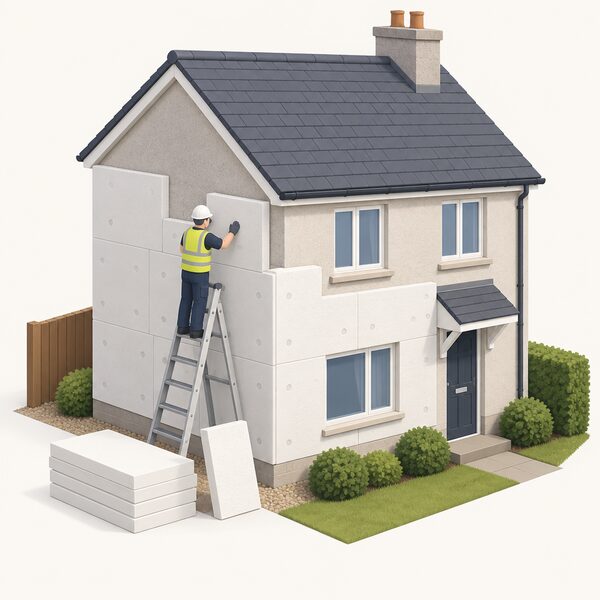
The primary focus is insulation measures for 'hard to treat' properties, but the programme includes clean heating and microgeneration measures as part of a 'whole house' approach14. Current reporting repeats that framing: the programme emphasises insulation for hard to treat properties while including investment in clean heating and microgeneration as part of a whole house approach10.
In practice that means solid wall and hard-to-treat cavity wall insulation dominate. West Lothian describes its scheme as primarily an insulation programme, delivering solid wall and hard-to-treat cavity wall insulation, focused on homes that are hard to treat due to non-standard construction11. These are the properties that standard cavity fill and loft top-ups cannot reach and that supplier-funded schemes alone have historically left behind.
The scope has widened deliberately. The Scottish Government has said the increased funding allowed it to increase the scope of ABS projects to provide more whole house retrofits that include zero/low carbon heating and microgeneration such as solar photovoltaics, where technically feasible and where it will help reduce fuel poverty7. The draft Heat in Buildings Strategy proposed that, as well as prioritising insulation measures, ABS would deliver an increased number of whole house retrofits to fuel poor households and adopt a 'zero emissions first' approach15.
Delivery carries technical conditions. Scheme documentation requires that insulation to tanks, cylinders or pipework be carried out in accordance with the provisions of PAS 2030/2035, specifies smoke alarms to BS EN14604:2005 and heat alarms to BS 5446-2:2003, and requires all operatives in the supply chain involved in whole house inspections, installation of energy efficiency measures or inspection activities to have Asbestos Awareness Category A training, without exception16.
West Lothian reports outcomes from previous years: households participating in the scheme experienced an average fuel bill reduction of 15%, and temperature and humidity monitoring revealed that properties maintained more stable and comfortable indoor environments after insulation upgrades11. Improvements have been made in areas including Quentin Rise and Palmer Rise, Deans, Dedridge, Knightsridge, Howden, Ladywell and Eliburn in Livingston, Mid Calder, Pumpherston, Longridge and Armadale11.
Loans towards a household contribution

Where a scheme does not meet the full cost, a contribution falls to the owner or landlord. West Lothian directs applicants to Home Energy Scotland for loan support, asking that when contacting Home Energy Scotland the applicant informs the advisor they are applying for the HEEPS:ABS loan, to ensure the correct guidance is given11. The loan sits alongside the grant rather than replacing it.
The national loan route is the Home Energy Scotland Grant and Loan Scheme, which is open to all domestic owner-occupiers in Scotland5. Enquiries about that scheme can be made by email to heesgl@gov.scot17. Loan terms, amounts and cashback levels change between funding years and are set out by the scheme itself rather than by individual councils, so the figure quoted by one authority may not be the figure available in another year. A separate, now closed route is covered on the HEEPS equity loan pilot.
How councils design and deliver a scheme
Councils decide how to run their schemes, and some share out money through local charities and community groups18. That discretion is why two neighbouring authorities can run visibly different programmes from the same national funding stream: different measures prioritised, different Council Tax band limits, different contractors, different years for the same estate.
Delivery capacity is unevenly spread. A parliamentary briefing on local authority project funding notes that larger, more experienced authorities receive the most19. Smaller and island authorities compete for the same officer time and contractor availability with fewer staff, which is one reason a household's experience of ABS depends heavily on postcode. Energy costs in Scotland's islands and remote areas sets out the wider picture.
The annual cycle shapes everything. Funding is secured each year, project areas are confirmed, letters of offer go out, and work is programmed within the financial year11. A household that misses one year's programme waits for the council to return to that area, which may not happen.
Blending with ECO and other programmes
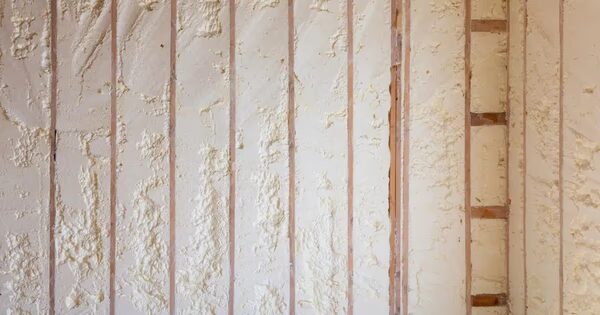
One of the stated objectives of the area-based approach is to lever in Energy Company Obligation funding8, and ABS has long been designed to pull supplier-obligation money into fuel-poor Scottish streets. But the rules on combining pots are strict, and they are set at UK level by Ofgem rather than in Scotland.
Ofgem's ECO4 delivery guidance states plainly:
"Funding for measures delivered under ECO4 cannot be blended with other government schemes or grants."
The same guidance sets out that funding from ECO4 and the Social Housing Decarbonisation Fund cannot be blended for the same measure or be included within an ECO4 project, that funding from the Boiler Upgrade Scheme and ECO cannot be blended for the same measure or be included within an ECO4 project, and that Home Upgrade Grant funding cannot be blended within the ECO4 package of measures20. Private rented sector properties are eligible under ECO4 at SAP ratings E, F and G where occupied by a member of the help to heat group or a person declared eligible by the local authority20.
In practice this means a project may sequence measures, some funded by ECO and others by ABS, rather than stacking two funds on a single measure. It also means that headline talk of "blended funding" describes a programme-level arrangement, not a household-level doubling up.
Scale and track record
The programme has been substantial and sustained rather than dramatic. Scottish Government funding of £55 million was allocated specifically for the scheme in 2013-1421. The 2016/17 and 2017/18 programmes were expected to help almost another 50,000 households improve their homes22. ABS projects have benefitted over 100,000 households living in or at risk of fuel poverty across Scotland, and the Scottish Government has said investment will continue and the schemes' reach will be extended4.
Forward commitments have been framed in the Heat in Buildings Strategy, which stated that over the next five years at least £465 million would be invested to support those in fuel poverty23. Annual investment in local ABS projects has been maintained at £64m in 2025/26, at the same level as in 2024/251.
| Figure | Period | Source type |
|---|---|---|
| £55 million allocated to the scheme | 2013-1421 | Scottish Government business case |
| almost 50,000 households expected to be helped | 2016/17 and 2017/18 programmes22 | Scottish Government route map |
| over 100,000 households benefitted | reported 20214 | Scottish Government impact assessment |
| at least £465 million for fuel poverty support | five years from 202123 | Heat in Buildings Strategy |
| £64m annual ABS investment | 2025/261 | Scottish Government scheme page |
These figures are drawn from documents written at different dates and for different purposes, so they are not a single running total and should not be added together.
Area Based Schemes compared with Warmer Homes Scotland

The two programmes are often confused because both target fuel poverty in Scotland, but they work differently. Warmer Homes Scotland is the national fuel poverty programme designed to help those living in or at risk of fuel poverty through the installation of measures such as insulation and clean heating systems14. It is available to households, owner-occupiers and some private rented sector tenants, who are living in or at risk of fuel poverty and who meet the qualifying eligibility criteria2, and it mainly supports owner occupiers while also covering tenants in private rented homes5. It operates throughout Scotland, including the islands, and improvements are recommended as bespoke packages24, with a limited offer for the private rented sector where measures are not covered by landlords' obligations24.
| Area Based Schemes | Warmer Homes Scotland | |
|---|---|---|
| Route in | council project area2 | national programme14 |
| Basis of eligibility | area targeting, non means tested insulation grants3 | living in or at risk of fuel poverty, qualifying criteria2 |
| Typical measures | solid wall and hard-to-treat cavity insulation, plus whole house measures11 | bespoke packages of insulation and clean heating14 |
| Geographic reach | selected fuel-poor areas7 | all of Scotland including the islands24 |
Making an enquiry
The starting points are the local authority and Home Energy Scotland. Home Energy Scotland provides free, independent and impartial energy advice to householders, community groups and businesses throughout Scotland8, and Scottish Government reporting describes it as a free independent advice and referral scheme10. Funded by the Scottish Government, it acts as a referral partner for ABS eligibility enquiries3.
- Check whether the council is running a project covering the property this funding year; councils hold the area lists and decide how to run their schemes18.
- Contact Home Energy Scotland for free advice and referral8, stating if the enquiry concerns the HEEPS:ABS loan so the correct guidance is given11.
- Wait for the council's formal letter of offer, which follows once that year's funding is secured11.
Related national comparisons are set out on why home energy grants differ across the four nations and the home energy across the UK nations overview.
What it means for household independence
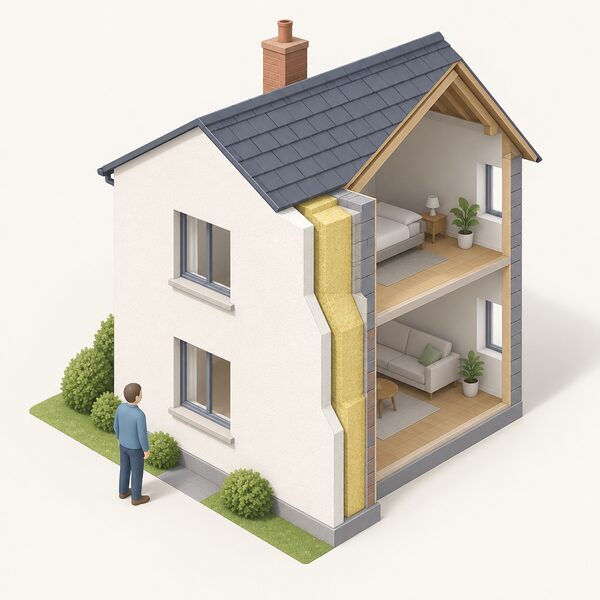
An insulated wall does not expire, cannot be switched off and does not need an app. That is the strongest independence case for HEEPS:ABS: it reduces the amount of purchased energy a home needs, and the reported average fuel bill reduction of 15% among participating households in one council area is a permanent effect of the fabric rather than a tariff11.
The dependencies are real and worth stating. Access depends on the council choosing a household's street in a given year, on annual Scottish Government funding, currently £64m for 2025/261, and on contractor capacity, which is unevenly distributed towards larger, more experienced authorities19. Where the whole-house approach adds clean heating or microgeneration, the home moves from gas to electricity and remains a grid and supplier customer10. And because grants are non means tested but area-bound3, a fuel-poor household outside the boundary gets nothing from this route, however well it would meet a national scheme's criteria.
Sources24 cited
- Area Based Schemes, Scottish Government, 2025
- Energy saving home improvements, Scottish Government, 2026
- Home energy efficiency, Argyll and Bute Council, 2026
- Heat in Buildings Strategy: Fairer Scotland Duty assessment summary, Scottish Government, November 2021
- Heat in Buildings progress report 2025: delivery programmes, Scottish Government, 2 October 2025
- Area Based Schemes committee report, Glasgow City Council, 2026
- Tackling fuel poverty in Scotland: a strategic approach, Scottish Government, 23 December 2021
- Area Based Schemes, Glasgow City Council, 8 June 2026
- Response to the Green Heat Finance Taskforce, Scottish Government, 17 December 2025
- Heat in Buildings progress report 2025: programmes, Scottish Government, 2 October 2025
- Energy Efficient Scotland Area Based Schemes, West Lothian Council, 2026
- Tackling fuel poverty in Scotland: eligibility alignment, Scottish Government, 23 December 2021
- Review of retrofit assessment in Scotland, Scottish Government, 6 June 2025
- Heat in Buildings progress report 2024: delivery programmes, Scottish Government, 10 October 2024
- Draft Heat in Buildings Strategy consultation, Scottish Government, February 2021
- Area Based Scheme technical annex, information released, Scottish Government, August 2024
- Home Energy Scotland Grant and Loan Scheme processing times, Scottish Government, 12 March 2026
- Cost of living help from your local council, GOV.UK, 2026
- Local authority delivery of energy efficiency, UK Parliament POST, 6 January 2025
- ECO4 delivery guidance version 4.0, Ofgem, 26 March 2026
- Warmer Homes Scotland business case, Scottish Government, July 2015
- Energy Efficient Scotland route map, Scottish Government, 2 May 2018
- Heat in Buildings Strategy summary, Scottish Government, October 2021
- National Islands Plan annual report 2022, Scottish Government, 31 March 2023
 Community Energy in ScotlandCommunity energy in Scotland lets you join a local scheme for cheaper, greener heat and power, or get advice and funding to make your own home warmer and cheaper to run.
 Home Energy Planning ScotlandDo you need planning permission for solar panels or a heat pump in Scotland?
 Planning Permission in ScotlandDo you need planning permission for a heat pump in Scotland?
 Energy Policy in ScotlandWho decides how your home in Scotland is heated and improved?
 Permitted Development by HomeCan you put up solar panels or a heat pump without asking the council?
 Using an Installer in ScotlandYou live in Scotland and want solar panels or a heat pump fitted.