In this guide
The Home Energy Scotland Grant and Loan Scheme offers homeowners in Scotland a grant, an interest-free loan, or a combination of both, to install clean heating systems and energy efficiency measures1. For clean heating systems such as heat pumps, grant funding of up to £7,500 is available. For energy efficiency measures such as insulation, grant funding covers up to 75 per cent of the combined cost of measures, again to a maximum grant of £7,500. On top of either, an additional £7,500 is available as an optional interest-free loan1.
An uplift of £1,500 applies to rural and island homes, to both the clean heating grant and the energy efficiency grant, taking the grant ceiling to £9,0001. The scheme rules set out a maximum combined grant of £7,500, or £9,000 where the rural uplift applies4. Taking grant and loan together, the package reaches £15,000, or £16,500 for a household qualifying for the uplift. The minimum funding that can be applied for is £5004.
The scheme launched in December 20225 and is run by Energy Saving Trust on behalf of the Scottish Government6, delivered through the Home Energy Scotland advice network. It is open to all domestic owner-occupiers in Scotland and is not means tested7. Funding operates on a first-come, first-served basis, subject to availability or until the end of the financial year, whichever is sooner8.
A grant, a loan, or both
The structure is deliberately two-part. The grant is the element that does not have to be repaid, and it is the larger lever for most households. The loan sits behind it, covering the remainder of a project cost that the grant does not reach, and it carries no interest4. Homeowners can take the grant alone, the loan alone, or the two together2.
The loan element has been described in Scottish Government policy documents as part of a wider approach of providing zero interest loans through Home Energy Scotland and the parallel Business Energy Scotland scheme. Independent analysis describes the loans as unsecured and zero interest, supporting a range of energy efficiency measures and low carbon technologies9.
For a heat pump, that means the grant of up to £7,500 is followed, where needed, by an interest-free loan of up to £7,500 for the remainder of the cost10. For households qualifying for the rural uplift the equivalent figures are a £9,000 grant plus a £7,500 loan, a maximum of £16,50011. Those totals are the headline package for a single property; they are not per measure.
For a household's energy independence, the significance is straightforward. The scheme reduces the capital barrier to leaving gas or oil for electric heat, and to cutting the fabric losses that drive demand in the first place. What it does not do is remove dependence: a heat pump moves the home from a gas supplier to an electricity supplier and the grid, and the scheme itself depends on an annual Scottish Government budget that is allocated first come, first served8.
Who qualifies: owner-occupiers in existing Scottish homes
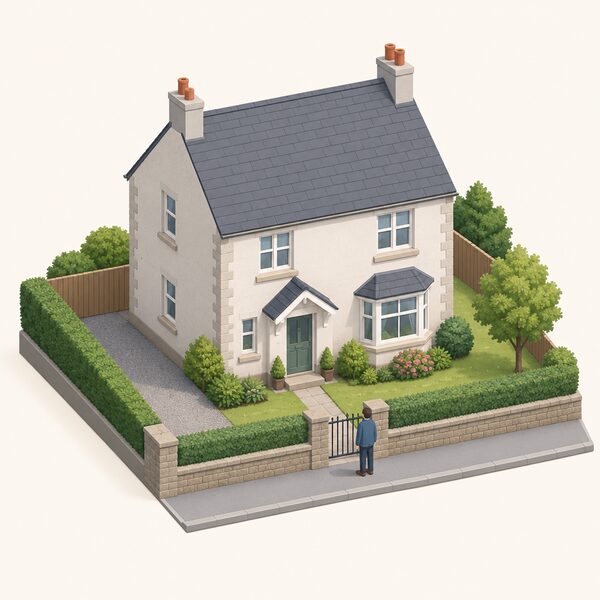
The scheme is open to all domestic owner-occupiers in Scotland7. There is no benefits test and no income threshold. That distinguishes it from Warmer Homes Scotland, which is available to households (owner-occupiers and some private rented sector tenants) who are living in or at risk of fuel poverty and who meet the qualifying eligibility criteria1.
The applicant conditions are specific:
- The applicant must own or jointly own the property as a "natural person", not a business4.
- The property must be the applicant's only or principal private residence4.
- Funding is for energy efficiency improvements, low and zero emission heat, other renewables systems or heat network connections in existing Scottish homes only4.
- All funding applications must be completed by the applicant, not by an installer acting on someone else's behalf14.
Landlords are handled separately. Scottish Government statistics describe the Home Energy Scotland Grant and Loan Scheme and the Private Rented Sector Landlord Loan Scheme as providing grant and/or loan funding directly to owner occupiers, as well as to private registered landlords for their rented properties15. Earlier scheme guidance recorded that loans were available to owner occupiers, with private landlords eligible to borrow to fund measures in a maximum of three properties16.
Eligibility for this scheme does not confer eligibility elsewhere: the rules state that applicants may be able to combine Home Energy Scotland grants and loans with other schemes and incentives, but that eligibility is not indicative of eligibility for any other programmes of support8. In some council areas, an interest-free Home Energy Scotland loan can be used to cover the customer contribution where a home is selected for a future area based scheme programme17.
What is funded: clean heat and fabric measures
The scheme provides grants and loans to install clean heat and energy efficiency measures in homes7. On the heat side that includes air, ground and water source heat pumps and biomass boilers9. Grant and loan funding is also available for costs associated with connecting to a heat network, with applications for that support having opened in December 202519.

Battery storage sits on the loan side rather than the grant side. Official council guidance describes the scheme as able to provide interest-free loan funding for energy efficiency measures or to install renewable measures such as heat pumps or battery storage, with grant funding also potentially available17. The scheme terms also contemplate energy storage system only installations, which are among the cases exempted from the usual post-installation EPC requirement21.
The exclusions from grant funding are explicit. Grant funding is not available for8:
- replacement heat pumps
- wind or hydro turbines
- warm air units
- solar water heating systems
- glazing, double or secondary
- insulated doors
"We cannot offer grant funding for replacement heat pumps."
That exclusion matters for households already on a heat pump reaching end of life, and for anyone assuming the scheme underwrites the whole renewables shopping list. Wind and hydro, the two technologies that most obviously reduce grid dependence for a rural Scottish property, are outside the grant entirely.
Grant amounts: £7,500, or £9,000 rural and island
The clean heating grant is up to £7,500 and the energy efficiency grant is up to £7,500, the latter capped at 75 per cent of the combined cost of measures1. Where a household qualifies for the uplift, £1,500 is added to each1.
| Element | Standard | With rural uplift |
|---|---|---|
| Clean heating grant | up to £7,5001 | up to £9,0004 |
| Energy efficiency grant | up to £7,500, max 75% of cost1 | up to £9,0004 |
| Optional interest-free loan | £7,5001 | £7,50011 |
| Maximum package | £15,00011 | £16,50011 |
Who counts as rural varies slightly in how the documents describe it. The Scottish Government describes the £1,500 uplift as available for remote rural and island homes, and elsewhere for rural and island homes10. Scheme guidance describes it as available to households in remote rural and island areas, as well as off-gas accessible rural areas9, and independent guidance refers to eligible rural and island postcodes12. The uplift applies to heat pump installations, heat network connections and energy efficiency grants4.
The practical effect of the 75 per cent rule on the efficiency side is that fabric work is never fully grant funded: a household always carries at least a quarter of the cost of insulation measures, whether from savings or from the loan. Clean heating grants are not expressed with that percentage cap, only the cash ceiling1.
The loan: 0% interest, repayment terms and the 1.5% fee
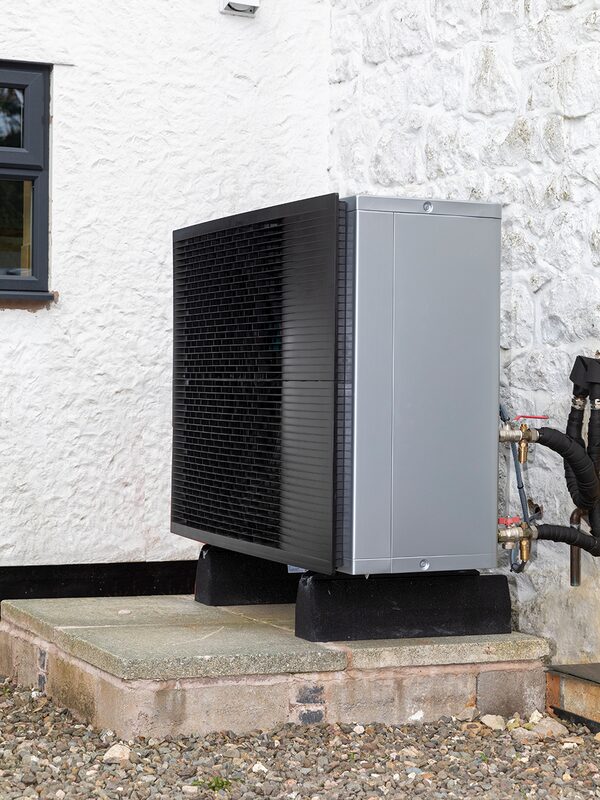
There is no interest to pay on the loan4. What there is, where loan funding is taken, is an administrative fee of 1.5 per cent of the total loan value, up to a maximum of £150 for each application3. There is no administration fee for grant-only applications4.
Repayment periods are set by the size of the loan:
| Loan value | Maximum repayment period |
|---|---|
| Under £5,000 | 5 years3 |
| £5,000 to £9,999 | 10 years3 |
| More than £10,000 | 12 years3 |
Published scheme documents word the lowest band slightly differently, as "under £5,000" in one place and "up to £4,999" in another; the periods themselves are identical.
Loans are subject to eligibility and to the scheme terms and conditions13. Scottish Government statistics give some sense of typical borrowing: for heat pump applications where the grant excluded a rural uplift, the average interest-free loan value was £4,076 in the December 2022 to March 2023 period and £5,993 in 2023/2422. The loan can also be used to pay for a pre and/or post installation Energy Performance Certificate, up to a maximum of £150, but only where that cost is not covered by a government-funded scheme4.
A loan is still a debt against the household budget, and a twelve-year commitment on a heat pump is a long one. The trade is that it converts a capital barrier into a monthly cost with no interest attached, at a time when the alternative for most households is commercial credit.
How the application works: EPC, offer, then work
The process runs in two stages. First an application is submitted to request funding before any work takes place. Once the work has been completed, a claim is submitted6. Applications can only be made using the application form provided by Home Energy Scotland23.
- Get the supporting reports. For energy efficiency measures an EPC must recommend the improvements being applied for and must be included with the application. An EPC is not required for renewable systems such as heat pumps3. Home Energy Scotland can help applicants obtain an EPC, a Home Energy Improvement Report or a Home Renewable Selector Report where they do not have one9.
- Apply. Applications are processed in order of submission date, but first come first served applies from the date a funding offer is made, not from the date of submission8. Energy Saving Trust aims to process all applications and claims within 10 working days of receiving all required documents6.
- Wait for the written offer. Work must not start until the written funding offer has been received, and funding cannot be granted retrospectively3.
- Sign. After receiving a written funding offer, the details are reviewed and the funding agreement is signed electronically within 14 days3.
- Install and claim. Post-installation, energy efficiency applicants must obtain a post-installation EPC and submit it with the claim to confirm the work4.
One point of constitutional interest: the scheme requirements are not set out in legislation or regulations. The terms and conditions are set by the Scottish Government24. The scheme therefore sits on contract and policy rather than statute, which is part of why its rules can change between financial years. The wider question of what Holyrood controls is covered under devolved and reserved energy powers.
Deadlines and payments

After signing the funding agreement, the applicant has nine months to complete all installation of the funded measures and submit a final funding claim3. Funding agreements are valid for nine months3, and Scottish Government statistics confirm the nine-month window as the current period for completing work and claiming22. The predecessor Loan and Cashback scheme allowed six months to draw down funding [22 is not the source here]; that earlier scheme is covered separately.
Payments are made within 10 working days of receiving a fully complete claim, plus an additional three to five working days for the BACS transfer4. Proof of payment must be submitted within 10 working days of receiving the funding: a bank statement or a receipt from the installer3.
For renewable measures only, up to 60 per cent of funding can be drawn down after the offer has been received and accepted and before the work is complete4. That early drawdown is not available for energy efficiency improvements, so insulation work has to be financed by the household until the claim is paid.
Processing times are published. Scottish Government statistics cover monthly data from April 2025 to January 2026, with queries directed to heesgl@gov.scot6. Older data may include applications made under the previous Home Energy Scotland Loan and Cashback Scheme that were not approved or completed before the Grant and Loan Scheme launched25.
Who runs it: Scottish Government, Energy Saving Trust, Home Energy Scotland
The money is Scottish Government money21. The scheme is run by Energy Saving Trust on the Scottish Government's behalf6, and delivered via Home Energy Scotland, a network of local advice centres covering all of Scotland, funded by the Scottish Government and managed by Energy Saving Trust27. Energy Saving Trust manages these schemes in partnership with advice providers and energy companies1.
Energy Saving Trust was awarded a new contract through a competitive tender exercise to administer and manage Scottish Government heat and energy efficiency grant and loan schemes, starting 1 December 2023, with an initial term running to November 202628. The amount paid to Energy Saving Trust for administering the scheme from December 2023 onwards has been withheld under Regulation 10(5)(e) of the Environmental Information Regulations, covering confidentiality of commercial or industrial information28.
| Contact | Detail |
|---|---|
| Home Energy Scotland phone | 0808 808 228217 |
| Opening hours | Mon to Fri 8am to 8pm, Sat 9am to 5pm17 |
| Call cost | Free from landlines and most mobile networks29 |
| Scheme email | heesgl@gov.scot6 |
Home Energy Scotland gives free, impartial advice on energy efficiency and renewable energy in Scotland29, and can help households find funding, including grants and interest-free loans from the Scottish Government14.
Where the scheme leaves a household
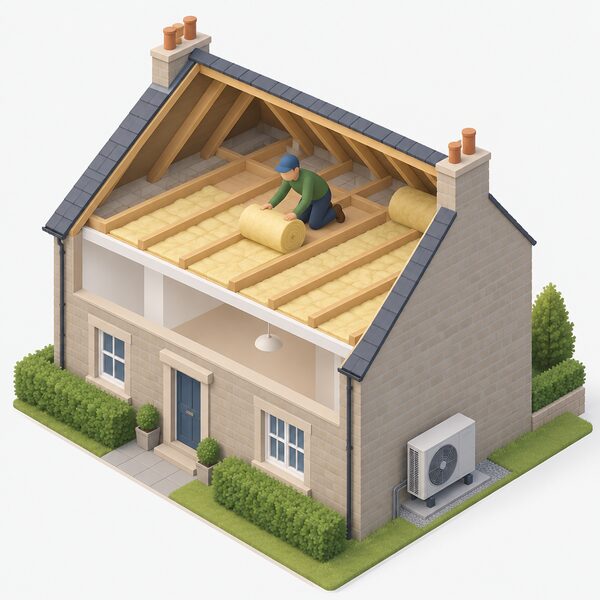
The scheme is the main route by which a Scottish owner-occupier can fund a heat pump, insulation or a heat network connection without commercial borrowing. Independent commentary describes it as offering grants and zero interest loans for energy efficiency measures and low carbon technologies30, and it forms part of the Heat in Buildings programme's offer of grants to homeowners to install heat pumps18.
The limits are real, and they are worth stating as firmly as the ceilings. Grant support stops at £7,500 per stream, or £9,000 rural, and the efficiency grant never exceeds 75 per cent of cost1. Replacement heat pumps, wind, hydro, solar thermal, glazing and insulated doors are outside the grant8. Funding is first come, first served and runs only to the end of the financial year, whichever comes sooner8. Nothing can be claimed retrospectively9. And the scheme has no statutory footing: its terms are set by government policy, not by regulation24.
For household energy independence, then, the scheme buys down the capital cost of reducing demand and of switching the heat source. It does not deliver autonomy from a supplier, and where wind, hydro or solar thermal would do most to close that gap on a rural Scottish property, grant funding is not there. Households considering how the wider picture differs across the UK can compare with the other nations at home energy across the four nations and the reasons for the divergence at why grants differ by nation.
Sources30 cited
- Energy saving home improvements, Scottish Government, 2026
- Local and small scale renewables, Scottish Government, 2026
- Home Energy Scotland grants and loans, Home Energy Scotland, 2026
- Home Energy Scotland Grant and Loan terms and conditions, Home Energy Scotland, 2026
- Energy efficiency and low carbon heating schemes briefing, House of Commons Library, 2026
- Grant and Loan Scheme application and claim processing times, Scottish Government, 12 March 2026
- Heat in Buildings progress report 2025, Scottish Government, 2 October 2025
- Home Energy Scotland Grant and Loan funding portal guidance, Energy Saving Trust, 2026
- Home Energy Scotland Grant and Loan, MCS, 17 June 2026
- Heat in Buildings progress report 2025, funding, Scottish Government, 2 October 2025
- Funding for heat pumps, Energy Saving Trust, 10 July 2026
- Heat pumps on subscription, ClimateXChange, 21 February 2024
- Heat pumps, Energy Saving Trust, 11 June 2026
- Helping avoid energy scams, Home Energy Scotland, June 2024
- FOI 202500448310, Scottish Government, 20 February 2025
- Energy efficiency private rented property regulations island communities impact assessment, Scottish Government, 17 June 2019
- Home energy efficiency advice, Argyll and Bute Council, 2026
- The Heat in Buildings programme, Scottish Government, 2026
- What is district heating, Energy Saving Trust, 19 February 2026
- Heat networks delivery plan review report 2026, Scottish Government, 25 March 2026
- Home Energy Scotland Grant and Loan terms and conditions PDF, Home Energy Scotland, 5 June 2024
- FOI 202400442664, Scottish Government, 20 January 2025
- Heat pump installation checklist guide, Home Energy Scotland, February 2024
- FOI 202300391064, Scottish Government, 15 May 2024
- FOI 202400400863, Scottish Government, 13 September 2024
- Heat pump grants and support briefing, House of Commons Library, 13 May 2026
- Home Energy Scotland programme, Energy Saving Trust, 20 February 2026
- FOI 202500462873, Scottish Government, 22 July 2025
- Domestic RHI: who to contact, Ofgem, 2026
- What the UK needs from the Warm Homes Plan, Energy Saving Trust, 17 April 2025
 Community Energy in ScotlandCommunity energy in Scotland lets you join a local scheme for cheaper, greener heat and power, or get advice and funding to make your own home warmer and cheaper to run.
 The Full Grants and Schemes GuideWhich grants can you actually get right now, and how do you apply for them?
 Energy Policy in ScotlandWho decides how your home in Scotland is heated and improved?
 Apply for a Home Energy GrantThe application sequence common to funded schemes: the checker, the survey or assessment, the installer, the paperwork and the sign-off.
 The Full Where to Start GuideWhich home improvements actually cut your bills, and which should you do first?
 Why Energy Grants DifferWhere you live in the UK changes which home energy grants you can get.