
In this guide
Grant heat pumps are air-to-water units made by Grant, an Irish heating specialist with a long-established UK presence in oil boilers and, more recently, in air source heat pumps and hot water cylinders. The current headline product is the Grant Aerona 290, described by the maker as "our new air to water heat pump built for the next generation"1. The Aerona 290 range covers 4kW, 6.5kW, 12kW and 15.5kW models, and the earlier Aerona³ range continues in service, including a 6kW unit used in a documented new-build installation in Cornwall2.
The commercial case rests on three things: the guarantee, the base the unit needs, and the grant that offsets the cost. Grant heat pumps carry a 7 year product guarantee when installed by a Grant G1 Installer, subject to terms and conditions1. The outdoor unit needs a 150mm thick concrete base or paving slabs on compacted hard core, not grass, soil, gravel or shingle5. On funding, air-to-water heat pumps attract a £7,500 grant, and eligible off-gas grid homes replacing oil or LPG heating can get £9,000 until March 20277.
What a Grant pump does for a household is move space heating and hot water off oil or gas and onto electricity, which removes the fuel delivery and the tank but leaves a dependence on the electricity grid and a supplier. The guarantee depends on using a registered installer and on annual servicing, and the controls depend on the maker's own controllers rather than third-party systems.
What a Grant Aerona heat pump is
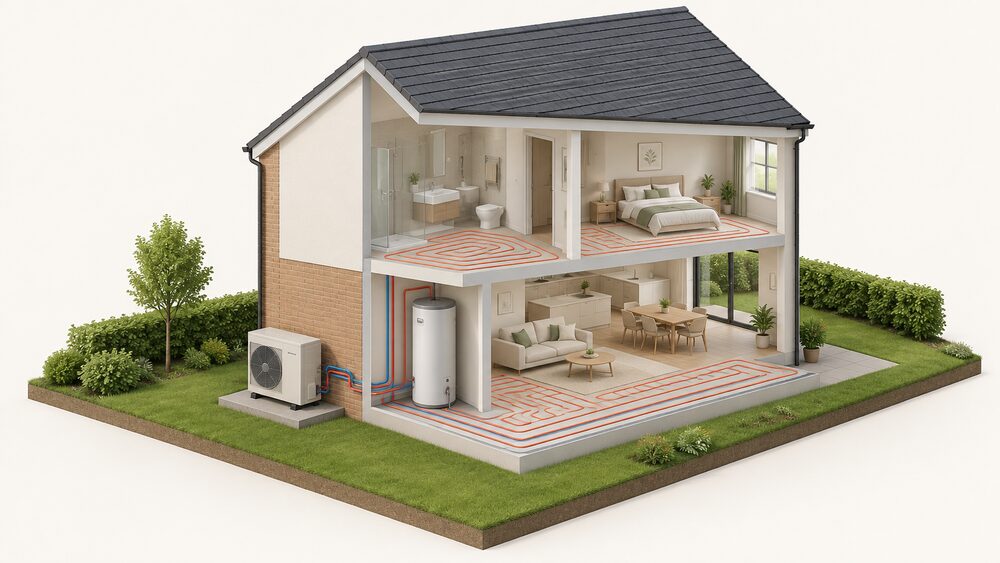
Grant is a heating specialist rather than a general appliance brand, and the Aerona is an air-to-water heat pump: it takes heat from outside air and delivers it to a wet heating system and a hot water cylinder. The maker describes the Aerona 290 as "our new air to water heat pump built for the next generation"1. That places it in the same category as the air-to-water systems that most UK retrofits use, rather than the air-to-air units that heat rooms directly.
The distinction matters for what the pump can do in a house. An air-to-water unit can serve radiators, underfloor heating and a cylinder, so it can replace a boiler across the whole property. An air-to-air unit cannot heat domestic hot water, which is why the two are treated separately in grant rules and in air-to-air heat pumps generally.
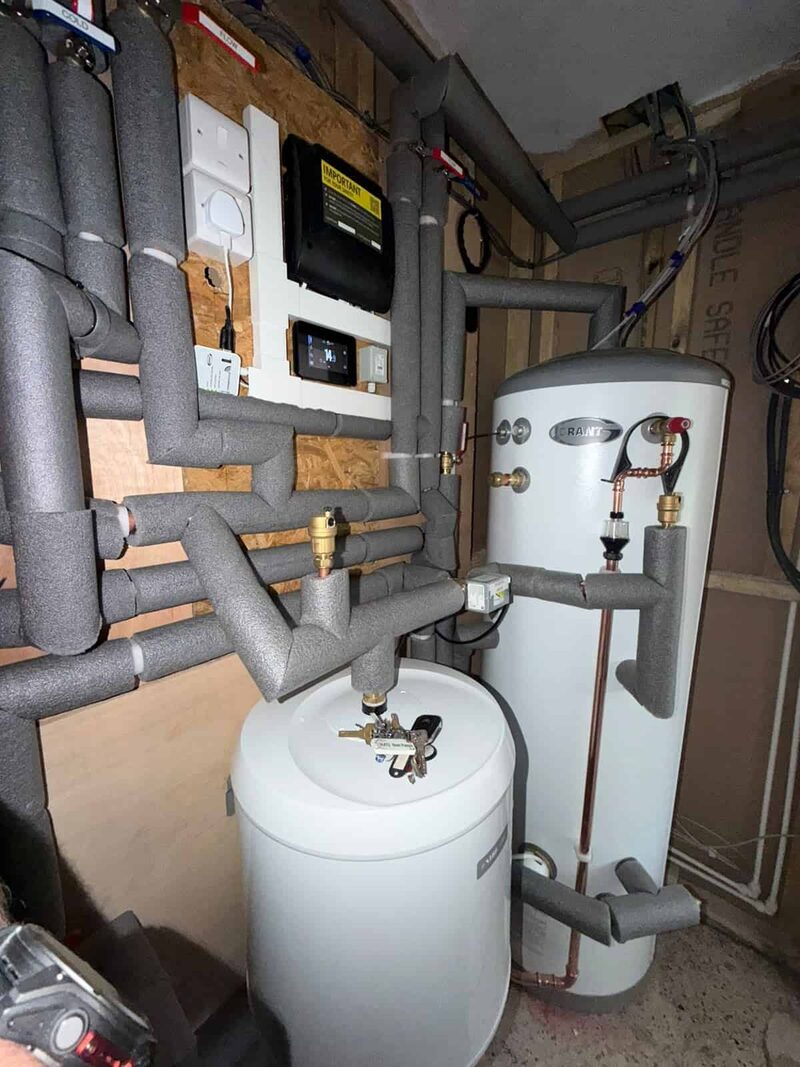
Grant's UK presence is not limited to the pump itself. A documented installation in Cornwall paired an Aerona³ 6kW air source heat pump with a Grant High Performance 200 litre pre-plumbed cylinder with an integrated buffer, and Grant equipment in another case included a QR hot water cylinder and underfloor heating alongside the pump6. That combination, pump plus cylinder plus emitters, is the shape of a Grant system rather than a pump sold on its own.
For a household, the practical point is that buying a Grant pump means buying into a system: the outdoor unit, a cylinder, controls and heat emitters that the maker pairs together. That reduces the risk of mismatched components, and it also means the household's relationship is with Grant's installer network and Grant's guarantee terms rather than with a generic installer fitting a generic box.
Efficiency: SCOP of 4.56 to 5.40 at 35°C flow temperature
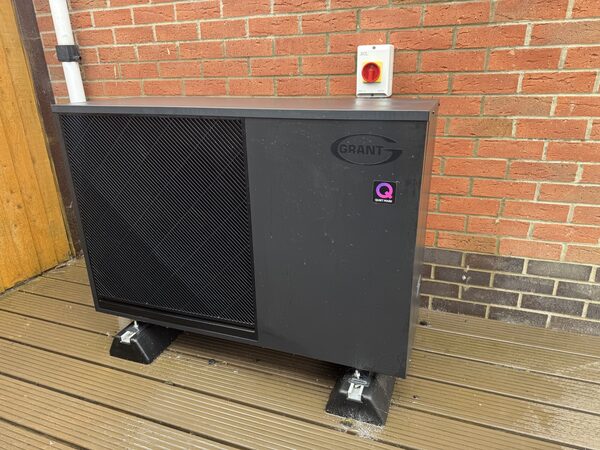
Efficiency for a heat pump is expressed as SCOP, the seasonal coefficient of performance, which averages performance across a heating season rather than at a single test point. Grant's own figures for the Aerona range sit between a SCOP of 4.56 and 5.40 at a 35°C flow temperature, and the maker gives a worked example: the Grant Aerona³ R32 6kW model produces 6kW at a SCOP of 4.625.
The flow temperature is the whole story behind those numbers. A heat pump is most efficient when it is heating water to a low temperature, because the compressor has less work to do. At 35°C the unit is running at conditions suited to underfloor heating or generously sized radiators. Push the flow temperature up and the SCOP falls. The Aerona 290 15.5kW model is rated at an ambient temperature of minus 5°C and a water flow temperature of 55°C, which is a colder day and a hotter system than the 35°C figure, and the two are not comparable3.
For grant purposes there is a floor. Heat pumps must have a seasonal coefficient of performance of at least 2.8 to qualify under the Boiler Upgrade Scheme7. Every figure Grant publishes is well above that threshold, so the eligibility question is not about efficiency but about the property and the installer.
The gap between a published SCOP and what a household actually sees comes down to the installed system: how well the radiators or underfloor loops are sized, whether the system is hydraulically balanced, and what flow temperature the controls are set to run. A pump rated at a SCOP of 4.62 at 35°C will not deliver that in a house running at 55°C on undersized radiators. The efficiency measures explained page sets out how SCOP, COP and SPF differ, and the flow temperature page covers what the setting does to running costs.
The range: 6kW and up, plus cylinders, emitters and controls
Grant's range starts at 6kW and moves up through the Aerona 290 models at 4kW, 6.5kW, 12kW and 15.5kW1. The Aerona³ range remains in the field, including the 6kW R32 model5. For context on where that sits among UK air source units, the Vaillant aroTHERM Split is available in 3.5kW, 5kW, 7kW, 10kW and 12kW outputs, so Grant's smallest listed unit is larger than the smallest units from some competing ranges10.
| Model | Type | Output | Guarantee |
|---|---|---|---|
| Grant Aerona 290 | Air to water | 4kW2 | 7 years with a G1 Installer2 |
| Grant Aerona 290 | Air to water | 6.5kW1 | 7 years with a G1 Installer1 |
| Grant Aerona 290 | Air to water | 12kW4 | 7 years with a G1 Installer4 |
| Grant Aerona 290 | Air to water | 15.5kW3 | 7 years with a G1 Installer3 |
| Grant Aerona³ R32 | Air to water | 6kW, SCOP 4.625 | Subject to terms5 |
Around the pump, Grant supplies the parts that make a complete system. The maker states that heat emitters with larger surface areas are best, and names its own Uflex underfloor heating ranges and Afinia aluminium radiators as ideal heat emitters to install with the pump5. On the hot water side, Grant cylinders appear in real installations: a High Performance 200 litre pre-plumbed cylinder with integrated buffer in one case, and a QR hot water cylinder in another6.
Controls are Grant's own. The Aerona Smart Controller is designed for installation with both the Aerona³ and Aerona 290 heat pumps, while the Aerona Remote Controller is compatible with Aerona³ models only5. That is a narrower control ecosystem than some brands offer, and it is worth knowing before assuming a third-party smart controller will drop in. The wider subject of heat pump controls covers weather compensation and smart operation across brands.
Warranty: 7 years with a G1 Installer, 8 in some cases
The Grant guarantee is conditional on who fits the pump. Every Aerona 290 model listing states the same term: the unit "comes with a 7 year product guarantee when installed by a Grant G1 Installer (subject to Terms & Conditions)"1. The G1 Installer requirement is the load-bearing condition, not a formality. A pump fitted by an installer outside that network does not carry the same cover.
The guarantee also depends on servicing. Grant states that its heat pumps should be serviced annually in order to comply with the product guarantee terms and conditions5. Independent guidance agrees on the interval, with heat pumps generally needing a service once a year11. The two together mean the annual visit is a warranty obligation as well as a maintenance task, and a household that skips a year is exposed on both counts.
For comparison, guarantee lengths vary widely across the market. Glow-worm's GeniaAir heat pump carries a standard 2 year guarantee, extendable up to 5 years when installed by a qualified installer with a HydraCyl cylinder and registered on myREWARDS12. E.ON Next offers Ideal and Vaillant heat pump installations with seven-year manufacturers' warranties13. Grant's 7 year term sits at the longer end, but it is tied to a specific installer network in a way that a shorter, less conditional term is not.
The practical consequence for a household is that the guarantee is not a property of the product alone. It is a property of the installation route and the servicing record. That is worth weighing against a cheaper quote from an installer outside the network, because the difference in cover is real rather than nominal. The servicing and warranty page covers how servicing terms interact with cover across brands.
Siting and base: 150mm concrete or slabs on compacted hard core
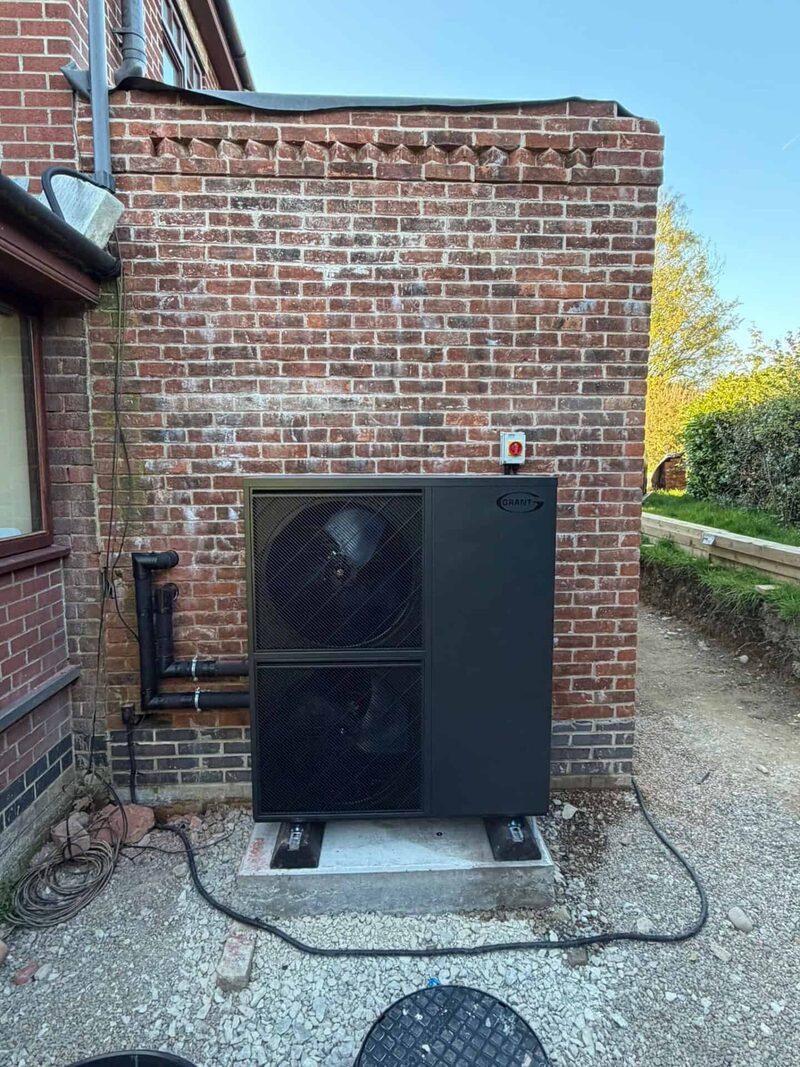
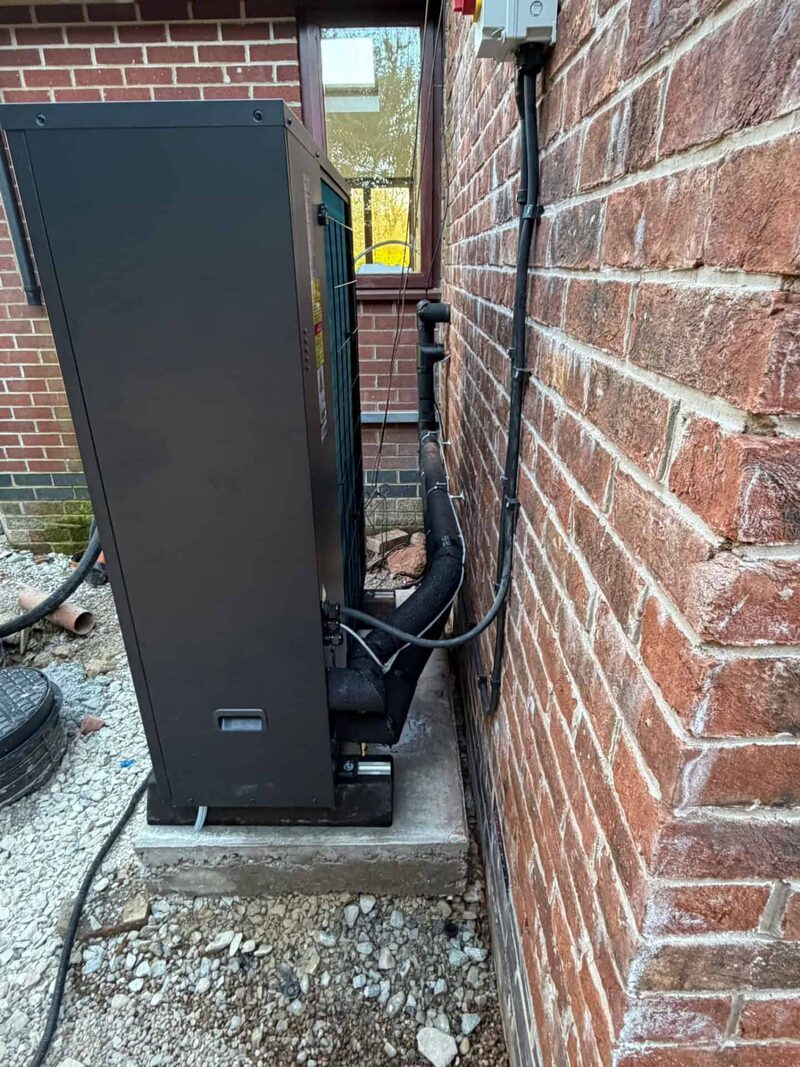
The outdoor unit needs a proper base. Grant lists suitable bases as a 150mm thick concrete base or paving slabs on compacted hard core, and states that loose, uneven surfaces such as grass, soil, gravel or shingle are not suitable5. Independent guidance on the same point gives the same 150mm figure for a flat trowelled concrete base, with paving slabs laid on compacted hard core to a sufficient depth for the ground conditions as the alternative14.
That is a heavier specification than some other outdoor equipment. A domestic heating oil tank, for comparison, should sit on either a 100mm thick concrete slab or on paving slabs that are a minimum of 50mm thick15. The heat pump base is thicker because the unit vibrates and needs to stay level, and because a base that settles will tilt the unit and transmit noise.
Ground preparation is therefore part of the installation cost, not an optional extra. In one documented household assessment, the requirements included a concrete base for the heat pump to sit on in the garden, alongside a check on whether planning permission was needed because the property sits in a conservation area16. The base and the planning question tend to arrive together.
Planning rules differ across the UK. In Scotland, existing permitted development rights for air source heat pumps apply where they are sited 100m from the nearest neighbour's curtilage17. Ground source heat pumps are typically considered permitted development in England18, while in a listed building, adding renewable energy solutions like solar panels or air and ground source heat pumps might be acceptable but will require listed building and or planning consent19. The siting and clearances page covers where an outdoor unit can go, and the planning permission in Scotland page covers the Scottish position in more detail.
Running it well: hot water priority, DHW cycles and defrost

How a heat pump is set up to run matters as much as which model is chosen. Approved Document L states that reversible heat pump systems should be designed to be optimised for heating in most circumstances20. In practice that means the system prioritises space heating and switches to domestic hot water when the cylinder needs it, rather than trying to do both at once.
The Heat Pump Ready Programme, a government-funded programme, supported the development and trial of innovative methodologies for the optimised deployment of domestic heat pumps at high density21. That work is about installation quality and system design rather than product specification, which reflects where most of the performance variation actually sits.
Defrost is the part of heat pump operation that surprises households most. In cold, damp conditions the outdoor coil collects frost, and the unit periodically reverses briefly to melt it. That is normal operation, not a fault, and it is one reason a heat pump's instantaneous output varies through a cold spell even when the SCOP figure is fixed.
Controls matter here. Independent guidance states that heating controls should allow you to pre-program your system to switch on or off at different times, which is important for cheaper electricity on heat pump or time-of-use tariffs22. A household on a time-of-use tariff can shift cylinder heating into cheaper hours, and the controls need to support that scheduling. The running costs page covers what the settings do to bills, and the cold weather performance page covers defrost and output in low temperatures.
Sizing and emitters: underfloor heating and aluminium radiators
Sizing starts with heat loss, not floor area. Grant states that its pumps are correctly sized to provide the required heat output at design conditions, typically when the outside temperature is at minus 3°C, based on an accurate determination of the heat loss from the property5. That calculation sets the output figure, and the model is then chosen to match it.
Where a heat pump is installed alongside an existing heating system under the Warm Homes: Local Grant, the scheme rules require that the heat pump is sized to provide a minimum of 55% of the calculated heat load for retrofit and packaged hybrids23. That is a scheme condition rather than a Grant requirement, but it shows how sizing is treated in funded work.
Emitters are the other half of the calculation. Grant states that heat emitters with larger surface areas are best, and names its Uflex underfloor heating ranges and Afinia aluminium radiators as ideal heat emitters to install with the pump5. Larger surface area means the system can deliver the same heat at a lower flow temperature, which is what protects the SCOP figures quoted earlier.
For a household, the practical expectation is that a Grant installation may involve new emitters as well as a new pump. Underfloor heating is the most straightforward route where floors are being opened up, and aluminium radiators are the alternative where they are not. The radiators and emitters page covers the trade-offs, and the sizing and heat loss page covers how the calculation is done.
Grants and what owning a Grant pump means for energy independence
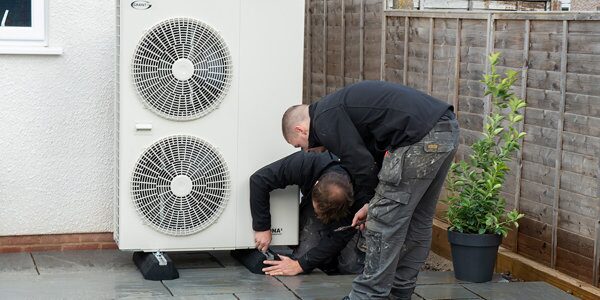
Funding is the part of the decision with the clearest numbers and the clearest deadlines. Air-to-water heat pumps attract a £7,500 grant, and ground source heat pumps attract the same £7,500 under the standard rate8. Eligible off-gas grid properties replacing an oil or liquefied petroleum gas heating system can get £9,000, a rate that applies from 21 July 2026 and runs until March 20277.
| Scheme | Amount | Applies to |
|---|---|---|
| Boiler Upgrade Scheme, standard | £7,5008 | Air-to-water and ground source heat pumps |
| Boiler Upgrade Scheme, off-gas grid uplift | £9,000 until March 20277 | Off-gas grid homes replacing oil or LPG |
| Scotland, HES Grant and Loan | £7,500 grant and £7,500 interest free loan24 | Heat pump installation in Scotland |
| Scotland, grant range | £7,500 to £9,00025 | Heat pump installation in Scotland |
The application route runs through the installer. The installer applies for the grant on the householder's behalf through Ofgem, and a quote can be obtained through the MCS find a heat pump installer tool or by contacting an energy supplier26. Government guidance points households to the Clean Energy website to find out whether a grant is available27. The grants and funding page covers the schemes across the four nations.
On independence, the position is mixed and worth stating plainly. A Grant heat pump moves a home off oil or gas for space heating and hot water, which removes the fuel delivery, the tank and the flue. What remains is a dependence on electricity: the grid, a supplier and a tariff. A household with solar panels can use the free energy they generate to power the heat pump, which reduces that dependence but does not remove it25. The controls add a further dependence on Grant's own controllers, since the Aerona Smart Controller pairs with the Aerona³ and Aerona 290 ranges and the Remote Controller works with Aerona³ models only5. The guarantee adds a dependence on the G1 Installer network and on annual servicing1. The energy independence page sets out the wider picture.
Sources27 cited
- Grant Aerona 290 6.5kW Air Source Heat Pump, Quiet Mark, 2026-09-17
- Grant Aerona 290 4kW Air Source Heat Pump, Quiet Mark, 2026-09-17
- Grant Aerona 290 15.5kW Air Source Heat Pump, Quiet Mark, 2026-09-17
- Grant Aerona 290 12kW Air Source Heat Pump, Quiet Mark, 2026-09-17
- Grant Aerona brochure, August 2026, Grant UK, 2026-08
- Grant new builds, Cornwall case study, Heat Pump Association, 2026-02-17
- Boiler Upgrade Scheme guidance for installers v5.1, Ofgem, 2026-07-02
- Boiler Upgrade Scheme property owner guidance, Ofgem, 2023-09-25
- Heat pump statistics, Heat Pump Association, 2026-07-10
- Vaillant aroTHERM Split air source heat pump, Quiet Mark, 2026-09-17
- Moving house energy checklist, Energy Saving Trust, 2026-05-01
- Glow-worm GeniaAir 7kW air source heat pump, Quiet Mark, 2026-09-17
- Heat pumps vs boilers, Which?, 2025-09-22
- The Quiet Mark certified guide to no heat pump noise, Quiet Mark, 2023-08-07
- Tank care and security, UKIFDA, 2026-02-18
- I'm a sustainability expert, here's why I'm not getting a heat pump, Which?, 2026-02-12
- Permitted development rights impact assessments, Scottish Government, 2026-09-17
- Air and ground source heat pumps, Croydon Council, 2026-09-17
- Making alterations to a listed building, Bristol City Council, 2026-09-17
- Approved Document L, Volume 1: Dwellings, HM Government, 2026
- Information about the Heat Pump Ready Programme, GOV.UK, 2026-05-11
- Installing a ground source heat pump, Which?, 2025-09-22
- Warm Homes: Local Grant policy guidance, July 2026, HM Government, 2026-07
- Scotland's climate change plan 2026 to 2040, Scottish Government, 2025-11-06
- Is now a good time to get a heat pump, Energy Saving Trust, 2025-12-12
- Heat pump grants, Clean Energy Campaign, 2026-09-10
- Find out if you can get a heat pump grant, Manchester City Council, 2026-09-20
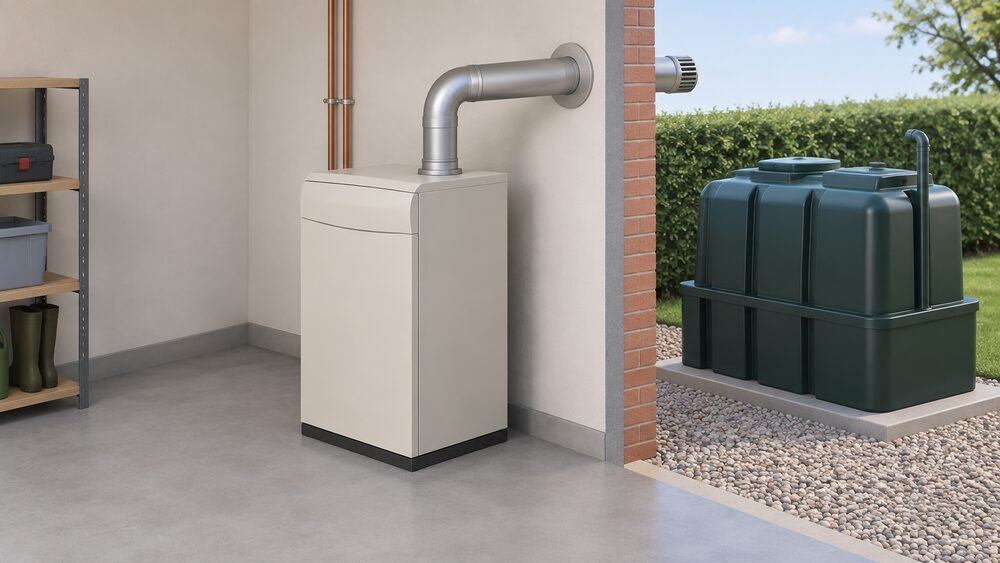 Grant oil boilersGrant oil boilers suit homes with no gas supply, so which Vortex model fits your house, and can it run on greener fuel later?
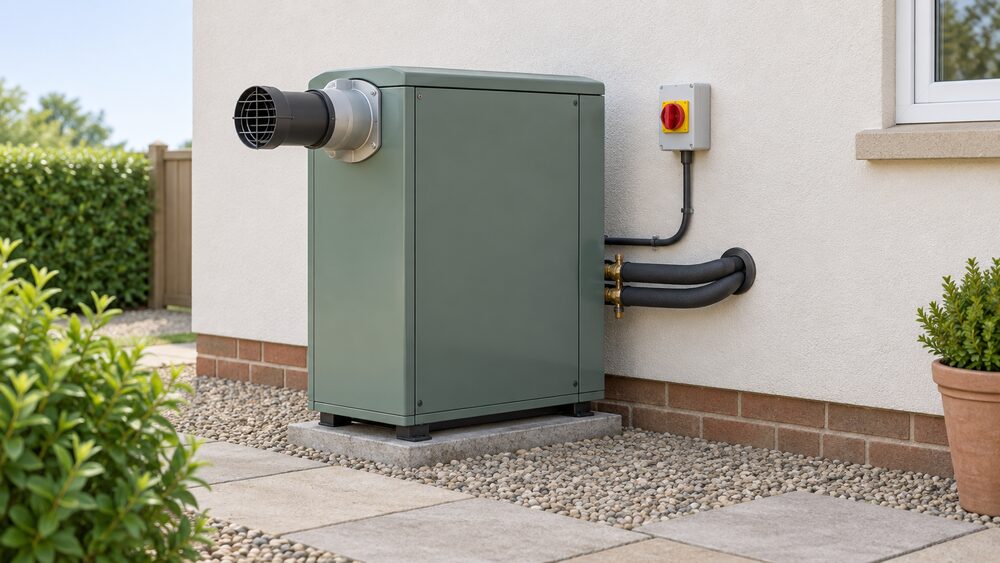 Grant Vortex oil boilerLiving off the gas grid with an oil boiler means you may be comparing a Grant Vortex with a heat pump.
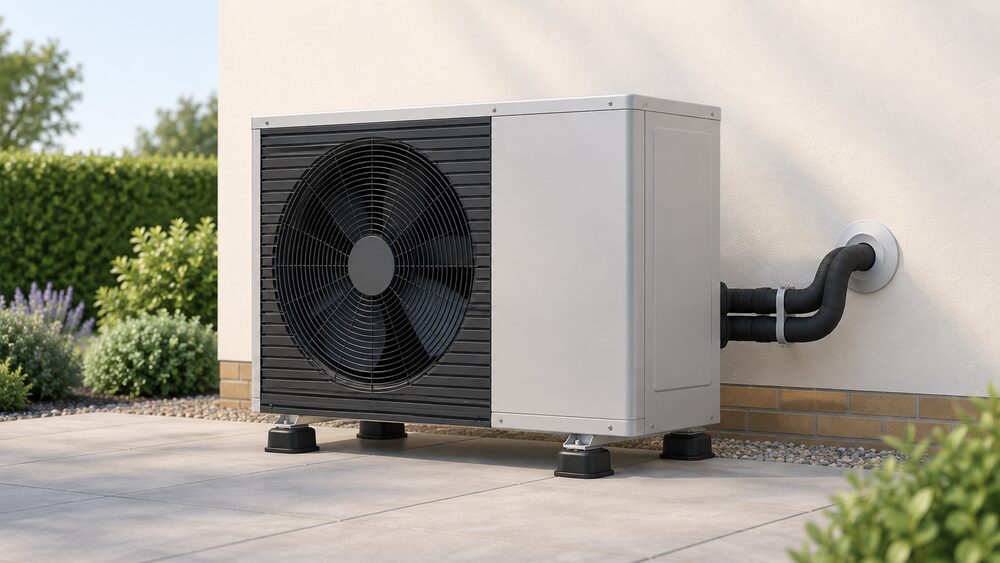 Grant Aerona 290 heat pumpThinking about a Grant Aerona 290?
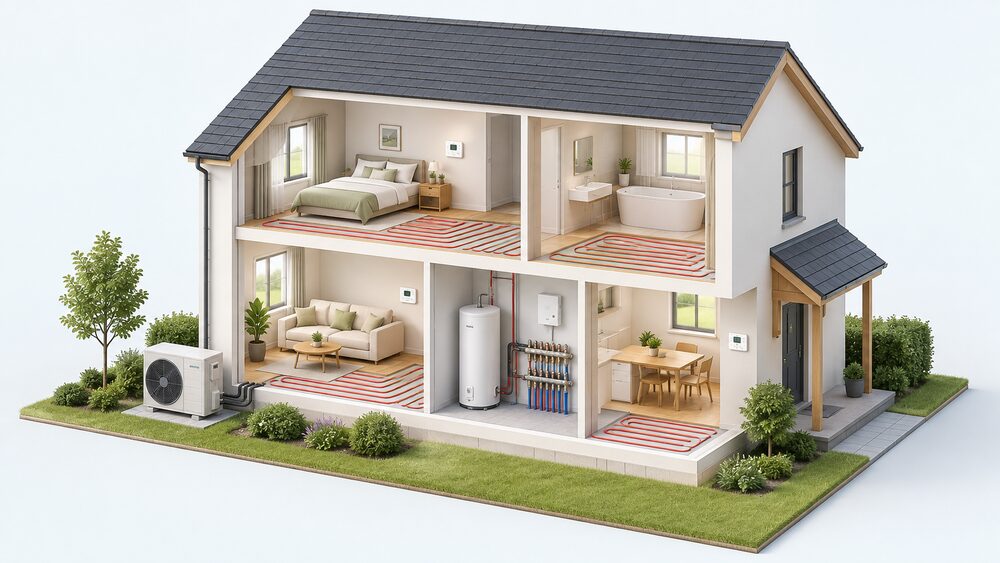 Grant Heating ControlsGrant makes heating controls for its own air source heat pumps, not for boilers.
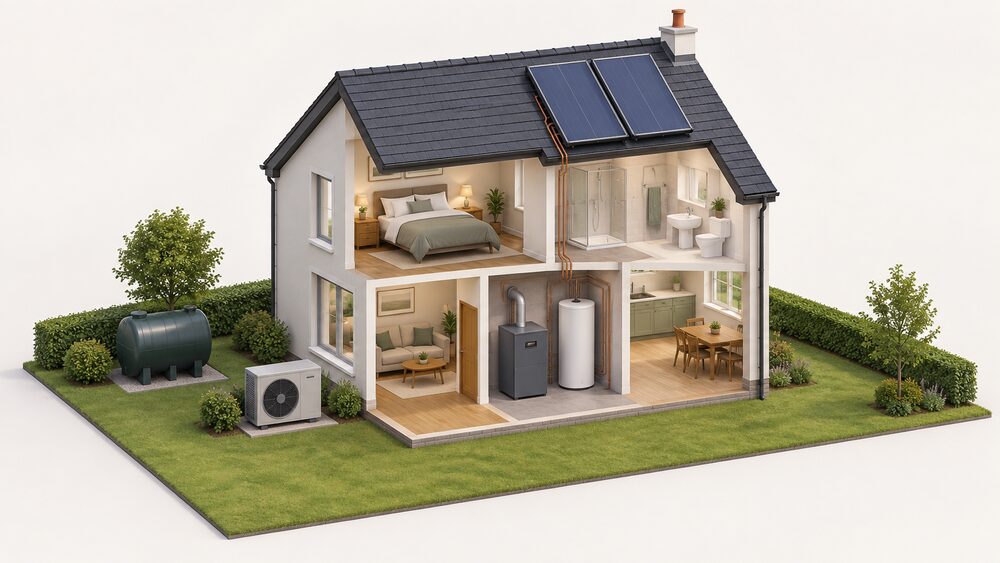 Grant UK oil boilers and heat pumpsGrant UK makes oil boilers for homes off the gas grid, and also sells air source heat pumps if you would rather move away from oil.
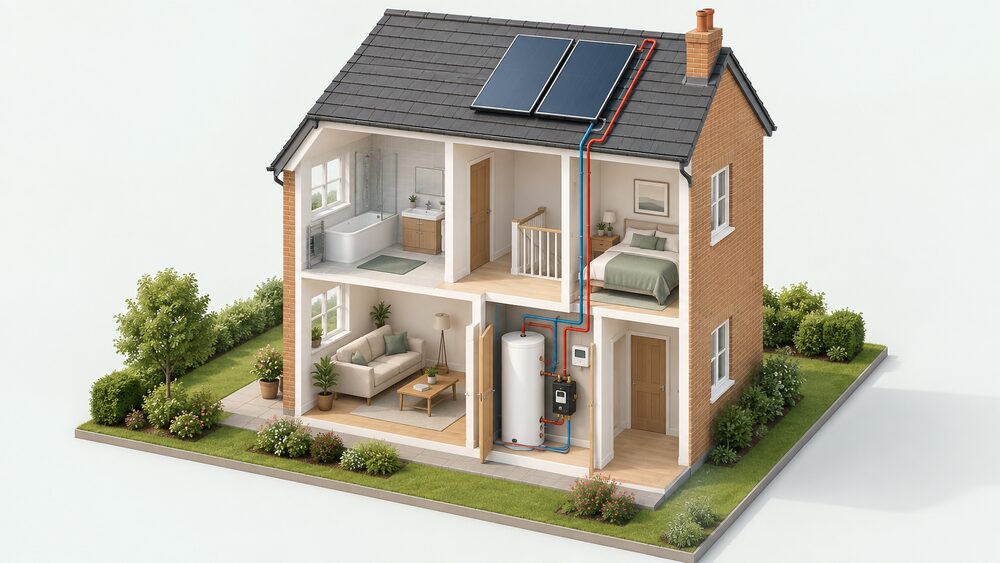 Grant solar thermalGrant solar thermal panels heat your hot water using sunlight, working alongside your boiler rather than replacing it.