

In this comparison
Nest and the Warm Homes: Local Grant are not rivals a household chooses between. They operate in different countries. Nest is the Welsh Government Warm Homes scheme, delivered across Wales, and the Warm Homes: Local Grant is available in England only1. A household in Cardiff cannot apply to the local grant, and a household in Birmingham cannot apply to Nest.
The two schemes also differ in what they ask of a home. Nest requires an EPC rating of 54 (E) or less, or 68 (D) or less where someone in the household has an eligible health condition3. The Warm Homes: Local Grant accepts homes rated D to G, with household income usually £36,000 a year or less after housing costs, and it is delivered by local authorities rather than a national contractor2.
For a Welsh household the practical question is therefore not which scheme is better but whether Nest will take the case, and what happens if it will not. Nest is funded at £37 million this financial year after an additional £5 million was allocated in July 20265. The Warm Homes: Local Grant sits inside £0.5bn allocated across England4.
Two schemes, one goal, and two different governments
Both schemes exist to cut bills in low-income homes, but they are run by different administrations under different rules. Nest is managed by British Gas, working with Energy Saving Trust, on behalf of the Welsh Government6. The Warm Homes: Local Grant is a government-funded scheme delivered by local authorities in England, providing grants for energy performance upgrades and low carbon heating to low-income households living in the worst quality, privately owned homes4.
The Welsh scheme has been through a redesign. The current Warm Homes Nest scheme launched on 1 April 20247. Its predecessor ran for years under the same name, and the annual reports from that period still describe the shape of the offer: free, impartial advice and potentially free home energy efficiency improvements such as insulation, a heat pump or solar panels8. More than 210,800 households have contacted Nest for free energy efficiency advice since 20117.
The English scheme is newer. The Warm Homes: Local Grant and the Warm Homes: Social Housing Fund were introduced as a pair, replacing earlier programmes9. The local grant is not a national application: a household applies through its own council, and the council decides which homes in its area are treated.
For energy independence the distinction matters less than it looks. Neither scheme removes a household from the grid or from a supplier. What both do is reduce the quantity of energy a home must buy, by treating the fabric of the building and, in some cases, the heating system. A home that moves from band E to band C needs less gas or electricity to reach the same temperature, which is a permanent reduction in dependence on whatever is delivered through the meter. It is not self-sufficiency, and neither scheme funds a battery or a grid connection.
Who qualifies for Nest: income, benefits and health conditions

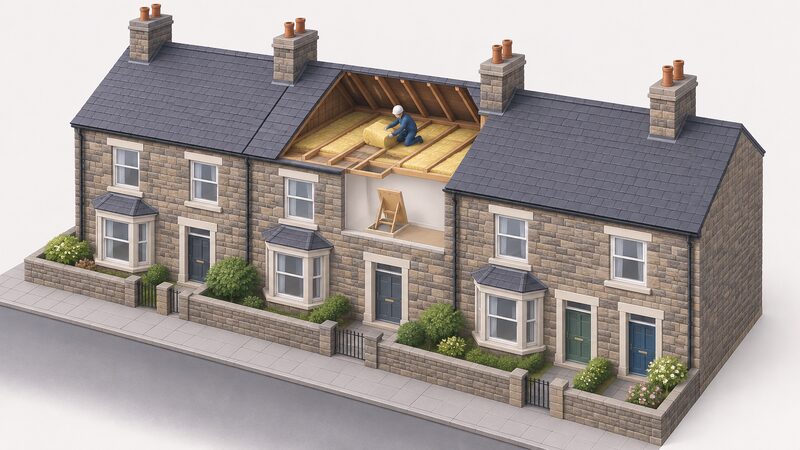
Nest looks to support people in Wales living on a lower income who receive a means-tested benefit or live with a respiratory, circulatory or mental health condition10. Those are two separate doors into the scheme, and a household only needs one of them to open.
The income route is the simpler of the two. A household on a qualifying means-tested benefit, living in a home with an EPC rating of 54 (E) or less, can be assessed without any health condition being present3.
The health route widens the property criteria rather than the income criteria. Where someone in the household has an eligible condition, the home can be rated up to 68 (D) and still qualify3. That is the single most important difference between the two routes: the health condition buys a higher EPC ceiling, not a higher income ceiling.
Nest also works with households in immediate difficulty. The Welsh Government describes help designed for households facing an immediate risk to their health and wellbeing due to a lack of essential heating or hot water11. That sits alongside the improvement scheme rather than replacing it.
The scheme is not the only route in Wales. The Welsh Government funds the Optimised Retrofit Programme and the Warm Homes Nest scheme, which collectively provide more than £130 million a year for free energy efficiency improvements to low-income households12. Households that Nest cannot help are pointed towards other schemes that suit their circumstances1.
Income thresholds: £20,000 for a single adult up to £40,000 for a larger couple household
The income test differs by nation and by scheme, and it is assessed after housing costs. In England, the Warm Homes: Local Grant sets a threshold of £20,000 for one adult, one adult plus one dependent and one adult plus two dependents, and £20,000 for two adults. The limit then rises with household size: £23,600 for one adult plus three dependents, £24,000 for two adults plus one dependent, £27,600 for one adult plus four dependents, £28,000 for two adults plus two dependents, £31,600 for one adult plus five dependents, £32,000 for two adults plus three dependents, £36,000 for two adults plus four dependents and £40,000 for two adults plus five dependents1. A separate route for households not in a qualifying postcode and not receiving means-tested benefits uses a flat £36,000 or less after housing costs2.
In Wales, the Nest scheme publishes annual, weekly and monthly limits that vary with the age of the children as well as the number of adults. A couple with two children aged 14 or over is set at £38,456 a year (£740 a week, £3,205 a month), while the same couple with two children under 14 is set at £32,433 (£624, £2,703). A couple with one child aged 14 or over is £30,811 (£593, £2,568), and with one child under 14 it is £27,799 (£535, £2,317). A single adult with one child aged 14 or over is £23,166 (£446, £1,931), and a single adult with two children under 14 is £24,788 (£477, £2,066)3.
The practical effect is that two households of the same size can face different limits depending on where they live and, in Wales, on the age of the children. Warm Homes: Local Grant projects in Wales are also subject to a £35,000 per household threshold above which additional assurance and sign-off is required4.
Nest publishes a table of income thresholds that vary by household composition. The figures below are annual, with the weekly and monthly equivalents as published3.
| Household | Weekly | Monthly | Annual |
|---|---|---|---|
| Couple with two children 14 years or over | £740 | £3,205 | £38,456 |
| Couple with two children under 14 years | £624 | £2,703 | £32,433 |
| Couple with one child 14 years or over | £593 | £2,568 | £30,811 |
| Couple with one child under 14 | £535 | £2,317 | £27,799 |
| One adult with two children under 14 years | £477 | £2,066 | £24,788 |
| One adult with one child 14 years or over | £446 | £1,931 | £23,166 |
The pattern is that older children raise the ceiling more than younger ones, because the published thresholds treat a child aged 14 or over as costing more to keep warm and fed. A couple with two teenagers sits at the top of the published range at £38,456 a year.
The Warm Homes: Local Grant uses a different measure. Its thresholds are set after housing costs, and the published table runs from £20,000 for one adult or two adults, through £24,000 for two adults plus one dependent, £28,000 for two adults plus two dependents, £32,000 for two adults plus three dependents, £36,000 for two adults plus four dependents, and £40,000 for two adults plus five dependents9. For single-adult households the published figures are £20,000 for one adult, £23,600 for one adult plus three dependents, £27,600 for one adult plus four dependents and £31,600 for one adult plus five dependents9.
One English council summarises the general position as a household income of £36,000 or less after housing costs for households not in a qualifying postcode and not receiving means-tested benefits2. That is a summary of one route, not the whole scheme.
The two schemes are not directly comparable on income. Nest publishes gross-style annual, weekly and monthly figures; the local grant publishes after-housing-costs figures. A household near either boundary should expect the assessment to turn on the detail of its own circumstances rather than on the headline number.
What Nest funds and how the whole house assessment works
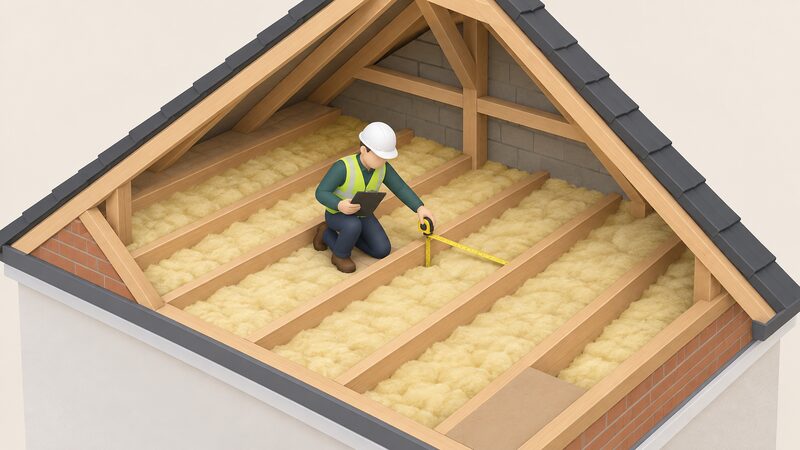
Nest does not begin with a measure. It begins with an assessment. If a household is eligible, Nest arranges for an assessor to visit the home and gather information used to develop a tailored package of support specific to the household and the home13. The package can include a heat pump, insulation and solar panels14.
The older published description of the offer is broader still: a referral for eligible householders for a package of free home energy efficiency measures such as a new boiler, central heating system, loft or cavity wall insulation, or renewable technologies15. The scheme has always been framed as a whole-house package rather than a single measure.
There is a cost ceiling on individual projects. Nest has a threshold of £35,000 per household, and any project above that threshold requires additional assurance and sign-off16. That figure is a control on the scheme's exposure, not a budget a household can spend.
The delivery model is deliberately local. In 2022 to 2023, 100% of installations were completed by Wales-based installers6. That keeps the spending inside the Welsh economy and gives households a contractor they can reach.
The results reported for the 2024 to 2025 period show what the packages achieve. Around two thirds, 66%, of the 232 homes with a recorded post-installation rating moved up to band C16. Half of the properties had cavity walls, 19% were detached and 30% were mid-terraced16. Fourteen per cent were in band E before treatment16.
For a household's independence, the assessment model is the point. A package that addresses the building fabric and the heat source together reduces the amount of energy the home must buy, and a heat pump or solar panels reduce the share of that energy that comes from gas or from a single supplier. The household remains connected to the grid and, in most cases, to a supplier. What changes is the size of the bill attached to that connection.
Tenure and property rules: owner-occupiers and private renters only
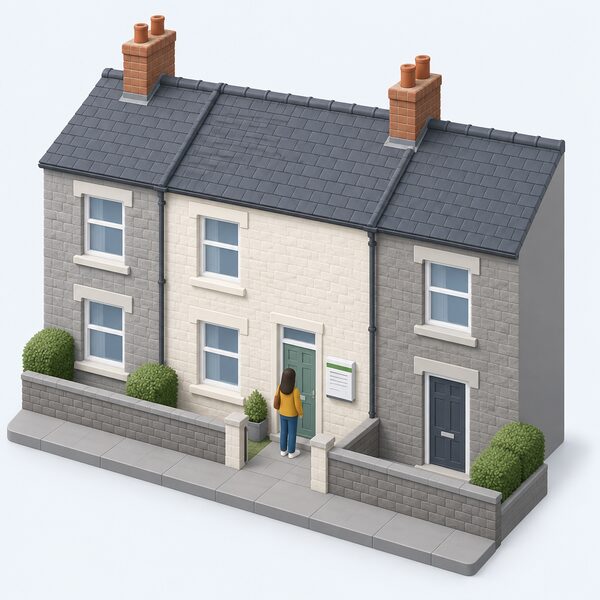
Nest is open to households that own or privately rent their home3. Social housing tenants are not the target group, because their landlord carries the repair and improvement duty.
For private renters there is a registration condition. Nest works in partnership with Rent Smart Wales to ensure all private landlords are officially registered before being allowed access to support6. A tenancy with an unregistered landlord does not proceed, and the household cannot fix that on the landlord's behalf.
Wales has been tightening the rules on rented homes separately. Landlords who let out a property under a domestic short-hold, regulated or assured short-hold tenancy are affected by the minimum energy efficiency standards17. That matters to a renter weighing Nest, because a landlord already facing a legal improvement duty may be more willing to engage with a scheme that carries no cost to them.
The Warm Homes: Local Grant takes a different approach to landlords. The home must be privately owned, either by the occupier or by the landlord18. The scheme fully funds upgrades for one property per landlord, and second and subsequent properties are funded at 50% of the cost up to £15,0009. Owner-occupied homes require no match funding19.
The tenure rules are where the two schemes diverge most sharply for renters. A Welsh private renter needs a registered landlord and a qualifying home. An English private renter needs a privately owned home and a landlord willing to use their one fully funded property, or to contribute to a second.
EPC ratings: the 54 (E) and 68 (D) routes into the scheme
The EPC is the gate on the property side of Nest. A home must have an EPC rating of D or lower, meaning a SAP score of 68 or lower, and someone in the household must have a qualifying health condition for that route16. Where there is no qualifying condition, the home must be rated 54 (E) or less3.
The eligible health conditions are listed by the scheme. They include respiratory disease such as respiratory infections, broncho-constriction in asthma and chronic obstructive pulmonary disease; circulatory disease including cardio-vascular disease, strokes and heart attacks; mental health conditions including depression, anxiety, psychosis and bipolar disorders; dementia; and intellectual and development disorders3.
The English scheme sets its own property bar. All eligibility pathways require the EPC to be D, E, F or G2. There is no health condition route, and no separate lower band for households without one. A home rated D qualifies on the property test in England where it would not in Wales without a health condition.
The English scheme also has a rule for homes already treated. Where a property has been treated under other DESNZ schemes such as ECO, it will be eligible for further treatment under the Warm Homes: Local Grant with no requirement to reach EPC C or to receive low carbon heating9. That is a deliberate loosening, so that a home part-way through improvement is not shut out.
The Welsh scheme reports its outcomes against the same bands. Around two thirds of homes with a recorded post-installation rating moved up to band C in the 2024 to 2025 period16. The scheme is not required to reach band C in every case, but that is where most treated homes land.
Funding and the Warm Homes Programme review: £37 million for Nest this year

Nest's funding has moved during 2026. Over £30 million was allocated for the following year to fund energy efficiency, renewables and clean heat measures20. In July 2026 the Welsh Government allocated an additional £5 million to the Nest scheme, bringing total funding to £37 million for the financial year5. The same statement announced £17 million of additional retrofit funding across Welsh housing schemes, using existing portfolio budget5.
The wider Welsh provision is larger than Nest alone. The Optimised Retrofit Programme and the Warm Homes Nest scheme collectively provide more than £130 million a year for free energy efficiency improvements to low-income households12. Nest's own share of that in the 2024 to 2025 period was £6.7 million of Welsh Government investment in delivering the scheme16.
The English scheme's allocation is on a different scale because it covers a larger population. Of the funding announced, £0.5bn has been allocated to the Warm Homes: Local Grant4. The Warm Homes Plan as a whole comprises over £4.4 billion grant funding plus £600 million from the Warm Homes Fund intended for low-income households21.
The review published in July 2026 covered scheme performance, fuel poverty levels and next steps22. It followed a period of unusual demand: after the announcement that ECO4 was coming to an end, applications to the Nest scheme surged22. That surge is the context for the additional £5 million, and it explains why a household applying now may wait longer than the published service standards suggest.
For a household, the funding picture has one practical implication. Nest is a demand-led scheme with a fixed annual budget, and its capacity in any given month depends on how much of that budget has already been committed. The scheme's own advice is to call and check eligibility rather than to assume the answer14.
Nest is not ECO4 or GBIS: why eligibility is not identical
Households often arrive at Nest having already been refused by a supplier scheme. The Welsh Government is explicit that the Nest scheme is not identical to ECO or GBIS, and that it cannot guarantee eligibility or that householders will be offered the same energy efficiency and heating measures23.
The differences are structural. ECO and the Great British Insulation Scheme are obligations on energy suppliers, delivered by installers working for those suppliers, and their eligibility rules are set by the obligation rather than by a devolved administration. Nest is a Welsh Government scheme delivered by British Gas and Energy Saving Trust on the government's behalf6. A household can fail one and pass the other, in either direction.
The history explains part of the divergence. A Welsh Government consultation on a future demand-led fuel poverty scheme considered amending eligibility to exclude private landlords, and described free energy efficiency measures and in-home advice for eligible households18. The scheme that exists today reflects a series of such decisions rather than a single design.
There is also a practical difference in what happens after a refusal. Nest states that if a household is not eligible, the scheme helps find other schemes that suit its circumstances1. That is not a feature of the supplier obligations, which simply decline an application.
For a household's energy independence, the distinction between these schemes is about who controls the money. A devolved scheme can set its own income thresholds, its own EPC bands and its own health condition list, and it can redirect a household to a different Welsh programme. A supplier obligation cannot. Neither, however, changes the underlying position: the household remains dependent on the grid, on a supplier and, where a heat pump is installed, on electricity rather than gas. What the schemes change is how much of that energy the home needs to buy.
Contacting Nest, and what to do about cold callers

Nest is reached free on 0808 808 2244, Monday to Friday from 9am to 6pm, excluding bank holidays24. The same number is published by Welsh councils and by Green Homes Wales for free and impartial general advice on current support options8. A callback can be requested from an advisor instead of waiting on the line1.
Calls and emails are welcomed in Welsh11. Households who are hard of hearing, neurodivergent, or who have difficulties communicating by telephone can email advicewales@est.org.uk13.
Households who do not think they are eligible, or are not sure, can still make contact for energy efficiency advice, help with other grants, energy tariffs and benefits entitlement checks13. Nest can confirm whether a household is eligible for a package of free home energy efficiency improvements14.
Free advice is available from other sources too. NEA's Warm and Safe Homes advice service is a free support service providing advice to householders on their energy bills and keeping warm and safe in their home, benefits advice and income maximisation24. Council energy teams in Wales also publish local guidance10.
Sources25 cited
- Nest Warm Homes Programme, Welsh Government, 2026
- Apply for the Warm Homes: Local Grant, GOV.UK, 2026
- Get free home energy efficiency improvements: Nest eligibility, Welsh Government, 2026
- Warm Homes: Local Grant statistics, August 2026, Department for Energy Security and Net Zero, 2026
- Written statement: first 100 days commitment to warmer and more energy efficient homes, Welsh Government, 2026
- Warm Homes Nest scheme annual report 2022 to 2023, Welsh Government, 2023
- Tackling fuel poverty: priority actions, Welsh Government, 2025
- Nest: a scheme to make your home warmer and more energy efficient, Isle of Anglesey County Council, 2026
- Warm Homes: Local Grant policy guidance, July 2026, Department for Energy Security and Net Zero, 2026
- Home energy efficiency, Bridgend County Borough Council, 2026
- Get help with unexpected costs such as food and heating, Welsh Government, 2026
- Thousands of Welsh households get help with oil and LPG heating costs, Welsh Government, 2026
- Get free home energy efficiency improvements: Nest apply, Welsh Government, 2026
- Get free home energy efficiency improvements: Nest, Welsh Government, 2026
- Warm Homes Nest report reveals benefits for homes and businesses, Welsh Government, 2017
- Warm Homes Nest scheme annual report 2024 to 2025, Welsh Government, 2026
- Stricter energy efficiency rules set to apply to all private rental homes in Wales, Welsh Government, 2020
- A future demand-led fuel poverty scheme to succeed Welsh Government Warm Homes: Nest, Welsh Government, 2016
- Warm Homes: Local Grant FAQs, West Midlands Combined Authority, 2026
- Written statement: support available to help with the cost of living, Welsh Government, 2026
- Warm Homes Plan research briefing, House of Commons Library, 2026
- First 100 days: warmer and more energy efficient homes, Welsh Government, 2026
- Written statement: support for householders impacted by the closure of the Energy Company Obligation scheme, Welsh Government, 2026
- Heating your home, Carmarthenshire County Council, 2026
- Green Homes Wales, Development Bank of Wales, 2026
 Energy Policy in WalesWhat help can you get in Wales to make your home warmer and cheaper to run?
 Why Energy Grants DifferWhere you live in the UK changes which home energy grants you can get.
 Home HeatingMost Welsh homes still run on mains gas, so what are the alternatives in rural areas?
 Community Energy in WalesWales wants more of its energy owned by local people, not big companies.
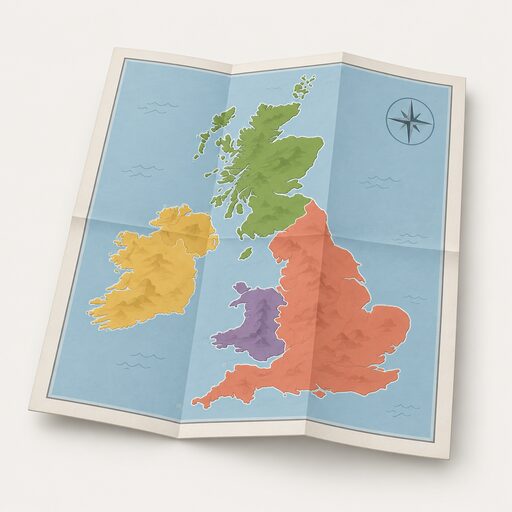 The Full Scotland, Wales and Northern Ireland GuideWhy a householder in Glasgow, Cardiff or Belfast faces different schemes, standards, targets and markets from one in England.
 The Full Grants and Schemes GuideWhich grants can you actually get right now, and how do you apply for them?