

In this comparison
The price cap does not set one number. It sets a level for each way of paying, and standard credit is the most expensive of them. For 1 July to 30 September 2025, a household paying by standard credit paid an additional £136 a year compared with direct debit1. In the previous period, 1 April to 30 June 2025, the gap was £1202. In the 1 April to 30 June 2024 period it was £1063.
The direction of travel is consistent even as the levels move. Ofgem's own summary of the cap states plainly that standard credit is the most expensive payment method option under the price cap1. Prepayment sits below direct debit: the prepayment cap level was £47 lower than the direct debit level for 1 July to 30 September 20251, and £48 lower for 1 October to 31 December 20254.
Both methods are covered by the same cap. The cap applies to payment by standard credit, direct debit, prepayment meter and Economy 7 meter5. What differs is the allowance Ofgem builds into each level for the cost of serving that kind of payer, and the gap between the two is the price of paying after the fact rather than in advance.
Two caps, one market
The default tariff cap has always been built as two separate caps, one for direct debit consumers and one for standard credit consumers7. That structure dates from the cap's design, and it survives each quarterly reset. The reason is straightforward: the cost of collecting money differs. A direct debit customer pays ahead of consumption, so the supplier holds the money before it buys the energy. A standard credit customer pays after consumption, so the supplier funds the gap and carries the risk of non-payment.
Ofgem's allowance for debt-related costs is allocated on the basis of retaining the current differences between direct debit and standard credit customers8. In an earlier cap period, the debt-related costs allowance accounted for 1% of typical dual fuel direct debit bills9. The gap between the two levels is not a penalty added on top; it is the modelled cost of arrears, bad debt and administration, spread across the customers who generate it.
The gap has widened and narrowed with the market. In the 1 April to 30 June 2024 period, the direct debit cap fell by £238 (12%) compared with the previous level, to £1,690 for a typical dual fuel customer after levelisation3. Standard credit customers in that same period paid £106 more3. By the following spring, the standard credit level had risen to £1,969 for a typical dual fuel customer, a £118 (6%) increase on the previous period2.
For a household's energy independence, the payment method is one of the few levers that costs nothing to pull. It does not change the units consumed, the standing charge or the fuel mix. It changes only which published cap level applies.
Direct debit: paying monthly in advance
Direct debit is the default assumption behind most published cap figures. When Ofgem announces a new cap level, the headline number is normally the direct debit level for a typical dual fuel customer. For 1 October to 31 December 2025, that level rose from £1,720 to £1,755, an increase of £35, or 2%, compared with the previous period4.
The direct debit level is not simply the standard credit level minus a discount. It is built from its own cost stack. For 1 July to 30 September 2025, that stack included an earnings before interest and tax allowance of £43 a year, headroom of £18 a year, and policy costs of £198 a year, unchanged from the previous period1. There was also a levelisation allowance of £8 a year1.
| Direct debit cost stack element, July to September 2025 | Amount a year |
|---|---|
| Earnings before interest and tax allowance | £431 |
| Headroom | £181 |
| Policy costs | £1981 |
| Levelisation allowance | £81 |
Direct debit customers are also the group suppliers must handle most carefully on credit balances. Suppliers must ensure that fixed direct debit amounts are based on accurate and up to date information so that credit balances are not excessive10. That obligation sits alongside the cap, and it is the rule a household can point to when a monthly amount looks out of step with usage.
Satisfaction data has consistently put direct debit payers at the happier end of the market. In Q2 2021, 75% of direct debit customers were satisfied with their supplier overall11. In the same period, 87% of direct debit customers who switched supplier were satisfied with the process overall, and 81% with the ease of comparing suppliers11.

Standard credit: paying in arrears after you use

Standard credit means paying on receipt of an electricity and gas bill, by cash or cheque or by a one-off payment after the energy has been used5. It is the method that carries the highest cap level, and Ofgem has said so in each of the recent cap summaries2.
The premium is not uniform across meter types. For electricity only customers on Economy 7 meters, the standard credit level for 1 July to 30 September 2025 was £82 a year more than the Economy 7 direct debit level1. For 1 October to 31 December 2025, that Economy 7 standard credit premium was £844. In the 1 April to 30 June 2025 period, the Economy 7 standard credit figure was £74 more than paying by direct debit2.
| Cap period | Standard credit premium, dual fuel | Standard credit premium, Economy 7 electricity only |
|---|---|---|
| 1 April to 30 June 2024 | £106 a year3 | Not stated in that announcement |
| 1 April to 30 June 2025 | £120 a year2 | £74 a year2 |
| 1 July to 30 September 2025 | £136 a year1 | £82 a year1 |
| 1 October to 31 December 2025 | Not stated in that announcement | £84 a year4 |
The pattern of who pays this way matters for how the market is understood. Standard credit customers are less satisfied than both direct debit and prepayment customers, on Ofgem's implied impact satisfaction score, at 71%12. In a 2023 survey, 54% of those paying by standard credit reported unexpectedly high bills in the previous three months, compared with 30% on direct debit13.
The historical scale of the premium has been documented for years. In 2018, the large suppliers charged an average of £75 more to a standard credit customer with typical domestic consumption value than to a direct debit customer7. The mechanism has not changed; only the level has.
Credit balances and refunds: what suppliers owe you
A credit balance is money a household has paid that has not yet been spent on energy. The rule that governs its return is specific. A supplier must, within 10 working days of issuing a customer's final bill, or if applicable a corrected final bill, refund any outstanding credit balance to the customer6.
That deadline is triggered by the final bill, which is what an account produces when it closes. A supplier switch closes the account, so the 10 working day clock starts then. A change of payment method with the same supplier does not close the account, so the balance simply stays where it is and continues to offset future consumption.
The scale of credit held across the market has been a live policy question. Ofgem's work on the energy debt landscape has examined the differential between payment methods as part of the wider picture, with the total differential in the October to December 2024 price cap recorded at £112 for standard credit to direct debit, at typical domestic consumption value for dual fuel across Great Britain, post levelisation14.
Where a supplier will not refund a balance, the escalation route is defined. Ofgem does not directly get involved with complaints about energy suppliers or network operators, and does not investigate individual disputes15. It monitors suppliers and network operators to make sure they meet the rules set out in licences, regulations and law, and will start an investigation if it thinks a supplier has not met certain rules15. Where a credit agreement is involved, the guidance is to complain directly to the company the credit agreement is with, and then possibly the Financial Services Ombudsman, subject to time limits16.
"A supplier must, within 10 working days of issuing a customer's final bill, or if applicable a corrected final bill, refund any outstanding credit balance to the customer."
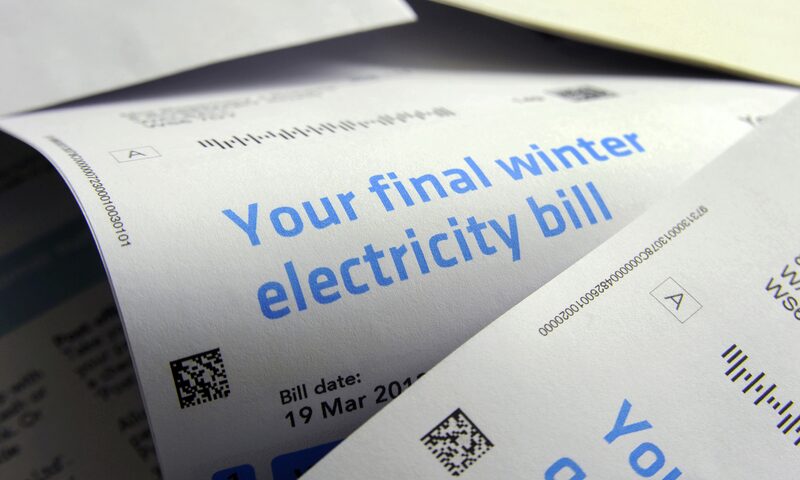
Switching between direct debit and standard credit
Changing payment method is not a tariff switch. The household stays on the same default tariff and the same supplier; what changes is which published cap level applies. Moving from standard credit to direct debit moves a household onto the cheaper of the two levels, and the saving is the differential for that cap period.
The differential has been recorded at several points. For 1 July to 30 September 2025 it was £136 a year1. For 1 April to 30 June 2025 it was £1202. For 1 April to 30 June 2024 it was £1063. For the October to December 2024 cap, the total differential was £112 at typical domestic consumption value for dual fuel across Great Britain, post levelisation14.
The reverse move, from direct debit to standard credit, costs the household the same differential in the other direction. There is no cap-set exit fee for changing payment method, but the higher level applies from the point the method changes. A household that has built up a credit balance on direct debit and then moves to standard credit keeps that balance on the account; it is not refunded simply because the payment method changed.
The cap's own history shows how much the payment method question has mattered to regulators. In 2013, before the cap existed, Ofgem's retail market review found that any individual customer looking to compare the market would be faced with 117 core tariff choices from the incumbent suppliers, including white labels but excluding small suppliers, if they paid by direct debit on non-time of use tariffs in the London region17. The cap was designed in part to cut through that. The two-level structure for direct debit and standard credit was one of its founding decisions7.
For a household, the practical position is that the payment method is a published, checkable variable. The level that applies is set out in Ofgem's quarterly summary, and the differential for the current period is stated in it.
How often the cap changes and where the levels are published
Ofgem updates the price cap every three months18. That quarterly cycle replaced the earlier arrangement, under which updates to the cap level occurred in February and August in a given year, applying respectively for cap periods starting in April and October19.
Each quarterly announcement sets out the levels for every payment method. The 1 October to 31 December 2025 announcement, for example, gave a direct debit level of £1,755 a year for a typical customer, an increase of £35 or 2% on the previous period4. The same announcement set the prepayment level £48 lower than the direct debit level4, and the Economy 7 direct debit level at £1,179 a year for electricity only customers on Economy 7 meters, an increase of £34 or 3% on the previous level4.
One Ofgem summary gives the direct debit cap level as £1,755 with a £35 increase, a 2% rise4, while another gives £1,738 with a £111 increase and a 6.4% rise. Both are official guidance from 2025, and the conflict is unresolved. Where a household needs the figure that applies to its own bill, the level published in the announcement for the relevant cap period is the one to check.
The cap applies to default tariffs regardless of how bills are paid, and does not apply to fixed, green or time of use tariffs18. A household on a fixed deal is outside the cap entirely, so the direct debit and standard credit levels are not the rates it pays.
The levels are published by Ofgem in a summary of changes for each cap period, and the same figures are restated in the cap letter that accompanies each announcement3. The Welsh Government's consumer guidance restates the position for households in Wales: the cap applies to default tariffs and it does not matter how bills are paid18. The cap operates across Great Britain, so the same structure of direct debit and standard credit levels applies in England, Scotland and Wales. Northern Ireland has a separate market and separate arrangements.

Sources19 cited
- Summary of changes to the energy price cap, 1 July to 30 September 2025, Ofgem, 2025
- Summary of changes to the energy price cap, 1 April to 30 June 2025, Ofgem, 2025
- Default Tariff Cap Letter, 1 April 2024, Ofgem, 2024
- Summary of changes to the energy price cap, 1 October to 31 December 2025, Ofgem, 2025
- Energy prices and the price cap, UK Parliament, 2026
- Guaranteed standards for switching and credit balance refunds, Ofgem, 2018
- Default tariff cap policy consultation overview, Ofgem, 2018
- Energy price cap operating cost and debt allowances decision overview, Ofgem, 2025
- Additional debt-related costs allowance policy consultation, Ofgem, 2023
- Customer credit balance explanatory note, Ofgem, 2024
- Consumer perceptions of the energy market, Q2 2021, Ofgem, 2021
- What drives consumer satisfaction with energy suppliers, Ofgem, 2025
- Energy consumer satisfaction survey findings, August to September 2023, Ofgem, 2023
- Resetting the energy debt landscape, Ofgem, 2024
- Complain about your energy supplier, Ofgem, 2026
- HELMS and Green Deal complaints, Citizens Advice Scotland, 2026
- The retail market review: final domestic proposals, Ofgem, 2013
- Energy price cap explained, Welsh Government, 2026
- Decision on the process for updating the Default Tariff Cap methodology, Ofgem, 2022
 Price Cap RatesPaying by direct debit, prepayment or standard credit changes what you pay under the price cap, so which method is cheapest?
 Ways to Pay an Energy SupplierHow you pay for gas and electricity changes what you are charged, and by how much.
 Energy Price CapThe price cap sets the most you pay for each unit of gas and electricity, plus the daily standing charge, but not your total bill.
 The Full Energy Bills and the Price Cap GuideWondering why your bill went up even when you used less power?
 Standing ChargesWhy is there a daily charge on a gas or electricity bill even when nothing is used, and what does it actually pay for?
 Cost to Charge an EV at HomeHow home charging cost is worked out from battery size, efficiency, the unit rate paid and the tariff behind it, with full-charge costs of about £8 to £17, cost per mile, annual running costs and what changes for EV owners from April 2028.