
In this guide
How you pay for gas and electricity is not an administrative detail. It is one of the variables the price cap itself is built around, and it changes what a household is charged for the same units of energy. Ofgem sets the cap with separate figures for Direct Debit, standard credit and prepayment, so the method you choose sits alongside where you live, the fuel and the meter type as a factor in the price1.
The practical effect is that monthly Direct Debit is usually the cheapest way to pay, standard credit costs more, and prepayment is priced separately again. The gap is not a penalty invented by suppliers: it reflects what it costs to collect money in each way, and it is written into the cap methodology. Ofgem's 2018 consultation on the default tariff cap set out two separate caps for direct debit and standard credit consumers2.
What follows is how each route works, how the monthly amount is calculated and reviewed, what notice you get before it changes, and how to get money back when your account is in credit. The same rules apply across England, Scotland and Wales; Northern Ireland has its own suppliers and its own price list, which is noted where it matters.
Ways to pay an energy supplier: the range on offer
Suppliers in the UK offer a small number of payment routes, and the tariff you are on usually determines which are available. The main ones are monthly Direct Debit, quarterly Direct Debit, standard credit (paying on receipt of the bill), prepayment (pay as you go), and payment by cash, cheque, card or bank transfer. Tariffs themselves come in several shapes: standard variable, renewable, electric vehicle, fixed price and prepayment8.
| Payment route | How it works | Cap treatment |
|---|---|---|
| Monthly Direct Debit | Fixed sum on the same date each month, based on estimated annual use divided into twelve5 | Separate cap level1 |
| Quarterly Direct Debit | Direct Debit collected against a bill issued every three months4 | Separate cap level1 |
| Standard credit | Pay on receipt of the bill, by cash, cheque, card or bank transfer9 | Separate cap level1 |
| Prepayment | Pay as you go, on a traditional or smart meter10 | Separate cap level1 |
The price cap applies to default tariffs regardless of how you pay, and it does not cover fixed, green or time of use tariffs9. That distinction matters, because a household on a fixed deal is not protected by the cap in the same way, and the payment method discount is a feature of the supplier's own pricing rather than a cap rule.
Where a household is struggling, the payment method is not fixed either. Suppliers can agree a payment plan, a payment break or a reduction, review current payments and debt repayments, and give access to hardship funds11. Supplier schemes and grants can fund paying off energy debt13. If a complaint arises from how payments have been handled, the possible outcomes include financial compensation, an apology, agreeing to fix the problem, a refund, or an affordable payment plan14.
For households without full banking, the routes are narrower but they exist. Network operators can be paid by cheque, cash or bank transfer, automatically if they hold your bank details, or through your energy supplier added to your energy account or prepayment meter16. Prepayment customers moving to a smart credit meter can do so straightforwardly17. Ofgem has consulted on requiring lower or zero standing charge tariffs for all payment types, on both smart and traditional meters, with prepayment customers as a minimum10.

Monthly Direct Debit: how the amount is worked out
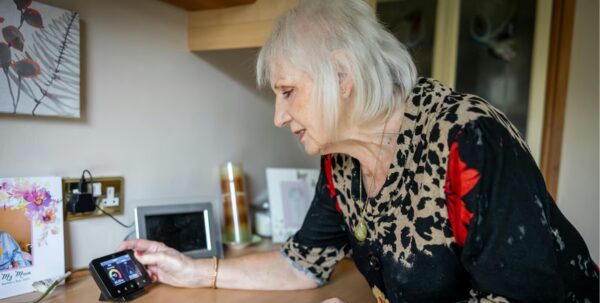
A monthly Direct Debit is a fixed sum taken on the same date each month, and it is almost never a bill for the energy used that month. The payments are usually based on an estimate of the amount of energy you will use over a year, divided into twelve5. The supplier then reconciles that estimate against actual meter readings over time.
That is why credit builds up. You pay for more energy than you have used, for example because you pay a set amount by Direct Debit every month, and the surplus sits on the account6. In a worked example used by Citizens Advice, a monthly Direct Debit for gas and electricity is set at £705. The figure is illustrative, not a market rate, but it shows the shape of the arrangement: a level monthly sum against a seasonal pattern of use.
The seasonal mismatch is the reason suppliers may increase the Direct Debit amount over the winter months to cover additional usage, while the unit rates themselves do not change3. A household that heats more in January is not on a higher tariff in January; it is paying a level amount that no longer matches consumption.
Meter readings keep the estimate honest. Suppliers recommend providing readings at least once a quarter, which is also the point at which a quarterly Direct Debit account is billed3. A smart meter removes the manual step, and switching from an existing prepay meter to a smart credit meter is straightforward17.
The independence question here is straightforward. A monthly Direct Debit is a standing arrangement with a private company, drawn on a bank account, and it depends on both continuing. It buys the lowest unit rate but ties the household to a supplier's estimate of its own consumption. The alternative, paying for what you use as you use it, costs more per unit but removes the estimate from the relationship.
Discounts: up to £60 a year with monthly Direct Debit and online billing
The discount for paying by Direct Debit is real money, and in Northern Ireland it is published as a figure. Power NI's Monthly Direct Debit with online billing gives a maximum of £60 savings per year, equivalent to 6% off the standard rate, with no exit fee and no fixed term contract4. The same supplier's Quarterly Direct Debit with online billing gives a maximum of £46 savings per year4.
The annual costs in that price list, using 3,200 units, show the same gap from the other direction:
| Power NI option | Annual cost (3,200 units) | Maximum annual saving |
|---|---|---|
| Monthly Direct Debit with online billing | £1,027 | £60 (6% off the standard rate)4 |
| Monthly Direct Debit without online billing | £1,049 | Not stated4 |
| Quarterly Direct Debit with online billing | £1,044 | £464 |
The figures are dated 18 September 2026 and apply to Power NI, so they are a Northern Ireland illustration rather than a GB-wide rate.
Two things drive the discount. The first is collection cost: a Direct Debit is cheaper for a supplier to administer than a payment on receipt of a bill, and the price difference reflects that. The second is billing method: online billing removes paper and postage, which is why the largest discount in the Power NI list attaches to Monthly Direct Debit with online billing rather than to Direct Debit alone.
The discount is not a reward for loyalty and it is not guaranteed to persist. It is a pricing decision by each supplier, and it sits inside the tariff rather than outside it. Ofgem's price cap benchmark review received 11 responses on the payment method specific approach, nine from suppliers and two from consumer groups and charities, which shows how contested the treatment of payment methods is19.
For a household, the discount is the clearest financial reason to hold a bank account and use it. It is also the clearest illustration of the trade-off: the cheapest published route is the one that gives a supplier standing access to a bank account, and the household's independence from that arrangement is correspondingly reduced.
Quarterly Direct Debit: smaller discount, bill every three months
Quarterly Direct Debit sits between monthly Direct Debit and standard credit. The household still pays by Direct Debit, so the supplier has the same collection mechanism, but the bill is issued every three months rather than levelled into twelve payments. The discount is smaller: in the Power NI list, Quarterly Direct Debit with online billing saves a maximum of £46 a year against £60 for the monthly equivalent4.
The practical difference is the size of each payment and the frequency of the reckoning. A quarterly account is billed against meter readings taken at least once a quarter, which is the frequency suppliers recommend for readings in any case3. That means less credit accumulates, because the gap between what is paid and what is used is shorter.
For households whose income arrives irregularly, or who prefer to see the actual consumption before paying for it, quarterly Direct Debit is the middle route. It keeps the Direct Debit discount, smaller though it is, without the level monthly estimate that produces large credit balances. The trade-off is that winter quarters are expensive and summer quarters are cheap, so budgeting is less even.
The Northern Ireland figures are the only published comparison in this set, and they should not be read across to Great Britain. Power NI's prices are set in a separate market with its own regulatory arrangements, and the Consumer Council for Northern Ireland publishes the comparison table4. Households in England, Scotland and Wales will find the same structure of discount, but the amounts are supplier-specific and change with each price cap period.
Paying without a Direct Debit: standard credit and fixed plans
Standard credit means paying on receipt of the bill rather than by an arrangement to pay in advance. The price cap covers default tariffs whatever the payment method, so a standard credit customer on a default tariff is protected, but at a different cap level from a Direct Debit customer9. Ofgem's 2018 cap design set two separate caps for direct debit and standard credit consumers2.
The cap varies by where you live, payment method (Direct Debit, standard credit or prepayment meter), fuel type (gas or electricity), and meter type1. That is the full list of variables, and payment method is one of them. A household that moves from Direct Debit to standard credit is not simply changing how it pays; it is moving to a different price.
Fixed plans complicate the picture. The cap does not apply to fixed, green or time of use tariffs9, so a household on a fixed deal pays whatever the contract says, and the payment method discount is a matter of the supplier's terms rather than a cap entitlement. Ofgem has consulted on designing at least one time of use price cap variant, for those who pay different prices depending on when they use electricity20.
Standard credit is also the fallback when a Direct Debit fails or is cancelled. If there are not enough funds in the bank account to pay a Direct Debit, it may be returned unpaid and could result in a charge from the bank to cover additional administration3. The energy debt remains, and the supplier will bill for it.
For households without a bank account, standard credit is the practical route, paid by cash, cheque, card or bank transfer. The cost is a higher unit rate than Direct Debit, which is the price of not giving the supplier standing access to an account. It is a real cost, and it falls hardest on households least able to absorb it.
Who qualifies for a standard credit meter
The price cap covers default tariff customers paying by standard credit, Direct Debit, prepayment meter or Economy 7 meter19. Standard credit is therefore not a niche arrangement: it is one of the four payment routes the cap recognises, and any household on a default tariff can be billed that way.
The qualification question is less about eligibility than about what the supplier will offer. Prepayment customers moving to a smart credit meter can do so straightforwardly17, which means the route out of prepayment and into credit billing exists. Ofgem has consulted on mandating lower or zero standing charge tariffs for all payment types, on both smart and traditional meters, with prepayment customers as a minimum10.
Backbilling rules apply across the board. Standard Licence Condition 21BA covers all payment methods, regardless of the payment type, meter mode or meter arrangements21. That matters for standard credit customers, because it limits how far back a supplier can bill for energy that was used but not charged.
The Green Gas Levy allowance in the default tariff cap is applied to gas standard credit, other and prepayment meter customers, equally across each payment method22. The detail is technical, but the principle is not: the cap is constructed payment method by payment method, and standard credit is one of the categories.
For a household, the practical position is that standard credit is available, capped, and more expensive per unit than Direct Debit. It requires no bank mandate and no advance payment arrangement. What it does not do is remove dependence on a supplier: the bill still arrives, the price is still set by the supplier within the cap, and the household still has to pay it.
How your monthly amount is reviewed and changed
A Direct Debit amount is not fixed for the year. Suppliers review current payments and debt repayments, and adjust the monthly figure when consumption or prices move11. The review is the mechanism that keeps a level monthly payment roughly aligned with annual use.
When the amount rises, the reason is usually consumption rather than price. Payments may rise because you are using more energy than the supplier expected, while the price of energy and the daily fee stay the same5. That distinction is worth holding onto: a higher Direct Debit is not automatically a price increase, and a household that has changed its heating habits can expect the estimate to follow.
The notice requirement is a consumer protection. Your supplier should give you reasonable notice of any changes to your direct debit payments, and should also explain why the change is necessary5. The Direct Debit guarantee sets the notice period at between 3 and 10 days, depending on the supplier5.
If the review produces a figure the household cannot meet, the supplier has options beyond the standard amount:
- Agree a payment plan, a payment break or a reduction11
- Review current payments and debt repayments11
- Give access to hardship funds11
- Fund paying off energy debt through supplier schemes and grants13
Where a complaint follows, outcomes can include financial compensation, an apology, agreeing to fix the problem, a refund, or an affordable payment plan14.
The independence point is that the monthly amount is the supplier's estimate, reviewed on the supplier's schedule, and changed with notice rather than consent. The household can challenge it, negotiate it, or leave, but it does not set it. That is the arrangement a Direct Debit discount buys.
Credit on your account: when you get a refund

Credit builds up when payments exceed use, which is the normal state of a level monthly Direct Debit for much of the year6. The money is the household's, and it can be claimed back. You can contact your supplier to claim this credit back at any time6.
The clearest trigger for a refund is switching. When you switch to a new supplier, your old supplier will refund any credit in your final bill, and you could get compensation if they do not7. The same rule appears across Ofgem's billing guidance, which is a sign of how firmly it is established6.
There is a separate route for money owed after a supplier has failed. Ofgem publishes a service for checking whether you are owed money from your energy bill, which covers the cases where the supplier is no longer trading6.
For households that prefer not to hold credit with a supplier at all, the options are quarterly Direct Debit, which shortens the gap between payment and use, or standard credit, which pays after the fact. Both cost more per unit than monthly Direct Debit. The credit balance is the price of the discount, and it is a real transfer of cash flow from the household to the supplier for part of the year.
Changing your payment date or amount
Payment dates and amounts are changed by contacting the supplier. If you want to change the amount you pay, contact your supplier24. The supplier will then review current payments and debt repayments and agree a new figure11.
Some suppliers offer more flexibility than others on timing. Octopus Energy has outlined offering weekly or fortnightly direct debits, with payments reviewed and adjusted more easily25. That is a supplier-specific arrangement rather than a market standard, and it shows that the monthly rhythm is a commercial choice, not a regulatory requirement.
Variable Direct Debit is the other route for households that want to pay for what they use. Citizens Advice advises checking whether your supplier offers variable direct debit payments, and notes that if it does not, you could switch energy supplier5. Variable Direct Debit removes the estimate and the credit build-up, at the cost of a bill that moves with consumption.
Where a supplier has made a mistake with payments, there is a timescale. They should pay any refund by cheque or into your bank account within 10 working days of the date they agree a mistake was made23. That is a guaranteed standard rather than a discretionary gesture.
If you are on Fuel Direct, where deductions are made from benefits, the rules are different again. You can stop deductions for ongoing bills at any time, and if you want to change the amount you pay, contact your supplier24. The Department for Work and Pensions publishes the benefits guidance that covers this route24.
What paying without Direct Debit costs you
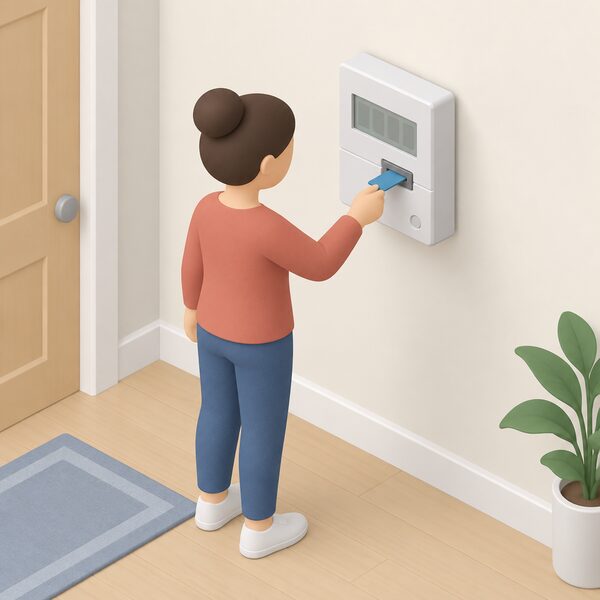
The cost of paying without Direct Debit is a higher unit rate, and it is built into the cap rather than added as a fee. Ofgem sets separate cap levels for Direct Debit, standard credit and prepayment, so the difference is structural1. A household on standard credit pays more for the same energy than a household on Direct Debit, before any question of late payment arises.
The published Northern Ireland figures show the size of the gap in one market. Power NI's Monthly Direct Debit with online billing costs £1,027 a year using 3,200 units, against £1,049 for Monthly Direct Debit without online billing and £1,044 for Quarterly Direct Debit with online billing4. The maximum annual saving from the best combination is £60, equivalent to 6% off the standard rate4.
There is no separate late payment charge in the facts available here, and the cost of missing a payment falls differently. A Direct Debit that cannot be met may be returned unpaid and could result in a charge from your bank to cover additional administration3. That charge comes from the bank, not the supplier, and the energy debt remains payable.
For households without a bank account, the higher unit rate is unavoidable through the standard routes. The routes that exist are cash, cheque, card and bank transfer, and payment through the supplier added to the energy account or prepayment meter16. Prepayment is priced separately again, and Ofgem has consulted on lower or zero standing charge tariffs with prepayment customers as a minimum10.
The independence picture is mixed. Paying without Direct Debit keeps the supplier out of the household's bank account and removes the standing arrangement, which is a genuine form of independence. It costs more per unit, and it does not remove dependence on the supplier for the energy itself. The cheapest route and the most independent route are not the same route, and the difference is priced.
Sources25 cited
- Energy price cap, Ofgem
- Default tariff cap: policy consultation overview, Ofgem, 2018-05-25
- Direct Debit guide, Uswitch, 2025-10-22
- Electricity price comparison table, Consumer Council for Northern Ireland, 2026-09-18
- Energy supplier has increased your direct debit, Citizens Advice, 2026-09-17
- Check if you are owed money on your energy bill, Ofgem
- Understand your electricity and gas bills, Ofgem
- Problems with services: consumer advice, Isle of Anglesey County Council, 2025-10
- Energy price cap explained, Welsh Government
- Mandating lower or zero standing charge tariffs: technical working paper, Ofgem, 2025-09-24
- Get help with your energy bills, Ofgem
- Getting help if you can't afford your energy bills, Ofgem
- Get help with your home or business energy bills, Ofgem
- Complain about your energy supplier, Ofgem
- Complain about your energy supplier or network operator, Ofgem
- Check if you can get payment power cut, Ofgem, 2026
- How to get a smart meter, Smart DCC, 2026
- Energy price cap benchmark review decision, Ofgem, 2025-11-21
- Changes to the energy price cap between 1 January and 31 March 2026, Ofgem, 2025-11-21
- Energy price cap: technical approach to market wide half hourly settlement, Ofgem, 2026-03-25
- Open letter on expectations for energy suppliers undertaking charge recovery action, Ofgem, 2020-12-17
- Price cap: decision on changes to Annex 4, Ofgem, 2022-02-04
- Switch your home energy supplier, Ofgem
- Bills and benefits, GOV.UK, 2026-09-17
- Consumer vulnerability strategy progress report, Ofgem, 2026-07-21
 Price Cap RatesPaying by direct debit, prepayment or standard credit changes what you pay under the price cap, so which method is cheapest?
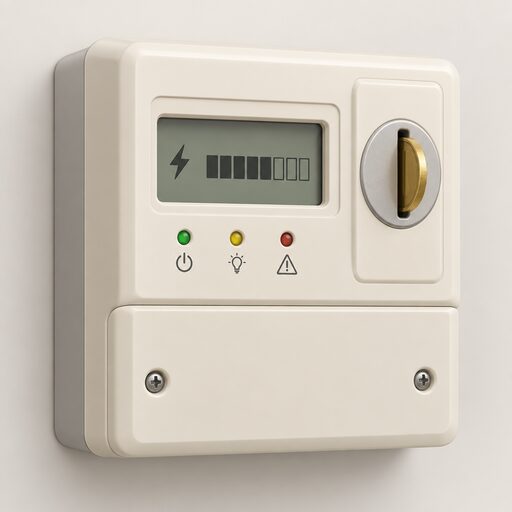 Prepayment and Pay As You GoHow prepayment and pay as you go energy tariffs work in the UK: meter types, top-ups, emergency credit, debt repayment through the meter, price cap treatment and how households move to a credit meter.
 Unit Rates by RegionWhy do electricity and gas prices differ depending on where you live?
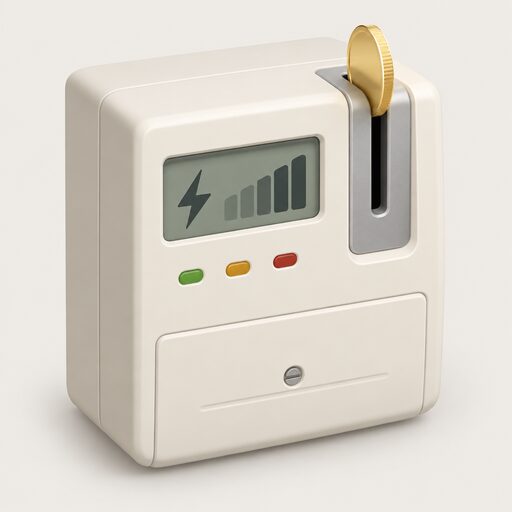 Prepayment MetersHow do you top up a prepayment meter for gas or electricity, and what happens when the credit runs out?
 Reading an Energy BillA line-by-line walk through a domestic gas and electricity bill: unit rate, standing charge, kWh consumption, meter readings, tariff name and balance, plus the 12-month back billing limit and the guaranteed standards payments that apply when a supplier or network operator gets it wrong.
 Energy Debt Repayment PlansOwe money to your energy supplier?