In this guide
The Big Six were the six incumbent household energy suppliers that dominated Great Britain after privatisation: Centrica plc, the parent company of British Gas, E.ON UK, Scottish and Southern Energy (SSE), RWE npower, EDF Energy and ScottishPower1. Ofgem's own glossary classes them as large legacy suppliers, defined as firms that have held at least 5% of the market in either fuel since the government transferred the ownership of gas and electricity from public to private ownership in the 1980s1. EDF joined the group in 2002 and is French-owned2.
The grouping is now historical. As a label it survives mostly in search boxes and in older consumer guidance. Two of the six, npower and SSE, no longer trade as household supply brands in Great Britain, while the remaining four still supply more than half of all energy customers, among them British Gas, EDF Energy and E.ON Next3. Concentration itself has barely shifted: Ofgem's retail market reporting of April 2025 records six large companies holding 91% of the domestic market, but notes that Octopus Energy, which was never a Big Six member, is now the largest electricity supplier4. Twenty-three domestic energy suppliers and 72 business energy suppliers were active at that point4.
For a household, the practical point is that the brand on the bill changed hands more than the market structure did. Six firms still hold the great majority of accounts, the price they may charge on a default tariff is set every three months by Ofgem rather than by competition, and none of the surviving incumbents offers a tariff without a standing charge5. Reducing dependence on any one of them is less about the logo and more about how much energy a home buys in the first place.
The Big Six at their peak
At the height of their dominance the six firms were effectively the market. Ofgem's Retail Market Review of March 2011 recorded that the Big Six still held over 99 per cent of domestic customer accounts11, a figure echoed in commentary at the time that the six companies controlled 99 per cent of the market12. Guidance still in circulation describes 91.2% of the domestic electricity market as dominated by the Big Six13, a figure that reflects a later stage of the same concentration.
Ownership was mixed from early on, which matters for any discussion of energy sovereignty. British Gas sat under Centrica, a UK-listed company. E.ON UK and RWE npower were the British arms of German groups. EDF Energy is French-owned and is described as the UK's fifth-largest energy supplier2. ScottishPower has been part of a Spanish group, and SSE was a Scottish-headquartered company. A household buying from most of the six was buying from a foreign-owned balance sheet, with the profit and the investment decisions made outside the UK.
Erosion began slowly. Ofgem reported that the six large suppliers' share of GB domestic electricity meter points fell from 90% to 87% between March 2015 and March 20166, and that as of September 2016, 14% of domestic consumers received their electricity from suppliers other than the six large energy suppliers14. That is a decade of change measured in single percentage points, which is why the term stuck long after it stopped describing a stable group. More detail sits on UK energy supplier market share.
What became of them: consolidation, failure and foreign ownership
Three forces reshaped the group: consolidation among the incumbents, the arrival and collapse of challengers, and continued overseas ownership.
The collapses were the sharpest event. The Public Accounts Committee recorded that between July 2021 and July 2022, 29 energy suppliers failed, attributing this to a lack of financial resilience within many suppliers alongside the rise in wholesale prices7. Citizens Advice put the consumer effect at turmoil for over 4 million customers from the beginning of August 20218, and found afterwards that a significant minority of people continue to face severe disruption8. Those failures did not bring down a Big Six firm, but they redistributed customers and costs across the whole market, and much of the mutualised cost eventually reached every bill.
Consolidation ran alongside it. Ofgem's scheme reporting notes that ESB merged with So Energy in 2021, with ESB remaining the supplier group name and trading as So Energy15. Similar absorptions moved former Big Six household books into other brands, which is why four rather than six of the original names still appear on bills3. On the public side, Great British Energy is publicly-owned16, a different model of ownership from any of the incumbents.
Related detail sits on who owns which energy supplier, energy supplier failures and supplier of last resort.
Which names still trade, and who is largest now
Four of the original six still supply more than half of energy customers, including British Gas, EDF Energy and E.ON Next3. The market beyond them is broader than it was but not crowded: 23 domestic suppliers were active at Ofgem's April 2025 count, against 72 in the business market4. The single largest electricity supplier is now Octopus Energy4.
| Measure | Figure | Date |
|---|---|---|
| Six large suppliers' share of GB domestic electricity meter points | 87%, down from 90% | March 20166 |
| Domestic consumers supplied outside the six large suppliers | 14% | September 201614 |
| Six large companies' domestic market share | 91% | April 20254 |
| Active domestic suppliers | 23 | April 20254 |
Ofgem's 2022 review of how suppliers support customers in vulnerable situations grouped firms by the severity of the weaknesses found. British Gas, Bulb, EDF, E.ON, Ovo, ScottishPower and Utility Warehouse were in the first group, where Ofgem identified minor weaknesses17. That review is a reminder that incumbency and service quality are separate questions. Comparative pages including E.ON Next vs British Gas and EDF vs British Gas set out the individual brands.
The tariff cap: how Ofgem limits what suppliers can charge
The energy price cap limits the maximum amount energy suppliers can charge for each unit of gas or electricity used9. It was first introduced in 2019, because of concern that customers who stayed put were paying more than those who moved, and it sets a limit to the unit rate of gas and electricity a supplier can charge to protect consumers against this loyalty penalty9. The Welsh Government's guidance describes the same purpose: Ofgem sets the price cap to protect people from a loyalty penalty18.
Ofgem reviews and resets the cap every 3 months, covering both the unit rate and the daily standing charge on a default tariff10. The Commons Library likewise records that the regulator revises the cap each quarter19. Recovery of some wholesale cost elements within the cap methodology has been on a six-monthly basis20, which is one reason cap movements lag wholesale market movements.
Two limits matter to households. First, the cap is a cap on rates, not on bills: a home that uses more pays more, and the headline figures quoted around each review describe typical use rather than an individual account. Second, the cap is a Great Britain instrument. Energy prices were not capped in Northern Ireland and energy suppliers there have the flexibility to set their tariffs independently to reflect their costs of operating21. See energy suppliers in Northern Ireland.
Bills since the crisis and what is driving them
Bills remain far above pre-crisis levels. The End Fuel Poverty Coalition reported in January 2026 that energy prices were 70% higher than five years ago22. The House of Lords Library analysis of June 2026 breaks the increase down: 54% of the rise since pre-crisis levels is due to higher wholesale prices, with network charges accounting for 20% and green levies for 6%23.
That split is the heart of most arguments about bills. The largest single driver is the wholesale price of gas and electricity, which no domestic supplier sets and no supplier switch removes. Network charges, the cost of the wires and pipes, are the second largest. Policy costs, the so-called green levies, are the smallest of the three named components.
Tax sits on top. Ofgem's bill guidance identifies VAT at 5% on energy bills24. HMRC guidance records that qualifying supplies of electricity in Great Britain are liable to VAT at 0% from 1 October 202625. Separately, the Government stated in March 2026 that action taken through the previous Budget would remove costs from energy bills and reduce energy costs by 7% from April26.
Standing charges: why none of the Big Six offers a zero standing charge tariff
A no standing charge tariff, also called a zero standing charge tariff, is a gas, electricity or dual fuel energy deal that does not include standing charges5. As of April 2026 there were just two suppliers offering no standing charge electricity and gas tariffs, E and Utilita5. In terms of the Big Six, none currently offers a zero standing charge tariff5.
The reason is structural rather than reputational. These tariffs typically charge higher unit rates for gas and electricity, which could result in higher energy bills5, and independent guidance makes the same point: tariffs with zero standing charges usually charge a higher cost per kWh for each unit of energy used27. Fixed network and metering costs still have to be recovered, so removing the daily charge pushes them into the rate.
They are also narrow in availability. Zero standing charge tariffs currently only exist for prepayment customers and are geared very much towards those who use little electricity and gas5. They are described as best suited for households that use little gas or electricity, and properties left empty for long periods such as holiday homes27.
This matters for households generating their own power. A home with solar and storage may cut its imported units sharply while still paying the standing charge every day of the year, so the fixed element becomes a larger share of a smaller bill. Several suppliers, including British Gas, E.ON Next and EDF Energy, offer smart storage battery tariffs, and smart time of use tariffs are offered by British Gas, E.ON Next, EDF Energy, Octopus Energy, Ovo Energy and ScottishPower as well as smaller firms including 100Green, Fuse Energy, Good Energy and So Energy28. See also energy suppliers and household energy independence.
Energy UK: the trade association behind the suppliers

Energy UK is the industry trade body, representing firms including British Gas, ScottishPower and EDF Energy29. It is not a regulator. It does not issue licences, set the price cap, or impose penalties, and it has no role in adjudicating a household's complaint. Its function is representation: putting the industry position to government, to Parliament and to the public.
That position is sometimes contested. On the use of court warrants to enter homes and fit prepayment meters, Energy UK has argued that the warrants are a last resort after exhausting all other options and after vulnerability checks are carried out29. Consumer bodies have taken a different view of how those checks worked in practice. Reading a trade body's statement as industry advocacy rather than as an independent finding is the right frame.
A separate voluntary commitment, the Energy Switch Guarantee, covers the switching process itself. All of the big six energy suppliers have signed up, along with several smaller suppliers30, and So Energy is among the signatories as of May 202630. It is an industry promise, not a licence condition, and is set out on the Energy Switch Guarantee.
Switching away from an incumbent
Ofgem's position is direct: if you pay a supplier directly for the electricity or gas you use at home, you can choose to switch to a different supplier or tariff at any time31. Residents of some alternative and communal arrangements are in a different position; where a household holds its own contract with a supplier, it may be able to switch.
Exit fees are the usual friction. Tariff Watch reported in September 2026 that just one in twenty, 6%, of British Gas tariffs come with no exit fees32. Where a supplier has entered an Energy Supply Administration Order, Ofgem states that customers can switch to another supplier without any exit fees33.
If a supplier stops trading, no action is needed:
"You do not need to do anything if your current supplier goes out of business. We'll automatically move you to a new supplier, and make sure your energy supply is not interrupted."
Related pages cover exit fees when switching, what happens if my energy supplier goes bust and final bills and credit refunds.
Profits, penalties and scrutiny
Supplier profit is measured on a bill as earnings before interest and tax, or EBIT, described by Ofgem as how much the supplier makes before interest or tax34. The historic numbers show how volatile supply margins are: across the six large suppliers, profits on domestic electricity sales fell from £544.0m in 2014 to £128.7m in 2015, while the average non-domestic electricity profit margin fell from 2.0% to 1.0% over the same period6.
Contemporary estimates are larger and cover the whole industry rather than supply alone. The End Fuel Poverty Coalition stated in January 2026 that around 24% of every household energy bill is taken as profit by the energy industry22, and reported in September 2026 that suppliers are expected to make an additional £140m in profit on the nation's energy bills over the next 12 months following price cap changes32. Those two figures come from a campaigning body and should be read as its estimates. More sits on energy supplier profits and margins.
Scrutiny runs through several bodies:
- Ofgem, formally the Gas and Electricity Markets Authority35, monitors suppliers and network operators to make sure they meet the rules set out in licences, regulations and law, provide good customer service and reply quickly to customers who contact them36. On the cap, Ofgem states it will be closely monitoring supplier compliance and will continue to take firm action against suppliers who fall short of their requirements37.
- Guaranteed Standards. Ofgem requires energy suppliers to meet Guaranteed Standards and sets the level of compensation payable if they breach a standard38. See switching compensation and guaranteed standards.
- Enforcement. Ofgem has previously used its enforcement powers for smart meters to require OVO Energy to contribute more than £1 million to a redress fund, and has been considering more severe financial penalties39.
- Obligations. Ofgem calculates suppliers' obligations under the Energy Company Obligation, processes notifications, audits suppliers, runs counter fraud work and reports to the Secretary of State40. Which suppliers carry obligations under the Great British Insulation Scheme is determined by customer numbers and supply volumes41, and suppliers have had to publicly share their performance against smart metering installation targets42.
- The Energy Ombudsman can tell suppliers to take practical action, such as crediting or cancelling an account or changing a tariff, make an apology, or offer a financial award, or a combination, and may make recommendations to prevent issues happening again43. It is funded by the suppliers signed up to its scheme, who pay a fee for each case it reviews regardless of the outcome44.
That last point is worth stating plainly: the redress scheme a household uses against a supplier is paid for by suppliers. The fee is charged per case whatever the decision44. See complaining about an energy supplier.
What the Big Six mean for a self-sufficient household
The dependence that remains is easy to state. Six large companies hold 91% of the domestic market4, most of them under foreign ownership, and the rate they may charge on a default tariff is reset by a regulator every three months10 rather than negotiated. The largest driver of the increase in bills since the crisis, at 54%, is wholesale price23, which sits entirely outside a household's control and outside any individual supplier's control. Switching brand changes the customer service and the standing charge; it does not change the wholesale exposure.
What a household can influence is volume and timing: the units imported, and when they are imported. Time of use and storage tariffs from several of the incumbents and from smaller firms make timing worth money28. But the daily standing charge persists whatever the meter records, and no Big Six supplier offers a way around it5. Energy independence, in this market, is built on the fabric of the building and on-site generation, with the supplier relationship reduced rather than replaced.
Sources44 cited
- Energy terms explained, Ofgem
- Big six energy suppliers guide, Uswitch, 17 July 2026
- Which? energy survey results, Which?, 19 January 2026
- State of the energy market: retail, Ofgem, 15 April 2025
- Should I get a no standing charge tariff?, Uswitch, 26 August 2026
- Retail energy markets in 2016, Ofgem, 2016
- Energy bills support, Public Accounts Committee, UK Parliament
- Back from the brink, Citizens Advice, 10 July 2022
- What is the energy price cap, Energy Saving Trust, 7 September 2026
- Changes to the energy price cap, 1 October to 31 December 2025, Ofgem, 27 August 2025
- Retail Market Review final domestic proposals, Ofgem, March 2011
- What could energy price fixing mean for consumers and markets, Carbon Brief, 2011
- Moving house gas and electricity guide, Uswitch, 26 August 2026
- Future Insights Series 4, Ofgem, March 2017
- Smart Export Guarantee annual report 2022-23, Ofgem, September 2023
- Great British Energy, Energy Saving Trust, 20 May 2026
- Ofgem completes review of how suppliers support customers in vulnerable situations, Ofgem, 22 November 2022
- Energy price cap explained, Welsh Government, 4 March 2026
- Energy prices briefing, House of Commons Library, 20 September 2026
- Energy price cap wholesale costs review, Ofgem, 15 December 2023
- Energy Price Guarantee up until 30 June 2023, GOV.UK, 17 September 2026
- Household energy debt surges to £4.43 billion, End Fuel Poverty Coalition, 1 January 2026
- Electricity prices in Great Britain, House of Lords Library, June 2026
- Understand your electricity and gas bills, Ofgem
- VAT on fuel and power (Notice 701/19), HMRC, 1 October 2026
- Heating Oil Support debate, Hansard, 16 March 2026
- Gas and electricity standing charges, Confused.com, 6 July 2026
- Time of use tariffs explained, Which?, 23 April 2026
- Forced prepayment meter transfer, End Fuel Poverty Coalition, 8 January 2026
- Energy Switch Guarantee, Uswitch, 20 July 2026
- Switch your home energy supplier, Ofgem
- Tariff Watch, End Fuel Poverty Coalition, 20 September 2026
- What happens if your energy supplier goes out of business, Ofgem
- Check if you are owed money on your energy bill, Ofgem
- Improving debt standards in the domestic retail market, Ofgem, 12 December 2024
- Complain about your energy supplier or network operator, Ofgem
- Summary of changes to the energy price cap, 1 October to 31 December 2025, Ofgem, 27 August 2025
- Problems with services: energy, Isle of Anglesey County Council Trading Standards, October 2025
- Smart meter rollout, Public Accounts Committee, UK Parliament, 20 October 2023
- Energy Company Obligation, Ofgem, 17 September 2026
- Great British Insulation Scheme energy suppliers, Ofgem, 17 September 2026
- Supplier smart metering installation targets, Ofgem, 17 September 2026
- What to expect, Energy Ombudsman, 19 September 2026
- Energy Ombudsman FAQs, Energy Ombudsman, 19 September 2026
 Who Owns Which Energy SupplierWho is actually behind the company that sends your energy bill?
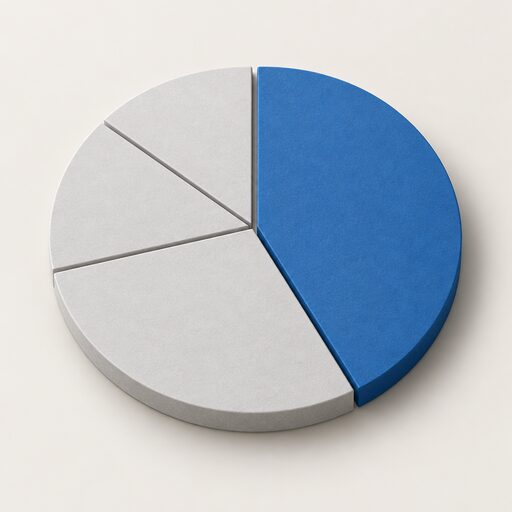 Supplier Market ShareWho supplies most homes in Britain, and does the answer change for gas and electricity?
 The Full Energy Suppliers GuideWho the UK's domestic gas and electricity suppliers are, how the market is structured across Great Britain and Northern Ireland, what a supplier is licensed and obliged to do, how the price cap limits bills, what happens when a supplier fails, and who regulates it all.
 Suppliers in ScotlandWho do you contact in Scotland when something goes wrong with your supplier, whether that is British Gas, ScottishPower, SSE or another big name?
 Gas Distribution NetworksWho actually owns the pipes under your street, and who do you call when gas smells or the supply fails?
 Customer Service RatingsWhich energy suppliers answer the phone quickly and deal with complaints properly?