

In this guide
An erroneous transfer is a change of energy supplier that the householder never asked for. The supply is moved from the company that was billing you to a different one, usually because of a mistaken address, a misread meter serial number, a doorstep or telephone sales error, or a data entry slip somewhere in the switching chain. Ofgem guidance is blunt about the consequence: you could get £40 if your energy supply is switched by mistake1.
The scale of the problem is not trivial. Ofgem's own consultation on faster and more reliable switching found that in one in every ten switches there are problems with the change of supplier meter read that suppliers have to fix2. That is a 2014 figure and the switching process has been tightened since, but it shows how routine the underlying failure is: the meter reading that anchors a switch is the point where addresses, serial numbers and occupiers get confused.
What follows is the industry process for putting the supply back, who pays what, and how the rules differ from an ordinary switch. The short version: the new supplier carries the £40 payment, the reversal has a 21 working day deadline, and your original supplier's account continues rather than closing1.
What an erroneous transfer is, and how often it happens
An erroneous transfer, usually shortened to ET across the industry, is a switch that happens without a valid contract behind it. The supply itself does not move: the same wires and pipes serve the property, and the same meter measures the units. What changes is the registration, the record held in the central switching systems that says which company is entitled to bill this meter point. An ET is therefore a billing and registration error, not a physical one.
The frequency figure that Ofgem has published is the one in ten switches with change of supplier meter read problems2. That is not the same as one in ten switches being erroneous, and the two should not be conflated: a meter read problem is a defect that suppliers have to fix, and most are fixed without the customer ever noticing. But it is the mechanism through which many erroneous transfers begin, because a wrong or missing read at the point of transfer leaves the new supplier billing against an estimate that belongs to somebody else's usage pattern.
The Energy Ombudsman's casework shows the pattern from the other end. In one published case, a consumer's electricity was billed on estimated readings only for the previous six months, after a meter exchange where the new meter had an installation reading of 00000 and the supplier's systems had not been updated5. The consumer later provided an online reading of 00056, three months after the meter reader's visit, and the supplier assumed the reading was incorrect because the meter could not go backwards, and continued with estimates5. That is a billing failure rather than an ET, but the root cause, a delay in the supplier updating its systems, is the same one that produces transfers to the wrong account.
For a household, the practical point is that an ET is not rare enough to be dismissed as impossible, and it is not something the householder has to prove from scratch. The registration record either shows a contract or it does not.
How you end up switched to the wrong supplier
There are three routes, and they look different from the household's side.
The first is a genuine mistake in a switch that was meant to happen, but to a different address or meter. A new occupier at a property, a block of flats with similar numbering, or a meter serial number transcribed incorrectly can all send a registration to the wrong meter point. The second is an unauthorised switch: a sales agent, whether on the doorstep, on the phone or online, registers a supply without the householder's agreement. The third is supplier-initiated. Ofgem's consumer journey research records that the new supplier may also initiate the ET process without a customer prompt6. In other words, a supplier that realises it has taken a supply in error can start the reversal itself, and the householder does not have to be the one to raise it.
The rules on who may switch are clear, and they matter here because they define when a transfer is legitimate. Ofgem guidance states that if you pay a supplier directly for the electricity or gas you use at home, you can choose to switch to a different supplier or tariff at any time1. The same applies in rented properties where the tenant pays the bills: if you have to pay your energy bills, you can choose to switch your supplier or tariff at any time1. A landlord or letting agent cannot authorise a switch on a tenant's behalf where the tenant holds the account.
"a supplier cannot prevent you from switching to another supplier, for any reason or at any time, (i.e. they cannot object to you transferring for reasons of debt or contract)"
That quotation is about blocking a switch, but it cuts both ways. If a supplier cannot object to a transfer, it also cannot claim a transfer was valid simply because the registration went through. The registration is a record, not a contract.

The rules that protect you: the Energy Switch Guarantee and Ofgem's standards
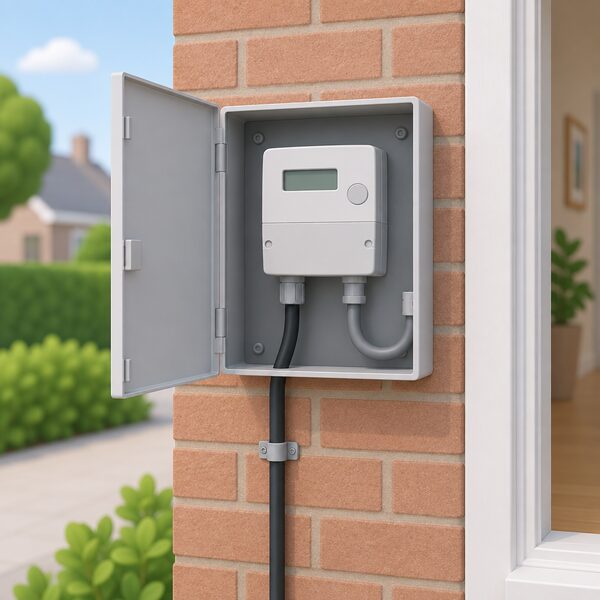
Two layers of protection apply. The first is the switching process itself, which Ofgem sets: suppliers must switch your electricity or gas supply from your old supplier to your new supplier within 5 working days1. The second is the Guaranteed Standards of Performance, a set of service levels with fixed compensation attached. Ofgem requires energy suppliers to meet Guaranteed Standards and sets the level of compensation payable if they breach a standard8.
The switching standards were introduced deliberately. Ofgem introduced new guaranteed standards as part of its work to improve customer experience when switching supplier9. The Energy Ombudsman's own casework records industry-mandated payments of £30 for the failure to complete the transfer10, which shows the standards being applied in practice, though the £40 figure in current Ofgem guidance is the one that applies to an erroneous transfer1.
Awareness of these standards is poor. Ofgem's 2026 research on customer service standards found low awareness of Guaranteed Standards of Performance among participants, alongside widespread agreement that compensation is an important element of responding to service failings when guaranteed standards are breached11. The same research found that views on the appropriate level of compensation varied widely amongst the sample, and that service failings related to loss of supply were typically seen as the most severe11. An erroneous transfer is not a loss of supply, which is part of why it attracts a fixed £40 rather than the larger sums attached to power cuts.
The Energy Ombudsman sits alongside Ofgem rather than inside it. It provides an independent service, separate to Ofgem, for problems with an energy supplier, an energy broker, a network operator or a heat network supplier12. It cannot be used as a first port of call: the supplier must have had the chance to resolve the matter first.
Compensation: £40 from the new supplier, with more if they miss deadlines
The core payment is straightforward. Ofgem guidance states you could get £40 if your energy supply is switched by mistake, and that if the supplier does not resolve it, your new supplier must pay you £401. The payment should be made by cheque or into your bank account within 10 working days of the date they agree a mistake was made1.
Beyond that, three further £40 payments can apply, each tied to a missed deadline:
| Trigger | Who pays | Amount |
|---|---|---|
| Supply switched by mistake | New supplier | £401 |
| Old and new suppliers take more than 20 working days to agree whether the switch was correct | Each supplier | £40 each1 |
| Supplier takes more than 20 working days to reply after being told about the switching mistake | The supplier | £40 extra1 |
| Old supplier takes more than 21 working days to re-register the supply once aware of the mistake | Old supplier | £40 extra1 |
The Energy Ombudsman's casework shows a related figure in a switching dispute: industry-mandated payments of £30 for the failure to complete the transfer, with a further £30 for failing to make the initial guaranteed standards payment within 10 working days10. The documents give £30 and £40 for what appear to be the same class of failure, and the two figures are not reconciled. The £40 figures come from current Ofgem guidance on switching1; the £30 figures come from an Ombudsman case study10. Where a household is calculating what it is owed, the £40 schedule is the one published as current guidance.
Compensation is not the only remedy available. Where a complaint is upheld, possible outcomes include financial compensation, an apology, agreeing to fix the problem, a refund, or providing an affordable payment plan13.
Getting switched back: the 21-working-day reversal process
The reversal has a fixed deadline. Ofgem guidance states they have 21 working days to switch you back1. That figure is consistent with Ofgem's earlier consultation on the guaranteed standards, which set the requirement to return an erroneously switched customer within 21 working days of identification of an erroneous switch3.
The process runs roughly as follows:
- The householder, or the new supplier acting on its own initiative, identifies that the switch was erroneous6.
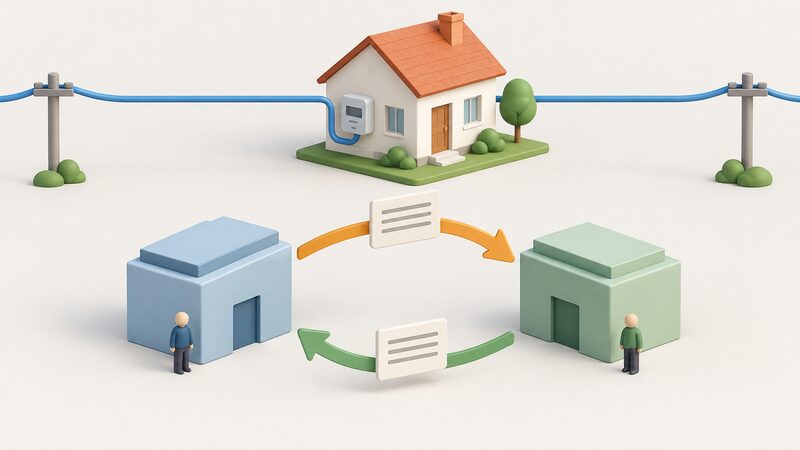
- The two suppliers exchange the registration data and agree whether the switch was valid. This stage has its own 20 working day limit, after which each supplier pays £401.
- The old supplier re-registers the supply. This has a 21 working day limit, after which the old supplier pays a further £401.
- Billing is corrected so that the original supplier bills the period throughout.
Ofgem's consumer journey research describes a variant in which the customer contacts the original supplier within 5 days suspecting an erroneous transfer, continuous billing applies, and the customer is returned to the original supplier within 20 days of registration6. Current guidance states a 21 working day deadline for the supplier to switch you back1, and the Energy Switch Guarantee gives the same 21 working days1. The two figures sit close together and are not reconciled in the available documents; the 21 working day deadline is the one stated in current guidance1.
The important practical feature is continuous billing. Because the supply is returned to the original supplier and that supplier's account continues, the household should not end up with two suppliers each billing a slice of the same period at out-of-contract rates. Where the reversal is delayed, the risk of a gap in correct billing rises, which is why the deadline carries a payment.
Your credit balance and final bill from the old supplier

Where a switch is genuine, the financial position is settled by the final bill. Ofgem guidance states your old supplier will refund any credit in your final bill, and you could get compensation if they do not4. The same rule appears across Ofgem's billing guidance: your old supplier will refund any credit in your final bill14.
Where the switch was erroneous, the position is different in an important way. The account with the original supplier does not close, because the supply is returned to it. The credit held on that account therefore stays where it is and is applied against the ongoing account rather than refunded. That is the practical answer to the question of whether an erroneous transfer affects your credit balance: it should not, because the balance is not being settled, it is continuing.
Debt works the same way in reverse. Ofgem guidance states that if you owe money to your old supplier and have been in debt to them for less than 28 days, any money you owe should be added to your final bill1. Separately, you cannot switch if you have been in debt to your supplier for more than 28 days1. Neither rule is engaged by an erroneous transfer, because the householder did not initiate a switch and the supply is being returned rather than moved.
If a credit refund is delayed on a genuine switch, the complaint route is the same as for any billing dispute. Ofgem lists refusing to refund credit from your account among the issues a supplier must be contacted about, alongside late, incorrect or missing bills, back billing, being overcharged, a faulty meter and poor customer service12.
How to spot an erroneous transfer on your account
The signs are usually administrative rather than physical. Nothing about the supply changes: the lights stay on, the meter keeps recording, and no engineer visits. What changes is the paperwork.
- A welcome letter, email or text from a supplier you never contacted.
- A final bill from your existing supplier when you did not ask to leave.
- A Direct Debit mandate set up with a new company, visible on a bank statement.
- A change to the supplier name on your online account or app.
- A bill from a new supplier showing estimated readings that do not match your meter.
The last of these is the one that causes the most damage if left. The Ombudsman case study on incorrect estimated billing shows how a supplier can continue on estimates for six months where a meter reading is disputed, and how a consumer reading of 00056 was set aside because the meter could not go backwards5. An erroneous transfer that is not corrected can produce the same pattern: estimates accumulating against a meter point that is not properly registered to the billing supplier.
Checking is straightforward. Ofgem's guidance on switching sets out the information a household needs to identify its supply: your postcode, the name of your current supplier, the name of your current tariff, the amount you pay per unit in kilowatt hours, and the amount of energy you use each year1. If the supplier name on a bill does not match the supplier you believe you are with, the registration has moved.

Escalating a complaint: the supplier first, then the Energy Ombudsman
The route is fixed and it starts with the supplier. The Energy Ombudsman's guidance is that a household notifies its supplier and works with them to try and resolve the issue before contacting the Ombudsman17. Its consumer-facing wording is the same: speak to your energy supplier first to raise a complaint, and if they cannot help, the Ombudsman will aim to fairly and impartially resolve the dispute18.
The time gate is eight weeks. The Ombudsman states you must raise a complaint with your supplier in the first instance, and that the service is free if the issue is not resolved after eight weeks, or you receive a deadlock letter, after complaining to the supplier first19. A deadlock letter is the supplier's formal statement that it cannot take the matter further.
For an erroneous transfer complaint specifically, the evidence matters. The Ombudsman's guidance on case files states that for erroneous transfer complaints, gaining suppliers should provide evidence a contract was agreed, such as a call recording or a screenshot of the information submitted by the consumer9. That places the burden of showing a contract on the supplier that took the supply, which is the correct place for it: the householder's position is that no contract was agreed, and the supplier is the party that must show otherwise.
When a case is raised, the Ombudsman asks for the energy supplier's name, the name of the account holder, the account number and the date the complaint was first raised with the supplier20. Where a mistake has been made or a customer has been treated unfairly, the Ombudsman can require the supplier to put things right20.
Where the household's independence stands
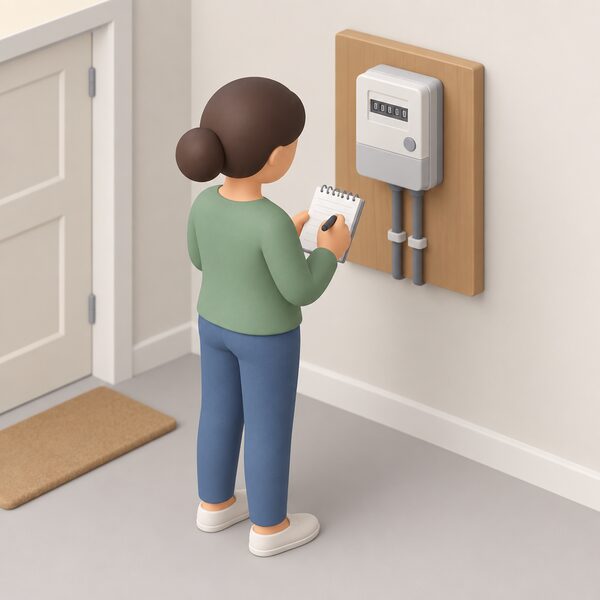
An erroneous transfer is a reminder of how much of a household's energy position rests on records it does not control. The physical supply is independent of the billing company: the wires, pipes and meter are unaffected by which name appears on the bill. But the registration record, held in industry systems and updated by suppliers, determines who can bill you, what rate applies, and whether a credit balance is refunded or carried forward. A household can choose its supplier, and Ofgem's rules protect that choice, but it cannot directly correct the registration itself.
The protections are real and they are priced. The £40 payment, the 21 working day reversal deadline, the 20 working day agreement deadline and the 10 working day payment deadline together create a structure in which the cost of an error falls on the suppliers rather than the householder1. The weakness is awareness: Ofgem's own research found low awareness of Guaranteed Standards of Performance among consumers11, which means the payments are most reliably made to households that know the deadlines exist.
The dependence that remains is on the supplier to act, and on the Ombudsman where it does not. Both are outside the household's control. What the household controls is the record: keeping the meter reading at the point of any switch, checking the supplier name on every bill, and raising the missed deadline rather than waiting for the payment to arrive.
Sources20 cited
- Switch your home energy supplier, Ofgem, 2026
- Fast and reliable switching consultation, Ofgem, 2014-06-16
- Way forward on supplier guaranteed standards, Ofgem, 2018-11-23
- How your electricity or gas bill is calculated, Ofgem, 2026
- Case study: incorrect estimated billing, Energy Ombudsman, 2026-09-20
- Switching update: consumer journey experiences, Ofgem, 2017-01
- Deemed contracts and rates, Energy Ombudsman, 2026-09-20
- Problems with services: consumer advice, Isle of Anglesey County Council, 2025-10
- New guaranteed standards from 1 May 2020, Energy Ombudsman, 2026-09-20
- Case studies: switching, Energy Ombudsman, 2026-09-20
- Energy consumer experiences: customer service standards, Ofgem, 2026-06-23
- Complain about your energy supplier or network operator, Ofgem, 2026
- Complain about your energy supplier, Ofgem, 2026
- Understand your electricity and gas bills, Ofgem, 2026
- Check if you are owed money on your energy bill, Ofgem, 2026
- How your electricity or gas bill is calculated, Ofgem, 2026
- How we can help energy suppliers, Energy Ombudsman, 2026-09-20
- Facilitated complaints resolution, Energy Ombudsman, 2026-09-20
- Worried about your energy bills, Energy Ombudsman, 2026-03-24
- Understanding your rights, Energy Ombudsman, 2026-09-20
 Rented Homes and Landlord MetersWho is responsible for the energy in your rented home?
 Switching SupplierHow long does switching energy supplier actually take, and what happens if you owe money?
 Back Billing RulesCan a supplier really charge you for energy you used years ago?
 Supplier Licensing and FailureWhat happens when your energy supplier goes bust?
 Who Owns Your Home Energy DataYour smart meter records how much gas and electricity you use, and that information belongs to you, not your supplier.
 The Full Installers GuideHow do you find an installer you can trust, and what should you check before signing anything?