

In this guide
An involuntary prepayment meter is the mandatory installation of a prepayment meter under warrant, or the remote switching of a smart meter from credit to prepay mode, to recover debt without the consumer's consent1. Ofgem's rules allow this only in narrow circumstances: a supplier can move a household to prepayment without permission where the household is building up an energy debt and has not responded to the supplier's attempts to help2. Before that point, the supplier must make reasonable efforts to agree another way for the debt to be repaid and offer support where payment is difficult3.
The protections around this process are detailed and layered. A supplier must make at least 10 attempts to contact the household using different methods, and must visit the home to check whether a prepayment meter is safe and suitable3. Certain households are excluded outright, including homes where everyone is 75 or over with no other support, homes with a child under 2, and homes where a terminal illness, severe health condition or dependence on powered medical equipment makes prepayment unsafe3. Where the rules are broken, the compensation framework runs from £250 to £1,000 by category5.
This page sets out how the rules work, who they cover, what has to happen before a meter can be fitted or switched, what the repayment agreement must contain, how Additional Support Credit works, and what compensation is available when suppliers get it wrong.
What an involuntary prepayment meter is and when suppliers can use one
A prepayment meter lets a household pay for electricity or gas in advance rather than after use6. The involuntary version is different in kind, not degree: it is imposed to recover money owed. Ofgem defines it as the mandatory installation of a prepayment meter under warrant and the remote switching of smart meters from credit to prepay mode for debt, without the consent of the consumer7. The Code of Practice describes the same thing: a prepayment meter can be installed with a warrant, or a smart meter switched to prepayment mode, to get back debt owed without consent from the customer1.
The gateway conditions are cumulative. A supplier can move a household to prepayment without permission if the household is building up debt and has not responded when the supplier tried to help2. Ofgem's consumer guidance puts it as two tests: you are building up an energy debt, and other ways of recovering that debt have not worked3. Before reaching that point, the supplier must make reasonable efforts to agree another way for the debt to be repaid and offer support if the household is struggling to pay3.
There is a further rule that shapes the whole pathway. Any installation of a prepayment meter with the explicit consent of the consumer must be explored before disconnection, which should be an absolute last resort9. In other words, the involuntary route sits behind both a voluntary prepayment option and disconnection in the order of things a supplier should consider.
Two methods exist for putting a meter in place without consent. A supplier can get a warrant to enter the property and install a prepayment meter, or remotely switch an existing smart meter to prepayment mode3. Remote switching avoids entry altogether. Where a supplier switches an existing supply meter to prepayment mode without consent, it must ensure the consumer receives prepayment meter credit, unless that is technically infeasible or otherwise outside the supplier's control10.
The safety test applies throughout. A supplier must not proceed with installation or switching unless it has made the necessary arrangements to ensure it would be safe and reasonably practicable for the consumer to use a prepayment meter10. Ofgem has stated the same principle in simpler terms: suppliers can only install a prepayment meter where it is safe and reasonably practical for the consumer to use11.
The Code of Practice: how the rules work and who they cover
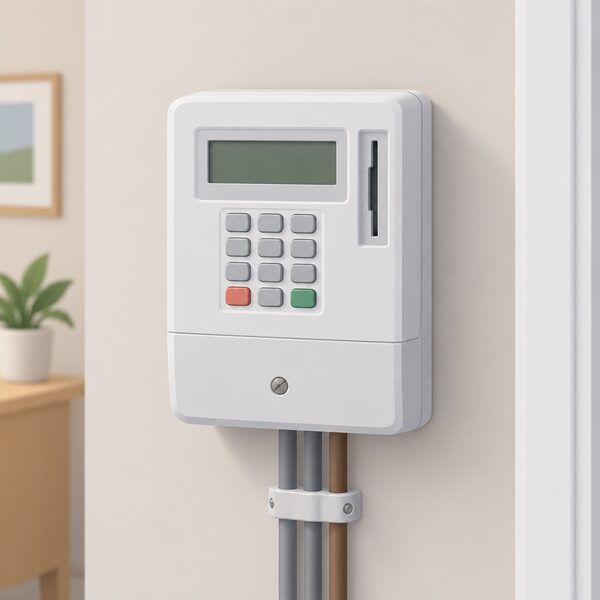
The Code of Practice on involuntary prepayment installations was agreed with suppliers in 2023 as the mechanism to withdraw from a suspension on involuntary installations and remote switches, and to set clear expectations on suppliers to further protect customers in vulnerable circumstances from being made to use a prepayment meter involuntarily12. It sets out how suppliers should deal with a customer when considering whether to install an involuntary prepayment meter1.
Coverage is universal across the retail market. All suppliers have signed up to the Code1. Its conditions have since been moved into the standard gas and electricity licences, so what began as a voluntary commitment now sits in the licence framework that Ofgem enforces1. Ofgem confirmed in September 2023 that the Code of Practice for the involuntary installation of prepayment meters would be incorporated into mandatory Supply Licence Conditions13.
The Code's original purpose was transitional as well as protective. Suppliers were told not to restart involuntary prepayment activity until they could demonstrate readiness to implement the new Code12. That sequencing matters: the restart was conditional on capability, not on a date.
The licence route has since been reinforced. Ofgem's licence conditions require that the functionality of a domestic customer's prepayment meters, including smart prepayment meters, is used only when safe and reasonably practicable in all the circumstances of the case14. That obligation dates from November 2022 and applies to the meter's prepayment function itself, not only to the decision to install.
For households, the practical effect is that the Code is not a set of aspirations a supplier may choose to follow. It is the operating standard, backed by licence conditions, and a supplier that departs from it is exposed to enforcement and to the compensation framework described below. The Code also carries a continuing duty: the supplier must contact the consumer, as a minimum annually, to assess whether it remains safe and reasonably practicable to continue using the prepayment meter10.
"The Code sets out how suppliers should deal with a customer when considering whether to install an involuntary prepayment meter (PPM)"
Do not install and further assessment: the risk categories that decide protection
The rules sort households into risk categories, and the category decides whether a meter can be fitted at all. The highest tier is a prohibition. A supplier must not install a prepayment meter without permission if there are any vulnerable people in the household, including terminal illness or severe health condition, dependence on a continuous energy supply for medical equipment, everyone aged 75 or over with no support, a child under 2, no one able to top up due to a physical or mental health condition, or temporary circumstances such as pregnancy or bereavement that make it unsafe or unsuitable3.
The 2023 Code of Practice framed the same group as the highest risk customers, for whom suppliers should refrain from all involuntary installations: households requiring a continuous supply for health reasons, including dependence on powered medical equipment; people over 85 where there is no other support in the house; households with residents with severe health issues including terminal illnesses or a medical dependency on a warm home; and households where no one has the ability to top up the meter due to physical or mental incapacity12.
The age thresholds differ between the two documents and both remain in circulation. Current Ofgem guidance uses 75 or over with no other support in the home3. The Code of Practice used over 85 where there is no other support12. A household at the centre of that gap should treat the lower threshold as the operative protection in current guidance.
Below the prohibition sits a second category requiring further assessment. Ofgem's heat network guidance describes a precautionary principle: the assumption that any consumer faced with an involuntary prepayment meter for debt is likely to be in financial difficulty and therefore more likely to self-disconnect10. Within that framework, children aged 5 and under fall into the further assessment category, distinct from the under 2 prohibition10.
The distinction between the two tiers is the difference between a bar and a pause. A do not install category stops the process. A further assessment category requires the supplier to look harder at the household's circumstances before deciding. Ofgem has also stated the underlying safety rule in direct terms: if a customer relies on energy for medical reasons, or has mobility problems that limit their ability to access the prepayment meter or top up the meter, the supplier is not allowed to install a prepayment meter11.
Before a meter can be fitted: ten contact attempts, welfare visits and suitability assessment
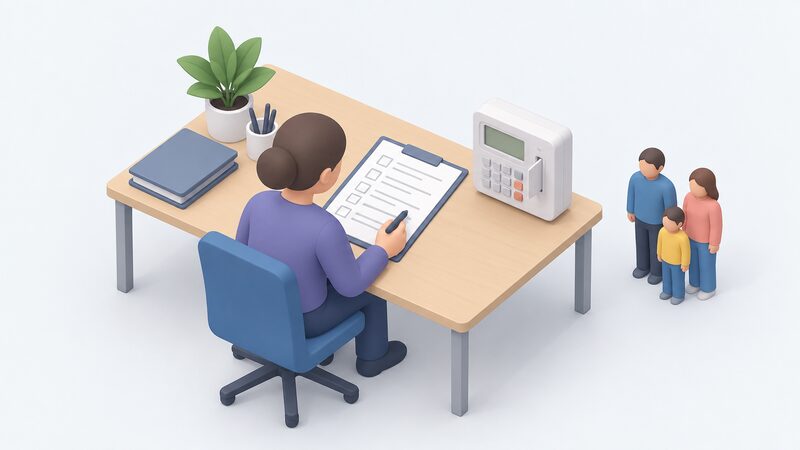
The pre-installation process is the part of the regime a household is most likely to experience directly, and it has a defined sequence.
- The supplier makes at least 10 attempts to contact the household using different methods, for example phone calls, letters or text messages3.
- The supplier visits the home to understand the circumstances and check whether a prepayment meter is safe and suitable for the household3.
- The supplier explains why it has made its decision, tells the household when it plans to install the meter, explains what will happen during installation, and tells the household how to make contact if circumstances have changed or the decision is thought to be wrong3.
- The supplier makes reasonable efforts to agree another way for the debt to be repaid and offers support where payment is difficult3.
The ten contact attempts requirement has been contested. Stakeholders responding to consultation described ten attempts to contact consumers as too onerous15. The requirement nonetheless stands in current guidance, and it is the clearest single number a household can hold a supplier to.
The welfare visit is not optional paperwork. The Code of Practice requires suppliers to carry out a site welfare visit before a prepayment meter is installed12. Its stated purpose is to understand the household's circumstances and check whether a prepayment meter is safe and suitable3. A visit that does not result in a genuine suitability assessment does not satisfy the rule.
The notification duty gives the household a chance to correct the record before installation. The supplier should explain the reasons for its decision, the planned timing, what installation involves, and how to report changed circumstances or a disputed decision3. This is the point at which a household can raise a health condition, a new baby, a bereavement or a caring responsibility that changes the risk category.
Where the process is followed properly, the household has several opportunities to stop an inappropriate installation: at the contact stage, at the welfare visit, and in the notification window. Where it is not followed, the compensation framework applies, and the historical scheme covers meters fitted between 1 January 2022 and 21 January 2023 where the supplier did not follow the rules properly3.
The restart conditions: audits, independent assessment and board attestation
Involuntary prepayment activity was suspended, and restarting it was made conditional on proof of readiness rather than the passage of time. Suppliers were told not to restart involuntary prepayment installations until they could demonstrate readiness to implement the new Code12. The Code itself was the mechanism for withdrawing from the suspension12.
The conditions tightened further. Suppliers have had to demonstrate that they meet the new requirements before restarting any involuntary prepayment activity, supported by a second independent audit5. The reference to a second audit indicates that an initial assurance exercise was followed by independent verification, so a supplier's own assessment of its readiness is not sufficient on its own.
There is also a continuing review. Ofgem intended to conclude its review in the first half of 2026, with interim findings expected to be shared ahead of that9. That timetable sits alongside the compensation work arising from the earlier market compliance review, which assessed prepayment meters installed without permission over the period 1 January 2022 to 31 January 20238.
The market compliance review produced substantial redress. Energy suppliers that did not follow the rules when installing prepayment meters to collect debt without household permission were required to pay compensation and write off debt totalling £18.6 million, affecting at least 40,000 customers8. Of that, £5.6 million in compensation went to 40,000 customers who had a prepayment meter installed without permission during the assessment period, and suppliers also wrote off a further £13 million of debt from customers who had a prepayment meter installed without permission8.
The restart architecture matters to households because it determines whether involuntary activity is happening at all in a given period. A supplier that has not demonstrated readiness, and has not been independently audited, should not be restarting. Where a household is contacted about an involuntary installation, the supplier's readiness status is a legitimate question.

The agreement behind the meter: repayment terms, affordability and your right to cancel
Once a prepayment meter is in place to recover debt, the repayment arrangement is governed by legislation as well as licence conditions. The Electricity (Prepayment Meter) Regulations 2006 require that the agreement states in writing the amount of each element of the sum owed and what it relates to, the repayment rate and repayment amount, and the date the sum owed will be fully repaid16.
Affordability is built into the calculation. The repayment rate and repayment amount must be calculated by the supplier to take into account the customer's ability to pay the total of all charges recovered through the prepayment meter16. That is a legal requirement, not a matter of discretion, and it covers all charges recovered through the meter rather than the debt element alone.
There is a statutory right to cancel. Notice of cancellation can be given orally or in writing and must be given within seven working days beginning with the day the customer receives the written terms of the agreement16. The oral route matters: a household that cannot easily put something in writing can cancel by telephone within the window.
Consent, where it exists, has its own standard. Consent must be explicit, meaning it must be written rather than implied or retained in terms and conditions, with a record of the date and method of consent, and must not be given under pressure10. That definition is aimed at the practice of burying agreement in contract terms.
The Code of Practice adds a reassessment duty once the debt is cleared. Suppliers must re-assess the case once a customer has repaid debts owed, contacting the customer to offer an assessment of whether a prepayment meter remains the most suitable and preferred payment method; if a customer is clear of debt and wishes to move off prepayment, the supplier must agree where the customer passes any required credit checks12. A prepayment meter imposed for debt is therefore not intended to be permanent.
Additional Support Credit: emergency credit for customers at risk of self-disconnecting
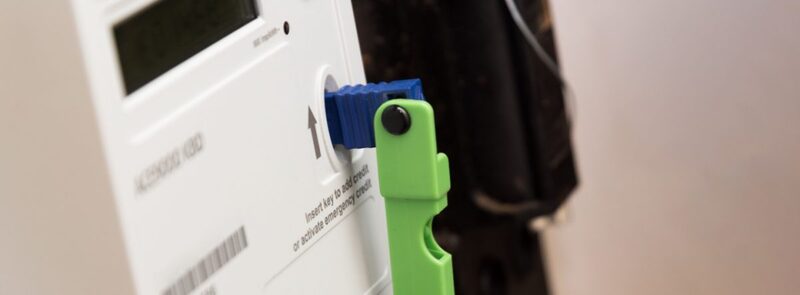
Additional Support Credit is the mechanism designed to keep prepayment households connected when credit runs out. Ofgem introduced the rules in 2020, requiring suppliers to offer additional credit to vulnerable prepayment customers who have self-disconnected or are at risk of doing so17. Ofgem describes it as a vital tool to support prepayment customers in vulnerable situations who have self-disconnected or are at risk of doing so18.
The legal basis is specific. The rules include a requirement for suppliers to consider whether providing Additional Support Credit is in the customer's best interest, and a requirement to provide alternative support where that is more appropriate to the customer's circumstances17.
Assessment is individual. Ofgem expects suppliers to assess each offer or request for Additional Support Credit on an individual basis17. Suppliers must also record clear justification for decisions taken, including evidence for why the assessment determined Additional Support Credit to be unsuitable, to ensure transparency and accountability17. Where Additional Support Credit is refused, suppliers must consider and should offer support with long-term solutions, such as signposting to a free debt advice service, sustainable and affordable repayment plans, support with energy efficiency measures, income maximisation, or considering whether prepayment is the most suitable payment method17.
Repayment is expected but scaled. Ofgem expects consumers to pay back the Additional Support Credit provided, at a rate appropriate to their circumstances and consistent with the Ability to Pay rules17. Provision rose sharply during the energy crisis: from September 2022, monthly provision increased from around £4 million a month to between £8 million and £18 million a month, with seasonality peaks17.
Misuse has a defined meaning. Ofgem cites failing to adhere to agreed Additional Support Credit repayment terms without further engagement, or providing false information about vulnerability status or financial hardship18. Those are the grounds on which a supplier may treat the credit as misused, and they are narrow.
For heat network consumers, parallel obligations apply. Authorised heat network suppliers are obliged to offer a reasonable amount of Additional Support Credit in a timely manner where a prepayment consumer has self-disconnected or self-rationed in circumstances where any occupant of the household is in a vulnerable situation10. The same guidance obliges those suppliers to offer a reasonable amount of Emergency Credit and Friendly Hours Credit to any consumer using a prepayment meter, unless it is technically infeasible10.
Compensation when the rules are broken: £250 to £1,000 by category
Where a supplier breaches the rules, the compensation framework sets amounts by category of failure. The figures are published and specific.
| Failure category | Compensation |
|---|---|
| Inappropriate installation, switch or use of a prepayment meter | £1,0005 |
| Vulnerability not considered | £5005 |
| Insufficient debt support | £2505 |
| Unfair customer treatment | £2505 |
| Process misalignment, data quality and record keeping | £40 to £60 goodwill, case by case5 |
The framework also records how the categories have been applied in practice. For inappropriate installation, switch or unsafe use of a prepayment meter, 1,925 customers received £1,629,8655. Unpaid amounts are reconciled and paid to the Energy Industry Voluntary Redress Scheme5.
Eligibility for the historical scheme is time-bound. A household may be able to claim compensation if it was forced to have a prepayment meter between 1 January 2022 and 21 January 2023 and the supplier did not follow the rules properly3. The assessment period for the market compliance review ran from 1 January 2022 to 31 January 20238.
Where a supplier fails to pay, there are two backstops. The Energy Ombudsman states that in circumstances where a supplier has not made the standard compensation payment, it will make an award that ensures the consumer is compensated in line with the regulations19. Separately, Guaranteed Standards rules require an additional standard payment of £40 where the compensation amount is not paid to the consumer within 10 working days20. Ofgem's wider Guaranteed Standards of Performance set minimum standards that all suppliers must meet for specific services or pay £40 automatic compensation if they do not15.
Complaint escalation has its own route. The Citizens Advice consumer service may refer a household to the Extra Help Unit where support is needed with a difficult or urgent complaint, where the household cannot deal with its supplier alone due to personal circumstances, where it is considered vulnerable, or where it is at risk of being disconnected from an energy supply21. For households in Wales, the Welsh Government's fuel poverty priority actions sit alongside the GB-wide framework10.
Sources21 cited
- Involuntary prepayment meter energy supplier Code of Practice, Ofgem, 2023-04-18
- Prepayment meters consumer guidance, Ofgem, 2026
- Installing a prepayment meter without your permission, Ofgem, 2026
- Check if energy suppliers can install prepayment meters without household permission, Ofgem, 2026
- Market Compliance Review: prepayment meter installations, Ofgem, 2026-06-03
- Get help with your prepayment meter, Ofgem, 2026
- Consumer Standards Decision, Ofgem, 2023-10-18
- Installing a prepayment meter without your permission, Ofgem, 2026
- Debt strategy update: supporting reduction of energy debt, Ofgem, 2025-11-06
- Tackling fuel poverty: priority actions, Welsh Government, 2026
- Ofgem statement on prepayment meters installed under warrant, Ofgem, 2015-05-26
- Energy suppliers sign new Code of Practice on involuntary prepayment installations, Ofgem, 2023-04-18
- Ofgem completes review of how suppliers support customers in vulnerable situations, Ofgem, 2022-11-22
- Ofgem transformed to strengthen protections for energy consumers, GOV.UK, 2026-04-22
- Compensation for installing prepayment meters without permission, Ofgem, 2025-05-28
- The Electricity (Prepayment Meter) Regulations 2006, legislation.gov.uk, 2006-07-23
- Additional Support Credit: our expectations, Ofgem, 2025-08-25
- Regulatory Expectations on Additional Support Credit, Ofgem, 2025-11-06
- New Guaranteed Standards, Energy Ombudsman, 2026-09-20
- Smart Meter Guaranteed Standards of Performance, Ofgem, 2025-03-28
- Complain about your energy supplier, Ofgem, 2026
 Disconnection and WarrantsCan your energy supplier force you onto prepayment or cut you off for debt?
 Prepayment and Vulnerable RulesThe licence obligations on energy suppliers when a household falls into debt: when a prepayment meter may be installed without consent, the warrant process, the ban covering highly vulnerable households, remote switching of smart meters, and the free help available.
 Prepayment Meter DebtHow debt repayment is set on a prepayment meter, the limits on the share of a top-up that can be taken, and how to have a rate reviewed.
 Smart Meter RulesCan your supplier make you have a smart meter?
 Back Billing RulesCan a supplier really charge you for energy you used years ago?
 Smart Meter InstallationCan your supplier make you have a smart meter, and how long should you wait for an appointment?