
In this answer
Short answer
Yes, in a specific and limited sense. A supplier is not obliged to hand a struggling household a cheaper tariff on request, but it is obliged to work with customers who cannot pay, and it must keep at least one lower standing charge offer available at all times, in all regions1. Ofgem states that suppliers have to work with struggling customers to come up with realistic payment plans and help3. Consumer Scotland records that suppliers must offer support to customers who cannot pay, such as repayment plans, emergency credit, and other affordability measures4.
What a household can ask for is a payment plan, a payment break or reduction, a review of payments and debt repayments, and access to hardship funds1. Suppliers also hold their own hardship funds aimed at helping vulnerable customers, though the details differ depending on the supplier6.
The dependence that remains is real: the household is still buying from a supplier, still exposed to standing charges and unit rates, and still reliant on the grid. What the rules change is the terms on which that dependence is managed, and the routes available when a supplier will not engage.
What help suppliers must offer when you're struggling
The starting point is that suppliers have to work with struggling customers to come up with realistic payment plans and help3. Ofgem's consumer guidance sets out what a household can ask for: agree a payment plan, payment break or reduction, review payments and debt repayments, and access to hardship funds1. Consumer Scotland's summary of the obligations is that suppliers must offer support to customers who cannot pay, such as repayment plans, emergency credit, and other affordability measures4.
Hardship funds are a separate layer. Suppliers have specific hardship funds aimed at helping vulnerable customers, but the details differ depending on the supplier, so the amount, the application route and the eligibility test are not standardised across the market6. That means two households in similar circumstances with different suppliers can receive different outcomes.
The lower standing charge requirement is the closest thing to a structural cheaper tariff. Under Ofgem's consultation on the requirement to offer lower standing charge tariffs, suppliers must have available, at all times, in all regions, at least one lower standing charge offer2. Ofgem estimated that this would ensure that over 99.5% of current customers would be with suppliers that are eligible suppliers2. Suppliers would also need to clearly explain what the tariff rates and charges are to their customers so they can make informed decisions11.
There is also a reasonableness test on the unit rate itself. The consultation states that suppliers ensure the unit rate is reasonable, including by having regard to the cost of supplying energy to the customer, comparative tariffs and their costs, and any other relevant matter11. That is a constraint on how far a supplier can load costs onto a standing charge or a unit rate, not a promise of a discount for any individual household.
For a household's energy independence, this is partial. The support reduces the cash cost of dependence but does not remove the dependence: the home still takes gas and electricity from a network and a supplier, and the tariff structure still sets the floor on what a low-usage home pays. What the rules do is give the household a set of things it can ask for by name, and a regulator's statement that suppliers must engage.
Debt, disconnection and self-rationing: the rules suppliers work under
Disconnection is tightly constrained. Suppliers cannot disconnect any customers without first taking all reasonable steps to help them repay their debts and are not allowed to cut off supply for certain vulnerable consumers12. In Northern Ireland, all fuel suppliers (electricity and gas) follow a code of practice that means they won't cut off your supply if you agree a payment plan with them and then keep to it, and they should take into account your ability to pay, with complaints going to the Utility Regulator if they do not13.
Self-rationing is the quieter version of the same problem: a household that has a supply but restricts its own use because it cannot afford to run it. The protections that matter here are the ones on credit and repayment. Suppliers should try and understand your circumstances, which is the standard the independent advice sector points households towards when a supplier's response feels mechanical14.
"Suppliers cannot disconnect any customers without first taking all reasonable steps to help them repay their debts and are not allowed to cut off supply for certain vulnerable consumers"
Northern Ireland has its own support architecture. Suppliers there refer customers who are struggling to pay bills to organisations like Advice NI, which offers free, independent debt advice15. That referral route sits alongside the code of practice rather than replacing it.
The practical effect for a household is that disconnection is a last resort with procedural conditions attached, not a first response to arrears. The dependence on the supplier remains, and so does the debt, but the supply itself is protected while a payment plan is being kept to.
Prepayment meters: the code of practice on forced installations
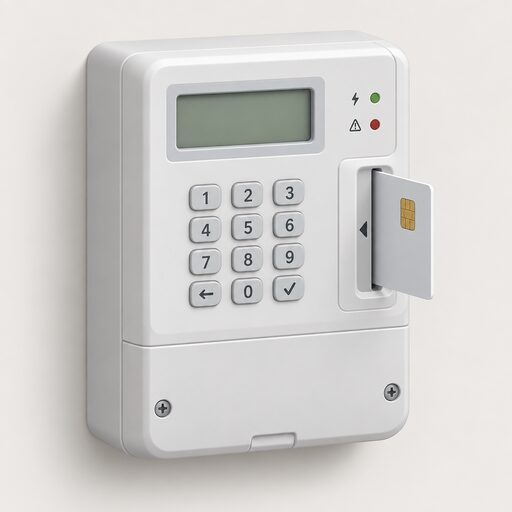
A supplier can move a customer to a prepayment meter without permission if they are building up debt and have not responded to the supplier's attempts to help16. The conditions are cumulative rather than alternative. Ofgem's guidance states that a supplier can install a prepayment meter without your permission if you are building up an energy debt and other ways of recovering your debt have not worked17.
Before that point, two obligations bite. The supplier must make reasonable efforts to agree another way for you to repay your debt and offer support if you are struggling to pay7. And it must make at least 10 attempts to contact you using different methods, for example phone calls, letters or text messages7.
Once on a prepayment meter, the debt does not block switching in the way many households assume. Ofgem's switching guidance states that you can switch if you have a prepayment meter and you owe your supplier up to £5008. Above that figure the debt assignment rules apply instead, and the Debt Assignment Protocol governs how prepayment debt moves with a household.
Smart prepay changes the mechanics. Many customers can switch supplier while keeping their smart meter19. Where a transfer is refused, the Energy Ombudsman has published a case study on MTC mismatch blocking smart prepayment meter transfers, setting out its view that gaining suppliers should not refuse transfers over a prepayment MTC and that losing suppliers should not amend the national database with incorrect information20.
For independence, a prepayment meter is a mixed instrument. It gives a household direct control over spend and removes the risk of a large arrears build-up, but it also means the home can be cut off by an empty balance rather than by a supplier's decision, and it typically carries a standing charge that a very low-usage home still pays. The supplier conduct on prepayment and debt rules are where those trade-offs are set out in more detail.
Warm Home Discount: who gets letters and when
The Warm Home Discount requires suppliers to provide an electricity bill discount for certain customers21. It is paid by the supplier as a discount on the bill22. Energy suppliers with more than 1,000 domestic customers, plus other suppliers who elect to take part, offer the discount and recoup the costs from the energy bills of all their customers23. In practice that means larger energy suppliers provide it, with some smaller utility suppliers voluntarily participating24.
Eligibility has three parts. Your energy supplier must be part of the scheme, you or your partner must get certain means-tested benefits, and your name or your partner's must be on the electricity bill, all as at 23 August 20269. The scheme rules also require you to be a customer of a participating energy supplier on the qualifying date25.
The award process is largely automatic. Through data matching, the majority of eligible households will receive their rebates automatically from their energy supplier, without applying25. Notification follows a set pattern: you will get a letter from your supplier before January of the qualifying year if you are eligible for the scheme or migrated onto it14.
| Element | Detail |
|---|---|
| Who provides it | Larger suppliers, plus smaller suppliers that elect to take part23 |
| What it is | An electricity bill discount paid by the supplier21 |
| Core eligibility | Participating supplier, means-tested benefit, name on the electricity bill, all at 23 August 20269 |
| Award route | Majority automatic through data matching25 |
| Notification | Letter from the supplier before January of the qualifying year14 |
Warm Home Discount does not apply in Northern Ireland, where the support landscape runs through the Consumer Council for Northern Ireland and the Advice NI referral route instead15. Households in England and Wales can check the scheme's own eligibility statement for the current year25. The Warm Home Discount and suppliers page covers which suppliers take part and how payment is made.
Where to go if your supplier won't help: complaints and escalation
The first step is the supplier. The Ombudsman's own framing is that a household speaks to its energy supplier first to raise a complaint, and if they can't help, the service will aim to fairly and impartially resolve the dispute26. The Consumer Council may help where a complaint has been raised with the company, time has been allowed for a response, and either no response has arrived or the response is unsatisfactory25.
Escalation becomes available on a defined trigger. The service is free if the issue isn't resolved after eight weeks, or you receive a deadlock letter, after complaining to the supplier first10. To register a dispute, you search for the name of your energy supplier to get started27. The complaining about an energy supplier page sets out the full process, and the Energy Ombudsman page covers what the scheme can decide.
The remedies are broader than an apology. The Ombudsman can tell suppliers to take practical action (for example credit or cancel an account, change your tariff), make an apology, or offer a financial award, or a combination of these, and recommendations may be made to prevent issues happening again28. A tariff change is therefore within the range of outcomes, which is the nearest thing to a route to a cheaper tariff when a supplier will not offer one directly.
Complaints about a forced prepayment installation follow the same path: you can contact the Energy Ombudsman if you're not happy with the way your supplier has handled your complaint18. The same escalation applies to billing disputes29.
If the supplier fails altogether, the position changes. You do not need to do anything if your current supplier goes out of business: Ofgem automatically moves you to a new supplier and makes sure your energy supply is not interrupted8. Your credit balance is still protected by the rules Ofgem sets, and the new supplier will contact you about a refund31. You can switch without paying an exit fee if you're not happy with your new supplier or tariff14. Existing complaints are handled by the new supplier, who will review the complaint and check it is still relevant or whether it can be closed31. The supplier of last resort and energy supplier failures pages cover the mechanics.
One further limit is worth stating plainly. Research on consumer understanding of tariff choices found that 57% net said it was true that exit fees may still apply to a fixed contract even when moving to another deal with the same supplier32. Households weighing a move to a cheaper deal should check the exit terms on the tariff they hold, not assume a same-supplier move is free.
Sources32 cited
- Get help with your energy bills, Ofgem, 2026
- Requirement to offer lower standing charge tariffs, Ofgem, 2025
- Energy debt rises to eight-year high, Uswitch, 2025
- Rising energy bills deepen affordability pressures ahead of winter, Consumer Scotland, 2026
- Getting help if you can't afford your energy bills, Ofgem, 2026
- Which energy efficiency grants are you eligible for?, Uswitch, 2025
- Installing a prepayment meter without your permission, Ofgem, 2026
- Switch your home energy supplier, Ofgem, 2026
- The Warm Home Discount Scheme: if you live in England and Wales, GOV.UK, 2026
- Worried about your energy bills, Energy Ombudsman, 2026
- Requirement to offer lower standing charge tariffs: supporting document, Ofgem, 2025
- Energy debt and disconnection protections, House of Commons Library, 2023
- Overdue utility bills, nidirect, 2026
- Your home energy checklist, National Energy Action, 2026
- Advice if you're struggling to pay your energy bills, nidirect, 2026
- Prepayment meters: consumer guidance, Ofgem, 2026
- Check energy suppliers can install prepayment meters without household permission, Ofgem, 2026
- Installing a prepayment meter without your permission, Ofgem, 2026
- How to use a smart meter in prepay mode to save money, Smart Energy GB, 2026
- Smart meters: MTC and timeswitch code inaccuracies, Energy Ombudsman, 2023
- Warm Home Discount research briefing, House of Commons Library, 2026
- Help with household costs, Isle of Anglesey County Council, 2026
- Warm Home Discount scheme costs, House of Commons Library, 2026
- Heating your home, Carmarthenshire County Council, 2026
- Warm Home Discount eligibility statement, England and Wales, 2026 to 2027, GOV.UK, 2026
- Facilitated complaints resolution, Energy Ombudsman, 2026
- Raise a dispute, Energy Ombudsman, 2026
- What to expect, Energy Ombudsman, 2026
- Understand your electricity and gas bills, Ofgem, 2026
- How your electricity or gas bill is calculated, Ofgem, 2026
- What happens if your energy supplier goes out of business, Ofgem, 2026
- Understanding consumers' energy tariff choices, Ofgem, 2025
 Disconnection and WarrantsCan your energy supplier force you onto prepayment or cut you off for debt?
 Prepayment and Vulnerable RulesThe licence obligations on energy suppliers when a household falls into debt: when a prepayment meter may be installed without consent, the warrant process, the ban covering highly vulnerable households, remote switching of smart meters, and the free help available.
 Prepayment Meters and DebtCan your energy supplier force you onto a prepayment meter because you owe them money?
 Energy Debt Repayment PlansOwe money to your energy supplier?
 Tariff Rules and ProtectionsOfgem decides which energy tariffs suppliers can offer you, so it's worth knowing what they must provide.
 Financial Resilience RulesYour supplier going bust raises two questions: who takes over and what happens to your credit balance?