

In this answer
Short answer
The Warm Home Discount is a one-off £150 discount off household electricity bills, applied by the supplier to the account rather than paid to the household1. It is not a cash payment and it does not arrive in a bank account. The scheme requires large domestic energy suppliers to provide an annual discount of £150 to eligible households, and it reached around 6 million households in winter 2025-262.
A refusal is rarely a decision about need. It is usually a decision about data: whether the household was matched to a qualifying benefit, whether the right name was on the electricity account on the qualifying date, and whether the supplier taking the payment participates in the scheme at all. For winter 2025/26 the qualifying date was 24 August 20254. For the 2026 to 2027 scheme year the conditions had to be met on 23 August 20261.
The route back depends on which group the household falls into. Core group households are matched automatically and need not apply. Broader group households, and households in caravans or park homes, often have to act themselves. This page sets out what the scheme is, why a rebate fails, how to challenge it with evidence, and what switching supplier or a supplier failure does to the entitlement.
What the Warm Home Discount is and who qualifies
The scheme is an obligation on suppliers, not a benefit paid by the Department for Work and Pensions. Large domestic energy suppliers must provide the discount to eligible households, which is why the first test is whether the supplier participates at all2. The second test is the household's circumstances on a single qualifying date: a domestic customer of a participating supplier, named on the energy bill or account, and in receipt of certain benefits on that date4.
Housing Benefit is one qualifying benefit1. The full benefit list is set by the scheme rules for each year, and the eligibility statement for England and Wales for 2026 to 2027 is the authoritative version for that year4. Only households living in an eligible domestic premises may receive a rebate, and households in a property not supplied with electricity wholly or mainly for domestic purposes are not eligible4.
The scheme covers England, Scotland and Wales and runs until 31 March 2031 in Scotland6. In England and Wales the regulations continue the scheme until 31 March 20307. Northern Ireland sits outside the Warm Home Discount; the home heating oil support scheme there is separate, and its awards are not made automatically8.
For a household's energy independence, the discount is a small, fixed reduction in a bill that still depends on the grid and on a supplier. It does not change how the home is heated or where the electricity comes from. It reduces the cost of dependence rather than the dependence itself. Households looking at the wider picture of grants and self-supply can start with home energy grants and schemes in the UK.
Why a discount may be refused or not applied automatically

Most refusals trace back to one of four things: the supplier, the data match, the property, or the group.
The supplier test is the most common. Not every supplier is part of the scheme, and the number of discounts paid by each supplier to their broader group customers may be limited5. Some smaller firms do not pay those who do not automatically qualify5. A household can meet every personal condition and still receive nothing because the company on the bill is not obligated or has exhausted its broader group allocation.
The data match is the second. Through data matching, the majority of eligible households receive their rebates automatically from their energy supplier4. Where the match fails, for example because the benefit record and the energy account do not line up, no letter arrives and no discount is applied. The scheme's own guidance directs households who think they meet the criteria but do not get a letter to contact the Warm Home Discount helpline9.
The property test is the third. Caravans are generally excluded from the scheme, and households receiving electricity through an intermediary such as a site owner are not eligible for the main scheme4. Park home residents who pay a supplier directly for their electricity might be eligible for the regular Warm Home Discount, applied automatically as a discount on the bill10.
A fourth cause is confusion with other schemes. ECO and Warm Home Discount funding cannot be combined for any measures, so a household that has had work funded through the Energy Company Obligation cannot also use the discount against the same measures12. That is a funding rule, not a refusal of the £150 itself.
Core Group and Broader Group: which route applies to you
The scheme splits eligible households into two routes, and the route decides whether anything needs to be done.
The core group is the automatic route. From scheme year 16, core group 1 and core group 2 have been merged into one core group4. Households in it do not need to apply, and the supplier should automatically apply the discount to the electricity account13. A letter is sent in autumn if the household is eligible or if more information is needed14.
The broader group is the application route. In Scotland it includes low income households that are not part of the core group, and those households must contact their energy company to apply13. Scottish guidance sets out the same split: the core group does not need to apply but must meet the eligibility criteria, while the broader group must apply and meet the criteria15.
| Route | Action needed | Who it covers |
|---|---|---|
| Core group | None; automatic via data matching4 | Households matched to a qualifying benefit on the qualifying date |
| Broader group | Contact the supplier and apply13 | Low income households outside the core group, mainly in Scotland |
| Park home, direct supplier | Automatic discount on the bill10 | Residents who pay a supplier directly for electricity |
| Park home, intermediary supply | Not eligible for the main scheme4 | Households supplied through the site owner |
The practical consequence is that a household in the broader group which does nothing receives nothing, even where it qualifies. That is the single most common reason a legitimate entitlement goes unclaimed in Scotland. Households wanting the full eligibility picture, including the benefit list and the qualifying date, can read who qualifies for the Warm Home Discount.
How to challenge a refusal and apply to your supplier with evidence

A challenge is an evidence exercise. The scheme rules set out what a household must show: be a customer of a participating energy supplier on the qualifying date, be named on the electricity bill, and receive a qualifying benefit1.
For caravan residents the bar is higher and the route is specific. The guidance states that the household will need to contact the Warm Home Discount helpline and provide evidence that the caravan is the sole, legal residence and that the applicant is named on the electricity bill4. That is the documented path for a case that the automatic data match cannot see.
The sequence is straightforward:
- Check the supplier participates in the scheme for the relevant year1.
- Check the qualifying date and whether the benefit was in payment on it4.
- Check the name on the electricity account matches the benefit claimant or their partner1.
- Contact the supplier, or the helpline where the case is a caravan or a missing letter, and supply the evidence requested4.
- If the supplier does not resolve it, take the dispute to the Energy Ombudsman16.
The Ombudsman is the escalation route, but it has limits. It will refuse to accept a case if it is apparent that the consumer is pursuing a dispute without merit and intends to cause inconvenience, harassment or expense to the supplier16. A case built on the qualifying date, the benefit award and the account name is the kind that can be considered. A case built on the view that the household deserves the money is not.
"If we refer to something as a vexatious complaint, this means we will refuse to accept a case if it's apparent that the consumer is pursuing a dispute without merit and intends to cause inconvenience, harassment or expense to the supplier"
Two helpline numbers appear in published guidance: 0800 731 0214 and 0800 030 932217. The helpline is also the route where a household expected a rebate and had not received it by mid January17. Households whose letter has not arrived at all have a separate set of steps, covered in what to do if you don't get a Warm Home Discount letter.
When the discount is paid, and how on a prepayment meter
Timing matters because the entitlement is tied to the supplier relationship. The discount should appear on the electricity bill by the end of March 2027, and the household needs to stay with the same energy supplier until it is paid5. Suppliers apply the discount to the bill by the stated deadline for the scheme year9.
The money is never paid to the household. The electricity supplier applies the discount to the bill, and the money is not paid to the customer1. That distinction explains why a household cannot simply be sent a cheque when the automatic route fails.
On a prepayment meter the mechanism changes but the value does not. The supplier confirms how the discount is given, and it might be a voucher to top up the meter5. The energy supplier will likely issue a voucher to top up the meter19. The discount is worth £150 and is paid through the electricity supplier, either by adding credit to the account or by voucher for a prepayment top-up14.
Switching suppliers: when you keep the discount and when you lose it
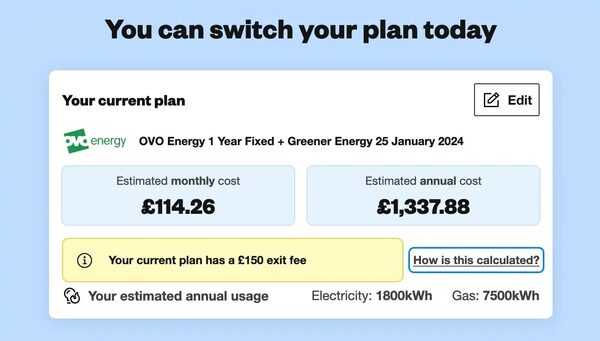
Switching is where a confirmed entitlement can be lost, and the rules differ by group.
For the core group in England and Wales, the company that supplied the electricity on the qualifying date is responsible for the payment14. That means a household that switches after the qualifying date may still receive the discount from the supplier it was with on that date13. The entitlement was fixed on the qualifying date, and the old supplier carries the obligation.
For the broader group in Scotland, the position is different: the household reapplies with the new supplier14. There is no carry-over, because the entitlement was never automatic.
The general warning applies to both. Switching from a supplier that offers the Warm Home Discount to one that does not means losing it, even for the core group, and the new supplier's criteria should be checked before switching5. Not all suppliers offer it, and it is best to switch after receiving the discount so it is not lost for that year20. The scheme's own guidance is blunt: a household that qualifies and switches to a supplier that does not participate will lose its entitlement21.
| Situation | Effect on the discount |
|---|---|
| Switch after the qualifying date, core group, England and Wales | Old supplier remains responsible for payment14 |
| Switch after the qualifying date, broader group, Scotland | Reapply with the new supplier14 |
| Switch to a non-participating supplier | Entitlement is lost, including for the core group5 |
| Switch after the discount has been received | No effect on that year's payment20 |
The independence point is uncomfortable but real. The discount is tied to a commercial relationship with one supplier, and changing that relationship can extinguish it. A household that wants to move supplier for a better tariff is weighing that against a £150 reduction it may not be able to carry across.
If your supplier stops trading: what happens to your discount
When a supplier fails, the household is moved to a new supplier under the supplier of last resort arrangements, and the discount is meant to follow. If a household receives the Warm Home Discount, the new supplier should honour it too22.
The enforcement route narrows, however. The Energy Ombudsman will not consider disputes against a supplier that has ceased trading, because the supplier will not be able to respond23. Once a company ceases trading, no new cases can be opened for dispute with the closed company, although prior disputes are sometimes upheld by the new nominated supplier16.
That leaves a household in a difficult position if the refusal happened before the failure. A dispute that was already open may be taken up by the new supplier. A dispute that had not been raised cannot be started against the company that has gone. The practical lesson is that a challenge should be raised while the supplier is still trading, not held back.
For households dealing with a supplier in difficulty, the wider options for debt, hardship and crisis support sit alongside the discount rather than replacing it, and are set out in crisis funds, hardship grants and energy debt help. The Ombudsman has also handled cases where a supplier failed to review a household's changing financial circumstances under an agreed 12-month debt payment plan, which shows the kind of service failure that can be escalated24.
Sources24 cited
- Warm Home Discount: if you live in England and Wales, GOV.UK, 17 September 2026
- Warm Home Discount statistics 2025 to 2026, GOV.UK, 18 June 2026
- DESNZ annual report and accounts 2025 to 2026, performance report, GOV.UK, 17 September 2026
- Warm Home Discount eligibility statement, England and Wales, 2026 to 2027, GOV.UK, 17 September 2026
- Warm Home Discount, Which?, 4 August 2026
- Warm Home Discount, Ofgem, 17 September 2026
- Warm Home Discount Scheme in England and Wales continued until 31 March 2030, legislation.gov.uk, 31 March 2030
- Home heating oil support, nidirect, 17 September 2026
- Warm Home Discount, StepChange, 20 September 2026
- Park homes advice, Centre for Sustainable Energy, July 2026
- Warm Home Discount (Amendment) Regulations 2025Regulations2025), Hansard, 3 September 2025
- ECO4 delivery guidance v3.2, Ofgem, 8 December 2025
- Warm Home Discount scheme, England, Scotland and Wales, Turn2us, 8 September 2026
- Warm Home Discount guide, Uswitch, 12 August 2026
- Warm Home Discount scheme, OVO Energy, 12 August 2026
- Energy Ombudsman FAQs, Energy Ombudsman, 19 September 2026
- Struggling with energy bills, National Energy Action, 6 May 2026
- Energy grants, Confused.com, 2026
- Save money on energy bills, Energy Saving Trust, 1 July 2026
- Dealing with your energy supplier, Centre for Sustainable Energy, January 2026
- Warm Home Discount scheme guide, The Energy Shop, 20 September 2026
- Energy supplier out of business, Uswitch, 29 May 2026
- Supplier of last resort information, Energy Ombudsman, 20 September 2026
- Debt and payment case study, Energy Ombudsman, 20 September 2026
 Why You Cannot Get a Smart MeterWhy can some homes not have a smart meter fitted, and what counts as a good enough reason?
 Older People and Home EnergyOlder people often pay more to keep warm and can miss out on help they are entitled to.
 The Full Heat Pumps GuideWill a heat pump keep my house warm in winter, and what does one cost to buy and run?
 Apply for a Home Energy GrantThe application sequence common to funded schemes: the checker, the survey or assessment, the installer, the paperwork and the sign-off.
 The Full Grants and Schemes GuideWhich grants can you actually get right now, and how do you apply for them?
 The Full Installers GuideHow do you find an installer you can trust, and what should you check before signing anything?