
In this answer
Short answer
The Warm Home Discount does not run in Northern Ireland. Ofgem, which administers the scheme, states that it "does not run in Northern Ireland", and independent guidance is equally direct: "There's no Warm Home Discount in Northern Ireland."1 A household in Belfast, Derry or anywhere else in the province cannot claim the £150 rebate that around 6 million households across Great Britain are estimated to receive in winter 2025/263.
What exists instead is a separate, devolved system. The Affordable Warmth Scheme provides grants to low-income households in Northern Ireland, funded by the Department for Communities and delivered by the Northern Ireland Housing Executive4. That scheme is itself being replaced: the Warm Healthy Homes Fund will take over, with an introduction planned for April 20276.
The practical consequence is that the answer to the search query is a territorial one. Energy policy in Northern Ireland is devolved, and the Warm Home Discount was never extended there. Households moving between Northern Ireland and Great Britain cross a boundary in fuel poverty support, not just in suppliers and tariffs.
What the Warm Home Discount is and who it reaches in Great Britain
The Warm Home Discount is a fuel poverty reduction scheme, reducing the energy costs of low-income and vulnerable households across Great Britain since its inception in 20111. It was first introduced by the Government in 2011 to support low-income households, and it operates as a supplier obligation rather than a benefit: electricity suppliers who are part of the scheme apply a one-off discount to the bill9.
The scale has grown. Around 6 million households across Great Britain are estimated to receive the rebate in winter 2025/26, an increase of around 2.7 million on the previous year3. Before that expansion, the number of households receiving the discount was estimated at 3.4 million, around 3.1 million in England and around 300,000 in Scotland10. More than 2 million low-income and vulnerable households also receive rebates under the scheme as legislated10.
The discount is worth £150 for eligible customers in Great Britain for winter 2025 to 202611. There is a disagreement in the published figures on the amount: official guidance dated 2026-09-20 gives £140, while an official press-release dated 2026-07-31 gives £150 off energy bills. The two figures are not reconciled in the documents, and households should treat the amount as subject to confirmation for the scheme year in question.
The scheme is administered by Ofgem and funded through a levy on suppliers, which is why participation is a condition of eligibility. A household whose supplier is not part of the scheme cannot receive the discount, whatever its circumstances.

Why the scheme does not run in Northern Ireland
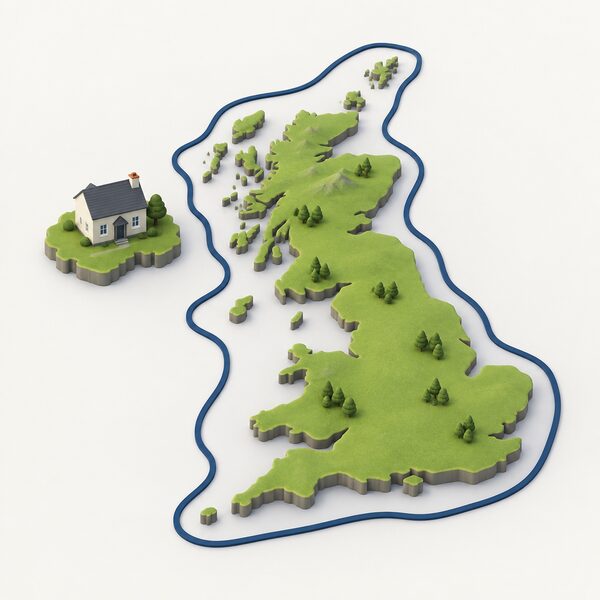
The exclusion is territorial and long-standing. Ofgem states that the Warm Home Discount Scheme does not run in Northern Ireland, and independent scheme guidance confirms the scheme is not available there1. The reason is devolution: energy efficiency and fuel poverty programmes in Northern Ireland are the responsibility of the Northern Ireland Executive, and the Warm Home Discount was designed as a Great Britain obligation on suppliers licensed in the GB market.
The same boundary appears in other schemes. The Domestic Renewable Heat Incentive operates across Great Britain, and the Renewable Heat Incentive scheme for Northern Ireland is a separate and unrelated scheme8. Northern Ireland also has no dedicated heat pump schemes, in contrast with the support available elsewhere in the UK3.
There is a data dimension too. The Valuations Office data used for Warm Home Discount eligibility does not exist in Scotland, and alternative proxies had to be found there; the point illustrates how tightly the scheme's mechanics are tied to specific GB datasets10. Northern Ireland sits outside that machinery altogether.
For a household, the exclusion is not a gap that can be filled by applying harder or contacting the right office. There is no Northern Ireland variant of the Warm Home Discount, no waiting list and no discretionary fund operating under that name. The support that does exist is a different scheme with different rules, a different administrator and a different application route.
What replaces it in Northern Ireland: the Affordable Warmth Scheme
The Affordable Warmth Scheme is the Northern Ireland answer to fuel poverty. It provides grants to low-income households, and some people in Northern Ireland can get energy efficiency and fuel poverty support through it12. It is funded by the Department for Communities and delivered by the Northern Ireland Housing Executive, which works with local councils to deliver the scheme5.
Eligibility is built around income, tenure and benefit receipt. Households with a total annual gross income of less than £23,000 may be able to get funding8. Fuel poor households in privately rented or owner-occupied properties in Northern Ireland can access support to install measures14. Applicants must live in Northern Ireland, and receipt of certain benefits can open the door to help improving home heating4.
The scheme funds a range of insulation and heating measures to improve the thermal efficiency of homes13. It replaced the earlier Warm Homes Scheme16. Households in Northern Ireland may also qualify for financial support towards the cost of loft and cavity wall insulation through related government support17.
The scheme is changing. The Warm Healthy Homes Fund will replace the current Affordable Warmth Scheme, with the new scheme to be introduced in Northern Ireland in April 20276. Until then, the Affordable Warmth Scheme remains the route, and applications continue to be handled through the Housing Executive and local councils.
| Feature | Affordable Warmth Scheme (NI) | Warm Home Discount (GB) |
|---|---|---|
| Territory | Northern Ireland1 | Great Britain1 |
| Form of support | Grants for insulation and heating measures13 | One-off bill discount11 |
| Administrator | Department for Communities and NIHE5 | Ofgem and participating suppliers1 |
| Income test | Under £23,000 total annual gross income may qualify8 | Means-tested benefit receipt18 |
| Successor | Warm Healthy Homes Fund from April 20276 | Extended under review3 |
How the Great Britain scheme works: eligibility, payment and timing
For households in England, Scotland and Wales, the Warm Home Discount works through three conditions: the energy supplier is part of the scheme, the householder or their partner receives certain means-tested benefits, and their name or their partner's is on the electricity bill18. Housing Benefit is among the qualifying benefits listed in official scheme rules19.
Payment is automatic in most cases. There is no need to apply for the Warm Home Discount in England or Wales; the supplier applies it automatically, and if it does not arrive, the householder can apply to the supplier with evidence20. In Scotland, only customers on a low income need to apply through their energy supplier21. Eligible energy customers should receive the discount by 31 March 202621.
The discount is paid through the electricity supplier, either as a credit to the account or as a voucher for a prepayment meter top-up20. For prepayment meter customers, the supplier confirms how the discount will be given, and it might be a voucher used to top up the meter22. Voucher expiry dates matter: one supplier states that vouchers expire on 31 July 2026 and no new vouchers can be issued after that date23.
The scheme is being extended. In Scotland, a proposal to proportionally increase the size of the scheme so more households on means-tested benefits can receive support through their energy supplier's scheme is proceeding24. The Warm Home Discount could present an acceptable interim measure for 2025/26, subject to extended eligibility criteria and an increased rebate23.
"Claiming the Warm Home Discount doesn't affect your eligibility for any other discounts or payments."
What the difference means for households moving to or from Northern Ireland
Crossing the Irish Sea changes the support available, and the change is not symmetrical. A household moving from England, Scotland or Wales to Northern Ireland leaves the Warm Home Discount behind and enters the Affordable Warmth Scheme, which is grant-based rather than a bill rebate and is aimed at home improvement rather than a one-off payment1. A household moving the other way enters a scheme where the discount is applied automatically in England and Wales, and where only low-income customers in Scotland need to apply20.
Northern Ireland has its own energy support history. The Energy Price Guarantee for Northern Ireland opened on 1 November 2022, with a similar scheme providing the same level of support to households in Northern Ireland from that date25. Ministerial directions have also allowed domestic electricity and gas suppliers in Northern Ireland to make tariff changes on days other than the first day of a quarter26. These are separate arrangements from the Warm Home Discount and do not substitute for it.
For households in Northern Ireland, the practical routes are the Affordable Warmth Scheme and, for those off the gas grid, the home heating oil support scheme, under which people living in Northern Ireland may be eligible to apply online27. Households in Northern Ireland may qualify for financial support towards loft and cavity wall insulation17. Belfast City Council also points residents receiving certain benefits towards help to improve home heating through the Affordable Warmth Scheme15.
The independence picture is mixed. The Affordable Warmth Scheme is devolved and locally administered, which gives Northern Ireland a support structure shaped to its own housing stock and heating mix, including a large off-gas-grid population. But the household remains dependent on grant cycles, on the Housing Executive and local councils for delivery, and on the successor fund arriving on schedule in April 2027. The Warm Home Discount's automatic, supplier-administered model does not exist on this side of the water, and no household in Northern Ireland can rely on it.
Sources27 cited
- Warm Home Discount (WHD), Ofgem, 2026-09-17
- Cheap ways to stay warm this winter, Which?, 2026-01-29
- Continuing the Warm Home Discount Scheme: government response, GOV.UK, 2026-01-30
- Affordable Warmth Scheme, Northern Ireland Housing Executive, 2026-09-17
- Northern Ireland Affordable Warmth Scheme, House of Commons Library, 2026-09-17
- Warm Healthy Homes Fund, Department for Communities, 2026-09-17
- Warm Healthy Homes Fund: replacing Affordable Warmth Scheme, Department for Communities, 2026-05-19
- Northern Ireland Affordable Warmth Scheme briefing, House of Commons Library, 2026-05-13
- Warm Home Discount Annual Report, scheme year 14, Ofgem, 2026-05-07
- Warm Home Discount (Amendment) Regulations 2025Regulations2025), Hansard, 2025-09-03
- Understanding the energy crisis, Smart Energy GB, 2025
- Warm Home Discount Scheme: England, Scotland and Wales, Turn2us, 2026-09-08
- Change in delivery of Affordable Warmth Scheme, Department for Communities, 2023-06-02
- Northern Ireland, National Insulation Association, 2026
- Stay warm at winter, Belfast City Council, 2026-09-20
- Affordable Warmth Scheme consultation document, Belfast City Council, 2017-11
- Energy efficiency support, nidirect, 2026-09-02
- Warm Home Discount: if you live in England and Wales, GOV.UK, 2026-09-17
- Warm Home Discount eligibility statement, England and Wales 2026 to 2027, GOV.UK, 2026-09-17
- Warm Home Discount guide, Uswitch, 2026-08-12
- Warm Home Discount Scheme briefing, House of Commons Library, 2026-02-26
- Warm Home Discount, Which?, 2026-08-04
- Social Tariff Working Group final report, Scottish Government, 2025-04-23
- Expanding the Warm Home Discount Scheme 2025 to 2026, GOV.UK, 2025-02-25
- Energy Price Guarantee (Northern Ireland) legislation, UK Parliament, 2022-10-18
- Energy Price Guarantee for domestic energy consumers in Northern Ireland: ministerial directions, GOV.UK, 2023-01-04
- Home heating oil support, nidirect, 2026-09-17
 Housing Stock Data for NIMost homes in Northern Ireland heat with oil, so why are the grants and help different from the rest of the UK?
 Energy Bills in Northern IrelandNorthern Ireland has no price cap.
 Home HeatingWhy do so many homes in Northern Ireland run on heating oil, and will that ever change?
 Climate TargetsNorthern Ireland has committed to cutting its greenhouse gas emissions to almost nothing by 2050, with a big reduction due by 2030.
 Planning Permission in NIDo you need planning permission for a heat pump in Northern Ireland?
 Why Energy Grants DifferWhere you live in the UK changes which home energy grants you can get.