

In this guide
The Energy Price Guarantee was a temporary scheme that set maximum unit rates for domestic gas and electricity across the United Kingdom. It ran from 1 October 2022 to 30 June 2023, and the scheme is now closed1. It was introduced under the Energy Prices Act and delivered by ministerial direction, with the government setting maximum prices and compensating suppliers for the difference between those prices and what they would otherwise have charged2.
The headline figure attached to it was £2,500 a year for a typical household, but that was never a cap on any individual bill. The guarantee worked on unit rates: it limited the October 2022 price increase to 26%, and the government paid suppliers the difference4. For a household, the practical effect was that the rate charged for each kilowatt hour of gas and electricity was reduced, and the reduction appeared automatically on the bill.
The scheme has no ongoing function. Because the Ofgem price cap has since fallen below the level the guarantee set, there is no longer any support under the EPG for customers on fixed tariffs, and the guarantee is not needed to set maximum prices again3. What follows records what it did, the rates it set in each nation, what it cost, and why its closure did not produce the jump in bills that some households expected.
What the guarantee actually did: a cap on unit rates, not on your bill
The Energy Price Guarantee set maximum unit rates that suppliers could charge for tariffs subject to the Ofgem price cap, and suppliers could charge less than those maxima5. That distinction matters more than any other on this page. The Ofgem price cap itself limits how much suppliers can charge per unit of gas or electricity, based on the underlying costs to serve energy, and it is not a limit on the total bill7. The guarantee operated in the same way, on the same unit-rate basis, but at a lower level than the cap would otherwise have reached.
The mechanism was a discount applied to unit rates. From October to December 2022 the reduction was 17p/kWh for electricity and 4.2p/kWh for gas, excluding VAT, on derogation variable tariffs. From January to March 2023 it rose to 31.8p/kWh for electricity and 6.4p/kWh for gas. From April to June 2023 it fell back to 16.6p/kWh for electricity and 2.2p/kWh for gas1. Those figures show how closely the support tracked wholesale prices: as the gap between the cap and the guarantee narrowed, so did the discount.
Standing charges were treated separately. Between April and June 2023 average standing charges for customers on default tariffs remained capped in line with the levels set in Great Britain by Ofgem, rather than being reduced or removed by the guarantee1. A household therefore saw support in the rate per kilowatt hour, not in the daily charge, and not in the total it owed at the end of the quarter.
"These are the maximum unit rates suppliers can charge for tariffs that are subject to the Ofgem price cap. Suppliers can charge less."
The £2,500 headline: what a typical household really paid
The £2,500 figure was an annual cost for a household using the typical consumption values, not a ceiling. The government described it as keeping the annual energy bill for the typical household to around £2,500, based on Ofgem Typical Domestic Consumption Values for a medium dual fuel household using 2.9MWh of electricity and 12MWh of gas a year8. The same figure was restated in later analysis as equivalent to £2,380 with current lower assumed consumption levels, which shows how much the headline depended on the consumption assumptions behind it3.
That is the single most misunderstood point about the scheme. A household using more gas to heat a larger or older home paid more than £2,500; one using less paid less. The guarantee did not send anyone a cheque for the difference, and it did not stop a bill rising when consumption rose. It reduced the price of each unit, and the total followed from how many units were used.
Prices under the October 2022 to March 2023 EPG were around 27% higher than the summer 2022 price cap, and the guarantee limited increases in typical bills to 27% in October 20223. The scheme was announced with a firm intention that it would continue, initially for a period of three months to 31 December, and then for two years10. In the event it was extended at £2,500 for a further three months from April 2023, and closed at the end of June12.
| Figure | Value | Basis |
|---|---|---|
| Headline annual level | £2,500 | Typical household usage5 |
| Restated on lower consumption | £2,380 | Current assumed consumption levels3 |
| Increase limited to | 26% | October 2022 increase4 |
| Typical bill increase limited to | 27% | October 20229 |
Timeline: from launch to closure
The scheme's dates are more complicated than the headline period suggests, because announcements, operation and closure do not coincide. The guarantee was announced on 8 September 2022 as a temporary price capping measure, and it operated from 1 October 2022 to 30 June 20231. It was introduced on 1 October 2022 and was originally stated to last until April 202414. The Spring Budget 2023 maintained it at £2,500 for a further three months from April 202312.
The end came in stages. The guarantee kept prices constant until June 20238. After that, the Ofgem price cap fell to £2,074 and became active once again under the temporary price guarantee4. The guarantee was not needed to set maximum prices again and it ended in March 20243. The scheme documents themselves were last updated on 29 December 2023, with the Great Britain electricity and gas documents updated in November 20232.
For a household, the practical timeline is simpler than the legislative one. Support at the guarantee level ran through the winter of 2022 to 2023 and the following spring, and stopped at the end of June 2023. Everything after that date is the price cap operating on its own.
Who was covered, and who was not
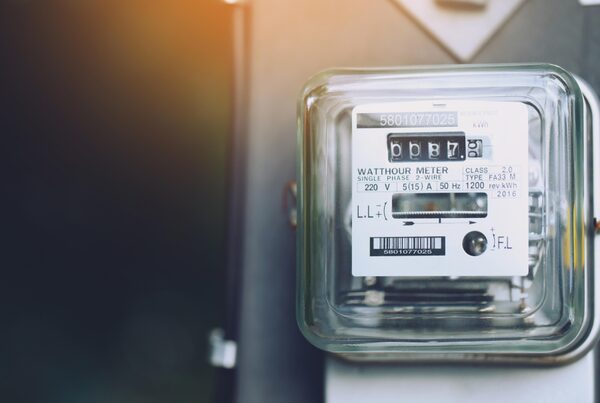
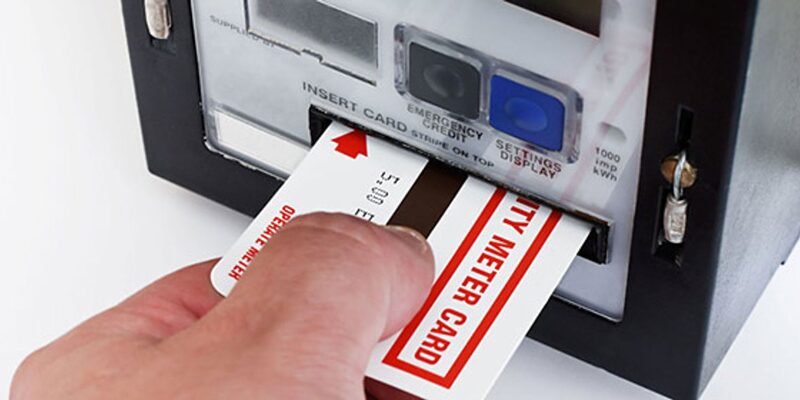
The guarantee provided a support rate discount to all households with a domestic gas and or electricity contract, across Great Britain and Northern Ireland1. Consumers in England, Scotland and Wales did not have to do anything to receive the benefit10. The discount was applied automatically by the supplier, including for prepayment meter customers on variable contracts1.
Coverage stopped at the domestic meter. Business energy customers are not protected by the energy price cap, and the guarantee did not extend to them15. Heat networks were also outside it: they are not covered by the Ofgem energy price cap or by the Energy Price Guarantee because they are classed as commercial supplies16. The existing energy price cap was not applicable to heat networks17. Households who did not pay directly for mains gas and electricity, such as those living in park homes or on heat networks, were to be no worse off and to receive support through a separate fund10.
There were also limits on who could take a complaint to the Energy Ombudsman, which deals with gas and electricity supply disputes and does not cover a consumer who has never been a consumer of the supplier, or a complaint about something outside the scheme18. The Energy Switch Guarantee, a separate arrangement, does not have market-wide coverage of suppliers19.
- Covered: all households with a domestic gas and or electricity contract6
- Covered automatically: no application needed in England, Scotland and Wales10
- Not covered: business energy customers15
- Not covered: heat networks, classed as commercial supplies16
- Separate support: households not paying directly for mains energy, such as park homes10
How the discount reached your bill
The guarantee reached households through the rates their supplier charged, not through a payment. The discount was applied automatically by the supplier, and for prepayment meter customers on variable contracts it appeared in the rates in the same way1. The distribution method recorded for the scheme is simply "automatically"6.
That automatic route is why so few households noticed the mechanism. There was no claim form, no voucher and no separate credit for the guarantee itself. The reduction was built into the unit rate, and the bill showed the result rather than the intervention. The separate Energy Bills Support Scheme, by contrast, did involve a visible payment: a £400 non-repayable discount in six monthly instalments in Great Britain, with £66 applied in October and November and £67 each month from December through to March 20236. Prepayment customers received that scheme differently again, with smart prepayment meters credited directly each month and traditional prepayment customers receiving vouchers by SMS, email or post, redeemable at PayPoint or the Post Office22.
The two schemes are often confused because they ran alongside each other. The guarantee changed the price of a unit; the support scheme paid a fixed sum towards the bill. A household in the winter of 2022 to 2023 was receiving both at once.
Great Britain and Northern Ireland: one scheme, two versions
The guarantee operated, for the most part, in the same way for households across the whole of the United Kingdom, with differences for Northern Ireland1. Those differences were substantial. Northern Ireland has a different regulator, the Utility Regulator for Northern Ireland, no price cap and an entirely different set of suppliers from Great Britain13. Energy prices were not capped there and suppliers had the flexibility to set their tariffs independently to reflect their costs of operating1.
The Northern Ireland scheme started later, on 1 November 2022 rather than 1 October 2022, and the typical annual dual fuel bill under it was around £2,109 a year, against around £2,500 in Great Britain1. A typical household using electricity and mains gas saw its bill increase from £1,952 to £2,109 as an annual equivalent1. The scheme was already in force and delivering support to households across Northern Ireland by mid-November 2022, with a reduction of almost 5 pence per kilowatt hour on gas13.
The discounts differed by quarter. From October to December 2022 the Northern Ireland reduction was up to 19.9p/kWh for electricity and 4.8p/kWh for gas. From January to March 2023 it was up to 13.6p/kWh for electricity and 3.9p/kWh for gas. From April to June 2023 it was up to 3.8p/kWh for electricity and 2.6p/kWh for gas1. Additional backdated support of 2.91p/kWh for electricity and 0.61p/kWh for gas applied from November 2022 and ended in March 20231.
| Quarter | GB electricity | GB gas | NI electricity | NI gas |
|---|---|---|---|---|
| Oct to Dec 2022 | 17p/kWh | 4.2p/kWh | up to 19.9p/kWh | up to 4.8p/kWh |
| Jan to Mar 2023 | 31.8p/kWh | 6.4p/kWh | up to 13.6p/kWh | up to 3.9p/kWh |
| Apr to Jun 2023 | 16.6p/kWh | 2.2p/kWh | up to 3.8p/kWh | up to 2.6p/kWh |
All rates exclude VAT1.
What it cost, and what it saved
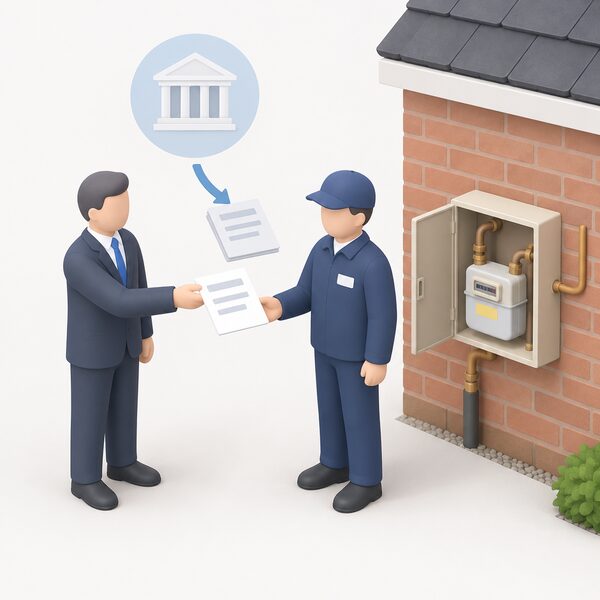
The cost of the guarantee fell on the Exchequer, not on bills. The government set maximum prices and compensated energy suppliers for providing the discount, which is the mechanism that made the scheme work without a claim from the household3. The overall estimated cost of the scheme was £29.4 billion after the extension at £2,500 to June 2023, revised up from £26.8 billion3. Total recorded spend on the Energy Price Guarantee was £23,999 million, with irregular payments of £224.9 million, or 0.94% of spend6.
The range of early estimates shows how uncertain the final figure was. Over winter 2022 to 2023 the estimate was that the EPG would cost between £16 billion and £304 billion over two years, with a central estimate of £97 billion6. The final figure sits far below that central estimate, largely because wholesale prices fell and the scheme closed earlier than the two years originally announced.
The wider economic effect was significant. The guarantee reduced peak CPI inflation by 2.5 percentage points12. That is a saving to households and to the public finances that does not appear on any energy bill, and it is part of why the scheme was described as protecting consumers from the October 2022 increase rather than simply subsidising consumption.
The Energy Price Guarantee versus the Ofgem price cap
The two mechanisms are often treated as rivals, but the guarantee was designed to sit on top of the cap. The price cap protects people on standard variable tariffs, where the unit rate can go up or down depending on the energy market23. It limits how much suppliers can charge per unit of gas or electricity, based on underlying costs to serve energy, and it is not a limit on the total bill7. The cap applies where a customer has not signed up for a fixed-term contract with their supplier8.
The guarantee set maximum unit rates for tariffs subject to the cap, and suppliers could charge less5. It limited the October 2022 increase to 26%, with the government paying suppliers the difference4. The cap itself is a temporary measure, introduced while Ofgem and the government bring in other reforms such as faster switching and smart meters24. Under the Act, Ofgem cannot set different cap levels for different suppliers and must protect default tariff customers25.
The interaction explains the scheme's closure. The guarantee operated as a floor: it mattered only while the cap was above the EPG level. Once the cap fell below that level, the cap alone governed bills, and there was no longer any support under the EPG for customers on fixed tariffs3. The cap has since moved well below the crisis peak: in February 2025 it was £531, or 22%, lower than at the height of the energy crisis at the start of 2023 when the guarantee was in place, and in August 2025 it was £625, or 26.3%, lower on the same comparison14.
| Feature | Energy Price Guarantee | Ofgem price cap |
|---|---|---|
| What it limits | Maximum unit rates for capped tariffs5 | How much suppliers charge per unit7 |
| Total bill cap | No | No |
| Status | Closed1 | In force23 |
| Applies to fixed tariffs | Floor prices to 30 June 20231 | Not where a fixed contract is signed8 |
Why bills did not jump when the guarantee ended
The expected cliff edge did not arrive because the guarantee had already stopped doing any work before it formally closed. The guarantee kept prices constant until June 2023, and the Ofgem price cap then dropped to £2,074 and became active once again under the temporary price guarantee4. In other words, the cap had fallen to a level below the guarantee, so removing the guarantee changed nothing about the maximum a supplier could charge.
The floor prices for fixed rate tariffs tell the same story. They remained unchanged from 1 October 2022 through to 30 June 2023, and the support for fixed tariffs ended with the scheme1. The guarantee was not needed to set maximum prices again and it ended in March 20243. By then the cap was doing the work on its own, and the crisis peak was receding in the comparison figures.
For a household, the lesson is about which mechanism actually governs a bill. The guarantee was a temporary override of the cap during a period when wholesale costs would otherwise have pushed capped rates far higher. When the override was removed, the cap remained, and the cap has continued to fall relative to the crisis peak. The guarantee's closure was therefore an accounting event rather than a change in what households paid.
Sources26 cited
- Energy Price Guarantee up until 30 June 2023, GOV.UK, 2026-09-17
- Energy Price Guarantee scheme documents, GOV.UK, 2022-10-31
- The Energy Price Guarantee and the price cap, House of Commons Library, 2026-08-28
- The history of Ofgem's energy price cap, Energy Helpline, 2026-09-20
- Energy Price Guarantee regional rates, GOV.UK, 2022-10-07
- Energy bills support: an update, National Audit Office, 2024-11-14
- Energy price caps explained, Ofgem, 2020-12
- Energy Price Guarantee and the price cap, House of Commons Library, 2026-09-20
- Energy bills support, House of Commons Library, 2022-10
- Government announces Energy Price Guarantee for families and businesses, GOV.UK, 2022-09-29
- Government introduces new Energy Prices Bill, GOV.UK, 2022-10-11
- Spring Budget 2023, GOV.UK, 2023-03
- Energy Prices (Domestic Supply) (Northern Ireland) Regulations 2022(NorthernIreland)Regulations2022), Hansard, 2022-11-16
- Energy price cap will rise 6.4% in April, Ofgem, 2025-02-25
- Alternative homes energy guidance, Ofgem, 2026
- Edinburgh local heat and energy efficiency strategy, City of Edinburgh Council, 2023-12
- Heat networks, House of Commons Library, 2026-02-26
- What to expect from the Energy Ombudsman, Energy Ombudsman, 2026-09-19
- Supplier guaranteed standards and the Energy Switch Guarantee, Ofgem, 2018-11-23
- £400 energy bills discount to support households this winter, GOV.UK, 2022-07-29
- West Midlands residents urged not to miss out on energy bill support, West Midlands Combined Authority, 2023-02-22
- Energy Bills Support Scheme, House of Commons Library, 2026-09-20
- Energy price cap, Ofgem, 2026-09-17
- How your electricity or gas bill is calculated, Ofgem, 2026
- Energy price cap operating cost and debt allowances decision, Ofgem, 2025-05
- Energy price cap will rise 2% in October, Ofgem, 2025-08-27
 Domestic Energy Prices Over TimeTracks the published domestic gas and electricity unit rates, standing charges and cap levels over time, from the £1,277 cap of early 2022 through the crisis peak to the 2026 quarters.
 Fixed-Rate Energy TariffsWhat a fixed energy tariff fixes and what it does not, the contract lengths sold in the UK, exit fees and the 49-day window, how fixed rates compare with the price cap, and what happens when the term ends.
 Closed Energy PoliciesIf a scheme you used has closed, do you still get paid?
 Switching and Supplier MarketWhat is the Ofgem price cap and does it limit what you actually pay?
 Price Cap HistoryThe energy price cap sets the most a supplier can charge you for each unit of gas and electricity, so it shapes what you pay.
 The Full Tariffs GuideWhich energy tariff suits how you live, and will switching really save you money?