

In this guide
The Energy Bills Support Scheme is closed. It paid a £400 non-repayable discount to households in Great Britain in six monthly instalments between October 2022 and March 2023, delivered automatically through domestic electricity suppliers, and no new payments are coming1. Northern Ireland received a single £600 payment combining the £400 with a £200 Alternative Fuel Payment3.
The scheme reached 29 million households across Great Britain, and 98.7% of eligible customers received their payments2. Total spend was £11,692 million, of which £11,364 million went to Great Britain and £328 million to Northern Ireland3. Households without a direct relationship to an electricity supplier, such as park home residents and people in care homes, were routed through a separate Alternative Funding scheme that has also closed3.
This page records what each payment was, who received it, how it arrived, when each route shut and what remains for households still carrying energy debt. It is a closed-scheme record rather than a live claim guide: every deadline described here has passed.
What the scheme paid: £400 in six instalments of £66 and £67
The headline figure was £400 per household, paid as a non-repayable discount in six monthly instalments3. The structure was deliberately front-loaded in the first two months and then levelled: households saw a discount of £66 applied to their energy bills in October and November, rising to £67 each month from December through to March 20232. Six payments of that shape sum to the £400 total.
The £400 discount was initially applied over a six-month period, and the scheme ended in March 20238. Suppliers were required to provide each eligible domestic electricity customer they served on the qualifying date with the monthly instalment, so the payment was tied to the supply relationship rather than to the household's payment history or tariff4.
The scheme sat alongside a separate business support programme. The Energy Bills Relief Scheme provided a discount on gas and electricity unit prices, similar to the Energy Price Guarantee, and covered businesses, voluntary sector organisations and public sector organisations through 101 non-domestic suppliers, at a total spend of £7,483 million3. That is a different scheme with a different eligibility test, and it did not pay households.
For a household's energy independence, the £400 was a pure transfer: it reduced the bill without changing the relationship with the grid or the supplier. It did not reduce consumption, did not shift any load off the network and did not build any capacity to generate or store energy at home. The dependence on a domestic electricity connection was the very thing that made a household eligible.
Who was eligible: any household with a domestic electricity connection
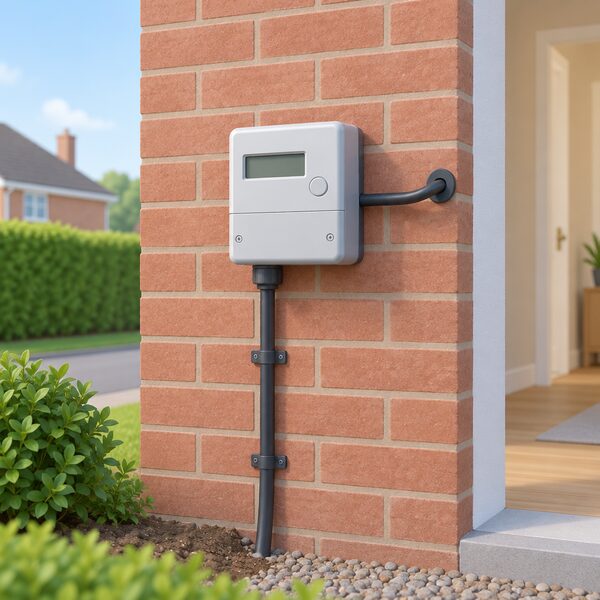
Eligibility was broad by design. All households with a domestic electricity connection in the UK qualified, and all households with a domestic electricity connection or a domestic electricity meter received the £400 non-repayable grant as a credit from their energy supplier in autumn 2022, automatically and without an application3. The scheme applied to consumers in England, Scotland and Wales, with Northern Ireland handled through its own arrangements4.
The automatic route covered the overwhelming majority. Households without a direct relationship to an electricity supplier, such as those living in park homes and care homes, were covered by the Energy Bills Support Scheme Alternative Funding instead3. That route required an application through the local authority, which checked applicants' eligibility3.
The Energy Price Guarantee ran in parallel and applied to all households with a domestic gas or electricity contract, providing a support rate discount from 1 October 2022 up until 30 June 20231. The two schemes are often confused: the Guarantee capped the unit rate, while the Support Scheme paid a fixed cash credit. A household could receive both.
The eligibility test explains the scheme's shape and its limits. Because the payment travelled through the electricity supply relationship, a household with gas only and no electricity connection was outside the main scheme. That is why the Alternative Fuel Payment existed as a parallel route for homes using heating oil, LPG or coal rather than mains gas6.
How the £400 arrived, by payment type
Delivery depended on how the household paid. Direct debit and standard credit customers saw the discount applied to their account as a credit. Smart prepayment meter customers saw the discount credited directly to their smart prepayment meters each month, while traditional prepayment customers received vouchers via SMS, email or post, redeemable at PayPoint or the Post Office4.
| Payment method | How the discount arrived | Timing |
|---|---|---|
| Direct debit or standard credit | Account credit from the supplier | Monthly, October 2022 to March 20232 |
| Smart prepayment meter | Credited directly to the meter each month | Monthly, October 2022 to March 20234 |
| Traditional prepayment meter | Voucher by SMS, email or post, redeemable at PayPoint or Post Office | Issued from the first week of each month2 |
Suppliers carried a notification duty as well as a payment duty, including notifying customers in writing that they had received the £400 Energy Bill discount from HM Government2. That written notice is the record a household can look back to if it needs to confirm what was paid.
The voucher route was the weakest link in the chain. Traditional prepayment customers had to take an active step to convert a voucher into credit, and the scheme set a hard redemption deadline of 30 June 20236. Vouchers were issued from the first week of each month, which gave each one a limited window before the final cut-off2.
For a household's independence, the payment type mattered less than the fact that all routes depended on a supplier or a voucher network. There was no route that put the money directly in a household's hands outside the energy supply system, apart from the local authority route for households with no supplier relationship at all.
Northern Ireland: the £600 combined payment and the Alternative Fund
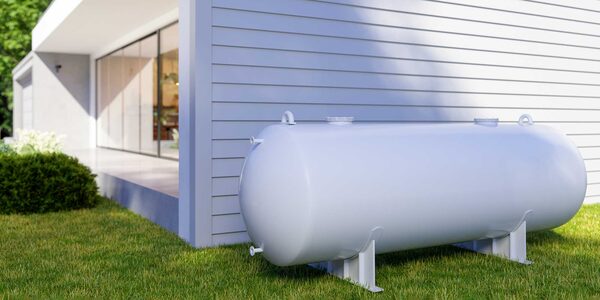
Northern Ireland was treated differently because its energy market is separate. All households in Northern Ireland received a one-off £600 payment to help with energy bills in winter 2022/23, made up of £400 of support under the Energy Bills Support Scheme Northern Ireland and £200 of support under the Alternative Fuel Payment4. The £600 combined both the EBSS and AFP domestic schemes into a single payment3.
The Northern Ireland scheme was funded separately. The cost was estimated at approximately £332 million based on estimates of eligible households in Northern Ireland, and the government committed to fund the Northern Ireland Executive to provide comparable support with around £150 million through the Barnett formula in financial year 2022 to 20238. Actual spend recorded for Northern Ireland was £328 million3.
The Alternative Fuel Payment element was initially set at a lower figure. The alternative fuel payment was to provide £100 to support households who do not use mains gas for heating, before the Northern Ireland package was confirmed at £600 in total7. That £600 was made up of £400 of support under the Energy Bills Support Scheme Northern Ireland and £200 of support under the Alternative Fuel Payment scheme7.
Households in Northern Ireland without a direct relationship to a domestic electricity supplier, such as park home residents, people living in care homes and households on commercial contracts, were covered by the Energy Bills Support Scheme Alternative Funding. Over 28,000 households were eligible, and applicants had to search for the Northern Ireland application route on GOV.UK9. The government stated plainly that it would never provide any links to the application portal, or directly ask individuals to apply for the £6009.
The £400 was non-repayable: how the original £200 rebate changed
The scheme did not start at £400. The original proposal was an up-front discount on bills worth £200, repayable through bills in later years10. That structure would have spread the cost across future bills rather than meeting it from general taxation.
The change came in 2022. The scheme was doubled to £400 and provided as a non-repayable grant10. The Energy Bill Support Scheme was then described as a £400 grant for all domestic energy customers, appearing as a credit from energy suppliers from October 2022 onwards5. The Alternative Funding route was likewise described as £400 of non-repayable help with fuel bills7.
The distinction matters for anyone looking back at old statements. A repayable £200 discount would have shown up as a later charge or a levy; the £400 that was actually paid did not. Scottish Government modelling treated the £201 Energy Bill Support Scheme as a direct reduction to energy costs that was not present in the modelled prices, which is a separate treatment of the same payment in a different analytical context11.
For household independence, a non-repayable grant is a straightforward reduction in the cost of dependence. It does not reduce the dependence itself. The household still buys all its energy from a supplier, still relies on the grid, and still faces the same bill in the following year once the credit has gone.
Vouchers, deadlines and unclaimed payments for prepayment customers
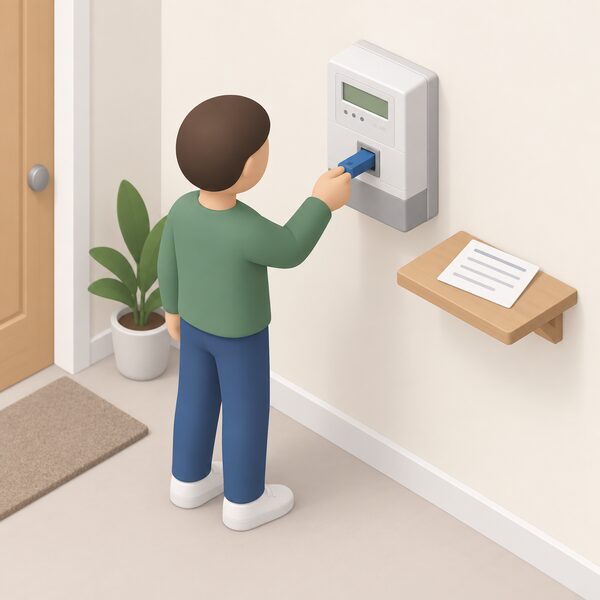
Prepayment customers faced the tightest deadlines of any group. The £400 discount was initially applied over a six-month period, and households were urged to check online or contact their provider before the 31 March 2023 deadline8. All vouchers then had to be redeemed by 30 June 20236.
| Deadline | What it applied to |
|---|---|
| 31 March 2023 | Final date for the six-month discount period and for checking with a provider8 |
| 30 June 2023 | Final redemption date for all prepayment vouchers6 |
The voucher scheme was designed for households at risk. The Fuel Voucher scheme in Wales provided support to eligible households that pre-pay for their fuel and are at risk of disconnection, and included fuel vouchers for homes with prepayment meters and deliveries of oil or gas for those not connected to the mains gas network12. That is a separate Welsh scheme, not the EBSS, and it continued after the EBSS closed.
Unredeemed vouchers were the main leakage in the prepayment route. The National Audit Office recorded that take-up for the scheme providing support to households which did not have a domestic electricity supply reached around one-fifth of the Department's provisional estimate of potentially eligible recipients3. That is the Alternative Funding route rather than the voucher route, but it shows the same pattern: schemes that require an active step reach fewer households than schemes that pay automatically.
How the scheme fitted alongside the energy price cap
The £400 and the Energy Price Guarantee were separate instruments aimed at the same bill. The Guarantee provided a support rate discount to all households with a domestic gas or electricity contract from 1 October 2022 up until 30 June 20231. The Support Scheme paid the fixed £400 credit on top3.
The price cap itself is a different mechanism again. It applies to customers on a standard variable tariff paying by standard credit, direct debit, prepayment meter or Economy 7 meter14. The cap level moved sharply through the period: it fell to £3,116 in April to June 20234.
The Guarantee is now closed, and so is the heat network support scheme that accompanied it: the Energy Bills Discount Scheme heat network support closed to new applications on 31 March 2024, and you cannot apply for it anymore15. The Energy Price Guarantee scheme is now closed1.
Policy costs have since moved in the opposite direction. The government cut policy costs in April 2026 by ending a levy-funded scheme for energy efficiency and shifting funding for the largest renewable generation support scheme to general taxation17. Ministers stated that actions taken had removed £150 from energy costs, and that removing costs from energy bills reduced energy costs by 7% from April18.
For a household, the sequence matters: the crisis payments reduced bills while they lasted, and the underlying dependence on purchased gas and electricity continued throughout. The £400 was a cushion, not a change in how the home was supplied.
What the scheme cost and how well it reached households
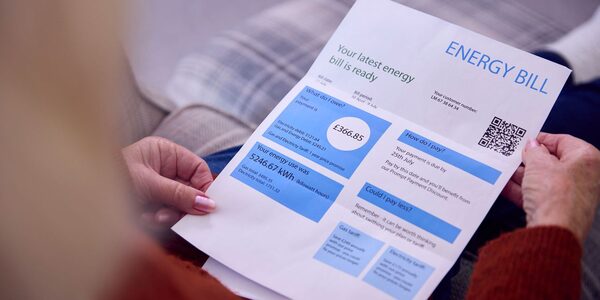
The Energy Bills Support Scheme cost £11,692 million in total, of which £11,364 million went to Great Britain and £328 million to Northern Ireland3. The Alternative Funding route accounted for £61 million3. The Energy Bills Relief Scheme for non-domestic customers cost £7,483 million3.
Delivery performance was high on the automatic route. The proportion of eligible customers receiving payments through the Energy Bills Support Scheme was 98.7%3. Irregular payments amounted to £7.2 million in Great Britain, or 0.06% of spend3. Those are the figures behind the claim that the scheme reached almost everyone it was meant to reach.
The picture is weaker where an application was required. Take-up for the scheme providing support to households which did not have a domestic electricity supply reached around one-fifth of the Department's provisional estimate of potentially eligible recipients3. Households in park homes, care homes and on commercial contracts were the group most likely to miss out, precisely because they sat outside the standard supplier relationship.
The wider cost of the crisis support was larger still. Based on the 10-day average forward prices for gas and electricity on 12 September 2022, the total cost of the schemes between October 2022 and March 2023 was estimated at £29 billion in nominal undiscounted terms, excluding the VAT revenue impact8. That figure covers both domestic and non-domestic support.
For energy independence, the cost figures show the shape of the dependence: a very large sum was transferred through suppliers and local authorities to soften the price of imported energy, and none of it reduced the volume of energy a household needed to buy.
Scams and how to check a genuine payment
The closed schemes are now a common hook for fraud. The government stated during the Alternative Funding rollout that it would never provide any links to the application portal, or directly ask individuals to apply for the £6009. That rule remains the clearest test: a genuine scheme did not arrive as an unsolicited link or a cold approach.
The application route itself was specific. Consumers applied for support through their local authority, which checked applicants' eligibility3. In Northern Ireland, applicants had to search for the dedicated GOV.UK page rather than follow a link9. Any message that bypasses those routes and asks for bank details or a fee is not part of the scheme.
For households still struggling with bills, the live routes are different. Ofgem's guidance covers paying off energy debt through supplier schemes and grants19. Local energy advice services offer help to check if you are on the cheapest tariff and can arrange a free telephone advice service to help with benefits, money and bill problems20. In Northern Ireland, the Home Heating Oil Support Scheme was created to help households in Northern Ireland with the cost of home heating oil, and it remains open to households who use oil as their primary source of heating, are resident in Northern Ireland, and meet the income or benefit tests21.
The Warm Home Discount is the surviving bill credit of this type. It provides £150 energy bill rebates, funded through a levy on all domestic gas and electricity customers23. Eligibility was widened so that all households where the means-tested benefit recipient, or their partner or legal appointee, is named on the energy bill qualify25. Unlike the EBSS, it is not universal and it is not closed.
"The government will never provide any links to the application portal, or directly ask individuals to apply for the £600"
What if I switched supplier or moved house during the scheme?
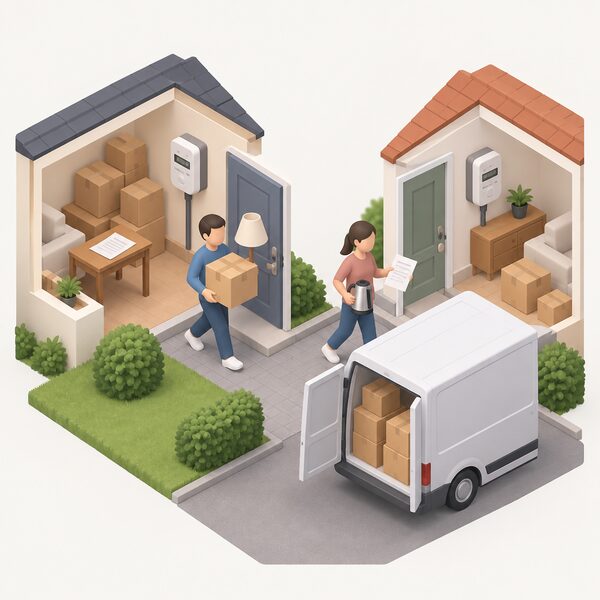
The discount followed the supply relationship, not the household. Suppliers provided the instalment to each eligible domestic electricity customer they served on the qualifying date, so a switch or a move mid-scheme could split the six payments between two suppliers4. The scheme is closed, so no instalments remain outstanding from either.
Switching rules were unaffected by the scheme. If you pay a supplier directly for the electricity or gas you use at home, you can choose to switch to a different supplier or tariff at any time, and in a rented property where the tenant pays the bills, the same right applies26. The EBSS did not create any exit fee or lock-in.
For households that moved into a property after March 2023, there is nothing to claim. The scheme ended in March 2023, and the Energy Price Guarantee closed on 30 June 20236. A new occupant of a property that received the discount has no entitlement to any part of it.
The practical lesson for independence is that bill support tied to a supply account is also tied to the timing of that account. A household that moves, switches or changes payment method mid-scheme has to track the payments across more than one record, and the automatic route offers no way to consolidate them.
Sources26 cited
- Energy Price Guarantee up until 30 June 2023, GOV.UK, 2026-09-17
- £400 energy bills discount to support households this winter, GOV.UK, 2022-07-29
- Energy bills support: an update, National Audit Office, 2024-11-14
- Energy bills support, House of Commons Library, 2026-08-28
- Support for energy bills: the Council Tax Rebate 2022-23, GOV.UK, 2022-03-16
- Energy bills support, House of Commons Library, 2023-04-12
- Vital help with energy bills on the way for millions more homes, GOV.UK, 2022-12-19
- Energy Prices (Domestic Supply) (Northern Ireland) Regulations 2022, UK Parliament, 2022-10-18
- Thousands more households in Northern Ireland on course to benefit from £600 government help, GOV.UK, 2023-02-27
- Energy bills support, House of Commons Library, 2022-05-26
- Scenario modelling 2023 fuel poverty levels under 2019 fuel prices, Scottish Government, 2023
- Funding Fuel Bank Foundation to continue fuel voucher and heat fund schemes, Welsh Government, 2024-11-15
- Tackling fuel poverty, Welsh Government, 2025-01-27
- Energy price cap, House of Commons Library, 2026-02-26
- Energy Bills Discount Scheme heat network support, GOV.UK, 2025-04-01
- Energy Price Guarantee scheme documents, GOV.UK, 2025-06-13
- Energy bills support, House of Commons Library, 2026
- Heating oil support, Hansard, 2026-03-16
- Get help with your energy bills, Ofgem, 2026-09-17
- Grants and funding, Tameside Council, 2026-09-17
- Home Heating Oil Support Scheme, Northern Ireland Executive, 2026-09-17
- Lyons announces agreement on Home Heating Oil Support, Northern Ireland Executive, 2026-04-16
- Continuing the Warm Home Discount Scheme: government response, GOV.UK, 2026-01-30
- Warm Home Discount guidance: England and Wales, Ofgem, 2022-07-05
- Millions more families to get £150 off energy bills this winter, GOV.UK, 2025-06-19
- Switch your home energy supplier, Ofgem, 2026
 Energy Bills in Northern IrelandNorthern Ireland has no price cap.
 Switch Energy SupplierThe practical sequence of a domestic energy switch: the details and readings needed, the five working day transfer, cooling-off periods, exit fees and the final bill.
 Check Which Energy Grants ApplyWhich energy grants can you actually get right now, and which have closed?
 Domestic Energy Prices Over TimeTracks the published domestic gas and electricity unit rates, standing charges and cap levels over time, from the £1,277 cap of early 2022 through the crisis peak to the 2026 quarters.
 Devolved vs Reserved PowersWho decides what you pay for gas and electricity, and who decides how your home is insulated or improved?
 Closed Energy PoliciesIf a scheme you used has closed, do you still get paid?