
In this guide
Energy independence for a household means shrinking the part of the bill that a supplier and the grid control, and being honest about the part that cannot be shrunk. Two components sit on every bill: the unit rate, which falls with use, and the standing charge, which does not. Ofgem defines the standing charge as "a fee you pay each day, even if you do not use any energy on that day"1. A household that generates its own electricity still pays it, because it still has a connection.
The main route to cutting the unit-rate side is solar photovoltaics, which uses energy from the sun to create electricity to run appliances and lighting3. Independent guidance puts a standard three-bedroom house at 10 panels and a small detached house at 124. Installed cost is quoted by installers rather than published, and payback is usually modelled over a decade or more, so the case rests on how much of the generation a household uses itself rather than exports.
What remains is substantial. The grid connection, the standing charge, gas for heating and hot water in most homes, and the supplier relationship all survive a solar installation. Leaving the grid entirely is a different proposition with different costs, and the sections below set out where the boundary sits.
What energy independence means for a household
Independence is a spectrum, not a switch. At one end sits a household on a standard variable tariff, buying every unit from a supplier at capped rates and paying a standing charge for the connection. At the other sits a home with its own generation, storage and a heating system that does not burn gas. Most homes sit somewhere between, and the useful question is which costs stop responding to wholesale prices and which do not.
Renewable technologies reduce reliance on fossil fuels such as gas and oil and therefore reduce fuel bills and carbon emissions, as Welsh Government guidance puts it8. That is the mechanism: every kilowatt hour generated and used on site is a kilowatt hour not bought at the unit rate. Demand side response, where a household shifts consumption in response to price or signal, could make household energy bills cheaper9. Neither removes the connection.
The supplier relationship is more resilient than it looks. If a supplier goes out of business, the household does not need to do anything: Ofgem moves customers automatically to a new supplier and makes sure supply is not interrupted10. That protection is worth stating plainly, because it means supplier risk is largely a billing and service risk rather than a supply risk. What a household cannot do is opt out of the network that delivers power when its own generation is not running.
Standing charges: the fixed cost you pay even when you use nothing
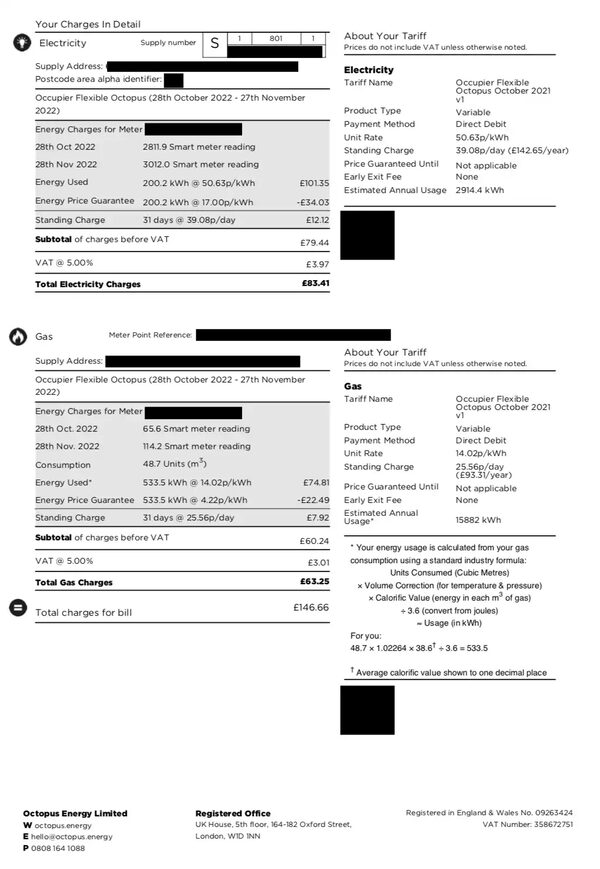
The standing charge is the clearest limit on household energy independence. Ofgem describes it as the charge "you pay every day even if you do not use any energy on that day"1. The Commons Library defines it the same way: a daily charge that energy customers have to pay even if they use no energy3. The Energy Ombudsman adds the detail that matters most for anyone planning to generate their own power: it is a daily charge covering a range of services from maintenance to support services, and "You can't opt out of it or reduce it"11.
That is the whole problem in one sentence. A household can cut units to near zero in summer with solar and still owe the standing charge for every day of the year. The charge pays for network maintenance, metering, and the costs of supplier obligations and failures that are recovered across all customers rather than from the households that caused them.
The practical consequence is that self-generation changes the shape of a bill rather than removing it. A home with panels and a battery may buy very few units in the brighter months, but the fixed element continues at the same daily rate. For a low-usage household, that fixed element becomes the dominant part of the bill, which is why the Welsh Government's housing decarbonisation analysis notes that standing charges are now considerable and represent an increasingly significant proportion of energy costs, particularly for more efficient homes12.
There is a route out, but a narrow one. A no standing charge tariff is a gas, electricity or dual fuel deal that does not include standing charges7. The trade-off is a higher unit rate, so the deal suits low-usage households and penalises high-usage ones. For a household weighing that against self-generation, the comparison is set out in no standing charge tariffs and in the wider treatment of standing charges.
Standing charges by region: from £267 in London to almost £360 in north Wales and Merseyside
Standing charges are not uniform. They vary by distribution area, by fuel and by payment method, and the published benchmark tables for 1 July to 30 September 2026 show the spread. In the north Wales and Merseyside electricity area, the three published tables give annual standing charges of £245.97, £276.80 and £276.53, with annual bills at 2,500 kWh of £884.59, £971.97 and £904.48 respectively, and at 3,400 kWh of £1,053.89, £1,158.77 and £1,079.215.
Gas in the same area is charged separately. The benchmark tables give a standing charge of £102.26 with an annual bill of £760.71 at 9,500 kWh on the other payment method, £127.56 with an annual bill of £820.96 on standard credit, and £102.26 with an annual bill of £734.85 on prepayment5.
| Fuel and payment method | Annual standing charge | Annual bill at benchmark use |
|---|---|---|
| Electricity, table one, 2,500 kWh | £245.97 | £884.59 |
| Electricity, table two, 2,500 kWh | £276.80 | £971.97 |
| Electricity, table three, 2,500 kWh | £245.97 | £904.48 |
| Gas, other payment method, 9,500 kWh | £102.26 | £760.71 |
| Gas, standard credit, 9,500 kWh | £127.56 | £820.96 |
| Gas, prepayment, 9,500 kWh | £102.26 | £734.85 |
The regional pattern is the reason a household cannot read a national headline figure as its own bill. The same nominal usage produces different totals in different parts of the country, and the fixed element differs too. For a household considering self-generation, the regional standing charge is the floor below which the bill cannot fall while the connection remains. Regional unit rates and standing charges are set out in more detail in electricity and gas unit rates by region.
Why standing charges keep rising
Standing charges have risen faster than unit rates at points in the recent past. Ofgem's announcement ahead of the October to December 2025 cap period stated that standing charges were set to rise by 4% for electricity and 14% for gas13. Those are the figures for that cap period, not a permanent trend, but they show how the fixed element can move independently of the unit rate.
Part of the reason is historical. A 2022 early day motion recorded in the Commons Library briefing states that much of the increase in standing charges results from the failure of 30 energy suppliers in 2020, with the cost of guaranteeing customers' balances added to the bills of all households14. That is a cost of supplier failure spread across the customer base rather than borne by the failed companies or their owners.
The Welsh Government's analysis points to a structural cause as well: as homes become more efficient and use fewer units, the fixed costs of the network and supplier obligations are spread over a smaller volume of energy, so the standing charge takes a larger share of what remains12. That creates an awkward interaction with self-generation. A household that cuts its units sharply makes itself more exposed to the fixed element, not less.
Solar PV: the main route to generating your own electricity
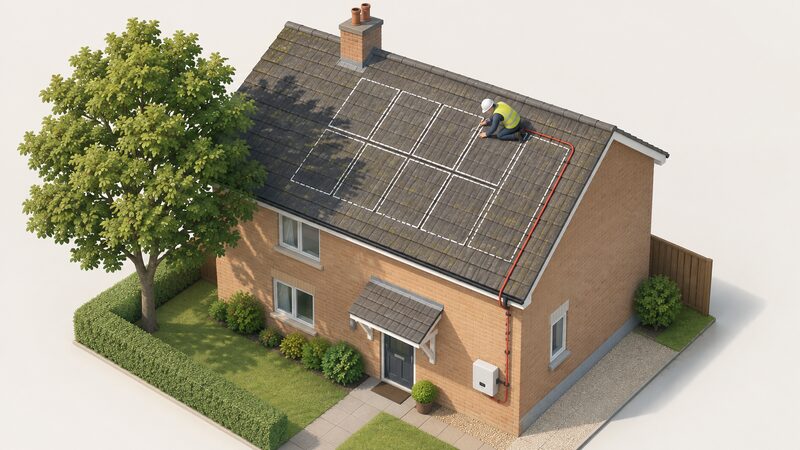
Solar photovoltaics is the technology that turns a roof into a generating asset. The Planning Portal describes it simply: solar PV uses energy from the sun to create electricity to run appliances and lighting15. Legislation covering the reliefs defines solar photovoltaics to include plug-in solar, and defines stand-alone solar as solar PV or solar thermal equipment not installed on a building16.
The economics turn on self-consumption rather than export. Rates for selling electricity to the grid are much lower than tariffs for using electricity from the grid, so using solar electricity yourself is much more cost-effective than exporting it17. That single fact shapes every design decision: a system sized to match daytime household use, or paired with a battery to shift generation into the evening, delivers more value than one sized purely to maximise total output.
Solar PV requires only daylight, not direct sunlight, to generate electricity, and power can be generated even on a cloudy day18. Output is lower under cloud and in winter, so a system is normally assessed on annual generation rather than peak output. The Energy Saving Trust notes that solar panels are permitted developments, meaning planning permission is not needed to install them on a home, subject to conditions19.
For a household, the independence gain is real but partial. Generation reduces the units bought at the capped rate, and it reduces exposure to wholesale price movements on those units. It does not reduce the standing charge, does not remove the need for a grid connection to cover winter evenings, and does not by itself change how the home is heated.
Costs, savings and payback: modelled returns of four to fifteen years
Installed cost is not published as a national figure. Prices are installer-quoted, and no published range for a full rooftop system is available, so no range is stated here. What is published is a smaller-scale comparison: plug-in solar has a £500 upfront cost, and Carbon Brief calculated annual electricity bill savings of £110 a year, giving a five year payback on that basis20. That is a modelled figure for a specific product type, not a general payback for rooftop solar.
Payback varies widely by system type and scale. An 800W plug-in solar system is estimated to save £70 to £110 a year, giving a payback period of around four to seven years21. A UK domestic solar payback example calculation gives approximately eight years, based on a £6,000 initial cost and £740 annual savings22. For domestic solar installations of 3 to 4 kWp, the payback period generally ranges from 7 to 15 years23. A solar panel and battery system pays off in about 10.5 years with increased savings24. A battery-only install typically pays back in 8 to 12 years, shortening to 5 to 8 years when combined with new solar panels25. One modelled scenario for a 2kW modular plug-and-play storage system costing £4,500 with a £409 annual saving gives a simple payback of 11.0 years26. A £6,000 installed battery with a £400 a year saving gives a 15 year payback27.
For a full system, the honest position is that payback depends on three variables: the installed price, the proportion of generation used on site, and the unit rate it displaces. Because export rates are much lower than import tariffs, a household that exports most of its generation recovers far less per kilowatt hour than one that uses it17. A battery improves the self-consumption ratio and therefore the return, at additional capital cost.
The Energy Saving Trust's guidance on combining solar with a heat pump makes the same point from the other direction: combining solar panels with a home battery lets a household store free, renewable electricity to power a heat pump, making it less reliant on grid electricity21. That is where the largest bill reduction sits, because it displaces gas or grid electricity used for heating rather than only for lighting and appliances.
Roof suitability, orientation and planning: what your home needs
Most homes do not need planning permission for solar panels. The Planning Portal states that homes can often have solar panels without requiring planning permission from the council, covered by permitted development so long as certain conditions apply22. Cornwall Council's guidance is consistent: solar panels are permitted development, and planning permission can be applied for if needed22. The clear exception is listed buildings, which need planning permission and listed building consent22.
Shading is the main technical constraint. Where shading is unavoidable, an installer might recommend microinverters or power optimisers, which let each panel work independently, or trimming trees causing partial shade19. Orientation and pitch affect annual yield, and roof condition matters because the panels will outlast the covering beneath them if it is near the end of its life.
For new build and self-build projects, the Planning Portal's sustainability guidance advises designing the home to take advantage of solar heating, natural ventilation and daylight where possible, exploring other renewable sources such as wind or heat pumps if suitable for the location, and considering a compact and efficient building shape to minimise surface area and reduce energy consumption23. Welsh building regulations for new roofs require that they resist weather and have adequate drainage24, and re-roofing or inserting roof lights or skylights does not normally require planning permission25.
In Northern Ireland, homeowners are directed to seek independent advice on solar panels, heat pumps and other energy efficiency measures from organisations funded to provide it26. That is a different support landscape from Great Britain, and it matters because the planning and grant routes differ.
Batteries, self-consumption and using what you generate
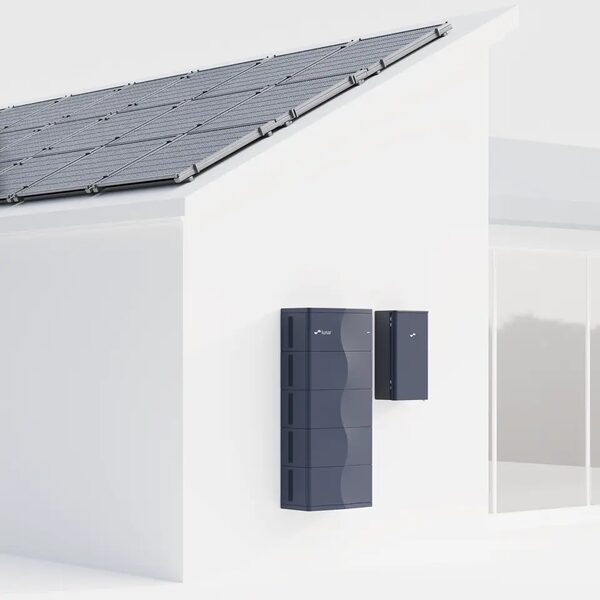
A battery changes the value of a solar system more than any other single addition, because it moves generation from the middle of the day to the hours when the household is actually using power. The Energy Saving Trust's formulation is direct: combining solar panels with a home battery lets a household store free, renewable electricity to power a heat pump, making it less reliant on grid electricity21.
The reason this matters is the gap between import and export prices. Rates for selling electricity to the grid are much lower than tariffs for using electricity from the grid, so using solar electricity yourself is much more cost-effective17. Every kilowatt hour shifted from export to self-consumption is worth the difference between the two rates. A battery is the mechanism for capturing that difference.
Registration is part of the installation, not an optional extra. The installer registers the solar panel system and any battery storage with the District Network Operator as an important safety process19. The installer must contact the DNO through connect and notify or apply to connect27. A household does not arrange this itself, but it should expect it to be done, because an unregistered installation is a compliance problem.
The dependence that remains is worth naming. A battery is a manufactured product with a finite life, and its performance is governed by the maker's warranty and the installer's workmanship. A household that stores its own electricity still relies on a supply chain, a manufacturer and an installer, and on the grid for the winter weeks when generation is low. Self-consumption reduces exposure to unit rates; it does not eliminate exposure to the companies that make and maintain the equipment.
VAT on energy-saving products and the dates that matter
The VAT treatment of solar installation has moved twice in recent years, and the dates matter for anyone timing a purchase. A reduced rate for the installation of energy-saving materials applied to supplies made on or after 1 October 2019, except for supplies paid for before that date or made under a contract entered into before it28.
The relief was then expanded. With effect from 1 February 2024 the relief was expanded to include further categories of materials29, and the measure took effect from that date6. Qualifying supplies moved to a temporary zero rate, which runs until 31 March 202729. The Energy Saving Trust's own summary is that there is 0% VAT on solar until April 202730.
The end date is written into the legislation rather than left to annual review. A sunset clause will result in the automatic reversion to the reduced rate after 31 March 2027 unless the government introduces further legislation to extend the end date31. Installers of energy-saving materials in Northern Ireland will, from 1 May 2023 to 31 March 2027, no longer be required to charge and account for VAT on their supplies31.
| Date | What changes |
|---|---|
| 1 October 2019 | Reduced rate applies to supplies made on or after this date28 |
| 1 February 2024 | Relief expanded, temporary zero rate takes effect29 |
| 31 March 2027 | Temporary zero rate ends29 |
| 1 April 2027 | Northern Ireland reduced-rate provision begins31 |
Understanding your usage: smart meter data and tools like Energy Hub
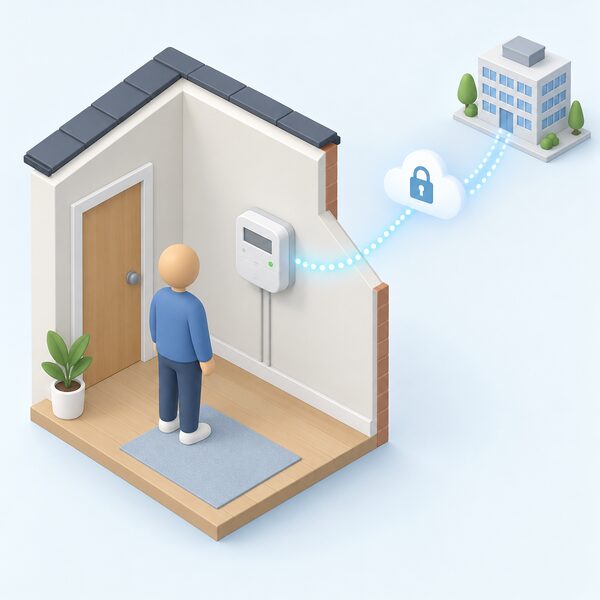
Self-generation only pays if the household knows when it uses electricity. Smart meters are the instrument for that. They measure gas and electricity usage and send the data directly to the energy supplier32, and the meter automatically sends usage data to the supplier using a secure network32.
The data has several uses. It is used to bill for the energy used, to offer new products and services such as new tariffs where permission has been given, and to help make the energy system more efficient by recording demand more accurately33. A household can also find ways to save money using up-to-date information on its energy use33. Billing is based on actual rather than estimated usage, with energy use automatically recorded in half-hour periods34.
That half-hourly record is what makes time-of-use and self-consumption decisions possible. A household can see how much of its demand falls in daylight hours, which is the share a solar system can serve directly, and how much falls in the evening, which is the share a battery would need to cover. Switching supplier does not disrupt this: customers can switch easily and quickly between suppliers without any disruption to smart service34.
The dependence here is on data and connectivity. A smart meter reports to a supplier over a network the household does not control, and the app or portal that displays the data is provided by a company. That is a softer form of dependence than buying every unit at the capped rate, but it is dependence nonetheless. Smart meter rights and expectations are set out in more detail in meter readings and estimated bills.
The Energy Independence Bill and where policy is heading
The Energy Bill [HL] 2022-23 is centred around three pillars: leveraging investment in clean technologies, reforming the UK's energy system and protecting consumers, and maintaining the safety, security and resilience of the energy systems across the UK35. The name invites the reading that households will become independent, but the pillars describe a system-level reform rather than a household-level one. The consumer protection pillar is about the relationship between households and suppliers, not about removing the relationship.
Other support routes sit alongside it. Energy supplier schemes and grants fund making energy-saving improvements to a home36, and Ofgem directs households to help with energy bills through supplier and government schemes36. In Northern Ireland, the advice route is separate, with homeowners directed to independent advice on solar panels, heat pumps and other efficiency measures26.
For a household, the direction of policy matters less than the dates already fixed. The zero rate on qualifying installations runs to 31 March 202729. The reduced rate returns after that unless legislation changes31. Standing charges continue to be recovered from every connected household, and the Welsh Government's analysis expects them to remain a significant and growing share of costs for efficient homes12.
The realistic picture is a household that generates a meaningful share of its own electricity, stores some of it, uses less gas, and still pays a daily connection charge and still buys power in the depths of winter. That is a large reduction in exposure to unit rates and wholesale prices. It is not independence from the grid, and no current policy proposes that it should be.
Sources36 cited
- Energy price cap, Ofgem
- Understand your electricity and gas bills, Ofgem
- Standing charges and energy bills, House of Commons Library
- How long do solar panels last, Uswitch
- Energy price cap levels, 1 July to 30 September 2026, Ofgem
- Extension of VAT energy saving materials relief, GOV.UK
- Should I get a no standing charge tariff, Uswitch
- Renewable energy, Carmarthenshire County Council
- Demand side response, Parliamentary Office of Science and Technology
- Switch your home energy supplier, Ofgem
- How to understand your electricity and gas bills, Energy Ombudsman
- Homes of today for tomorrow: decarbonising Welsh housing, Welsh Government
- Energy price cap will rise 2 per cent in October, Ofgem
- Energy supplier failures and standing charges, House of Commons Library
- Solar electricity photovoltaics, Planning Portal
- VAT relief on energy-saving materials: schedule, legislation.gov.uk
- Solar panels, London Borough of Hammersmith and Fulham
- Generating your own energy: solar electricity, Welsh Government
- Solar panel installation, Energy Saving Trust
- Plug-in solar, Parliamentary Office of Science and Technology
- How to ensure a heat pump runs efficiently, Energy Saving Trust
- Solar panels and planning permission, Cornwall Council
- Sustainability and self-build homes, Planning Portal
- Constructing a new roof, Welsh Government
- Planning permission: roof, Welsh Government
- Support to generate your own electricity, nidirect
- Building regulations and renewables guidance, Bedford Borough Council
- Draft VAT guidance on changes to energy-saving materials, GOV.UK
- VAT energy saving materials relief, HM Revenue and Customs
- Energy advice insights, Energy Saving Trust
- VAT energy saving materials: explanatory memorandum, legislation.gov.uk
- Smart meters, Welsh Government
- Get help with your smart meter, Ofgem
- Smart meters: your rights and expectations, GOV.UK
- The Energy Bill, House of Commons Library
- Get help with your energy bills, Ofgem
 The Full Solar Panels GuideHow much do solar panels cost, and what could they save you each year?
 Leaving the Electricity GridCan you really cut your home off the grid completely, and what does it cost to have your electricity supply removed for good?
 Solar and Energy IndependenceHow far domestic solar cuts dependence on suppliers and the grid, what self-consumption really looks like across the year, what a battery, diverter or EV adds, and the grid-outage limit of ordinary inverters.
 Suppliers and IndependenceCan you really cut your energy bills by making your own power, and how much of your supplier do you still need?
 Charging and Energy IndependenceCharging an electric car at home can cut your fuel costs, but how much does it really free you from the grid?
 Self-ConsumptionHow much of the electricity from your own solar panels do you actually use, and how much goes to the grid?