

In this guide
A fixed tariff holds the unit price of gas and electricity for an agreed period, usually 12 months, and a standard variable tariff does not: the rate moves with the market but sits underneath Ofgem's energy price cap. That single difference decides most of what follows, because the cap is a ceiling on the default rate rather than a deal a household chooses1.
The cap itself is set every quarter and covers standard variable and default tariffs. Ofgem introduced it on 1 January 2019 under the Domestic Gas and Electricity (Tariff Cap) Act 2018, and moved from setting it every six months to every quarter in summer 2022 in response to high and volatile wholesale prices3. The wholesale index inside it is calculated on a 12 month forward view of gas and electricity prices, which is why a cap level announced today reflects expectations about the year ahead rather than today's spot market4.
For a household, the practical question is not which label sounds safer but what each one fixes, what it leaves exposed, and what it costs to leave. A fixed tariff fixes the unit rate and the daily standing charge, not the bill. A standard variable tariff fixes nothing but gives the right to leave at any time without a fee. The arithmetic between them turns on the gap at the moment of signing, the exit fee if circumstances change, and what happens on the day the fixed term ends.
Fixed or standard variable: the difference in one line
A fixed tariff sets the price per unit of gas or electricity for an agreed period; a standard variable tariff does not, and instead moves up or down with the cost of buying energy on the open market7. Ofgem's own consumer research tested households against three options: a 12 month fixed term, a 24 month fixed term, and standard variable8. Those are the shapes the market actually offers.
The legal definition matters because it decides who is protected. The Domestic Gas and Electricity (Tariff Cap) Act 2018 defines a standard variable rate as a rate or amount charged for the supply of gas or electricity under the contract that is not fixed for a period specified in the contract9. Anything not fixed for a stated period is, in effect, variable, and variable domestic tariffs are the ones the cap exists to cover.
Fixed terms are usually shorter than households assume. Independent guidance puts a typical fixed rate tariff at between one and three years, with 12 months the common case and two or three year deals available from some suppliers2. A separate guide states fixed tariffs usually last for a year10. The range across sources reflects the market rather than a disagreement: one year is the norm, longer terms exist, and the term is stated on the contract.
The distinction has a second edge that is easy to miss. A standard variable tariff is usually the supplier's default tariff, the one a household lands on at the end of any fixed rate tariff, and it is usually the most expensive tariff that supplier offers2. It is not a product anyone selects so much as the position a household occupies when it has not selected anything.

What a fixed tariff actually fixes, and what it does not
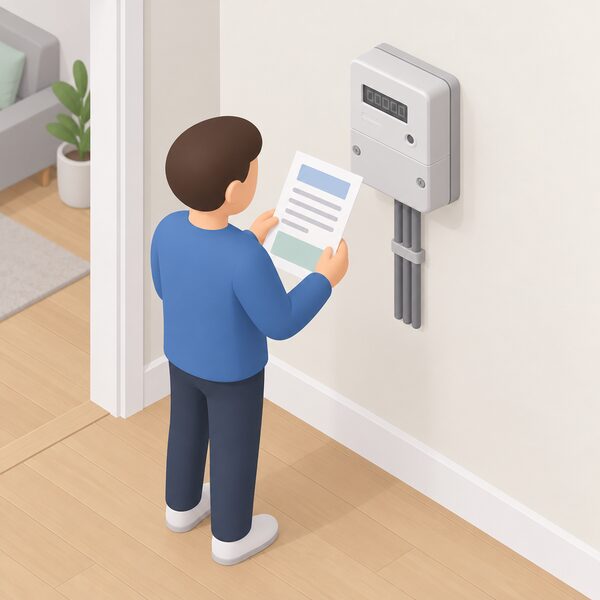
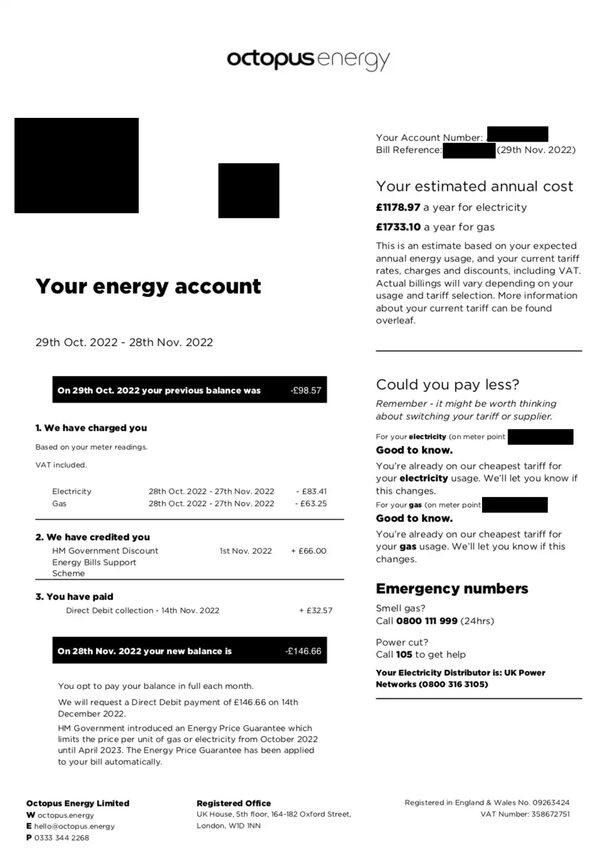
The name oversells it. A fixed rate tariff fixes your unit price, not your energy bill2. The amount charged is set by three things: how much energy you use, the unit cost, and the daily fee10. Two of those are held for the term. The first is entirely within the household's control and is the reason a fixed tariff still produces a different total every month.
What is held is the unit cost of energy and the daily standing charge12. What is not held is consumption. A cold February, a fortnight of working from home, or a change in the number of people in the property all move the total while the rates stay exactly where they were. A household comparing a fixed deal with the cap should compare rates and standing charges, not last year's total bill.
Suppliers cannot raise the price during the fixed period, with narrow exceptions. Independent guidance states that a supplier cannot increase the price you pay unless the government has raised VAT, and a second source adds that the exception also covers a staggered tariff10. The VAT point is not theoretical: VAT on electricity bills is reduced from 5% to 0% from 1 October 2026 until 31 March 2027, applying to all tariffs including fixed deals, so a fixed tariff signed before that date will show a lower electricity bill for reasons that have nothing to do with the fix itself.
"The unit cost of your energy and the daily fee are fixed."
The protection runs for the length of the term. Independent guidance describes a fixed tariff as worth locking in to protect against higher prices for at least 12 months14. That is the whole of the offer: a known rate for a known period, and no protection at all on the day the period ends.
A standard variable tariff moves with the market, but sits under the price cap
A standard variable tariff is where the price you pay can go up or down based on things like the cost of buying energy on the open market7. It is tied to Ofgem's energy price cap, so when the cap moves, the tariff moves with it2. The rate fluctuates depending on the price of energy, and the household has no contract term to serve15.
The trade is straightforward and worth stating plainly. Standard variable tariffs are usually the most expensive types of tariff on the market, often hundreds of pounds more expensive per year than a fixed tariff11. A separate guide reaches the same conclusion from the other direction, describing the standard variable rate as the supplier's default and typically higher than fixed rates15. The cap does not make the tariff cheap; it makes it capped.
What the household gets in return is freedom of exit. Standard variable tariff customers can switch at any time without incurring any fees, because they are not tied into a contract and pay no exit fees if they change supplier16. That is a real benefit, and one that consumers routinely fail to recognise: Ofgem's research found that only half of consumers correctly identify that switching deals without being charged an exit fee is a benefit of a variable tariff8.
The cap's coverage is broad. Ofgem states that people on a standard variable tariff are protected by the energy price cap, and the same wording appears across its billing guidance1. The cap protects existing and future domestic customers on standard variable and default tariffs, which Ofgem refers to collectively as default tariffs18. It is one cap across the market, set to cover a notional efficient supplier, rather than a bespoke cap for each company19.

The price cap: how it works and what it limits
The cap is a limit on the unit rate and standing charge a supplier can charge a default tariff customer, not a limit on the bill. Ofgem introduced the default tariff cap on 1 January 2019 following the Domestic Gas and Electricity (Tariff Cap) Act 201820. It has been set every quarter since summer 2022, when Ofgem moved from a six monthly cycle in response to high and volatile wholesale prices4.
The wholesale element is built on a 12 month forward view of gas and electricity prices4. That forward view is why cap levels can rise while current wholesale prices are falling, and why a household watching the news can find the cap moving in a direction that seems to contradict the market. The cap also carries allowances for operating costs and for debt related costs, and Ofgem has consulted repeatedly on how those allowances are set6. Any adjustment to those elements is a fixed amount rather than a float and true-up21.
The scale of the protection is large. Ofgem's consultation on operating cost allowances states the cap currently protects 29 million customers on standard variable and default tariffs6. Earlier figures show how the protected population has been counted over time: 23 million households in 2022, around 11 million in 2019, and 11 million in 2018 when the legislation was still passing through Parliament22. The differences reflect the market at each date rather than a contradiction.
What a fixed deal costs against the cap: the current gap
The gap between a fixed deal and the cap is not fixed either. The average fixed tariff offered in May 2026 was above the price cap, reflecting supplier expectations that the cap would increase in the future26. That is the normal shape of the market: fixed deals priced above the current cap when suppliers expect the cap to rise, and below it when they expect it to fall.
The cap itself rose on 1 October 2026. Ofgem's cap for 1 October to 31 December 2026 is £1,723 a year for a typical dual fuel household paying by Direct Debit, a 4% rise on the July cap, adding around £60 a year4. The previous level was £1,6634. Electricity unit rates rose to 26.32p per kWh from 26.11p per kWh over the same change.
The comparison a household actually runs is between the fixed rate on offer and the capped rate it would otherwise pay, over the length of the fixed term. Because the cap is reset every quarter, a 12 month fix is a bet on four cap decisions, and a 24 month fix on eight. The evidence on whether that bet has paid recently is mixed and dated. One analysis of 365 days of deals found average savings of £182 versus the cap across the year, while a September 2026 assessment found fixed deals offering smaller savings than previously because higher prices had pushed them up27. Both point the same way: the advantage of fixing has varied through the year rather than being constant.
Exit fees and the 49-day switching window
Exit fees apply to fixed term deals, including some tracker tariffs, and cannot be charged in the last 49 days of the tariff5. The same window appears across the guidance: a customer in the last 49 days of a fixed term contract does not have to pay an exit fee and has the right to switch freely without being charged13. Customers are entitled to switch to a new deal or supplier from 49 days before the end of their contract14.
Outside that window, the fee is real. Exit fees are typically £100 or more5. A supplier should not charge a fee to switch supplier if the contract ends in the next seven weeks, which is the same 49 day period expressed in weeks10. The rule exists so that a household approaching the end of a term can shop without penalty rather than being held in place until the final day.
The timing that avoids a gap is narrower than the free window. Switching with 21 to 49 days left on the current tariff should avoid spending a few days or weeks on the current supplier's standard variable rate while the switch completes16. Switching earlier than 49 days means paying the exit fee; switching later risks a period on the default rate.
"if you are in the last 49 days of your fixed-term contract, you don't have to pay an exit fee and have the right to free"
Fixed energy tariffs usually run for 12 to 24 months, so the window arrives once a year or once every two years5. Independent guidance suggests treating switching as a habit every 12 to 18 months14. The two figures describe the same rhythm from different ends: contract lengths cluster at a year, and the habit that matches them is annual.
Dual fuel: one supplier, one bill, sometimes cheaper

A dual fuel tariff means you get your gas and electricity from the same supplier, covered by the same tariff, with one point of contact and one monthly or quarterly invoice for both fuels28. Pretty much all energy suppliers offer dual fuel tariffs, because they are cheaper and easier to manage for the supplier as well as the household29. Whether a particular supplier offers one is up to that supplier and can differ from company to company, though most offer one30.
The saving is not guaranteed. There is no guarantee that a dual energy deal is cheaper than separate gas and electricity tariffs, although suppliers tend to pass on some savings29. Some suppliers offer a discount for having both fuels with them, and in some cases separate suppliers could still be cheaper11. A reduced rate for dual fuel customers is offered by some suppliers rather than all28.
The tariff type and the fuel arrangement are separate choices. Online tariffs can be either fixed or variable, and dual fuel options are available on both31. A household can hold a fixed dual fuel deal, a standard variable dual fuel deal, or two separate single fuel contracts, and the comparison has to be run on the rates rather than on the label. On the variable side the answer is clearer: a standard variable dual fuel tariff will cost more than a fixed dual fuel tariff most of the time30.
Checking which arrangement is in place takes one document. A recent energy bill should show spending on both gas and electricity if the account is dual fuel, or the supplier can confirm it30. The administrative saving is genuine and easy to state: less admin, because there is only one energy company to deal with2.
Which tariff fits which household
There is no single answer, and the facts point to conditions rather than a recommendation. A fixed tariff suits a household that wants a known unit rate for a known period and does not expect to move house or change circumstances during the term. A standard variable tariff suits a household that values the right to leave at any time without a fee, and is willing to accept that it is usually the most expensive tariff on the market11.
The evidence on what households actually do is weaker than the market data. Ofgem's research found considerably more consumers claiming to be on fixed tariffs, at 38%, than the official data suggests, at 11%8. Among those who say they are on a fixed tariff for electricity, 55% report being very confident this is the case and 38% somewhat confident8. Confidence and accuracy are not the same thing, and a household that cannot state its tariff type is not in a position to judge whether it is getting a good rate.
The conditions that push toward one or the other are concrete:
- Certainty of rate. A fixed tariff holds the unit cost and daily fee for the term; a variable tariff does not12.
- Freedom to leave. A standard variable tariff carries no exit fee at any point; a fixed tariff carries one outside the final 49 days16.
- Expected direction of the cap. A fix signed when the cap is expected to rise protects the rate; a fix signed when it is expected to fall locks in the higher one26.
- Household stability. A move, a change in occupancy or a switch to a different heating setup all interact badly with a fixed term and an exit fee.

When your fixed deal ends: rollover and what to do next
The end of a fixed term is automatic and unglamorous. The supplier will automatically move you onto the standard variable tariff when the fixed deal ends, and should remind you when the contract is about to end10. When a fixed rate has expired, the supplier moves the household to the standard variable tariff, which is typically higher than fixed rates15. Customers rolling off a fixed price tariff are usually rolled onto their supplier's standard variable tariff11.
The rules on what happens next were set well before the current cap. At the end of a fixed term, customers can no longer be rolled over to another fixed term offer, and by default the account rolls over to the cheapest evergreen tariff of the same type33. The consumer rolls on to the cheapest evergreen tariff unless they make an active choice33. The principle was described at the time as no surprises, no lock-ins.
The practical sequence is short:
- The supplier should remind you before the contract ends12.
- If no new deal is chosen, the account moves to the standard variable tariff automatically10.
- That tariff is capped, so the rate is limited, but it is usually the most expensive the supplier offers11.
- If the fixed tariff has already ended, you can still switch supplier or tariff10.
The last point matters because households often assume the moment has passed. It has not. A household that rolls onto the default rate can leave at any time without a fee, because standard variable tariff customers can switch at any time without incurring any fees16. The cost of inaction is the difference between the fixed rate that was available and the capped default rate, for as long as the household stays there.
Sources33 cited
- Energy price cap, Ofgem, 2026-09-17
- Switching your energy supplier, Energy Saving Trust, 2026-06-26
- Review of additional wholesale costs in the default tariff cap, Ofgem, 2023-10-03
- Energy price cap methodology: backwardation and deadband decision, Ofgem, 2025-11-21
- How to switch energy supplier, Which?, 2026-05-15
- Additional debt-related costs allowance policy consultation, Ofgem, 2023-10-12
- Check if you are owed money on your energy bill, Ofgem, 2026
- Understanding consumers' energy tariff choices: research report 2024, Ofgem, 2025-07
- Domestic Gas and Electricity (Tariff Cap) Act 2018, legislation.gov.uk, 2018-07-19
- Your gas or electricity supplier has put up its prices, Citizens Advice, 2026-09-17
- Energy tariffs explained, Uswitch, 2026-02-17
- Your gas or electricity supplier has put up its prices (Wales), Citizens Advice, 2026-09-17
- How to complain about your electricity, gas or energy bill, Which?, 2026-07-30
- When is the best time to switch my energy deal?, Uswitch, 2026-08-26
- How to understand your electricity and gas bills, Energy Ombudsman, 2025-04-24
- How to switch energy supplier, Confused.com, 2025-12-15
- Understand your electricity and gas bills, Ofgem, 2026
- Energy price cap wholesale costs review, Ofgem, 2023-12-15
- Default tariff cap: policy consultation overview, Ofgem, 2018-05-25
- Energy price cap review of historical debt-related costs, Ofgem, 2026-03-25
- Price cap: consultation on possible wholesale cost adjustment, Ofgem, 2022-05
- Decision on the Contract for Difference allowance methodology in the default tariff cap, Ofgem, 2022-06-23
- Households with smaller energy suppliers to benefit from £140 Warm Home Discount, GOV.UK, 2018-06-15
- Higher wholesale costs push default and pre-payment price caps up, Ofgem, 2019-02-07
- Energy price cap levels, 1 October to 31 December 2025, Ofgem, 2025-08
- Energy prices and the price cap, House of Commons Library, 2026
- Fixed energy deals, Uswitch, 2026-09-07
- Best deal energy, Home Energy Scotland, 2026-09-20
- How to compare dual fuel tariffs, Confused.com, 2025-11-03
- Dual fuel or single fuel tariffs: what suits your home, Energy Helpline, 2026-09-20
- Types of energy tariff, Confused.com, 2025-11-03
- Five top tips from Which? to cut your energy bills, Welsh Government, 2026-03-18
- The retail market review: final domestic proposals, Ofgem, 2013-03-27
 Fixed-Rate Energy TariffsWhat a fixed energy tariff fixes and what it does not, the contract lengths sold in the UK, exit fees and the 49-day window, how fixed rates compare with the price cap, and what happens when the term ends.
 Exit Fees and Contract TermsExplains exit fees on fixed energy contracts, how they are charged per fuel, and the Ofgem switching window in which a supplier cannot apply them.
 Energy Price CapThe price cap sets the most you pay for each unit of gas and electricity, plus the daily standing charge, but not your total bill.
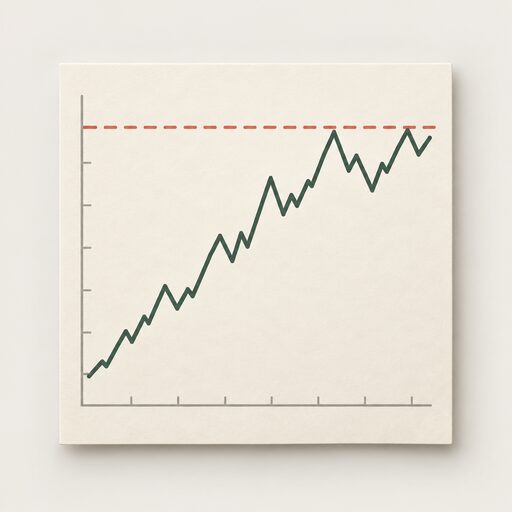 Tracker vs Price CapTracker tariffs can cost more than the price cap, so how do they compare?
 V2G Earnings and TariffsExplains how households are paid under vehicle-to-grid arrangements, whether through export payments, a flat monthly credit or a time-of-use tariff.
 The Full Tariffs GuideWhich energy tariff suits how you live, and will switching really save you money?