
In this answer
Short answer
A tracker tariff is an energy tariff whose unit rate follows a market price rather than being fixed for a set term. On a wholesale tracker, the rate follows wholesale energy prices and can change on a daily basis, with the cost on a given day depending on wholesale prices that day1. A second design, the cap tracker, tracks the level of the energy price cap instead and often provides a guaranteed discount against it, so it changes when the cap changes1.
The distinction matters because the two designs carry different risks. Tracker tariffs are not usually subject to the price cap, so a household on one can be charged more than the cap if prices rise beyond its limit1. A cap tracker moves with the cap rather than with daily wholesale prices, and some versions carry an in-built discount against the cap3.
What a tracker does for a household is pass market movement through to the bill, in both directions. What it does not do is remove dependence on the wholesale market, on the supplier that sets and administers the rate, or on the grid that delivers the energy. The sections below set out how the pricing works, how it compares with fixing, what the default tariff cap covers, and what to read before switching.
How a tracker follows the wholesale price
The mechanism is straightforward in principle. A wholesale tracker sets the prices customers pay for their energy on a daily basis, following wholesale energy prices1. The rate structure is the same idea stated another way: energy rates are based on wholesale energy prices, and the cost on a given day depends on wholesale prices that day2. One supplier describes its own tracker as moving with wholesale prices6, and another describes its tracker mechanism as following a market index for transparency7.
That daily link is what separates a tracker from a standard variable tariff, where the supplier sets the rate and changes it on its own schedule, and from a fixed tariff, where the price you pay is set for a period of time5. It also separates it from the older restricted-meter designs: Economy 7 and Economy 10 use fixed cheaper periods, while newer EV and tracker tariffs can be more dynamic and usually work best with a smart meter2.
In practice the rate a household sees is not a raw market price. It is the supplier's published rate for that day or period, derived from the market and set out in the tariff's terms. The frequency of change is a design choice, not a fixed rule: wholesale-linked trackers can move daily, while cap trackers change every three months when the price cap is reset, with most providers guaranteeing a discount on the price cap4. Standing charges on a tracker usually stay fixed for a set period, usually 12 months, so the volatile part of the bill is normally the unit rate rather than the daily charge2.
For a household's independence, the tracker is a partial step. It removes the supplier's discretion over when to reprice, because the movement is tied to an index, and it lets a household capture falls in the market without waiting for a new fixed deal. It does not remove exposure to the market itself, and it does not remove the supplier from the relationship: the supplier still sets the formula, publishes the rate and bills for it.

Tracker vs fixed: which suits which household

The two tariffs answer different questions. A fixed rate sets the price you pay for a period of time5, and it cannot increase its prices for the time they are fixed unless the government raises VAT or the tariff is staggered8. A tracker does the opposite: it passes market movement through, which means the bill can fall without the household doing anything, and can rise the same way.
The choice turns on how much certainty a household wants and how much consumption it has. On the cap tracker variants, the discount design changes who benefits: a tracker where the discount sits on the unit rate suits higher consumption, while a cap tracker where the discount is taken out of standing charges would be better for lower-consumption households than a tracker where the discount is on the unit rate1. Some tracker tariffs with an in-built discount take it out of standing charges, so while unit rates would change like a normal tracker, the standing charge carries the benefit3.
There is a wider point about what households actually know about their own tariff. Ofgem's research found considerably more consumers claim to be on fixed tariffs than the official data suggests, with 38% self-reporting a fixed tariff against 11% in the official data, and around one in five reporting no understanding of what fixed or variable tariffs are9. That gap matters for trackers too: a household that is unsure which type it is on cannot judge whether a tracker is a change of risk or a change of label.
For a household weighing independence, a fixed rate buys certainty at the cost of missing falls; a tracker buys market exposure at the cost of missing certainty. Neither removes reliance on the grid or on a supplier. The related comparison of fixed and tracker tariffs sets the two side by side, and the mechanics of wholesale-linked pricing are covered in more detail on tracker energy tariffs.
What the default tariff cap does and does not cover
The default tariff cap was introduced on 1 January 201910. It protects households on standard variable and default tariffs, which Ofgem refers to collectively as default tariffs10. Under the legislation, Ofgem can only set one cap across the market, set to cover a notional efficient supplier, with no bespoke caps per supplier13. The licence requirements that set out suppliers' obligations for adhering to the cap specify the benchmark annual consumption level that should be used to set the level of default tariffs14.
What the cap does not do is cover tracker tariffs. Independent guidance states that tracker tariffs are not usually subject to the price cap, so customers can be charged more than the cap if prices rise beyond its limit1. The same point is made more bluntly elsewhere: tracker tariffs are not subject to the price cap, so a household should be able to save if prices drop below the price cap3.
That is the whole of the trade. The cap is a ceiling for default tariffs, not a ceiling for the market. A household that moves from a default tariff to a wholesale tracker leaves the protection of the cap and takes on the market directly. A household that chooses a cap tracker stays close to the cap's level and often keeps a guaranteed discount against it, but it is still a tracker product rather than a capped default tariff1.
"Under the Act, we can only set one cap across the market. We set this to cover a notional efficient supplier."
Where the cap applies, it applies across Great Britain. Northern Ireland has its own arrangements, covered on energy tariffs in Northern Ireland, and the position in Scotland is set out on energy tariffs in Scotland.
Reading the Tariff Information Label before you switch
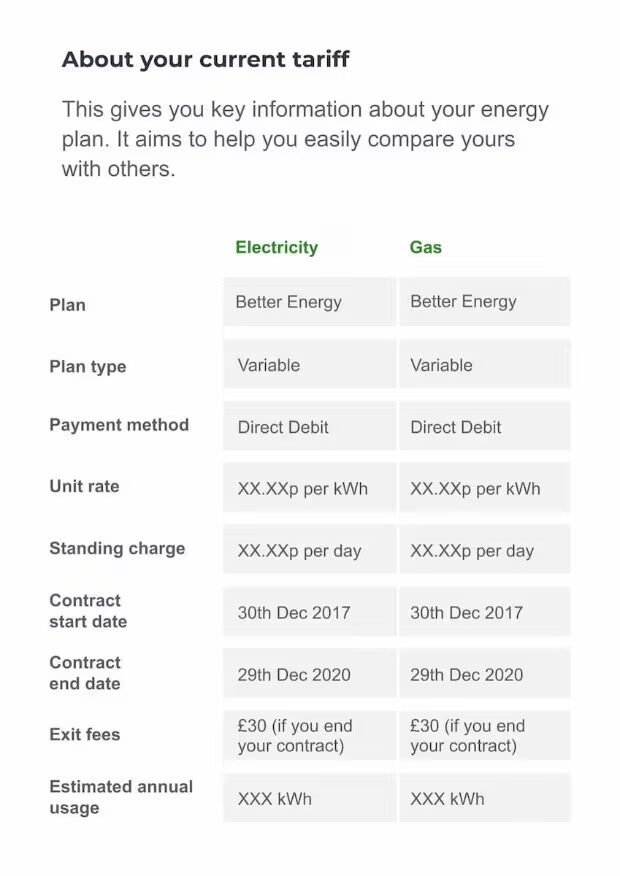
A Tariff Information Label is a breakdown of the tariff you pay for your energy15. It is the document that makes a tracker comparable with a fixed deal, because it sets out the unit rate, the standing charge and the terms in one place rather than leaving the household to reconstruct them from a bill.
Before changing supplier or tariff, the check is the same whichever type is being considered: make sure you understand any exit fees, fixed-term conditions or other charges that might apply16. On a fixed rate, remember that only the unit price and standing charge are fixed17, so other elements of the bill can still move. On a tracker, the label will show the current rate, but the rate itself is the part designed to change.
The label is also where the discount structure of a cap tracker becomes visible. A cap tracker tracks the level of the energy price cap and often provides a guaranteed discount against it, so it changes when the cap changes1. Some trackers offer discounts against the price cap using standing charges rather than unit rates1. Reading which element carries the discount is what tells a household whether the product suits its consumption shape.
One practical caution: not every product labelled a tracker is a plain wholesale tracker. A supplier's heat pump tracker tariff has been advertised as a trial rather than a standard product18, and bundled products can exclude tracker customers altogether. One supplier's Power Pack requires customers on Tracker or Agile import tariffs, Agile Outgoing export, or any of its Intelligent tariffs to switch tariffs first before joining19. Checking the eligibility rules on the specific product is part of reading the label properly.
Standing charges and unit rates: what you actually pay
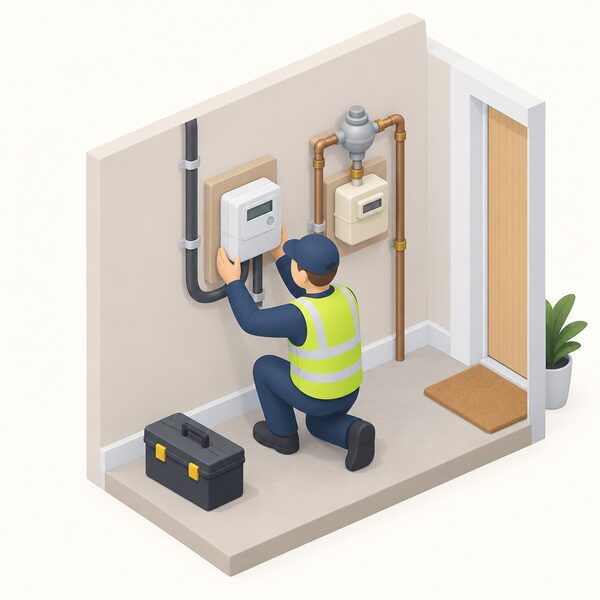
A tracker bill has the same two components as any other: a standing charge and a unit rate. The difference is which part moves. On a tracker, standing charges usually stay fixed for a set period, usually 12 months, while the unit rate follows the market2. On a fixed rate, both the unit price and the standing charge are fixed for the term17.
Standing charges vary depending on your supplier, your tariff and where you live20. That regional variation applies to tracker products as much as to any other, so two households on the same named tariff in different areas can pay different daily charges. Where a tracker carries its discount in the standing charge rather than the unit rate, that regional and supplier variation feeds directly into how good the deal looks1.
There is a separate design question about standing charges themselves. Tariffs with no standing charge usually charge a higher cost per kWh for each unit of energy used20. One version of this structure charges a much higher unit rate for the first two units of gas and electricity used each day, then a lower, more normal rate for all usage after that21. A household comparing a tracker against a zero standing charge tariff is therefore comparing two different shapes of bill, not just two rates.
| Component | Tracker | Fixed rate |
|---|---|---|
| Unit rate | Follows wholesale prices or the cap; can change daily or quarterly1 | Fixed for the term17 |
| Standing charge | Usually fixed for a set period, usually 12 months2 | Fixed for the term17 |
| Price cap protection | Not usually subject to the cap1 | Not applicable; price fixed by contract8 |
| Exit | Free to leave at any point on a tracker or SVT5 | Exit fee may apply, not chargeable in the last 49 days4 |
For a household's independence, the standing charge is the part of the bill that no behaviour changes. Shifting usage to cheaper hours reduces the unit rate element, which is why trackers and time-of-use tariffs are often discussed together, and why a smart meter is needed to get the full benefit of flexible tariffs22. The standing charge is paid whatever the household does, and it is the clearest reminder that a tracker changes how the energy is priced, not whether the home remains connected to a supplier and a grid.
Sources23 cited
- What is a tracker tariff?, Uswitch, 2026-06-26
- Energy tariffs explained, Uswitch, 2026-02-17
- Types of energy tariff, Confused.com, 2025-11-03
- How to switch energy supplier, Which?, 2026-05-15
- How to complain about your energy bill, Which?, 2026-07-30
- Renewable electricity and gas tariff, E.ON Next, 2026-09-17
- Which energy tariff is right for me?, So Energy, 2025-10
- Energy your questions answered, Confused.com, 2026-07-30
- Understanding consumers' energy tariff choices, Ofgem, 2025-07
- Energy price cap review of historical debt-related costs, Ofgem, 2026-03-25
- Energy price cap methodology: backwardation deadband decision, Ofgem, 2025-11-21
- Additional debt-related costs allowance policy consultation, Ofgem, 2023-10-12
- Review of additional wholesale costs in the default tariff cap, Ofgem, 2023-10-03
- Energy price cap levels, 1 October to 31 December 2025, Ofgem, 2025-08
- What's a Tariff Information Label?, OVO Energy, 2023-09-29
- Energy bills support, British Gas Energy Trust, 2026-08-11
- Switching your energy supplier, Energy Saving Trust, 2026-06-26
- A heat pump might be a lot cheaper than you think, Which?, 2024-11-26
- Power Pack, Octopus Energy, 2026-09-18
- Gas and electricity standing charges, Confused.com, 2026-07-06
- Standing charges, National Energy Action, 2026-04-28
- Energy flexibility, Smart Energy GB, 2026-08-17
- Using energy flexibly, Smart Energy GB, 2026-04-14
 How Tracker Tariffs WorkTracker tariffs move your unit rate with wholesale prices or the Ofgem price cap, so what you pay can change daily.
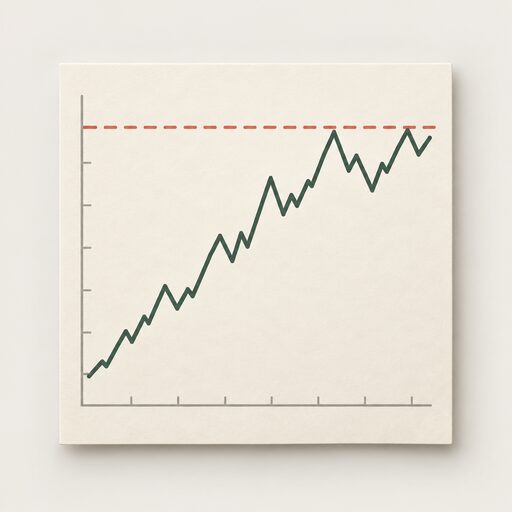 Tracker vs Price CapTracker tariffs can cost more than the price cap, so how do they compare?
 The Full Tariffs GuideWhich energy tariff suits how you live, and will switching really save you money?
 The Full Energy Bills and the Price Cap GuideWondering why your bill went up even when you used less power?
 Energy Price CapThe price cap sets the most you pay for each unit of gas and electricity, plus the daily standing charge, but not your total bill.
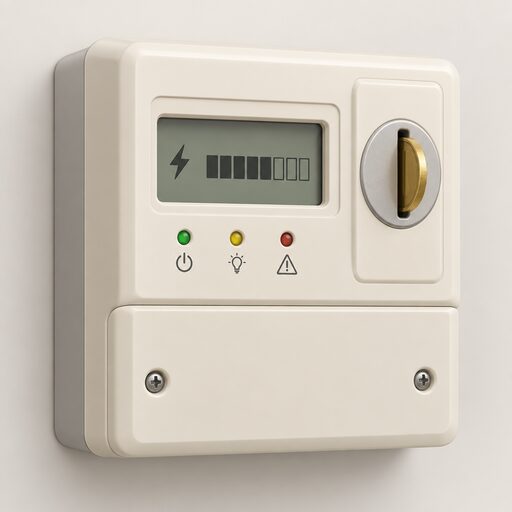 Prepayment and Pay As You GoHow prepayment and pay as you go energy tariffs work in the UK: meter types, top-ups, emergency credit, debt repayment through the meter, price cap treatment and how households move to a credit meter.