
In this answer
Short answer
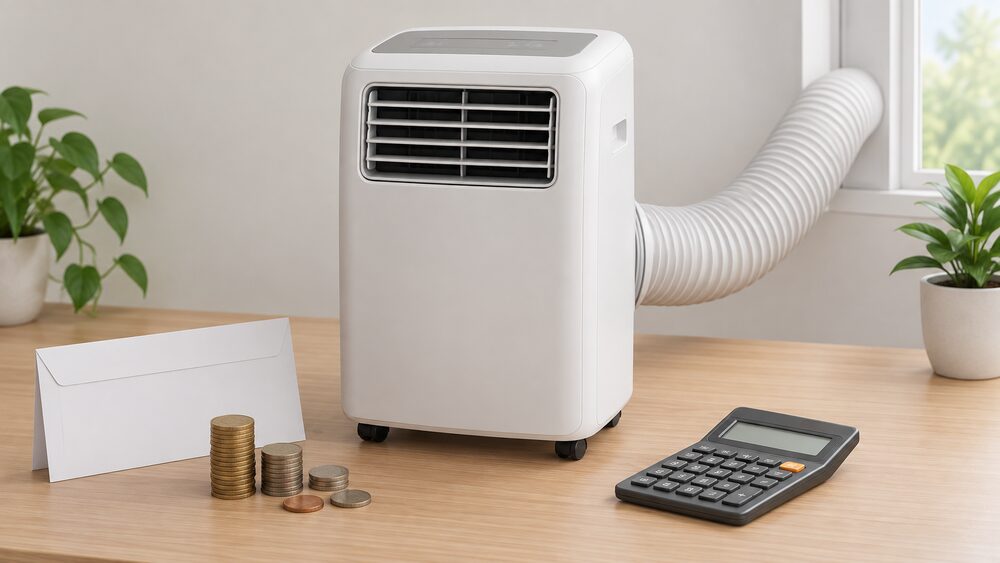
An air conditioner is one of the few household appliances whose running cost is quoted per hour rather than per year, and the reason is that the figure is large. A typical portable air conditioner rated at 1,000 to 1,500W costs around 26 to 39p per hour, roughly 14 to 20 times more than a fan1. Run it for six hours on a hot evening and the cost is measured in pounds, not pence.
That figure is a running cost, not a purchase price, and it sits on top of a bill that is already dominated by something else. More than half of a typical household energy bill goes on heating rooms and hot water2. Cooling is a seasonal addition to that baseline, and it arrives in the months when the heating load is lowest.
What follows sets out the headline cost, why it varies so much between homes, how cooling and heating modes differ, how to work out a figure for a particular unit, and what the wider energy picture means for a household trying to keep control of its bills.
What an air conditioner adds to the bill
The honest answer is that it depends on the unit and the hours, and the only published UK figure for a typical case is the hourly one. National Energy Action puts a typical portable air conditioner of 1,000 to 1,500W at around 26 to 39p per hour, and notes that this is roughly 14 to 20 times more than a fan1. That range is wide because it spans both the power rating of the unit and the electricity unit rate being paid.
The unit rate is the part households often overlook. Ofgem's explanation of how a bill is calculated sets out that the total depends on how much energy is used, the type of energy used, the type of meter installed, and how the bill is paid, for example by Direct Debit2. Two identical air conditioners in two identical flats can therefore produce different hourly costs purely because of the tariff and payment method behind them.
For context on scale, a fridge and freezer account for 13% of an average household energy bill6. That is a continuous load running every hour of the year. An air conditioner is the opposite: a high-power load running for a small number of hours, concentrated into the warmest weeks. Its annual share of a bill is therefore driven almost entirely by how many hours it is switched on, not by its presence in the home.
Why running costs vary between homes
Independent guidance is consistent that actual costs vary depending on a home's insulation, temperature settings, energy prices and how the system is used7. Those four variables explain most of the spread between one household's experience and another's.
Insulation and airtightness matter because they set how quickly a cooled room warms back up. A well-insulated home holds a lower temperature for longer, so the compressor cycles less. A leaky home loses the cooled air and the unit runs closer to continuously. The same guidance notes that bigger houses are likely to cost more to run since there is much more space that needs heating, and the same logic applies to cooling a larger volume8.
The building's overall energy performance is the best available proxy for this. An EPC A or B rated home of 90m2 costs £1,574 a year to run, while EPC D rated homes, which are most existing homes, spent 27% more on their energy bill overall and 53% more on their gas bill than EPC A and B rated homes9. Those figures cover the whole bill rather than cooling alone, but they show how much the fabric of the home moves the numbers.
Cooling versus heating: which mode costs more
Air conditioning is often discussed as though it were a single mode, but a reversible unit in heating mode is doing a different job with a different efficiency. The regulatory figures that exist describe cooling. Approved Document L sets a minimum seasonal energy efficiency ratio of 4.0 for comfort cooling systems4, and the consultation version for Wales sets a minimum of 4.6 for new dwellings5. Those are cooling performance standards, and they are the only efficiency figures the guidance provides.
Heating mode is a separate measure, and the two should not be assumed to cost the same per hour of operation. What can be said is that the wider evidence on electric heating is cautionary. Official guidance notes that if a home is not well insulated, installing a heat pump may increase energy bills instead, because electricity is more expensive than gas10. An air conditioner in heating mode faces the same unit-rate disadvantage relative to a gas boiler.
There is also a question of how common cooling actually is. Official statistics for winter 2025 record that 5% of households said they used air conditioning3. That is a small base, and it means most UK homes have no cooling equipment at all, relying on windows, shading and fans instead.

How to estimate your own running cost
Two published formulas do the same job in slightly different units. Smart Energy GB gives it as appliance power rating in kW multiplied by electricity unit cost in pounds multiplied by time used in hours equals running cost11. National Energy Action's Northern Ireland guidance gives the per-hour version: appliance running cost in pence per hour equals power rating in watts multiplied by electricity unit rate in pence per kWh, divided by 1,00012.
Both need the same two inputs: the unit's power rating, which is on the label or in the manual, and the electricity unit rate, which is on the bill. Neither formula requires anything else, and neither accounts for cycling, so a unit that reaches its set temperature and idles will cost less in practice than the formula suggests.
For households that would rather not do the arithmetic, the Consumer Council provides an appliance cost checker that helps estimate the running costs of appliances, offering tips to save money and improve energy efficiency13. Its single appliance checker shows how much appliances cost to run on a per-minute, per-hour and per-day basis14.
| Input | Where it comes from | Why it matters |
|---|---|---|
| Power rating (W or kW) | Unit label or manual | Sets the draw when the compressor runs |
| Electricity unit rate (p/kWh) | The bill | Varies by tariff, region and payment method2 |
| Hours used | Household routine | The only input a household fully controls |
Ways to limit the bill impact
The most direct lever is hours of use, because the hourly cost is the whole cost. Beyond that, the general measures that reduce a household's exposure to high electricity prices apply here as they do elsewhere.
Reducing the thermostat by 1°C could save up to 25% of heating bills and associated carbon, according to official guidance15. Independent guidance puts the same kind of adjustment at up to 10% on an annual fuel bill from reducing room temperatures by 1°C16. The two figures differ, and they are measuring different things, but both point the same way: a small change in set temperature has a disproportionate effect on consumption.
For homes with a combi boiler, lowering the flow temperature can save 6 to 8% on the heating bill17. That is a heating measure rather than a cooling one, but it illustrates the principle that the biggest savings usually come from the systems that run for the most hours, not the ones that run for a few weeks.
Air conditioning and the wider energy picture
Cooling sits inside a bill that is shaped by forces well beyond the household's control. The wholesale cost of energy is the biggest factor affecting energy bills19, and the price cap itself moves with it: Ofgem's August 2025 announcement described a change adding around £1.23 a month to the average household bill20.
The direction of travel has been upward. Energy bills rose by 10% at the same time as the Winter Fuel Payment was cut21, and the average older household saw bills increase by up to 15% in real terms compared with winter 2023/2422. Against that background, an appliance that costs 26 to 39p an hour is a discretionary load, and one of the easier ones to switch off.
Time-of-use tariffs are sometimes presented as a way to cut the cost of high-draw appliances, and they can be, but the condition matters. Official guidance notes that where heating patterns are not well aligned to the tariff, time-of-use tariffs can increase fuel bills23. Solar Energy UK explains the underlying pattern: the price of electricity varies throughout the day, tending to be cheap during the day and more expensive in the evening24. Evening cooling runs against that pattern.
Demand side response, the practice of shifting consumption to when the grid is under less strain, could make household energy bills cheaper25. For a household, the practical meaning is that when cooling runs matters as much as how much it runs.

Sources25 cited
- Summer energy tips, National Energy Action, 2026-08-13
- How your electricity or gas bill is calculated, Ofgem, 2026
- Public attitudes tracker: heat and energy use in the home, winter 2025, Department for Energy Security and Net Zero, 2025
- Approved Document L, Conservation of fuel and power, Volume 1: Dwellings, HM Government, 2026-09-17
- Approved Document L Volume 1 consultation version, Welsh Government, 2026-09-17
- Save energy in summer, ivie, 2024-09-30
- Electric wallpaper explained, Energy Saving Trust, 2026-03-26
- Energy saving house viewing tips, Energy Saving Trust, 2026-05-20
- Watt a Save 2026, Home Builders Federation, 2026-02-02
- Air and ground source heat pumps, London Borough of Bromley, 2026-09-17
- Energy saving in the kitchen, Smart Energy GB, 2026-08-18
- NI electrical items cost, National Energy Action, 2025-04
- Energy efficiency, Consumer Council, 2026
- Save energy and money, Consumer Council, 2026-09-20
- Home and business grants, schemes and advice, East Hertfordshire District Council, 2026-09-17
- Help and advice, UKIFDA, 2026-01-29
- Energy saving tips for winter, Centre for Sustainable Energy, 2025-12-10
- Reduce my bills, Home Energy Scotland, 2026-09-20
- What changes are coming for energy bills in 2026, Which?, 2025-12-30
- Energy price cap will rise 2 percent in October, Ofgem, 2025-08-27
- MPs back dangerous Winter Fuel Payments axe, End Fuel Poverty Coalition, 2024-09-12
- Pensioners face surge in winter energy bills, End Fuel Poverty Coalition, 2024-08-05
- Heat pump transition report, HM Government, 2026-05
- Batteries in the home, Solar Energy UK, 2026-09-17
- Research briefing on demand side response, Parliamentary Office of Science and Technology, 2026-06-07
 Running CostsA portable air conditioner costs roughly twenty to forty pence for every hour it runs, while a fixed unit uses far less electricity for the same cooling.
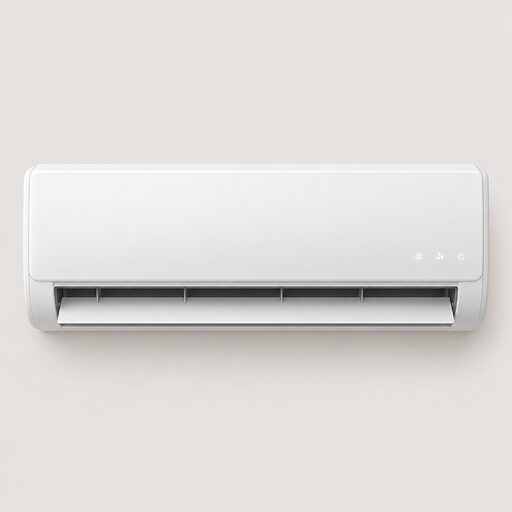 Air Conditioning CostPublished UK equipment prices and the parts of an installed price for portable, single split, multi-split and whole-house air conditioning.
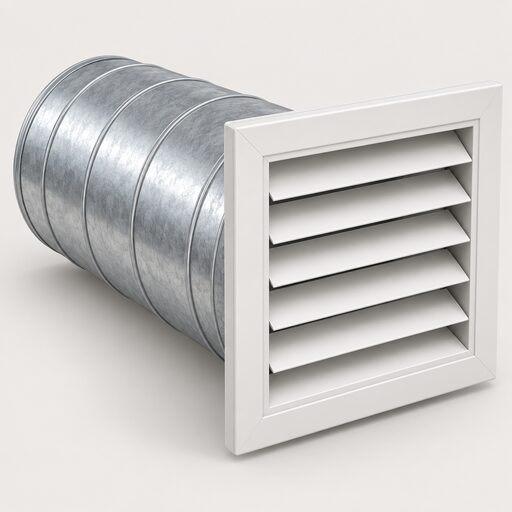 Types of Air ConditioningPortable, wall-mounted, multi-room or ducted: which air conditioning suits your home?
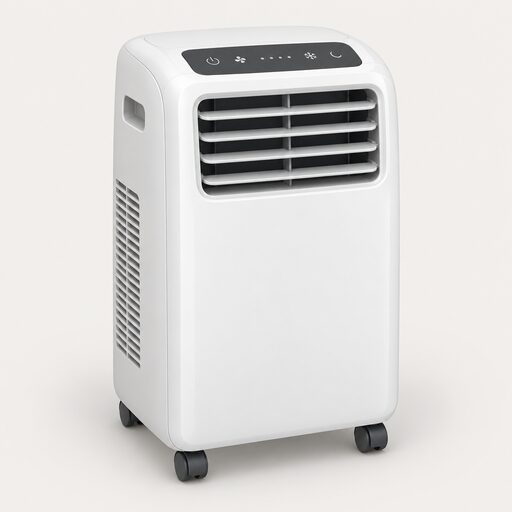 The Full Cooling and Air Conditioning GuideDo you really need air conditioning in a British summer, or would a fan and better shading do the job?
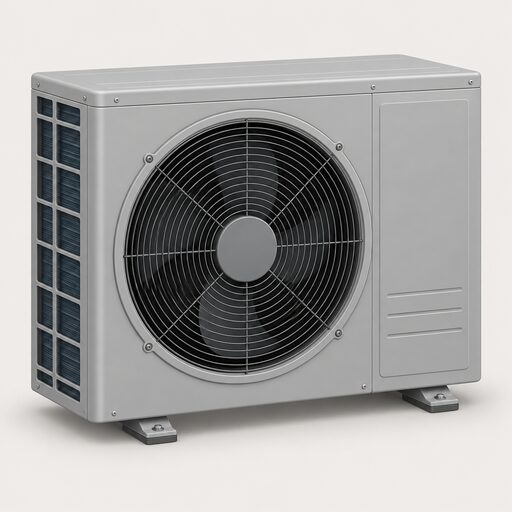 Cooling and Heat PumpsCan an air conditioner heat your home as well as cool it?
 UK Cooling DemandPublished data on air conditioning ownership and home overheating, with projections for summer temperatures in each UK nation, and what rising cooling demand means for summer electricity use.