
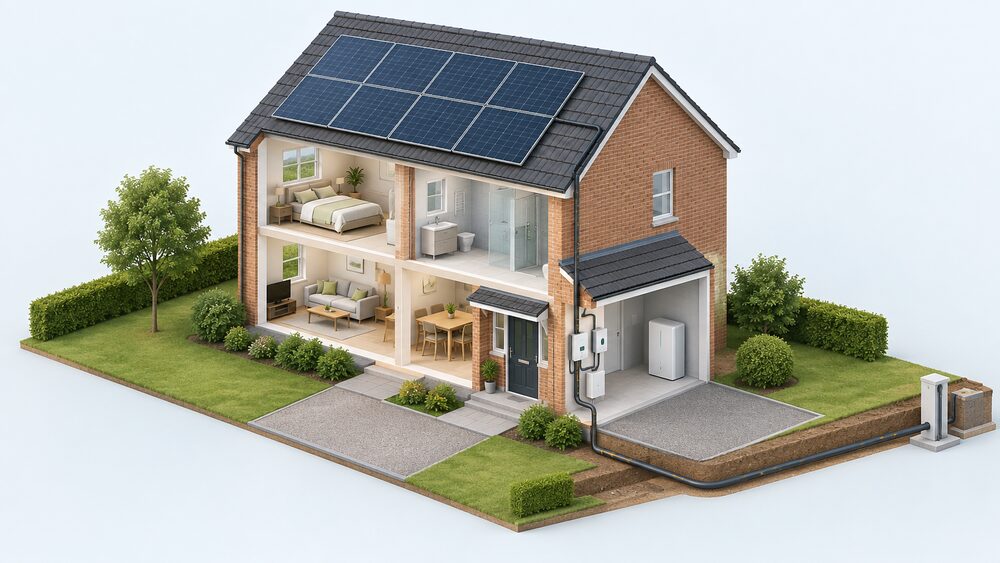
Household Energy Independence in the UK
Can you really run your home on your own power in the UK, and how far can that go before the grid still matters? Here is what energy independence means for a household like yours, how it is measured, and the honest limits of going it alone.
Read the guideBrowse by subject
 Heating & CoolingHeat pumps, boilers, controls, insulation and air conditioning: comfortable all year round.605 guides
 Solar & BatteriesGenerating, storing and using your own electricity: panels, batteries, backup power and independence.533 guides
 EV ChargingCharging an electric car at home: chargers, installation, running costs and smart tariffs.134 guides
 Bills & SuppliersThe price cap, tariffs, suppliers and smart meters: understanding and cutting what you pay.411 guides
 GrantsGrants and schemes that help pay for upgrades, across England, Scotland, Wales and Northern Ireland.161 guides
 Policy & SupplyRegulations, standards and where Britain's energy comes from, with the statistics behind it.328 guides
 BrandsThe makers behind the equipment: who owns them, their UK ranges and warranties.105 guides
 Getting StartedNew to home energy? Where to begin, common jobs, your type of home, hiring an installer.322 guides
- Public Accounts Committee report finds water, energy and broadband regulators fail to do enough for vulnerable people
- UK wholesale gas prices hit four-year high
- Tax information and impact note published on temporary VAT zero rate
- Ofgem publishes updated energy price cap levels for 1 October to 31 December 2026
- Uswitch warns of difficult winter as Ofgem announces October price cap level
- New permitted development rules for domestic solar come into force
Getting Started with Home Energy
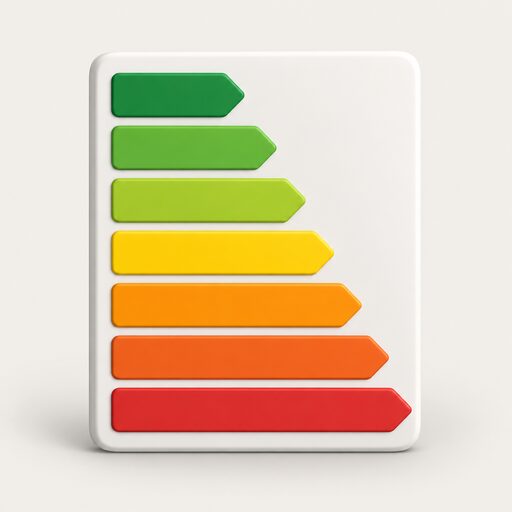
Which home improvements actually cut your bills, and which should you do first? How much does it cost to get your home up to a decent energy rating, and what help with paying is available across the UK?



Heat Pumps
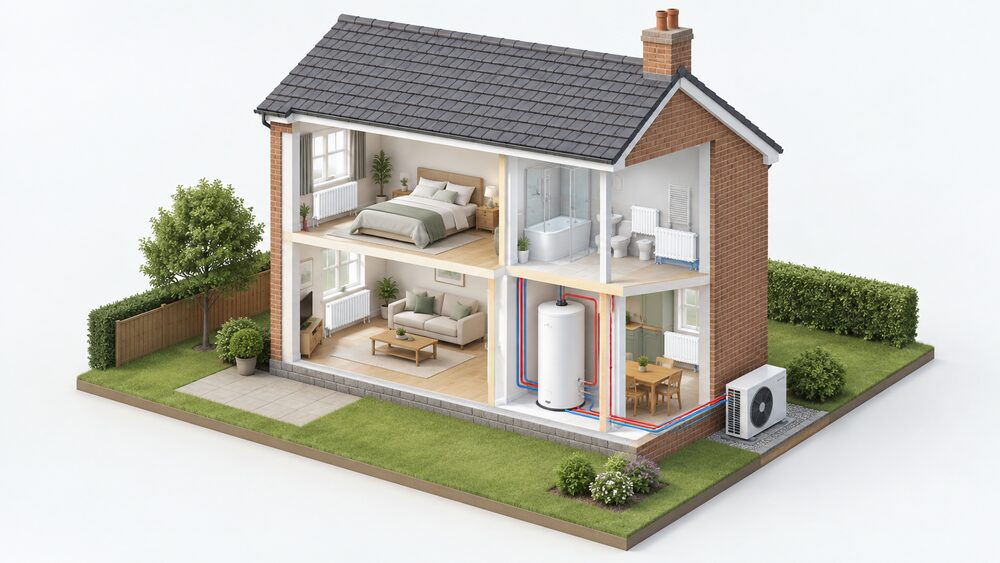
Will a heat pump keep my house warm in winter, and what does one cost to buy and run? Can I get a grant towards fitting one, and is my home suitable? These are the questions to answer before you decide.
- Air Source Heat Pumps
- Ground Source Heat Pumps
- Air-to-Air Heat Pumps and Heating with Air Conditioning
Solar PV for UK Homes
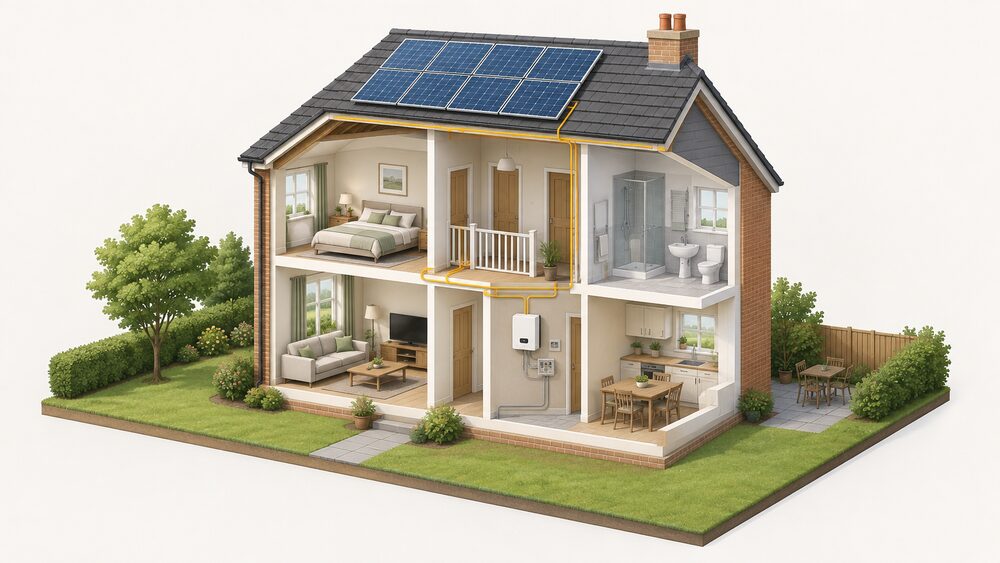
How much do solar panels cost, and what could they save you each year? Can you still get paid for the electricity you send back to the grid? And how long before the panels pay for themselves?
- Types of Solar Panel Sold in the UK
- Solar Cell Technology: PERC, TOPCon, N-Type and Heterojunction
- Bifacial and Glass-Glass Solar Panels
Home Energy Grants and Schemes in the UK
Which grants can you actually get right now, and how do you apply for them? Find out what help is open where you live, what it pays towards, and who to contact to claim it.
- The Boiler Upgrade Scheme: Grants for Heat Pumps and Biomass
- Boiler Upgrade Scheme Eligibility: Which Homes and Systems Qualify
- How the Boiler Upgrade Scheme Application Works



Compare
240 side-by-side comparisons. No winners: the facts, set against each other.





































Frequently asked questions
The questions people ask us most, answered from our guides.
Do heat pumps work in freezing weather?
Yes. Heat pumps can extract heat from outside air even in below-freezing temperatures. Energy Saving Trust says they can perform down to -15°C or lower, and that most current models work down to about -25°C. Welsh Government guidance gives -20°C. Efficiency drops in very cold weather, and there may come a point when the output is not enough for the home, which is why sizing matters.
More in Heat PumpsWill a heat pump save money if I'm on mains gas?
It depends on the installation, the tariff and the home. Which? reports that a household could save as much as 50% and more against a gas boiler, but only with a high quality installation, high efficiency and a heat pump tariff. Savings are greater when replacing LPG or direct electric heating than mains gas. In a poorly insulated home, official council guidance warns that bills may rise, because electricity costs more than gas.
More in Heat PumpsDo solar panels work on cloudy days or do they need direct sunlight?
Solar panels respond to light, not heat, so they generate during daylight even when the sky is overcast. Official and independent UK guidance agrees that direct sunlight is not required, although panels are more efficient in direct sun, and they continue to generate during winter. Output on a dull day is lower than on a clear one, which is why annual figures, not daily ones, are used to describe what a system delivers.
More in Solar PanelsDo I need a battery if I already have solar panels?
A battery is optional, and solar panels work without one. A Parliamentary briefing reports Great British Energy's figures that adding a battery raises self-consumption of solar electricity from 30 to 40% to 70 to 80%, and annual savings from about £150 to £450. Home Energy Scotland notes that a battery lowers export payments, though it says overall savings are greater. Batteries can be added to existing panels.
More in Home BatteriesCan I charge an EV from a standard 3-pin socket?
Yes, it is possible, but it is slow. Which? describes a regular three-pin wall socket as delivering 2.4kW, and Uswitch describes a standard three-pin plug as running at 3kW. The standard home charger is rated at 7kW, and a typical UK home can support a maximum of 7.4kW. A 7kW unit generally takes six to 12 hours to charge a car from 20 to 80%, and a socket is slower still.
More in EV ChargingDoes the price cap apply if I have a prepayment meter?
Yes. The cap applies to anyone on a default energy tariff regardless of how they pay, including prepayment meter customers. Prepayment households were protected by their own cap before the wider default tariff cap began in January 2019. For October to December 2025 Ofgem's typical prepayment figure was £1,707 a year, against £1,755 for Direct Debit. A levelisation allowance in the cap is there so prepayment and Direct Debit customers pay the same standing charge.
More in Energy Bills and the Price CapCan my supplier raise the price on a fixed tariff?
Citizens Advice guidance for England and for Wales states that a supplier cannot increase the price paid on a fixed tariff unless the government has raised VAT. What is fixed is the unit rate and standing charge, not the total bill, which still rises and falls with use. On a variable tariff, a supplier that raises prices should give notice a reasonable amount of time before the increase takes place.
More in TariffsWhat happens to my credit balance if my supplier goes out of business?
Ofgem's guidance states that a household's credit balance is protected when a supplier fails, and that this protection does not extend to businesses. The supply itself continues: gas and electricity are not cut off, and Ofgem automatically moves customers to a new supplier. The household does not need to arrange anything for the supply to carry on, although the tariff with the new supplier will not be the one it had before.
More in Energy SuppliersCan I refuse a smart meter, and what happens if I do?
Yes. Smart meters are not compulsory, and the Energy Ombudsman states that it is your right to refuse installation. Two consequences are recorded. If a traditional meter has to be replaced because it is faulty or unsafe, the replacement options may be limited. Citizens Advice notes that refusing a smart meter can make it hard to access all tariffs, because time-of-use tariffs and flexibility schemes rely on half-hourly smart readings.
More in Smart MetersDo I have to claim power cut compensation, or is it automatic?
It depends on the payment. The Energy Networks Association states that payments are typically made automatically, by a cheque sent to the property that lost power. The payment for repeated cuts is different: Ofgem states that a claim must be made to the local network operator, which then decides whether the payment is due.
More in Backup Power