

In this guide
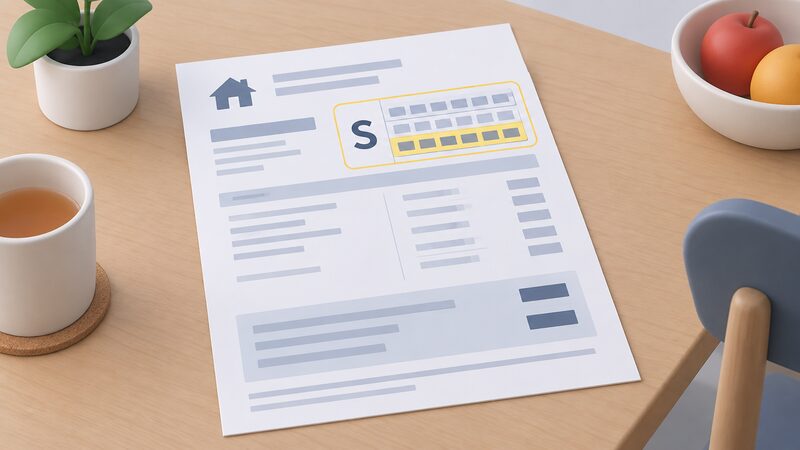
The electricity supply number, the MPAN, is printed on the electricity bill, normally inside a bordered grid of figures with a large letter S beside it, and the number itself is the bottom row of that grid1. It is also called the supply number or the S number2. The gas equivalent, the MPRN or meter point reference number, appears on the gas bill and usually on the gas meter as well, sometimes preceded by the letter M. Neither number is the meter serial number: they identify the point at which energy enters the property, not the box on the wall, which is why they survive a meter exchange and a change of supplier.
The electricity number is described by National Energy System Operator as "the unique identifier for your electricity supply point"3. Network operators most often give its length as 13 digits4, although other published descriptions of the printed supply number block put it at 21 digits preceded by an S5, and one debt charity's bill explainer says 126. The gas number is shorter: descriptions range from 11 digits beginning 81 through "between six and 11 digits"7 to "between six and 10 digits" sometimes preceded by M5. The documents genuinely disagree, and the section below sets out why.
One national difference matters from the outset. In Northern Ireland the electricity supply point itself is identified by an MPRN, an 11-digit number starting 81 that appears on the electricity bill, not by an MPAN. Guidance written for Great Britain, where MPRN means the gas meter point, does not describe the Northern Irish bill correctly.
Where to find your MPAN: the supply number box on an electricity bill
Every network operator points to the same place. The MPAN "can be found on a copy of the electricity bill for that supply"11, and SSEN states plainly that MPANs can be found on energy bills for existing properties13. UK Power Networks is the most specific about the layout: look for a grid of numbers with a large letter S, and the MPAN is made up of the bottom row of that grid1. The top rows of the same grid carry the technical detail described further down this page, which is why the block as a whole can be quoted as longer than the number a supplier will ask for.
Because the grid is bordered and set apart from the charges, it is easy to skim past. Which? describes the electricity identifier as the MPAN, "also known as your 'S' number"2, and that letter is the fastest visual cue on a paper or PDF bill. Electricity North West describes it as a 13 digit number issued by the Distribution Network Operator, unique to the supply and used by energy suppliers for billing, found on the energy bill or provided for new connections14. An app provider describing smart meter setup gives the same 13-digit figure and says it can usually be found on the electricity bill15.
One oddity worth knowing about: published guidance is not always consistent in which name it attaches to which fuel. At least one consumer advice page labels the electricity number as "MPRN or 'S number'" and the gas number as "MPAN"16, the reverse of standard Great Britain usage. The safer test is the letter and the fuel, not the acronym: the S grid on an electricity bill is the electricity supply number whatever a given page calls it.
For an existing home the practical route is a recent bill or online account statement. Where a household has more than one electricity supply, for instance a separate off-peak circuit, more than one MPAN can be listed. Home Energy Scotland uses exactly that as a diagnostic for radio teleswitch meters: the bill lists two MPANs, with the first line starting 0210.
Where to find your MPRN: the gas bill and the gas meter
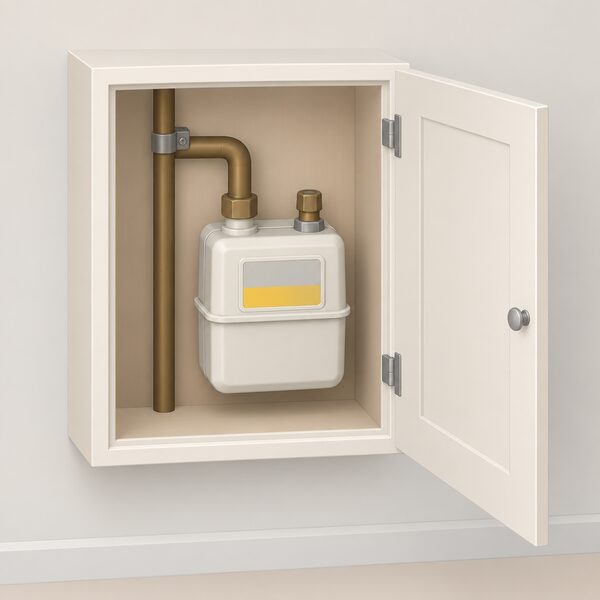
The gas meter point reference number is "the number which identifies your gas meter" and can usually be found on the gas meter or a recent bill17. Another guide puts it on the gas bill or through the Find My Supplier search tool18. Cadent, a gas distribution network, describes the online route in the same terms: a postcode search on Find My Supplier returns the meter point reference number19. SGN notes that the MPRN can normally be found on the bill from the gas supplier "but it can sometimes be difficult to spot"20.
On the bill it is often printed next to the words "meter point reference"5. It is also referred to as the gas meter number or the M number21, and a back-billing guide tells readers to look for an MPRN or M number on both the gas bill and the meter23. Its function is administrative rather than technical: it is used by energy suppliers to identify the gas supply at the property5, and Citizens Advice calls it a unique registration number for the meter, used to check that the meter shown on a bill is the right one24.
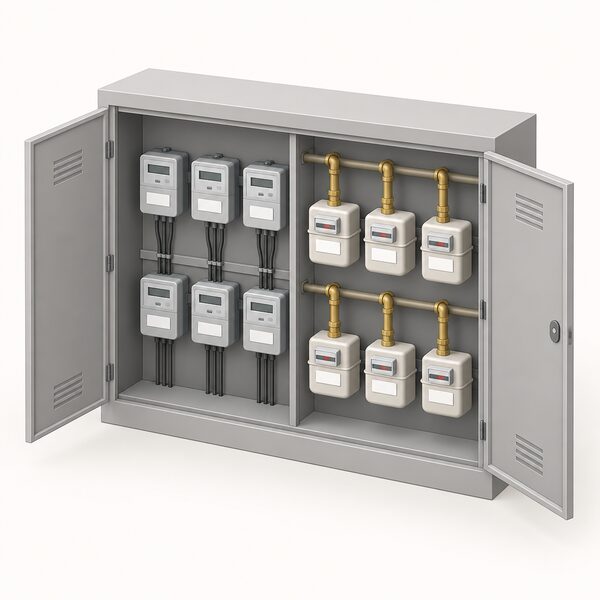
That check matters in flats and converted houses, where several gas meters and several electricity meters can sit in one communal cupboard. The recommended method is to check the MPRN against the gas meters and the MPAN against the electricity meters, comparing each with the bill26. Getting this wrong means paying for a neighbour's consumption, and it is one of the few household energy errors that can persist for years without any obvious symptom. Anyone doing this alongside taking a meter reading can record both numbers at the same time.
Note the limit of the gas number: it exists only where there is a gas connection. Homes off the gas grid have an electricity supply point number and nothing else, and MPANs have been used administratively for exactly that purpose, by taking a list of all domestic MPANs and removing those on the gas grid27.
Northern Ireland: the electricity supply number is called an MPRN
NIE Networks, the electricity network operator for Northern Ireland, uses MPRN throughout for electricity. It defines a meter point reference number as "a unique 11 digit number starting with 81 to identify your address"8, repeats the 11-digit, 81-prefix format in its guidance on connecting electric vehicles and heat pumps, and states that the number can be found on the electricity bill28. Its disconnection application guidance describes the MPRN as registered against a specific address and usually found on the electricity bill29, and its heat pump and EV pages say the same30.
There are two additional places to look in Northern Ireland: the card left by a meter reader, and NIE Networks' own self-serve tool, alongside the bill from the electricity supplier8. For generation applications under the fast-track route, NIE Networks asks for the 11-digit MPRN, found on the bill or the meter, together with the meter serial number31.
| Where you are | Electricity supply point number | Gas meter point number |
|---|---|---|
| England, Scotland, Wales | MPAN, also called the S number or supply number2 | MPRN, six to 11 digits7 |
| Northern Ireland | MPRN, 11 digits starting 81, on the electricity bill28 | Gas supply is served by separate networks; MPRN is not the electricity identifier elsewhere in the UK |
The practical consequence is that a Northern Irish household following a Great Britain switching guide will look for an S grid that its bill does not contain, and a household in England reading NIE Networks' definition will conclude, wrongly, that its gas number belongs on the electricity bill.
Digit counts: why 13, 21, 12 and six to 11 all appear in print
The disagreement is real and unresolved in the published material, so both readings are given here.
| Number | Length stated | Who states it |
|---|---|---|
| MPAN | 13 digits | UK Power Networks4, Electricity North West14, UK Power Networks help pages32 |
| MPAN | 21 digits, preceded by S | Uswitch5, Which?7, Confused.com18 |
| MPAN | 12 digits | StepChange bill explainer6 |
| MPRN (gas, GB) | six to 11 digits | Which?7, StepChange6 |
| MPRN (gas, GB) | six to 10 digits, sometimes preceded by M | Uswitch5 |
| MPRN (electricity, NI) | 11 digits, starting 81 | NIE Networks8 |
The most likely explanation, and it is consistent with UK Power Networks' description of the layout, is that the shorter figure describes the core identifier on the bottom row of the supply number grid, while the longer figure describes the whole printed block including the rows above it1. A supplier asking for "your MPAN" during a switch normally wants the bottom row. Where a form validates the entry and rejects it, entering the full block, or the bottom row alone, is the difference between the two published counts.
None of this affects what the number does. Whichever convention a document uses, the MPAN is a unique registration number for the meter point24, used by suppliers as reference points for getting meters installed4, and described by one network operator as "like a unique ID for your electricity supply"32.
What the parts of the MPAN mean
The rows above the MPAN in the supply number grid carry supply characteristics rather than an identity. The first two digits of the top row are the profile class, and the one householders encounter most often is 02: the MPAN starts 02 where the home is on Economy 733, and Home Energy Scotland uses the same 02 prefix as an indicator of a radio teleswitch meter, alongside the presence of two MPANs on one bill10. If a bill shows 02 and the household has never knowingly used a two-rate tariff, that is worth checking against the tariff actually being charged, and against how to read an electricity meter for two-rate displays.
The distributor identifier says which network area the supply sits in. Ofgem's guidance for suppliers sets the validity rule: the first 2 digits, the Distributor ID, should start with a value in the range 10 to 289. Energy Networks Association guidance on connecting electric vehicles and heat pumps places the distributor ID at digits 9 and 10 of the 21-digit MPAN34, which is the same two digits read from the longer block rather than from the bottom row, and is a further sign that the two published lengths describe the same number counted from different starting points.
The number is used as a reference in operational systems as well as billing. Electricity North West's e-card for planned power cuts builds its link from a reference number and the customer's MPAN35, so a householder checking a planned interruption may be looking at their own supply number without recognising it.
"the first 2 digits (Distributor ID) starts with a value in the range 10-28"
Finding the numbers without a bill
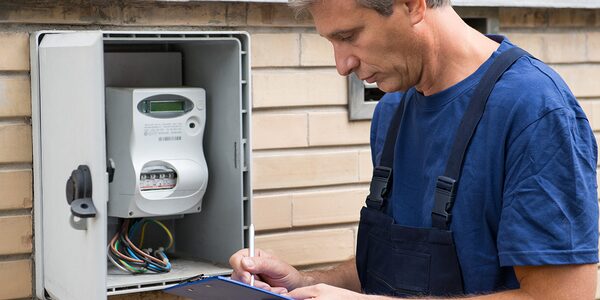
Three routes exist where no bill is available: the meter itself, an address lookup run by the network, and a direct request to the supplier or network operator.
- The meter and its housing. The gas number can usually be found on the gas meter17, and back-billing guidance points to both the bill and the meter for each fuel23. In Northern Ireland the electricity MPRN can also be found on the meter31, or on the card left by a meter reader8.
- An address or postcode lookup. For gas, a postcode entered into Find My Supplier returns the meter point reference number19. For electricity, UK Power Networks runs a lookup that takes a few details and emails back both the registered supplier and the MPAN36.
- A direct request. SSEN asks new occupants with no energy bill to email its metering address with the full address and the meter serial number, and states that a third party must attach a letter of authority13. Where a gas meter is already on site but no MPRN exists, Cadent directs the householder to contact a supplier of their choice and ask to register the supply, which starts the meter number creation process19.
Smart metering does not create a new number and does not remove the need for these routes. It works the other way: smart meter status checkers ask for the electricity and gas meter point numbers plus the postcode and report what is installed at the address37. Smart meters are provided by the supplier at no extra cost and remove the need to submit readings manually39, but they change nothing about the identity of the supply point.
When you need the number: switching, moving in, connections and export
For an existing home on an existing supply, the numbers are rarely needed day to day. They become load-bearing at the moments when the registration itself changes hands or comes into being.
- Switching supplier. The numbers are the identification numbers for the meters and are found on bills40. They resolve ambiguity where an address is shared or newly subdivided. The process itself is covered in switching energy supplier step by step.
- Moving in. The incoming occupier's first task is to establish which supply point they are responsible for, which is what comparing the number on the bill with the number registered to the address achieves41.
- New connections. Network operators issue the MPAN as part of the connection. Electricity North West requires a formal postal address before it can issue a new MPAN42, and states that an MPAN is needed to arrange a meter and will be provided following acceptance43. SSEN issues the MPAN shortly after payment44. UK Power Networks offers guidance through the process of obtaining one45. NIE Networks states that the MPRN is needed when getting a first time electricity connection to new premises8.
- Low-carbon technology applications. Connect Direct asks for the MPAN where the address cannot be found on its system47, and SSEN's micro-generation route asks for property details including the address and the MPAN if available48.
- Export registration. A separate export MPAN can exist alongside the import one, and UK Power Networks' application details ask for a brief description of what the MPAN or MPANs will supply, together with the control equipment4. For a household pursuing energy independence step by step, the export MPAN is the registration that makes generated electricity sellable rather than merely self-consumed.
Where the number is wrong, disputed, or has to be removed
If the number printed on the bill does not look right, the check is a comparison, not a judgement. Citizens Advice guidance for Wales sets out the method: compare the MPAN on the bill with the MPAN registered to the address, found through the electricity network operator's find my supplier service, and if they do not match, contact the electricity supplier41. The equivalent gas check uses the MPRN, and the same principle holds across Great Britain. The supplier, not the network, owns the billing relationship, which is why it is the first point of contact.
Two further cases sit with the network rather than the supplier. Where a supply has been physically disconnected, the network operator arranges a new cable and a new MPAN can then be booked with the operator49. Where a supply point is to be closed down administratively, UK Power Networks directs the customer to their electricity supplier, "the company you pay your bills to", to arrange a logical disconnection1. Anything involving the meter itself, including relocation, is dealt with in moving or replacing a meter, and a suspected metering fault in reporting a faulty or inaccurate meter.
What these numbers mean for a household's energy independence
An MPAN or MPRN is a registration in someone else's system. It is issued by the distribution network operator, not by the household14, and it is the reference by which suppliers install meters and raise bills4. Knowing it does not reduce dependence on the grid, the gas network or a supplier by a single kilowatt hour. What it does is make the household legible to those systems on its own terms: able to prove which supply it is responsible for, able to switch without an address mismatch stalling the transfer, and able to apply for a connection or a generation registration without waiting for a third party to look the number up.
The dependence that remains is worth stating plainly. The number cannot be created or changed by the occupier. A new supply point exists only when the network operator issues it, and it requires a formal postal address to do so42. A closed one is closed by the supplier on request1. Export registration, the step that turns a solar array from a bill reducer into something that can be paid for, hangs on an MPAN that the network issues4. Self-sufficiency in generation is achievable at the meter; self-sufficiency in registration is not. The realistic goal is to hold both numbers on record, with the meter serial numbers beside them, so that none of the moments above, a move, a switch, a connection, a dispute, starts from a blank page. The wider sequence is set out in the home energy how-to guide.
Sources49 cited
- Close down or remove an MPAN, UK Power Networks, 2026-09-17
- Gas meters and electricity meters: what you need to know, Which?, 2026-01-16
- Domestic and homeowner connections support, NESO, 2026-09-17
- MPAN guidance, UK Power Networks, 2026-09-17
- MPAN and MPRN numbers explained, Uswitch, 2026-07-02
- Understanding energy bills, StepChange, 2026-09-20
- How to understand your energy bill, Which?, 2022-03-14
- How do I get my MPRN, NIE Networks, 2026-09-19
- Guidance for suppliers, version 14, Ofgem, 2021-08
- RTS switch-off guidance, Home Energy Scotland, 2026-09-20
- Frequently asked questions about connecting to the networks, Energy Networks Association, 2026-09-17
- Connecting to the networks: FAQs, Energy Networks Association, 2026-09-17
- What is an MPAN, SSEN, 2026-09-19
- Advice and support FAQs, Electricity North West, 2026-09-20
- How to set up and use the smart meter app, ivie, 2024-09-30
- Understanding your gas or electricity bill, Centre for Sustainable Energy, 2026-02
- Gas meter identification, Energyhelpline, 2026-09-20
- Who is my gas and electricity supplier, Confused.com, 2026-07-03
- MPRN number, Cadent Gas, 2026-09-20
- Connections FAQ, SGN, 2026-09-17
- Independent gas transporters, Uswitch, 2025-06-05
- Who supplies my electricity and gas, Uswitch, 2026-06-29
- Energy back-billing, Confused.com, 2026-07-06
- Check if you are responsible for paying an energy bill, Citizens Advice, 2023-11-28
- Energy bill too high, Citizens Advice, 2024-01-19
- How to read your gas and electricity meter, Confused.com, 2025-12-15
- Households, businesses and organisations off the gas grid to receive energy bill support, GOV.UK, 2023-02-06
- EVs and heat pumps FAQs, NIE Networks, 2026-09-19
- Disconnect or isolate: what you need to start, NIE Networks, 2026-09-19
- EVs and heat pumps connections, NIE Networks, 2026-09-19
- G99 NI fast track installations, NIE Networks, 2026-09-19
- Find my network operator, Energy Networks Association, 2026-09-17
- Energy tariffs explained, Uswitch, 2026-02-17
- Connecting electric vehicles and heat pumps to the networks, Energy Networks Association, 2026-09-17
- E-card for planned power cuts, Electricity North West, 2026-09-20
- Help and contact, UK Power Networks, 2026-09-17
- How do you know if you have a smart meter, Smart DCC, 2026
- What happens to my smart meter when I change supplier, Smart DCC, 2023
- Get help with your smart meter, Ofgem, 2026-09-17
- Moving meter guidance, E.ON Next, 2026-09-19
- Check if you are responsible for paying an energy bill, Citizens Advice Wales, 2023-11-28
- Apply for a new connection: 1 to 4 properties, Electricity North West, 2026-09-19
- New connections: what to expect, Electricity North West, 2026-09-19
- Connect 1 to 4 new properties: FAQs, SSEN, 2026-09-17
- Connect 1 to 4 properties, UK Power Networks, 2026-09-17
- MPRN explained, NIE Networks, 2026-09-20
- Connect Direct application service, Energy Networks Association, 2026-09-17
- Micro-generation installations up to 3.68 kW per phase, SSEN, 2026-09-17
- Energy meters guidance, Energyhelpline, 2026-09-20
 Who Supplies Your Energy?Not sure who bills you for gas or electricity?
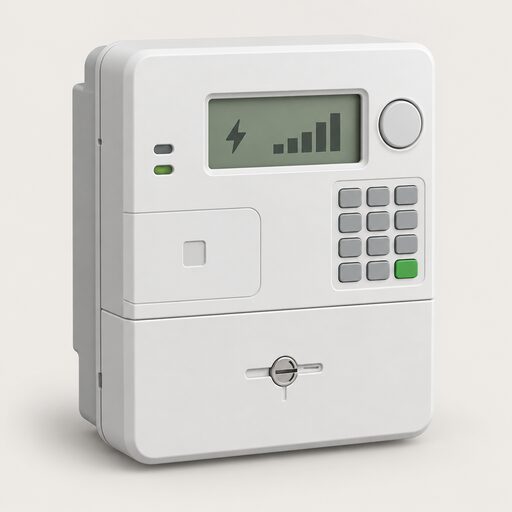 Who Owns Your Home Energy DataYour smart meter records how much gas and electricity you use, and that information belongs to you, not your supplier.
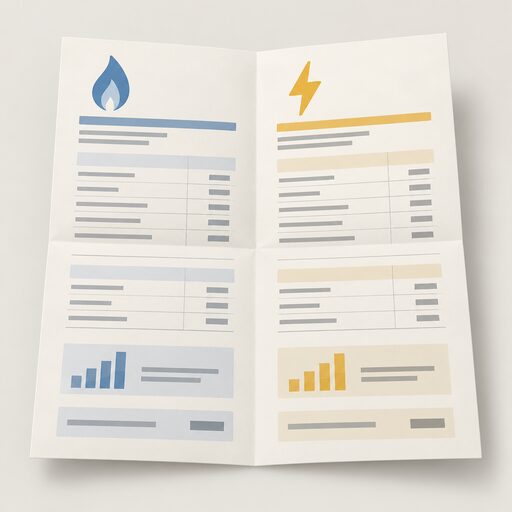 Reading an Energy BillA line-by-line walk through a domestic gas and electricity bill: unit rate, standing charge, kWh consumption, meter readings, tariff name and balance, plus the 12-month back billing limit and the guaranteed standards payments that apply when a supplier or network operator gets it wrong.
 Regional Energy ConsumptionHow much gas and electricity does your area use compared with the rest of the country?
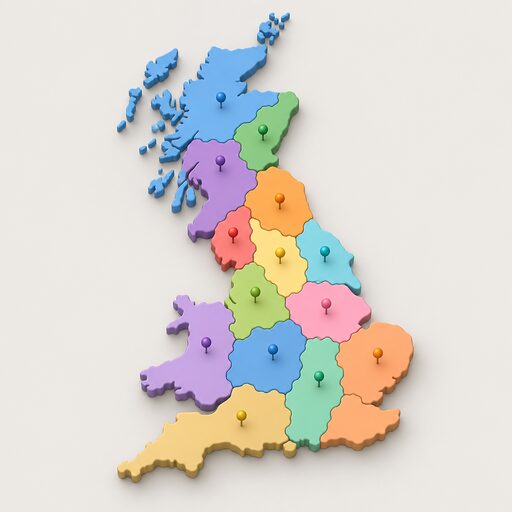 Unit Rates by RegionWhy do electricity and gas prices differ depending on where you live?
 Reducing Your BillRanks household electricity and gas uses by share of the bill and sets out what each measure changes, from heating settings and insulation to appliance use and tariff choice.