
In this guide
A severe storm can take a household off the grid in seconds, and the recovery can take days. Electricity networks are built to withstand strong winds, heavy rain and snow, but severe weather can sometimes be destructive and bring down power lines and cause power cuts1. When that happens, gas boilers and heating, electrical appliances and the home's internet and landline connections will stop working in a power cut1. The practical work of preparing a home therefore splits into two halves: what can be done before the weather arrives, and what must be done safely while the supply is off.
The numbers that matter most are the reporting ones. The number to report a power cut is 105 in England, Scotland and Wales and 03457 643 643 in Northern Ireland1. If there is an immediate risk to life or someone is in danger, dial 9992. For a damaged power line or substation that could put someone in danger, 105 can be called immediately3.
Flooding adds a second layer of risk, because water and electricity together are lethal. Where a property has flooded, the electricity supply should be switched off at the fusebox if it is safe to do so, and both the electricity and gas supplies should remain off until the network or supplier advises it is safe to turn them back on4. Nothing electrical that has been submerged should be assumed usable until a registered electrician has assessed it4.
What happens to the network when a severe storm hits
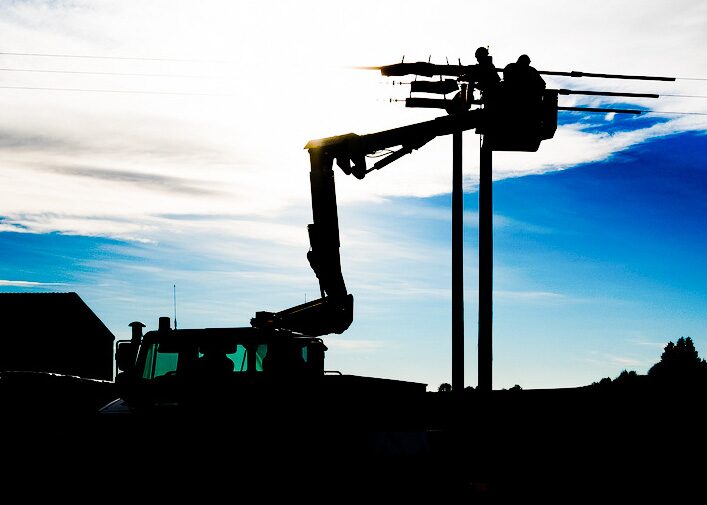
Network operators do not wait for the first fault to appear. When a storm is forecast, operators arrange standby emergency teams and place vehicles and resources in strategic locations, such as big substations, so that crews are already close to the areas most likely to be affected1. Energy Networks Association co-ordinates a joint response from across the energy networks, collating information from its members and sharing updates through the news and social media1.
In Northern Ireland the same pattern applies at company level. NIE Networks states that when it receives a severe weather warning it mobilises staff and resources, sends materials and emergency crews to areas most likely to be affected, and holds heavy machinery on standby11. It also maintains regularly reviewed plans in place to respond to severe weather11, and an Emergency Response Plan that comes into effect when weather forecasts indicate that severe weather is likely12. That plan was activated for Storm Éowyn, in effect from 23 January until power was restored to all homes and businesses12.
For a household, the practical consequence is that restoration information is published rather than delivered door to door. Social media and the local network operator's website are the best places for key updates and restoration times in storms2. That matters because the home's own internet and landline connection will stop working in a power cut1, so a mobile phone with charge, or a neighbour's connection, becomes the route to that information.
Who to contact: NIE Networks and the 24-hour helpline 03457 643 643
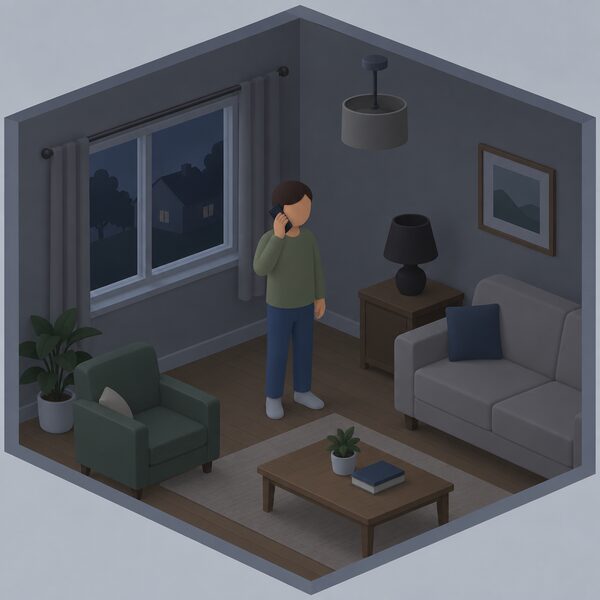
Northern Ireland has its own reporting routes, separate from the 105 number used across England, Scotland and Wales. NIE Networks asks customers to report a power cut via nienetworks.co.uk, WhatsApp, Facebook or the helpline on 03457 643 64313. The same number appears as the power cut support line in its emergency power cut guidance7, and customers can also report online or use Powercheck for real-time updates about when power will be restored, or reach the company through WhatsApp, Facebook Live Chat or the Customer Helpline14.
The 105 service is the counterpart for the rest of the UK. It is a free call that puts the caller in touch with their electricity network operator for unplanned power cuts10. It is also the number to use for damage: 105 can be called immediately if damage to electricity power lines and substations is spotted that could put someone in danger3. Where there is an immediate risk to life, 999 takes precedence2.
One point of etiquette carries real weight. If neighbours' power is also off, do not assume the distribution network operator has already been notified: always call to let them know15. A single call establishes the fault for the whole street.
Before the storm: a preparation checklist for the householder
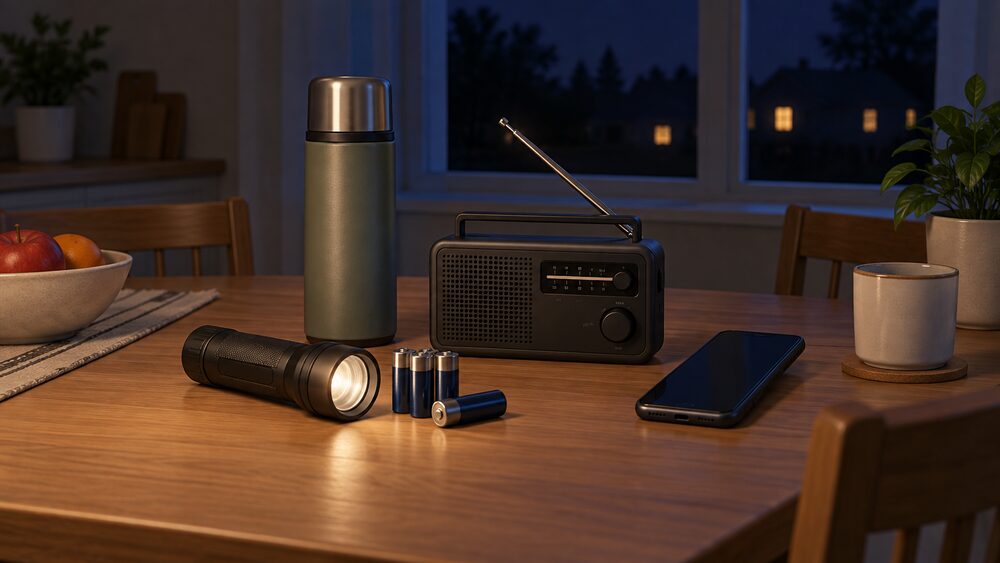
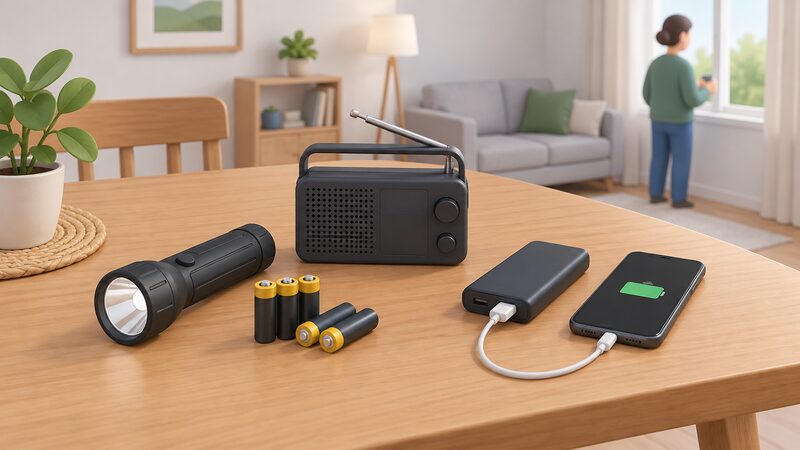
Preparation advice from the network operators is consistent and inexpensive. Keep a torch and batteries in the house13, and keep a torch handy in case of power cuts17. Know where the fuse box is, be able to open electric gates manually, keep an electric vehicle battery charged, and join the medical care register if anyone in the home depends on electricity for medical equipment13. SSEN's list adds keeping a mobile phone charged, keeping a battery-powered radio tuned to a local station, keeping a note of key contacts, checking with neighbours, keeping warm with a thermos flask, and regularly saving work3.
For households with tropical fish, NIE Networks advises keeping a battery-operated air pump, heater or generator ready18. For anyone working or studying, work should be backed up before the power is anticipated to go off16.
Where a planned cut is scheduled, notification is structured. Customers receive an e-card six days before and one day before the planned power cut, and a postcard ten days before19. The e-card carries the date and time the power will be switched off and back on, why the power cut is happening, a reference number, and the number of properties affected19.
During a power cut: what to switch off, what to leave on
The rule that protects both people and appliances is to turn off electric cookers, heaters and sensitive electrical equipment such as televisions and computers13. Electricity North West widens this to all electrical appliances that are not designed to run unattended, naming cookers, grills, chip pans, hair straighteners and electric fires20. The reason is that a supply returning after an outage can catch an unattended appliance switched on.
At least one light should be left on so the household knows when electricity is back on20. NIE Networks' own during-a-cut list combines the two: never touch damaged electricity equipment, check on vulnerable family and friends, keep the freezer door closed, report the power cut, turn off cookers, heaters and sensitive equipment, and leave a light on15.
Where a property has flooded rather than simply lost supply, the sequence changes. The electricity supply should be switched off at the fusebox, if it is safe to do so4. The electricity and gas supplies should then remain off until advised by the network or supplier that it is safe to turn them back on4. Contact the insurance company, and the landlord if applicable, to report what has happened and take instruction4.
How long food stays safe in a fridge and freezer without power
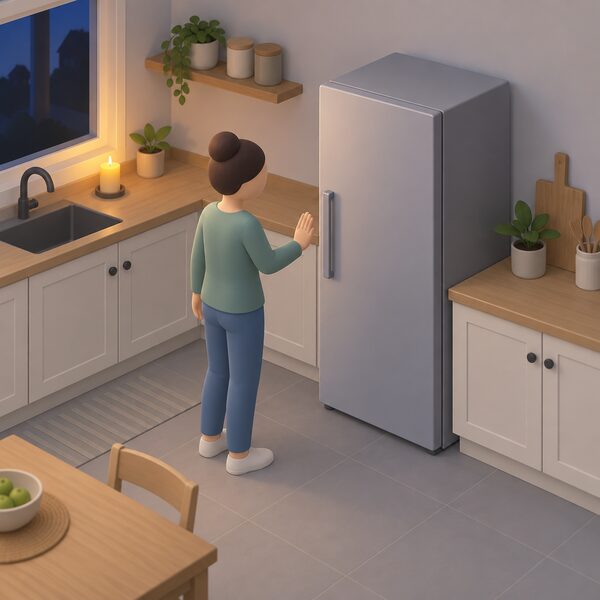
The guidance on food varies by source and by appliance, and the variation is worth understanding rather than averaging. Electricity North West states that food in a fridge can stay safe for around 4 hours without power5. Which? puts the figure at four to six hours without power, as long as the doors are kept closed6. NIE Networks gives 4 to 6 hours in the fridge and 15 to 24 hours in the freezer if the contents are not disturbed7, and Electricity North West repeats the same 4 to 6 and 15 to 24 hour figures in its emergency power cut guidance21. SSEN gives a shorter freezer figure of about eight hours without power3, while Which? states that a fully stocked freezer can stay frozen for as long as 48 hours with the door closed6.
| Appliance | Safe duration without power | Source |
|---|---|---|
| Fridge | Around 4 hours | Electricity North West5 |
| Fridge | Four to six hours, doors closed | Which?6 |
| Fridge | 4 to 6 hours, unopened | NIE Networks7 |
| Freezer | 15 to 24 hours, unopened | NIE Networks7 |
| Freezer | About eight hours | SSEN3 |
| Fully stocked freezer | Up to 48 hours, door closed | Which?6 |
The spread reflects different assumptions about how full the appliance is, how often it is opened and what the room temperature is. The practical rule that follows from all of them is that the freezer door stays shut: every source that gives a longer figure attaches the condition that the door is not opened.
Keeping warm and informed while the supply is off
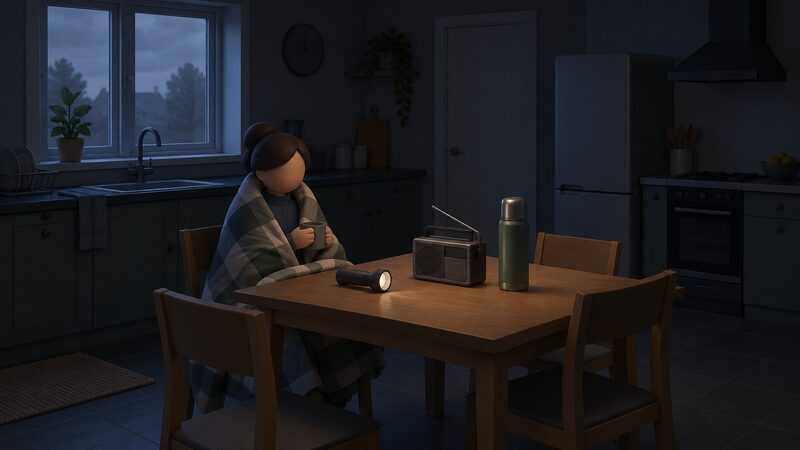
Warmth and information are the two things a household can still control once the supply is gone. NIE Networks advises having warm clothes and blankets accessible in case of a prolonged power cut16. Northern Gas Networks advises keeping a torch handy in case of power cuts17. The Energy Networks Association's winter campaign material is designed to keep people safe and ready to respond if they have a power cut1.
Information is harder, because the home's internet and landline connection stops working in a power cut1. Mobile phone service may be extremely limited and might drop out entirely during a planned emergency cut, so alternative arrangements should be made if people need to be contacted16. A battery-powered radio tuned to a local station is one of SSEN's listed preparations3.
Some households need more than warmth. NIE Networks' Preparing for Winter campaign notes that its advice is particularly important for customers within the agricultural industry, rural communities and those who have critical healthcare needs16. Anyone who depends on power for medical equipment and does not already have their own power cut plan should speak to their healthcare provider1.
The Medical Care Register and support for vulnerable households
In Northern Ireland, householders who rely on electricity for medical equipment should join the medical care register15. The same advice appears in NIE Networks' power cut help pages13. Elsewhere in the UK the equivalent is the Priority Services Register, and the route in is to contact the distribution network operator at any time, as they may be able to add a household to their Priority Register for assistance during any power outage22.
Eligibility for the Priority Services Register covers households that rely on electricity for medical reasons, use a stair lift, hoist or electric bed, have a specific communication need, or would find an unexpected power cut particularly distressing or difficult to cope with22. The register is free22, and Electricity North West's Extra Care register is likewise free5.
What the register provides is practical. It helps the operator tailor services to support households who may need extra help during a power cut22. Benefits include priority support with heating and cooking facilities if the supply is cut off, advanced notice of power cuts, and an identification and password scheme for home visits23. The Centre for Sustainable Energy lists notice of planned interruptions, advice on preparing, a cold weather crisis pack where available, emergency support such as heating, cooking facilities or accommodation, free bottled water, a generator for medical equipment, a direct number to the network operator, bills in different languages or Braille, and a password scheme for visits23.
Generator safety: airflow, carbon monoxide and damaged equipment
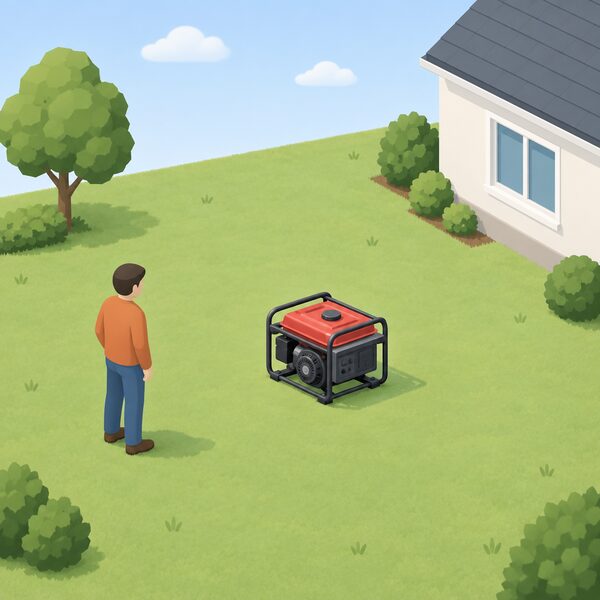
Generators solve one problem and create another. NIE Networks advises that anyone using a generator should be careful where it is sited because of carbon monoxide poisoning, and should make sure there is plenty of air flow around the generator to supply oxygen and remove the fumes13. The same wording appears in its power cut advice15. SGN states it is vital to ensure there is adequate ventilation to prevent potential exposure to carbon monoxide17.
Carbon monoxide is a genuine hazard beyond the home. Incidents and fatalities because of CO can also occur in holiday homes, caravans and on board boats where faulty gas cookers, appliances or petrol-powered generators have led to carbon monoxide poisoning24. Incorrectly installed, poorly maintained or poorly ventilated household appliances, such as cookers, heaters and central heating boilers, are the most common causes of accidental exposure to carbon monoxide25. Poorly maintained, badly installed or faulty gas appliances can cause gas leaks, fire, explosions and carbon monoxide poisoning26.
If a carbon monoxide alarm sounds, the response is to turn appliances off, open windows and get out of the house to breathe in fresh air24. The Health and Safety Executive's guidance adds switching off the appliance and shutting off the gas supply at the meter control valve, opening all doors and windows to ventilate the room, and visiting a GP to report possible exposure25. The house will also need to be checked for safety before anyone returns25.
How the network is restored, and in what order
Restoration is governed by published time limits. Ofgem sets out that the local network operator must restore supply within 24 hours in severe storm category 1 weather and 48 hours in severe storm category 2 weather8. Those are the deadlines against which compensation is measured, and they are the reason the storm categories matter to a household.
For planned emergency cuts, the picture is different. Power should return automatically and, for a planned cut, within one hour after the expected time of reconnection23. Where a rota load disconnection is used, power might be switched off or reconnected around 30 minutes before or after the published time depending on the network16. Households and businesses cannot opt out or be specially treated for emergency planned power cuts16.
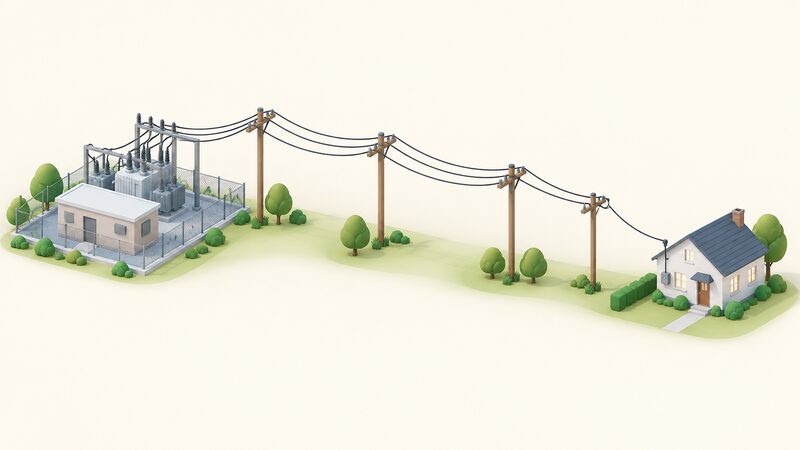
Reconnection more generally takes place as soon as reasonably practicable after disconnection, so that consumers are not off supply for longer than necessary9. In practice, restoration follows the damage: crews work from the faults that affect the most properties, and the pre-positioned teams and materials described earlier determine how quickly each area is reached1.
After the storm: insurance claims and confirmation letters
Two separate things may be owed after a storm: a compensation payment for the outage, and a confirmation letter for an insurance claim. On the first, the compensation scheme has thresholds. If fewer than 5,000 premises are affected by a power cut, compensation kicks in if the outage goes longer than 12 hours before power is restored; if more than 5,000 premises are affected, compensation is not payable unless the outage exceeds 24 hours27. Depending on whether the storm is placed in one of two categories, category 1 and category 2, eligibility for storm compensation differs27. Payment is made within 4 weeks if the outage was caused by a storm27.
The amounts are set. If a power cut was caused by a category 1 storm, the payment is £90 if the power was off for 24 hours10. Claims must be made within 3 months of the power coming back on, unless the household is on the Priority Services Register, in which case there is no time limit10. Payment is normally automatic, and if it has not arrived within 4 weeks of the power coming back on, the operator should be contacted to make a claim10.
On the second, Electricity North West states that if a household is claiming through insurance, it can provide a letter confirming the outage5. For flood damage specifically, the insurer should be contacted first to report what has happened and take instruction, and a registered electrician should assess the condition and safety of the electrical wiring in the property and of fixed and portable electrical appliances affected by the flood4.
Sources27 cited
- Storms and bad weather, Energy Networks Association, 2026-09-17
- Power cut, Energy Networks Association, 2026-09-17
- Preparing for a power cut, SSEN, 2026-09-19
- Flood damage and electrical safety, Electrical Safety First, 2026-09-19
- Be summer ready, Electricity North West, 2026-09-19
- What to do in a power cut, Which?, 2026-06-04
- Emergency power cuts, NIE Networks, 2026-09-19
- Plan for a power cut, Ofgem, 2026
- Get compensation if you have a power cut, Citizens Advice, 2026-09-17
- How to get power cut compensation, Uswitch, 2025-06-23
- Response to storms, NIE Networks, 2026-09-19
- Emergency Response Plan, NIE Networks, 2026-09-19
- How do you prepare for a storm, NIE Networks, 2026-09-20
- Electricity made easy, Electrical Safety First, 2026-09-19
- Power cut advice, NIE Networks, 2026-09-19
- Winter ready, NIE Networks, 2026-09-19
- Be winter ready, SGN, 2026
- What about my tropical fish, NIE Networks, 2026-09-19
- E-card for planned power cuts, Electricity North West, 2026-09-20
- Tips to help you during a power cut, Electricity North West, 2026-09-19
- Emergency power cuts, Electricity North West, 2026-09-19
- Who can join the Priority Services Register, National Grid, 2026-09-20
- Support schemes, Cheshire West and Chester Council, 2026-09-17
- Carbon monoxide poisoning, nidirect, 2026-09-17
- Carbon monoxide, Health and Safety Executive, 2026
- Gas Safe Register, nidirect, 2025-10-29
- Check if you can get payment for a power cut, Ofgem, 2026
 Prepare a Home for a Power CutA household checklist for before, during and after an outage: what to keep charged and to hand, which appliances to switch off, how long food stays safe and what to do about medical equipment.
 Prepare a Home for WinterA seasonal checklist covering heating and hot water checks, controls and timers, alarms, draughts, outside pipework and stocking up on off-grid fuel.
 Prevent Frozen PipesMeasures that reduce freezing risk in lofts, garages and outbuildings, and the steps to take when a pipe has already frozen or burst.
 Surge and Lightning ProtectionWill a surge protector stop a lightning strike from wrecking my wiring and appliances?
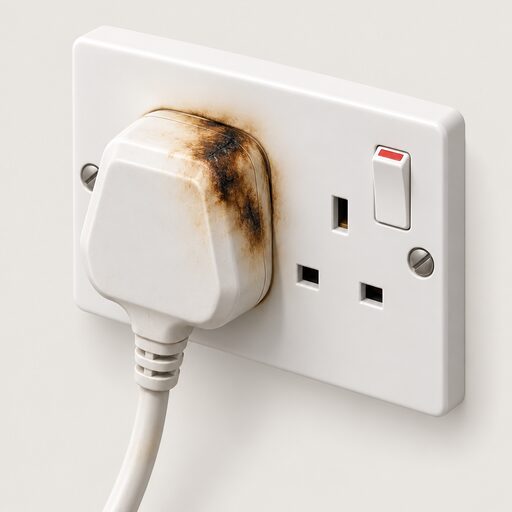 Air Conditioning SafetyA safety guide to home cooling appliances: plug and circuit loading, flammable refrigerants in portable units, condensate and water damage, venting, window sealing and product recalls, with the markings to look for.
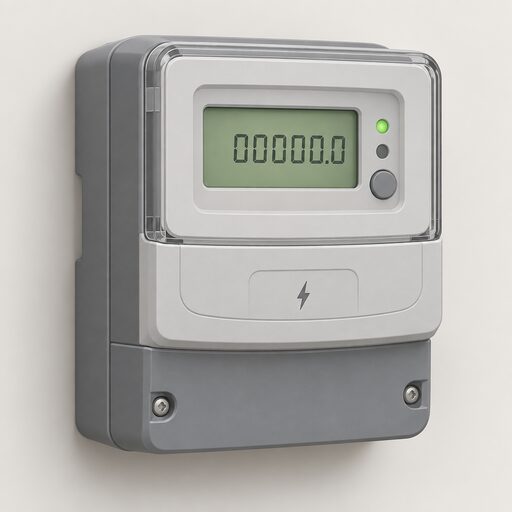 Take Control of Your EnergyHow do you read your own energy use and keep hold of your meter readings?