
In this answer
Short answer
A winter power cut in the UK is usually short, but the season changes what it costs a household. Storm damage to overhead lines is the common cause, and network operators treat restoring supply as their first priority after an unplanned cut1. Where the cause is a national electricity shortage rather than weather, the picture is different: rota load disconnection, or planned emergency power cuts, is timetabled in blocks of typically around three hours, once or twice a day, and may repeat over several days depending on severity2.
The industry position is that such emergency disconnections remain an unlikely scenario and a worst case, with robust plans in place and disconnections as a last resort2. Northern Ireland's network operator describes the same mechanism, with supply sectioned into blocks that can be switched on and off, typically for three-hour periods, until a shortage passes4. For most households, the practical preparation is the same either way: light, heat, communications, food safety and a plan for anyone who depends on electricity for medical care.
This guide sets out what a winter cut involves, what to keep ready, how to keep food safe, what backup power can and cannot do, and how priority support works across the four nations.
What a winter power cut involves and how long it lasts
Two different events get called a winter power cut, and they behave differently. The first is the ordinary fault: a storm brings down a line or damages equipment, and the local network operator restores supply as soon as it can1. The second is a planned emergency cut, run under the Electricity Supply Emergency Code, where the system operator needs to reduce demand nationally. In that case, customers are divided into blocks and timetabled to be without power for typically around three hours once or twice a day3. Energy Networks Association describes the same pattern, with different block letters off for around three hours once or twice a day11.
The duration matters for how a household prepares. A three-hour block is survivable with torches, warm layers and a charged phone. A multi-day event, where power may be interrupted multiple times over a period that may last several days depending on severity, needs more: food management, a way to heat at least one room, and a plan for anyone with medical equipment2.
Northern Ireland follows the same three-hour block model, with supply sectioned into blocks that can be temporarily switched on and off until the shortage passes4. Advance notice is limited. For emergency cuts, the system operator plans to hold a press conference and use social media to let people know a few days before cuts are needed, but it is not possible to call, text or email every customer in advance3. That is why the Priority Services Register matters: it is the route by which a household that needs warning gets advance notice of planned power cuts where possible12.
Distribution companies also try to shorten times without power during the winter months, which is a planning choice rather than a guarantee13.
Lighting, heating and communication: the essentials to have ready
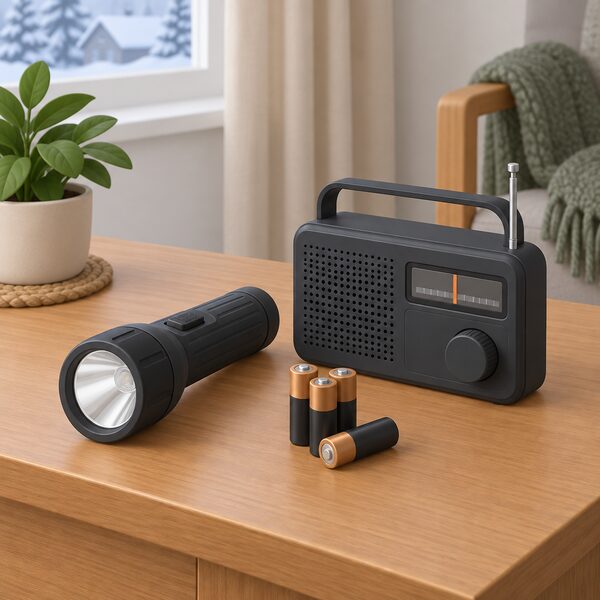
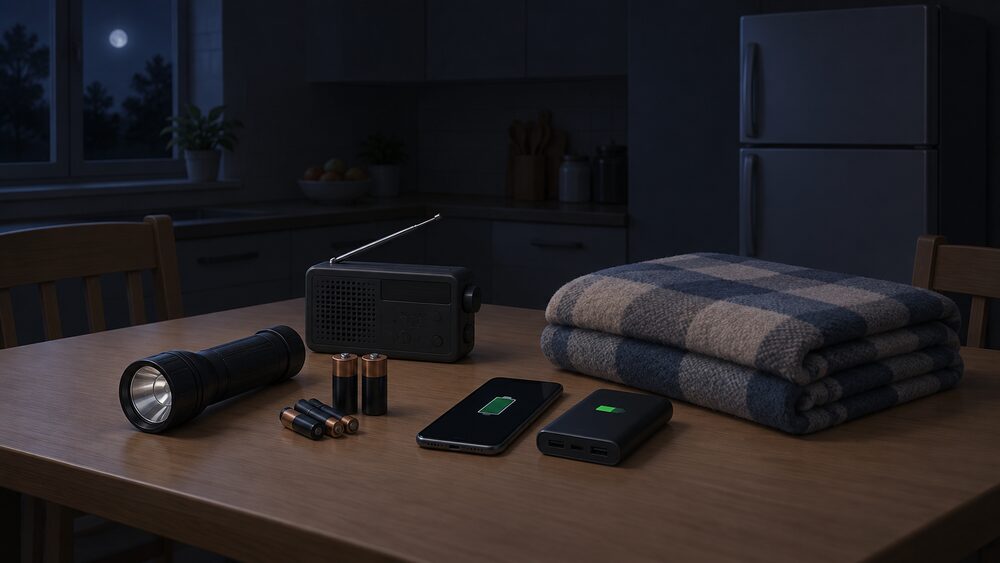
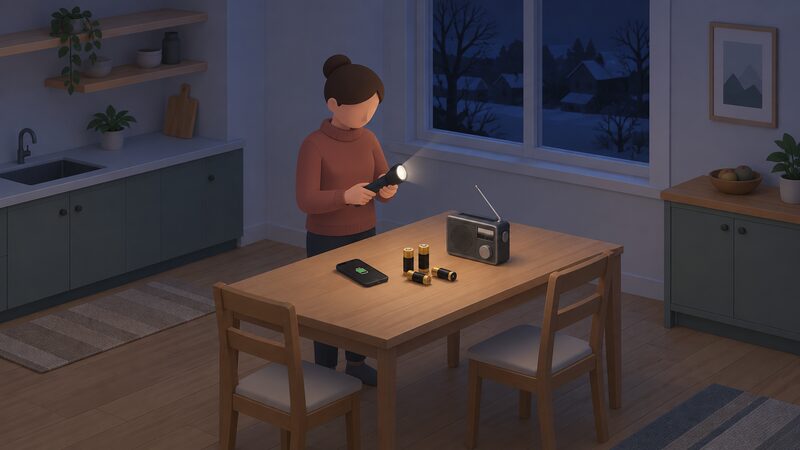
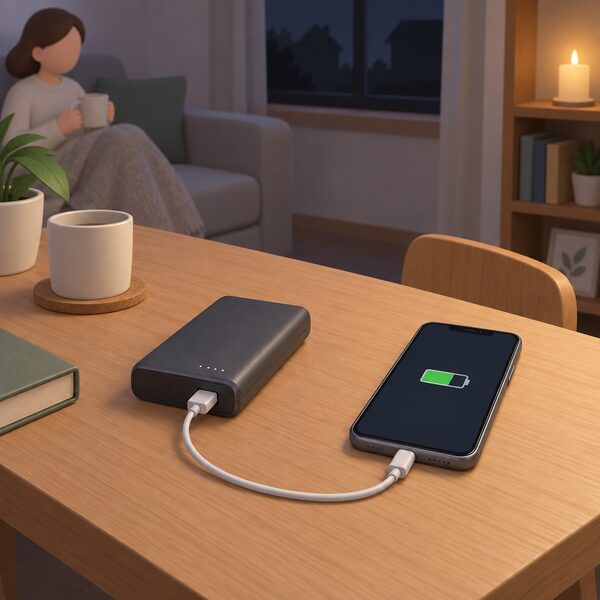
The core kit is small and cheap. Keep torches, a battery-powered radio and spare batteries in case of power cuts14. Keep a mobile phone fully charged so you can use it to go online for updates or call if you have a power cut10. A portable power bank can hold enough power to charge a mobile several times, and is worth having to hand so that a phone stays usable through a longer outage15.
Heating is the harder problem, because the systems most homes rely on stop. Gas boilers and heating, electrical appliances and your home's internet and landline connections will stop working in a power cut10. A gas boiler needs electricity for its pump, fan and controls, so it cannot fire. Oil-heated and rural households not connected to the gas grid face the same interruption, and winter checklists for oil users are built around preparing early to stay warm and avoid winter disruptions16.
For anyone who depends on powered medical equipment, the preparation is different again. Customers who have medical equipment in their homes, such as specialised mattresses, feeding systems or lifting equipment, can register to receive up-to-date information by phone during a power cut or a planned interruption to supply17. Hearing aid and alarm users can get advance notice of planned power cuts where possible, giving time to charge hearing aids, visual alarms and vibrating devices12.
A short list of what to have ready before the season turns:
- Torches and a battery-powered radio, with spare batteries14
- A fully charged mobile phone and a power bank10
- Warm layers and blankets, since central heating will not run10
- A plan for medical equipment, registered with the network operator17
- Frozen ice packs or containers of water to move into the fridge if a cut is planned18
Keeping food safe and the fridge and freezer cold
The single rule that preserves the most food is to keep the doors shut. The most important thing to remember is: keep the refrigerator and freezer doors closed19. NIE Networks puts it plainly: keep fridge and freezer doors closed, and contents should be safe for many hours, but if in any doubt, dispose of the food if it appears to have defrosted20. SSEN gives a working figure of about eight hours for food to keep without power2.
Where a cut is planned rather than sudden, there is time to act. Turn the temperature settings down a couple of hours before the power is due to be switched off, and to keep the fridge cold longer, add ice and pack food tightly in the drawers18. Resist opening and closing your fridge and freezer unnecessarily, because you never know how long the outage may last21.
| Situation | Action | Expected result |
|---|---|---|
| Planned cut, two hours ahead | Turn temperature settings down18 | Colder starting point, slower warm-up |
| Fridge, during the cut | Add ice, pack food tightly in drawers18 | Contents stay cold longer |
| Freezer, during the cut | Keep the door closed22 | Food should keep about eight hours2 |
| Any doubt after defrosting | Dispose of the food20 | Avoids a food safety risk |
The independence point is that food safety in a cut is a behaviour, not a purchase. No domestic battery will run a fridge freezer for long at reasonable cost, so the household's protection is the thermal mass already in the appliance plus a closed door. A UPS for a fridge or freezer is possible in principle but limited in runtime, and the practical answer for most homes is the door rule and a full freezer.
Backup power options: power stations, batteries and generators
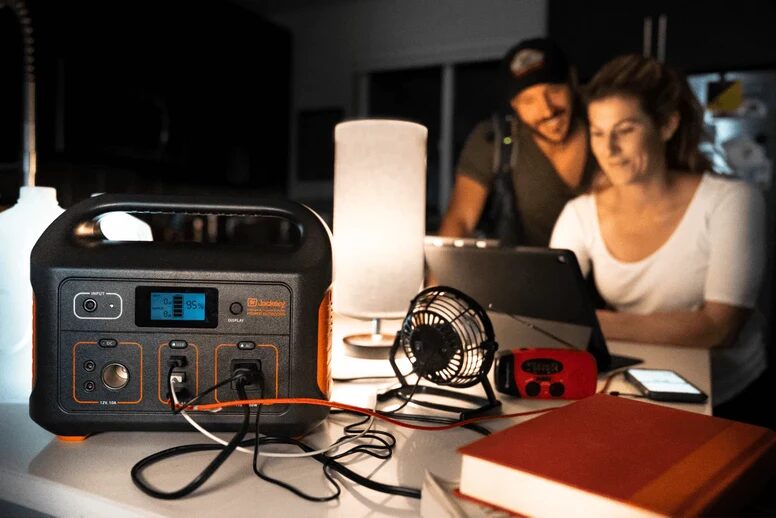
Backup power for a winter cut divides into what keeps a phone alive, what keeps a few appliances running, and what can supply a whole home. At the smallest end, a portable power bank holds enough power to charge a mobile several times15. Above that, portable power stations and generators can run lighting, a router or a small appliance, and the site's guides to portable power stations and portable generators cover sizing and connection.
Home batteries are a separate case, and the caveat matters. In some cases these storage devices can provide back-up supplies for use in a power cut, but this is not always possible, and the installer should be asked to confirm23. The more expensive battery systems can also provide electricity during a power cut24. For a household hoping to cover winter energy use, an additional solution such as battery storage may be needed9.
The official view of where this is heading is that further innovation in home battery technology, vehicle-to-everything (V2X), and solar can provide households with additional backup options during power outages25. That is a direction of travel, not a product a household can buy today.
What remains dependent is worth stating plainly. A portable power station depends on having been charged beforehand, and on a manufacturer's app or cloud service for some monitoring. A home battery depends on the installer configuring backup circuits, and on the manufacturer remaining in business. A generator depends on stored fuel and on safe outdoor siting. None of these removes the household's reliance on the network for the bulk of its energy; they shorten the gap.
Vulnerable households: priority registers and extra support
The Priority Services Register is the main support mechanism, and it is free7. It helps network operators tailor services to support households who may need extra help during a power cut26. Eligibility covers people who are elderly, have a disability or long-term health condition, have young children, or need extra help during power cuts27. It also covers customers who depend on electricity for home medical care or who have special communication needs28.
Signing up is not centralised. To sign up for the Priority Services Register you will need to contact all your utility suppliers directly8. The benefits are practical: priority support with heating and cooking facilities if your supply is cut off, advanced notice of power cuts, and an identification and password scheme for home visits29. Where staying at home is unsafe during a power cut, operators can help find alternative accommodation as required, and hot food and drinks are provided when appropriate28.
Northern Ireland runs its own version. The Customer Care Register contacts registered customers regularly during the power cut with up-to-date information30. Registration is aimed at customers who have medical equipment in their homes, such as specialised mattresses, feeding systems or lifting equipment17. The Preparing for Winter campaign there is particularly important for customers within the agricultural industry, rural communities and those who have critical healthcare needs6.
| Nation | Register | Who it covers |
|---|---|---|
| Great Britain | Priority Services Register | Elderly, disability or long-term condition, young children, extra help in a cut27 |
| Northern Ireland | Customer Care Register | Medical equipment at home, critical healthcare needs17 |
| All | Medical dependency | Customers depending on electricity for home medical care28 |
A practical step that costs nothing is to check on elderly or vulnerable neighbours, family and friends and make them aware of planned emergency power cuts31. The Get Winter Ready campaign toolkit carries safety messages, free phone energy emergency numbers, the extra support available through the Priority Services Register, and the compensation available due to disruption32.
What to do during the outage and how to recover
During a cut, the operator's priority following an unplanned power cut is to restore power for customers as soon as possible1. Most unplanned cuts follow cables and equipment becoming damaged, especially in bad weather5. Reporting matters even when the whole street is dark: if your neighbours' power is also off, do not assume the network operator has already been notified, and always call to let them know7.
Reporting channels vary by operator. NIE Networks customers can report a power cut online or visit Powercheck for real-time updates about when power will be restored, and can also use WhatsApp, Facebook Live Chat or the Customer Helpline6. The free national number for power cuts is 1055. The site's guide to who fixes a power cut explains the split between network operators and suppliers.
After supply returns, a short sequence helps:
- Check the fridge and freezer and discard anything that has defrosted and is in doubt20.
- Reset clocks, timers and heating controls, which will have lost their settings.
- Recharge phones, power banks and any medical equipment batteries10.
- Check on neighbours who registered for priority support31.
- If the cut was long or caused damage, look at whether compensation applies under the guaranteed standards.
Recovery is also the point to review what failed. A household that found itself without light, heat or a charged phone has the evidence it needs for next winter, and the site's wider backup power material covers the equipment choices in more depth.
Sources32 cited
- Restoration following a power cut, Electricity North West, 2026
- Electricity Supply Emergency Code, SSEN Distribution, 2026
- Emergency power cuts, Electricity North West, 2026
- How do planned emergency power cuts work, NIE Networks, 2026
- Powercut105, Powercut105, 2026
- Winter Ready, NIE Networks, 2026
- What to do in a power cut, Met Office, 2026
- Heating your home, Carmarthenshire County Council, 2026
- How much solar do I need for my house, LuxPowerTek, 2025
- Storms and bad weather, Energy Networks Association, 2026
- Care and assisted living providers, Energy Networks Association, 2026
- Priority Services for hearing needs, SSEN Distribution, 2026
- Planned power cuts, Electricity North West, 2026
- Stay safe, warm and connected this winter, Cadent Gas, 2026
- What to do in a power cut, Which?, 2026
- Winter heating checklist 2025, UKIFDA, 2025
- Critical care register, NIE Networks, 2026
- Tips to prepare for a power cut, Electricity North West, 2026
- How do I keep food safe, NIE Networks, 2026
- What to do when power is disrupted, NIE Networks, 2026
- How to prepare for and stay safe during a power cut-a-power-cut), NICEIC, 2025
- Power cut help, NIE Networks, 2026
- Renewable energy storage, Electricity North West, 2026
- Making the most of your solar PV panels, Centre for Sustainable Energy, 2026
- Well-adapted energy system, Climate Change Committee, 2026
- Who can join the Priority Services Register, National Grid, 2026
- Worried about your energy bills, Energy Ombudsman, 2026
- Chronic and serious illness, Electricity North West, 2026
- Support schemes, Cheshire West and Chester Council, 2026
- Customer Care Register, NIE Networks, 2026
- Is there any action I should take in preparation, NIE Networks, 2026
- Get Winter Ready resources, Energy Networks Association, 2026
 Prepare a Home for a Power CutA household checklist for before, during and after an outage: what to keep charged and to hand, which appliances to switch off, how long food stays safe and what to do about medical equipment.
 The Full Backup Power GuideHow long do UK power cuts usually last, and what can keep your fridge, heating or phone going until the power comes back?
 Prepare a Home for WinterA seasonal checklist covering heating and hot water checks, controls and timers, alarms, draughts, outside pipework and stocking up on off-grid fuel.
 The Full How To GuideSwitching supplier, sending meter readings, sorting an EPC, claiming a grant, complaining when something goes wrong, coping in a power cut: where do you start with any of it?
 The Full Home Batteries GuideA home battery stores cheap or solar power for later, but will it really cut your bills enough to be worth it?
 Power Cuts in ScotlandWho do you call when the power goes out in Scotland, and how long should it take to come back on?