
In this answer
Short answer
If your household depends on electricity for medical care, the route to a warning before a power cut is the Priority Services Register. It is run by the energy network operators, the companies that own the wires, and it is free. It provides advance notice of planned power cuts for customers who depend on their energy supply for medical reasons, and free 24 hour power cut alerts and text updates to medically dependent customers1.
The register is not a backup supply. It tells you a cut is coming or is under way; it does not keep a ventilator, oxygen concentrator or stairlift running. That gap is closed by a second layer, a battery or an uninterruptible power supply sized for the equipment, and by a written plan agreed with a GP, a carer and the equipment supplier.
This page sets out who qualifies, what evidence is asked for, how alerts arrive, what the guaranteed standards pay after a long cut, and how backup power fits alongside the register. Northern Ireland runs its own version, the medical care register and Customer Care Register, and the details differ from the rest of the UK.
The Priority Services Register: free power cut alerts from your network operator
The register is operated by energy network operators, and it exists to support households during a power cut or another energy emergency7. Membership brings a set of services rather than a single alert: a direct number to get straight through, an agreed password before visits, special help through the British Red Cross, information about planned interruptions, updates during an unplanned cut, and free 24 hour power cut alerts and text updates to medically dependent customers2.
The wider package matters for a household managing a health condition. It includes regular personal meter readings, which may help stop large backlog bills building up, advanced warnings of power cuts, priority support in an emergency, and accessible information8. Priority support can extend to heating and cooking facilities if the supply is cut off, along with an identification and password scheme for home visits9.
Joining does not require changing supplier or tariff. A supplier can pass your details to your local network operator so that you get extra support during a power cut and advance notice of engineering work that could disrupt the supply10. The register is free, and the Met Office advises contacting your distribution network operator at any time if electricity is crucial for medical equipment1.
For a household, this is the cheapest form of energy resilience available: no equipment, no installation, no maintenance. What it does not do is restore power. It buys time to move equipment, charge batteries or make other arrangements, and it depends on the operator holding correct contact details and on the phone network working. A landline or mobile that fails with the power removes the warning channel, which is why a plan should not rest on a single device.
Who counts as medically dependent, and what evidence is needed
Eligibility turns on dependence on electricity for medical care or on communication needs. Customers who depend on electricity for home medical care, or who have special communication needs, can find power cuts particularly difficult, and the register is designed for them11. One energy advice line sets out a longer list of health criteria: a cardiovascular condition, a respiratory condition, a neurological or neurobiological condition, musculoskeletal conditions, blood conditions, cancer, moderate to severe mental illness, severe learning disabilities, an autoimmune or immunodeficiency disease, terminal illness, another illness exacerbated by cold and confirmed by a GP, or possession of a valid NHS Medical Exemption Certificate12.
Evidence requirements are not uniform. Some schemes ask for a health diagnosis as part of the application13. Others work from a conversation about circumstances. The practical step is to ask your own network operator what it wants before applying, because the criteria are set operator by operator rather than by a single national rule.
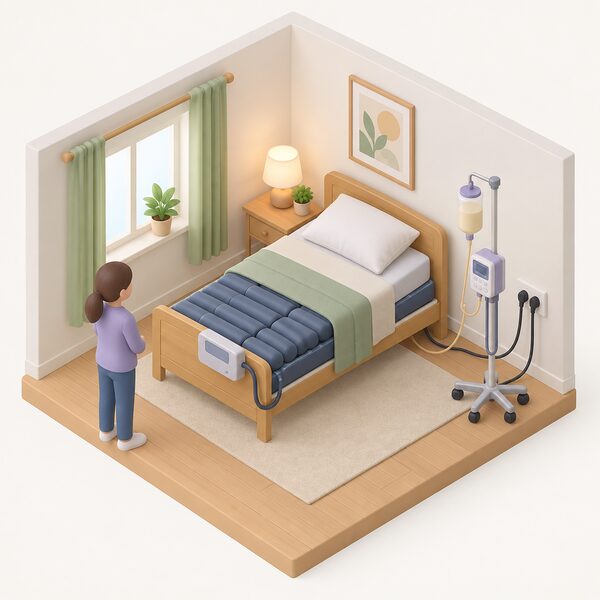
In Northern Ireland the picture is different again. NIE Networks asks householders who rely on electricity for medical equipment to join its medical care register14. Its Customer Care Register covers customers with medical equipment at home, such as specialised mattresses, feeding systems or lifting equipment, who can register to receive up to date information by phone during a power cut or a planned interruption15. Customers who require a continuous supply of electricity for medical reasons are advised to seek advice from their local health service provider16.
How alerts reach you: phone, text, email or pager
Contact method is chosen at registration, and the channels differ by operator. Electricity North West emails and texts customers with contact details on file six days and one day before a planned power cut3. It also sends an e-card, a unique link delivered by text or email, where a mobile number or email address is held17.
For unplanned cuts, one operator notifies customers by text message as soon as is practically possible, noting that this may be after the start of the interruption18. That timing matters: an alert can arrive once the lights are already off, so equipment planning cannot assume warning comes first.
Advance notice has a specific use for households with sensory or communication needs. It gives time to charge hearing aids, visual alarms and vibrating devices before the supply goes off19. For a household using a pager, a text-capable phone or an email account monitored by a carer, the registration should record whichever channel is actually checked.
Smart meters add a second, silent channel. Smart meters can send automatic alerts to the operator when there is a power cut or a problem with the voltage20. That helps the operator see an outage without waiting for calls, but it does not warn the household and it does not replace registration.
What the 24-hour compensation guarantee covers, and what it does not
The Guaranteed Standards of Performance set payments for long unplanned cuts. Where more than 5,000 homes were affected, the payment is £100 if the power is off for longer than 24 hours, then £45 for every further 12 hours, up to a maximum of £4004. Payment should be automatic from the network operator within 10 working days, with an extra £40 where a claim has to be made5.
There are firm exclusions. No payment is made for blackouts caused by a national power shortage, for damage to electrical equipment or appliances, or for a low supply after a power cut22. A cut lasting less than 12 hours would not normally attract a payment23. For repeated cuts, each one must have lasted at least 3 hours24, and the repeated cut payment is not available if compensation has already been received for any power cuts in the same 12 months; planned cuts that were notified do not count5.
The rules also vary by region and by circumstance. Where the number of high voltage incidents did not reach the storm threshold for the region and a household was without electricity for over 12 hours, a customer guarantee payment may be due and is sent automatically25. Both figures are reported, and the position depends on the incident and the operator.
Compensation is money after the event. It does nothing for a household that needs a supply to keep medical equipment running through the night, which is why the register and a backup supply sit alongside it rather than instead of it.
Backup power at home: batteries and EPS as a second layer
A backup supply is the layer that keeps equipment running when the alert has done its job and the power is still off. The options are not equal. In some cases storage devices can provide backup supplies for use in a power cut, but this is not always possible, and the capability should be checked with the installer26. The more expensive battery systems can also provide electricity during a power cut27.
At household level, further innovation in home battery technology, vehicle-to-everything and solar can provide households with additional backup options during power outages28. That is a statement about direction of travel as much as about what is on sale today, and it points to the two questions that decide whether a system helps a medically dependent household: does it supply power when the grid is down, and does it supply it to the right circuits.
An emergency power supply arrangement needs to cover the specific equipment in the home. Network operators advise checking mains power backup for all critical equipment, including air beds, ceiling hoists and stairlifts29. Medical equipment and partner health care providers should be contacted to prepare risk management plans for equipment losing power unexpectedly29.
Sizing is device-specific. The draw of a CPAP machine, an oxygen concentrator or a hoist is printed on the equipment or in its manual, and the runtime follows from that figure and the battery capacity. A general rule cannot substitute for the device rating, and the specification should come from the equipment supplier or an installer. For households weighing the options, portable power stations and home UPS systems cover the two main approaches, and essential loads and backup circuits explains how a system is wired to serve only what matters.

Making a plan with your GP, carer and supplier
The plan is the part that holds the other layers together. Care and assisted living providers are advised to contact medical equipment and partner health care providers to prepare risk management plans for equipment losing power unexpectedly29.
A practical plan records the equipment, its power draw, how long it can run on its internal battery, who to call, and where the household would go if the cut outlasts the backup. It should name the network operator and the 105 number, and it should list the people who can help move equipment or provide a spare supply.
Basic preparation supports the plan. NIE Networks advises keeping a torch and batteries in the house, knowing where the fuse box is, being able to open electric gates, keeping an electric vehicle battery charged, and joining the medical care register if dependent on electricity for medical equipment14. The Met Office gives the same core advice for any household: contact your distribution network operator if electricity is crucial for medical equipment, and sign up for the free Priority Services Register1.
Carers and care providers have a formal role. Network operators work with care and assisted living providers on behalf of the people they support30, and a relative can help someone register and hold the contact details that trigger the alert. For a household in Northern Ireland, the equivalent route runs through the Customer Care Register, and the wider picture of who fixes a fault sits on the network operators page.
Sources31 cited
- Priority Services FAQs, National Grid
- Who can join the Priority Services Register, National Grid
- How we will let you know about planned power cuts, Electricity North West
- Get compensation if you have a power cut, Citizens Advice
- Get compensation if you have a power cut, Citizens Advice
- Check if you can get payment for a power cut, Ofgem
- Customers, Energy Networks Association
- Priority Services Register research briefing, UK Parliament
- Support schemes, Cheshire West and Chester Council
- Energy for those with sight loss, Uswitch
- General advice, National Grid
- Eligibility, UK Power Networks Energy Advice Line
- Individuals, Charis Grants
- Power cut advice, NIE Networks
- Critical care register, NIE Networks
- What about people that rely on electrical medical equipment, NIE Networks
- E-card for planned power cuts, Electricity North West
- Electricity Supply Emergency Code, SSEN
- Priority Services for hearing needs, SSEN
- Smart meters, SSEN
- How to spot an energy scam, Energy Saving Trust
- Check if you can get payment for a power cut, Ofgem
- Compensation for a power cut lasting less than 12 hours, UK Power Networks
- Plan for a power cut, Ofgem
- Standards of performance, National Grid
- Renewable energy storage, Electricity North West
- Making the most of your solar PV panels, Centre for Sustainable Energy
- Well-adapted energy system, Climate Change Committee
- Care and assisted living providers, Energy Networks Association
- Rota load disconnections, National Grid
- Storms and bad weather, Energy Networks Association
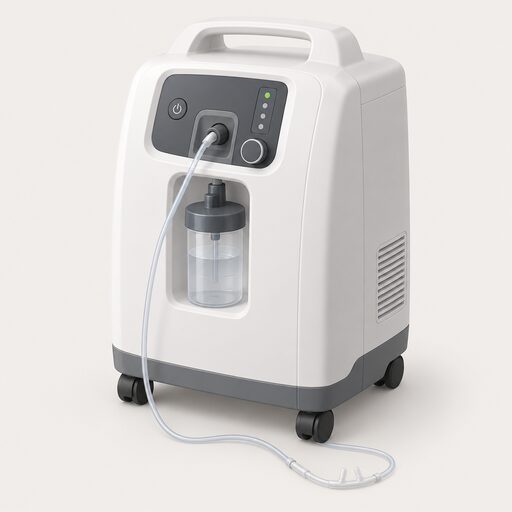 Vulnerable Households EnergyIf someone in your home relies on powered medical equipment, or needs extra warmth because of a health condition, what help is available?
 Prepare a Home for a Power CutA household checklist for before, during and after an outage: what to keep charged and to hand, which appliances to switch off, how long food stays safe and what to do about medical equipment.
 Power Cuts in ScotlandWho do you call when the power goes out in Scotland, and how long should it take to come back on?
 Electricity Margin ShortagesWill the lights stay on this winter, and what would have to happen before homes lose power?
 The Full Backup Power GuideHow long do UK power cuts usually last, and what can keep your fridge, heating or phone going until the power comes back?
 New Electricity ConnectionWho do you contact for a new or upgraded electricity connection, and what will it cost?