
In this guide
The support available to a UK household during a power cut is not a single scheme but a patchwork: a free register held by every supplier and network operator, a set of guaranteed payments when an outage runs long, and, with one operator, a free home battery pack. The register is the gateway to nearly all of it. Signing up is free, and it is what triggers advance warning of planned cuts, priority support in an emergency, and, in SSEN's licence area, assessment for a battery1.
The money side is separate and automatic in principle. For a power cut lasting more than 12 hours and interrupted for 36 hours, the guaranteed standards produce 2 additional £45 payments, adding up to £90; for a cut of more than 24 hours interrupted for 72 hours, 4 additional £45 payments, adding up to £1803. Businesses can get £120 for planned and unplanned power cuts3. These are the operator's obligations, not charity, and they sit alongside whatever welfare help a register unlocks.
What follows sets out what each scheme is, who qualifies, what it actually provides, and where the four nations diverge. The pattern throughout is that the register is the household's route in, and that the equipment and welfare help attached to it varies by operator rather than by any single national standard.
What support schemes exist during a power cut
Three distinct layers of support operate during a cut, and households often conflate them. The first is the Priority Services Register, a free service provided by utility suppliers and network operators that records a household's circumstances in advance2. The second is the guaranteed standards regime, which pays fixed sums when an outage exceeds set durations. The third is operator-specific equipment and welfare provision, of which SSEN's Home Battery Pack scheme is the clearest example5.
The register layer is the one that changes what happens in the first hour. For both planned and unplanned power cuts, network operators must offer customers on the priority service register extra help, for example giving them battery packs so that they can still charge phones or medical equipment1. That obligation is stated as a duty on operators, not a discretionary gesture, which is why the register matters more than any single scheme attached to it.
The payment layer is triggered by duration rather than by need. Domestic payments follow a fixed structure, with the £45 unit repeated as an outage lengthens3. A household does not have to ask for these in most cases, though reporting the cut through the operator's own channels is what starts the record.
The equipment layer is where operators differ most. SSEN runs a battery scheme at scale; Electricity North West runs an Extra Care register with local features such as a password scheme and a nominated contact5. Elsewhere the register may deliver warnings and priority contact without any hardware at all. The practical consequence for a household's energy independence is limited but real: these schemes reduce the harm of a cut, they do not remove the dependence on the network that caused it.
| Layer | What it is | Who runs it | What it delivers |
|---|---|---|---|
| Register | Priority Services Register, or a local equivalent | Suppliers and network operators | Advance warning, priority support, accessible information2 |
| Payment | Guaranteed standards of performance | Network operators | £45 units scaling with outage length; £120 for businesses3 |
| Equipment | Operator-specific hardware | SSEN, and others locally | Free Home Battery Pack for qualifying Priority Services customers5 |

Priority Services Registers: free extra help before, during and after an outage
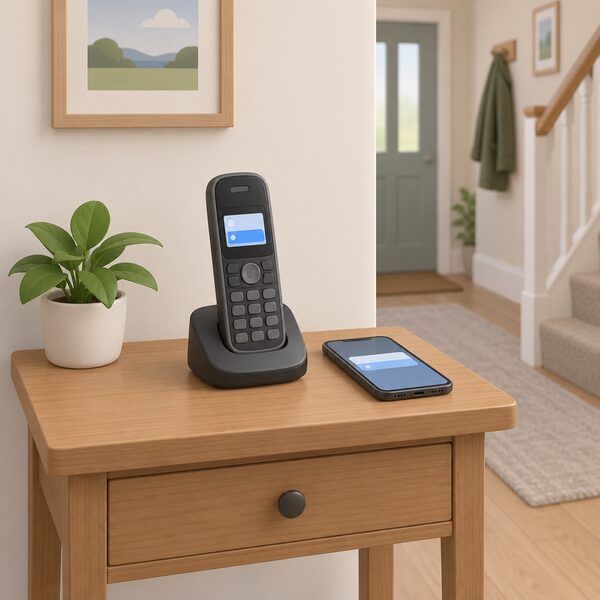
The Priority Services Register is the single most useful thing a household can be on before a cut happens, and it costs nothing. It is a free service provided by utility suppliers and network operators2. It ensures extra help during an emergency outage, such as a power cut or supply interruption3, and the support is free of charge4. Because it is held jointly across the industry, one registration can cover electricity, gas and water.
What it delivers is practical rather than financial. The benefits include priority support with heating and cooking facilities if your supply is cut off, advanced notice of power cuts, and an identification and password scheme for home visits7. Those three items map onto the three phases of an outage: before, when a planned cut is scheduled; during, when heating and cooking are the immediate need; and at the door, when someone claims to be from the operator.
The register also carries services that are less obviously about cuts but matter to the same households. These include regular personal meter readings which may help stop large backlog bills building up, advanced warnings of power cuts, priority support in an emergency, and accessible information8. Accessible information is the route to large print, braille and interpretation, and it is recorded on the register rather than requested in the moment.
There is a longer history of trying to make the register work better across systems. Parties to the Master Registration Agreement, which sets out the procedures in relation to change of supplier, recently voted to approve a modification proposed by Western Power Distribution to include contact information in the electricity data flows9. That is a 2014 consultation record, and it shows that the plumbing behind the register has been under review for over a decade.
For a household's independence, the register is a partial measure. It does not give the home its own generation or storage, and it does not insulate the home from the grid. What it does is convert a household from an anonymous address on a feeder into a known one with recorded needs, which is the difference between a warning that arrives in time and one that does not.
Who qualifies: eligibility covers medical needs, disability, age and young children
Eligibility is broader than many households assume, and it is assessed on circumstances rather than on income alone. The register is designed for people who need extra help, and the categories that appear across official material include medical dependence on powered equipment, disability, older age and households with young children.
The clearest statutory framing comes from the Warm Home Discount regulations, which set out the vulnerability criteria used in Scotland: a child under 5; an income related qualifying component; limited capacity for work element; a disabled child element; a disabled element10. Those criteria are written for a discount scheme rather than for the register itself, but they show the shape of the tests that official documents use when they define vulnerability.
The benefit list behind the broader group is long and specific. It includes pension age disability payment under the Disability Assistance for Older People (Scotland) Regulations 2024, adult disability payment, universal credit, income support, income-based jobseeker's allowance, income-related employment and support allowance, and housing benefit10. A person in receipt of income support is within the core group if Condition A or B is satisfied, which turns on responsibility for a child under 5 or an award that includes a pensioner, higher pensioner, disability, severe disability, enhanced disability or disabled child premium10.
The eligibility criteria for the broader group must include descriptions of persons in receipt of every type of benefit specified in Part 1 of Schedule 3, excluding core group customers, and will wholly or mainly be persons in fuel poverty or a fuel poverty risk group10. That is a legal requirement on how the criteria are drawn, and it explains why the qualifying benefit list is so wide.
In practice, a household that relies on powered medical equipment, has a disability, has a child under five, or is of pension age with a qualifying benefit is likely to fall within scope. The register is not means-tested in the way a grant is, and the assessment is about need and circumstance. Households in Northern Ireland follow a parallel route through the Customer Care Register rather than the Great Britain Priority Services Register.
What a register actually provides: updates, a Power Cut Plan and a nominated contact
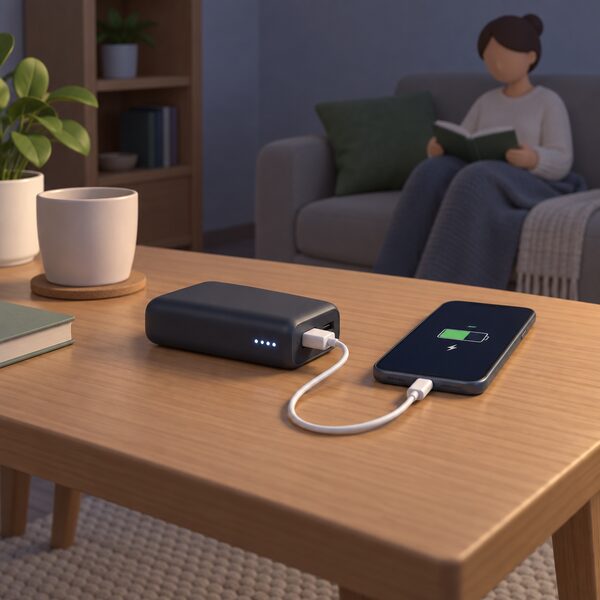
Once a household is on a register, the provision is a bundle rather than a single benefit. The core items are advance warning of planned cuts, priority support during an emergency, accessible information, and a way to verify anyone who turns up at the door7. Operators add local features on top.
Electricity North West's Extra Care register shows what the fuller version looks like. Customers can nominate a friend, carer or family member to receive updates on their behalf6. With permission, details can also be shared with other trusted partners including water and energy suppliers, meaning a customer only needs to register once6. That single-registration principle is the main practical advantage of the shared register model.
The verification feature is the one households ask about most. On the Extra Care register, a customer can give a unique password so they can verify representatives who visit their home; the representative makes a quick phone call to find out the password and prove their identity6. This is a defence against bogus callers who exploit outages, and it only works if the password is set in advance.
Contact expectations are also set out. Customers may receive phone or text messages at any time, day or night, only when necessary for safety or critical updates, and support is available 24/76. A household that joins should expect its phone to be used at unsocial hours in a genuine emergency, which is the point of the register.
The Power Cut Plan sits alongside these. Network operators must offer customers on the priority service register extra help for both planned and unplanned power cuts, for example giving them battery packs so that they can still charge phones or medical equipment1. A plan is the household's own record of what it will do, and the register is what makes the operator a party to it.
SSEN's free Home Battery Pack scheme: 20,000 packs at no cost for Priority Services customers
SSEN's Home Battery Pack scheme is the most substantial piece of hardware any UK network operator offers to households, and it is free to those who qualify. Home battery packs will be given at no cost to certain Priority Services customers who need the most support5. The scheme is not a retail product and cannot be bought; it is allocated through the register.
The scale is significant. More than six thousand customers have already accepted our offer of a free Home Battery Pack5. The scheme was built on a trial: during a six-month trial, batteries were given to 28 customers who rely on powered medical equipment5. That pilot group is the clearest statement of who the scheme is aimed at, and it explains why medical dependence carries weight in the assessment.
Allocation is not first come, first served. When customers sign up for Priority Services, their needs and circumstances are assessed. This process, together with data on the frequency of power cuts in their area, will determine if a customer is eligible for a battery5. Two variables therefore decide the outcome: the household's recorded needs and the reliability of the local network.
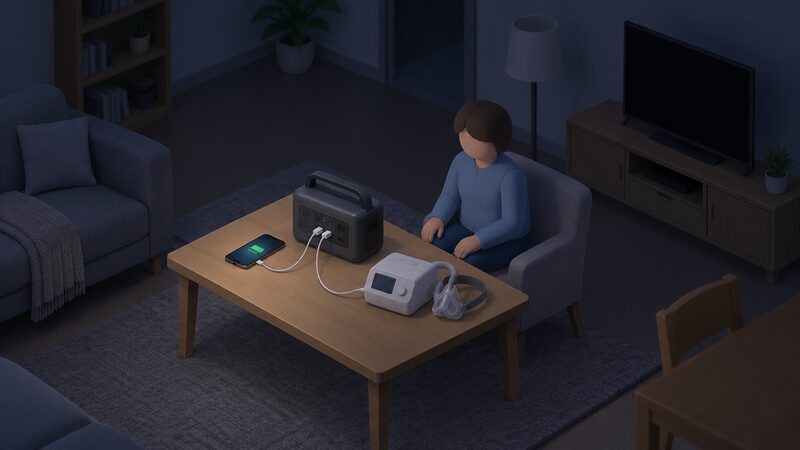
The equipment itself is a portable battery rather than a fixed home battery system. Subject to approval from the manufacturers of specialist in-home medical equipment, the battery may keep these devices operating for longer if there's a power cut5. That condition matters: the battery is not presented as a clinical guarantee, and the equipment maker's approval is part of the arrangement.
For a household's energy independence, the scheme is a genuine but bounded gain. It provides stored energy for phones and some medical devices during a cut, which removes one specific dependence at the worst moment. It does not power the home, does not reduce bills, and does not change the household's relationship with the grid. It is resilience equipment supplied by the network, not independence from it.
Extra Care Register: Electricity North West's version for the North West
Electricity North West runs its register under a different name, and the differences are worth knowing for households in its area. The Extra Care register covers the North West region of SP Electricity North West, and the operator states that it has partnered with local charities throughout the North West6. That partnership model is how the welfare side of the register is delivered on the ground.
The features that distinguish it are the password scheme, the nominated contact and the data-sharing arrangement. Customers can nominate a friend, carer or family member to receive updates on their behalf6. With permission, details can be shared with other trusted partners including water and energy suppliers, meaning a customer only needs to register once6. The password scheme lets a customer verify a visiting representative, who makes a quick phone call to find out the password and prove their identity6.
Contact arrangements are explicit. Customers may receive phone or text messages at any time, day or night, only when necessary for safety or critical updates, and support is available 24/76. The register also carries an update requirement: customers who joined before 2022 are asked to update their details, even if nothing has changed6.
Signing up is straightforward. Customers can join through the online form or by giving the operator a call on 0800 195 41 416. The same source lists contact on 105 or 0800 195 41 41, or by email6. The 105 number is the national power cut line, so a household that is unsure which operator covers it can start there.
The practical difference between the Extra Care register and the Priority Services Register is mostly one of naming and local add-ons. The underlying entitlement is the same, and the same household circumstances qualify. What the North West version adds is the charity partnership, the password scheme and the single-registration data sharing, all of which are local implementations rather than a separate national scheme.
Alternative accommodation and other costs you can claim during a long outage

When an outage runs past a day, the question shifts from warnings to money and shelter. The guaranteed standards of performance set fixed payments that scale with duration, and they are the household's clearest financial entitlement. For a power cut lasting more than 12 hours and interrupted for 36 hours, a household could get 2 additional £45 payments, adding up to £903. For a cut lasting more than 24 hours and interrupted for 72 hours, 4 additional £45 payments, adding up to £1803.
The same structure appears in Ofgem's guidance on claiming payment for a power cut, which gives the identical examples: 2 additional £45 payments, adding up to £90 for a cut of more than 12 hours interrupted for 36 hours, and 4 additional £45 payments, adding up to £180 for a cut of more than 24 hours interrupted for 72 hours4. The repetition across two official pages is useful because it confirms the figures are current and not a legacy table.
Businesses are treated separately and more simply. For planned and unplanned power cuts, a business can get £1203. That is a flat figure rather than a scaled one, and it reflects the different basis on which non-domestic customers are compensated.
Alternative accommodation is not a standard guaranteed payment. What the register provides in that direction is priority support in an emergency and priority support with heating and cooking facilities if your supply is cut off7. Where a household cannot remain safely in the property, the route is through the operator's welfare arrangements and the local authority rather than through a fixed tariff of hotel costs.
The independence point here is blunt. These payments compensate for a failure of the network; they do not reduce reliance on it. A household that wants to keep its heating, its fridge and its medical equipment running through a long cut needs its own stored energy, and the register is the mechanism that may supply a small amount of it.
Where else to turn: Citizens Advice and Age UK
Beyond the operator, the advice sector carries much of the welfare load during and after a cut. Citizens Advice offers information and support on a range of topics, including struggling to pay bills, problems with your energy supplier or energy supply, saving energy at home, and getting a better energy deal11. That scope covers the aftermath of an outage as well as the event itself.
The consumer service can escalate cases that the household cannot resolve alone. It may refer you to the Extra Help Unit if you need support with a difficult or urgent complaint, cannot deal with your energy supplier on your own due to personal circumstances, are considered vulnerable, or are at risk of being disconnected from an energy supply12. Vulnerability and risk of disconnection are the triggers, which aligns the escalation route with the same households the register serves.
Contact details differ by nation. Citizens Advice covers consumers in England and Wales13. Its telephone line is 0808 223 1133, with a Welsh language line on 0808 223 1144, open Monday to Friday, 9am to 5pm13. In England, there is also a line on 0808 144 884414. In Northern Ireland, the equivalent service is reached on 0808 278 7932 for free and impartial help and advice15.
Local authority and charity schemes fill the gaps that the register does not. Winter Wellbeing can be reached on Freephone 0800 954 1956 or by email at advice@cep.org.uk16. The Local Energy Advice Programme arranges a free telephone advice service to help with benefits, money and bill problems17. In Northern Ireland, NI Energy Advice provides referrals to energy grants and other sources of help18.
Age UK's role is largely delivered through local authorities and charities rather than a single national power cut line. Belfast City Council's older residents' winter support is one example of the local delivery model19. The pattern is consistent: the operator handles the network and the register, and the advice sector handles benefits, bills and the longer recovery.
| Nation | Advice route | Number |
|---|---|---|
| England and Wales | Citizens Advice | 0808 223 1133; Welsh language line 0808 223 114413 |
| England | Citizens Advice additional line | 0808 144 884414 |
| Northern Ireland | Citizens Advice | 0808 278 793215 |
| Northern Ireland | NI Energy Advice | Freephone 0800 111 445520 |
How to sign up: online forms and freephone numbers
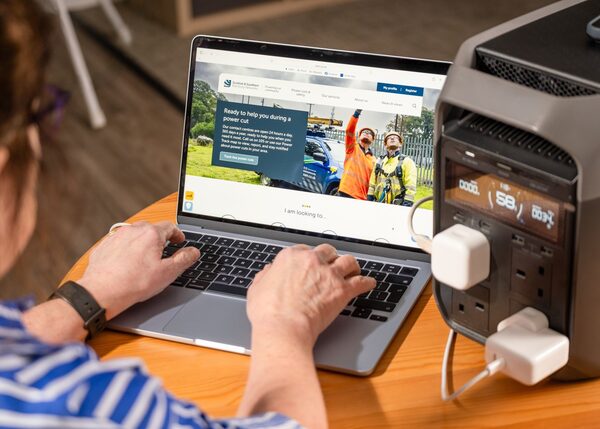
Joining is designed to be quick, and most routes take minutes. For Electricity North West's Extra Care register, customers can join through the online form or by giving the operator a call on 0800 195 41 416. The same source lists contact on 105 or 0800 195 41 41, or by email6. The 105 number works nationally for power cuts and is the simplest starting point for a household that does not know its operator.
In Northern Ireland, the route is different. NIE Networks takes power cut reports via nienetworks.co.uk, WhatsApp, Facebook or its helpline on 03457 643 64321. The Customer Care Register is the Northern Ireland equivalent of the Priority Services Register, and it is administered through the same operator.
For households that need to confirm who their operator is, the Energy Ombudsman points to a lookup: you can find out who your network provider is via the Energy Networks Association website22. That step matters because the register is held by the operator for the area, and a household that contacts the wrong one will not get its details recorded.
Other support schemes have their own application routes, and they are worth noting because they are often confused with the register. The Affordable Warmth Scheme in Northern Ireland is reached by calling NI Energy Advice Service on freephone 0800 111 4455 or completing the NI Energy Advice online form20. The Energy Bills Support Scheme Alternative Funding required a short online form via the government's GOV.UK pages, with a dedicated customer helpline for those without online access, for England, Scotland and Wales23. Where a household could not apply online, the number was 08081 753 28724.
A note on consent, because it comes up when a carer signs up on someone's behalf. Where a lasting power of attorney is in place, consent for a Boiler Upgrade Scheme application should be provided by the attorney, rather than by the property owner themselves, with the consent request sent to the attorney's email address25. That is guidance for a different scheme, but it states the principle that applies when one person acts for another in an energy application.
Sources25 cited
- Plan for a power cut, Ofgem, 2026
- Support schemes, Cheshire West and Chester Council, 2026
- Check if you can get payment for a power cut, Ofgem, 2026
- Check if you can get payment for a power cut, Ofgem, 2026
- Home battery packs, SSEN, 2026
- Our Extra Care register, Electricity North West, 2026
- Heating your home, Carmarthenshire County Council, 2026
- Energy bills support, House of Commons Library, 2026
- Social price support, Energy and Climate Change Committee, 2011
- The Warm Home Discount (Scotland) Regulations 2026, legislation.gov.uk, 2026
- Get help with your energy bills, Ofgem, 2026
- Complain about your energy supplier or network operator, Ofgem, 2026
- Consumer protection rights, GOV.UK, 2026
- Getting help if you can't afford your energy bills, Ofgem, 2026
- Help with household costs, Isle of Anglesey County Council, 2026
- Grants and funding, Tameside Council, 2026
- The Warm Home Discount Scheme if you live in Scotland, GOV.UK, 2026
- Winter Wellbeing, Cornwall Council, 2026
- Energy saving grants in your area, nidirect, 2026
- Stay warm at winter, Belfast City Council, 2026
- Help during a power cut, NIE Networks, 2026
- Network operators, Energy Ombudsman, 2026
- Energy Bills Support Scheme Alternative Funding, Carmarthenshire County Council, 2023
- Adapting historic homes for energy efficiency, GOV.UK, 2024
- British Energy Security Strategy, House of Commons Library, 2022
 Vulnerable Households EnergyIf someone in your home relies on powered medical equipment, or needs extra warmth because of a health condition, what help is available?
 Power Cuts in ScotlandWho do you call when the power goes out in Scotland, and how long should it take to come back on?
 Prepare a Home for a Power CutA household checklist for before, during and after an outage: what to keep charged and to hand, which appliances to switch off, how long food stays safe and what to do about medical equipment.
 Power Cuts in WalesWho do you call when the power goes out in Wales, and how long should it take to come back on?
 The Full Backup Power GuideHow long do UK power cuts usually last, and what can keep your fridge, heating or phone going until the power comes back?
 Network Operators and 105When the lights go out, who do you actually ring?