In this guide
A portable power station in the UK typically costs £400 to £3,000 or more, with the price set mainly by how much energy the battery holds and how much power it can deliver at once1. The smallest units sit below that band: BLUETTI's Elite 30 V2 was priced at £199 in September 20262. At the top, BLUETTI's EP500 home-scale unit was listed at £4,9993.
In the middle of the market, a unit of around 2kWh costs roughly £1,000 to £1,500. The BLUETTI AC200L, with 2,048Wh of capacity and 2,400W output, was priced at £1,399 in September 2026, down from £1,4994. Extras add to the bill: solar panels for off-grid recharging, expansion batteries for longer run time, and cables or adaptors. Recharging from the mains costs whatever a household pays per kWh on its tariff, plus conversion losses.
What the money does not buy is a way off the grid. A power station stores electricity; unless it is paired with solar panels, it stores electricity bought from a supplier. It keeps essential devices running through a cut, and it needs no electrician to use, but its capacity is small next to a household's daily use.
What a portable power station is and what the money buys
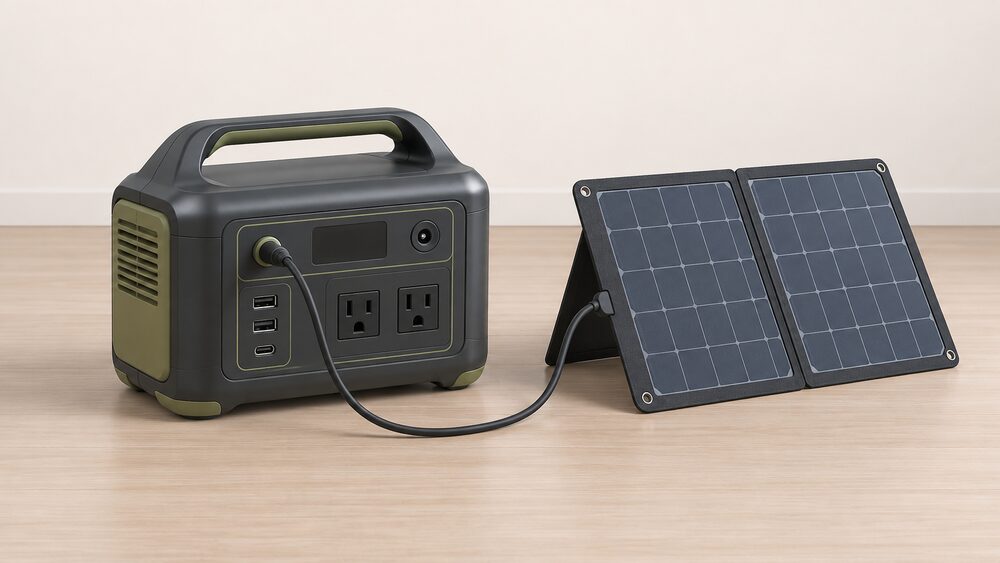
A portable power station is a sealed lithium battery with an inverter and sockets in one case. It charges from a wall socket, a car socket or solar panels, and supplies power through AC outlets, USB ports and DC outlets8. Current UK models use lithium batteries of two main chemistries, LiFePO4 (lithium iron phosphate) and NMC6; Anker SOLIX uses LiFePO4 across its range8. The difference between the two is covered in portable power station batteries.
The purchase price covers four things:
- Capacity (Wh): how much energy is stored, which sets how long appliances run.
- Output (W): how large an appliance, or how many at once, the inverter can power.
- Charging inputs: how fast the unit refills from the mains and how much solar it accepts.
- Protection and warranty: a battery management system and the maker's cover.
Jackery states its units carry a battery management system protecting against overcharging, over-discharging, overheating, overcurrent and short circuits9. Built-in protections of this kind are standard across the brands, so they are not in themselves what separates a £200 unit from a £2,000 one. Capacity and output are.
Small units at the bottom of the BLUETTI range illustrate the entry point: the Premium 30 V2 at £269 and the Elite 30 V2 at £219 in its green variant2, the AC70P at £56910 and the Elite 100 V2 at £4693. These are maker prices, including VAT, and they move with frequent promotions. How the hardware works in more detail is set out in portable power stations.
Typical UK cost: £400 to £3,000+, set by capacity

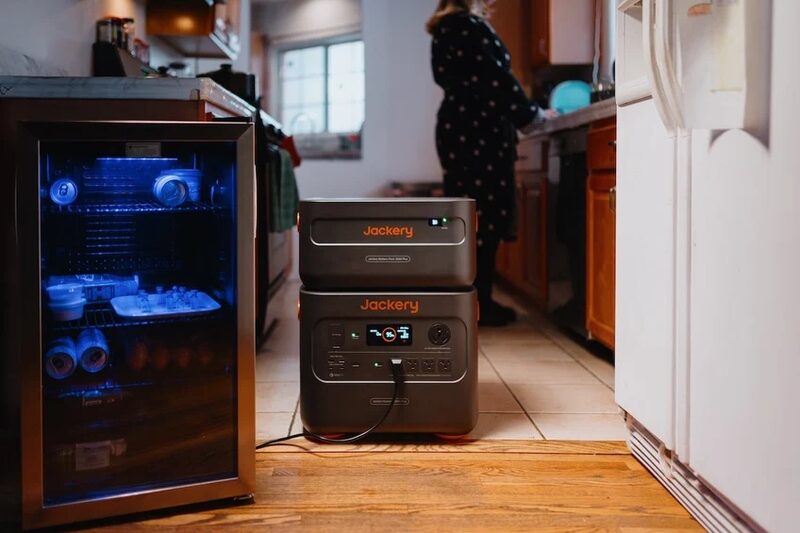
The £400 to £3,000+ band comes from a maker's UK cost guide, which also places solar generator bundles (a power station sold with solar panels) at £600 to £4,000 or more1. The wide spread reflects the range of sizes on sale, from lunchbox-sized units for phones and laptops to wheeled units that can run a fridge, a freezer and a kettle.
A rough picture of the bands, built from BLUETTI's UK prices on 19 September 2026:
| Band | Example models and prices | Typical use |
|---|---|---|
| Under £300 | AC2A £189, Elite 30 V2 £199, EB3A £219, AC2P £249, Premium 30 V2 £2693 | Phones, laptops, lights, router |
| £300 to £700 | AC50B £349, AC70 £419, Elite 100 V2 £469, AC70P £569, AC180 £599 | Small appliances, some short fridge backup |
| £700 to £1,500 | AC180P £799, Elite 200 V2 £999, Pioneer Na £1,099, AC200MAX £1,199, AC200L £1,399 | Fridge and freezer, several devices at once |
| £1,500 to £2,000 | AC240 £1,699, Elite 400 £1,799, AC240P £1,899 | Higher output, heavier loads |
| Over £3,000 | EP500Pro £3,499, EP500 £4,999 | Home-scale backup |
Prices for the smaller models come from BLUETTI's UK listings2, with the larger models from its premium and payment-plan listings10. Several of these models were shown as sold out on the maker's UK site on the same date, including the AC180P, AC200MAX, AC200P and AC24012, so a listed price is not the same as a unit available to buy.
The AC2P shows how quickly prices move: one BLUETTI listing gives £249 and another £189 for the same model on the same day3. Sale prices are common; BLUETTI's UK summer sale ran from 27 June to 1 July 2026 advertising up to 67% off. The comparison with other backup options is laid out in backup power costs compared.
What drives the price: capacity, output and chemistry
Capacity
Capacity is the largest driver. For fixed home batteries, lithium-ion storage was reported in 2022 as often costing around £1,000 per kWh, and perhaps £700 per kWh for larger batteries13. That figure is dated and applies to home storage rather than portable units, but the pattern holds: larger batteries cost less per kWh stored.
Cost per usable kWh
The capacity printed on a unit is not all usable at the socket. Anker SOLIX gives run time as capacity (Wh) multiplied by 0.8, divided by the appliance's wattage8, which treats roughly a fifth of the stored energy as lost in conversion to mains AC. Comparing cost per kWh between two units therefore means comparing like with like: stated capacity against price for each, knowing that usable energy at the AC sockets is lower on both.
The 2kWh class on BLUETTI's UK site gives a sense of the spread. The AC200L at 2,048Wh was £1,3994; the Elite 200 V2 at 2,073.6Wh was £99914; the AC200P at 2,000Wh was £999 on sale against a list price of £1,39911. Near-identical capacities sold at prices £400 apart, reflecting differences in output, charging speed, age of design and whether a promotion was running.
Output power
Output sets which appliances a unit can start and run. The AC200L delivers 2,400W continuously14; the Elite 200 V2 delivers 2,600W14. A kettle, microwave or electric heater needs a high-output unit even if the energy used is modest. More on matching output to appliances is in what size portable power station you need.
Chemistry
LiFePO4 dominates newer units because of its cycle life. BLUETTI also sells a sodium-ion model, the Pioneer Na, at £1,09912. Different chemistries trade weight, cold-weather behaviour and life, which feeds into price.
Entry-level units: what £150 to £500 buys
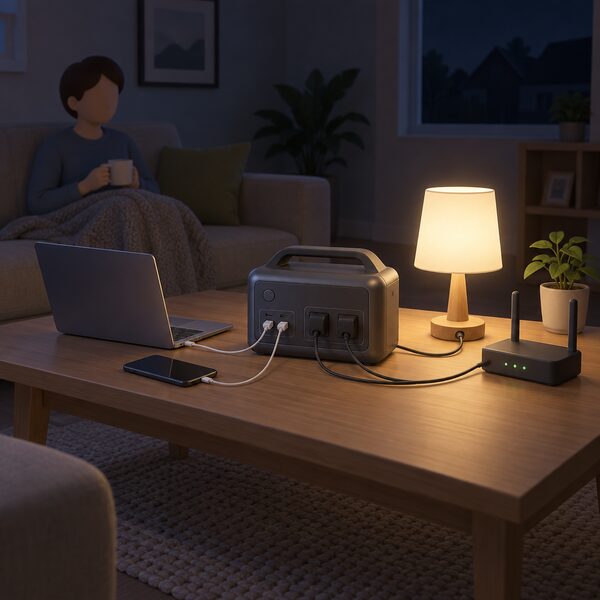
At the bottom of the market, £189 to £269 bought a BLUETTI AC2A, Elite 30 V2, EB3A, AC2P or Premium 30 V2 in September 20263. Recent discounts are visible in the listings: the Elite 30 V2 was £199 against an original £2392, the EB3A £219 against £239, and the AC70 £419 against £4992. The AC70's list price elsewhere on the maker's site was £49911.
Between £300 and £500 sit units such as the AC50B at £349 and the Elite 100 V2 at £4692.
What a unit in this band will do:
- Keep phones, tablets and laptops charged through a cut
- Run LED lighting and a broadband router, which matters where Wi-Fi during a power cut is the priority
- Power a CPAP-type device only where the maker permits it (see the warning below)
- Run low-wattage appliances for short periods
What it will not usually do is run a fridge for long. A maker's guidance describes a unit of around 1,000W output or above as usually more practical for fridge backup than a very small one1. Entry-level units suit flats and short cuts, where the aim is light and communications rather than keeping food cold; power cut food safety covers how long a closed fridge holds temperature without power.
Mid-range and large units: what £1,000 to £3,000 buys
The £1,000 to £3,000 band covers units of roughly 1.5 to 2kWh and above with outputs of about 2,000W or more. In BLUETTI's UK range this included the Elite 200 V2 at £999, the AC200MAX at £1,199 (list £1,599), the AC200L at £1,399, the AC240 at £1,699, the Elite 400 at £1,799 and the AC240P at £1,8994. The AC180P at £799 against a list price of £1,399 had 1,440Wh capacity and 1,800W output12.
These units run a fridge freezer, a microwave for short periods, a kettle and lighting, and many accept expansion batteries. BLUETTI states the AC200L supports compatible expansion batteries when longer run time is needed15. An expansion battery adds capacity without replacing the unit, but it is an additional cost, and BLUETTI publishes no UK price for its expansion batteries that can be given here.
Above £3,000, the EP500Pro was £3,49911 and the EP500 £4,9993. At that level, portable units overlap in price with fixed home batteries. The Energy Saving Trust gives home battery storage costs of £1,500 to £10,000 depending on type and size16, and a typical 4 to 10kWh installed domestic system is put at £2,500 to £10,00017. The trade-off is set out in home battery vs portable power station.
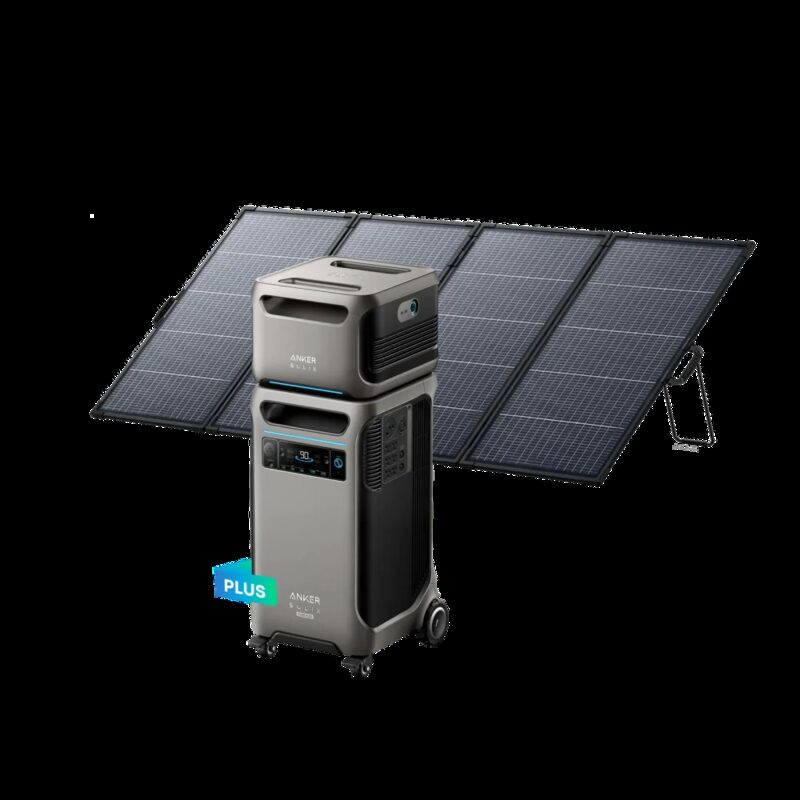
The solar generator bundle, a power station sold with matched panels, sits at £600 to £4,000 or more1. Bundles are usually priced below the sum of the parts, but the panels included are often small folding units rated for camping rather than sustained home use.
Worked example: the BLUETTI AC200L at 2,048Wh
The AC200L illustrates what a mid-range buyer gets and what they still depend on. The maker's specifications14:
| BLUETTI AC200L | Specification |
|---|---|
| Battery capacity | 2,048Wh |
| AC output (continuous) | 2,400W |
| AC input power | 2,400W max |
| Solar input | 1,200W max, 12V to 145V DC, 15A |
| Price, 19 September 2026 | £1,399 (was £1,499)4 |
| UK availability, same date | Shown as sold out on one maker listing12 |
BLUETTI also states a 20ms UPS function "helps selected equipment ride through short interruptions"15. That makes the unit usable as a buffer for a router or computer, but it is described for selected equipment only, and the distinctions between this and a dedicated UPS are covered in UPS vs portable power station.
Applying the Anker SOLIX rule of thumb8 to the stated capacity gives an idea of scale: 2,048Wh multiplied by 0.8 is the usable energy at the AC sockets, and that total is divided by the appliance's wattage. A 1,000W appliance running continuously would therefore run for well under two hours; a fridge, which cycles on and off, lasts much longer than its rating implies.
Two points about the listings. First, a BLUETTI sale page also lists an AC200L at 5,120Wh and 3,000W18, which does not match the 2,048Wh and 2,400W in the specifications and appears to describe a bundle with extra batteries; the two BLUETTI listings conflict, and the 2,048Wh figure is the one given in the product specification. Second, BLUETTI gives two different peak power figures for this model, which is why no surge figure is quoted here.
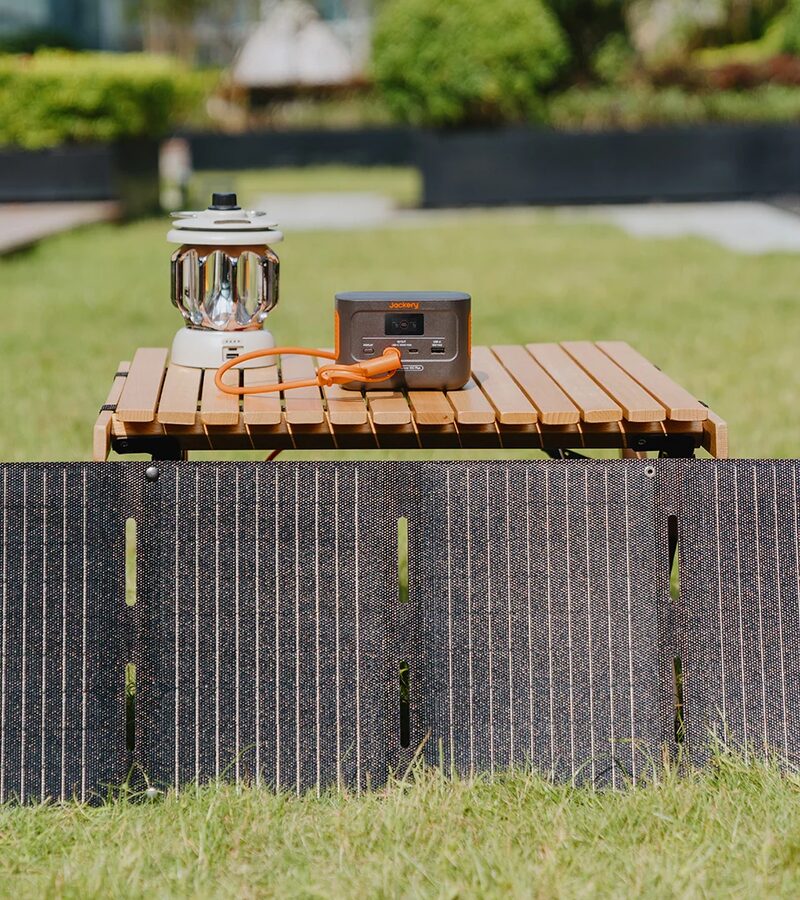
The unit's 1,200W solar input15 is what gives it an independent charging route, but reaching that rate needs panels sized to match, which is a separate cost. Charging a portable power station from solar panels covers panel sizing.
Running costs, lifespan and how long a unit lasts
Recharging from the mains
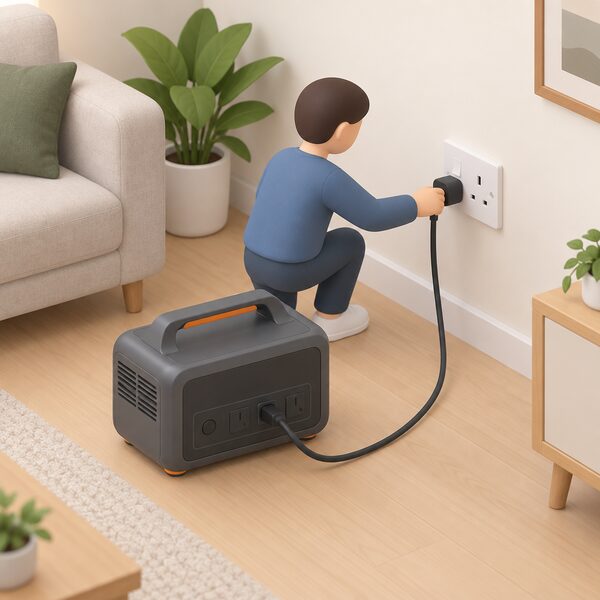
Recharging costs what the household's electricity tariff charges per kWh, and slightly more energy goes in than comes out because of charging losses. For reference, the Ofgem price cap unit rate for July 2026 was 26.11p per kWh19. The cost of a full recharge depends on the unit's size and the tariff, and households on time-of-use tariffs pay the rate for the hour they charge. There is no fuel to buy and no servicing schedule of the kind a petrol engine needs.
Standby drain and storage
Units lose charge slowly while stored. Jackery states its units can be left on standby for 6 to 12 months depending on capacity and battery health6. Anker SOLIX notes that leaving the AC and car socket buttons switched on causes no-load power consumption, and gives this storage routine8:
- Recharge to 100% after every use.
- Turn on Power Saving Mode and switch off all output buttons.
- Recharge to 100% every month.
Keeping a unit charged is what makes it useful in an unexpected cut; a flat unit gives no protection. See maintaining and testing backup power equipment.
Cycle life
Jackery states a 4,000-cycle lifespan, lasting over 10 years if used once every three days, approximately 120 cycles a year6. Another Jackery document gives 6,000+ charge cycles; the two disagree and neither is independently tested. Temperature matters: Jackery recommends charging between 0 and 45°C and discharging between minus 10 and 45°C6, so a unit kept in an unheated garage through a hard frost is outside its charging range.
Warranty
Warranty length is part of the cost of ownership. Jackery's terms9:
- Most Pro and Plus series: 3+2 years
- Standard series: 2+1 years
- Refurbished units: 6 months
Jackery states its extended terms apply only to purchases at jackery.com9. A warranty depends on the maker remaining in business to honour it, which is a dependence on the company as much as the product.
Power station or petrol generator: the fuller cost picture
Petrol generators are cheaper per watt of output at the point of purchase. Which? reports portable generators starting at around £160 and going up to £2,000 or more, and advises expecting to spend at least £200 on a petrol generator20. A maker's guide puts small petrol generators at £300 to £1,000 and larger ones at £1,000 to £2,5001.
| Option | Typical UK purchase cost |
|---|---|
| Portable power station | £400 to £3,000+1 |
| Solar generator bundle | £600 to £4,000+ |
| Small petrol generator | £300 to £1,000 |
| Larger petrol generator | £1,000 to £2,500 |
| Propane / LPG generator | £1,000 to £5,000+ |
| Standby / whole-home generator | £3,000 to £10,000+ for the unit |
All rows except the first are from the same maker guide1. The running cost pattern differs. Which? reports around £4.35 to fill a Hyundai P1 petrol generator and run the tank empty20, so a generator can keep running as long as fuel is available, while a power station stops when its battery is flat unless it has solar or mains to recharge from. Hiring is an option for rare use: Which? gives around £76 a day or £110 a week to hire a 1.6kVA portable generator20.
The costs a generator carries that a power station does not include fuel storage, engine servicing and safety measures. A petrol generator must run outdoors because of carbon monoxide; a battery unit produces no exhaust. Generator safety and storing fuel at home set out the rules. A full comparison is in portable power station vs generator.
Setup costs and accessories

A power station that powers appliances from its own sockets usually needs no electrician, because it does not alter household wiring7. That is a real saving against fixed storage, where installation of an energy storage unit can add £1,000 to £2,000 depending on the system and location21.
Accessories that commonly add cost:
- Solar panels. Plug-in solar panel devices meeting UK regulations cost from around £4505; these are grid-connected kits, and portable folding panels matched to a power station are priced separately by each maker.
- Expansion batteries. Offered for models such as the AC200L15, at extra cost.
- Charging cables and connectors. Anker SOLIX connects its smaller PowerHouse models to its panels through a connector and solar charging cable, and its larger ones through a solar charging cable alone8.
Jackery and Anker SOLIX state all their units have an MPPT solar charge controller6, so no separate controller is needed. Jackery notes most of its models cannot charge from car and solar at the same time, though simultaneous AC and solar charging is supported in most cases6.
Connecting a power station or generator to the house's fixed wiring is different from plugging appliances into it, and is covered in generator connection and transfer switches.
What owning one means for household energy independence
A portable power station gives a household control over a small, stored supply of electricity that it can use when the grid fails. That has value in cuts: network operators pay compensation when power is off for long periods, for example £100 if more than 5,000 homes are affected and power is off for more than 24 hours22, or £100 after 12 hours and £45 for every 12 hours after that where fewer than 5,000 homes are affected23. A power station bridges the hours before those thresholds are reached; details are in power cut compensation, with Northern Ireland's arrangements in power cut compensation in Northern Ireland.
The dependence that remains is substantial:
- The grid and a supplier. Without solar, every kWh in the battery was bought from the mains at the household's tariff.
- Capacity. A 2kWh unit is a fraction of a home's use. Fixed home batteries are typically 4 to 10kWh and cost £2,500 to £10,000 installed17.
- The maker. Warranty, spare parts, app support and replacement batteries depend on the company continuing to trade and sell in the UK. Several BLUETTI models were shown as sold out on its UK site in September 202612, and Jackery reported several models sold out on its US site through summer 2026.
- Imports. Units and cells are manufactured abroad, so price and availability follow global supply.
Adding solar panels changes the picture most, because the unit can then be refilled without the grid for as long as the sun allows. That is where the "solar generator" label comes from. Even then, output in a British winter is low, and a power station is a backup for essential loads rather than a route off the grid. The wider picture is set out in backup power and energy independence and across the backup power section.
Sources23 cited
- Guide to emergency generators, Jackery UK, 2026-06-03
- Power stations under 1kWh, BLUETTI UK, 2026-09-19
- Coupon products, BLUETTI UK, 2026-09-19
- Power now, pay later, BLUETTI UK, 2026-09-19
- Plug-in solar panels, Energy Saving Trust, 2026-09-17
- Jackery buying guide, Jackery UK, 2026-09-20
- Do you need an electrician for a solar battery?, Jackery UK, 2026-07-29
- Solar generators, Anker SOLIX, 2026-09-19
- Jackery buying guide, Jackery, 2026-09-19
- Premium series, BLUETTI UK, 2026-09-19
- Best sellers, BLUETTI UK, 2026-09-19
- Product collection, BLUETTI UK, 2026-09-19
- Store and save, Centre for Alternative Technology, 2022-10-27
- Elite 200 V2 and AC200L specifications, BLUETTI UK, 2026-09-19
- Best battery for solar panels, BLUETTI UK, 2026-08-31
- Battery storage, Energy Saving Trust, 2026-08-19
- Everything you need to know about battery storage, Plymouth Energy Community, 2026-09-20
- Sale listing, BLUETTI UK, 2026-09-19
- Is air conditioning worth it in the UK?, Uswitch, 2026
- How to buy the best generator, Which?, 2026-01-20
- Electrical energy storage systems, Flexi-Orb, 2025-04-22
- How to find out if there's a power cut, Which?, 2026-06-04
- Get compensation if you have a power cut, Citizens Advice, 2026-09-17
 Portable Power Station SizeHow big a portable power station does a home actually need, and how long will it keep things running in a power cut?
 Solar Panel CostsA typical UK home pays somewhere between four and eleven thousand pounds for solar panels fitted, with most landing in the middle.
 Home Battery CostA home battery usually costs between one and a half and ten thousand pounds fitted, depending on size.
 Portable Power StationsWhat can a portable power station actually keep going in a power cut, and for how long?
 How Much Does a Heat Pump CostA heat pump usually costs around eleven thousand pounds installed, though quotes vary a lot depending on your home.
 Solar Charging a Power StationCharging a portable power station from solar panels comes down to a few practical questions.