In this guide
Backup power for a flat, a rural home and an off-grid property is not one problem with one answer. The building decides almost everything: whether a unit can be sited outdoors, whether an engine can run without disturbing neighbours, whether there is a roof or garden for panels, and how long the network is likely to take to restore supply. A battery power station can be used indoors and emits no carbon monoxide, which makes it the only realistic option in a flat with no outdoor space1. A fuel generator cannot be run indoors at all, and its exhaust is the reason.
The scale of what a household can hold is bounded by the supply itself. Domestic properties have a standard single phase supply of up to 20kW, and anything above that needs an amp increase or a move to three phase3. That is the ceiling on whole-home backup, and it is far above what a portable unit delivers. Batteries, both domestic and grid-scale, store electricity for up to eight hours, and domestic battery storage has a lifetime of around 10 to 15 years4. A portable power station sits below all of that: useful for a defined set of loads, not a substitute for a wired supply.
What follows sets out what is practical in each home type, what a portable unit can and cannot run, the indoor safety position, the cost and running cost trade between battery and fuel, and the recharging routes available when the grid is down.
What backup power can realistically do in a flat, a rural home or an off-grid property
The three home types fail in different ways, and the backup that suits one is often impossible in another.
A flat has no outdoor space for an engine and usually no roof of its own. That rules out a petrol or diesel generator on safety grounds and rules out a fixed solar array on practical grounds. What remains is a battery unit kept indoors, charged from a wall socket while the grid is up, and a power bank for phones. Portable power banks hold enough to charge a mobile several times and are worth having to hand1. The dependence that remains is total: the flat still relies on the grid for recharging, on a supplier for that electricity, and on the building's communal systems, which the occupant does not control.
A rural home has the opposite problem. It has space for panels, an outbuilding for a generator and fuel storage, but it also has the longest restoration times and the greatest chance of being at the end of a line. Rural communities are the focus of local energy work built around rural hydropower and solar PV matched with domestic battery storage8. The dependence that remains is on the network to reach the property at all, and on fuel deliveries if a generator is the main backup.
An off-grid property has no network supply to fall back on, so every load is carried by the installed system. That makes the battery capacity, the inverter rating and the charging sources the whole of the design, with no grid to absorb a shortfall. Household-level innovation in home battery technology, vehicle-to-everything and solar can provide additional backup options during power outages9, but each of those is a supplement to a system sized for the worst week, not the average one.
Across all three, the honest position is that backup power buys time and covers defined loads. It does not make a home independent of the grid, a supplier, gas or imports unless the property is genuinely off-grid and sized for it.
Portable power stations: what they are and what they can run
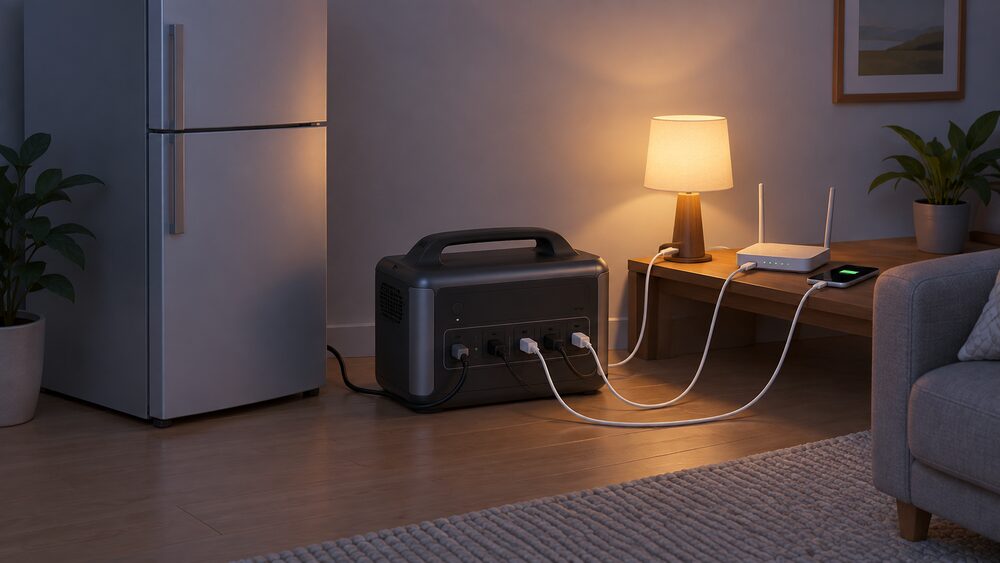
A portable power station is a battery, an inverter and a set of output sockets in one case. It stores direct current, converts it to mains voltage, and supplies whatever is plugged into it until the stored energy runs down. Because there is no combustion, it can be operated in a room, which is the property that makes it relevant to flats.
What it can run is a question of two separate ratings: continuous output and stored capacity. Small electronics, a router, a phone charger, a laptop and a light are well within the reach of modest units. A fridge is a heavier and longer load, and the food safety window gives the target: four to six hours in a fridge with the doors closed, and 15 to 24 hours in a freezer if it is not opened1. A unit sized to cover the fridge window is a different product from one sized to cover the freezer window.
Heating loads are the hardest. A boiler sized for a flat or small house runs at 24 to 27kW10, which is a measure of how much power thermal comfort demands and why a battery unit cannot carry space heating for long. A kettle or a heater draws a high continuous load, so it drains capacity quickly and needs an output rating that matches the appliance. Sizing should start from the devices that must run, not from the headline capacity figure.
For a rural or off-grid property, the same unit can serve as a bridge for a few circuits while a larger system carries the rest. It is not a substitute for a wired backup supply, and it does not remove the need for a generator or a home battery where long outages are normal.
Indoor safety: no fumes, no carbon monoxide, no ventilation needed
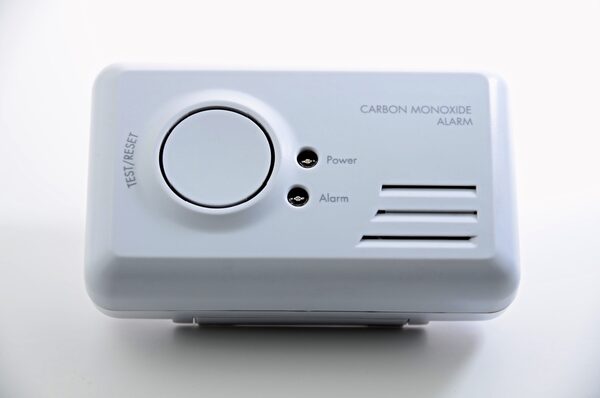
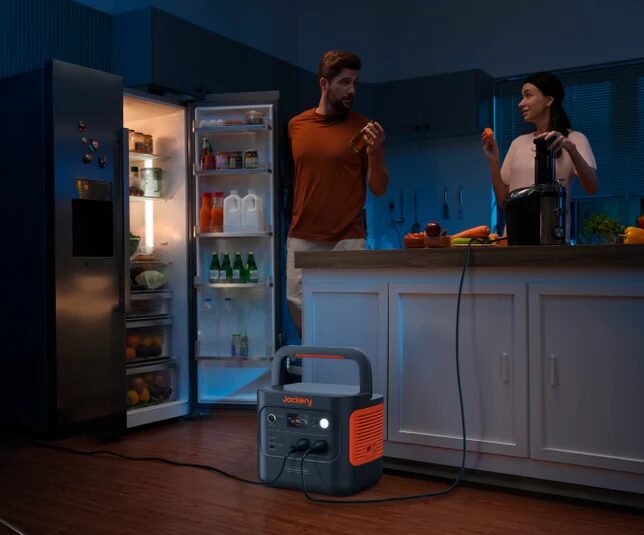
Carbon monoxide is produced by combustion appliances that burn fossil fuels such as oil, wood and coal11. A battery power station burns nothing, so it produces no carbon monoxide and needs no flue or ventilation. That is the whole of its indoor safety case, and it is why it is the only backup source that can be run in a flat during a blackout.
The risk sits entirely with combustion. Carbon monoxide incidents and fatalities occur in holiday homes, caravans and on board boats where faulty gas cookers, appliances or petrol-powered generators have led to poisoning12. The risk from portable devices is higher in caravans, boats and mobile homes13. Carbon monoxide poisoning can also occur when people bring gas and charcoal barbecues into tents and other small enclosed spaces to keep warm12. Every one of those cases involves something burning.
For a rural or off-grid property that also runs a fuel generator, the safety rules are separate and firm. A portable audible carbon monoxide alarm is worth having when going away, especially for tents, caravans, motorhomes, boats and holiday lets, and for camping and caravanning the alarm should be one designed for leisure accommodation and checked against the right British Standard14. If an alarm sounds, the response is to turn appliances off, open windows and get out of the house to breathe fresh air12.
Solar backup or fuel generator: upfront cost versus running cost
The two routes differ in where the money goes. A battery unit costs more to buy for a given output and less to run. A fuel generator costs less to buy and more to run, and it adds fuel storage, servicing and ventilation requirements.
On the battery side, the running cost is the price of the electricity used to charge it. Charging from your own electricity is significantly cheaper than using grid power and far cheaper than petrol or diesel over the same distance15. The grid price itself is set by the cap: for 1 October to 31 December 2025 the single-rate cap for North Wales and Mersey was £1,036.55 at 3,100 kWh annual consumption, with a nil consumption figure of £243.1516. Those are the standing and unit rates a household pays to recharge, and they are the benchmark against which any generator fuel cost is compared.
On the generator side, portable generator prices start at around £160 but can go up to £2,000 or more7. That is the purchase price only. Fuel, oil, servicing and safe storage sit on top, and the running cost per unit of electricity is higher than mains charging.
Solar changes the arithmetic for properties that can host panels. A plug-in solar system of around 800W has a typical upfront cost of around £500 and could save £110 on electricity bills each year17. A full rooftop array is a different scale: the average upfront cost is £6,100 according to the Energy Saving Trust18. Battery storage costs range from £1,500 to £10,000, with a 5kWh battery system around £4,60019. The Energy Saving Trust estimates battery storage can be up to £10,000 depending on size, with a typical 5kWh system around £4,6005.
The trade is therefore not close on running cost and not close on upfront cost either. A household choosing between them is choosing which cost it prefers to carry, and whether it has anywhere to put a generator and its fuel.
Choosing capacity and output ports for the devices you actually need
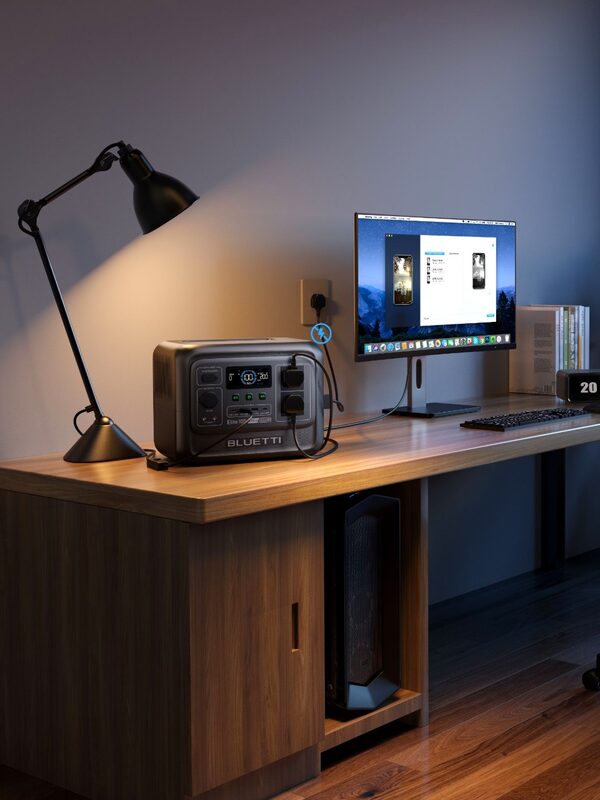
Sizing starts with a list, not a number. The devices that must run during an outage determine both the continuous output rating and the stored capacity needed to cover the expected duration.
Work through the loads in order of priority. Communications and lighting come first for most households: a router, phone chargers and a lamp. Refrigeration comes next, with the food safety windows setting the target duration. Heating and hot water come last, because they are the heaviest loads and the least suited to a portable unit.
| Load | What sets the requirement | Practical note |
|---|---|---|
| Phones, router, laptop | Low continuous output | A power bank covers phones alone1 |
| Fridge | Four to six hours with doors closed1 | Opening the door shortens the window |
| Freezer | 15 to 24 hours if unopened6 | Larger capacity needed than for a fridge |
| Kettle, heater | High continuous output | Drains capacity quickly; needs matching output rating |
| Medical equipment | Planned supply, not improvised | Check mains power backup for all critical equipment20 |
For anything wired into the house rather than plugged into a unit, the supply capacity matters. Domestic properties have a standard supply of up to 20kW on single phase, and a supply over 20kW may need an amp increase or a move from single phase to three phase3. That is the point at which a household is designing a whole-home backup system rather than buying a portable unit.
Not every home battery can serve this purpose either. Not all batteries can deliver electricity during a power cut21. In some cases storage devices can provide back-up supplies for use in a power cut, but this is not always possible and should be checked with the installer22. If the aim is protection against power cuts with a home battery, not all systems are suitable, and the installer should be asked whether the battery will work in an outage and for how long23.
Recharging options: wall socket, car adaptor or solar panels
A battery unit is only as useful as the routes available to refill it. There are three, and which are open depends on the property.
The wall socket is the default. It is the cheapest and fastest route while the grid is up, and it is the only route available to a flat with no outdoor space. Its limitation is obvious: it depends on the grid, so it is a pre-outage charging method rather than a during-outage one.
A car adaptor allows charging from a vehicle's 12V supply. That is a genuine option for a flat, because the car can be parked on the street or in a bay, and it does not require any outdoor space at the property. It is slow relative to mains charging and it draws on the vehicle's battery, so it is a top-up route rather than a full recharge.
Solar is the third route, and it is the one that changes the independence picture. Solar panels can charge an electric car, though solar power alone is unlikely to be relied on year round in the UK, especially in winter15. The same seasonal limit applies to charging a power station. Panels are used to charge up an on-site battery storage system24, and for a rural or off-grid property with a roof, garden or outbuilding, that is the arrangement that reduces reliance on both the grid and fuel deliveries.
"Yes, solar panels can charge an electric car. While you're unlikely to rely entirely on solar power year-round in the UK, especially in winter, you can use solar power to charge your car."
For a flat, the honest position is that solar recharging is not available, and the unit remains dependent on mains or vehicle charging. For a rural or off-grid property, solar is the route that most reduces dependence, but it is a summer-weighted input that needs a generator or a larger battery to cover winter.
What a portable power station costs in the UK: £400 to £3,000+
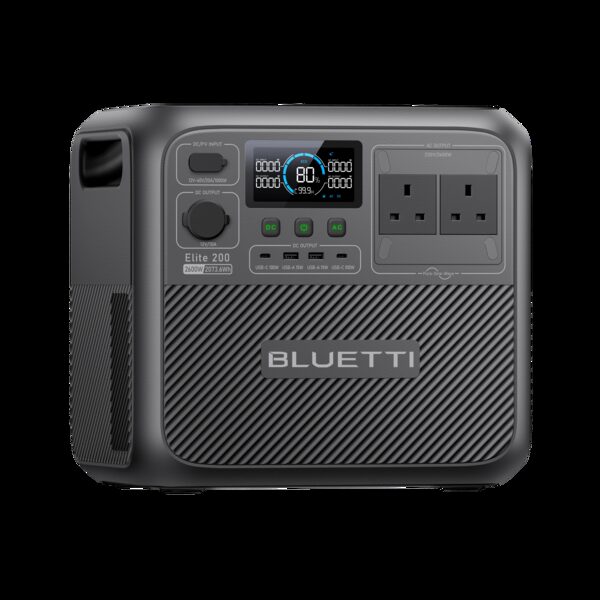
Portable power station prices are installer-quoted and vary with capacity and output rating, so no single published figure covers the range. The typical UK cost is £400 to £3,000+1, and high-quality portable solar generators generally cost between £300 and £2,500 depending on power output and brand2. Named models sit across that span: the Explorer 300D at £149.003, the EB3A at £219.004, the Elite 300 at £1,399 (was £1,599)5, the Fogstar 3kWh at £1,499.996, and the Apex 300 with B500K bundle at £3,898 (was £4,198)5. For comparison, portable generators start at around £160 but can go up to £2,000 or more7, and home battery storage ranges from £1,500 to £10,000, with a 5kWh battery system around £4,6008.
That places a portable unit between the two. It costs more than the cheapest generator and less than a wired home battery, and it delivers a fraction of what the home battery delivers. The comparison that matters is not price against price but capability against capability.
| Option | Published cost | What it covers |
|---|---|---|
| Portable generator | Around £160 to £2,000 or more7 | Plug-in loads; must run outdoors |
| Portable power station | Installer-quoted | Plug-in loads; can run indoors |
| Home battery storage | £1,500 to £10,000; 5kWh around £4,60019 | Wired circuits, if the system supports backup |
| Plug-in solar (800W) | Around £500 upfront17 | Generation, not storage |
| Rooftop solar | £6,100 average upfront18 | Generation, not storage |
VAT treatment matters at these figures. Solar panels and batteries that store power produced by the solar panels, forming a single supply, fall within the installation of energy-saving materials in residential accommodation25. That is the VAT position for a combined solar and battery installation, and it is a reason the installed cost of a wired system differs from the sum of its parts.
For a flat, the realistic spend is at the lower end, because the unit is small and there is no installation. For a rural or off-grid property, the portable unit is usually an addition to a larger system rather than the system itself, so its cost sits alongside the battery and generator figures rather than replacing them.
Where portable units fall short for whole-home backup
The limits are structural, not a matter of buying a bigger model.
The first is capacity. Batteries store electricity for up to eight hours, and the electricity they can deliver is much more limited than pumped storage4. A portable unit sits below even that, because it is sized to be carried rather than to carry a house.
The second is the supply itself. A domestic property has a standard supply of up to 20kW on single phase, and a supply over 20kW needs an amp increase or a three phase connection3. No portable unit approaches that, and connecting one to the fixed wiring is a different job with different rules.
The third is that not every storage system can deliver power during an outage at all. Not all batteries can deliver electricity during a power cut21, and not all home battery systems are suitable for power cuts23. A household that assumes a battery will cover an outage without checking may find it does not.
The fourth is the dependence that remains even when the unit works. It still needs recharging from the grid, a vehicle or panels. It still relies on a supplier for that electricity. It still relies on a manufacturer for spares, warranty and app support, and on a cloud service if the unit is controlled by an app. None of that is removed by owning the hardware.
Living with backup power: noise, displays and everyday features
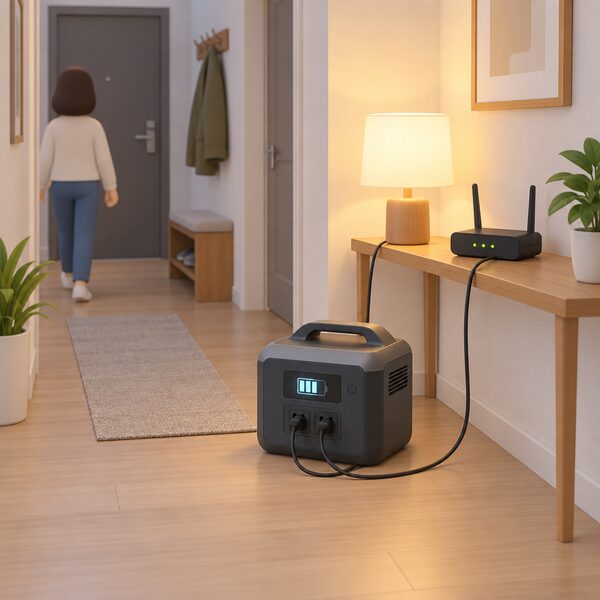
The everyday experience of a battery unit is quiet. There is no engine, so the only sound is a cooling fan under load. That is the practical difference from a generator, which runs an engine continuously while supplying load. Network operators ask customers to use less power than usual by switching off things they do not need during generator use2, which reflects both the load a generator carries and the disruption of running one.
For a flat, quiet operation is not a luxury. A running engine in a block would be a nuisance and a safety problem, and there is nowhere compliant to site it. A battery unit can sit in a hallway or kitchen and run a router, a lamp and a phone charger without anyone outside knowing.
Displays and controls vary by model, and the features that matter in practice are the ones a household uses during an outage: a clear state-of-charge readout, output sockets that match the appliances owned, and a charging input that matches the routes available. Where a unit is app-controlled, that control depends on a working network and a manufacturer's service, which is a dependence that survives the purchase.
For households with care needs, the checks are more specific. Care and assisted living providers are advised to check mains power backup for all critical equipment, including air beds, ceiling hoists and stairlifts20. Uninterruptible power supplies provide a few minutes of emergency battery backup if power fails20, which is enough to ride through a brief interruption and not enough to cover an outage. Stairlifts often have backup batteries, and the expected battery life should be checked with the manufacturer, along with access to a ground floor exit, a telephone and heating for around three hours6.
The pattern across all of it is the same. A portable unit covers a defined list of loads for a defined time, quietly and indoors. It does not cover heating, it does not cover the fixed wiring, and it does not remove the household's dependence on the grid, a supplier or a manufacturer. For a flat it is the only indoor option; for a rural or off-grid property it is one layer in a system that has to be sized for the worst week of the year.
Sources26 cited
- What to do in a power cut, Which?, 2026-06-04
- Why do you use generators, UK Power Networks, 2026-09-17
- Upgrade or reduce your supply, Electricity North West, 2026-09-19
- Statutory security of supply report 2025, GOV.UK, 2025-12-17
- Domestic battery storage, UK Parliament POST, 2026-06-25
- Emergency power cuts, NIE Networks, 2026-09-19
- How to buy the best generator, Which?, 2026-01-20
- Local energy solutions, British Hydropower Association, 2024-08-19
- Well-adapted energy system, Climate Change Committee, 2026-09-19
- Best boilers, Confused.com, 2025-11-03
- Carbon monoxide, Health and Safety Executive, 2026
- Gas safety and carbon monoxide, nidirect, 2025-11-24
- Carbon monoxide poisoning, nidirect, 2026-09-17
- Holiday carbon monoxide safety tips, Northern Gas Networks, 2026-07-24
- Can solar panels charge electric cars, The CPA, 2026-04-15
- Energy price cap levels, 1 October to 31 December 2025, Ofgem, 2025
- How plug-in solar can save UK homes £1,100 on energy bills, Carbon Brief, 2026-04-02
- Are solar panels worth it, Uswitch, 2026-09-16
- Battery storage, Energy Saving Trust, 2026-08-19
- Care and assisted living providers, Energy Networks Association, 2026-09-17
- Battery storage advice, Centre for Sustainable Energy, 2025-10
- Storage, Electricity North West, 2026-09-19
- Solar panel battery storage, Which?, 2026-05-14
- Solar panels, East Herts Council, 2026-09-17
- VAT energy saving materials and grant funded heating supplies, HM Revenue and Customs, 2026-09-17
- How does storage help us balance the grid, NESO, 2026-09-17
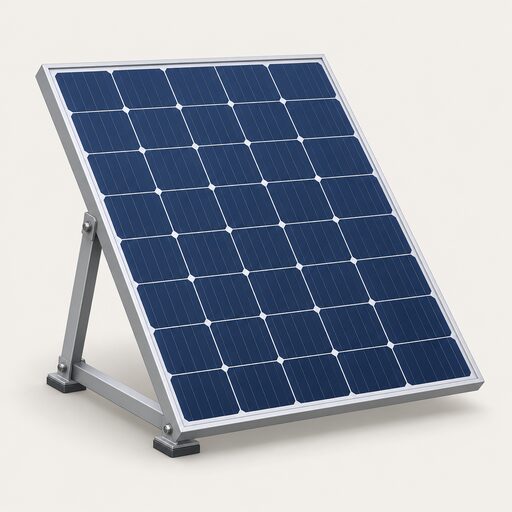 Batteries by Home TypeLooks at how house type, occupancy pattern, electrical supply and available space change what storage can achieve, from flats and terraces to rural and off-grid properties.
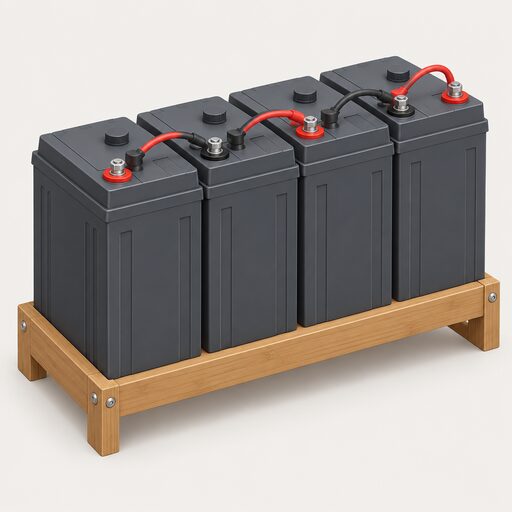 Off-Grid Battery SystemsHow many days of power do you need when there is no sun?
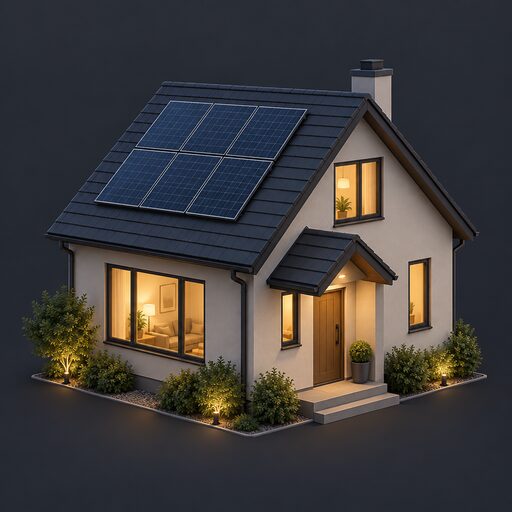 Backup Power and IndependenceA power cut leaves most homes completely dark, so how much backup do you actually need to keep the lights on?
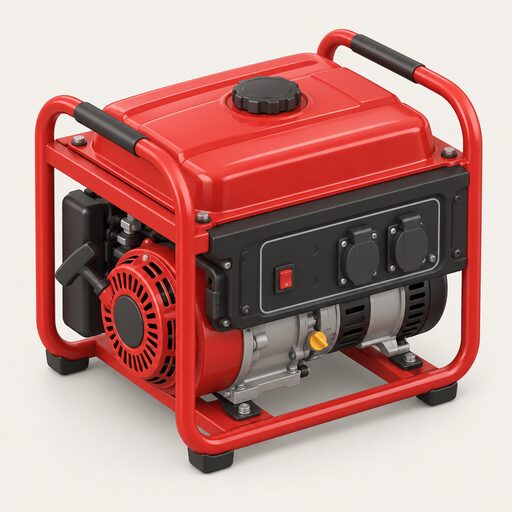 The Full Backup Power GuideHow long do UK power cuts usually last, and what can keep your fridge, heating or phone going until the power comes back?
 Technology by Home TypeWhich new energy technologies actually work in a flat, a terrace or a rural home?
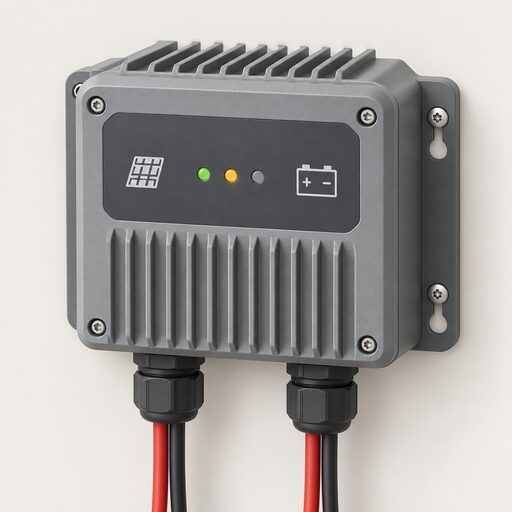 Off-Grid SolarOff-grid solar means your home, cabin or boat runs on its own power, with no connection to the grid.