
In this guide
Storing fuel at home for a generator is a question about three different substances with three different rulebooks. Petrol for a small portable set, diesel or heating oil for a larger one, and LPG in cylinders for a gas-fuelled set or a standby unit each sit under separate controls, and the controls are about fire separation, pollution and ventilation rather than about how much power the generator makes.
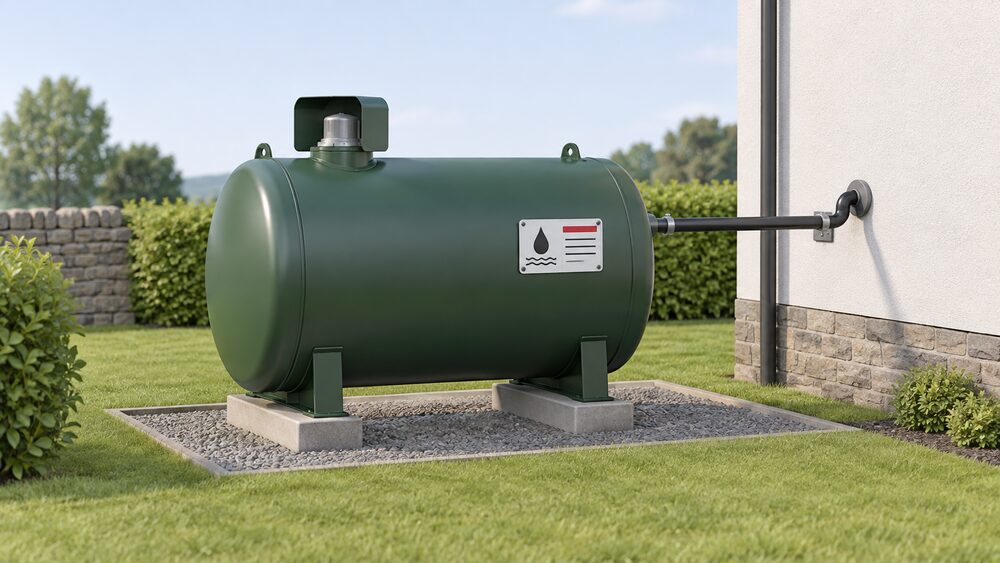
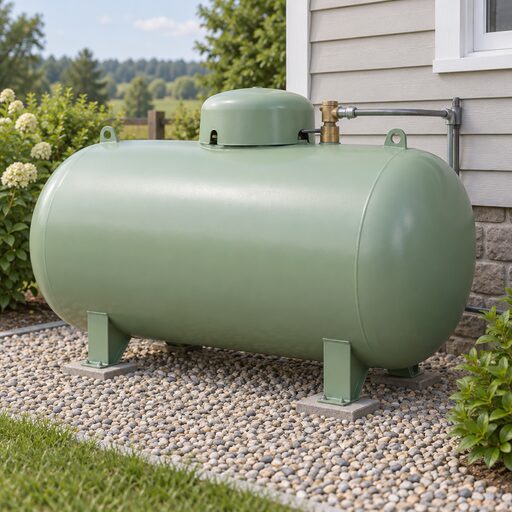
The building regulations draw the clearest line. Fixed oil storage tanks with capacities greater than 90 litres, and fixed LPG storage installations with capacities greater than 150 litres, both located outside the building, must be constructed and separated from buildings and from the boundary of the premises so as to reduce to a reasonable level the risk of the fuel igniting in the event of fire in adjacent buildings or premises1. Below those thresholds, and for fuel held in portable containers rather than a fixed installation, the building-regulation route does not apply in the same way.
What that means for a household is that the fuel store is a piece of the backup system in its own right, with its own siting, its own inspection routine and its own failure modes. A generator that runs perfectly is useless if the fuel behind it has been stored where a fire can reach it, or if the tank has been overfilled and the spill has gone into a drain.
What storing fuel for a generator involves
Off-gas-grid households use a range of other fuels to heat their homes, including heating oil, liquefied petroleum gas, solid fuels, mains electricity and microgeneration5. A generator adds a second fuel demand on top of whatever already heats the house, and the storage question is really about how that second demand is kept separate, ventilated and inspectable.
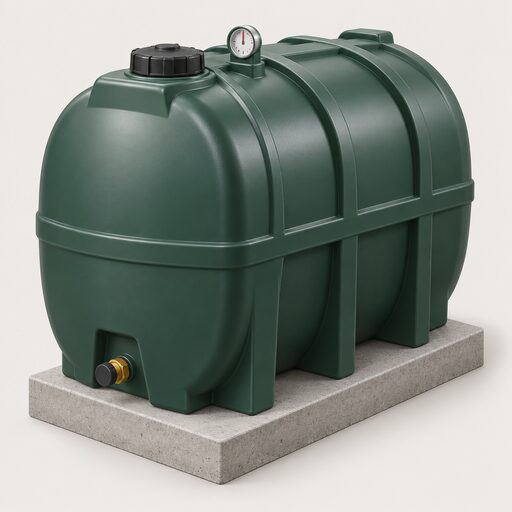
For liquid fuels the governing principle in the building regulations is separation. Requirement J6 covers liquid fuel storage systems and the pipes connecting them to combustion appliances, and requires them to be constructed and separated from buildings and the boundary of the premises so as to reduce to a reasonable level the risk of the fuel igniting in the event of fire in adjacent buildings or premises. It applies to fixed oil storage tanks with capacities greater than 90 litres and fixed LPG storage installations with capacities greater than 150 litres located outside the building1.
Requirement J7 adds the pollution side. Oil storage tanks and the pipes connecting them to combustion appliances must be constructed and protected to reduce to a reasonable level the risk of oil escaping and causing pollution, and must have a durable notice on how to respond to an oil escape. That requirement applies to fixed oil storage tanks with capacities of 3,500 litres or less located outside buildings and serving buildings used wholly or mainly as private dwellings, excluding buried systems1.
In Northern Ireland the practical guidance for a domestic oil tank is to supervise oil deliveries, never allow the tank to be overfilled and not to order more oil than can be safely stored6. That is a delivery-day discipline rather than a piece of equipment, and it is the point at which most domestic oil spills happen.
Petrol, diesel or LPG: which fuel suits which home
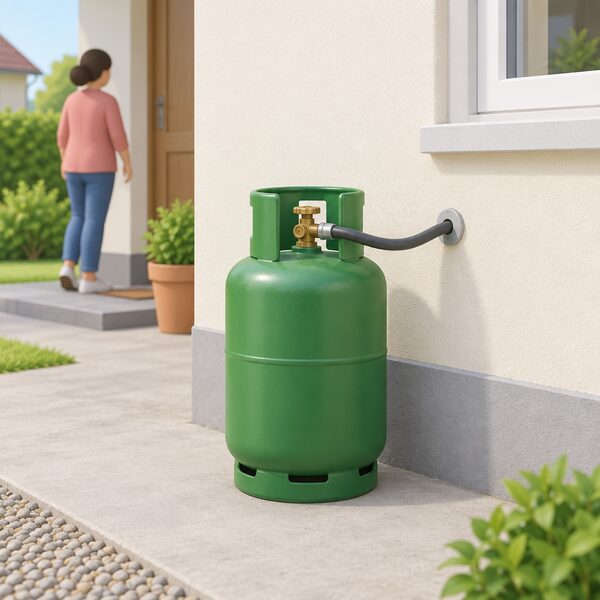
The three fuels divide by how the household already lives. LPG fuels all familiar domestic gas appliances, such as central heating boilers, gas fires, gas ranges, AGAs and cookers, so a home already running on LPG can add a gas-fuelled generator without introducing a new fuel type2. Around two million UK properties are off-grid and therefore depend on alternative fuel sources for heating and cooking2.
The national picture is small but not negligible. LPG accounts for 0.7% of UK homes and solid fuel for 0.8%3. Main fuel type of central heating in England and Wales is published by property type, tenure, property age and whether the dwelling is new or existing, which is the dataset to consult for a local read on how a street or a housing type heats itself7.
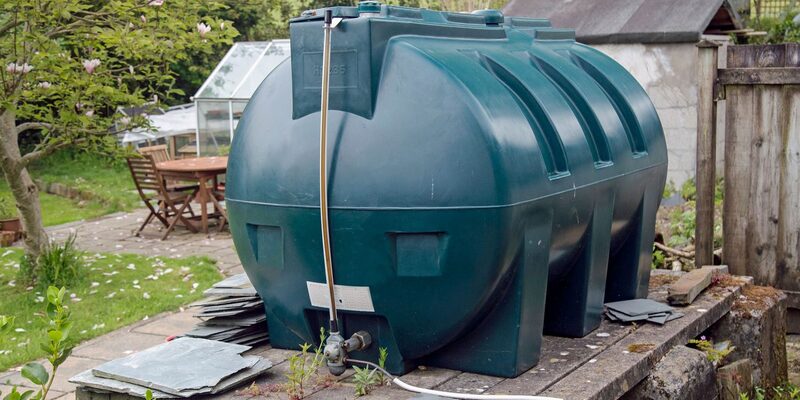
Diesel and heating oil suit larger, longer-running sets and rural properties where a tank already exists. Petrol suits small portable sets used intermittently, and it is the fuel with the shortest storage life and the tightest handling rules. LPG sits between them: a cylinder is a pressure vessel with a fixed connection, so it is not decanted or poured, but it is also a gas that can accumulate in a low space.
| Fuel | Typical generator use | Storage form | Key control |
|---|---|---|---|
| Petrol | Small portable sets, intermittent running | Portable containers | Flammable liquids handling, container condition |
| Diesel or heating oil | Larger sets, longer runs, rural homes | Fixed tank or drums | Building regs J6 and J7 above 90 litres1 |
| LPG | Gas-fuelled sets, homes already on LPG | Cylinders, fixed installation | Building regs J6 above 150 litres1 |
For a household weighing a generator against a battery, the fuel choice is also a dependence choice. A generator depends on a fuel supply chain, a supplier and a delivery; a battery depends on the grid to recharge and on a manufacturer for the hardware. The backup power overview sets the two side by side.
Storing petrol at home: the rules and the limits
Petrol is the fuel with the least forgiving storage profile, and the rules that touch it are split between building control, environmental control and the flammable liquids regime. The building regulations address fixed liquid fuel storage systems rather than portable petrol containers, so a can of petrol in a shed is not governed by Requirement J6 in the way a fixed tank is1.
Where a household burns solid fuel as well, the smoke control regime is the relevant local control. In a smoke control area only authorised fuels, or exempted furnaces and boilers, may be used, and chimney smoke is not allowed with only a few exceptions8. In Wales the rule is put more tightly still: only the types of fuel that the manufacturer says can be used in the appliance may be used9. Buying or receiving controlled, unauthorised solid fuels for burning in a smoke control area without an exempt appliance carries a fine of up to £1,00010.
The practical conditions that follow from the regulations are consistent:
- Fixed tanks above the thresholds go outside the building, separated from walls and boundaries1.
- Pipes connecting the tank to the appliance are part of the controlled system, not an accessory1.
- A durable notice explaining how to respond to an oil escape must be fixed to the installation1.
- Deliveries are supervised, the tank is not overfilled, and no more oil is ordered than can be safely stored6.
- Fuel is used only in the appliance the manufacturer says it is for9.
For a generator, the same logic applies at a smaller scale: the fuel is kept away from the ignition sources, the container is inspected, and the quantity held is the quantity the household can actually manage.
LPG cylinders and what Calor provides for emergencies
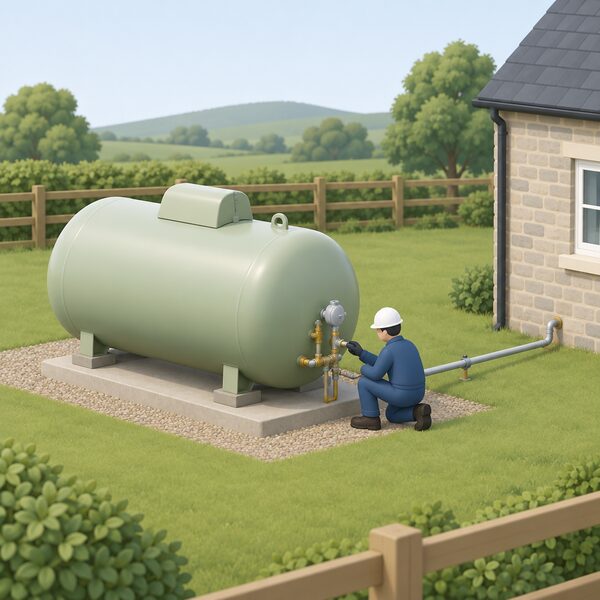
LPG is the fuel that most closely matches a home already running on gas, because it fuels all familiar domestic gas appliances, including central heating boilers, gas fires, gas ranges, AGAs and cookers2. Around two million UK properties are off-grid and depend on alternative fuel sources for heating and cooking, which is the population for whom an LPG cylinder is a normal household object rather than a specialist item2.
Calor operates an emergency service available 24 hours a day, 365 days a year11. Bulk LPG customers receive annual tank safety inspections12, and the company states that it is the largest supplier of LPG in the UK and therefore holds the most storage13. For gas generally, the National Gas emergency service is reached on 0800 111 999 at any time of day or night to report a suspected gas leak11. Gas Safe Register runs a freephone helpline on 0800 408 5500 for checking whether an engineer is registered, and a local registered engineer can be found on 0800 408 5577 or through the register's website12.
For household emergency support rather than a leak line, ECHO provides emergency help to fuel poor or vulnerable households who own and live in their homes14. That is a support scheme, not a supplier's fault line. Where a bulk LPG tank is customer-owned, appropriate formal emergency cover must be provided by the LPG supplier and is not available via the emergency services15.
Carbon monoxide is the risk that travels with any fuel-burning appliance, including a petrol generator. Incidents and fatalities because of CO can also occur in holiday homes, caravans and on board boats where faulty gas cookers, appliances or petrol-powered generators have led to carbon monoxide poisoning16. Carbon monoxide poisoning can also occur when people bring gas and charcoal barbecues into tents and other small enclosed spaces to try to keep warm16. In Wales, the Fitness for Human Habitation Regulations require a landlord to ensure that a carbon monoxide alarm is present in any room which has a gas, oil or solid fuel burning appliance installed17.
Running costs: cheap to buy, expensive to run
The running cost of a generator is the price of the fuel it burns, and the cost figures sit mostly on the electric heating side of the comparison. Heat pumps currently have similar running costs to gas boilers18. Heat pumps cost around £800 to £1,050 a year to run, making them one of the cheapest electric heating options19. A heat battery costs around £1,770 a year for an average home on Economy 7 or an off-peak tariff, panel heaters around £1,080 a year for a flat, and night storage heaters £912 a year for a flat depending on the type of heater19.
Those figures matter to a generator household because they set the baseline the generator is being compared against. A generator that runs a few hours during an outage is not competing with a heat pump's annual running cost; it is competing with the cost of doing without. Where a generator runs for long periods, the fuel bill becomes the dominant cost of ownership, and the efficiency of the set matters more than its purchase price.
The performance gap is the other half of the picture. For a typical fuel poor home, the gap between modelled and actual heat pump performance is equivalent to several hundred pounds a year in running costs20. The same caution applies to any fuel-burning appliance: the nameplate figure and the metered figure are not the same thing.
Fuel prices themselves move sharply. The average price of home heating oil in the UK increased by over 100%, from approximately 60 pence per litre to over 120 pence per litre, between the end of February and mid-March 202621. A household storing oil for a generator is exposed to that movement directly, and a tank filled at one price is a hedge against a later one.
For comparison, battery storage with solar increases annual savings from about £150 to £450 a year, and battery storage costs can be up to £10,000 depending on size, with a typical 5kWh system around £4,6004. Drivers who can charge at home could save up to £750 a year compared with a petrol car22. The generator fuel and running costs page works through the fuel side in more detail.
Fire risk and how incidents are recorded
Fire and rescue services complete the Home Office's online Incident Recording System for every incident they attend23. That is the official record behind published fire statistics, and it is how a generator, fuel or battery fire would enter the national data. No separate count of generator fires in the UK is given, so no figure for them can be quoted.
The wider fire picture is one of rising heat and rising hazard. Hotter heatwaves could see 92% of existing homes overheat by mid-century, creating dangerous conditions for vulnerable people24. In a 4oC scenario all UK homes will overheat25. Private rented and owner occupied dwellings were equally likely to contain hazards, at 9 to 10%26. Home boilers that are installed incorrectly are given as an example of exposure risk27.
Lithium-ion batteries are the other fire source in a backup setup, and the official guidance is blunt: each of these items has the potential to cause a serious fire in your home28. That applies to the battery in a portable power station or a power bank as much as to a phone. Fire detection standards are the control: British Standard BS 5839-6 covers the planning, design, installation, commissioning and maintenance of fire detection and fire alarm systems in domestic premises29.
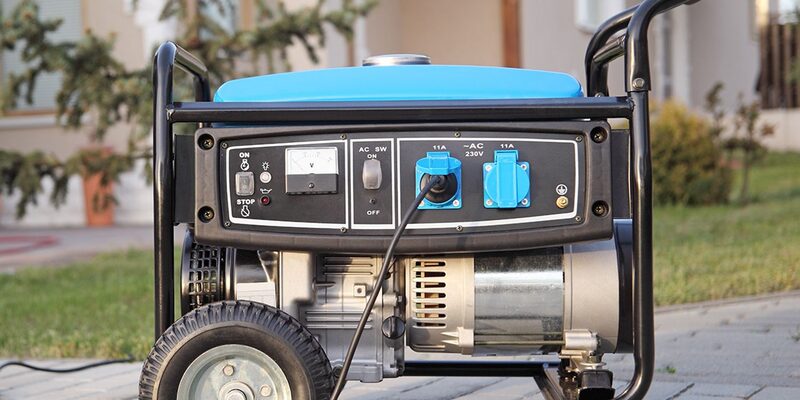
Electrocution risks from generators and connections
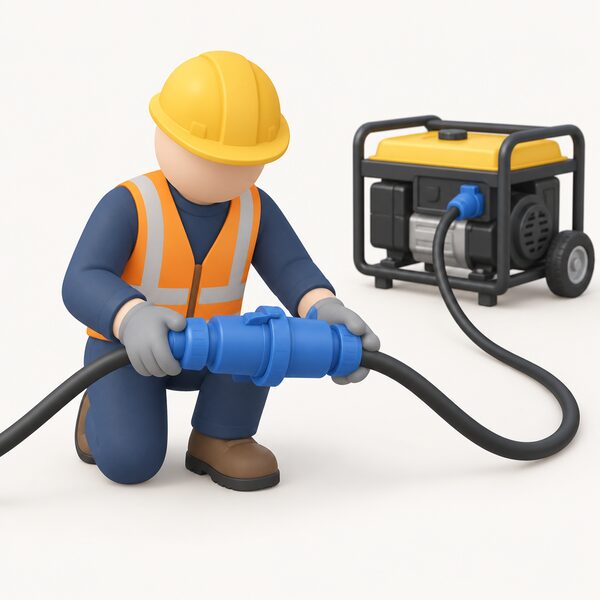
The electrical risk from a generator is concentrated at the connection, not at the engine. A generator that is plugged into a house circuit without a proper changeover arrangement can energise wiring that a network operator's staff believe is dead, and the connection itself is where reversed polarity and poor terminations cause shocks and overheating.
The clearest electrical safety evidence is a recall. The Diall 16A Blue Site Connector and Blue Site Socket was recalled from end users on 15 September 2026 because reversed live and neutral connection markings create risks of electric shock, overheating and fire30. A recall notice of that kind is a statement that the product should be withdrawn from use, and it is the reason connector and socket condition matters as much as cable size.
The rules on how a generator may be connected to a house supply, and who may do it, are set out on the generator connection and transfer switches page. The safety side, including earthing and carbon monoxide, is covered on generator safety.
Product recalls and why they matter for fuel and generator kit
Recalls are the point at which a household finds out that a product it already owns is unsafe. The 2Pcs 90V-250V Electricity Saving Box Power Saving Device Smart Energy Saver UK was subject to a recall of the product from end users, with the authority requiring the recall31. The SavePower Universal Standby Saver was recalled for all units after reports of units catching fire during use32.
The pattern across these notices is that the failure mode is usually thermal or electrical rather than mechanical, and that the product is often a low-cost accessory rather than a major appliance. A generator household accumulates exactly that kind of accessory: extension leads, connectors, chargers, standby savers and power banks.
The UK's exposure to fuel and energy prices is the backdrop to all of it. The UK has been strongly affected by the energy crisis due to its dependence on natural gas for heating, electricity generation and industry33. That dependence is what a stored fuel supply is meant to soften, and it is also why the storage rules are written around fire separation rather than convenience.
For a household, the recall routine is simple and worth building into the maintenance calendar: check the product safety alerts and recall notices for anything in the backup kit, and check the lithium battery safety and recalls page for the battery side. The backup power maintenance and testing page covers the wider inspection routine.
Sources33 cited
- Building Regulations Guidance Part J: Heat Producing Appliances, Welsh Government, 2026-09-17
- New to LPG, Liquid Gas UK, 2026-09-20
- Decarbonisation of heat, Energy Systems Catapult, 2025-06-27
- Energy storage research briefing, Parliamentary Office of Science and Technology
- Off-gas grid households, House of Commons Library, 2026-09-17
- Check your oil tank, nidirect, 2026-09-17
- Main fuel type or method of heating used in central heating, England and Wales, Office for National Statistics, 2025-10-28
- Preventing air pollution, GOV.UK, 2026-09-20
- Smoke control guidance: local authorities FAQs, Welsh Government, 2025-07-30
- Smoke control area guidance: homes and businesses FAQs, Welsh Government, 2025-07-30
- Gas leaks and safety, Uswitch, 2026-06-01
- Gas Safe Register: owner occupier FAQs, Health and Safety Executive, 2026
- Gas safety FAQs, Health and Safety Executive, 2026
- Getting help with your energy bills, Birmingham City Council, 2026-06-24
- Under your feet, Cadent Gas, 2026-09-20
- Gas safety and carbon monoxide, nidirect, 2025-11-24
- Fitness for Human Habitation guidance for landlords, Welsh Government, 2022-01-13
- Heat pumps and running costs, Parliamentary Office of Science and Technology, 2026-09-19
- Electric heating advice, Centre for Sustainable Energy, 2026-06
- Heat pump transition report, Department for Energy Security and Net Zero, 2026-05
- Home heating oil prices, House of Commons Library, 2026
- EVs: the facts, Society of Motor Manufacturers and Traders, 2025-09-22
- Number of fires in England with solar panel or photovoltaic panel mentioned, Home Office, 2023-10-26
- Progress in reducing emissions: 2026 report to Parliament, Climate Change Committee, 2026-06-24
- Energy in buildings and industry, Department for Energy Security and Net Zero, 2025-06
- English Housing Survey 2024 to 2025: headline findings, Ministry of Housing, Communities and Local Government, 2024
- Carbon monoxide: general information, UK Health Security Agency, 2022-05-24
- Lithium-ion batteries, North Wales Fire and Rescue Service, 2026
- Domestic fire detection and alarm systems, legislation.gov.uk, 2024-05-30
- Product recall: Diall 16A Blue Site Connector and Blue Site Socket, Office for Product Safety and Standards, 2026-09-15
- Product safety report: 2Pcs 90V-250V Electricity Saving Box, Office for Product Safety and Standards, 2022-04-28
- SavePower Universal Standby Saver recall, Electrical Safety First
- Climate policy that cuts costs, Climate Change Committee, 2026-09-19
 Generator Fuel and Running CostsPetrol, diesel, LPG or HVO: which is cheapest to run a whole-house generator, and how much does it really cost each day?
 LPG and Heating Oil SuppliersWho owns the tank in your garden, and can you switch supplier if they do?
 Cylinders and ControlsHow much of the sun's heat can your home actually keep?
 Domestic Oil TanksWhere can you legally put a heating oil tank at home, and how close can it sit to your house, a door or a fence?
 Replacing a Gas or Oil BoilerSwapping a gas, oil or LPG boiler for a heat pump changes how your home is heated and how much it costs.
 Portable Generators for HomesWhat can a portable generator actually run in a power cut, and for how long?