
In this answer
Short answer
A heat pump heats hot water less hot than a boiler does, so it relies on a periodic high-temperature clean to keep the stored water safe. Most heat pumps heat the hot water cylinder to 50 to 55°C for everyday use, because that is where they run most efficiently, and then a sterilisation cycle raises the temperature to 60°C or above, typically about once a week1. NIBE describes its own systems doing the same thing automatically: the heat pump increases the cylinder temperature to 60 to 65°C, usually once a week, to burn away any legionella bacteria2.
The reason is legionella, the bacterium that causes Legionnaires' disease. It multiplies in warm water left standing in a cylinder, which is exactly what a heat pump holds between cleans, and the weekly cycle is the standard countermeasure, built into the system rather than an optional extra3.
The temperature involved: 60 to 65°C for about an hour a week
The figures are consistent across official and independent guidance. If a heating system generates domestic hot water via a cylinder, official Scottish guidance says it will have to operate at up to 65°C to prevent legionella5. The Centre for Alternative Technology puts it more simply: the hot water cylinder should be heated up to 60°C, perhaps once a week, to kill off possible legionella6. Plymouth Energy Community describes the same arrangement, with the heat pump automatically heating the tank to 60°C once a week7.
Good Energy, describing systems it installs, gives the most specific version: a weekly legionella cycle in which the hot water cylinder is heated to 60°C for an hour to keep the tank free from bacteria3. Energy Saving Trust likewise notes that a hot water system will include a sterilisation cycle that periodically heats the cylinder to above 60°C to prevent bacteria growth8.
Two points follow for a household. First, the high temperature is periodic, not constant: the cylinder spends most of its life at 50 to 55°C, and only reaches 60 to 65°C during the clean1. Second, 60°C is genuinely hot. The plumbing industry body CIPHE states that water at 60°C or over kills bacteria such as legionella, and that water at that temperature can also scald9.
How the cycle works: heat, then circulate the water
The cycle does two things. It raises the water heater temperature, and it circulates the hot water throughout the system, so that the hot water reaches the pipework connected to the cylinder rather than sitting still10. That circulation matters because legionella risk comes from warm water standing in place, and the cycle is designed to sweep the whole stored volume and its connected pipework, not just the middle of the tank10.
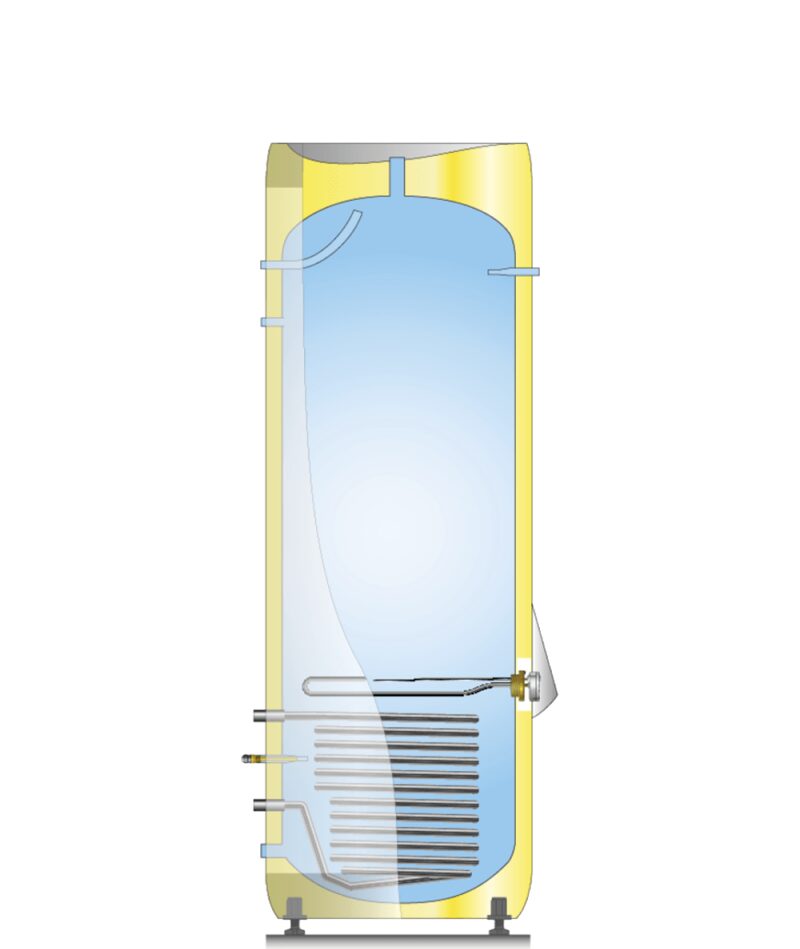
The heat itself comes from the heat pump's normal process. Most heat pumps are connected to a wet system: they heat water, which is then circulated through radiators or, in the case of hot water, through a coil inside the cylinder11. Raising the cylinder from 50 to 55°C up to 60 to 65°C is simply the heat pump working at the top of its hot water range, sometimes with an immersion heater helping it reach the last few degrees.
How often the cycle runs, and what it does to your hot water
Once a week is the standard frequency. NIBE says usually once a week2, Good Energy says weekly3, and Plymouth Energy Community says once a week7. Maker guidance on heat pump controls recommends scheduling the high-temperature legionella boost weekly in a favourable window, rather than doing it daily12. Daily boosts would cost more and gain little, since the cycle only needs to run often enough to stop bacteria taking hold in the stored water10.
The effect on the household is small but real. During the cycle the cylinder is hotter than usual, and in at least one documented UK development the system runs the legionella clean periodically with no heat sent to the radiators while it happens13. Because newer cylinders can hold hot water for up to 48 hours4, a cycle timed for the middle of the night or another low-use period leaves plenty of hot water for the morning.
The electricity cost is the other practical question. A heat pump uses roughly the same amount of electricity every hour of the day when it is set up to deliver steady warmth14, so the cycle is not a spike in the way an electric shower is; it is simply an hour or so of harder work. The efficiency loss is real, because heat pumps are less efficient producing 60 to 65°C water than 50 to 55°C water1, but it is confined to that weekly window.
Legionella cycles in UK heat pump systems
The cycle is built into the products sold here, usually switched on by default.
- NIBE: the heat pump automatically increases the hot water temperature to 60 to 65°C, usually once a week, to burn away legionella bacteria2. NIBE heat pumps require annual services, at which the settings can be checked15.
- Mitsubishi Electric Ecodan: the Ecodan cylinder automatically defaults to Legionella Protection Mode, raising the water temperature in the tank at regular intervals16.
- Grant Aerona: the Aerona Smart Controller stores applied settings, including demand schedules and legionella protection, which can be saved and restored17.
- Ideal Heating: the Link Cellular for Heat Pumps control includes the ability to schedule the anti-legionella cycle18.
- Good Energy installations: heat pump systems installed by Good Energy include a weekly legionella cycle heating the cylinder to 60°C for an hour3.
Good Energy also gives the clearest cost guidance: set the cycle to run during off-peak hours, at a time when little hot water will be used, to make it cost-effective3. On a time-of-use tariff, that timing is what turns the cycle from a peak-price expense into a cheap one.
Checking your cylinder's settings, and what you can change
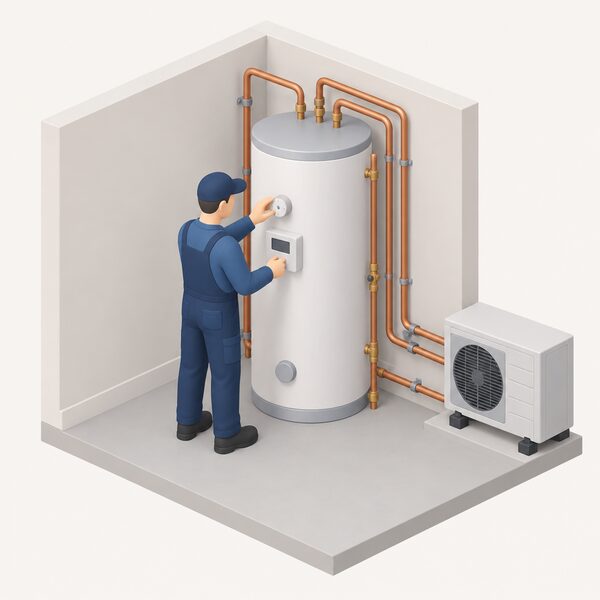
The settings are not purely a householder matter. Which? guidance is that if you have a hot water cylinder that stores water, the settings need to be set by a boiler engineer, and they need to be kept hot enough to avoid the build-up of bacteria in the tank19. Age UK makes the same point from the safety side: the cylinder thermostat should not be set too low, because a tank that drops below a safe temperature can allow bacteria to grow20.
What a householder can sensibly change is the schedule, not the temperature. The recommended pattern is a weekly boost in a favourable window12, and the two things worth checking are when the cycle runs and whether that time is on your cheapest electricity rate. The official Scottish heat pump guide's completion checklist expects the installer to have demonstrated the system's functionality at handover, including that controls operate properly21, so asking for a walkthrough of the legionella schedule is a fair request at that stage or at the annual service.
For homes without a cylinder the question does not arise in the same way. Heat pumps do not provide hot water instantly in the way combi boilers do, so a cylinder is normally needed22, and replacing a combi boiler with a heat pump will probably mean installing a hot water tank23. For everything else about stored hot water, see hot water cylinders for heat pumps and heat pump controls.
Sources23 sources
- Heat pump myths, Energy Saving Trust green heat toolkit, Energy Saving Trust, 2025-09-02
- Heat pump efficiency, NIBE, NIBE, 2026-09-17
- Heat pump running costs and tariffs, Good Energy, Good Energy, 2026-04-30
- Hot water guide, Uswitch, Uswitch, 2025-01-31
- Defining the project, heat pump guide, Local Energy Scotland, Local Energy Scotland, 2026-09-20
- Heat pumps, Centre for Alternative Technology, Centre for Alternative Technology, 2025-06-27
- How do you use an air source heat pump, Plymouth Energy Community, Plymouth Energy Community, 2026-09-20
- Heat pump questions answered, Energy Saving Trust, Energy Saving Trust, 2026-05-27
- Burns and scalds, CIPHE, CIPHE, 2026-09-17
- Homely and legionella protection cycles, Homely, Homely, 2026
- Heat pumps, Plymouth Energy Community, Plymouth Energy Community, 2026-09-20
- Common heat pump mistakes and how to prevent them, Homey, Homey, 2026-09-20
- Highfields development case study, Future Homes, Future Homes, 2024-08-22
- Time of use tariffs explained, Which?, Which?, 2026-04-23
- Upgrading your home can help tackle climate change, NIBE, NIBE, 2026-09-17
- Ecodan help and support, Mitsubishi Electric, Mitsubishi Electric, 2026-09-17
- Saving and restoring Aerona Smart Controller default settings, Grant UK, Grant UK, 2026-09-17
- IHD Link Cellular for Heat Pumps spec sheet, Ideal Heating, Ideal Heating, 2026-09-17
- Make your home more energy efficient in one weekend, Which?, Which?, 2026-08-28
- How to use your heating controls, Age UK, Age UK, 2026-03-23
- Project completion, heat pump guide, Local Energy Scotland, Local Energy Scotland, 2026-09-20
- Air and ground source heat pumps, Croydon Council, Croydon Council, 2026-09-17
- An introduction to heat pumps, Which?, Which?, 2025-09-22