

In this answer
Short answer
The Boiler Upgrade Scheme (BUS) pays £7,500 off the cost and installation of an air source heat pump or a ground source heat pump, and £9,000 for air-to-water or ground source heat pumps in eligible off-gas grid properties1. The grant is not paid to the household. It is applied upfront as a discount to the installation, and the installer receives it3.
That means the net cost of a job is the installer's quoted price minus the grant, and nothing else. The grant does not cover the whole installation: Nu-Heat states that even where a household is eligible, the scheme will not cover the entire cost, so some money still has to go in4. Which? makes the same point from the consumer side, noting that even with a BUS grant the initial cost of installing a heat pump can be expensive5.
The uplifted £9,000 applies from 21 July 2026 to eligible off-gas grid properties2. Homes with a live voucher applied for before that date can only claim £7,5006.
What the grant covers: £7,500, or £9,000 off-gas grid
The scheme pays a fixed sum against the installation, not a percentage of the invoice. Government scheme rules set £7,500 off the cost and installation of an air source heat pump and £7,500 off a ground source heat pump1. For eligible off-gas grid properties, the figure rises to £9,000 off air-to-water or ground source heat pumps, available until 31 March 20279. Ofgem's installer guidance describes the same uplifted value as £9,00010, and the July 2026 statistics describe £9,000 towards an air-to-water or ground source heat pump for eligible off-grid properties heated by LPG or oil11.
The uplift is conditional, not automatic. It applies to off-gas grid properties replacing an oil or liquefied petroleum gas heating system, and to air-to-water or ground source units rather than every technology the scheme funds2. A home on the gas grid sits at £7,500. So does an off-gas grid home that does not meet the uplift conditions. Homeowners holding a live voucher applied for before 21 July 2026 can only claim £7,500, and only vouchers applied for on or after that date are eligible for the higher level6.
Funding is also available for air-to-air heat pumps and, in limited circumstances, for biomass boilers6. Air-to-air attracts lower grants12. The scheme opened in 2022 and was formerly known as the Clean Heat Grant6. The air source figure was £5,000 before 23rd October 2023; applications submitted on or after that date are eligible to claim £7,5006.
For a household, the grant reduces the capital barrier to leaving a fossil fuel boiler behind. It does not remove the running cost question, which turns on electricity price against gas, nor the dependence on the installer who prices the job.
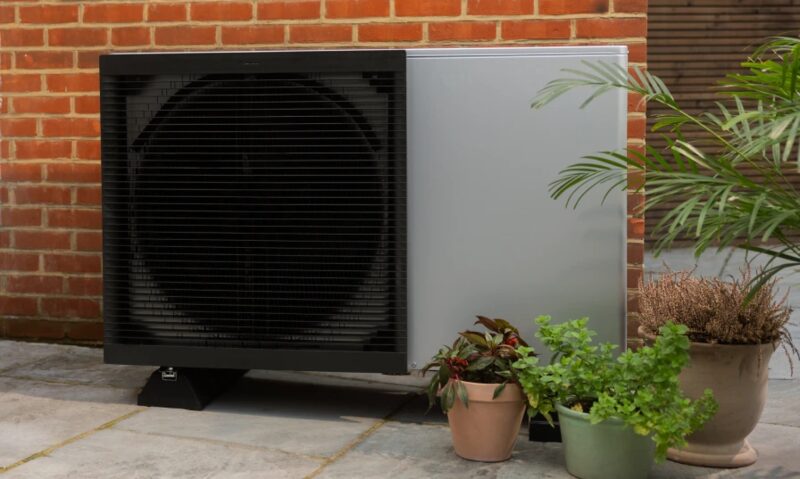
How the installer-led application works, from voucher to redemption

The application is installer-led, with the installer applying for the grant on the property owner's behalf1. Ofgem describes it as an installer-led two stage process, in which the property owner's chosen installer applies for and redeems the voucher14. MCS describes the same arrangement: it is installers that apply for the grant on behalf of their customers13.
Stage one is the voucher application. Stage two follows commissioning: the installer submits a voucher redemption application, and once Ofgem has established that the remaining eligibility requirements have been met, the grant payment is made15. The installer must therefore be MCS certified, and the heat pump unit itself must be MCS approved12.
The grant reaches the household as a discount rather than a payment. Ofgem's property owner guidance states that the grant is applied upfront as a discount to the cost of your installation, and that the householder does not receive the grant directly because it is paid to the installer3. Kensa sets out the installer's side of that duty: the installer is responsible for ensuring the grant funding is passed on to the property owner to reduce the cost16. Which? describes one-off payments of up to £7,500 sent as a voucher to registered installers, who deduct the grant from the cost payable by the householder17.
Two timing rules matter. Vouchers for air source heat pumps and biomass boilers are valid for 3 months, and ground source vouchers for 6 months18. Ofgem's installer guidance lists air-to-water, air-to-air and biomass vouchers at 3 months and ground source vouchers at 6 months7, and the quarterly report repeats the 3 month figure for air source and biomass19. Separately, applications are only eligible where the low carbon heating system has been commissioned no more than 120 days before the application is made6.
What the grant does not cover
The exclusions decide whether a job is fundable at all, and they are firmer than the headline figures suggest.
Hybrid systems are out. Government scheme rules state that a grant is not available for a hybrid heat pump system, giving the example of a combination of gas boiler and air source heat pump1. Home Energy Scotland's grant and loan scheme states that hybrid heat pumps are not eligible for funding20. A household wanting a hybrid heat pump therefore funds it without grant support.
Property type rules exclude most new builds, social housing, and any property that has already been given government funding or support for a heat pump or biomass boiler21. New build properties are exempt from BUS funding, though self-build or custom build homeowners can apply12.
The scheme is also territorial. BUS is available to eligible households in England and Wales who replace an existing fossil fuel boiler with an air source heat pump, with a heating capacity of up to 45kWth12. Scotland runs its own route: Home Energy Scotland's grant and loan funding is for existing Scottish homes only20, and it does not cover separate fees charged by a retrofit service for advice, planning, design or project management22. Its grant funding is not available for replacement heat pumps, wind or hydro turbines, warm air units, solar water heating systems, glazing or insulated doors23.
Funding cannot be stacked. Ofgem guidance states that funding from BUS and ECO cannot be blended for the same measure or be included within an ECO4 project24, and that ECO4 measures must not be blended with other government schemes including the Boiler Upgrade Scheme25. The two are alternatives for the same measure.
Eligibility, performance and the SCOP threshold
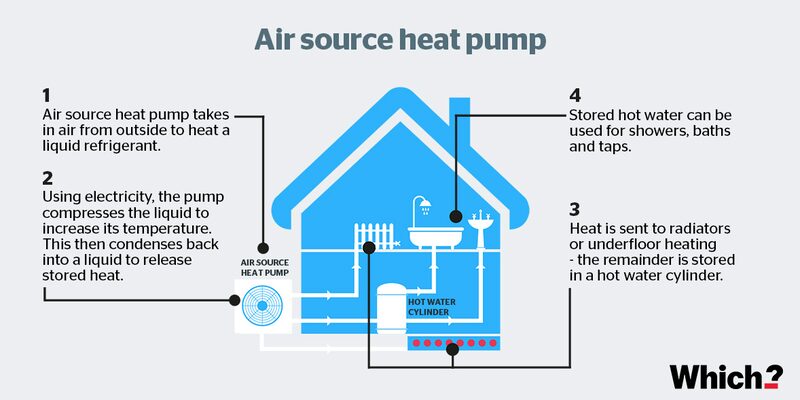
Two conditions sit behind the money. The first is the property: a homeowner with a valid EPC certificate getting a heat pump for the first time, with the grant deducted from the final price when paying26. Croydon Council's retrofit guidance points households to the scheme where the home is energy efficient enough27. The second is the equipment: heat pumps must have a seasonal coefficient of performance of at least 2.88. Grant UK repeats the same threshold, stating that the heat pump installed must have a minimum SCOP of 2.86.
SCOP is the seasonal figure rather than the peak COP, so it reflects performance across a heating season. The threshold is a floor for scheme eligibility, not a statement about what a well specified installation achieves; the efficiency measures explained page sets out how COP, SCOP and SPF differ.
The scheme forms part of the Government's Heat and Buildings Strategy28. Independent commentary has been less generous about the wider policy: the Energy and Climate Intelligence Unit scored the government's energy security strategy 3 out of 10 in 2024, while noting that the heat pump grant had been increased and extended29. MCS, reporting industry discussion, noted that the £7,500 grant means some homeowners can now install a heat pump for less than the average cost of a gas boiler30. That is a comparison of one installation against another, not a running cost claim.
For a household, the practical effect is that the grant is a capital subsidy tied to a certified installer and a certified unit. It lowers the entry price. It leaves the household connected to the electricity grid and to a supplier, and dependent on the installer for the application itself.
Where the grant leaves the household
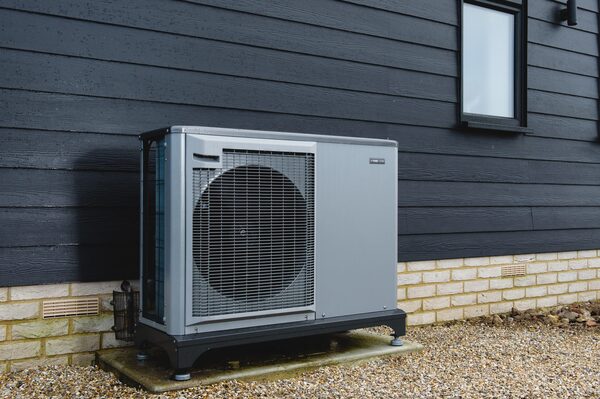
The grant changes the arithmetic of one decision: replacing a fossil fuel boiler with a heat pump. It does not change what the household depends on afterwards. A heat pump runs on electricity, so the home remains connected to the grid and to a supplier, and the running cost depends on the electricity price relative to the fuel being replaced. The running costs and energy independence pages cover that side.
What the grant does reduce is the dependence on imported heating fuel at the point of use. An off-gas grid home on oil or LPG that takes the £9,000 uplift stops buying delivered fuel and starts buying electricity2. That is a shift in what the household depends on, not an end to dependence.
The remaining dependence on the installer is real and worth stating plainly. The household does not apply, does not hold the voucher and does not receive the payment; the installer does all three1. If the installer does not redeem within the voucher window, the grant is lost7. The scheme's own design puts the household's access to public money in a third party's hands.
Prices for the installation itself are installer-quoted. The scheme publishes grant amounts, not job prices, and the net cost of any individual job is the installer's quote minus the applicable grant.
Sources30 cited
- Boiler Upgrade Scheme: what you can get, GOV.UK, 2026-09-17
- Boiler Upgrade Scheme installer guidance v5.1, Ofgem, 2026-07-21
- Boiler Upgrade Scheme guidance for property owners v5, Ofgem, 2026-04-28
- The best heating system for your home, Nu-Heat, 2026-07-22
- Beyond affordability: why heat pumps feel like a gamble, Which?, 2026-06-16
- What is the Boiler Upgrade Scheme?, Grant UK, 2026-05-07
- Boiler Upgrade Scheme installer guidance v5, Ofgem, 2026-04-28
- Boiler Upgrade Scheme installer guidance, Ofgem, 2022-07-21
- Boiler Upgrade Scheme, Ofgem, 2027
- Boiler Upgrade Scheme: information for installers, Ofgem, 2026-09-17
- Boiler Upgrade Scheme statistics, July 2026, Department for Energy Security and Net Zero, 2026-08-27
- Heat pump grants and incentives in the UK, Grant UK, 2026-09-20
- Boiler Upgrade Scheme, MCS Certified, 2026-07-21
- Boiler Upgrade Scheme property owner guidance v2.3, Ofgem, 2023-09-25
- Boiler Upgrade Scheme quarterly report, issue 13, Ofgem, 2025-08-29
- Boiler Upgrade Scheme, Kensa, 2024-09-27
- What is the Boiler Upgrade Scheme?, Which?, 2025-10-22
- Boiler Upgrade Scheme annual report 2024 to 2025, Ofgem, 2025-07
- Boiler Upgrade Scheme quarterly report, issue 15, Ofgem, 2026-02-27
- Home Energy Scotland Grant and Loan: terms and conditions, Home Energy Scotland, 2026-09-17
- Boiler Upgrade Scheme: check if you're eligible, GOV.UK, 2026-09-17
- A simple guide to retrofit services, Home Energy Scotland, 2026-08
- Home Energy Scotland Grant and Loan, Energy Saving Trust, 2026-09-20
- ECO4 delivery guidance v3.2, Ofgem, 2025-12-08
- Energy Company Obligation: homeowners and tenants, Ofgem, 2026-09-17
- Air source heat pumps, Hive, 2026-09-17
- Air and ground source heat pumps, Croydon Council, 2026-09-17
- Government incentives and initiatives, Grant UK, 2026-09-20
- UK going backwards: government's energy security strategy scores 3/10, Energy and Climate Intelligence Unit, 2024
- Heat pumps explained: talk to industry experts, MCS Certified, 2024-04-03
 How Much Does a Heat Pump CostA heat pump usually costs around eleven thousand pounds installed, though quotes vary a lot depending on your home.
 Heat Pump Running CostsWhat does a heat pump cost to run each year, and is it cheaper than a gas boiler?
 Replacing a Gas or Oil BoilerSwapping a gas, oil or LPG boiler for a heat pump changes how your home is heated and how much it costs.
 Ground Source Heat Pump CostWhat a ground source heat pump costs in the UK, splitting groundworks and drilling from the heat pump and internal works, and how the £7,500 Boiler Upgrade Scheme grant and the £9,000 off-gas-grid uplift change the figure.
 Heat Pump Electricity TariffsA heat pump tariff gives you cheaper electricity for part of the day, so running your heating costs less than on a standard rate.
 The Full Heat Pumps GuideWill a heat pump keep my house warm in winter, and what does one cost to buy and run?