
In this guide
A heat pump changes what a household buys to stay warm. Instead of burning gas, oil or LPG delivered by a supplier or a tanker, it moves existing heat from the air, the ground or a body of water into the home using electricity. Air source heat pumps heat homes by taking warmth from the outside air and using it for heating and hot water1. Water source units transfer energy from natural heat stored in a body of water to heat the home and domestic hot water2.
The independence gain is real but partial. A heat pump removes the fuel delivery, the flue and the standing charge on a gas connection, and it makes the household's heating run on a carrier that can be generated at home. It does not remove the electricity connection, the supplier, or the grid. What it does is move the household from a fuel with almost no domestic production to one where a roof, a battery and a flexible tariff can cover a meaningful share of the annual demand.
The efficiency gap is the reason the switch works at all. Heat pumps are around three-to-four times more efficient than gas boilers, which should lead to lower household energy bills3, and current available heat pump technologies can be up to 3 to 5 times more efficient than a natural gas boiler4. That ratio is what allows a household to heat the same house with less primary energy, and it is what makes a heat pump worth pairing with generation rather than simply a different way to buy the same warmth.
What a heat pump does for household energy independence
The dependence a heat pump removes is dependence on a delivered fuel. A gas, oil or LPG boiler needs a network connection or a tank, a delivery chain and a market price set outside the household's control. A heat pump needs electricity, and electricity is the one energy carrier a domestic property can produce, store and trade with. That is the structural difference, and it is why the technology sits at the centre of every official decarbonisation plan rather than at the edge.
The dependence that remains is the electricity supply itself. A heat pump runs from the grid, from a supplier, and through a meter. In a power cut it stops, exactly as a gas boiler with an electric pump and controls stops. A household that wants heat through an outage needs a battery with backup capability or a generator, and the heat pump's starting current is a factor in whether a given battery can carry it. Independence here means choosing the generation mix behind the meter, not disconnecting from the network.
There is a second, quieter form of independence: the fuel no longer arrives by lorry. Off-gas-grid homes running oil or LPG carry a tank, a delivery schedule and a price that moves with global markets and with the timing of the order. Moving that household to a heat pump removes the tank, the delivery and the risk of running out in a cold snap. For rural and island households this is often the most tangible gain, and it is why Scottish policy treats off-gas properties as the first to move.
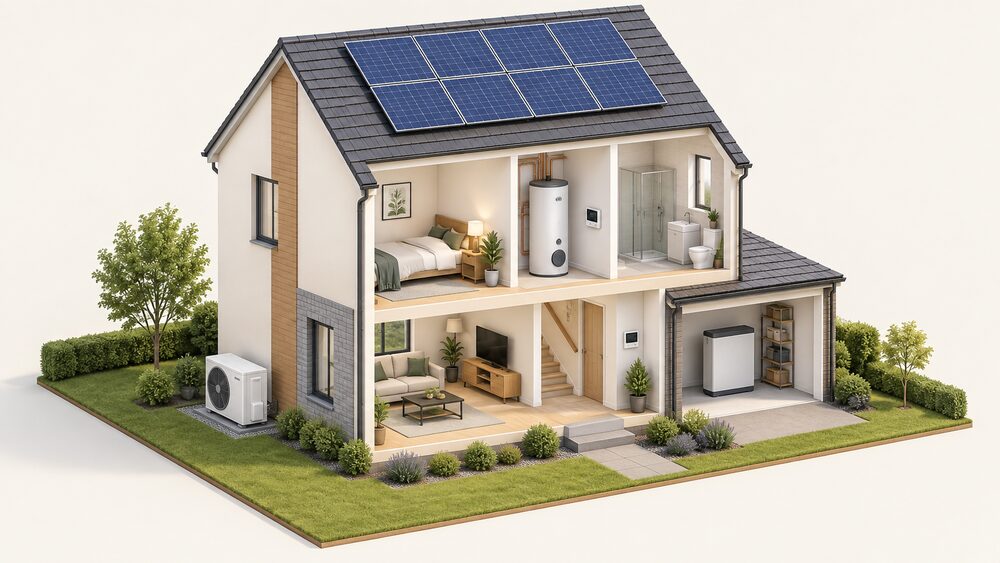
The third element is optional but decisive for the economics: generation and storage. A heat pump that integrates with solar photovoltaic systems is eligible under the Boiler Upgrade Scheme9, so the grant does not penalise a household that intends to add panels. Additional savings are possible with flexible electricity tariffs10, which let a heat pump and a battery buy at cheap periods and avoid the peak. None of this makes a home self-sufficient. It makes the household a participant in the electricity market rather than a captive buyer of a delivered fuel.
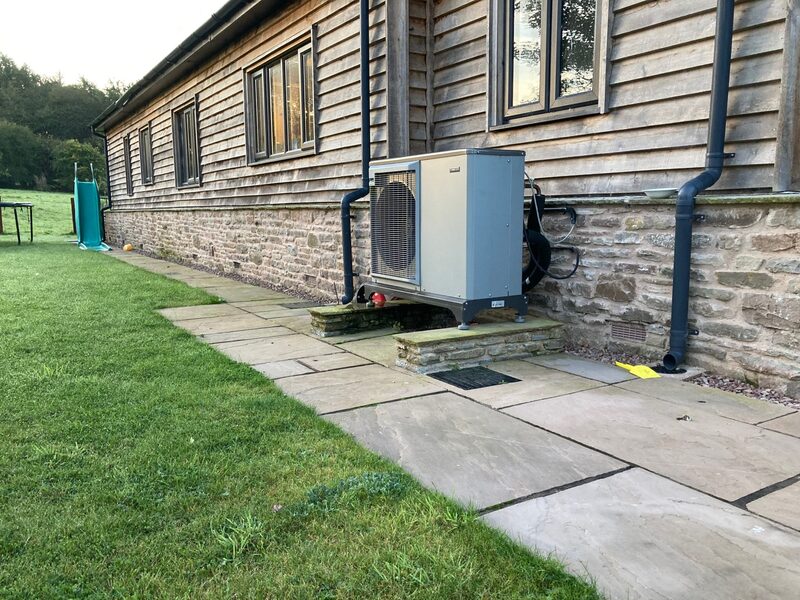
A heat pump heats on demand from outside air, using electricity rather than fuel
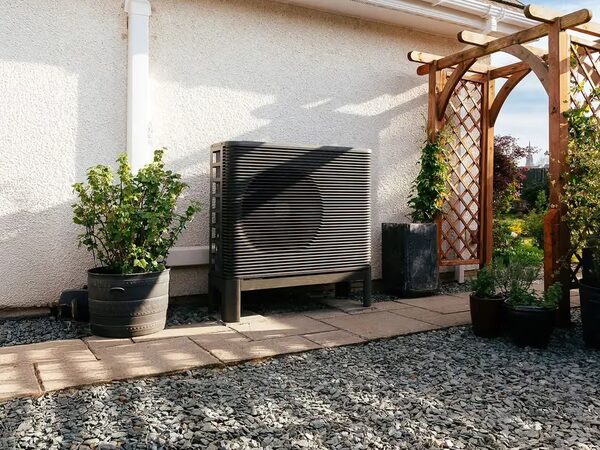
The mechanism is a refrigeration cycle, not a flame. An air source heat pump takes warmth from the outside air, at temperatures that feel cold to a person, and lifts it to a temperature useful for radiators, underfloor heating or a cylinder. Air-to-water units transfer heat drawn from surrounding air to water in a wet central heating system11. Air-to-air units deliver warm air directly and are treated differently under some schemes: an air-to-air system is not considered to be a renewable system in ECO411.
That distinction matters for anyone weighing independence against support. The grant-funded route in the UK is built around wet systems, because they can also supply domestic hot water and because they replace a boiler's whole function. An air-to-air unit heats rooms but does not fill a cylinder, so it leaves the household still buying something else for hot water. For a household whose goal is to remove a fuel entirely, the wet system is the one that closes the loop.
Water source heat pumps extend the same principle to a river, a lake, a canal or a borehole into groundwater, transferring energy from natural heat stored in a body of water to heat the home and domestic hot water2. Ground source systems take heat from the soil through loops or boreholes. Both are less exposed to air temperature than an air source unit, which is why they hold their output better in a cold snap and why they are quieter, with no outdoor fan.
The practical consequence for independence is that the household is no longer waiting for a delivery or watching a tank level. It is drawing on a source that is replenished continuously and is not traded. The trade is that the household now depends on the electricity network for every unit of heat, so the reliability of that network becomes the reliability of the heating system.
Efficiency: three to five times a gas boiler
Efficiency is where the independence argument is won or lost, because a heat pump that used the same energy as a boiler would simply move the dependence from gas to electricity without reducing it. Official guidance states that heat pumps are three times more energy efficient than traditional boilers12, and the climate campaign puts the same figure as 3x more energy efficient than traditional boilers6. The Climate Change Committee gives a slightly wider band, describing heat pumps as around three-to-four times more efficient than gas boilers3.
The higher end of the range comes from the newest equipment. Official statistics state that the current available heat pump technologies can be up to 3 to 5 times more efficient than a natural gas boiler4. Bristol's warm homes plan uses a comparable formulation, describing heat pumps as typically over three times more efficient than the most efficient gas boilers or electric heaters13. Welsh guidance states that heat pumps are up to 3 times more efficient than other heating systems14.
The spread between these figures is not a disagreement about physics. It reflects different measurement conventions, different equipment generations and different assumptions about the system around the unit. A heat pump's real-world efficiency depends on the flow temperature it runs at, which depends on the radiators and the insulation, and on how the controls are set. A unit running at a low flow temperature into well-sized emitters will sit at the top of the range; one pushed to a high flow temperature to compensate for undersized radiators will sit at the bottom.
For a household, the number to hold on to is the ratio, not the percentage. Every unit of electricity bought delivers roughly three to five units of heat, against roughly one for a resistive heater and less than one for a boiler once combustion losses are counted. That is the headroom that pays for the higher unit price of electricity, and it is the reason a heat pump can be cheaper to run than a boiler on the right tariff even though electricity costs more per kilowatt hour than gas.
Cost: around £12,000 installed, with £7,500 from the Boiler Upgrade Scheme

The headline cost figure comes from independent guidance: the typical cost of installing an air source heat pump is around £12,0001. Other independent guidance puts the figure at around £11,0001. The two figures come from the same publisher and are not reconciled, so a household should treat the installed cost as being in the region of £11,000 to £12,000 and expect a firm number only from a survey.
The grant changes the arithmetic. The Boiler Upgrade Scheme provides grants towards the cost of a heat pump installation of up to £7,5007, and official scheme guidance sets the amount at £7,500 for air-to-water heat pumps and ground source heat pumps5. That is a fixed contribution towards the installation, not a voucher for a product, and it is claimed by the installer on the household's behalf.
| Item | Figure | Source |
|---|---|---|
| Typical air source installation | around £12,000 | Energy Saving Trust1 |
| Alternative independent estimate | around £11,000 | Energy Saving Trust1 |
| Boiler Upgrade Scheme, air-to-water and ground source | £7,500 | Ofgem5 |
| Boiler Upgrade Scheme, maximum grant | up to £7,500 | MCS7 |
Ground source installations cost more because of the ground works, whether that is trenches for loops or a borehole. The grant is the same for both technologies, so the household's share is larger for a ground source system. Prices are installer-quoted, and the quote should reflect the emitter work, the cylinder, any electrical upgrades and the labour for the ground array where one is needed.
Running costs: more than gas on a standard tariff, less on time-of-use
Running cost is the part of the independence case that depends most on how the household buys electricity. On standard electricity tariffs, where electricity is nearly four times more expensive than gas, heat pumps can cost slightly more to run than new gas or oil boilers1. That is the honest baseline, and it follows directly from the price gap between the two fuels rather than from any failing of the technology.
The picture changes with a tariff designed for the load. Independent research shows that by switching to a heat pump time-of-use tariff, running costs can be reduced significantly1. Official guidance takes a similar line, noting that running costs for heat pumps are typically lower when compared to those of traditional gas boilers, while cautioning that this depends on how the system is set up15. Additional savings are possible with flexible electricity tariffs10.
The mechanism is straightforward. A heat pump with a cylinder and a buffer can be scheduled to run in the cheap hours, storing heat in water rather than buying it at the evening peak. A household with a battery can go further, charging overnight and running the heat pump from the battery through the expensive period. The heat pump becomes a flexible load rather than a fixed one, and flexibility is what the tariff is paying for.
For independence, this is the point where the household stops being a price-taker. On gas, the household buys at whatever the market sets and has no way to shift the purchase. On electricity, the household can choose when to buy, can generate some of its own, and can store what it does not use immediately. The saving is real but it is conditional: it needs a tariff, a meter capable of the right readings, and controls set up to use them.
Sizing and suitability: 8 to 12 kW, emitters and insulation
Sizing starts with a heat loss calculation, not with a rule of thumb. Independent guidance states that 5kW, 8kW, and 12kW systems should cover the demands of any household7, which gives the working band for domestic ground and water source units. Air source units are sized on the same basis, from the calculated heat loss of the property at its design external temperature.
The regulatory backdrop uses 12 kW as a boundary in several places. Regulation 206/2012 applies to air conditioners below 12 kW rated capacity, and to heating only heat pumps16. Building standards guidance refers to air heating and cooling products above 12 kW and up to 1000 kW in a separate category17. The practical effect is that a domestic installation sits below the 12 kW line, and a property needing more than that is unusual and needs a specific design.
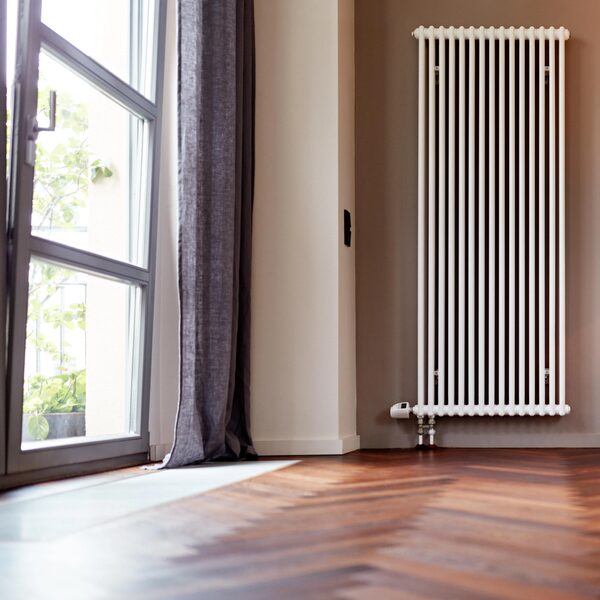
Emitters are the other half of the design. A heat pump runs most efficiently at a low flow temperature, and low flow temperatures need larger radiators, underfloor heating or both to deliver the same heat output. A property with undersized radiators will need them replaced, and that work is part of the installation cost rather than an optional extra. Insulation reduces the heat loss the system has to meet, which reduces the size of the unit and the flow temperature it needs.
| System size | Typical application | Source |
|---|---|---|
| 5 kW | Smaller or well-insulated homes | MCS7 |
| 8 kW | Mid-range domestic demand | MCS7 |
| 12 kW | Larger homes, upper end of the domestic band | MCS7 |
Scottish building standards work on new dwellings has examined how heat pump systems perform across archetypes, and found that the air source heat pump consistently resulted in the lowest delivered energy demand across the archetypes modelled18. The same work found that for houses the air source heat pump had the lowest capital cost under the baseline specification, while for a block of flats it was the highest18. That is a reminder that suitability is property-specific: the same technology can be the cheapest option in one building form and the most expensive in another.
Permitted development: noise, siting, size and boundary limits
In England, an air source heat pump on a house or block of flats, or within the curtilage, can be permitted development subject to conditions19. Development is permitted only if the installation complies with the Microgeneration Certification Scheme Planning Standards, known as MCS 020a19. Where compliance is not achieved a planning application will be required20.
The conditions are specific and worth checking before an order is placed. The volume of the outdoor compressor unit, including housing, must not exceed 1.5 cubic metres on a house or 0.6 cubic metres for a block of flats19. The pump must not be within 1 metre of the curtilage of the property21. Installations on pitched roofs are not permitted development, and on a flat roof all parts of the unit must be at least one metre from the external edge of that roof19.
The noise condition is the one that most often decides whether a site works. The permitted development noise limit is 42 decibels measured a metre from a habitable room, for the heat pump on its own8. The MCS 020 assessment produces a result against that limit: if the calculated level is equal to or lower than 42.0 dB(A), the unit will comply with the permitted development noise limit for that assessment position and may be permitted development16. The fan and the compressor are the main sound sources in an air source heat pump16.
Siting conditions apply on top of the numerical limits. The unit must, so far as practicable, be sited to minimise its effect on the external appearance of the building, and to minimise its effect on the amenity of the area22. Only the first installation is permitted development on a house that is not detached or on a block of flats, while for detached houses the first two air source heat pumps are considered permitted development19. Additional units at the same property require a planning application19.
Scotland, Wales and Northern Ireland set their own rules. Scottish proposals include a method by which the noise level of an air source heat pump is predicted, with a maximum noise level for the unit to be considered permitted development25. Welsh work on permitted development rights has examined noise from air source heat pumps and the conditions attached to the rights26. Households in those nations should check the position for their own area rather than assume the English limits apply.
Installation, maintenance and lifespan: what owning one involves

Installation begins with a heat loss survey and a design, and ends with a handover that should be documented. Building standards guidance for new dwellings sets out what the operating and maintenance information provided to the dwelling owner should include: the heat loss calculation, the design flow temperature, confirmation of the competent person scheme, the size of the emitter circuit and the minimum set back temperatures17. A household commissioning a retrofit should expect the same information, because those are the settings that determine whether the system performs as designed.
Maintenance is scheduled rather than reactive. Ground source and water source heat pumps can last around 20 years with regular, scheduled maintenance and proper care7. Air source units carry an outdoor fan and compressor exposed to weather, so the outdoor unit takes the wear. Servicing covers the refrigerant circuit, filters, controls and the checks that keep the warranty valid.
The number of quotes is a practical control on quality. Energy Saving Trust recommends getting quotes from at least three different installers to make sure you are getting the best value for money1. Comparing three designs exposes differences in heat loss calculation, emitter specification and cylinder sizing, which are the parts of a quote that vary most and matter most.
For independence, the maintenance regime is the price of the fuel switch. A boiler needs an annual service and a flue check; a heat pump needs a service and clean filters, and its performance drifts if the controls are left at settings that force a high flow temperature. The household that understands its own flow temperature and schedule gets more of the efficiency the technology offers, and that understanding is part of what replaces the simplicity of a gas meter.
How a heat pump fits with solar and storage
The pairing that matters most is a heat pump with solar photovoltaic generation and a battery. Heat pumps that integrate with solar photovoltaic systems are eligible under the Boiler Upgrade Scheme9, so the grant does not require the household to choose between the two. The combination works because the heat pump is a large, flexible electrical load and the panels produce at times when the load can be shifted to meet them.
A cylinder is the cheapest store in the system. Water heated in the middle of the day from the panels, or overnight on a cheap tariff, holds heat until the evening. A battery extends the same idea to the heat pump's own consumption, letting the unit run from stored electricity during peak periods. Additional savings are possible with flexible electricity tariffs10, and independent research shows that a heat pump time-of-use tariff can reduce running costs significantly1.
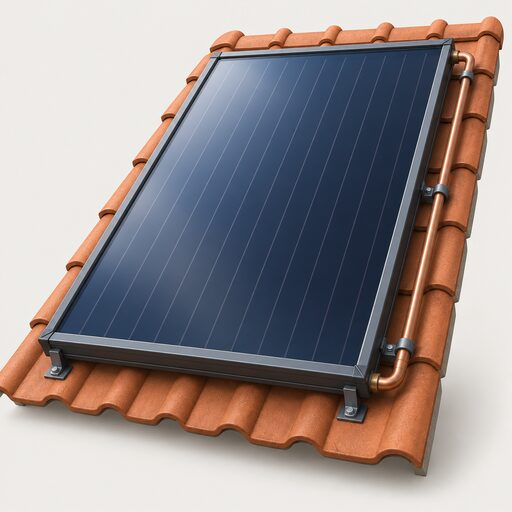
Solar thermal is a different proposition. It produces hot water directly rather than electricity, so it feeds the cylinder rather than the heat pump, and it competes with the heat pump for the same cylinder capacity. It does not contribute to space heating in winter, when demand is highest. The independence value of solar thermal is therefore limited to the hot water load, while photovoltaic generation can serve the whole system.
The limits are worth stating plainly. A solar and battery system sized for a typical roof will not cover a heat pump's winter demand, because generation is lowest exactly when heating demand is highest. The household remains connected to the grid and buys most of its winter heat. What the pairing does is cut the annual import, shift the timing of what remains, and give the household a store of heat and electricity that a gas connection cannot provide.
The policy timeline: gas boiler phase-out and what it means
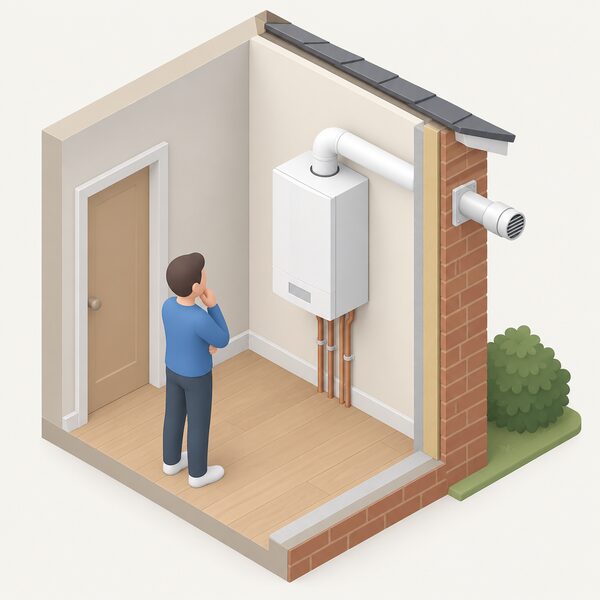
The direction of policy is set, even where the dates are still proposals. The Heat and Buildings Strategy set an ambition to phase out the installation of new natural gas boilers by 2035, using natural trigger points such as when a boiler is replaced28. Consultation documents describe the same intent, setting out plans to exempt certain households from the phase out of fossil fuel boilers, including gas, in 203529.
Scotland has its own timetable and its own consultation history. The Heat in Buildings Strategy set out phasing out the need to install new or replacement fossil fuel boilers in off gas properties from 2025, and in on-gas areas from 203031. The Bute House Agreement carried the same dates, phasing out the need to install new or replacement fossil fuel boilers in off gas areas from 2025 and in on gas areas from 203033. Scottish proposals also include a minimum energy efficiency standard for owner occupied homes with a polluting heating system by the end of 2033, and a prohibition on the use of polluting heating systems in all buildings after 204534.
| Nation | Policy position | Date |
|---|---|---|
| UK | Ambition to phase out installation of new natural gas boilers | 203528 |
| Scotland | Phase out new or replacement fossil fuel boilers, off-gas areas | from 202531 |
| Scotland | Phase out new or replacement fossil fuel boilers, on-gas areas | from 203031 |
| Scotland | Proposed prohibition on polluting heating in all buildings | after 204534 |
The dates are ambitions and proposals rather than settled law in every case, and the treatment of exemptions is not yet fixed. What is consistent is the direction: new fossil fuel heating is being closed off, and the replacement cycle is the trigger. A household replacing a boiler now is making a decision that will shape its options for the next fifteen to twenty years, which is why the cylinder question matters as much as the boiler question.
For independence, the timeline converts a voluntary choice into a scheduled one. A household that moves early can pair the heat pump with generation and a tariff on its own terms. A household that waits will still make the change, but with less room to choose the moment and the package. The policy does not remove the grid dependence; it removes the alternative.
Sources34 cited
- Air source heat pumps, Energy Saving Trust, 2026-07-16
- VAT Energy Saving Materials: grant funded heating supplies, HM Revenue and Customs, 2026-09-17
- The Seventh Carbon Budget, Climate Change Committee, 2025-02-26
- Energy in New Homes and Buildings 2025, UK Government, 2025-06
- Boiler Upgrade Scheme guidance for property owners, Ofgem, 2026-03-25
- Heat pumps, Welsh Government, 2025-02-20
- Ground and water source heat pumps, MCS, 2026-06-09
- Building regulations renewables guidance, Bedford Borough Council, 2026-09-17
- Boiler Upgrade Scheme guidance for installers, Ofgem, 2026-04-28
- Heat pumps and buildings research briefing, UK Parliament POST, 2026-09-19
- ECO4 new measures and products guidance, Ofgem, 2026-03-26
- Heat pump, UK Government Clean Energy Campaign, 2025-11-17
- Bristol warm homes plan, Bristol City Council, 2025-04
- Your essential guide to heat pumps, Welsh Government, 2025-02-20
- What impact can heat pumps have in domestic heating today, UK Government, 2023-11-21
- ASHPs and permitted development rights in Wales: phase 1 report, Welsh Government, 2023-12-13
- Approved Document L Volume 1 consultation version, Welsh Government, 2026-09-17
- Energy standards for new domestic buildings in Scotland, Scottish Government, 2026-07-24
- Planning permission: air source heat pump, Planning Portal, 2026-09-17
- Changes to permitted development rights: summary of responses, Welsh Government, 2025-12
- Air source heat pumps, Cornwall Council, 2026-09-17
- Class G: installation of air source heat pumps on domestic premises, legislation.gov.uk, 2026-09-17
- Class G permitted development data, legislation.gov.uk, 2026-09-17
- Air source heat pumps fact sheet, Pendle Borough Council, 2026-09-17
- Permitted development rights impact assessments, Scottish Government, 2026-09-17
- Heat pumps, New Forest District Council, 2026-09-17
- Air source heat pumps, Croydon Council, 2026-09-17
- Equality impact assessment for the Heat and Buildings Strategy, UK Government, 2023-03-01
- Delivering net zero for Scotland's buildings, Scottish Government, 2023-11-28
- Delivering net zero for Scotland's buildings: consultation, Scottish Government, 2023-11
- Heat in Buildings Strategy, Scottish Government, 2021-10-07
- Heat in Buildings Strategy: island communities impact assessment, Scottish Government, 2021-11-11
- Changing the way we heat homes and buildings, Scottish Government, 2023-11-28
- Heat in Buildings Strategy: achieving net zero emissions, Scottish Government, 2021-10
 Heating and Energy IndependenceCan you heat your home without relying on gas or oil, and what would that take?
 Heat Pump Electricity TariffsA heat pump tariff gives you cheaper electricity for part of the day, so running your heating costs less than on a standard rate.
 Heat Pump Running CostsWhat does a heat pump cost to run each year, and is it cheaper than a gas boiler?
 Cost of Energy IndependenceA heat pump and better insulation are the usual starting point, but what does the whole job really cost, and what help is there with the bill?
 Grants and Energy IndependenceCan you get a grant for solar panels or a battery?
 Charging and Energy IndependenceCharging an electric car at home can cut your fuel costs, but how much does it really free you from the grid?