In this guide
A time-of-use tariff is a plan where the price of a unit of energy varies during a 24 hour period1. The Low Carbon Hub defines it as a pricing scheme where the cost of electricity varies at different times of the day, encouraging consumers to shift usage to periods of lower demand and lower prices2. For a household with electric heating, a heat pump or a hot water cylinder, that shift is not something a person can do by hand every evening. It is a controls problem.
The controls decide whether the tariff pays. Energy Saving Trust states plainly that a time-of-use tariff charges different rates depending on the time of day, cheaper when demand is low and more expensive when demand is high, and that if most energy is used at peak times and cannot be shifted, the tariff could cost a little more3. Citizens Advice found that these tariffs require increased engagement from consumers at key points in the consumer journey, from choosing a tariff to monitoring their usage4. A schedule, a timer or a tariff-aware thermostat does that monitoring instead.
The stakes are real in both directions. Government research on the heat pump transition found that where heating patterns are not well aligned to the tariff, time-of-use tariffs can increase fuel bills5. Aligned well, they are one of the few ways a household can cut running costs without changing the fabric of the home. This page sets out the tariff structures, the controls that can chase them, and the evidence on what automation actually delivers.
What a time-of-use tariff is, and why the controls decide whether it pays
A time-of-use tariff charges different prices for energy at different times of day, or on different days11. Energy Saving Trust describes smart time-of-use tariffs as a pricing structure that varies the cost of electricity based on the time of day it is used12. The Energy Ombudsman notes that electricity prices vary throughout the day, usually with a cheaper overnight charging window13.
The structures fall into two families. Economy 7 and Economy 10 use fixed cheaper periods, while newer EV and tracker tariffs can be more dynamic and usually work best with a smart meter14. With dynamic time-of-use tariffs, energy prices can vary continually and are calculated in real-time depending on various factors1. That difference matters for controls: a fixed window can be met by a timer, while a half-hourly price needs something that reads the price.
Smart time-of-use tariffs use half-hourly smart meter readings to allow companies to charge lower rates when demand is lower and electricity is cheaper15. A supplier cannot charge based on when energy is used unless the household chooses such a tariff16. So the tariff is a choice, and the meter is the enabling device.
What the controls add is the ability to act on the price without a person watching the clock. Smart heating controls automatically optimise heating settings to save money and energy17. Smart thermostats can be programmed, or remotely controlled, to manage a home's temperature, and can switch heating off remotely, use more sophisticated sensors to avoid temperature extremes, and heat or pre-heat certain rooms while leaving unused rooms untouched18. On a time-of-use tariff, that room-by-room control is what turns a price signal into a smaller bill.
The dependence that remains is worth naming. A tariff-aware control depends on the supplier publishing prices, on the meter reporting half-hourly, and often on a manufacturer's cloud service and app. The household gains flexibility but takes on a relationship with a supplier and a platform that a simple timer does not require.
Economy 7: seven overnight cheap hours, and who they suit
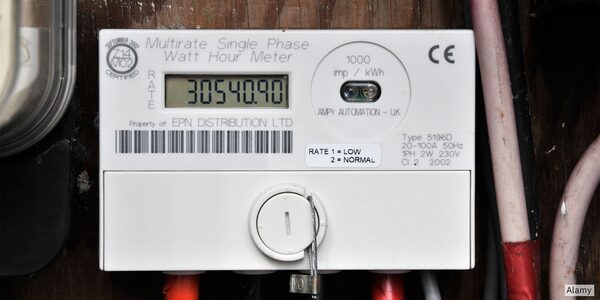
Economy 7 is a time-of-use electricity tariff that charges two different prices for the electricity used19. The cheaper off-peak rate applies for seven hours out of every 24 hours, usually at night14. Which? reports that the cheaper period usually runs between midnight and 7am, though this varies across suppliers8. Energy Helpline puts the cheaper rate usually between midnight and 7am6, and National Energy Action describes seven hours, usually between midnight and 7am20.
The window is not set nationally. uSwitch reports that the cheaper Economy 7 time period runs for a seven-hour period at some point between 11.00pm and 8.00am, and that the regional network operator, the company responsible for physically supplying electricity to the property, defines the window, which can be between 7 and 9 hours7. Which? notes that some energy companies also offer extra hours during winter8. The remaining hours are charged at a more expensive peak rate20, and uSwitch describes a 17-hour day period7.
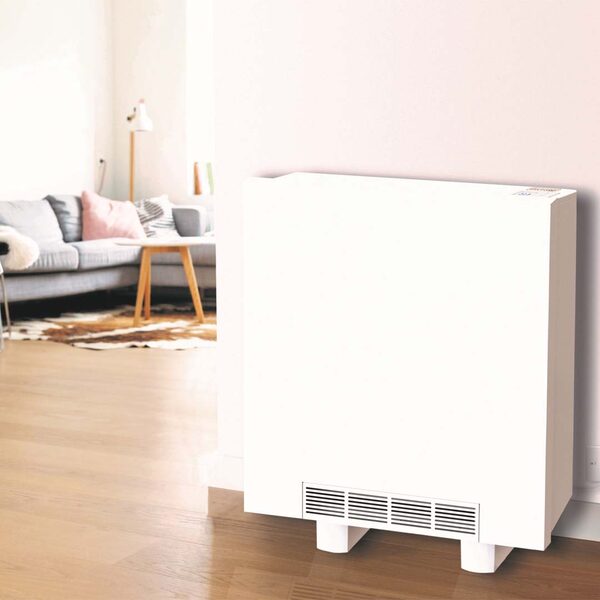
Economy 7 is mainly intended for homes that run on an electric heating system and use storage heaters21. Energy Saving Trust notes that storage heaters should always be used on an Economy 7 tariff to take advantage of cheaper overnight electricity9, and that a time-of-use tariff such as Economy 7 or Economy 10 is needed to access cheaper electricity prices22. National Energy Action states that storage heaters use Economy 7 or Economy 10 tariffs for cheaper energy at night20.
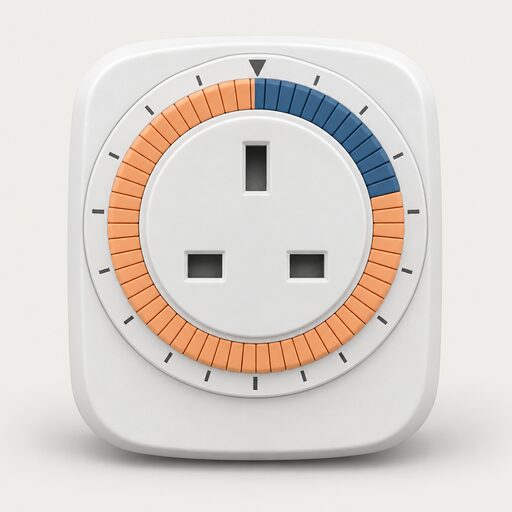
The controls are the mechanism. Energy Saving Trust explains that the meter or a timer switch controls when the off-peak circuit is live, and the heater charges automatically during these cheaper hours23. That is a hard-wired arrangement rather than an app: the off-peak circuit is energised by the meter or a time switch, and the storage heater's input control decides how much heat is taken in during the window. Storage heater controls are covered in more detail on Storage Heater Controls: Input, Output and Smart Charging.
In Scotland, Economy 7 meters are known as white meters, because the meters supplied by energy companies are white19. The Consumer Council for Northern Ireland publishes Economy 7 night unit rates for Northern Ireland suppliers, including 17.291p for Click Energy, 18.138p for Budget Energy Bill Pay and 19.641p for Budget Energy Keypad25. Those are Northern Ireland figures and do not apply in Great Britain.
Economy 7 rates: roughly 8p to 15p at night against 25p to 45p by day
Published Economy 7 rates vary widely by supplier, region and date, and no single national figure holds. What can be said is the shape: a cheap night rate against a much higher day rate, with the gap doing the work. One comparison puts the night rate at between 8p/kWh and 15p/kWh depending on the provider21, while a standard variable Economy 7 equivalent carries a night-time unit rate of 16.63 pence per kWh22. Northern Ireland night rates run from 17.291p to 19.641p across three suppliers25. Time-of-use tariffs can go lower still, with off-peak charging for a home car quoted at as little as 7p/kWh23.
The Centre for Sustainable Energy models Economy 7 tariffs at 34.38p for on-peak and 15.43p for off-peak, with a 58:42 split9. That is a modelling assumption for its electric heating advice, not a market average. uSwitch reports that most suppliers charge around 26.3p per kWh of electricity on their single-rate standard variable tariffs, in the South Wales (SWALEC) region7.
| Figure | Value | Basis |
|---|---|---|
| Economy 7 on-peak unit rate | 34.38p per kWh | Modelled assumption9 |
| Economy 7 off-peak unit rate | 15.43p per kWh | Modelled assumption9 |
| On-peak to off-peak split | 58:42 | Modelled assumption9 |
| Single-rate standard variable, South Wales | around 26.3p per kWh | Reported7 |
| Click Energy night rate, Northern Ireland | 17.291p per kWh | Read 18 September 202625 |
| Budget Energy Bill Pay night rate, Northern Ireland | 18.138p per kWh | Read 18 September 202625 |
| Budget Energy Keypad night rate, Northern Ireland | 19.641p per kWh | Read 18 September 202625 |
The rates a household is offered depend on the supplier, the region and the meter. Which? advises comparing off-peak rates and times, peak rates, and any standing charges or exit fees3. Energy Saving Trust advises asking about any flexibility in the tariff, such as the ability to switch between tariffs or opt out of time-of-use pricing12.
For a household's independence, the night rate is a genuine hedge: it lets a home buy electricity when the system is quiet and store the result as heat. What it does not do is reduce total consumption. A storage heater charged on Economy 7 still uses the same kilowatt hours, and the saving comes entirely from the price difference and from how much of the load can be moved into the window.
Cosy Octopus: three cheap windows a day, aimed at heat pump homes
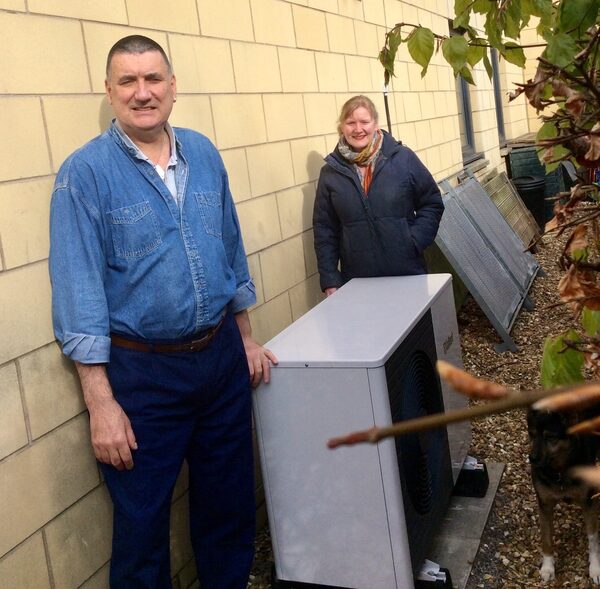
Cosy Octopus is a heat pump oriented tariff with more than one cheap window in the day, rather than a single overnight block. It is mainly aimed at homes with heat pumps, offering several cheaper electricity windows spread across the day rather than one overnight block26, and is specifically designed for homes equipped with heat pumps12. Aira describes it as powered by Octopus Energy and designed exclusively for heat pumps, allowing Aira to adjust the system to heat the home and hot water when it suits25. Its exact window times and rates are not published here, so the structure is best described by contrast with the fixed overnight model.
The distinction that matters for controls is that a multi-window tariff cannot be met by a single overnight timer. It needs a programmer or thermostat that can hold several separate schedules, or a control that reads the tariff. Heating programmers and timers are the baseline tool here, covered on Heating Programmers, Timers and Time Switches.
Octopus Energy's other tariffs show the range. Its Intelligent Octopus tariff has six hours of cheaper electricity overnight27. Its Agile Octopus tariff tracks half-hourly wholesale prices and updates its rates daily27. A household choosing between them is choosing between a predictable window and a variable price, and the controls needed differ accordingly.
For a heat pump, the multi-window structure suits the way the machine works. A heat pump runs most efficiently at low flow temperatures over long periods, so spreading operation across several cheap windows is closer to its natural rhythm than a single deep overnight charge. Government research on heat pump installations found that weather compensation was typically enabled, though in some cases it appeared to be in conflict with third party thermostat control5. That conflict is the practical risk on any tariff-aware setup: a third party thermostat cycling the heat pump on and off can work against the weather compensation curve the installer set. Weather compensation is explained on Weather Compensation Controls Explained.
Octopus Agile: half-hourly prices that follow the wholesale market
Agile Octopus tracks half-hourly wholesale prices and updates its rates daily27. Customers on the tariff find out the electricity unit rates they will pay for the next 24 hours between 4pm and 8pm daily8. Octopus says that price spikes are short-lived, typically lasting 30 minutes to an hour8.
That structure is the most demanding of controls and the most rewarding for a household that can shift load. A half-hourly price cannot be chased by a fixed schedule, because the cheap half-hours move. It needs either a control that imports the price and acts on it, or a household willing to check the next day's rates each evening and adjust.
The wider category is dynamic time-of-use tariffs, where energy prices can vary continually and are calculated in real-time depending on various factors1. The Energy Ombudsman notes that time-of-use tariffs have electricity prices that vary throughout the day, usually with a cheaper overnight charging window13, which is the simpler end of the same family.
"price spikes are short-lived, typically lasting 30 minutes to an hour"
For heating, the practical use of a half-hourly tariff is preheating: running the heat pump or the heating harder in a cheap half-hour so the fabric of the home holds the heat through an expensive one. That requires a control that can act on price rather than clock time, and it requires a home with enough thermal mass for the preheat to survive. Where the home is lightweight and loses heat quickly, the preheat is wasted and the household pays the peak rate anyway.
Smart thermostats and controls that can chase cheap hours
Having a smart meter lets a household take advantage of advanced time-of-use tariffs17. In Wales, the Welsh Government notes that access to time-of-use tariffs means cheaper rates during off-peak hours and incentives for energy usage on high-supply days28. The meter is the prerequisite; the control is what acts on it.
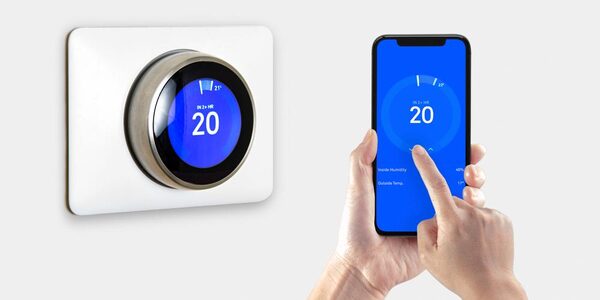
Smart thermostats are devices that can be programmed, or remotely controlled, to manage a home's temperature18. Their money-saving methods include remote switching off via a phone, more sophisticated sensors to avoid temperature extremes, and heating or pre-heating certain rooms while leaving unused rooms untouched18. On a time-of-use tariff, the pre-heating function is the one that matters most, because it is the mechanism by which a household buys heat in a cheap window and uses it in an expensive one.
Smart heating controls automatically optimise heating settings to save money and energy17. That optimisation is only as good as the data it has. A control that knows the tariff can preheat before the peak; a control that only knows the room temperature cannot.
The limits are worth stating. A smart thermostat on a dynamic tariff depends on the manufacturer's cloud service to fetch prices and on the app to hold the schedule. If the service ends or the app is withdrawn, the tariff-aware behaviour stops, even though the boiler and the meter still work. That dependence is examined on Heating Controls and Energy Independence: Local Control and Cloud Dependence and Smart Heating Controls: Security, Data and Product Support. Subscriptions attached to some thermostats are covered on Smart Thermostat Subscriptions and App Charges.
For heat pumps specifically, Smart Energy GB states that heat pumps can keep homes comfortable on smart tariffs by heating steadily at times when electricity is cheaper, without noticeable change for most households29. That is the design intent: not a cold house at peak, but a warm one heated earlier.
What the HeatFlex trial showed about automated heat pump flexibility
The HeatFlex trial tested remote control of heat pumps to avoid peak demand times, as a randomised control trial30. It specifically avoided introducing a financial incentive linked to the amount of turn-down participants achieved30, which means the comfort findings are not distorted by payment.
The consumption result was substantial. HeatFlex recorded a reduction in heat pump electricity consumption of 0.382 kWh per half-hour (p < .001) during the flexibility window, a 74% reduction of typical consumption10. That is a measured reduction in the trial, not a projection.
Comfort held up. Of the 15 interviewees, 14 reported being very comfortable with the remote automation of their heat pump10. That is a small sample, and the trial design matters: participants were not being paid to accept discomfort.
The economics were modelled separately. Nesta modelled electricity wholesale, network and policy costs associated with operating a heat pump flexibly over a ten year period from 202430. Which? reports that a study by energy consultancy Cornwall Insight found a household can save money just by being on a typical time-of-use tariff8. The Climate Change Committee's heat pump transition report notes that additional savings are possible with flexible electricity tariffs31.
What the trial establishes for a household is that automation, not manual scheduling, is what makes heat pump flexibility work at scale. A person cannot turn a heat pump down for a half-hour window every evening without noticing. A control can.
Whether Economy 7 is worth it: the 40% overnight rule
The published break-even points differ. Energy Helpline states that a household would have to use more than 40% of its electricity during the night to make switching worthwhile6. National Energy Action states that for Economy 7 to be economical, a household should be able to use at least 40% of its electricity at night20. uSwitch puts the general rule of thumb at more than 35% of electricity at night to make Economy 7 cost-effective7. Which? says at least 30% of electricity during the cheaper night-time hours8. Which? also notes that using less than 30% of electricity during the cheaper night-time hours could mean paying less on a single-rate tariff32.
| Source | Threshold for Economy 7 to pay |
|---|---|
| Energy Helpline | more than 40% of electricity at night6 |
| National Energy Action | at least 40% of electricity at night20 |
| uSwitch | more than 35% of electricity at night7 |
| Which? | at least 30% during cheaper night-time hours8 |
| Which? (single-rate comparison) | below 30% at night, a single-rate tariff may cost less32 |
The spread is not a contradiction so much as a difference in assumptions about rates, standing charges and the household's day usage. The safe reading is that a household well below 30% overnight use is unlikely to gain, and one above 40% is likely to. Between those figures, the answer depends on the specific rates on offer.
Who suits Economy 7 is clearer. Energy Helpline describes it as an ideal option for customers who have electric storage heaters, because they can be heated overnight and used to give off heat the following day6. Which? notes that people with Economy 7 typically use these hours to charge their electric storage heaters with heat3. The tariff and the heater are designed as a pair.
Where time-of-use heating falls short: peak rates, meter limits and comfort trade-offs
The limitations are structural, not fixable by choosing a better tariff.
- Peak rates can be higher than a single-rate tariff. A time-of-use tariff charges a higher price for electricity used in peak periods12, and the peak rate is the one a household pays when it cannot shift load.
- Misaligned heating costs more, not less. Government research found that where heating patterns are not well aligned to the tariff, time-of-use tariffs can increase fuel bills5.
- The meter has to be right. A special meter is needed for a time-of-use tariff, capable of charging and measuring two rates depending on when energy is used11. Economy 7 and Economy 10 are older time-of-use tariffs that need compatible meters14.
- Smart meter installation can be blocked. Smart Energy GB lists a barrier: a household has storage heaters and is on Economy 7 or 10, and the supplier does not offer smart meters that work with Economy 7 or 10 yet26. Smart Energy GB also states that a household on an Economy 7 or Economy 10 tariff can get a smart meter26.
- Comfort is the trade-off. Preheating a home to avoid a peak means warmer rooms at times a household may not want them, and a cooler home if the preheat runs out.
- Controls can fight each other. Government research found weather compensation was typically enabled on heat pump systems, though in some cases it appeared to be in conflict with third party thermostat control5.
The meter position is more settled than it once was. The Energy Ombudsman states that all smart meters can support tariffs which charge different prices at different times throughout the day and night, including Economy 7, and that Economy 10 meters are also available33. Smart Energy GB states that smart meters are compatible with Economy 7 tariffs and fixed rate tariffs, and can also enable newer time-of-use tariffs21. Which? notes that smart meters enable time-of-use tariffs, where different amounts are charged for electricity used at different times32.
For a household's energy independence, the honest summary is mixed. A time-of-use tariff with the right controls lets a home buy electricity when it is cheap and, increasingly, when it is abundant, which is a real gain in control over running costs. What it does not do is remove dependence on the grid, on a supplier's price publication, on a meter that reports half-hourly, or on a manufacturer's cloud service to act on the price. The household that wants the flexibility without the platform dependence can still use a timer and a fixed overnight window, and accept a smaller saving.
Sources33 cited
- POSTnote: Time-of-use electricity tariffs, UK Parliament, 2026-09-17
- Energy glossary, Low Carbon Hub
- Should I switch to a time of use tariff?, Energy Saving Trust, 2026-01-23
- Smart timing: making time-of-use tariffs work for consumers, Citizens Advice, 2025-09-09
- Heat pump transition report, UK Government, 2026-05
- What is Economy 7?, Energy Helpline, 2026-09-20
- Economy 7 guide, uSwitch, 2026-09-08
- Time of use tariffs explained, Which?, 2026-04-23
- Electric heating advice, Centre for Sustainable Energy, 2026-06
- HeatFlex: the untapped potential of automated heat pump flexibility, Nesta, 2024-11-19
- Types of energy tariff, Confused.com, 2025-11-03
- Time of use tariffs: all you need to know, Energy Saving Trust, 2026-05-20
- EV tariffs and home charging: what consumers need to know, Energy Ombudsman, 2026-09-11
- Energy flexibility, Smart Energy GB, 2026-08-17
- How to switch energy supplier, Which?, 2026-05-15
- Do smart meters cost more?, Smart Energy GB, 2026-03-16
- Guide to smart meters, Energy Saving Trust, 2026-07-15
- How a smart thermostat can save you money this winter, ivie, 2025-11-18
- What is Economy 7?, Confused.com, 2025-08-20
- Getting the most from Economy 7, National Energy Action, 2026-09-10
- What is Economy 7?, Smart Energy GB, 2026-04-07
- Storage heaters, Which?, 2026-06-01
- A guide to using electric storage heater controls, Energy Saving Trust, 2026-05-21
- Tariffs for renewable technology, Energy Saving Trust, 2026-08-12
- Economy 7, Consumer Council for Northern Ireland, 2026-09-18
- Can I get a smart meter?, Smart Energy GB, 2026-03-16
- How to choose the best energy company, Which?, 2026-01-19
- Smart meters, Welsh Government, 2026
- How smart meters work with heat pumps, Smart Energy GB, 2026-04-24
- Domestic heat pump flexibility modelling, Nesta, 2024-11-19
- POSTbrief: heat pumps, UK Parliament, 2026-09-19
- Gas meters and electricity meters: what you need to know, Which?, 2026-01-16
- Smart meters, Energy Ombudsman, 2026-09-20
 Heat Pump Electricity TariffsA heat pump tariff gives you cheaper electricity for part of the day, so running your heating costs less than on a standard rate.
 Time-of-Use Tariffs ExplainedCan you pay less for electricity by using it at different times of day?
 Smart Thermostats ExplainedWhat does a smart thermostat actually do, and is it worth it?
 Controls and Smart OperationWhy does a heat pump need different controls from a boiler, and what does weather compensation actually do?
 Controls and Energy IndependenceIf the broadband goes down, will your heating still come on?
 Heating Schedules and SetbackIs it cheaper to leave the heating on low all day, or set it to come on only when you need it?