In this guide
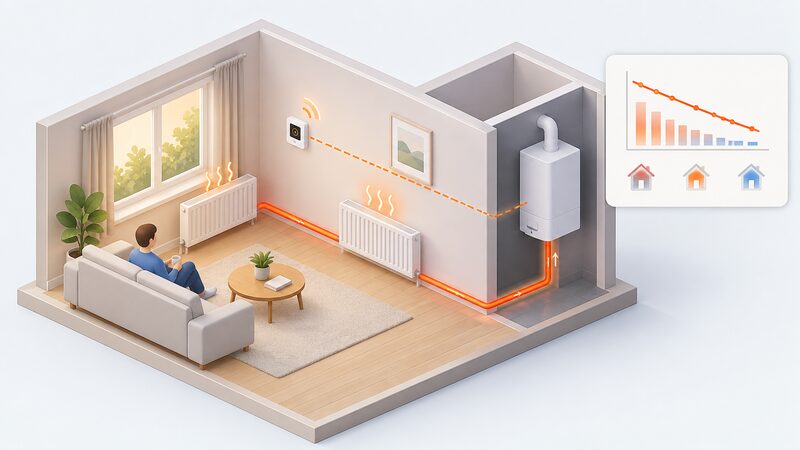
Load compensation is a heating control strategy that alters the boiler flow temperature and prevents overheating, by automatically measuring internal air temperature against the set point on a room thermostat1. Instead of a thermostat that simply closes a switch when the room is cold and opens it when the room is warm, a load compensating control tells the boiler how hard to work: when the room is far below setpoint it asks for hot water to the radiators, and as the room warms the requested flow temperature falls2. The effect is that the boiler spends more of its time running gently and continuously rather than firing flat out and shutting down.
That matters because every boiler installed in a British home under current rules is a condensing appliance, and a condensing boiler only earns its efficiency when the water coming back from the radiators is cool enough for the flue gases to condense. Which? puts that threshold plainly: a return temperature below 55 degrees C is essential for condensing to occur and for the boiler to operate at its advertised efficiency3. On/off switching at a high fixed flow temperature works against that. Manufacturer guidance states that the operating efficiency of a condensing boiler can be enhanced by up to 13 per cent when installed with the correct controls4, while University of Salford tests cited by BEAMA found an annual savings potential of up to 12 per cent from load and weather compensation controls alone applied to an in-situ boiler, compared with a Class I thermostat5.
Load compensation is also a regulatory item, not just a marketing feature. Under Boiler Plus in England, a new gas-fired combi installation must include either a smart, load or weather compensation control or a flue gas heat recovery unit6.
What a load compensator actually changes
The controlled variable is the temperature of the water leaving the boiler. Vaillant describes enhanced load compensation as adjusting the temperature of the water leaving the boiler depending on the amount of energy required to reach the desired room temperature8. Worcester Bosch describes the same feature as adjusting the temperature of the heat going to the radiators, lowering the temperature supplied as the room warms so comfort is maintained but energy use is reduced9. BEAMA's Part L guidance puts it in the formal terms used by assessors: load compensation varies the flow temperature from the boiler in relation to the difference between the measured room temperature and the room thermostat set point10.
Two consequences follow. The first is comfort: the room approaches setpoint on a falling heat input rather than a full-power blast followed by a cut-off, so overshoot is reduced. The second is efficiency: at the tail of each heating period, when most of the hours of a mild British winter day are spent, the radiators are running at a lower temperature and the boiler is condensing.
The difference from weather compensation is the sensor, not the outcome. Vaillant sets the two side by side: load compensation adjusts output based on the current temperature of your home, while weather compensation uses outdoor temperature11. A load compensator responds to what is actually happening in the room, including solar gain, cooking and occupancy, but only after the room has already started to drift. A weather compensator anticipates, but cannot see the room.
Why on/off control wastes energy in a condensing boiler
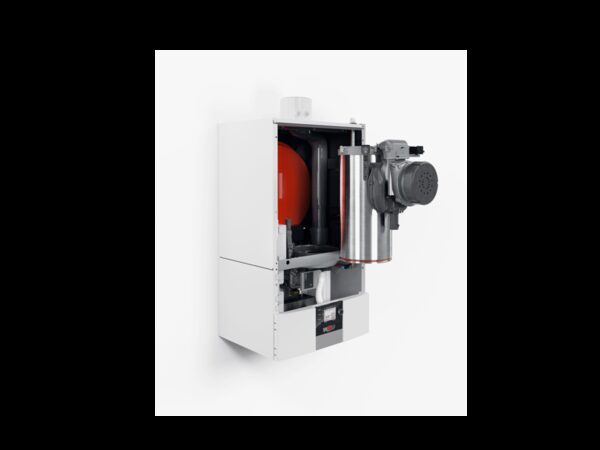
A condensing boiler is designed to run at a lower temperature than older traditional models, extracting over 90 per cent of the heat from the fuel it burns by cooling the water vapour from the burner flame below the point at which it condenses, usually around 50 degrees C, against the 50 to 60 degrees C typical of a central heating system12. If the control system holds the flow temperature at a factory default well above that, the flue gases leave hot and the latent heat goes up the flue.
On/off switching adds a second problem: cycling. Ideal notes that a boiler that is too large will dump too much heat into the system too fast, resulting in short cycling and fuel waste13. Because boilers are commonly sized on hot water output rather than on heat loss, most homes have far more boiler than the building needs on an average day. Each cycle has a burner start, a purge and a period of warming the heat exchanger back up, none of which delivers useful heat to the rooms, and the research group CREDS describes modern boilers as able to modulate their output, giving more or less heat, which is exactly the capability that plain switching leaves unused14.
BEAMA frames the general role of controls as regulating the operation of a central heating boiler and reducing waste15. The distinction worth holding onto is that a thermostat controlling only time and room temperature can still leave the boiler running at a flow temperature nobody chose, while a compensating control governs the boiler's operating point as well as its on-time. For the related requirement that controls must be able to shut the boiler down entirely when no heat is called for, see boiler interlock.
Modulation: matching boiler power to the heat the house is losing
Modulation is the boiler's ability to vary burner output between a minimum and its rated maximum. It is a property of the appliance; load compensation is the control strategy that uses it. Where the two are not matched, the benefit is lost. BEAMA's Part L guidance sets out two commissioning requirements that bear directly on this: the boiler central heating output should be set to match the calculated heat loss, and gas combination boilers should be selected that can modulate down to the typical heating load of the building10.
That second point is the crux of the oversizing problem. A combi sized for a bath fill may have a minimum heating output several times the heat loss of a well-insulated flat in October. Ideal describes what then happens in practice: a modern oversized boiler will modulate down and then turn the burner off while the boiler stays on, rather than switching the whole appliance on and off16. The burner still stops and starts, just at a level below the boiler's turndown limit.
Where modulation is properly matched, the behaviour changes character. A modulating boiler adapts its burner's power with no on/off alternation, which is described as giving very high precision in temperature regulation and less wear and tear on components17. Component wear is a real part of the case: burners, fans and ignition electrodes are stressed by starts, not by steady running.
For households, three practical questions follow: what the boiler's minimum output is relative to the home's heat loss, whether the control can request a flow temperature rather than just a switch closure, and whether the radiators are large enough and balanced well enough to deliver the design heat at a lower water temperature. Radiator balancing is checked, among other things, by whether the return temperature is below 55 degrees C3.
OpenTherm: the language a modulating control speaks to a boiler
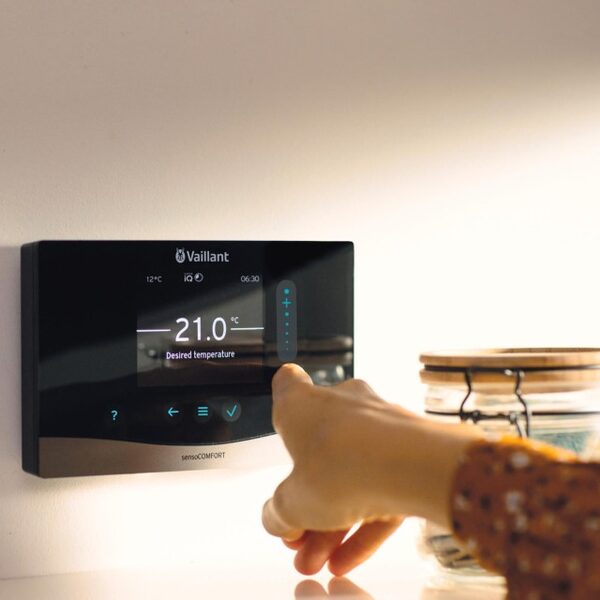
To ask for a specific flow temperature, a control needs more than a pair of switched wires. OpenTherm is a multi point to point communication protocol for use in heating, ventilation and air conditioning systems, primarily designed to control modulating heating appliances18. It exists precisely because the traditional room thermostat's on/off controller is inadequately effective for that job19. Which? describes it as the most common boiler communication protocol, enabling modulation20.
Open protocols are non-proprietary communication standards that allow smart heating controls and boilers to speak to each other regardless of manufacturer21. From 2026 onwards, more than 100 heating and ventilation manufacturers worldwide with large production volumes are OpenTherm members7. Policy is moving the same way: a consultation has been proposed on requiring new boilers to use open protocols such as OpenTherm, so heating systems are compatible with a wide range of heating controls22. A deeper treatment sits on the OpenTherm page.
What the data connection adds beyond switching
Because the link is a data channel rather than a relay, the same connection carries more than a heat request.
| Capability | What it gives the household |
|---|---|
| Modulating heat request | The control sets boiler output for precise heating control rather than switching it23 |
| Settings and diagnostics | Appliance settings and data such as error and malfunction codes can be read over the same channel19 |
| Fault codes to the control | Open protocol systems can send boiler fault codes to compatible smart controls, simplifying diagnostics and reducing downtime21 |
| Remote operation | A remote control can operate the appliance via the temperature controller and display other parameters and alarms19 |
| Future integration | Space is reserved in the protocol for future applications such as home energy management systems and grid data19 |
Controls commonly offer OpenTherm as one mode among several: the EPH CP4M, for example, features OpenTherm, Optimum Start, TPI and on/off control modes24. That ordering is a useful ladder. On/off is crude switching; TPI cycles in a measured proportion of each period to reduce overshoot without varying boiler output; OpenTherm varies the output itself.
Flow and return temperature: the 55 degrees C line
Condensing depends on the return temperature, and the return temperature depends mostly on the flow temperature and the size of the emitters. The threshold is quoted slightly differently by different bodies. Which? uses below 55 degrees C as essential for condensing and for advertised efficiency3. Nesta puts the water returning to the boiler at below around 54 degrees C25. The official product characteristics database treats 55 degrees C or higher as the default design flow temperature behind standard efficiency data, with lower-temperature efficiency adjustments applying where a system is designed for a design flow temperature of 45 degrees C or 35 degrees C and this is stated on the commissioning certificate26.
Against those thresholds, defaults are high. Many boilers are set by default to heat water to 75 to 80 degrees C, and at a flow temperature of 80 degrees C the return is probably 60 degrees C, above the condensing point27. Adjusting a gas-powered combi from 80 degrees C to 60 degrees C is described as capable of saving money each year28, and independent guidance for homes with condensing combi boilers points to 60 to 65 degrees C or lower27.
The Energy Saving Trust notes that the maximum possible savings from adjusting boiler temperature come from a combi weather compensation kit or load compensator rather than a manual setting29. That is the distinction between turning a dial down once and having a control choose the right flow temperature for every hour of the year. More on target settings is on thermostat temperature settings.
Efficiency and bills: what the numbers support
The figures in circulation measure different things against different baselines, and they should not be added together.
| Claim | Figure | Baseline | Source type |
|---|---|---|---|
| Condensing boiler with correct controls | up to 13% efficiency gain4 | boiler without those controls | maker |
| Load and weather compensation, Salford tests | up to 12% annual saving5 | in-situ boiler with a Class I thermostat | independent |
| Installing heating controls, Great Britain | around £100 a year30 | home gaining controls | independent |
| Full set of heating controls | £110 a year31 | system previously with no controls | gas network |
The Energy Saving Trust's figure of around £100 a year in Great Britain applies to installing heating controls as a whole30, and Cadent's £110 a year applies where a system previously had no controls at all31. Neither is a load compensation figure. The Salford result is the closest thing to one, because it isolates the controls applied to a boiler already in place and compares them against the lowest control class5. The maker's 13 per cent figure is the widest claim and comes from a boiler manufacturer describing its own products' potential4.
Two things explain why the range is so wide. The first is the starting point: a home moving from no controls gains from time and temperature control before compensation contributes anything. The second is the building. A home whose radiators cannot deliver design heat at 55 degrees C will see the control forced back up to high flow temperatures on cold days, and the condensing gain shrinks. Whether the savings show up in a given household is discussed further under do heating controls save money.
Control classes: on/off load compensation is not the same as modulating
The ErP control classes distinguish the two implementations. Class IV is a load compensator room thermostat, on/off; Class V is a load compensator room thermostat, modulating32. Both read the room and vary the heat delivered, but only Class V asks the boiler for a flow temperature. Several familiar thermostats sit in the on/off load compensation category rather than the modulating one, which is why a product can be described as load compensating and still be switching the boiler. The full ladder is set out under ErP control classes.
Which boilers and controllers support it
Under Boiler Plus, the qualifying additional control categories for a new gas combi are flue gas heat recovery, a weather compensation device, a load compensation device and smart heating controls33. Manufacturers list load compensation accordingly.
| Product | Stated capability |
|---|---|
| Hive thermostats | OpenTherm enabled, for compatible combi boilers only34 |
| Wiser Thermostat Kit 1, 2nd Generation | Smart control of combi boilers via OpenTherm or relay switching35 |
| Salus RT520TX | Modulates boiler output for efficient and precise heating control23 |
| EPH CP4M | OpenTherm, Optimum Start, TPI and on/off control modes24 |
| Ideal Halo Combi 2-Zone upgrade | Boiler communication by OpenTherm protocol; Boiler Plus by enhanced load compensation36 |
| Ideal Halo Lite | Enhanced load compensation provides compliance with Boiler Plus37 |
The recurring qualifier is worth noting. Hive's own material states that its heating supports OpenTherm, which enables boiler modulation for compatible combi boilers34, and Wiser's specification offers relay switching as the fallback where OpenTherm is not available35. A control sold as modulating will behave as an on/off control on a boiler that cannot talk to it.
Retrofit is therefore a question about the boiler, not the thermostat. Where a boiler has an OpenTherm terminal, a compatible control can be added without replacing the appliance; where it has only a switched live, the household gets time and temperature control and, at best, on/off load compensation. Practical considerations for the work itself are covered under installing and replacing heating controls.
"The servicing and repair of heating equipment is not covered under building regulations, but should always be done by a competent person."
What this means for household energy independence
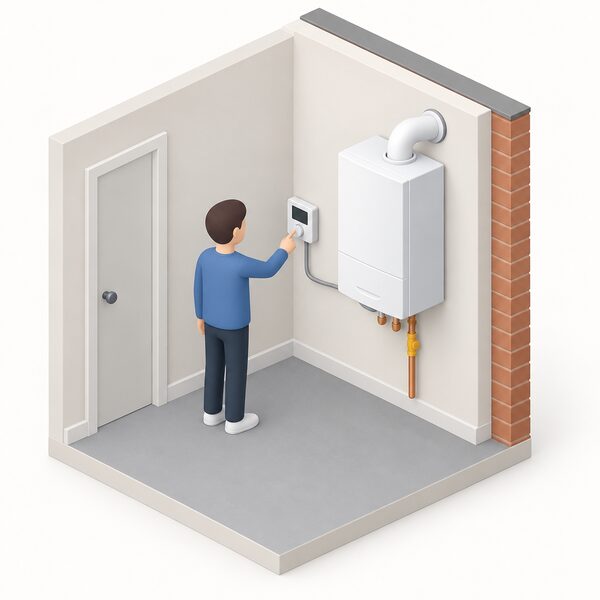
Load compensation makes a home's heating respond to the home rather than to a fixed factory setting. That is a genuine, if modest, form of independence: it reduces the fuel bought for a given level of comfort, it reduces the number of burner starts and so the wear that shortens equipment life, and the control logic runs locally between thermostat and boiler, without needing a supplier, a tariff or an internet connection to function.
The dependence that remains is substantial and should be stated as firmly. A gas boiler with load compensation is still a gas boiler: the fuel arrives by pipe from a supplier and an import chain, and the appliance's efficiency ceiling is set by the fuel it burns. The control depends on a manufacturer's protocol implementation on both sides of the link, and the recurring "compatible combi boilers only" caveat means the pairing, not the household, decides whether modulation happens at all34. Where a control adds cloud features, app access and remote operation bring a further dependence on a company's servers, though the compensating behaviour itself does not; that trade-off is examined under heating controls and energy independence.
The wider direction of travel reduces the protocol risk. More than 100 manufacturers are OpenTherm members7, a requirement for new boilers to use open protocols has been proposed22, and space is reserved in the protocol for future applications including home energy management systems and grid data19. A boiler and control that already speak an open, modulating language are better placed for whatever replaces them, since the same low flow temperatures that keep a condensing boiler condensing are also the conditions a heat pump needs. Making a home's emitters work at 55 degrees C is work that carries forward.
Sources38 cited
- ECO4 New Measures and Products Guidance v3.0, Ofgem, 2026-03-26
- Upgrading and replacing your boiler, Centre for Sustainable Energy, 2026-06
- How to balance your radiators, Which?, 2025-09-16
- Do I need a boiler, solar panels or heat pumps to heat my home, Worcester Bosch, 2026-09-20
- Low Carbon Heat Distribution Systems, BEAMA, 2021-10
- The ultimate way to comply with Boiler Plus, Alpha Innovation, 2018-12-18
- OpenTherm benefits, OpenTherm Association, 2026-01-14
- Controls and frost protection, Vaillant, 2026
- Boiler controls explained, Worcester Bosch, 2026-09-17
- Part L 2022 Heating Controls Guidance, BEAMA, 2022
- The benefits of weather compensation, Vaillant, 2026
- High efficiency condensing boilers: the benefits, Ideal Heating, 2026-09-17
- Heat only boiler size guide, Ideal Heating, 2026-09-17
- The secret life of boilers: how your boiler misbehaves, CREDS, 2020-03-31
- The power at our fingertips: manifesto for best practice heating controls, BEAMA, 2021-10-13
- Heat only boiler troubleshooting guide, Ideal Heating, 2026-09-17
- Smart thermostat and OpenTherm, Netatmo, 2026-09-20
- What is OpenTherm, OpenTherm Association, 2026-01-26
- Why a communication protocol, OpenTherm Association, 2026-01-26
- How to buy the best smart thermostat, Which?, 2026-09-17
- What are open protocols in heating controls, ESI Controls, 2026
- The future for smart heating policy, Drayton Controls, 2025-09-25
- Salus RT520TX wireless programmable thermostat, Salus Controls, 2026-09-20
- EPH CP4M control, EPH Controls, 2026-01-29
- Lowering boiler flow temperature to reduce emissions, Nesta, 2026-09-17
- Low temperature heating and condensing boiler efficiency, Product Characteristics Database, 2026-09-17
- One simple way to adjust your boiler to lower your heating bill, Which?, 2025-09-29
- Boiler flow temperature, Smart Energy GB, 2026-04-22
- Should I turn my boiler's flow temperature down, Energy Saving Trust, 2026-05-20
- Thermostats and heating controls, Energy Saving Trust, 2026-02-10
- Energy efficiency advice, Cadent Gas, 2026-09-20
- The power at our fingertips (full report), BEAMA, 2021-10
- Boiler Plus explained, Intergas Heating, 2026-09-17
- Hive smart heating, Hive, 2026-09-17
- Wiser Thermostat Kit 1, 2nd Generation, Drayton Controls, 2026-09-08
- Halo Combi 2-Zone specification sheet, Ideal Heating, 2026-09-17
- Ideal Halo Lite, Ideal Heating, 2026-09-17
- Why choose an OFTEC registered competent person, OFTEC, 2026-09-17
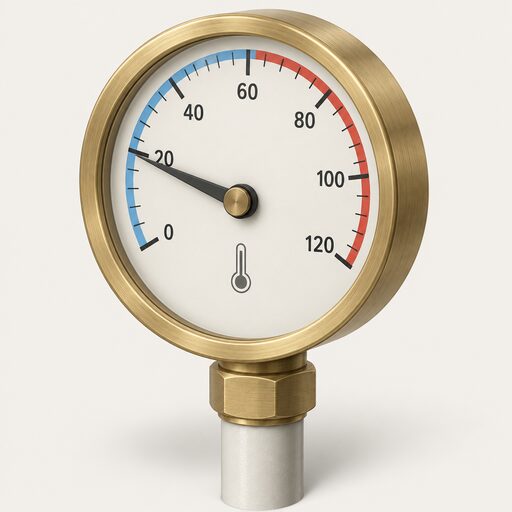 Weather Compensation ControlsDoes your boiler or heat pump run hotter on cold days and cooler when it is mild?
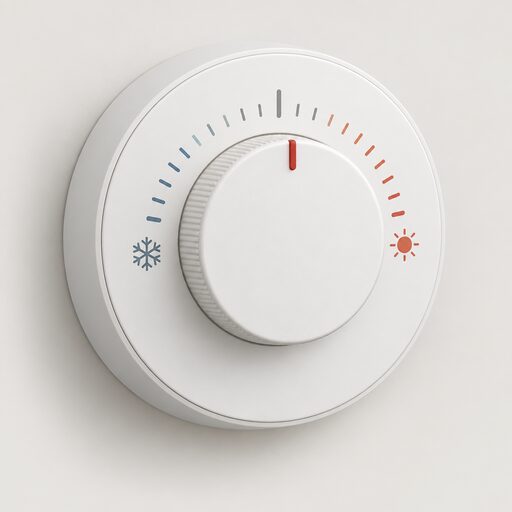 Controls and Smart OperationWhy does a heat pump need different controls from a boiler, and what does weather compensation actually do?
 Flow TemperatureTurning down your boiler flow temperature can cut your gas bill, but how low can you go before the house feels cold?
 Heating Schedules and SetbackIs it cheaper to leave the heating on low all day, or set it to come on only when you need it?
 The Full Boilers and Heating GuideWhich boiler suits your home, and when is it worth swapping the old one?
 OpenTherm Protocol ExplainedOpenTherm lets a smart thermostat and a boiler from different makers work together properly, so the boiler can run gently instead of switching on and off.