
In this guide
The Hive Thermostat is a smart heating control sold by Hive, the smart home brand owned by British Gas. It replaces a conventional room thermostat and programmer with a wireless thermostat, a receiver wired to the heating system, and a hub that connects to the home router, so heating and hot water can be scheduled and adjusted from a phone as well as at the device itself1. Hive launched its first smart thermostat in 2013 and describes the current model as its best-selling product3.
On price, the Hive Thermostat is listed at £119, or £101.15 for Hive+ members, on the Hive price list4. Hive claims the thermostat can save up to £167 a year on bills, a figure it bases on the Ofgem medium annual gas consumption1. Independent coverage has been more cautious: Which? reported in 2021 that Hive said buying the Hive Active Heating Thermostat could save "up to £110" a year5.
The thermostat is compatible with most gas and LPG boilers, oil boilers that already have a thermostat or programmer, and electric boilers with a standard room thermostat or programmer1. It does not work with storage heaters or individual plug-in electric room heaters2. Hive recommends professional installation, and does not offer pro installation on oil boilers1.
What the Hive Thermostat is and how it controls your heating
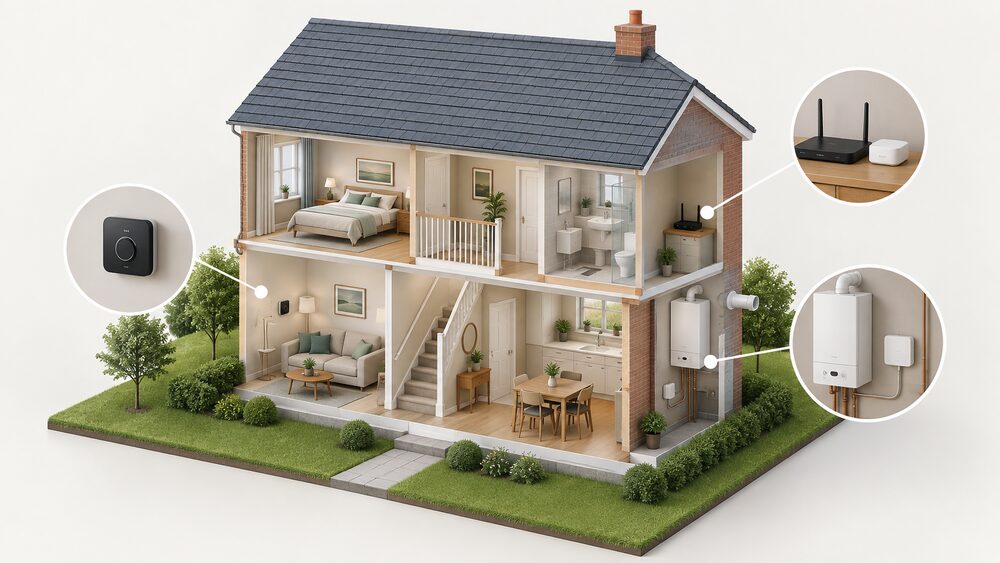
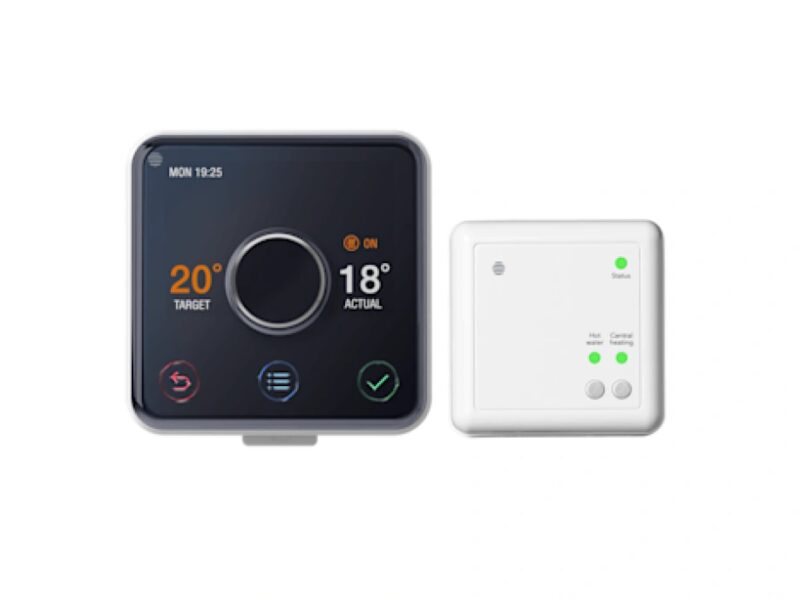
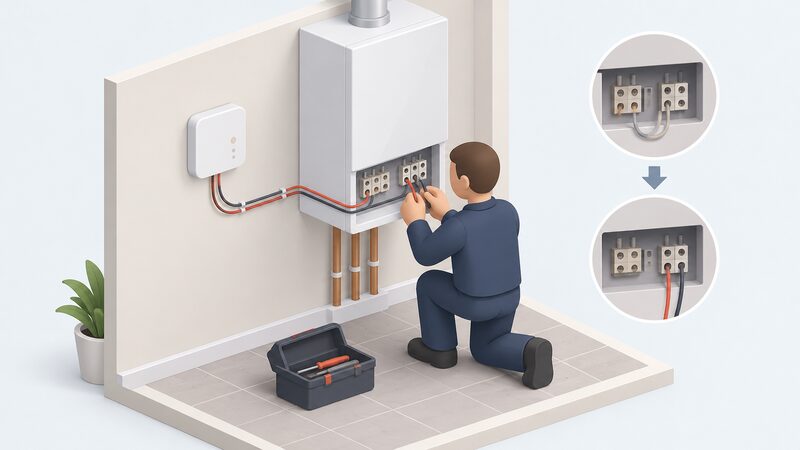
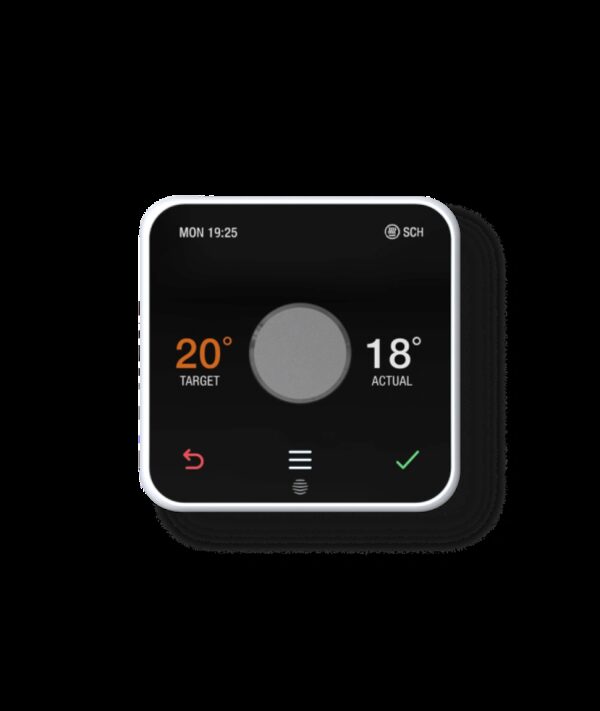
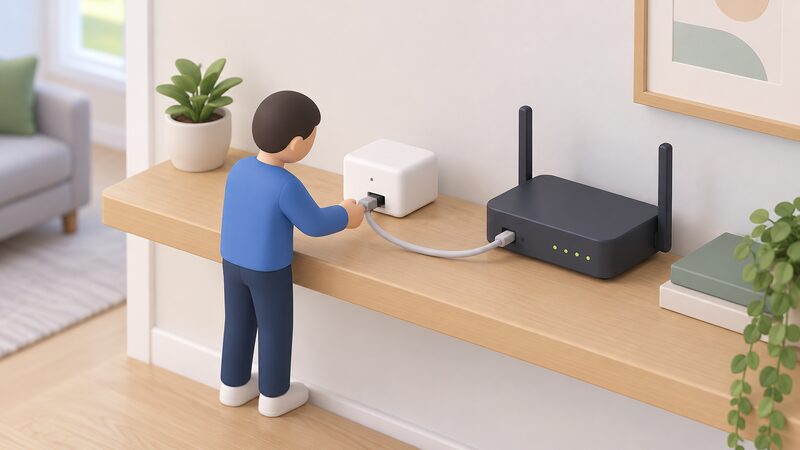
A Hive smart thermostat system is made up of three parts: a hub, a receiver, and the smart thermostat2. The hub connects to the home router and allows control of the heating and other Hive devices; the receiver is wired into the heating system; and the thermostat is the wireless control the householder handles day to day6. Setup follows that order: set up the hub, wire the receiver to the heating system, then finish setting up in the Hive app6.
The thermostat itself is a wireless device powered by four AA batteries, with the receiver running on 230V mains1. It is for indoor use only1. Hive heating devices communicate locally using Zigbee, which is the protocol that carries commands between the thermostat, receiver and hub1. That local link is what lets the heating keep running when the broadband connection drops.
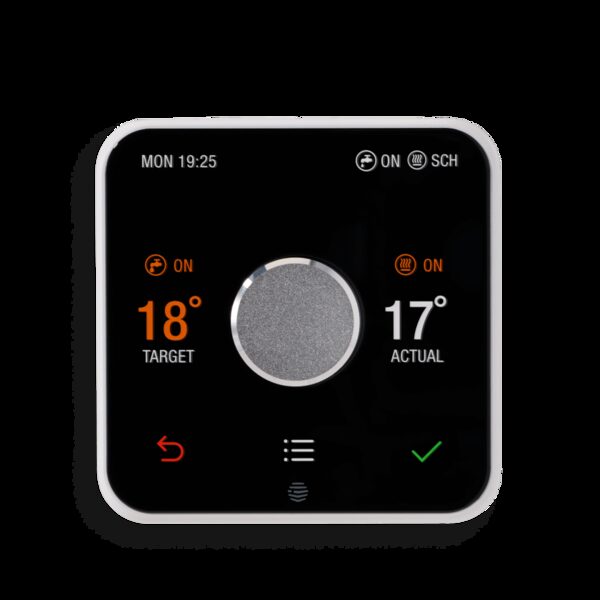
Control is split between the device and the app. The Hive Thermostat has classic manual controls on the device as well as app control, while the Hive Thermostat Mini is full app control only7. On a conventional system with a hot water cylinder, the thermostat can turn hot water on or off, set a schedule, or boost it, with boost periods running from 5 minutes up to 6 hours1. A separate cylinder thermostat still performs its own job of stopping the cylinder becoming hotter than it needs to be, cutting the heat supply from the boiler once the water reaches the set temperature8.
For households with more than one heating circuit, additional thermostats can control up to 6 zones of heating where an existing multizone system is already in place1. Hive's smart thermostats also work with wet underfloor heating systems9.
Features: app control, scheduling, geolocation and voice assistants
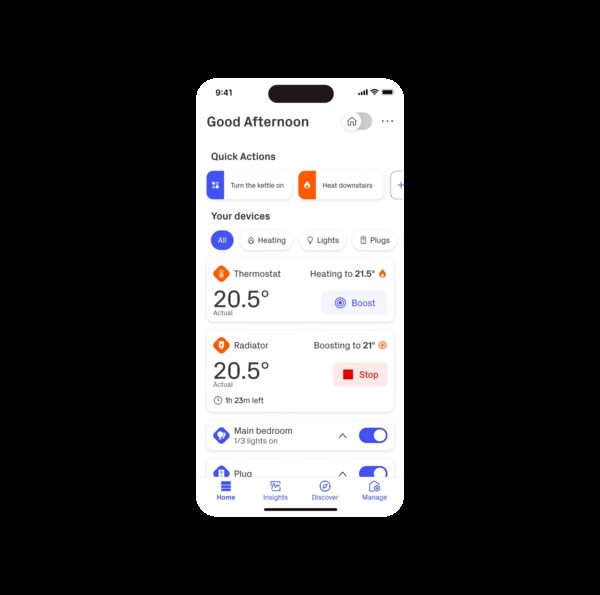
The feature set is built around scheduling, remote adjustment and alerts. Time slots can be set so the heating comes on to fit daily life, such as the end of school or bathtime, and the thermostat can be managed from a phone wherever the householder is10. Hive describes a ready-by function that pre-heats the home to reach a chosen temperature at a chosen time, for example starting the heating at the right moment to achieve 19 degrees at 7pm10.
Geolocation is one of the more distinctive features. Hive Thermostats come with a geo-location feature that sends an alert if the householder goes out leaving the heating on, and another when they are on the way home2. The thermostat can also send a notification if the person is on the way back and the home is colder than the set temperature3. Both the Hive Thermostat and the Hive Thermostat Mini carry this feature11.
Voice control runs through Alexa, Google Assistant, Apple HomeKit, Siri Shortcuts and IFTTT on both models7. Hive also supports Amazon Alexa, Google Home and Apple Home as platforms, but does not currently support Matter12. Other features listed across the range include holiday mode, heating boost, geolocation alerts and frost protection7.
Hive Actions is the mechanism for linking the thermostat to other Hive devices, such as a motion sensor that turns heating and lights off3. The Sunsave Plus product page describes controlling a Hive thermostat, EV charger or heat pump in one app, which shows the thermostat sitting inside a wider Hive ecosystem rather than as a standalone device13.
Compatibility: which boilers and systems it works with, and which it does not
Hive lists compatibility with most gas and LPG boilers, oil boilers if they have an existing thermostat or programmer, and electric boilers with a standard room thermostat or programmer1. The general rule Hive gives is that if a boiler works with a standard room thermostat or programmer, Hive can control it2. That covers a large share of UK homes, because the receiver is taking the place of an existing wired control rather than asking the boiler to do anything new.
There are firm exclusions. Hive does not work with storage heaters or individual plug-in electric room heaters2. It is also incompatible with Honeywell SmartFit Controls, described as a system sometimes installed to control gas and LPG boilers as part of the existing central heating setup, and with the Vaillant VR 65 Control Centre1. Hive publishes a list of incompatible Worcester Bosch models as well, covering a set of older ICC2, CDi, Greenstar HE Plus and Greenstar R appliances1.
OpenTherm is supported on both Hive thermostat models, but only on compatible combi boilers, and only single zones are supported with OpenTherm7. On multizone systems, OTR1 receivers must be configured to Standard (Relay) Mode1. OpenTherm is the modulating control protocol that lets a boiler vary its output rather than switching on and off, and Hive states that using it optimises energy usage and can reduce gas emissions by up to 12%1. More on the protocol is at OpenTherm.
For oil boilers, Hive does not offer professional installation and recommends contacting an OFTEC-qualified engineer to install the thermostat1. That is a practical limit rather than a compatibility one: the thermostat can control the boiler, but the installation route is different.
Specifications and what is in the box
The thermostat measures 95.9mm wide, 95.9mm high and 46.2mm deep including the dial, or 31.4mm excluding it, and weighs 265g with batteries or 172g without1. The receiver measures 90mm wide, 90mm high and 36.8mm deep; the single channel receiver weighs 159g including the back plate and the dual channel receiver 166g1. Temperature precision is 1°C12.
| Item | Specification |
|---|---|
| Thermostat dimensions | 95.9mm x 95.9mm x 46.2mm inc. dial, 31.4mm exc. dial1 |
| Thermostat weight | 265g inc. batteries, 172g exc. batteries1 |
| Receiver dimensions | 90mm x 90mm x 36.8mm1 |
| Receiver weight | 159g single channel, 166g dual channel, inc. back plate1 |
| Power supply | 4 x AA batteries (included); 230V mains1 |
| Connectivity | Zigbee1 |
| Temperature precision | 1°C12 |
| System requirements | Internet connection recommended 1.5Mbps or higher; iOS or Android device; Hive app1 |
The thermostat is supplied with four AA batteries, and the system requires an internet connection of 1.5Mbps or higher, an iOS or Android device running an up-to-date operating system, and the Hive app1. Hive notes that new customers enter a learning period of a minimum of 30 days where there is no historical data to base a forecast on1.
Accessories are sold separately. The Hive Thermostat Stand clicks the thermostat into place with no DIY or wall mounting needed, has a solid zinc base with a weighted base and non-slip feet, and measures 78mm deep14. It only fits the Hive Active Heating 2 Wireless Thermostat (Model SLT3 or SLT3b)14. The Hive Radiator Valve ships with three valve body adaptors (M30, M28 and Danfoss RA), an adaptor guide, two AA batteries and a user guide15.
Cost, Hive+ membership and claimed savings
The Hive Thermostat is listed at £119, or £101.15 for Hive+ members, on the Hive price list4. The Hive Thermostat Mini appears at £101.15 on the smart heating page, while a separate price list shows £79 and £67.15 for Hive+ members, so the two published figures for that model do not agree7. Independent coverage in 2025 put the Hive Smart Thermostat from £13016, and a 2026 comparison described the Hive Active Heating thermostat as costing just under £100 from the Hive website17. Prices are quoted as listed and the VAT position is not stated in these figures.
Hive+ membership is quoted at £3.99 a month, or £39.90 a year, on the Hive Thermostat product page1. A separate Hive price list shows a different membership figure, so the two documents disagree and the current price should be confirmed at purchase. Hive states that more than 120,000 people have joined Hive+1. Membership brings member pricing on devices, ongoing warranty on Hive products, and a claim of cutting cold weather bills by up to an extra £18 a month15.
On savings, Hive claims the thermostat can save up to £167 a year on bills, with a stated basis of £167.12 based on the Ofgem medium annual gas consumption1. The two figures are close but not identical. Independent reporting is more cautious: Which? noted in 2021 that Hive said buying the Hive Active Heating Thermostat could save "up to £110" a year5. The gap between the maker's current claim and the older independent report reflects both the date and the assumptions behind each figure. Wider evidence on what controls deliver is at Do Smart Heating Controls Actually Save Money?.
Installation: what a pro fit involves and what happens without internet
Hive's position on self-installation is qualified. The company states that if a householder is experienced with electrical wiring, then technically they can install a thermostat themselves, but that professional help is always recommended6. Elsewhere Hive says it would always recommend calling in the experts, pointing to its expert partner engineers2. Independent guidance records that Hive recommends professional installation of its smart thermostats19, and a comparison site notes that Hive recommends finding a local tradesperson because the job can be a bit of a task17.
The reason for the caution is the wiring. Many boilers are not Wi-Fi-enabled, so smart thermostat systems still include a wired element, and that wiring should be done by a trained professional20. Hive's own guidance is to make sure the mains supply to the central heating is off before going any further with wiring2. The Hive Thermostat product page states that pro installation is by a British Gas-backed expert, and that no pro installation is offered on oil boilers, where an OFTEC-qualified engineer is recommended instead1.
What happens without internet is straightforward. Hive states that if the internet connection goes down, the thermostat continues to work with the thermostat switching the heating on and off as normal, and app control is unavailable until the internet returns1. Local scheduling and the manual controls on the device keep working. Hive's support guidance names a home WiFi problem as the most common reason a thermostat is not connecting21.
If the household moves, the receiver, thermostat and signal booster if present all form part of the heating system and stay with the property22. To continue using a Hive Thermostat in a new home, it must be bought for that home if it is not already installed there22.
Warranty, returns and delivery
Hive products come with a 1-year standard warranty1. Hive+ membership is described as a route to ongoing warranty on all Hive devices, which is the main way the cover extends beyond the first year15. For comparison, the Hive air source heat pump offer carries a 5-year warranty covering all reasonable parts and labour, an unlimited number of repairs, and up to £1,000 including VAT for getting access and making good for each repair, conditional on an annual service to keep the warranty valid for the whole period23. That is a different product with different terms, and it shows how much the cover varies across the Hive range.
Returns must be arranged within 14 days, counted from the day the products are received, or from the point of installation if a British Gas engineer installed them1. Once the product is received, Hive aims to process the refund within 5 working days1. Delivery is free as standard when spending over £100, with a stated window of 3 to 5 business days1.
Where Hive sits among UK smart thermostats
Hive is one of the longest-running smart thermostat brands in the UK, with its first smart thermostat launched in 20133. Hive describes itself as the UK's favourite smart thermostat brand9, and the Hive Smart Thermostat is described as recommended by Which? experts24. British Gas sells smart products from its Hive brands, including smart thermostats, smart plugs and smart light bulbs25. Independent guidance states that Hive's smart thermostats and radiator valves will still be supported into 202619.
The comparison field is broad. tado° states its Smart Thermostat X is compatible with 95% of heating systems, including gas boilers, heat pumps, water-based underfloor heating and air conditioning units12. Heatmiser's neoStat Pro is listed as compatible with solar, heat pump and most boiler technologies26, and its neo system covers heat pumps, electric heating and boilers27. Ferroli's thermostats are described as ideal for use with boilers, heat pumps and hybrid systems28. The Google Nest Thermostat E works with most central heating systems29, and Netatmo publishes guidance on heating controllers for the same market30.
The differences that matter for a household are compatibility, protocol support and platform openness. Hive's strengths are its long UK presence, British Gas backing, hot water control on conventional systems, and OpenTherm support on compatible combi boilers1. Its limits are the absence of Matter support, no air conditioning control, and a 1-year standard warranty12. Side-by-side comparisons are at Nest vs Hive, tado° vs Hive and Drayton Wiser vs Hive.
For a household weighing energy independence, the position is mixed. The thermostat keeps local control of the heating through Zigbee and the manual controls on the device, and the heating keeps running when the internet drops1. What remains is a dependence on the Hive app and Hive's platform for remote control, scheduling from away and any cloud features, on a broadband connection, and on the manufacturer for support and warranty. The absence of Matter support means the device is not part of the cross-brand standard, so integration depends on Hive's own choices. More on that trade-off is at Heating Controls and Energy Independence and Smart Heating Controls: Security, Data and Product Support.
Sources30 cited
- Hive Thermostat product page, Hive, 2026-09-17
- How does a smart thermostat connect to a boiler, Hive, 2025-12-17
- How to use a smart thermostat, Hive, 2025-12-17
- Hive shop, Hive, 2026-09-17
- Smart thermostats: can you save what the companies claim, Which?, 2021-12-22
- A simple guide to smart thermostats, Hive, 2025-11-20
- Smart heating range, Hive, 2026-09-17
- Thermostats and heating controls, Energy Saving Trust, 2026-02-10
- What is multizone heating, Hive, 2025-12-15
- Are smart thermostats worth the investment, Hive, 2025-12-15
- Six smart energy saving tips, Hive, 2026-05-14
- tado vs Hive, tado°, 2026-07-09
- Sunsave partnership, Hive, 2026-09-17
- Hive Thermostat Stand, Hive, 2026-09-17
- Hive Radiator Valve, Hive, 2026-09-17
- Best boilers, Confused.com, 2025-11-03
- tado vs Hive: which smart thermostat is best, Energy Helpline, 2026-09-20
- Hive home, Hive, 2026
- How to buy the best smart thermostat, Which?, 2026-09-17
- What is a smart thermostat, Smart Energy GB, 2026-08-19
- Wireless thermostat not working, Hive, 2026-05-14
- Moving home with Hive, Hive, 2025-12-17
- Hive air source heat pumps, Hive, 2026-09-17
- How to buy the best smart thermostat, Hive, 2026-05-14
- How to choose the best energy company, Which?, 2026-01-19
- neoStat Pro, Heatmiser, 2025-08-28
- Renters Rights Act opens the door for landlords to get smart, Heatmiser, 2026-01
- Connectivity and thermoregulation thermostats, Ferroli, 2026-09-17
- Compare thermostats, Google, 2026-09-20
- Heating controller comfort guide, Netatmo, 2026-09-20
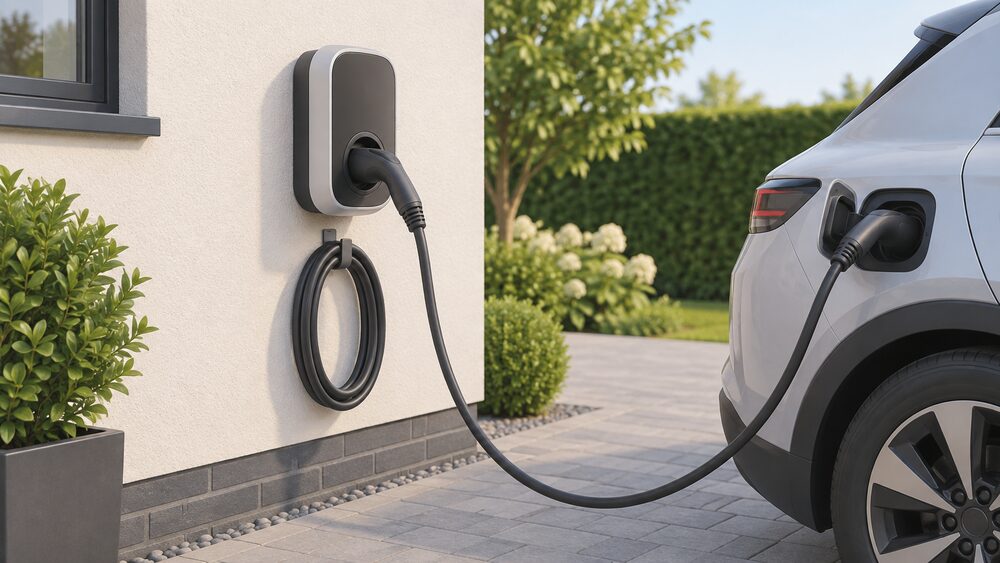 Hive EV ChargerCan you still buy the Hive EV charger, and is it still supported if you already own one?
 Hive Thermostats and Heating ControlsHive is a smart thermostat brand owned by Centrica and sold through British Gas.
 Hive Smart HomeHive is a widely installed UK smart-home brand covering heating, plugs, sensors and security through one app, with a hub at the centre and a paid Hive+ tier on top.