
In this comparison
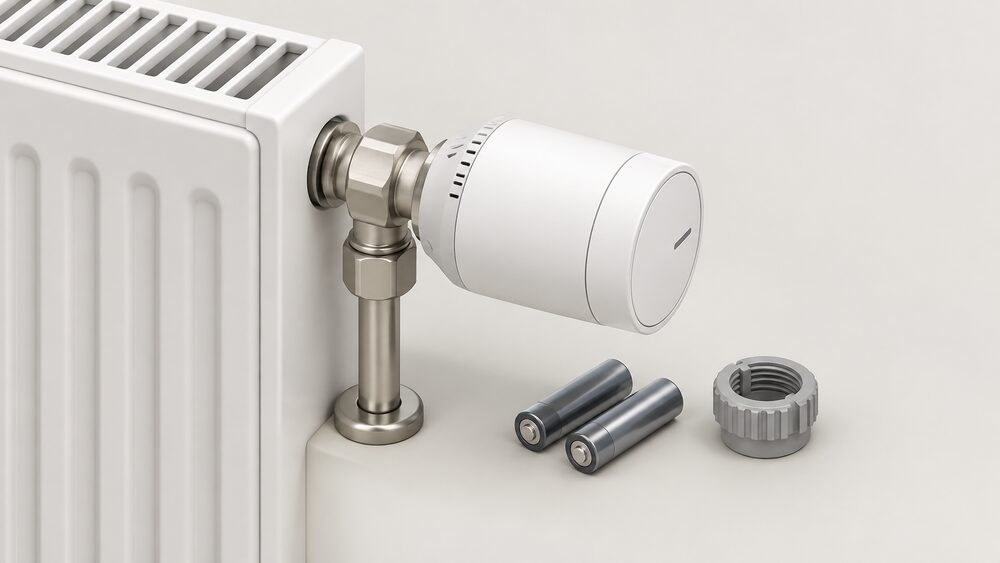
A smart TRV is a thermostatic radiator valve with a motorised head and a radio link, so each radiator can be scheduled and set from a phone instead of by hand. Drayton's own guidance describes them as valves that "allow you to control the temperature of individual rooms or zones remotely through a smartphone app", with the ability to program each device to heat individual rooms on custom schedules1. That is the whole proposition: room-by-room control, without draining or rewiring the system.
The purchase decision is rarely about the valve alone. It is about which hub, which protocol and which app the household is willing to live with, and whether the savings claims attached to the brand hold up. Smart radiator valves typically cost between £35 and £80 each, about five times more than a traditional TRV, according to Which?2. A four-bedroom house with eight or nine radiators is therefore a four-figure decision once a hub and a thermostat are added.
The savings case is real but modest at the valve level. Adding TRVs to a system that already has a programmer and thermostat can save £30 a year in Great Britain and £40 in Northern Ireland, the Energy Saving Trust estimates3. Using TRVs and heating controls properly could save around £100 per year on bills, the Centre for Sustainable Energy puts it4. The larger claims, up to 31% for tado°, come from the thermostat and the scheduling behaviour around it, not from the valve bodies.
What a smart TRV does, and what it can save
A smart TRV replaces the manual head on an existing valve body. The motor drives the pin in and out on a schedule, and the radio link carries setpoints and readings to a hub or app. The primary benefit, in the maker's own words, is "enhanced energy efficiency, which translates to lower utility bills"1. The mechanism is straightforward: a room that is not being used is not heated, and a room that is being used reaches temperature when it is wanted rather than when the whole house is warmed.
The independent figures are the ones to plan around. The Energy Saving Trust's £30 a year in Great Britain and £40 in Northern Ireland applies to adding TRVs to a system that already has a programmer and thermostat3. The Centre for Sustainable Energy's figure of around £100 per year assumes the TRVs and the heating controls are used properly together4. Confused.com puts a smart thermostat and controls at up to £110 a year5. These are not additive: they describe overlapping measures on the same heating bill.
The bigger percentages belong to the thermostat layer. tado° states that its system is "proven to reduce your energy usage by 22%", based on internal data across all tado° customers up to 30 November 20237. Uswitch reports that tado° systems, "according to tado°'s manufacturers, can help users save up to 31% on their energy bills"6. Both are the maker's claims rather than measured outcomes in an individual home, and the 22% figure is an average across a customer base, not a promise for a particular property.
For a household's energy independence, the valve itself changes little: the gas still arrives through the meter and the boiler still fires. What changes is how much of the heat produced is used in rooms that need it, and how much control sits in the home rather than in a fixed schedule. The full guide to heating controls sets the valve layer in the wider picture of thermostats, programmers and zoning.
The five systems at a glance
The UK market for smart TRVs is dominated by a handful of ecosystems, each with its own hub, app and expansion path. The table below sets out what each is, from the facts available.
| System | What it is | Hub and protocol | Notable features |
|---|---|---|---|
| tado° | Smart thermostat and TRV range, maker product pages7 | App-based, Energy IQ tariff connection7 | Geofencing, open window detection, weather adaptation, holiday mode7 |
| Drayton Wiser | Smart TRV range from a controls maker1 | Zigbee-based smart heating8 | Open window detection, frost protection, child lock, on-valve controls2 |
| Hive | Smart products from British Gas's Hive brand, including thermostats, plugs and bulbs9 | Hive app, expandable to security, lighting, sensors and plugs6 | Hive Smart Thermostat from £13010 |
| Aqara | Smart Home Radiator Thermostat E12 | Smart home ecosystem | GPS tracking, open window detection, frost protection, on-valve controls2 |
| Tuya | White-label ecosystem used by many own-brand valves | Varies by brand | Feature set set by the brand, not the platform |
Hive is described by one retailer as "the UK's largest eco-tech brand"11, a claim that comes from a commercial partner rather than a regulator. British Gas sells smart products from its Hive brands, including smart thermostats, smart plugs and smart light bulbs9. The practical difference between the five is less about the valve and more about what else the household wants to connect: Hive customers can expand their smart home with security, lighting, sensors, plugs and connectivity through one app6.
Savings claims compared: up to 31% (tado°) and up to 19% (Wiser)
The two headline claims in this lane are tado°'s up to 31% and Drayton Wiser's up to 19%. They are not measured the same way, and the difference matters more than the numbers.
tado°'s 31% is reported by Uswitch as the manufacturer's claim: tado° systems "can help users save up to 31% on their energy bills"6. The same maker publishes a separate, more conservative internal figure: a 22% average reduction in heating consumption across all tado° customers, from data up to 30 November 20237. tado° also states that this "can add up to £244 less spent on heating costs" per year, a figure reflecting 22% of an average UK household gas heating bill of £1,109 for 20247. The £244 is therefore derived from the 22%, not from the 31%.
The independent figures sit below both. The Energy Saving Trust's £30 a year in Great Britain and £40 in Northern Ireland is for adding TRVs to a system that already has a programmer and thermostat3. The Centre for Sustainable Energy's around £100 a year assumes proper use of TRVs and heating controls together4. Confused.com's up to £110 a year is for a smart thermostat and controls5.
The gap between a maker's percentage and an independent pound figure is explained by what is being measured. A percentage saving is a share of heating consumption in homes that have adopted the system and changed their behaviour; a pound figure is an estimate of what a typical household can expect from the measure alone. Both can be true at once. The evidence on whether smart heating controls actually save money examines that gap in more detail.
"can help users save up to 31% on their energy bills"
Valve compatibility and fitting: adapters, M30 x 1.5 mm threads and no wiring
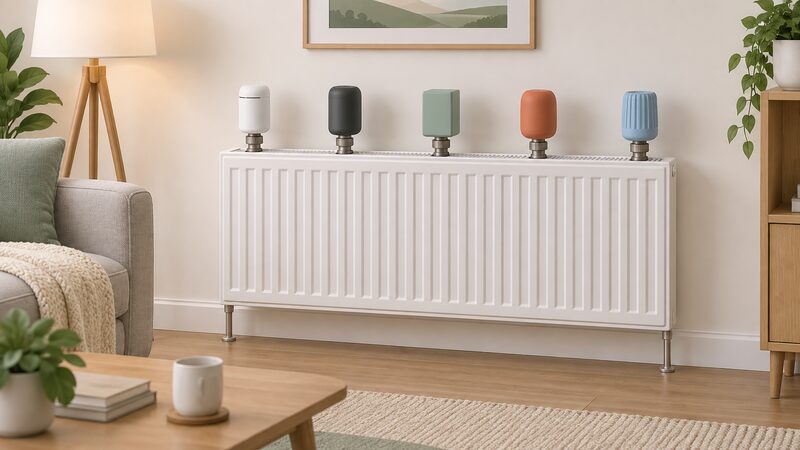
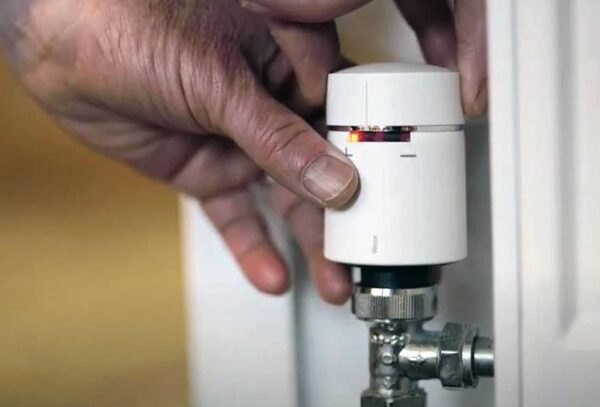
Fitting is the least glamorous part of the decision and the one most likely to go wrong. A smart TRV screws onto the existing valve body in place of the manual head. Most UK radiator valves use an M30 x 1.5 mm thread, and adapters cover the rest. Genius Hub's compatibility list marks unbranded TRV bodies, Oventrop direct acting valves and the British Gas TRV4 as compatible with its wireless radiator valve on an M30 x 1.5 mm thread12. That list is a useful illustration of how compatibility is checked: by valve body, not by radiator brand.
There is no wiring. The valve head is battery powered and the motor drives the pin, so nothing needs to be run back to the boiler or the wiring centre. That is what makes the change reversible, and it is why smart TRVs are a common first step for households that are not ready to replace a thermostat. It also means the valve cannot call for heat on its own: the boiler is still switched by the room thermostat or programmer, and the TRV only decides whether that heat reaches a particular radiator.
Where a system is being extended rather than started, the boiler end matters. Drayton sells a one channel smart room thermostat kit for combi boilers, which includes a smart room thermostat for improved control11. The wiring arrangements for heating controls explain how the thermostat, programmer and zone valves connect, and the boiler interlock requirement explains why the controls must be able to switch the boiler off as well as on.
Hubs, protocols and smart home integration: Zigbee, Matter and voice assistants
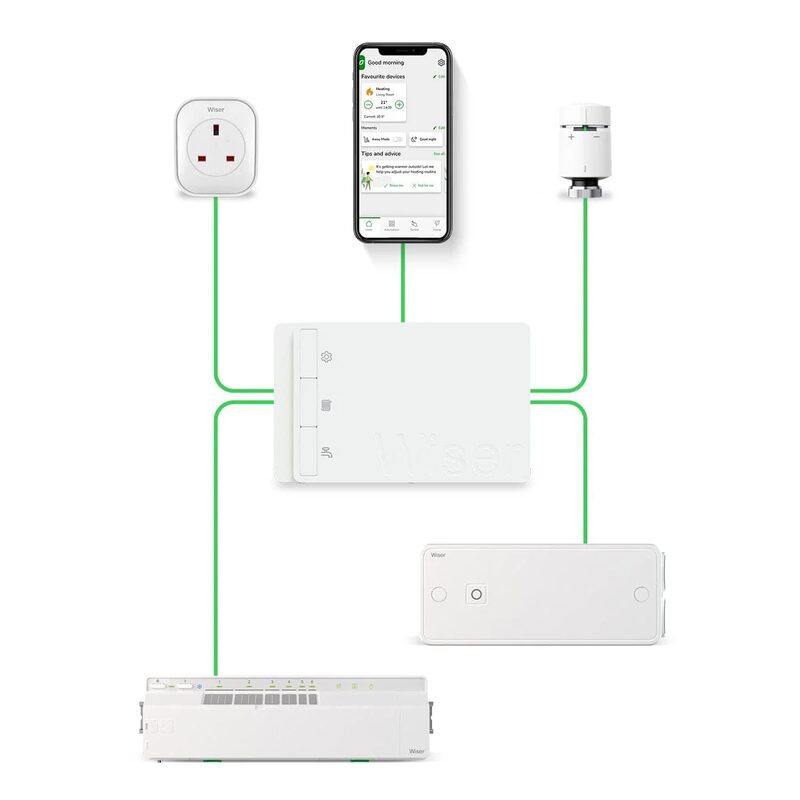
The protocol decides what the system can talk to. Zigbee is the most established option in UK heating: the UK Government has selected Zigbee Smart Energy as the mesh network for connected devices in the home to the utility network8. That selection is about the smart meter network rather than about radiator valves, but it explains why Zigbee appears so often in UK heating hardware and why Zigbee-based ranges such as Drayton Wiser fit naturally alongside a smart meter installation.
Matter is the newer route. The Switchbot Smart Radiator Thermostat with Hub Mini is listed as Matter compatible, alongside open window detection, GPS tracking, frost protection, child lock and on-valve controls2. Matter compatibility means the valve can be brought into a Matter controller rather than a single maker's app, which matters for households that already run a mixed smart home. The guide to Zigbee, Matter, KNX and Wi-Fi for heating controls sets out how these protocols differ in practice.
Voice assistants are a convenience layer rather than a control layer. They can change a setpoint or run a schedule, but they do not replace the hub, and they do not remove the dependence on the maker's cloud service for remote access. That dependence is the main limit on independence in this lane: the valves are local hardware, but the app, the schedules and the remote access usually run through a manufacturer's servers. The page on local control and cloud dependence examines what that means for a household that wants its heating to keep working if a service changes.
Sensors and automation: open window detection, geofencing and external temperature readings

The automation features are where the systems differ most, and where the marketing is thickest. tado°'s AI Assist includes geofencing, open window detection, preheat before arrival, weather adaptation, adaptive heating, holiday mode and full Energy IQ insights7. tado° states that open window detection alone delivers up to 12% energy savings7, and geofencing up to 23%7. Both are maker figures for the feature rather than measured outcomes in a given home.
The independent listings show how widely the basics have spread. The Aqara Smart Home Radiator Thermostat E1 offers GPS tracking, open window detection, frost protection and on-valve controls2. The Eve Thermo Smart Radiator Valve (5th Gen) adds a child lock to the same set2. The Drayton Wiser Smart Radiator Thermostat offers open window detection, frost protection, child lock and on-valve controls2. The Switchbot model adds Matter compatibility to the same list2. Open window detection and frost protection are now close to standard.
External temperature readings are the feature that separates a schedule from a control system. Weather adaptation uses the outdoor temperature to adjust the flow temperature or the start time, so the house is warm when it is wanted without overshooting on a mild day. The explanation of weather compensation controls covers the boiler-side version of the same idea, and load compensation and modulation explains how a boiler's output is matched to demand.
A separate room sensor is the other useful option. Where a radiator sits behind furniture or under a window, the sensor inside the valve reads the wrong temperature, and a system that can take its reference from a thermostat or a separate sensor in the room will control better. The tado° Smart Thermostat is compatible with boilers in wired or wireless thermostat setups, water-based underfloor heating, radiators and hydronic heat pumps, including air-to-water, water-to-water and geothermal7, so one app can hold several zones with different reference points.
Batteries, noise and day-to-day ownership
Day-to-day ownership of a smart TRV comes down to three things: how often the batteries are changed, how audible the motor is, and how much of the system depends on a service that the household does not control.
Battery life is driven by how hard the motor works. A valve that changes setpoint several times a day, in a room with wide temperature swings, will run its motor more often than one on a simple two-period schedule. Published battery figures vary by model and by household, so the maker's specification for the exact valve is the figure to work from. The same logic applies to noise: the motor is audible when it drives the pin, and a valve that moves frequently will be heard more often. Neither is a fault; both are consequences of how the schedule is set.
The ownership question that matters most for independence is the service behind the app. Schedules, remote access and automation features generally run through the maker's cloud, and the hardware is only as useful as the service attached to it. The page on smart heating control security, data and product support covers what happens when a maker changes or withdraws a service, and the page on smart thermostat subscriptions and app charges covers the fee question. A household that wants the heating to keep working without an internet connection should check what the system does when the hub is offline.
There is also a wider context. Smart meters are now installed in half of UK properties13, and the smart meter network operates "via a secure smart meter network that doesn't require WiFi"14. That network is separate from the heating system, but it is the infrastructure that time-of-use tariffs and flexibility schemes run on. Smart time-of-use tariffs are offered by British Gas, E.ON Next, EDF Energy, Octopus Energy, Ovo Energy and Scottish Power, as well as smaller firms including 100Green, Fuse Energy, Good Energy and So Energy15. A heating system that can respond to a tariff signal is worth more on one of those tariffs than on a flat rate.
Prices and where to buy in the UK
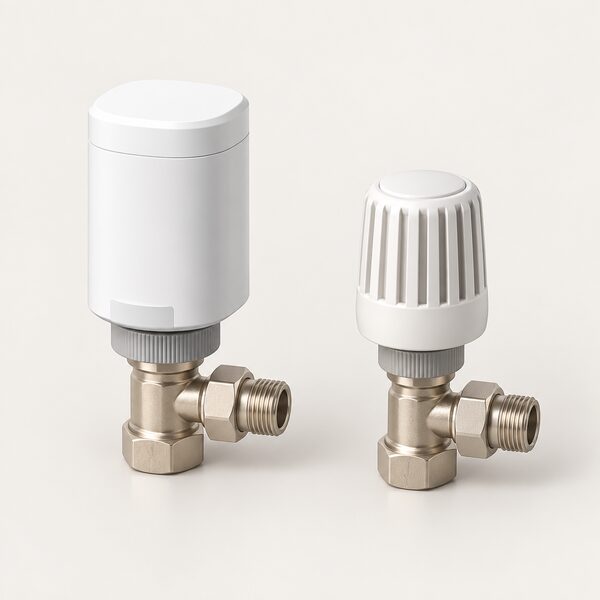
Prices in this lane are quoted per valve, and the range is wide. Smart radiator valves typically cost between £35 and £80 each, about five times more than a traditional TRV, according to Which?2. That is the figure to multiply by the number of radiators being converted, before adding a hub and, in most cases, a smart thermostat.
Published prices for the wider systems give a sense of the entry point. The Hive Smart Thermostat starts from £13010. That is a thermostat price rather than a valve price, and it is the figure published by the retailer at the date given. Where a system has no published valve price, the price is installer-quoted or set by the retailer, and no range should be assumed.
| Item | Published price | Date |
|---|---|---|
| Smart radiator valve, typical | £35 to £80 each2 | September 2026 |
| Hive Smart Thermostat | from £13010 | November 2025 |
Availability is broad. Hive products are sold through British Gas's Hive brand9, and Drayton Wiser sells through its own site and through installers1. Aqara and Switchbot valves are sold through general retail and smart home channels2. Tuya-based valves appear under many own-brand labels, with the feature set set by the brand rather than by the platform.
For a household weighing the valve layer against the thermostat layer, the comparison of smart TRVs and a smart thermostat sets out where each earns its place, and the guide to heating controls by home type covers how the choice changes with the property. The cost guide for heating controls covers the wider budget.
Sources15 cited
- Understanding smart TRVs, Drayton Wiser, 2024-12-01
- Best smart radiator valves, Which?, 2026-09
- Take control of your heating at home, Energy Saving Trust, 2026-09-11
- Energy saving tips for winter, Centre for Sustainable Energy, 2025-12-10
- Energy saving tips for the home, Confused.com, 2025-10-14
- tado° vs Hive: which smart thermostat is best, Energy Helpline, 2026-02-05
- tado° Smart Thermostats, tado°, 2026
- Zigbee, Connectivity Standards Alliance, 2026
- How to choose the best energy company, Which?, 2026-01-19
- Best boilers, Confused.com, 2025-11-03
- Homes under the hammer, Drayton Wiser, 2026-09-20
- TRV compatibility check, Genius Hub, 2026-02-02
- Smart meters research briefing, UK Parliament, 2026-06-07
- What is a smart meter, Smart Energy GB, 2026-08-10
- Time of use tariffs explained, Which?, 2026-04-23
 The Full Heating Controls GuideA room thermostat, a programmer and valves on your radiators are the basics.
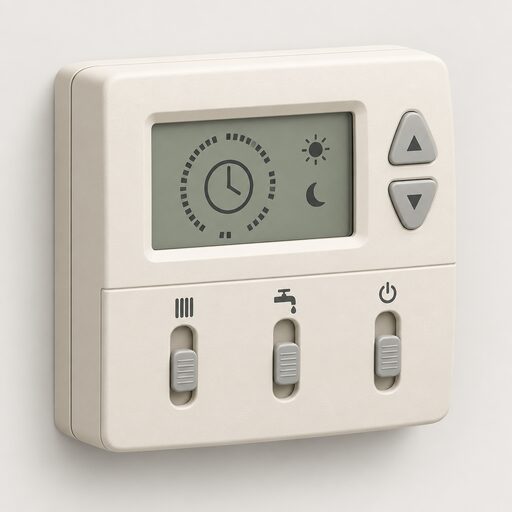 Controls, Thermostats and TRVsWhich heating controls actually cut your bills, and what does each one do?
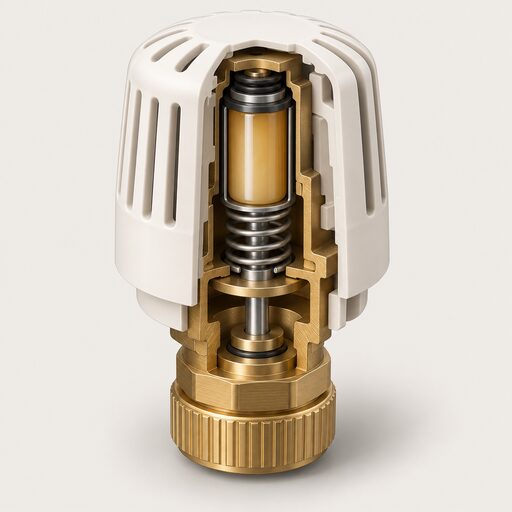 Thermostatic Radiator ValvesHow a thermostatic radiator valve senses room air temperature and throttles flow to a single radiator, what the numbered settings mean, where TRVs should and should not be fitted, and what the Building Regulations require across the UK.
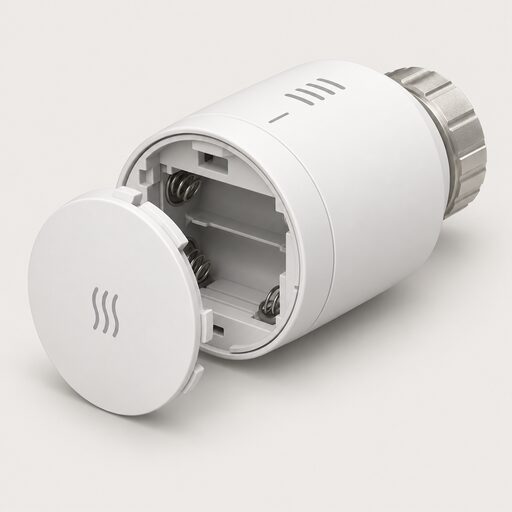 Smart TRVs ExplainedSmart radiator valves let you heat one room without heating the rest, on a schedule you set from your phone.
 Home EV Charger ManufacturersWhich home EV charger brands are worth considering, and how do you choose between them?
 Programmers, Timers and SwitchesWhat a heating programmer does, how single, twin and three-channel units differ, how programmers fit alongside room thermostats and TRVs, and how time control relates to smart meters, time-of-use tariffs and smart controls.