
In this comparison
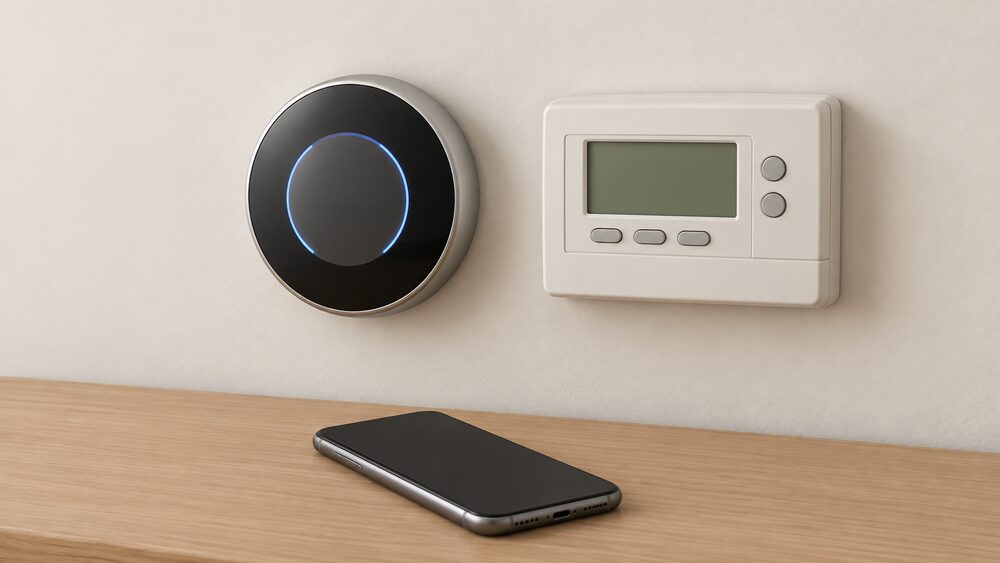
A traditional programmer controls when the heating comes on and off, and nothing else. A room thermostat sets the temperature, and a programmable room thermostat combines time and temperature controls in a single unit, able to set different temperatures for different times of the day1. A smart thermostat is an internet-connected thermostat that gives digital control over the central heating, adding app control, remote adjustment and, on some models, learning and automation2.
The practical difference is not the schedule. Both devices can run one. The difference is where the schedule lives, how easily it changes, and whether the boiler is told to modulate rather than simply switch. A smart thermostat can be programmed or remotely controlled to manage the home's temperature quickly and easily3, and most allow multiple routines so the house sits at the desired temperature at the right times3.
On cost, published UK figures put most smart thermostats at £100 to £200, with add-ons such as installation pushing the total higher4. A Which? guide gives around £100 to £250 for a smart thermostat for boiler heating controls5. A customer's outlay for a smart thermostat may be as little as £100 where a scheme or supplier subsidises it6. Savings are not guaranteed and depend on the home, habits, existing controls and energy prices2.
Smart thermostat vs traditional programmer: the short answer
A programmer is a time switch. It controls when the heating comes on and off, and on a system or regular boiler it also schedules the hot water1. A room thermostat is the temperature switch, and a programmable room thermostat combines time and temperature controls in a single unit, able to set different temperatures for different times of the day1. That combination is the baseline most UK homes already have, and it is the minimum expected when a boiler is replaced: a room thermostat and a programmer, or a programmable room thermostat8.
A smart thermostat does the same job with an internet connection attached. It is an internet-connected thermostat giving digital control over the central heating2, and it connects to Wi-Fi so heating and hot water can be controlled through a phone, tablet or desktop9. Some smart thermostats also operate as advanced room thermostats, combining convenience with improved boiler efficiency10.
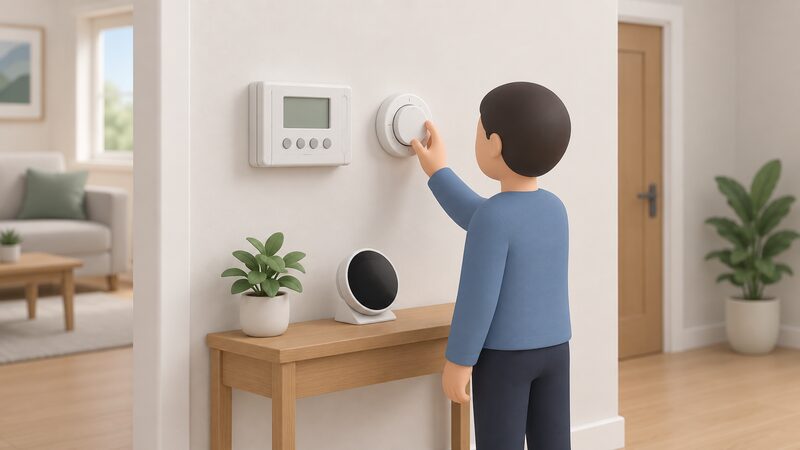
So the comparison is not smart versus dumb. It is a fixed, wall-mounted schedule that is edited at the unit, against a schedule that can be edited from anywhere, shared between household members, and adjusted automatically by the device. The boiler still does the heating. The control layer changes who can change it, when, and from where.
What a smart thermostat adds to that
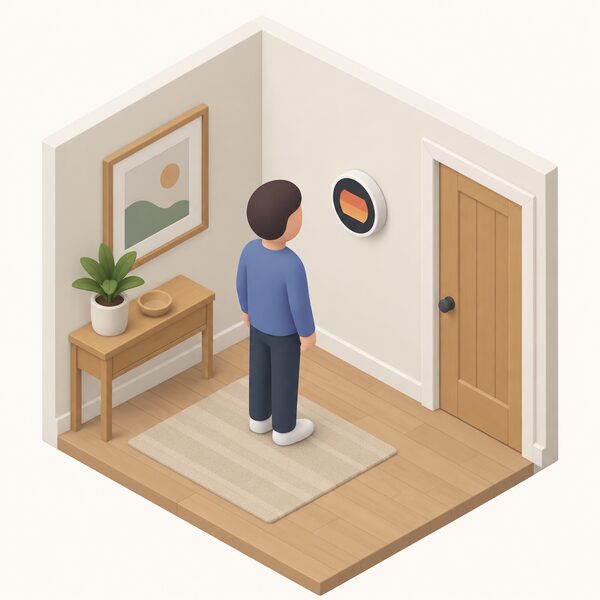
The extra functions are worth listing precisely, because they are what the price buys. Depending on the model, a smart thermostat may allow app control, voice control, hot water settings, location-based heating, reminders or alerts, open window detection, routine learning and heating-use tracking2. Most allow multiple routines so the home is at the desired temperature at the right times3.
Under the Boiler Plus framework, a smart thermostat with automation and optimisation is a recognised option, and the guidance sets out four functionalities that should be incorporated: time and room temperature control, automatic adjustment of settings, optimum start, and remote setting or adjustment with communications capability11. That is a useful checklist. A device that only offers app control, without automatic adjustment or optimum start, is a connected thermostat rather than a full Boiler Plus measure.
The buyer's guide from BEAMA notes that listed products are compatible with the definition in the 2018 Building Regulations Compliance Guide, known as a Boiler Plus option, and include automation and optimisation functions12. Independent testing looks at more than features: Which? puts smart thermostats in a temperature-controlled chamber, measuring how accurately they record the temperature and how quickly relays respond, alongside ease of use and privacy and security testing13. It has tested 32 smart thermostats14.
What this adds for a household is control resolution. A programmer gives one schedule for the whole house. A smart thermostat gives a schedule that can be changed in seconds, plus the option of automation that reacts to occupancy, weather or a time-of-use tariff. Whether that is worth the outlay depends on how often the existing schedule is wrong.
Where a smart thermostat earns its keep: control, zoning and learning
The strongest case for a smart thermostat is a household whose occupancy does not match a fixed schedule. Smart heating thermostats may interpret inputs such as preferred room temperature, learn from what you do, react to other data such as weather forecasts, and some have a learning function that predicts behaviour from how the heating is set and adjusted and how the home is occupied15.
Zoning is the second case. Zoning allows control of the temperature of individual rooms, and smart, programmable thermostats can keep the home heated on a schedule to help minimise bills16. That is usually delivered with smart TRVs on individual radiators, with the thermostat acting as the boiler's brain and the TRVs as the room-level valves. The two are separate measures in official scheme guidance: the standard heating control measure was split into a programmer and room thermostat measure and a TRV measure17, and the Great British Insulation Scheme lists thermostatic radiator valves and a boiler programmer and room thermostat as separate secondary measures18.
Flexibility is the third case, and it is the one that matters most for future tariffs. Research on the Passiv Smart Thermostat found that almost all non-users reported they would be likely to use its innovative smart or automated features, such as pre-heating or integration with demand shifting schemes or time-of-use tariffs19. That is stated intent rather than measured behaviour, but it points at where the value is heading: a control that can shift heating into cheaper hours.
"Field trials have shown 5% less gas used in homes where a room thermostat and programmer were replaced with a smart programmable room thermostat."
Compatibility: boilers, wiring and the neutral conductor question
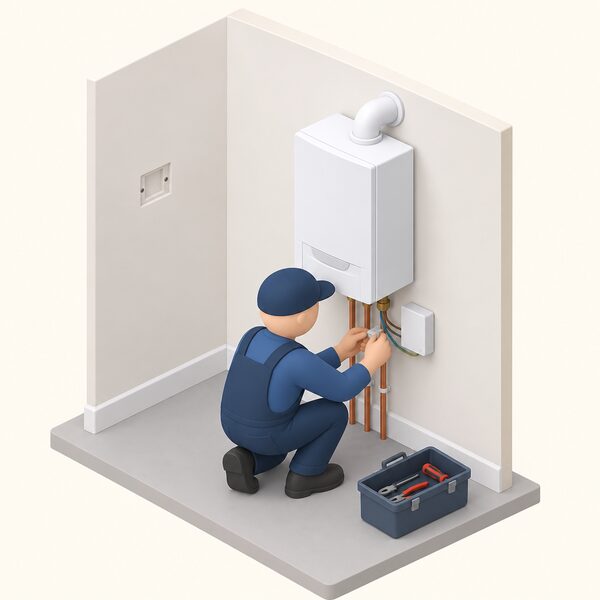
Compatibility is the first thing to check, and the guidance is direct: before buying a smart thermostat, check that it is compatible with your boiler and heating system, usually in the product description or on the thermostat manufacturer's website2. Many boilers are not Wi-Fi enabled, so many smart or wireless thermostat systems still include a wired element, and wiring should be done by a trained professional2.
The architecture explains why. A wireless thermostat usually sends a signal to a receiver connected to the boiler, which then tells the boiler when to turn the heating on or off, without a direct wired connection between thermostat and boiler2. The receiver is the part that needs wiring, and it sits at or near the boiler rather than at the old thermostat position. A smart thermostat connects to Wi-Fi, which allows it to form part of a more connected home heating system2.
On the neutral conductor question, the answer depends on the model and the wiring already present. Some products are sold as self or professional installation14. Where the existing thermostat position has no neutral, an installer may run one or fit the receiver at the boiler instead. It is worth separating this from the smart meter question: smart meters do not need home Wi-Fi to work, and the in-home display is not connected to the internet, so they can be installed in homes without broadband20. Smart meters are also different to smart heating controls, and one can be used without the other21.
Cost, installation and running costs compared
Published UK prices for the device cluster in a narrow band. Most smart thermostats cost between £100 and £200, but some have add-ons such as installation which push the total higher4. A Which? guide puts a smart thermostat for boiler heating controls at around £100 to £2505. Where a scheme or supplier supports the installation, a customer's outlay for a smart thermostat may be as little as £1006. If a smart thermostat is wanted outside any scheme, the device and the installation may both fall to the household9.
For comparison, a programmable room thermostat was listed at £49 in ErP Class II evidence to a parliamentary committee in 201523. That is an older figure for a different class of product, and it is given here as the only published price for a conventional programmable control in the record.
| Item | Published figure | Date and source |
|---|---|---|
| Smart thermostat, device only | £100 to £200, more with installation | 2026, Uswitch4 |
| Smart thermostat for boiler controls | Around £100 to £250 | 2025, Which?5 |
| Smart thermostat, supported outlay | As little as £100 | 2024, Nesta HeatFlex6 |
| Programmable room thermostat, ErP Class II | £49 | 2015, parliamentary evidence23 |
Running costs are a separate question from purchase price. Smart thermostats can reduce heating costs, but the same source notes that smart meters are needed first to make that possible24. Any cost benefit comes from reducing wasted heating rather than from the thermostat itself, so results vary from home to home2. The thermostat helps control how much energy is used, but will not be a barrier to switching the energy deal4.
Installation timing matters for a different reason. Independent guidance suggests looking into replacing an old thermostat before it gets too cold, before the autumn gets too chilly3, and a spring plumbing and heating checklist advises updating thermostat settings for spring and considering an upgrade to a smart or programmable thermostat for more efficient energy use and greater control25.
What this means for household energy independence
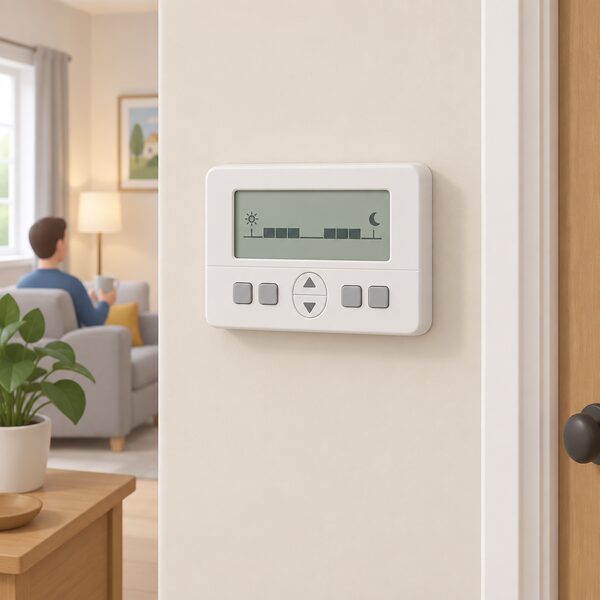
A smart thermostat keeps the boiler, the gas supply and the radiator circuit exactly where they were. What changes is the control layer, and that layer is where the dependence sits. A smart thermostat connects to Wi-Fi2, and the remote functions run through the maker's app and servers. The heating still works if the broadband drops, because the thermostat talks to the receiver at the boiler, but scheduling from a phone, learning and any weather-based automation stop.
The independence question is therefore about who holds the schedule. A programmer holds it on the wall, with no account, no app and no third party. A smart thermostat holds it in an account, and the household's access depends on the maker continuing to support the product and the app. That is a real trade: convenience and automation in exchange for a dependency that a traditional programmer does not create. The heating controls and energy independence page sets out the wider picture, and smart heating control security and data covers what the device collects.
There is a second dependency worth naming. Automation that shifts heating into cheaper hours only pays if the household is on a tariff that rewards it, and the research on automated heat flexibility is about potential rather than delivered savings19. A smart thermostat does not generate energy, store heat or reduce the amount of gas the boiler burns for a given heat demand. It reduces the hours the boiler runs when nobody needs the heat, and that is the whole of its contribution.
For a household already running a programmer and a room thermostat, the upgrade is a control improvement, not an energy source. The heating programmers and timers page covers what the existing device already does, and do heating controls save money examines the evidence on savings in more detail.
Sources25 cited
- Thermostats and heating controls, Energy Saving Trust, 2026
- What is a smart thermostat, Smart Energy GB, 2026
- How a smart thermostat can save you money this winter, ivie, 2025
- What are smart thermostats, Uswitch, 2026
- Boiler prices: how much does a new boiler cost, Which?, 2025
- HeatFlex: the untapped potential of automated heat pump flexibility, Nesta, 2024
- The Power at Our Fingertips: a manifesto for best practice heating controls in UK homes, BEAMA, 2021
- Upgrading and replacing your boiler, Centre for Sustainable Energy, 2026
- Do I already have one, Smart Energy GB, 2026
- Choosing the right heating controls: a simple guide for homeowners and installers, BEAMA, 2021
- Part L 2022 Heating Controls Guidance, BEAMA, 2022
- Heating controls buyers' guides, BEAMA, 2020
- How to buy the best smart thermostat, Which?, 2026
- Smart thermostat reviews, Hive brand filter, Which?, 2026
- Smart homes, lower carbon footprint, Energy Saving Trust, 2026
- Underfloor heating systems, NICEIC, 2026
- ECO4 scoring methodology part 1 and 2 decision, Ofgem, 2022
- Great British Insulation Scheme delivery guidance, Ofgem, 2023
- Passiv Smart Thermostat research, Centre for Sustainable Energy, 2025
- Smart meters and carers, Smart Energy GB, 2026
- A guide to smart meters, Energy Saving Trust, 2026
- Should I turn my boiler's flow temperature down, Energy Saving Trust, 2026
- Written evidence to the Business, Energy and Industrial Strategy Committee, UK Parliament, 2015
- Delivering smart meters, BEAMA, 2023
- Spring into home care, APHC, 2025
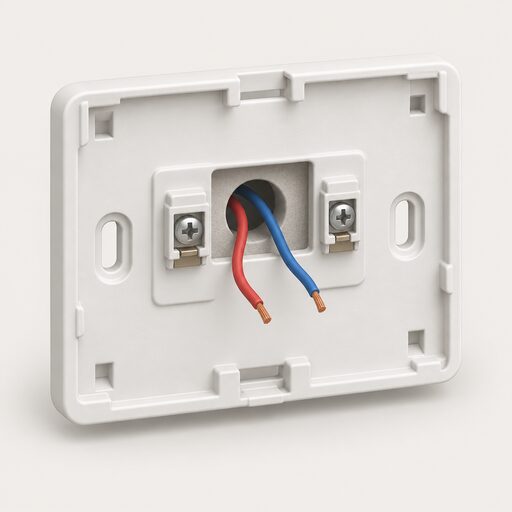 Installing Heating ControlsSwapping a thermostat or programmer looks simple, but which jobs can you safely do yourself and which need a registered installer?
 Smart Thermostat SubscriptionsDo you have to pay a monthly fee to use your smart thermostat, and what do you actually get for it?
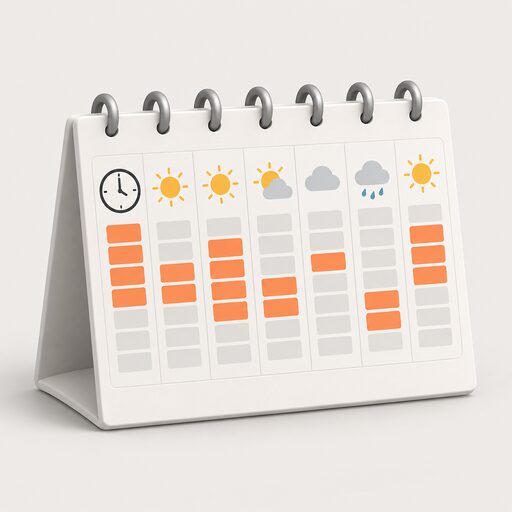 Programmers, Timers and SwitchesWhat a heating programmer does, how single, twin and three-channel units differ, how programmers fit alongside room thermostats and TRVs, and how time control relates to smart meters, time-of-use tariffs and smart controls.
 Smart Thermostats ExplainedWhat does a smart thermostat actually do, and is it worth it?
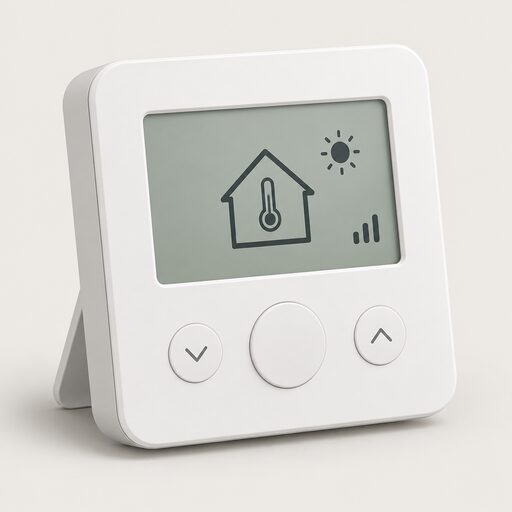 Room Thermostats ExplainedExplains mechanical, digital, programmable, wired, wireless and smart room thermostats, how they call for heat and switch it off, where to site them, how many zones a home needs under the building regulations, and what one degree on the dial is worth.
 The Full Heating Controls GuideA room thermostat, a programmer and valves on your radiators are the basics.