
In this answer
Short answer
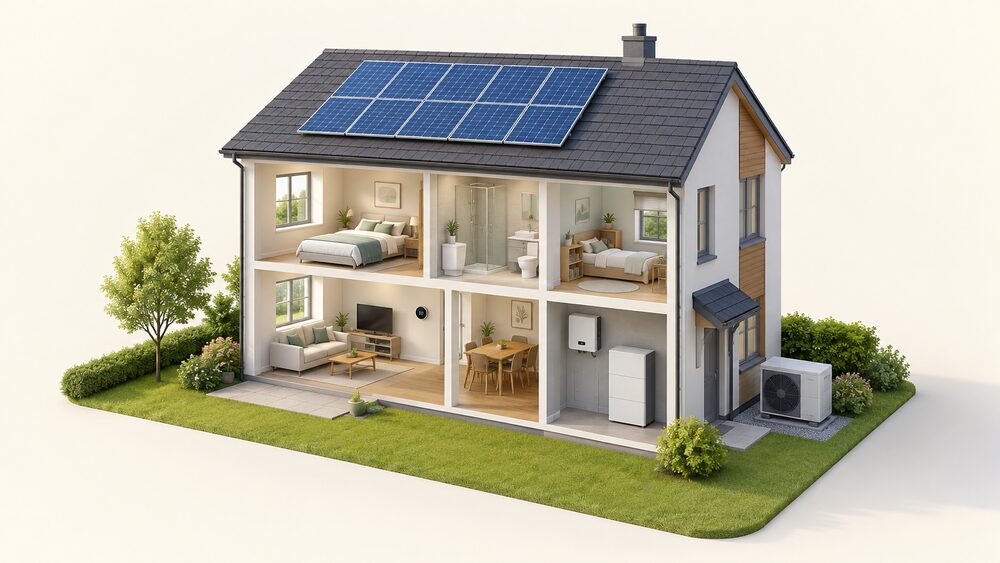
Yes, a heat pump can run on electricity from solar panels, and a smart thermostat can help by shifting when the heating runs. The panels themselves do the generating: solar panels can generate electricity that can help power a heat pump, reducing how much electricity is drawn from the grid1. A heat pump transfers heat from outside the home into it using electricity, and solar panels can be used to power it, which can lower both electricity and heating bills2.
What the thermostat cannot do is make the sun shine. It is an internet-connected thermostat giving digital control over the home's central heating3, and any cost benefit comes from reducing wasted heating rather than from the thermostat itself, so results vary from home to home3. The solar side of the pairing is a generation and timing question, not a thermostat feature.
The practical answer is that the two work together through scheduling and, where fitted, storage. Independent advice covers using heat pump controls to shift electricity usage to match solar generation, alongside export tariffs and time-of-use tariffs4. Combining solar panels with a home battery lets a household store free, renewable electricity to power its heat pump, making it less reliant on grid electricity5.
What "running a heat pump on solar" actually means
A heat pump is an efficient, low-carbon heating system that uses electricity to move heat rather than generate it6. It takes heat from the air or ground, raises its temperature through a refrigeration cycle, and transfers that heat to the central heating system7. In a home it uses electricity to move warmth from outside to inside8, and the same equipment can provide heating, cooling and hot water9.
So "running a heat pump on solar" does not mean the panels are wired to the heat pump. It means the heat pump draws from the same electrical supply the panels feed into, and the household tries to run the heat pump when the panels are producing. That is a timing and control problem, and it is where a thermostat or heat pump controller earns its place.
Some hybrid heat pump systems have controls that automate when and how the heat pump runs based on electricity costs, fossil fuel supply costs, time of day, and whether solar panels are generating or exporting electricity10. That last input is the closest thing to a genuinely solar-aware heating control: the system reads the state of the solar array rather than guessing from the clock.
Solar thermal is a different technology with a different job. Solar thermal panels harness sunlight to heat hot water, which is stored in a hot water cylinder or thermal store, and they usually only heat water11. Controllers fitted to a solar water heating system ensure the pump only runs when there is sufficient heat available at the panel12. That is a solar-aware control in the strictest sense, but it moves heat, not electricity, and it cannot run a heat pump's compressor.
Thermostat compatibility: which controls work with solar setups
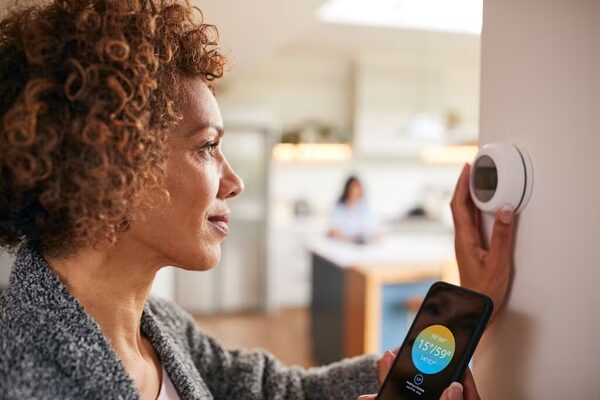
There is no solar certification a thermostat must hold. What matters is whether the control can schedule heating into the middle of the day, and whether it can talk to the heat pump or the tariff.
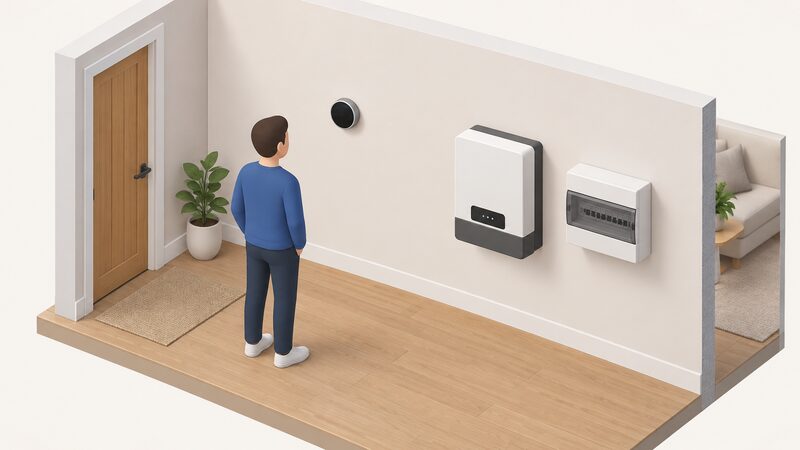
Tado's smart thermostat works with smart meters, which makes it easier to manage and control usage13. That matters because a smart meter is what gives a household visibility of when electricity is being imported and exported. A smart meter can be fitted in a home with solar panels: in most cases solar panels do not stop a household getting one14.
On the heat pump side, some manufacturers build the solar awareness into the unit. The Daikin Altherma 3 H HT Heat Pump is listed with Smart Grid compatibility and upgraded software for improved performance15. That is a maker's claim for its own product, and it points at the same idea: the heat pump can respond to a signal about grid or generation conditions rather than running to a fixed schedule.
| Control or product | Solar-relevant capability | Who states it |
|---|---|---|
| Tado smart thermostat | Works with smart meters | Independent guidance13 |
| Daikin Altherma 3 H HT | Smart Grid compatibility, upgraded software | Maker's product page15 |
| Hybrid heat pump controls | Automate running based on solar generating or exporting | Independent guidance10 |
| Solar thermal controller | Runs the pump only when sufficient heat is at the panel | Independent guidance12 |
A smart thermostat connects to Wi-Fi, which allows it to form part of a more connected home heating system3. That connectivity is what makes midday scheduling, remote adjustment and tariff-aware routines possible at all. It does not, on its own, tell the thermostat what the panels are doing.
Domestic hot water: the easiest solar pairing
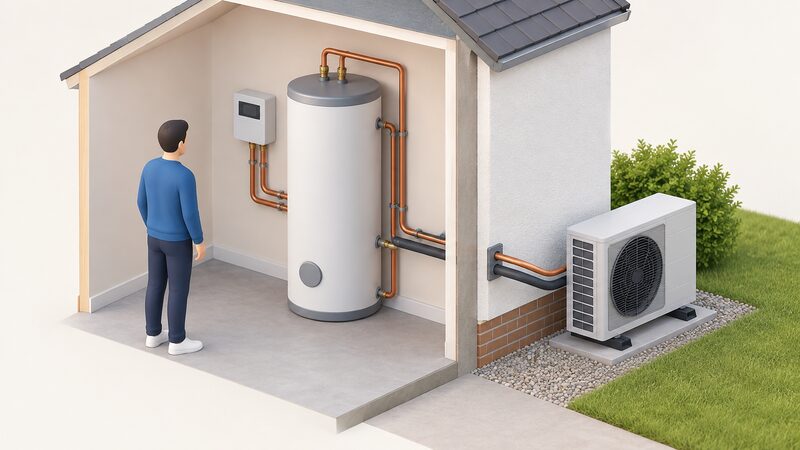
Hot water is where solar and heat pumps overlap most naturally, because both can serve a cylinder. Solar thermal panels heat hot water stored in a hot water cylinder or thermal store11, and a heat pump can also heat that cylinder. The two can share the store, with the solar contributing when the panel is warm enough and the heat pump taking over when it is not.
Solar thermal panels can be installed alongside other renewable or traditional heating systems, though they are not so easy to combine with a combi boiler11. A household with a cylinder and a heat pump is therefore in a better position than one with a combi and no store.
There is also a route through the tax system that recognises the overlap. Official guidance confirms that water source heat pumps and ground source heat pumps can be used to augment existing heating systems in the same way as solar panels16. Planning guidance for self-build homes advises considering solar panels to generate electricity, or solar water heating systems for hot water needs18.
For a household, the practical point is that a cylinder gives solar something to charge. Without one, solar thermal has nowhere to put its heat and the heat pump has no store to fill during the sunny hours.
How the thermostat and solar system work together in practice
The working arrangement has three parts: generation, storage and timing.
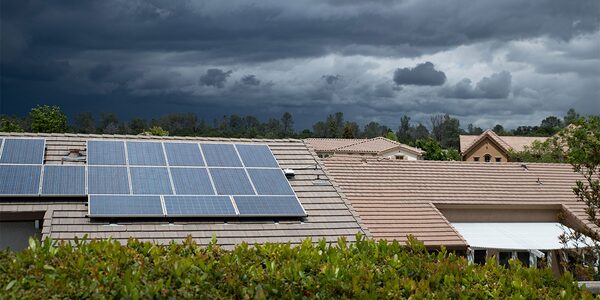
Generation is the panels. They can still generate electricity on cloudy days and during winter, though they are more efficient in direct sunlight2. That means the setup is not a summer-only arrangement, but output on a dull December day is a fraction of a clear June one.
Storage is optional but decisive. A home battery stores free, renewable electricity to power the heat pump, making the household less reliant on grid electricity5. Without it, solar electricity must be used the moment it is produced or exported.
Timing is where the controls sit. Independent advice covers how to use heat pump controls, shifting electricity usage to use as much solar generation as possible, signing up to export tariffs, and which heat pump or time-of-use tariffs might be suitable4. Apps and thermostats are available that automatically optimise a heat pump's schedule with the energy tariff19. Combining solar panels with a home battery is the arrangement that makes the heat pump least reliant on the grid5.
Where the setup falls short
The limits are real and worth stating plainly.
Solar output is weather-dependent. Panels generate on cloudy days and in winter, but less efficiently than in direct sunlight2. In a UK winter, a heat pump's demand peaks exactly when solar output is at its lowest, so most winter running comes from the grid.
The thermostat is not the saving. Any cost benefit comes from reducing wasted heating rather than from the thermostat itself, and results vary from home to home3. A household expecting the thermostat alone to cut bills will be disappointed.
Hot water control is not universal. Google Nest's Smart Thermostat E is listed as having no hot water control, alongside self or professional installation, modulating and learning behaviour, frost protection and GPS tracking. A household wanting separate hot water timing needs to check that the chosen control provides it.
Smart meters and smart heating controls are separate purchases. Smart meters are different to smart heating controls, and either can be used without the other20. In Wales, official guidance notes that while smart meters are independent of smart heating controls, combining the two can enhance the ability to manage heating and energy use remotely21. A smart thermostat will not be a barrier to switching energy deal22.
What this means for household energy independence
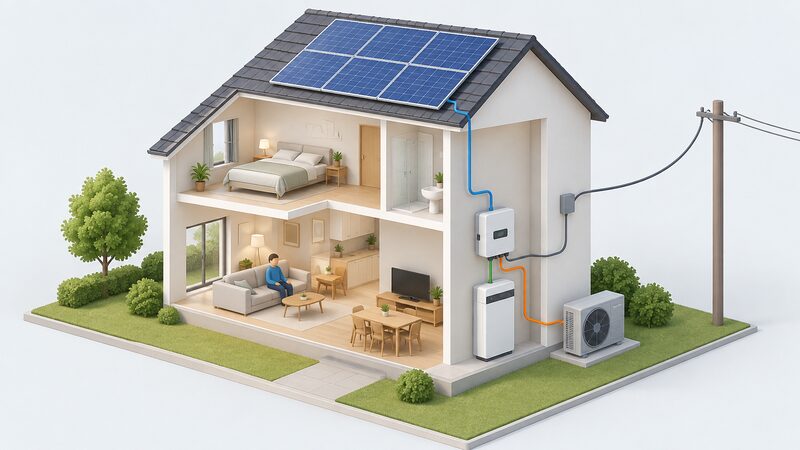
The combination moves a household part of the way. Insulating homes and running electric heat pumps and cars on an ever-greener grid would boost energy independence23. At the household scale, solar panels generating electricity for a heat pump reduce the amount drawn from the grid1, and a battery reduces reliance further5.
What remains is substantial. The heat pump still needs electricity at times the panels cannot supply, which means the grid and a supplier. A solar thermal system still needs a cylinder and a backup heat source for dull weeks. A smart thermostat typically depends on Wi-Fi, a manufacturer's app and the company's continued support, which is a different kind of dependence from a gas boiler but a dependence nonetheless.
The energy-efficient house of the future, as described by independent guidance, combines solar panels for free, clean electricity, a heat pump, battery storage, underfloor heating or larger radiators, an EV charger, full insulation, high-standard draught-proofing, a ventilation system and smart heating controls24. That list is the honest picture: solar and a heat pump are two parts of a system, not a standalone answer.
For advice in Northern Ireland, homeowners are directed to seek independent advice on solar panels, heat pumps and other energy efficiency measures from organisations such as the NI Energy Advice service25.
Sources25 cited
- Solar photovoltaic (PV), MCS Certified, 2026
- Is now a good time to get a heat pump, Energy Saving Trust, 2025
- What is a smart thermostat, Smart Energy GB, 2026
- Smart Energy Action Plans, Centre for Sustainable Energy, 2026
- How to ensure a heat pump runs efficiently, Energy Saving Trust, 2026
- Energy glossary, Low Carbon Hub, 2026
- In-depth guide to heat pumps, Energy Saving Trust, 2026
- Deciding if a heat pump is right for you, Citizens Advice, 2025
- Heat pumps, CIBSE, 2026
- Hybrid heat pumps, Energy Saving Trust, 2026
- Heating your home with renewable energy, Which?, 2025
- Your home guide to solar water heating, OFTEC, 2026
- tado vs Hive: which smart thermostat is best, Energy Helpline, 2026
- How do smart meters work, Smart Energy GB, 2026
- Daikin Altherma 3 H HT Heat Pump, Quiet Mark, 2026
- VAT energy saving materials and grant funded heating supplies: VENSAV3081, HM Revenue and Customs, 2026
- VAT energy saving materials and grant funded heating supplies: VENSAV3080, HM Revenue and Customs, 2026
- Self-build homes: sustainability, Planning Portal, 2026
- How smart meters work with heat pumps, Smart Energy GB, 2026
- Guide to smart meters, Energy Saving Trust, 2026
- Smart meters, Welsh Government, 2026
- What are smart thermostats, Uswitch, 2026
- Household energy buying: British, Energy and Climate Intelligence Unit, 2024
- House of the future, Energy Saving Trust, 2026
- Support to generate your own electricity, nidirect, 2025
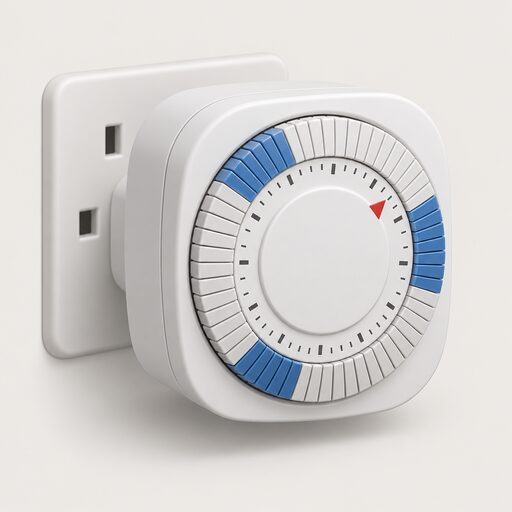 Controls and Time-of-Use TariffsCheaper electricity at night only saves money if your heating actually uses it then.
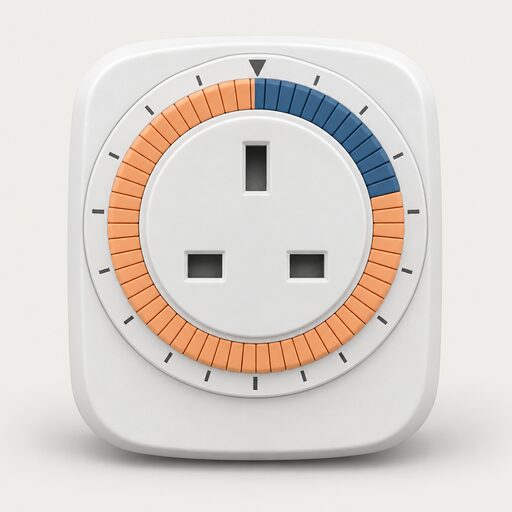 Heat Pump Electricity TariffsA heat pump tariff gives you cheaper electricity for part of the day, so running your heating costs less than on a standard rate.
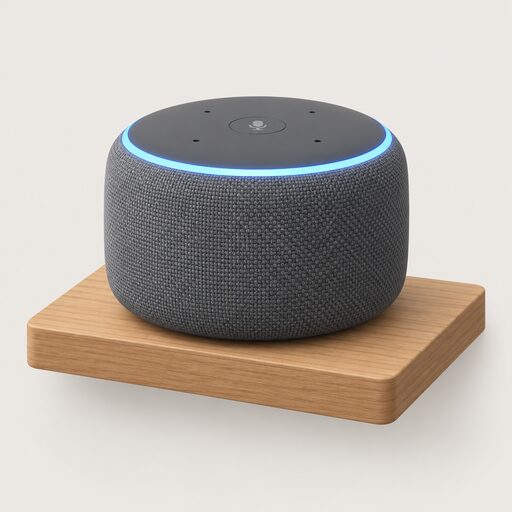 Smart Thermostats ExplainedWhat does a smart thermostat actually do, and is it worth it?
 Energy IndependenceA heat pump runs your heating on electricity instead of gas or oil, so how much does that really cut what you pay and how exposed you are when fuel prices jump?
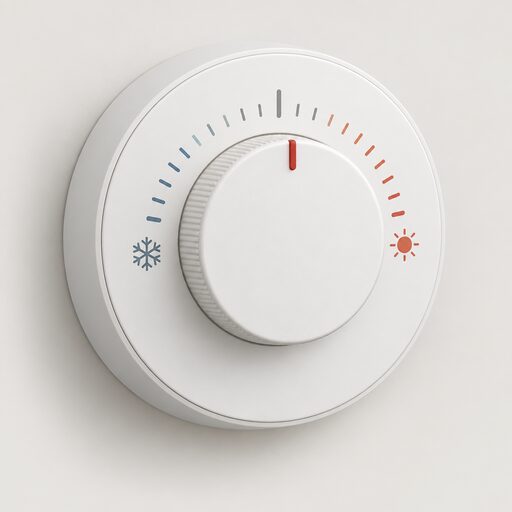 Controls and Smart OperationWhy does a heat pump need different controls from a boiler, and what does weather compensation actually do?
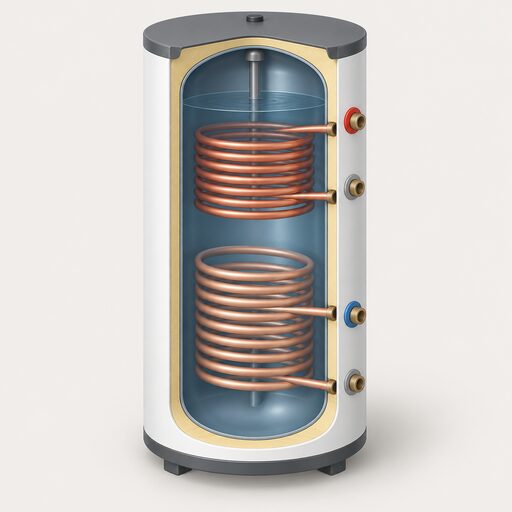 Cylinders and ControlsHow much of the sun's heat can your home actually keep?