In this guide
A smart thermostat is an internet-connected thermostat that gives you digital control over your home's central heating1. That single word, internet-connected, is what separates it from a wireless thermostat, which is not always smart1. It is also the source of every security, privacy and support question on this page: the device works, but it works through a manufacturer's cloud service, an app and a home network, and each of those has a lifespan and a set of terms attached.
The security picture is better documented than most households realise. Which? puts every thermostat it reviews through a barrage of tests to check how well it protects you from hacking attacks and keeps your data private, and raises concerns with manufacturers2. It has tested 32 smart thermostats, using a temperature-controlled chamber to measure how accurately they record temperature and how quickly they respond2. On the data side, the picture is split: a smart meter holds only information about how much energy you have used and what tariff you are on, and does not hold personal information that could identify you, such as your name or address3. Smart heating controls are separate devices with their own data practices, governed by the maker's policy rather than the meter rules.
Support is the least predictable part. Some makers publish a support horizon, some publish a refund guarantee, and some publish nothing at all. The practical answer for a household is to treat the control as a ten-year-plus purchase with a software dependency attached, and to check what runs locally before buying.
What smart heating controls do: remote control, learning and zoning
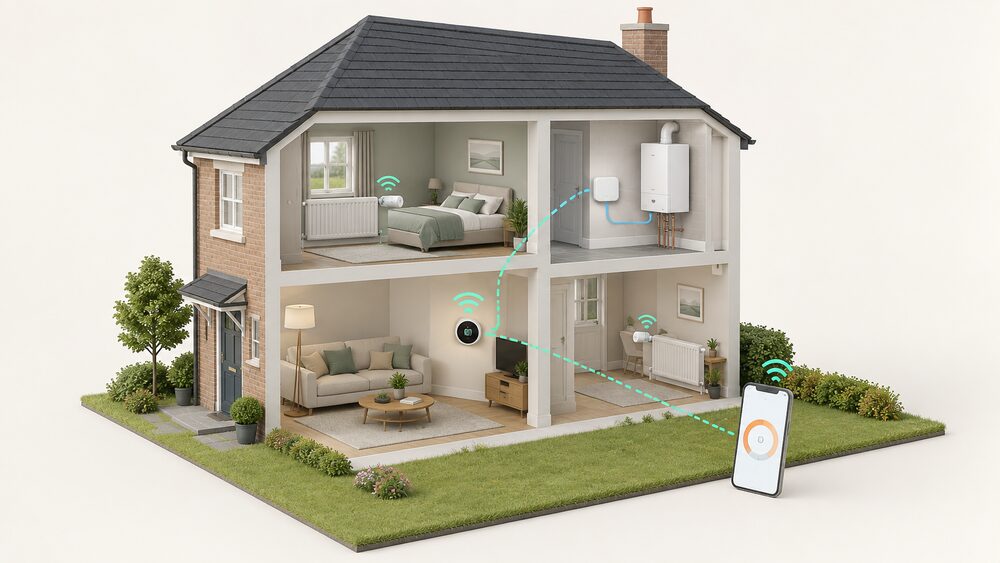
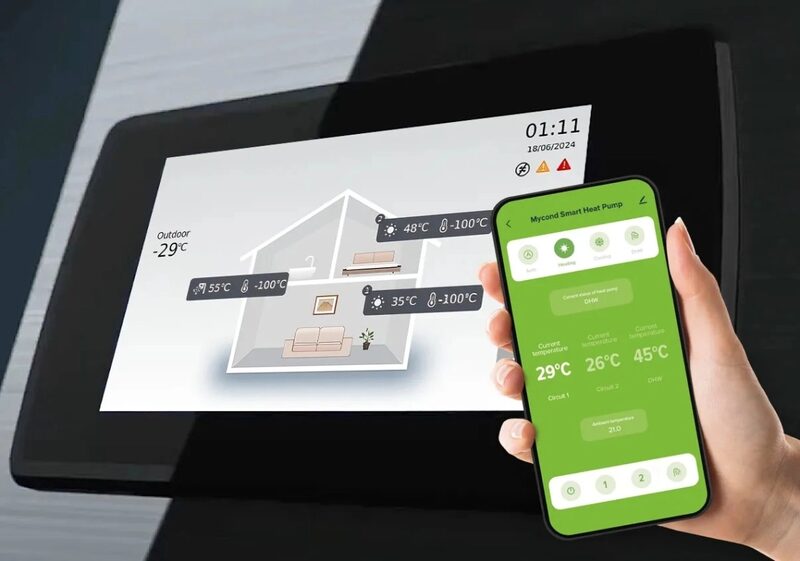
The core function is remote control. Smart heating controls link to your phone, and heating can be controlled via smartphone, tablet or laptop, or by telling your smart speaker what you want9. Energy Saving Trust describes the main difference from conventional controls simply: smart controls are connected to the internet and offer more functionality10. That functionality typically includes the ability to remotely turn your heating on and off, as well as adjust your temperature, and to access your temperature settings using a mobile app10.
Beyond the app, the interesting behaviour is automatic. Smart heating thermostats may interpret what you input, such as your preferred room temperature, learn from what you do, and react to other data like weather forecasts; some have a learning function that predicts behaviour from how you set and adjust heating and how you occupy the home9. Some know when you are away from home, and might adjust the heating accordingly or send a message so you can turn the heating off via an app9. Depending on the model, a smart thermostat may allow app control, voice control, hot water settings, location-based heating, reminders or alerts, open window detection, routine learning and heating-use tracking1.
Zoning is the third strand, and it is where the energy case is strongest. Zoning allows you to control the temperature of individual rooms, and smart, programmable thermostats can keep your home heated on a schedule to help minimise bills11. Underfloor heating is the clearest example, but the principle applies to any system with per-room control.
There is also a boiler-efficiency angle that has nothing to do with apps. Load and weather compensation adjust the boiler flow temperature to maximise boiler efficiency, and a smart thermostat is probably the easiest way to add compensation to an existing system9. That is a controls benefit rather than a connectivity benefit, and it survives even if the cloud service does not. For the wider picture of what these devices do, see smart thermostats and the pillar guide at heating controls.
What a smart setup consists of: thermostat, radiator valves and hub
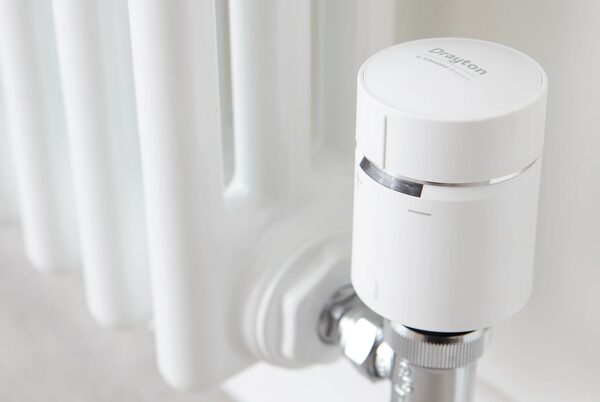
A full set of heating controls includes a programmer, thermostatic radiator valves and a room thermostat12. A smart system replaces or augments those parts, and the shape of the replacement matters for both security and support, because every connected component is another device with firmware and a cloud account.
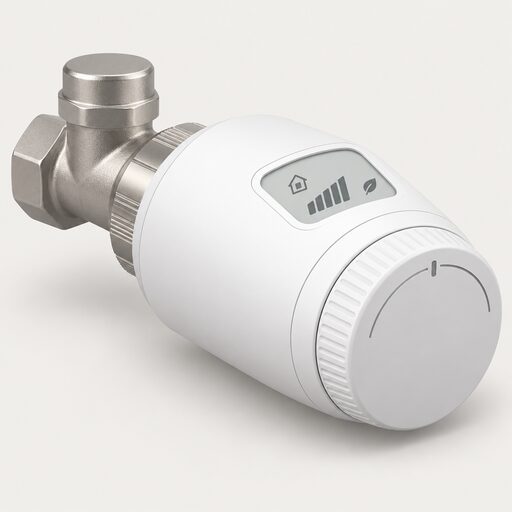
Smart radiator valves use sensors to monitor the room temperature and adjust the heat output accordingly, typically connect to your home wifi and often link to a central smart heating system13. That central system is usually a hub. Drayton's Wiser system, for example, is made up of a Wiser Home Hub and Smart Room Thermostat, with the Wiser Multi-room Kits offering room-by-room control, with Smart Radiator Thermostats offering individual control of each radiator4.
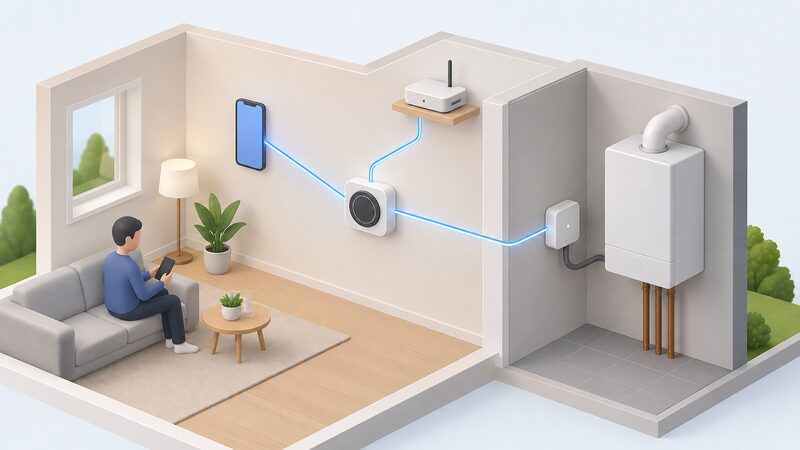
The hub is the part households most often overlook. A lot of boilers are not Wi-Fi-enabled, so many smart or wireless thermostat systems still include a wired element1. That wired element is a receiver or hub connected to the boiler, and it is the bridge between the internet-facing app and the physical heating circuit. It is also the component that determines whether the system can run anything at all when the internet is down.
| Component | What it does | Independence note |
|---|---|---|
| Smart thermostat | Internet-connected control of heating, app and voice control1 | Depends on the maker's cloud for remote features |
| Smart radiator valves | Sense room temperature and adjust heat output, connect over wifi13 | Usually need the hub to coordinate |
| Hub or receiver | Wired to the boiler, bridges app and heating circuit1 | Local schedules may survive an outage |
| Smart meter | Separate device, measures energy use only3 | Does not need an internet connection3 |
The distinction between the meter and the controls is worth holding on to. Smart meters do not use the internet to share data, so they do not need any kind of internet connection to work3. While independent of smart heating controls, combining the two can enhance your ability to manage your home's heating and energy use remotely14. For the controls themselves, see smart TRVs and heating zoning.
Security: how thermostats are tested for hacking and data privacy
There is no single UK security certificate that a household can look for on a thermostat box, so independent testing is the most useful evidence available. Which? states that all thermostats go through a barrage of tests to check how well they protect you from hacking attacks, and keep your data private, and that concerns are raised with manufacturers7. Its test scope covers a temperature-controlled chamber to check thermostat function and accuracy, ease of use, and privacy and security testing2. The method is specific: thermostats are put in a temperature-controlled chamber, measuring how accurately they record the temperature, and relay response time is measured too7.
That testing programme is the closest thing to a public security benchmark for the category, and it covers 32 smart thermostats7. It is worth understanding what it does and does not tell you. It tells you that an independent body has looked at hacking resistance and data handling for the models it has reviewed. It does not tell you how long the maker will issue security patches, because no maker in this category publishes a minimum security update period in the material available here.
The data question splits into two layers. The first is the meter, which is tightly constrained: smart meters only give data about how much energy you use, and personal information like your name, address or bank account are not kept on your smart meter15. The data collected from your smart meter is protected by the law15. The second layer is the heating control itself, which is a consumer connected device with an app account, and which is not covered by the meter protections. For a household, the practical check is whether the maker publishes a privacy policy that names what is collected and whether the device can operate a schedule locally. On the boiler side, compatibility should be confirmed before buying, usually in the product description or on the thermostat manufacturer's website1. For related material, see smart home protocols for heating.
Matter: the open standard for local, encrypted control
Matter is a universal, open-source, and secure connectivity standard for smart home devices16. Its purpose is interoperability: it allows products from different brands, like Apple, Google, Amazon, and Samsung, to communicate seamlessly, and it ensures interoperability using Wi-Fi, Ethernet, and Thread, rather than relying on lots of separate control hubs16. For a household, that is a meaningful reduction in lock-in, because a Matter-compatible thermostat is not confined to one vendor's ecosystem.
Adoption in heating is real but partial. tado° states that thanks to the universal smart home standard, Matter, its Smart Thermostat X easily integrates with other systems8. The Habi Wireless Smart Thermostat is listed with professional installation recommended, hot water control, frost protection, no GPS tracking, no motion sensor, manual and frost modes, a child lock, and support for multi-zone heating and Matter7. Those two examples show the pattern: Matter support appears alongside the maker's own app, not instead of it.
| Product | Connectivity or standard | Notable features | Source |
|---|---|---|---|
| tado° Smart Thermostat X (2nd gen) | Matter | Offline schedule stored on the device | 8 |
| Habi Wireless Smart Thermostat | Matter | Multi-zone heating, no GPS tracking, no motion sensor | 7 |
| Secure Meters C1727 Smart Thermostat | Wi-Fi and Bluetooth Low Energy | Listed as an approved innovation measure | 17 |
| Google Nest Smart Thermostat E | Not stated | Modulating and learning, no hot water control, GPS tracking | 7 |
| Worcester Bosch EasyControl | Not stated | Professional installation required, hot water control, GPS tracking | 7 |
The Secure Meters C1727 Smart Thermostat appears in the ECO4 innovation measures list as an approved smart thermostat measure, with connectivity via two modes, Wi-Fi and Bluetooth Low Energy17. That matters because it shows the route by which a specific model becomes eligible under an official scheme, and it is a different kind of assurance from a consumer review. For the protocol background, see Zigbee, Matter, KNX and Wi-Fi.
Cloud dependence vs local control: what it means for independence
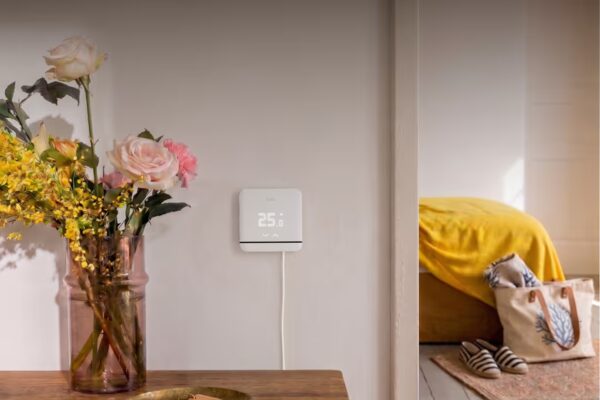
This is the section that decides how much of a smart heating system a household actually owns. A smart thermostat is defined by its internet connection1, and most of its headline features, app control, remote adjustment, learning and weather response, run through the maker's service. When that service is unavailable, or the broadband drops, or the maker withdraws the product, the physical device remains on the wall but much of its intelligence does not.
Local control is the counterweight, and it exists in some products. tado° states of its Smart Thermostat X (2nd gen) that the schedule is stored on the device, and the offline schedule even works without an internet connection8. That is a specific, checkable claim about a specific model, and it is the kind of statement worth looking for. It means the heating still follows a timetable when the cloud is unreachable, even though remote control and learning do not.
The dependence that remains is worth naming plainly. A cloud-connected thermostat depends on the maker's servers, the maker's continued commercial interest in the product, the household's broadband, and the app store that distributes the control app. A smart meter, by contrast, does not need any kind of internet connection to work3, so the metering side of a home is more robust than the heating control side. Combining the two can enhance your ability to manage your home's heating and energy use remotely14, but the combination inherits the weaker link.
For households weighing this up, the relevant comparison pages are heating controls and energy independence and Home Assistant and open-source control. The general principle is that a control which runs its schedule locally keeps working when the account, the app or the company does not.
Cost, savings and payback: £100 to £200 to buy, £75 to £150 a year to save
The purchase price is reasonably well documented. Most smart thermostats cost between £100 and £200, but some will have add-ons such as installation which push the total higher4. A separate independent figure puts a smart thermostat for boiler heating controls at around £100 to £25019. HeatFlex work reports that a customer's outlay for a smart thermostat may be as little as £10020. Where no published price exists for a specific model, prices are installer-quoted.
Savings are where the numbers diverge, and the divergence is honest rather than contradictory. Energy Saving Trust guidance cited by Oftec puts installing a smart thermostat and controls at up to £110 a year off bills5. Turning the thermostat down by one degree is put at up to £90 a year5, at between £85 and £90 a year in a typical home6, and at up to £80 per year21. Energy Saving Trust estimates that turning up the thermostat by just one degree costs an additional £90 a year in heating22. Installing a programmer and thermostat could save £65 a year23. One source puts smart thermostat savings at hundreds of pounds a year24.
| Measure | Annual figure | Source |
|---|---|---|
| Smart thermostat and controls | up to £110 | 5 |
| Thermostat down one degree | up to £90 | 5 |
| Thermostat down one degree, typical home | £85 to £90 | 6 |
| Thermostat down one degree | up to £80 | 21 |
| Thermostat up one degree (added cost) | £90 | 22 |
| Programmer and thermostat installation | £65 | 23 |
The reason these figures differ is that they measure different things. Some are the effect of a control change alone, some bundle controls with behaviour, and some are modelled rather than metered. Energy Saving Trust is explicit that a smart thermostat could save you money, but savings are not guaranteed, and that they depend on your home, heating habits, existing controls, energy prices, and how you use the thermostat's features1. The mechanisms are straightforward: a quick tap on your phone can save you hours of wasted heat and energy, and more sophisticated sensors avoid temperature extremes and heat or pre-heat certain rooms while leaving unused rooms untouched25. For the fuller treatment, see do heating controls save money and heating controls cost.
Compatibility: no need to replace your boiler, and when controls are over 12 years old
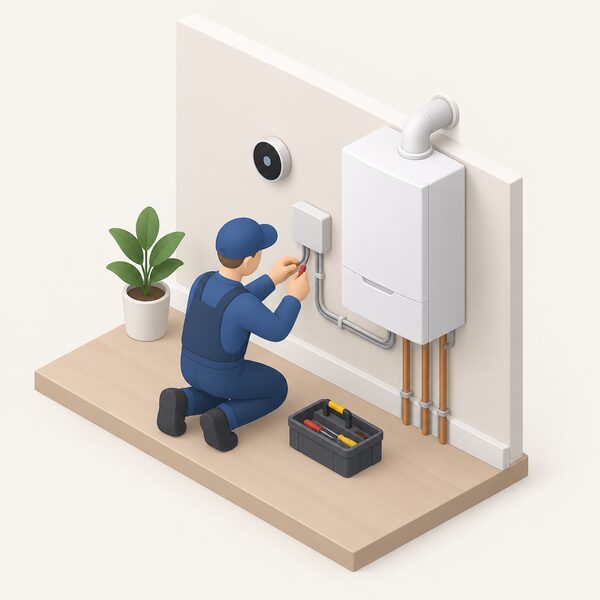
A smart thermostat does not require a new boiler. The thermostat helps to control how much energy you use, but will not be a barrier to switching your actual energy deal4. That is the key compatibility point: the control sits on top of the existing heating system rather than replacing it, and it does not tie a household to a particular energy supplier.
What it does require is a check before purchase. Before buying a smart thermostat, check that it is compatible with your boiler and heating system1. That check is usually answered in the product description or on the thermostat manufacturer's website1. The reason it matters is the wired element: a lot of boilers are not Wi-Fi-enabled, so many smart or wireless thermostat systems still include a wired element, and wiring should be done by a trained professional1.
Installation routes vary by model, and the differences are practical rather than cosmetic.
- Professional installation required: Worcester Bosch EasyControl, which can control hot water and includes GPS tracking, a motion sensor and weather response7.
- Professional installation recommended: Habi Wireless Smart Thermostat, which controls hot water and supports multi-zone heating and Matter7.
- Self or professional installation: Google Nest Smart Thermostat E, a modulating and learning thermostat with no hot water control7.
- Self installation: Bosch Room Thermostat II, with no hot water control, program modes, frost protection and a child lock7.
Where controls are old, the case for replacement is stronger than the case for repair. A full set of heating controls includes a programmer, thermostatic radiator valves and a room thermostat12, and a system still running original controls from more than a decade ago will typically lack compensation, zoning and any form of remote management. Load and weather compensation adjust the boiler flow temperature to maximise boiler efficiency, and a smart thermostat is probably the easiest way to add compensation to an existing system9. For the installation side, see installing and replacing heating controls and smart thermostat boiler compatibility.
Subscriptions and support: what free services include and what data they collect
Support terms are the least standardised part of the category, and they are set by each maker. The general position is that energy monitors and smart thermostats come at an additional cost with subscription costs for premium services, and are operated via an app on your mobile or tablet26. That is the model to check for: a free tier that covers basic control, and a paid tier for advanced features.
Some makers are explicit about what is free. tado° states that one of its control features is free for all Smart Thermostat X first generation and second generation users8. The same maker offers a refund guarantee: not happy with your savings in the first 12 months, return tado° for a full refund, with no proof needed8. That is a maker's own term, not a regulatory right, and it is worth reading in full before relying on it.
Support horizons are published unevenly. Hive's smart thermostats and radiator valves will still be supported into 20267. That is a dated statement about one brand, and it is the kind of commitment a household should look for, because a thermostat with no stated support horizon is a thermostat whose software future is unknown. The Passiv Smart Thermostat is listed with no service fee27.
Data collection sits alongside the subscription question. Smart meters only give data about how much energy you use, and personal information like your name, address or bank account are not kept on your smart meter15. The only information a smart meter holds is about how much energy you have used, and what tariff you are on, and it does not hold personal information that could identify you, such as your name or address3. The data collected from your smart meter is protected by the law15. Heating controls are separate, and their data practices are governed by the maker's own policy. For the subscription detail, see smart thermostat subscriptions.
Retrofit options: the universal dimmer insert for homes without a neutral conductor
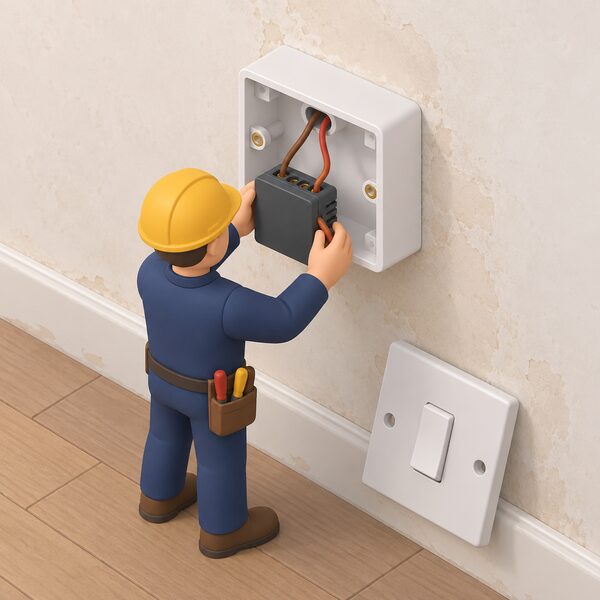
Older UK wiring often lacks a neutral conductor at the switch position, which has historically limited which smart devices could be fitted without rewiring. That constraint is easing. In September 2026, Homematic IP announced a new universal dimmer that can be wired without a neutral conductor, suited to retrofitting existing buildings28. The announcement was made across the maker's product and application pages on 1 September 202628.
The significance is broader than lighting. A neutral-free retrofit device removes one of the main reasons a household in an older property cannot adopt smart control without opening up walls, and it points to a direction of travel for the wider retrofit market. For heating specifically, the equivalent constraint is the wired receiver or hub: a lot of boilers are not Wi-Fi-enabled, so many smart or wireless thermostat systems still include a wired element, and wiring should be done by a trained professional1.
Installation expectations vary by model, and the split is worth knowing before choosing.
- Self installation: Bosch Room Thermostat II, with no hot water control, program modes, frost protection and a child lock7.
- Self or professional installation: Google Nest Smart Thermostat E, a modulating and learning thermostat with no hot water control7.
- Professional installation recommended: Habi Wireless Smart Thermostat, with hot water control and multi-zone support7.
- Professional installation required: Worcester Bosch EasyControl, with hot water control, GPS tracking, a motion sensor and weather response7.
For homes without a neutral conductor, the relevant pages are fitting a smart thermostat with no common wire and Homematic IP heating controls. The general point for independence is that a retrofit device which works without new cabling keeps the household's options open, and does not commit it to a single vendor's wiring standard.
Sources28 cited
- What is a smart thermostat, Smart Energy GB, 2026-08-19
- How to buy the best smart thermostat, Which?, 2026-09
- Smart meters and wifi: does a smart meter need wifi, Smart Energy GB, 2026-03-16
- What are smart thermostats, Uswitch, 2026-02-05
- Energy saving tips for the home, Confused.com, 2025-10-14
- Draught proofing, Which?, 2026-05-05
- Smart thermostat reviews: Hive brand filter, Which?, 2026-09-17
- Boilers and underfloor heating, tado°, 2026
- Smart homes and lower carbon footprint, Energy Saving Trust, 2026-01-21
- Thermostats and heating controls, Energy Saving Trust, 2026-02-10
- Underfloor heating systems, NICEIC, 2026-09-17
- Energy efficiency, Cadent Gas, 2026-09-20
- Radiator valves, Smart Energy GB, 2026-04-22
- Smart meters, Welsh Government, 2026
- Smart meters easy read, Smart Energy GB, 2026-03-16
- Making home energy management work for consumers, Energy Systems Catapult, 2026-02-12
- ECO4 Innovation Approved Innovation Measures v1.17, Ofgem, 2026-02
- ECO4 Innovation Approved Innovation Measures v1.5, Ofgem, 2023-10
- Boiler prices: how much does a new boiler cost, Which?, 2025-09-17
- HeatFlex: the untapped potential of automated heat pump flexibility, Nesta, 2024-11-19
- Electric heaters vs storage heaters, Energy Helpline, 2026-09-20
- How to balance your radiators, Which?, 2025-09-16
- Top five ways to make a tenement more efficient, Home Energy Scotland, 2024-07
- Make your home more energy efficient, Confused.com, 2026-07-06
- How a smart thermostat can save you money this winter, ivie, 2025-11-18
- How do you know if you have a smart meter, Smart DCC, 2026
- Heat Pump Ready Programme Stream 2 Wave 2 projects, GOV.UK, 2026-05-28
- Homematic IP product range, Homematic IP, 2026-09-01
 Smart Thermostat SubscriptionsDo you have to pay a monthly fee to use your smart thermostat, and what do you actually get for it?
 Controls and Energy IndependenceIf the broadband goes down, will your heating still come on?
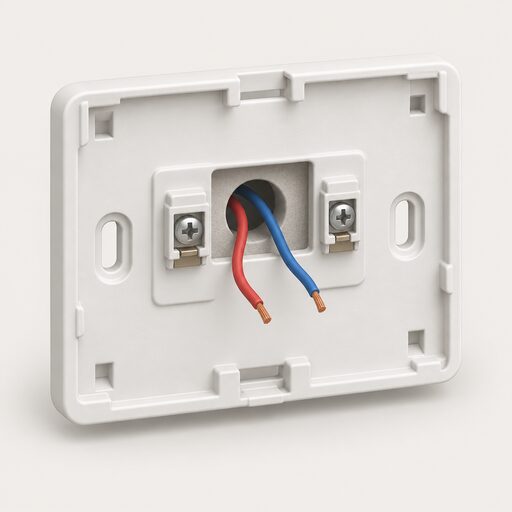 Installing Heating ControlsSwapping a thermostat or programmer looks simple, but which jobs can you safely do yourself and which need a registered installer?
 Smart Thermostats ExplainedWhat does a smart thermostat actually do, and is it worth it?
 Smart Meter Data and Who Sees ItWhat does your smart meter actually record, and who gets to see it?
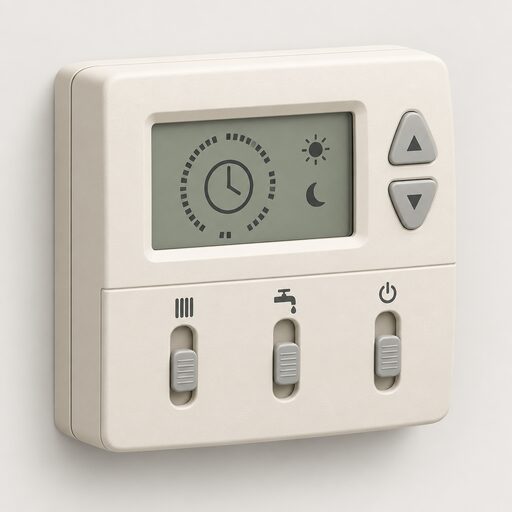 Controls, Thermostats and TRVsWhich heating controls actually cut your bills, and what does each one do?