

In this answer
Short answer
Open-source heating control means the logic that decides when the boiler fires, and at what flow temperature, sits on hardware in the home rather than in a manufacturer's cloud. In the UK that matters because more than 80% of households currently heat their homes with gas or oil, so the control layer is the one part of the system a household can change without touching the heat source itself1. A local controller can hold schedules, read room temperatures and modulate the boiler over a wired protocol, and it keeps doing so when the broadband drops.
The enabling technology is OpenTherm, a multi point to point communication protocol for HVAC systems that consists of a communication protocol and an interface specification2. It replaces the traditional on/off controller, which the protocol's own documentation describes as inadequately effective for the communications needs of modern appliances3. Around it sit the local radio protocols, Zigbee and Matter, that carry room temperatures and radiator positions between devices without a cloud round trip.
What open-source control does not do is remove dependence. The boiler still burns gas, the household still buys that gas from a supplier, and the controller still needs a bridge or coordinator to talk to Zigbee hardware. This page sets out what the protocol layer does, what a local platform adds, which hardware is compatible, and where the dependence remains.
What open-source control of heating means for a UK household
Open-source control is a separation of layers. The boiler, the radiator valves and the room sensor stay as they are; what changes is who holds the schedule and the setpoint logic. In a conventional arrangement that logic lives in a proprietary thermostat, and often in the maker's cloud as well. In an open arrangement it lives on a local controller that speaks a published protocol to the boiler and a published radio protocol to the sensors.
The practical benefit is that the household is not tied to one maker's app, one maker's account or one maker's continued existence. Open protocols are set, non-proprietary communication standards that allow smart heating controls and boilers to speak to each other, regardless of manufacturer4. That is the whole point: a control layer that outlives any single product line.
The UK policy context leans the same way. The proposed Home Energy Advice service is intended as a single-entry point for consumer home energy advice on GOV.UK, helping homeowners, landlords and tenants find tailored, impartial and trusted advice on how to heat their homes and make them more energy efficient7. Independent advice of that kind is more useful when the household can act on it without replacing an entire proprietary ecosystem.
There is a limit worth stating plainly. Open-source control does not change the heat source. More than 80% of UK households currently heat their homes with gas or oil, and the transition to electrified heating will ultimately affect all of them1. A local controller makes the existing system easier to run and easier to observe; it does not decarbonise it.
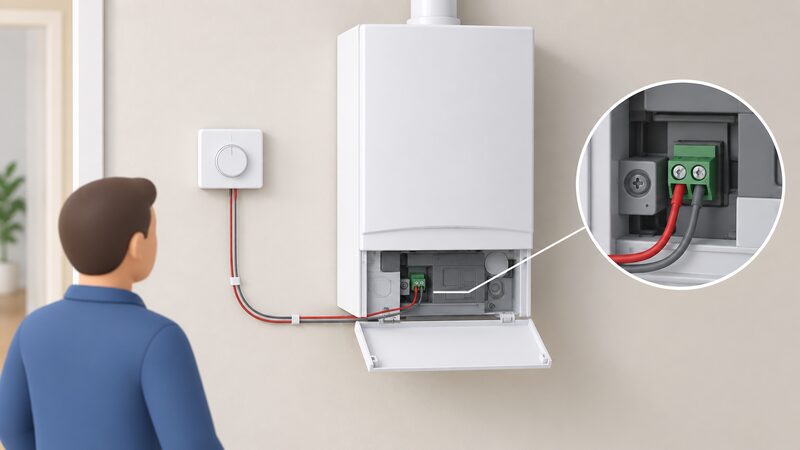
OpenTherm: the protocol that lets a controller modulate your boiler
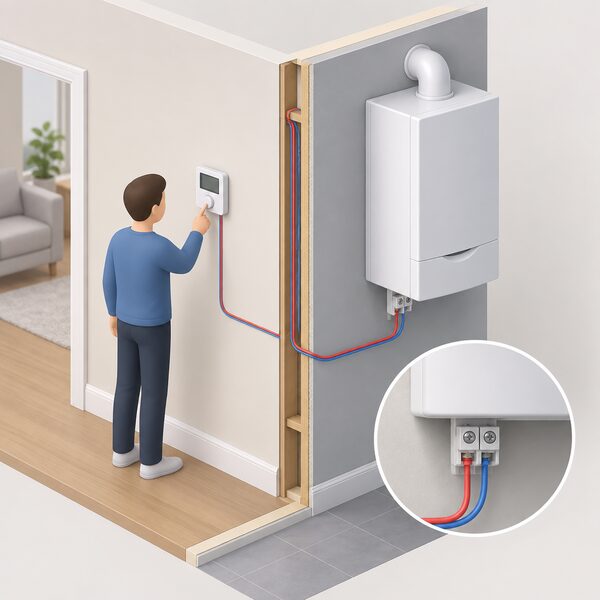
OpenTherm is the part of the stack that most directly affects running cost, because it changes what the boiler is told to do. It is a communication protocol between heating controls and the boiler which modulates the temperature flow through the heating system8. Instead of a simple call for heat, the controller sends a target flow temperature, and the boiler modulates its output to match.
The protocol was designed for exactly this. The traditional room thermostat's on/off controller is inadequately effective in fulfilling the communications needs of modern appliances, and OpenTherm replaces it as a standard communication protocol between HVAC appliances and controllers3. It can also be used as a wireless protocol, so the link does not have to be a cable2.
The diagnostic side is less discussed but useful. Open protocol systems can send boiler fault codes to compatible smart controls, simplifying diagnostics for engineers and reducing downtime for occupants9. A fault that would once have needed a site visit to read off the boiler's display can be surfaced on the controller.
Wiring is the practical constraint. OpenTherm requires a standard type of connection like in any modern installation practice, a 2-wire low voltage and polarity-free connection2. That is not the same as a conventional mains switching thermostat, and it is the single most common reason a boiler cannot be brought under modulating control without a change at the boiler terminals. The OpenTherm protocol explained page covers the message types in more detail, and load compensation and modulation covers what the boiler does with the instruction.
"OpenTherm requires a standard type of connection like in any modern installation practice, i.e. a 2-wire low voltage and polarity-free connection."
Zigbee and Matter: how heating devices talk to each other locally
Below the boiler link sits the radio layer that carries room temperatures, setpoints and valve positions. Zigbee is the incumbent in UK heating hardware. Hive states that all Hive heating devices use Zigbee for local communication5. That local mesh is what lets a thermostat, a receiver and radiator valves work together inside the home without each message going out to a server and back.
Matter sits above the radio rather than replacing it. It is an application layer intended to let devices from different makers be controlled by one platform, and it can run over Thread, Wi-Fi and Ethernet. Zigbee and Matter therefore coexist in a typical installation: the heating hardware keeps its Zigbee mesh, and a Matter-capable hub or platform presents those devices alongside others.
The user-facing layer is where most households meet this. Most smart heating controls link to your phone, and heating can be controlled via smartphone, tablet or laptop, or by telling your smart speaker what you want10. That convenience is real, but it is also the layer most likely to depend on a cloud account. The smart home protocols for heating page compares Zigbee, Matter, KNX and Wi-Fi in more detail.
Local integration between devices is not limited to one maker. Comfort Touch communicates with Xtend to automatically optimise its settings, making the heating system even more responsive11. That is a maker's own pairing, but it illustrates the pattern: devices exchanging state directly rather than through a remote service.
What Home Assistant adds, and what it cannot do on its own
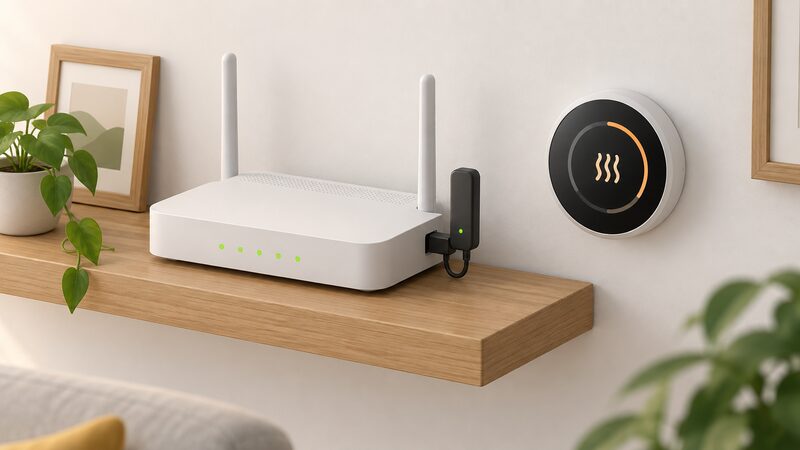
A local automation platform such as Home Assistant adds three things: a single place to hold schedules and setpoints across devices from different makers, the ability to read state from those devices, and the ability to act on it without a cloud service in the path. Where the platform can reach the boiler over OpenTherm and the sensors over Zigbee, the control loop closes inside the house.
What it cannot do is supply the missing hardware. A platform needs a coordinator for the Zigbee mesh, a bridge or interface for the boiler, and devices that expose their state in a usable way. It also cannot make a boiler modulating if the boiler has no OpenTherm terminals. The platform is the logic layer, not the physical layer.
The energy-monitoring angle is where local control and official guidance meet. Smart meters are independent of smart heating controls, but combining the two can enhance your ability to manage your home's heating and energy use remotely12. A local platform can read both the heating state and the consumption data and hold them side by side, which is the basis for any honest assessment of whether a schedule change saved anything.
Research platforms point the same way. The ALICE digital energy assistant interfaces with in-home devices including electric vehicles, smart meters, appliances and heating, ventilation and air-conditioning controls13. That is a research demonstrator rather than a product, but it shows the intended shape: one local assistant reading several device classes.
The limit is support. A local platform is maintained by its community, not by the boiler maker, so a firmware change at the boiler or a protocol revision at the radio layer can break an integration until someone updates it. That is a different kind of risk from a cloud service being withdrawn, but it is still a risk.
Choosing compatible hardware: boilers, thermostats and bridges

Compatibility comes down to two questions: does the boiler accept a modulating control link, and does the thermostat or bridge expose that link to the platform. Some products answer both. Wiser Thermostat Kit 1 provides smart control of heating for combi boilers either via OpenTherm or relay switching, and it can also interface with heat pumps to control heating according to heat demand6. The relay option is the fallback where OpenTherm is not available.
Maker controls show the same split. Comfort Touch communicates with the boiler using OpenTherm to automatically adjust its settings to achieve the desired room temperature14. Once connected to the Intergas Gateway, a smartphone can be used to change central heating settings or programmes remotely11. The gateway is the bridge in that arrangement, and it is the component that decides whether the system is local or cloud-dependent.
Heat pumps bring their own control layer. Hybrid heat pumps can be fitted with heat pump and hybrid controls across different heat sources and boiler types such as regular or combination boilers15. On the heat pump side, the NIBE S1156 is available in the UK through NIBE16, and the Daikin Altherma 3 H HT includes cloud connectivity and a wireless LAN adaptor for app control17. Both are maker or distributor descriptions of their own products.
| Product | Control link | Notes |
|---|---|---|
| Wiser Thermostat Kit 1 2nd Generation | OpenTherm or relay switching | Also interfaces with heat pumps6 |
| Intergas Comfort Touch | OpenTherm | Gateway enables remote smartphone control14 |
| Hive Thermostat | Zigbee | All Hive heating devices use Zigbee locally5 |
| Daikin Altherma 3 H HT | Cloud connectivity, wireless LAN adaptor | Maker app control17 |
| NIBE S1156 | Maker controls | Available in the UK via NIBE16 |
The recommended control set for a conventional system remains the baseline that any open platform has to reproduce: a time-controlled programmer, at least one room thermostat, thermostatic radiator valves if there are radiators, and a cylinder thermostat if the system has a hot water cylinder18. A local platform replaces the programmer and thermostat functions, not the valves or the cylinder stat. The smart thermostat boiler compatibility page covers the per-boiler detail.
Why local control matters for energy independence
Energy independence for a household is not the same as disconnection. The gas still arrives through a pipe, the electricity still comes from the grid, and the boiler still needs a competent person to service it. What local control changes is the number of third parties whose decisions can alter how the home is heated: a cloud service that is withdrawn, an app that stops being updated, a maker that exits the market.
Official guidance supports the underlying behaviour rather than the technology. Self-build sustainability guidance advises installing smart systems that control lighting, heating and cooling based on occupancy and time of day19. Local Energy Advice Programme advisers give day to day energy efficiency hints and tips and make sure the heating controller is working correctly20. Both are about the control layer doing its job, which is easier to verify when the logic is visible in the home.
The support landscape differs across the four nations. Home Energy Scotland offers free advice on improving the energy efficiency of your home21. In Northern Ireland, homeowners are directed to seek independent advice on solar panels, heat pumps and other energy efficiency measures from organisations22. In Wales, smart meter guidance sits with the climate action service12. In England, the Green Homes Grant Local Authority Delivery funded the installation of energy efficiency measures in domestic properties23.
The wider policy direction is toward electrified heating at scale. Over a million homes and around 50,000 non-domestic properties are to have converted to zero or low emissions heating by 2030 under Scottish proposals, with all homes meeting a minimum standard equivalent to EPC band C where technically feasible and cost-effective by 203524. A control layer that a household owns and can carry between heat sources is a practical hedge against that transition.
Where open-source control falls short
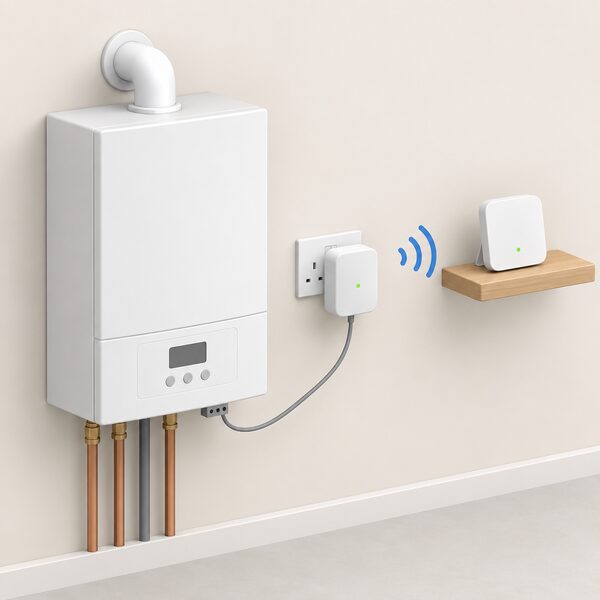
The honest limits are worth setting out. A local platform cannot modulate a boiler that has no OpenTherm terminals, and it cannot read a device that does not expose its state. It needs a coordinator for Zigbee and a bridge for the boiler, and those are additional components with their own failure modes.
Support is community-based. Where a maker withdraws a cloud service, the local platform may keep working; where a maker changes a firmware interface, the local platform may stop working until an integration is updated. Neither outcome is guaranteed in advance.
The heat source is unchanged. More than 80% of UK households heat with gas or oil, and the transition to electrified heating will affect all of them1. A local controller makes the existing system easier to run and easier to observe; it does not change what is being burned or what it costs per unit.
Finally, the control layer is not a substitute for the physical measures. Independent analysis of the policy framework for improving the energy efficiency of the UK's housing stock treats controls as one element among several25, and work on the design of the next national household support scheme is aimed at scaling low-carbon heating and insulation to millions of low-income homes26. Controls sit alongside fabric and heat source, not in place of them.
Sources26 cited
- Beyond affordability: why heat pumps feel like a gamble, Which?, 2026-07-02
- What is OpenTherm, OpenTherm Association, 2026-01-26
- Why a communication protocol, OpenTherm Association, 2026-01-26
- What are open protocols in heating controls and why do they matter, ESI Controls, 2026
- Hive Thermostat, Hive, 2026-09-17
- Wiser Thermostat Kit 1 2nd Generation, Drayton Controls, 2026-09-08
- Reforming consumer protection for home upgrade schemes, GOV.UK, 2026-06-17
- Wireless thermostats: all you need to know, Ideal Heating, 2026
- Benefits of open protocols for homeowners and landlords, ESI Controls, 2026
- Smart homes and lower carbon footprint, Energy Saving Trust, 2026-01-21
- Xtend Monobloc, Intergas Heating, 2026-09-17
- Smart meters, Welsh Government, 2026
- Heat Pump Ready Programme stream 1 phase 1 projects, GOV.UK, 2026-05-28
- Comfort Touch thermostat, Intergas Heating, 2026-09-17
- Hybrid heating, Cadent Gas, 2026-09-20
- NIBE S1156 13 heat pump, Quiet Mark, 2026-09-17
- Daikin Altherma 3 H HT heat pump, Quiet Mark, 2026-09-17
- Thermostats and heating controls, Home Energy Scotland, 2026-09-20
- Self-build homes: sustainability, Planning Portal, 2026
- Energy saving grants and funding, Tameside Council, 2026-09-17
- Financial help for energy efficiency and low carbon heating improvements, City of Edinburgh Council, 2026-09-20
- Support to generate your own electricity, nidirect, 2025-09-22
- Green Homes Grant Local Authority Delivery and Home Upgrade Grant release, GOV.UK, 2025-08-28
- Heat in Buildings Strategy, Scottish Government, 2030
- Help to Heat: a solution to the affordability crisis in energy, IPPR, 2026-09-20
- Shaping the next household energy support scheme, Nesta, 2026-09-17
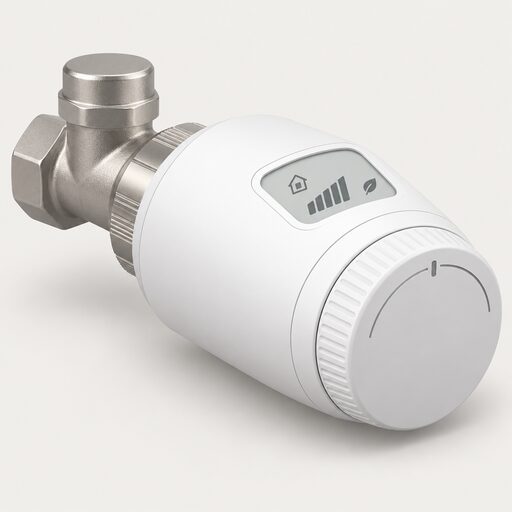 Controls and Energy IndependenceIf the broadband goes down, will your heating still come on?
 OpenTherm Protocol ExplainedOpenTherm lets a smart thermostat and a boiler from different makers work together properly, so the boiler can run gently instead of switching on and off.
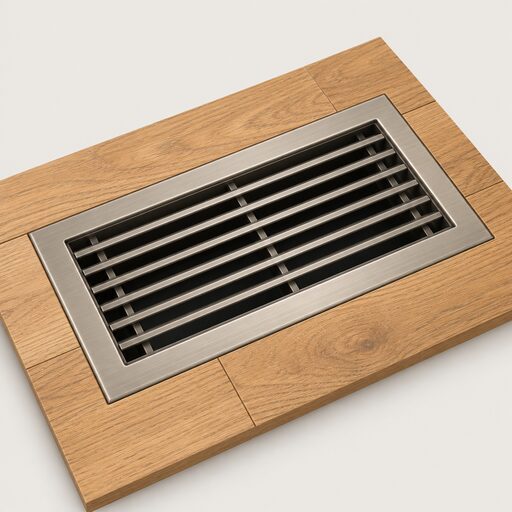 Warm Air Heating SystemsWarm air heating works by pushing heated air through vents in your floors or walls.
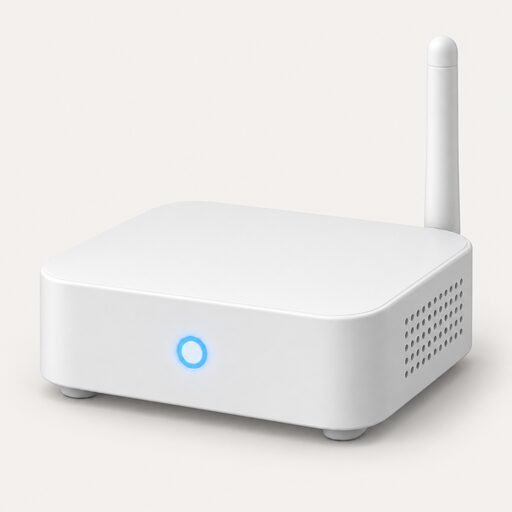 App Subscriptions and CloudWill you have to pay a monthly fee for the app that comes with your heat pump, boiler or solar setup?
 Controls and Wi-FiWhich air conditioning controls work without the internet, and which need Wi-Fi?
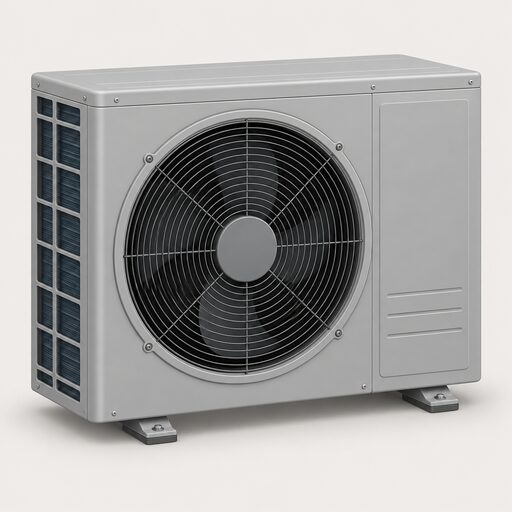 Cooling and Heat PumpsCan an air conditioner heat your home as well as cool it?