
In this guide
A smart meter does not make a home independent. It makes a home measurable. That distinction is the whole of the argument, and it runs in both directions: the meter is the gateway to half-hourly data, flexible tariffs, export payments and flexibility income, and it is also the point at which a household's energy information passes through systems it does not own.
The scale is settled. There were 39 million smart meters in domestic and non-domestic premises across Great Britain at the end of March 2025, over two-thirds of all meters1. The vast majority of smart meters in Great Britain are operating in smart mode2. Installation is free to the customer, and the national network operator states that a household can get one at no extra cost3.
What a household gains is visibility and a route into markets. What it does not gain is generation, storage or control of the tariff. Except by switching, a household does not control the tariff its supplier sets, though it can change how much energy it uses5. That sentence is the honest summary of the independence question.
What the meter actually does
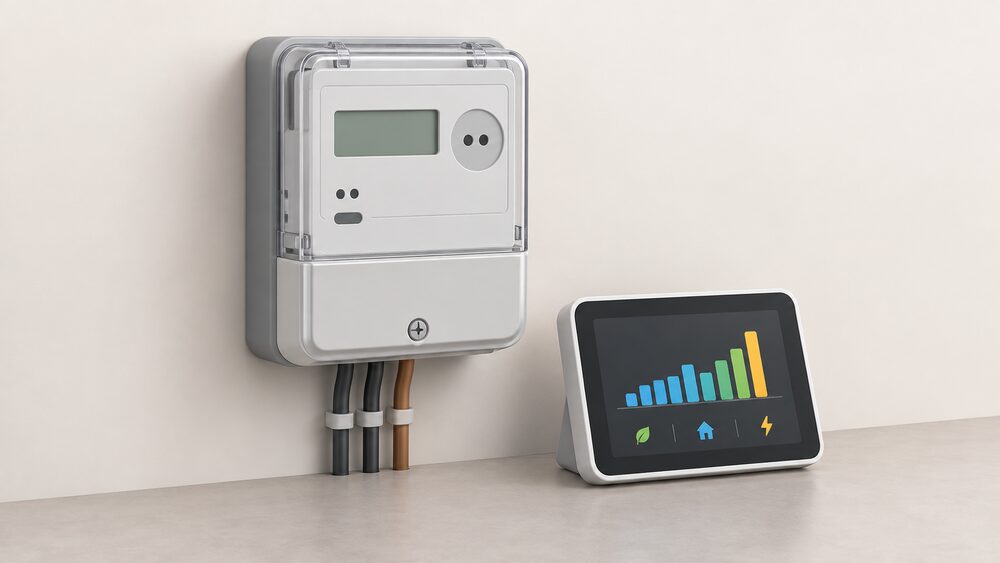
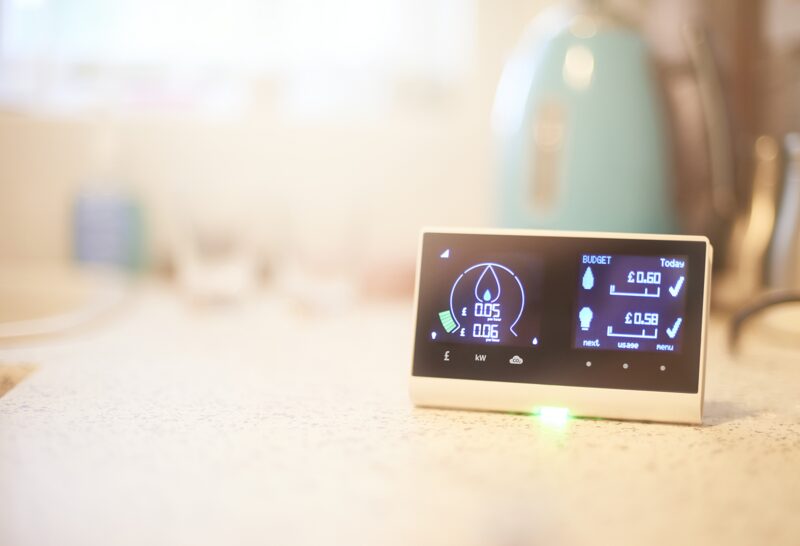
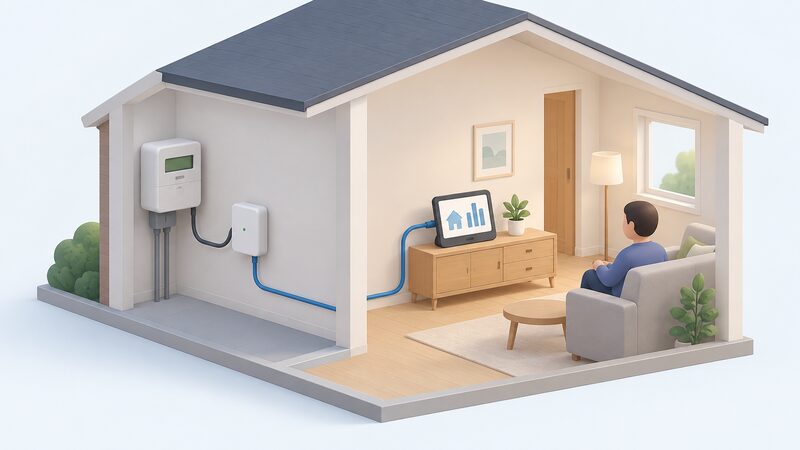
A smart meter sends meter readings automatically to the energy supplier and offers real-time monitoring through an in-home display3. The in-home display is a portable touchscreen device showing near real-time energy usage data9. That is the local layer: a screen in the home, working from the meter, needing no app, no account and no cloud service to show a household what it is using at that moment.
The reporting layer is different. Readings are sent automatically via the national network to the supplier5. Billing is based on actual rather than estimated usage, with energy use recorded automatically in half-hour periods11. That half-hourly record is the foundation of everything else on this page: time-of-use tariffs, settlement, export measurement and flexibility payments all rest on it.
The practical benefits listed by the regulator are consistent: bills based on accurate readings rather than estimates, no need to submit readings, up-to-date information on energy use, more flexible tariffs including dual-rate tariffs, and automatic credit top-up in prepayment mode4. Each of those is a real gain in household control. None of them is independence from the grid.
"A smart meter automatically sends your electricity and gas meter readings to your supplier."
What drives the independence case
Three things drive it, and they are worth separating because they fail in different ways.
The first is information. Smart meters help provide visibility of energy use, enabling consumers, energy suppliers and other organisations to better understand how energy is being used10. The data puts a household in control of its energy usage, meaning it can take energy-saving steps to reduce its CO2 emissions10. The government's own framing is that smart meters put consumers in control of their energy use, allowing energy efficiency measures that help save money on bills, offset price increases and reduce carbon emissions15. That is a claim about behaviour, not about supply.
The second is market access. Half-hourly data is what makes a time-of-use tariff possible, and it is what makes a flexibility payment verifiable. The Demand Flexibility Service was launched in winter 2022/23 to help manage potential winter pressures by reducing demand during evening peak periods and reducing reliance on more expensive electricity generation16. It incentivised 1.6 million households and businesses in that first winter, saving over 3.3GWh of electricity8. Between December 2024 and March 2025 it delivered 3.9GWh of flexibility across 44 events8. The service's stated purpose is to make it easier for homes and businesses to take part in the electricity market and be rewarded for shifting when they use electricity16.
The third is assessment. Smart Meter Enabled Thermal Efficiency Ratings use smart meters and other low-cost data sources to produce energy performance metrics, such as the rate of heat loss, while the home is occupied17. That turns the meter into an instrument for measuring the building itself, which is the first step in sizing anything else.
Where the dependence remains
The independence case has a hard edge, and it is worth stating as plainly as the benefits.
The meter is the supplier's asset. The tariff is the supplier's decision. Except by switching, a household does not control the tariff its energy supplier sets, though it can change how much energy it uses5. A household can respond to a price signal; it cannot set one.
Smart mode is not guaranteed to survive a change of supplier. Ofgem's guidance states that a meter may not work in smart mode when a household moves to a new supplier, and that readings may need to be taken manually and submitted instead18. The same guidance states the meter may work in smart mode again if the household changes tariffs or suppliers18. That is a dependence on commercial and technical arrangements between companies, not on anything the household does.
Meters fail. A smart meter may stop recording the energy used, or may no longer send readings to the supplier4. When that happens the household loses automatic billing and, in practice, loses its half-hourly record until the fault is fixed.
The communications layer is national infrastructure, not household infrastructure. Readings travel via the national network to the supplier5. The meter's smart mode depends on that network, on the supplier's systems and on the data service arrangements behind them. A household that wants to monitor its energy without a supplier can do so through the in-home display and a consumer access device, but it cannot bypass the meter's own reporting path.
The rules that shape what a household can expect
The obligations sit mostly on suppliers, and knowing them is how a household knows what it can ask for.
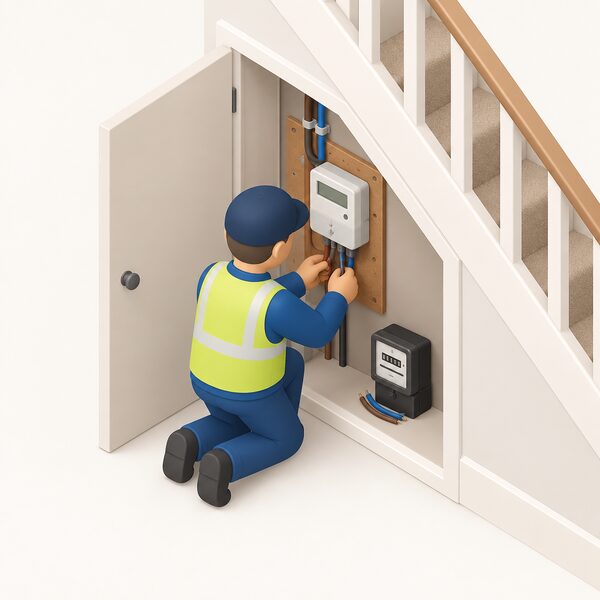
Under their licence conditions, energy suppliers are required to take all reasonable steps to install a smart meter where a meter is fitted for the first time or a traditional meter needs replacing due to a fault20. The government's guide sets out the standards energy suppliers should follow at each stage of the customer's smart meter journey20. Private renters can choose a smart meter if the energy bills are in their name or they prepay for energy, after checking the tenancy agreement and letting the landlord know21.
On faults, the 90-day figure recurs across the documents. The post-2025 policy framework proposes that suppliers take all reasonable steps to ensure smart meters are operating in smart mode as soon as possible and within 90 days6. The consultation document puts it as no later than 90 days from the date suppliers are first aware7. The earlier guaranteed standards consultation used 90 calendar days19. The documents agree on the figure.
On accuracy, an independent test of an electricity meter is free22. That matters because it is the one route by which a household can challenge the meter itself rather than the bill.
The technical rules sit in the Smart Energy Code, a multi-party agreement defining the rights and obligations of industry parties involved in the end-to-end management of smart metering in Great Britain23. A household is not a party to it. That is the structural point: the rules that govern the meter are made between companies and the state.
| Rule | What it requires | Source |
|---|---|---|
| Installation duty | Suppliers must take all reasonable steps to install a smart meter at first fit or fault replacement | 20 |
| Smart mode recovery | Back in smart mode as soon as possible and no later than 90 days | 6 |
| Guaranteed standard | 90 calendar days to resolve a meter not in smart mode | 19 |
| Meter accuracy test | Independent test of an electricity meter is free | 22 |
| Private renters | Can choose a smart meter if bills are in their name or they prepay | 21 |
How it differs across England, Scotland, Wales and Northern Ireland
The rollout is a Great Britain programme. Energy suppliers aim to provide every home and business in England, Scotland, and Wales with free smart meters3. Northern Ireland sits outside that arrangement, and the figures and obligations on this page should be read as applying to England, Scotland and Wales unless stated otherwise.
The progress figures are given on slightly different bases, and the difference matters. By the end of March 2023, in England, Scotland and Wales combined, 57% of all electricity and gas meters were smart24. The Public Accounts Committee used the same 57% figure for Great Britain at March 2023, noting it came over a decade after the rollout began25. The 39 million figure at end of March 2025 covers domestic and non-domestic premises across Great Britain1.
The proposed completion date is a GB target. The consultation proposes that suppliers complete installation of smart meters in remaining domestic premises by the end of 20307. Suppliers would be required to take all reasonable steps to reach 100% domestic smart meter penetration by that date7.
There is a second deadline that affects existing installations. Communications hubs using 2G or 3G, and associated metering devices as relevant, will need replacement with 4G-capable devices by the end of 20337. Older meters must be replaced ahead of the 2G and 3G network switch-off in 20337. A household with an early meter therefore faces a further visit within the life of the equipment.
For households in Scotland, Wales and Northern Ireland, the practical differences are in the supplier market and the support routes rather than in the meter itself. The Energy Ombudsman handles smart meter complaints21.
What a household can measure and control locally
This is where independence is real, and it is worth being precise about the boundary.
The in-home display shows how much energy is being used during the day13. It is supplied with the meter and needs nothing else to work. A consumer access device can take the same data into a household's own system, which is the route to keeping energy data in the home rather than only in a supplier's portal.
What a household cannot do locally is read the meter's own registers directly, change the tariff, or opt out of the reporting path. The meter reports through the national network to the supplier5. Local monitoring is a copy of the data, not an alternative to the system that produces it.
The measurement itself is improving. Domestic electricity consumption indicators are based on meter level electricity consumption data17. Smart Meter Enabled Thermal Efficiency Ratings assess energy performance while the home is in use, using smart meters and other low-cost data sources to produce metrics such as the rate of heat loss17. For a household planning solar, a battery or a heat pump, that is the difference between sizing a system on a year of bills and sizing it on what the building actually does.
Energy smart appliances extend the same logic to devices. An energy smart appliance is an appliance, such as an electric vehicle charging point or a heat pump, capable of increasing or reducing its electricity demand in response to signals received remotely from a third party26. That is automated response, and it is a further transfer of control to a third party in exchange for a reward.
What it means for energy independence
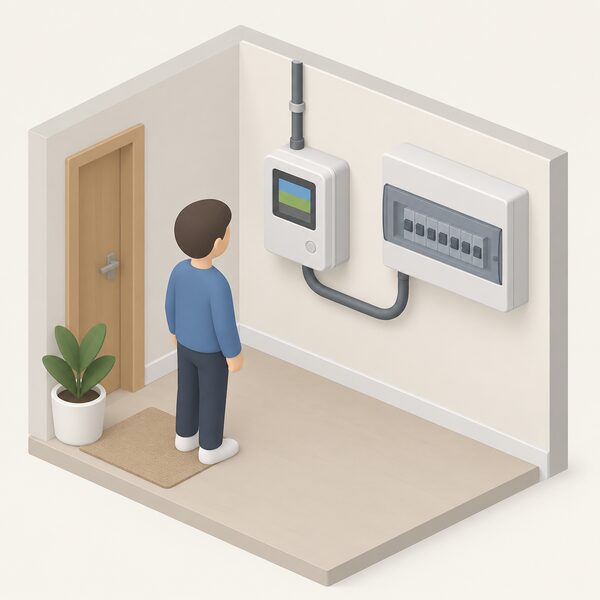
The honest position is that a smart meter moves a household from estimated to measured, and from passive to participating. It does not move a household off the grid, off gas, or off a supplier.
What it delivers is the information layer. Half-hourly data, accurate billing, access to flexible tariffs, a route into flexibility payments and a way to assess the building itself. Those are the preconditions for any serious attempt at self-consumption, because a household cannot shift what it cannot see.
What it does not deliver is control of supply. The tariff is set by the supplier5. Smart mode depends on arrangements between companies and can be lost on switching18. The meter reports through a national network5. The rules governing it are made under the Smart Energy Code between industry parties23.
The dependence that remains is therefore specific and nameable: the grid, a licensed supplier, the national communications network, and the commercial arrangements that keep the meter in smart mode. A household can reduce its exposure to the first by generating and storing, and to the second by switching, but it cannot remove the third or fourth. The meter is the instrument of participation, not of exit.
"Except by switching, you don't control the tariff your energy supplier sets, but you can change how much energy you use."
Sources26 cited
- Smart Metering 2025 Costs and Benefits Report, Parliament, 2025
- Smart meter performance, Ofgem, 2026
- How to get a smart meter, Smart DCC, 2026
- Getting a smart meter, Ofgem, 2026
- How do smart meters save energy, Smart DCC, 2026
- Smart Meter Guaranteed Standard Statutory Consultation, Ofgem, 2025-08-08
- Smart metering policy framework post-2025 consultation, DESNZ, 2025-08
- Statutory security of supply report 2025, GOV.UK, 2025-12-17
- How do smart meters help the environment, Smart DCC, 2026
- Smart meters and decarbonisation, Smart DCC, 2026
- Smart meters: your rights and expectations, GOV.UK, 2025-08-08
- Get help with your smart meter, Ofgem, 2026-09-17
- Get help with your smart meter, Ofgem, 2026
- Get help with your smart meter, Ofgem, 2026
- Second annual progress report on the roll-out of smart meters, GOV.UK, 2013-12-18
- Demand Flexibility Service, NESO, 2026-09-17
- Domestic electricity consumption indicator, ONS, 2025-12-18
- What happens if your energy supplier goes out of business, Ofgem, 2026
- Smart Meter Guaranteed Standards of Performance, Ofgem, 2025-03-28
- Smart meters: your rights and expectations, GOV.UK, 2025-08-08
- Smart meters, Energy Ombudsman, 2026-09-20
- Electricity meter accuracy disputes, GOV.UK, 2014-03-13
- Written evidence on smart meters, Science and Technology Committee, 2016-06
- Smart Metering Implementation Programme, Public Accounts Committee, 2023-03
- Delayed smart meter programme fails to hit targets, Public Accounts Committee, 2023-03
- Energy smart appliances, House of Commons Library, 2026
 The Full Smart Meters GuideDo smart meters really save you money, and how do you use one to cut your bills?
 Smart Meter InstallationCan your supplier make you have a smart meter, and how long should you wait for an appointment?
 Smart Meter Faults and FixesYour smart meter has stopped working.
 What Does a Smart Meter Cost?There is no upfront charge for a smart meter or a standard installation: the cost is recovered indirectly through energy bills.
 Smart Meter Installation DayWhat happens during a smart meter fitting appointment: how long it takes, the supply interruption, the safety checks, the in-home display demonstration, who can book it, and what happens when gas and electricity come from different suppliers.
 Monitoring in Flats and RentalsCan you get a smart meter in a rented flat, and who decides?