In this guide
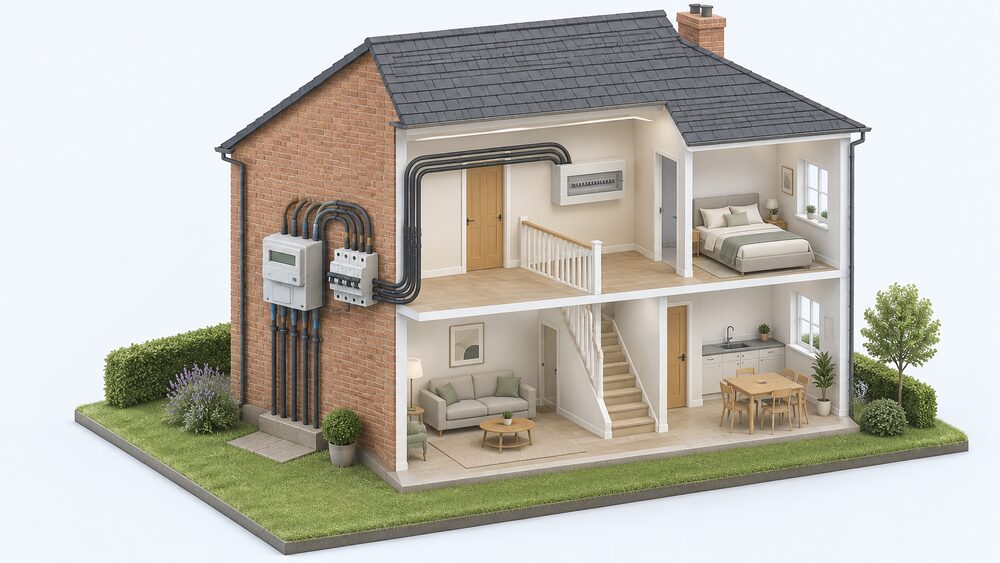
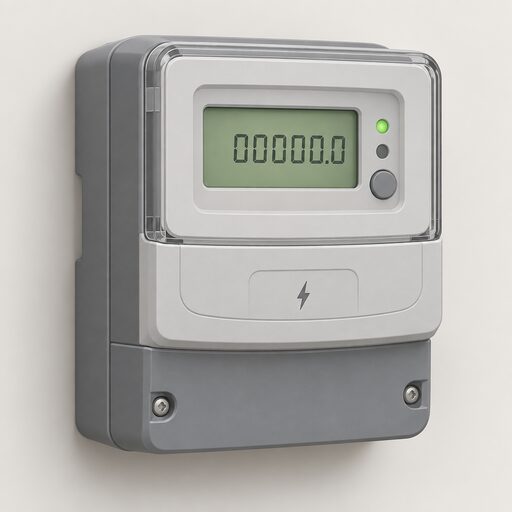
A three-phase supply is not exotic in a British home, but it is unusual, and it changes almost everything about how the property is metered and monitored. The clearest identification rule comes from independent monitoring guidance: if you have eight reasonably thick cables connecting to the meter, four of which go to your consumer unit or fuse-board, and a linked three-pole or four-pole miniature circuit breaker, the supply is three-phase1. A single-phase home has nothing like that many conductors at the meter position.
The practical consequence is that a single-phase smart meter cannot simply be swapped in. Where a household upgrades to a three-phase supply, the electricity supplier will need to replace the existing single-phase smart meter with a three-phase meter, and the upgrade may result in loss of some, or all, of the smart services currently provided by the supplier2. That is the central trade-off on this page: three phases give a home more capacity and more granular measurement, but the metering and monitoring path is narrower, more supplier-dependent and more expensive to instrument than the single-phase equivalent.
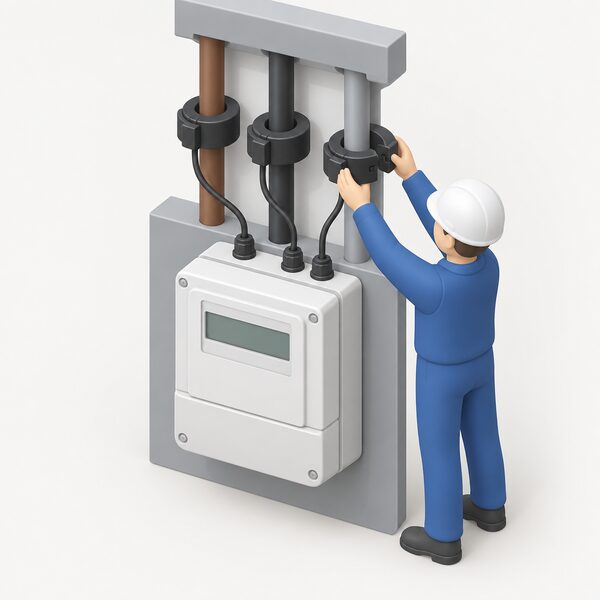
Monitoring is where three-phase homes can actually gain. A three-phase meter measures all three phases, and a whole-house monitor built for three phases uses three current transformers, one per phase, with total power being the sum of the three1. That per-phase view is the thing a single-phase household cannot have, and it is what makes phase balance visible rather than guessed at.
What a three-phase supply is and how to tell if you have one
A three-phase supply delivers electricity over three live conductors rather than one, with the phases offset from each other. For a household, the visible difference is at the meter and consumer unit, not at the socket: the wiring inside the home is still single-phase circuits, but they are distributed across the three phases rather than all drawn from one.
The identification rule is physical and specific. Independent monitoring guidance states that eight reasonably thick cables connecting to the meter, four of which go to your consumer unit or fuse-board, together with a linked three-pole or four-pole miniature circuit breaker, indicate a three-phase supply1. The linked breaker matters because it breaks all poles together, including the neutral, which is the safety arrangement for three-phase loads.
For a household, the reasons a property ends up three-phase are usually historical or practical: a former commercial or agricultural use, a very large property, or a supply installed for equipment that needed more capacity than a single phase could carry. The supply itself is the network operator's asset, and the meter is the supplier's. That split matters later, because changing the supply and changing the meter are two different processes run by two different organisations.
What three phases do not do is make a home independent of the grid. The property still draws from the distribution network, still has a supplier, and still depends on the same national system. What it gains is headroom: more capacity for large loads, and the ability to spread those loads across three phases rather than loading one. That headroom is the foundation for everything else on this page, from heat pumps and EV charging to the export limitation settings that keep a solar inverter within its agreed limits.
Why a single-phase smart meter does not fit a three-phase home
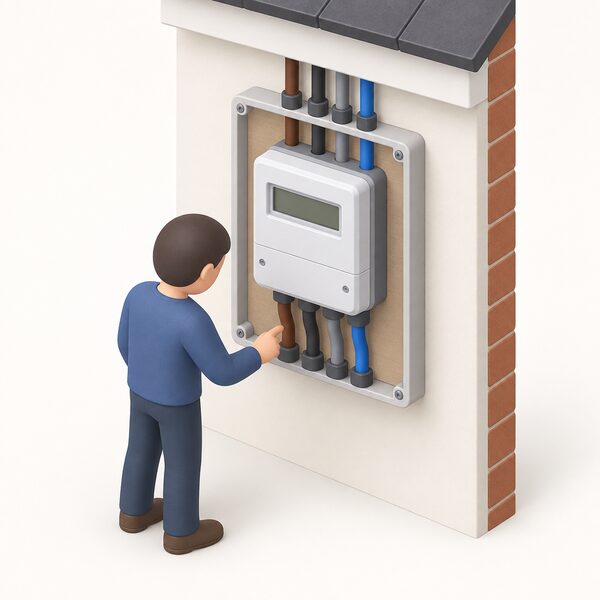
A single-phase meter measures one live conductor and one neutral. A three-phase service has three live conductors, and the meter has to measure all of them to bill the property correctly. The two are not interchangeable, and the mismatch is not something an installer can work around with adapters.
Independent guidance sets out the process plainly: where a household is upgrading its electricity supply to a three-phase supply, the household contacts its electricity supplier to tell them, and the supplier can advise on options including whether it can provide a three-phase smart meter and continue smart services2. The same guidance warns that this may result in loss of some, or all, of the smart services currently provided by your electricity supplier2. In other words, the household may keep a working meter but lose the smart functionality that made it useful, at least temporarily.
There is also a wider caveat that applies to unusual properties generally. Independent guidance notes that there are certain homes and locations where a smart meter will not currently work5. Three-phase domestic supplies sit in that category of properties where the standard installation process does not simply apply, and where the supplier has to be involved before anything is ordered.
The dependence here is worth stating firmly. On a single-phase supply, a household can often arrange a smart meter through the normal route and get an in-home display on the day. On three phases, the meter type, the availability of a three-phase smart meter and the continuity of smart services all rest with the supplier. That is a real limit on a three-phase household's ability to control its own metering, and it is the first thing to establish before planning any monitoring or solar work.
Three-phase smart meters: what they measure and how they work
A three-phase meter measures the flow of energy on each of the three phases and aggregates it. The measurement principle is the same as any electricity meter, applied three times over. Independent monitoring guidance describes the method for a three-phase monitor: three wattmeters, each with a current transformer and a voltage monitor on each phase, with total power being the sum of the three powers1. A three-phase meter does the same job in a single certified unit.
What that means in practice is that the meter can show not just how much energy the property used, but how it was distributed across the phases. That distribution is invisible on a single-phase supply because there is only one phase to measure. On three phases it becomes a variable a household can actually see, and it is the reason three-phase monitoring hardware exists as a separate product category.
Smart meters generally record how much gas and electricity you use7, and the smart metering system is designed to meet national technical and security standards, using controlled access and secure data processes8. Those protections apply to three-phase smart meters as they do to single-phase ones. The DCC network wraps smart meter data within two layers of encryption before sending it over a dedicated communications system, backed by the National Cyber Security Centre and in line with governance and data protection standards9.
The meter also has a role beyond billing. By integrating with national gas and electricity grids, smart meters help balance energy demand and supply10. On a three-phase service, that integration is the same in principle, but the data is richer because it is per-phase.
For a household, the practical expectation is this: a three-phase smart meter gives a complete and certified record of consumption across all three phases, and it does so under the same security and accuracy regime as any other smart meter. What it does not do on its own is give the household a live, per-phase view in an app. That requires either the supplier's own tools or a separate monitoring device, which is where the rest of this page turns.
Metering and surplus export: balancing loads across three phases
Export is where three-phase metering becomes more than a billing detail. A solar inverter on a three-phase supply has to be told what the export limit is, and it has to be able to measure the flow at the grid connection point to enforce it. That is a metering function, not an inverter function, and it is why three-phase meters are sold alongside inverters rather than as accessories.
The Growatt TPM-CT-E-EU three-phase meter illustrates the role. The maker states that it measures the flow of energy between the photovoltaic installation, the grid and the loads, and provides the inverter with data to manage self-consumption, battery charging and export limitation (zero-export)4. It works with Growatt inverters, on-grid and hybrid, that require energy metering at the grid connection point4. Once connected, the device becomes part of a system monitored in the ShinePhone app and the ShineServer portal4.
The Hoymiles three-phase meter performs a comparable function for its own ecosystem. The maker states that it supports zero export control to prevent energy export3. That is the same idea: the meter measures at the boundary, and the inverter acts on what it measures.
Balancing loads across three phases is the other half of the picture. Because the phases are separate conductors, a household can choose which phase a large load sits on, and the aim is to spread the load rather than concentrate it. A three-phase monitor makes that visible: with three current transformers, one per phase, the household can see whether one phase is carrying most of the demand while the others sit idle1. That imbalance is not visible on a single-phase supply, and it is the main reason a three-phase home benefits from per-phase monitoring rather than a single whole-house figure.
The dependence that remains is the grid connection itself. Export limitation exists because the network has limits, and the meter enforces them. A three-phase household with solar and a battery is still exporting into a network it does not control, under rules set by the network operator and the supplier.
Monitoring hardware: the Smappee Connect range and its specifications
Whole-house monitoring on three phases is a different hardware problem from single phase, because the monitor has to measure three conductors rather than one. The general method is settled: three current transformers, one per phase, each paired with a voltage reference, with total power being the sum of the three1. Any three-phase monitor is a variation on that arrangement.
The Smappee range is one of the established options for this kind of monitoring, and the wider Smappee energy monitoring range covers home and solar consumption monitors. The company also publishes technical documentation for its products, including an installation manual for the EV Ultra published in June 202612. For a three-phase household, the relevant question is whether the monitor in question supports three current transformers and reports per-phase data, because that is what distinguishes a three-phase monitor from a single-phase one.
The specifications that matter when comparing three-phase monitoring hardware are consistent across products:
- Number of current transformers. Three, one per phase, is the minimum for genuine three-phase measurement1.
- Current range. The Hoymiles three-phase meter is rated 0 to 120 A3, which sets the ceiling on what it can measure without a different transformer.
- Frequency. The Hoymiles unit is rated 50/60 Hz3.
- Mounting. DIN rail installation is the norm for this class of meter3.
- Service life. The Hoymiles three-phase meter is stated by the maker to have a 10-year service life3.
That consent requirement is the hinge for any app-based monitoring on a three-phase supply. A clamp-based monitor reads the cables directly and does not need the supplier's permission, but it also does not see what the meter sees. A device that pulls data from the smart meter sees the certified figures, but only with consent and only while the meter is communicating. A three-phase household choosing between the two is choosing between independence from the supplier and access to the official record.
Solar inverters and three-phase meters: Hoymiles, Growatt, Marstek and Anker SOLIX
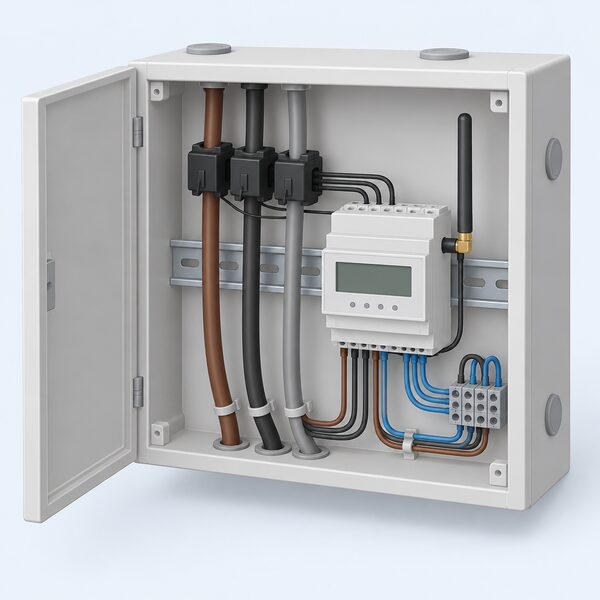
Three-phase metering hardware is sold mainly as part of an inverter ecosystem, and the compatibility rules are strict. The Hoymiles Smart Meter (Three Phases) is a three-phase meter, model HMeter-CT-T120-RW, supplied with one meter, three current transformers, one terminal block and one antenna3. It is rated 0 to 120 A and 50/60 Hz, installs on a DIN rail, and the maker states it has a 10-year service life3. It provides real-time energy data in the S-Miles Home App when connected to a compatible Hoymiles system3.
The compatibility limits are the important part. The maker states that this product is only compatible with Hoymiles products3, and specifically only compatible with Hoymiles HiBattery, HiFlow, and HiFlow Pro Series3. It is not a general-purpose meter that can be paired with any inverter.
| Product | Type | Key specification | Compatibility | Source |
|---|---|---|---|---|
| Hoymiles Smart Meter (Three Phases), HMeter-CT-T120-RW | Three-phase meter | 0 to 120 A, 50/60 Hz, DIN rail, 10-year service life | Hoymiles HiBattery, HiFlow and HiFlow Pro Series only | 3 |
| Growatt TPM-CT-E-EU | Three-phase meter | Measures PV, grid and load flow; manages self-consumption, battery charging and zero-export | Growatt on-grid and hybrid inverters needing metering at the grid connection point | 4 |
The Growatt unit is monitored in the ShinePhone app and the ShineServer portal once connected4. The Hoymiles unit reports into the S-Miles Home App3. Both are ecosystem products: the meter exists to give the inverter the data it needs, and the app is where the household sees it.
For a three-phase household, the practical implication is that the metering decision is usually made at the same time as the solar and battery decision, not afterwards. The meter has to match the inverter, and the inverter has to match the meter. That is a narrower set of choices than a single-phase home faces, where a clamp monitor can be added to almost any installation after the fact.
Installation, CT clamps and what the wiring involves
Three-phase metering installation is electrician work, not a plug-in job. The maker of the Hoymiles three-phase meter states that installation should be carried out by a qualified electrician according to local electrical regulations3. That is the baseline for any three-phase metering or monitoring work.
The physical work centres on the current transformers. A three-phase monitor needs three CTs, one clamped around each phase conductor, plus a voltage reference so the monitor can calculate power rather than just current1. The CTs are the reason installation is not trivial: they have to go around the right conductors, in the right orientation, and the voltage reference has to be taken from the right point.
The sequence for a household arranging this is broadly:
- Establish whether the supply is three-phase, using the cable and breaker test1.
- Contact the electricity supplier about metering, including whether a three-phase smart meter can be provided and what happens to existing smart services2.
- Decide whether monitoring will read the meter or the cables, since the two have different consent and compatibility requirements13.
- Have a qualified electrician install the meter or monitor, with three CTs and a voltage reference3.
- Verify the installation is working, which is the final step of a smart meter visit as described by independent guidance14.
What the wiring involves beyond the meter is mostly about the consumer unit. The four conductors going to the consumer unit from the meter are distributed across single-phase circuits, and the balance between them is a design choice made at installation. A three-phase monitor is what makes that choice visible afterwards, and it is the only way a household can tell whether one phase is carrying an unfair share of the load.
Standards and grid rules that shape three-phase metering
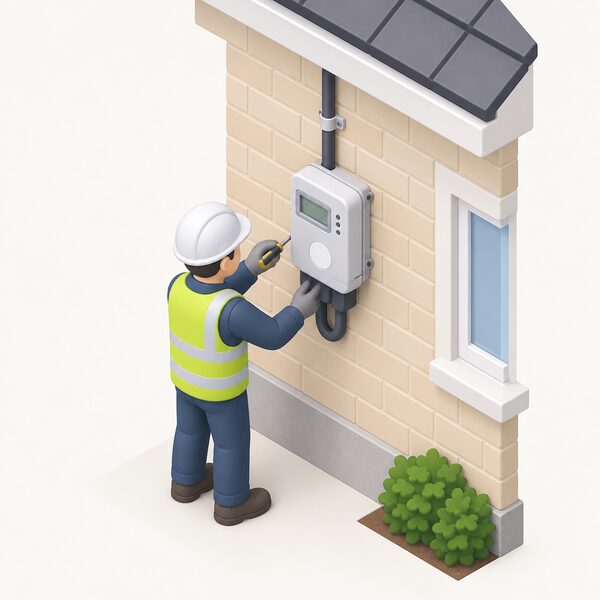
Three-phase metering sits inside the same regulatory framework as single-phase smart metering, and the framework is detailed. The government's guide sets out the standards energy suppliers should follow at each stage of the customer's smart meter journey15. Ofgem's smart metering licence guide exists to help stakeholders navigate and understand the rules relating to smart and advanced metering16, and further information on the smart metering rules is in that guide17.
The rules are still moving. Ofgem's consultation on smart meter guaranteed standards references the Electricity and Gas Acts, which could inadvertently include advanced metering, and respondents requested the definition be updated to clarify the standards apply only to SMETS meters18. In February 2026 the first three new smart meter Guaranteed Standards of Performance opened, covering smart meter installation and related matters19. A three-phase household relying on a supplier to provide metering is affected by these standards, because they set the timescales and remedies when things go wrong.
There is also a technical standards layer. The smart metering implementation programme published draft technical specifications as a policy paper21, and the security requirements for firmware are set out in official guidance: the meter will not activate firmware without verifying the digital signature, the message authentication code and the hash against the certified product list11. That is what stops an unauthorised update reaching a meter.
For a three-phase household, the practical effect of all this is that the metering on the wall is not a free choice. It has to be a certified product, installed to the supplier's process, and it operates under standards that the supplier is measured against. The household's leverage is in asking the right questions before the work is ordered, not in choosing the hardware.
What three-phase monitoring means for household energy independence
Three-phase monitoring gives a household something a single-phase home cannot have: a per-phase view of its own consumption. With three current transformers, one per phase, the household can see how demand is distributed and whether one phase is carrying more than its share1. That is genuine operational independence, because it is information the household owns and can act on without asking anyone.
The metering side is more constrained. Smart meters are installed by your energy supplier at no extra cost, and they track how much energy you are using daily, weekly and monthly22. That applies to the standard single-phase installation. On a three-phase supply, the position is different: the supplier has to be able to provide a three-phase smart meter, and the upgrade may result in loss of some or all smart services2. The household is dependent on the supplier for the meter, and on the supplier's timescales for fixing it.
The data side is a mixed picture. Smart meter data recorded at 30 minute intervals can be obtained by Distribution Network Operators in aggregated and anonymised form24, and through the DCC network smart meter data can be shared securely between authorised users to support smart energy services and innovation25. A three-phase household that wants its own data at that granularity needs either consent-based access through a Smart Energy Code signatory13 or its own clamp-based monitor.
What remains dependent is everything outside the meter: the grid connection, the supplier, the network operator's export limits, and the inverter ecosystem that the three-phase meter has to match. A three-phase home with good monitoring is better informed and better balanced than one without, but it is not self-sufficient. The monitoring tells the household what it is doing; the grid still decides what it may do.
Sources25 cited
- Measuring 3-phase power with emonTx, OpenEnergyMonitor, 2026-09-17
- Smart meters and changing your supply, Electricity North West, 2026-09-20
- Hoymiles Smart Meter (Three Phases), Hoymiles, 2026-09-17
- Growatt TPM-CT-E-EU 3-phase meter, Growatt, 2026-09-17
- The best way to start saving energy and money, ivie, 2026-09-20
- How accurate are smart meters?, Smart DCC, 2026
- What is a smart meter? Easy read, Smart Energy GB, 2026-03-16
- How do smart meters work?, Smart Energy GB, 2026-08-27
- Protecting data on the smart meter network, Smart DCC, 2026
- How do smart meters reduce my bills?, Smart DCC, 2025
- Smart metering implementation programme: draft technical specifications, Parliament, 2016-06
- Smappee EV Ultra installation manual, Smappee, 2026-06
- Data protection and smart meter data, Open Energy, 2026-09-20
- Getting a smart meter installed, Smart Energy GB, 2026-03-16
- Smart meters: your rights and expectations, GOV.UK, 2025-08-08
- Licence guide: smart metering, Ofgem, 2019-02-22
- Licence guide: metering, billing and payments, Ofgem, 2019-02-22
- Final decision: smart meter GSOPs, Ofgem, 2026-01-30
- How we are supporting customers with non-communicating smart meters, Smart DCC, 2026
- Smart Meter Guaranteed Standard statutory consultation, Ofgem, 2025-08-08
- Smart metering implementation programme: draft technical specifications, GOV.UK, 2011-08-04
- Smart meters, SSEN, 2026-09-19
- Smart meters in Wales, Welsh Government, 2026
- Smart meter data and privacy, Parliament, 2026-09-17
- How do smart meters help the environment?, Smart DCC, 2026
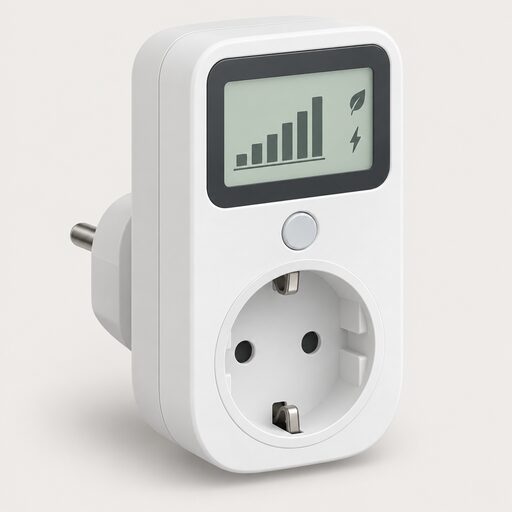 HEMS and Monitoring CostsWhat does a home energy monitor cost to buy and run?
 Meters and Energy IndependenceDo smart meters really save you money, and can you still get one fitted for free?
 Take Control of Your EnergyHow do you read your own energy use and keep hold of your meter readings?
 The Full Smart Meters GuideDo smart meters really save you money, and how do you use one to cut your bills?
 Monitoring in Flats and RentalsCan you get a smart meter in a rented flat, and who decides?
 Meters and Time-of-Use TariffsDo you need a smart meter for a time-of-use tariff, and does it have to send readings every half an hour?