
In this guide
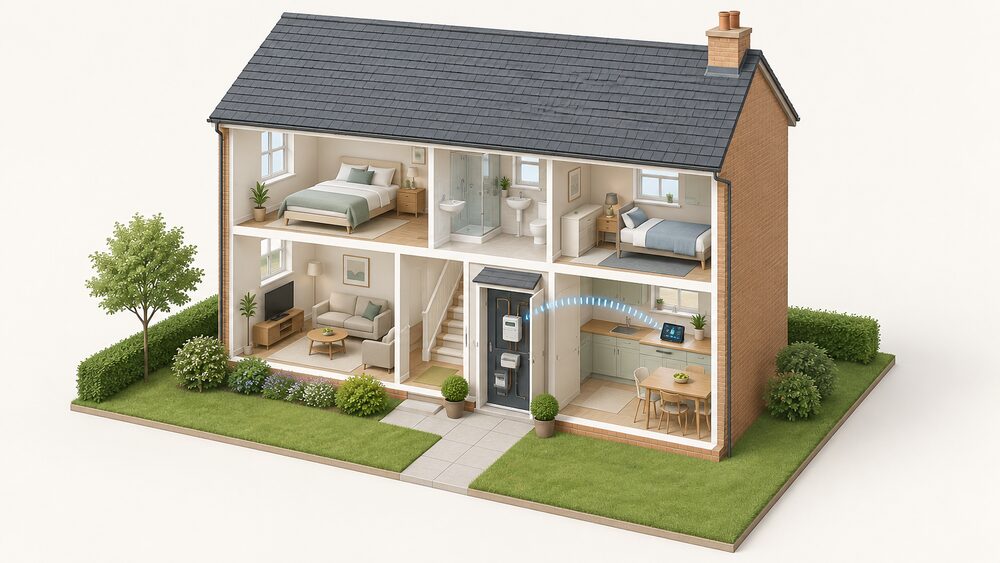
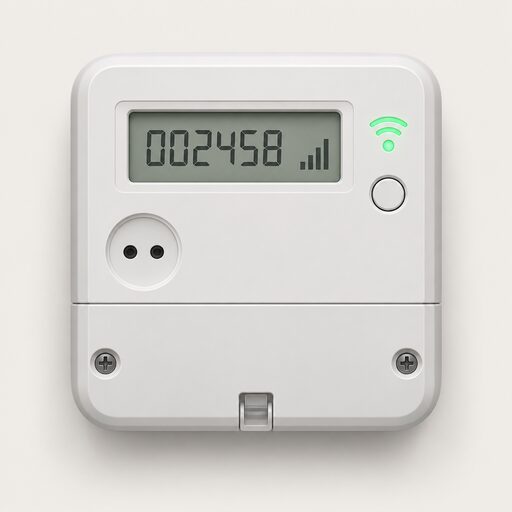
A smart meter is a gas or electricity meter that measures consumption and sends the readings to the energy supplier automatically, without anyone visiting the property or reading a dial1. It replaces the meter already in the house and does the same job of measuring, with two additions: it can communicate in both directions, sending and receiving information wirelessly2, and it comes with an in-home display that shows energy use and its cost in near real time3.
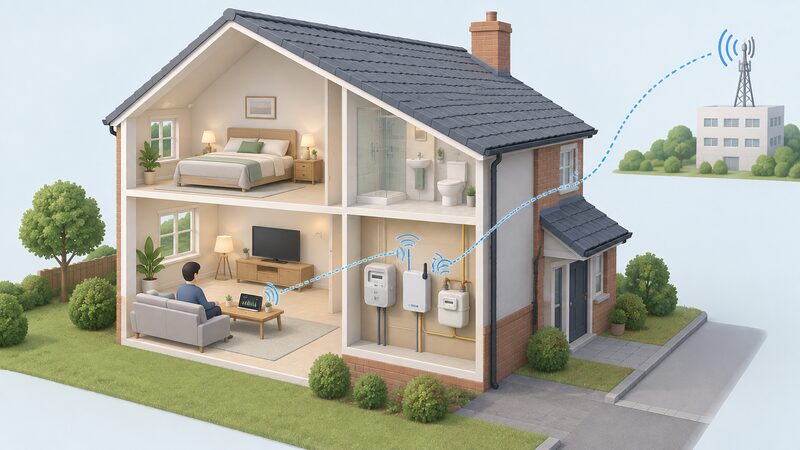
The readings do not travel over home broadband. They go across a separate national network run by the Data Communications Company, which is used solely for smart metering, does not connect to the public internet or home Wi-Fi, and wraps the data in two layers of encryption before it leaves the house4. Electricity consumption can be recorded every half hour and transmitted7, and readings reach the supplier at least once a month, with half-hourly, daily or in some cases monthly schedules in use8.
Three parts make the system work: the meter itself, the communications link to the supplier, and the display in the kitchen. Nothing in it generates energy, stores it or reduces a unit price. A smart meter does not automatically save money9: it measures, and what a household does with the measurement determines whether anything changes.
What a smart meter is and what it does
A smart meter measures how much gas and electricity a property uses, and sends that data directly to the energy supplier1. Suppliers use the data to bill for energy actually used rather than estimated, to offer products and services such as new tariffs where the household has given permission, and to help make the energy system more efficient by recording demand more accurately2.
The functional difference from a traditional meter is two-way communication: a smart meter can send and receive information wirelessly15. That is what makes remote operations possible, including changing the meter between credit and prepayment mode without a new meter being fitted, and adding prepayment credit over the air5.
Accurate billing is the change most households notice first. Energy use is recorded automatically in half-hour periods, which allows suppliers to bill on actual consumption3. What it does not do is identify individual appliances. A smart meter measures household energy use as a whole and does not know when a particular appliance is switched on or off16. Appliance-level detail needs separate equipment, such as smart plugs or a home energy monitor.
The parts: meter, home area network, in-home display
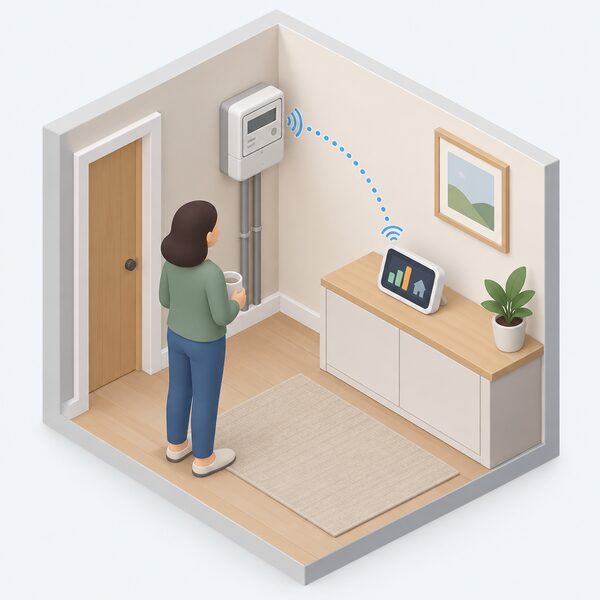
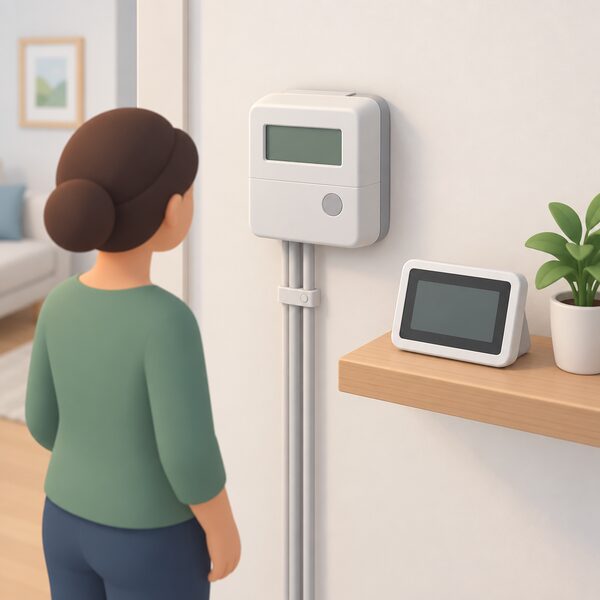
A smart metering installation has two visible parts: the meter or meters, and the display screen17. Between them sits the home area network, a secure short-range link. The meter sends data to the in-home display using the home area network11. That local link is why the display is paired to the meter in that specific property, and why it is left behind on moving out18.
Beyond the house, readings are transmitted to a wide area network made up of mobile phone or radio masts, and on to the supplier5. The distinction matters in practice: a display showing nothing while the supplier still receives readings is a home area network or display problem, whereas readings that stop arriving while the display still works points at the wide area link. The technical rules behind both are set by the Smart Meter Equipment Technical Specification, known as SMETS19; the difference between the first and second generation is covered on the page on SMETS1 and SMETS2 meters.
How readings travel: the DCC's secure network, not your Wi-Fi
When a smart meter is installed, readings are sent automatically over the DCC's secure network to the energy supplier4. Sending a reading does not require an internet connection, because the meters work on the DCC's secure, standalone network11. Smart Energy GB states the position flatly for households worried about their broadband:
"A smart meter does not use your Wi-Fi, connect to your router or affect your broadband speed."
No home Wi-Fi, broadband, router or internet package is needed for a smart meter to send readings12. The network carries two layers of encryption and operates entirely separately from the public internet6, and the DCC states that data is wrapped in those two layers before transmission over a dedicated communications system, backed by the National Cyber Security Centre and in line with governance and data protection standards11. The most heavily used message type on the network is the meter read, which lets suppliers read energy usage remotely5. Through the same network, smart meter data can be shared securely between authorised users to support smart energy services6.
For the household, the practical consequence is a dependency swap. There is no reliance on a home router, but there is reliance on mobile or radio coverage at the meter position and on the DCC's central systems continuing to run. Where coverage is poor, a meter can be installed and still fail to communicate. More detail sits on the page about how smart meters communicate.
The in-home display: what it shows and how often it updates
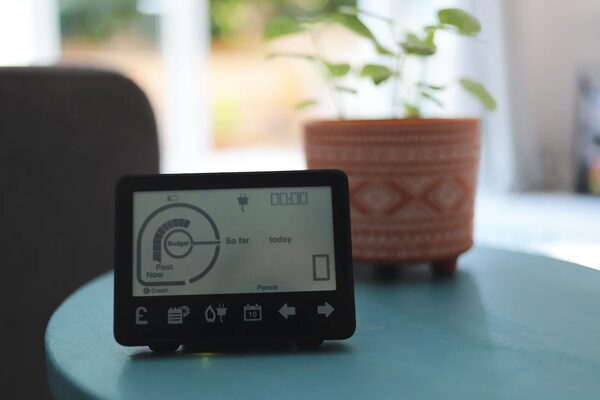
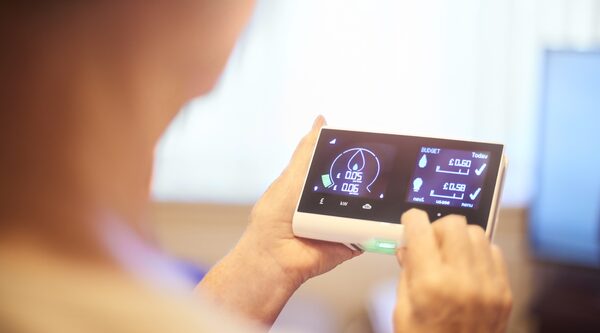
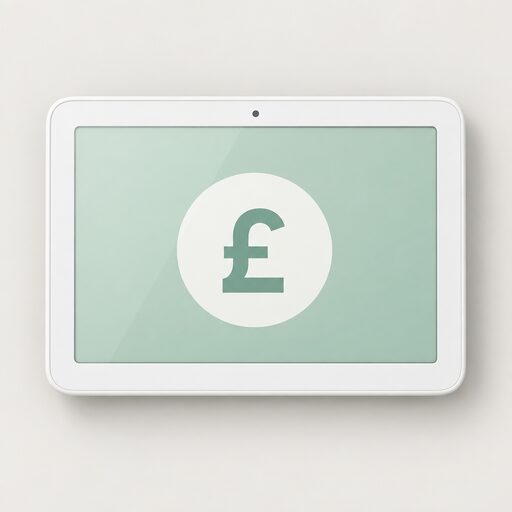
Smart meters come with an in-home display so that households can see and manage energy use3. It is a portable touchscreen device showing near real-time energy usage data6, covering how much energy is being used and what it is costing, over the day, week or month20.
Near real time is the accurate description: the display is fed by the meter over the home area network, not by the supplier's billing system, so it responds to a kettle or an oven within seconds rather than showing yesterday's account balance. That immediacy is the mechanism by which the display can change behaviour, and it is also the limit: the figure covers the whole property at once, so isolating one appliance means switching things off and watching what moves.
Displays can break, and cover exists. If a display breaks or goes missing in the first twelve months, a free replacement is available from the energy supplier21. Replacing a display should not involve replacing the meters: the new display is paired with the existing smart meter22. More on what the screens show is on the page about in-home displays.
Credit mode and prepay mode: two ways the display works
All smart meters can operate in prepayment or credit mode23, and the display has two modes to match, depending on how energy is paid for4. In credit mode the display concentrates on consumption and cost. In prepay mode, credit in pounds and pence appears on the display alongside consumption24.
The change between modes does not usually need new hardware. Because smart meters are set up to work for both prepay and credit customers, a supplier can switch between credit and prepay without a whole new meter25, and can switch a meter to credit mode remotely26.
| Credit mode | Prepay mode | |
|---|---|---|
| Billing | Billed for energy used, on actual rather than estimated readings3 | Credit bought in advance and used as energy is consumed27 |
| Display shows | Energy use and cost by day, week or month20 | Credit in pounds and pence as well as consumption24 |
| Topping up | Not applicable | Online, by phone or text, or with a smartphone app, with no gas card or electricity key needed28; over-the-air top-up across the DCC network5 |
| Changing mode | Supplier can switch modes remotely26 | Supplier can switch modes remotely26 |
Ofgem states that a household with a smart prepayment meter may be able to top up online or using the supplier's app29. Shop top-ups remain available27. One point worth stating plainly: a smart meter cannot cut off power by itself30. Remote disconnection is a supplier action governed by rules, not something the meter decides. The subject is developed on the page on smart prepayment meters.
What data is sent, and what is not stored
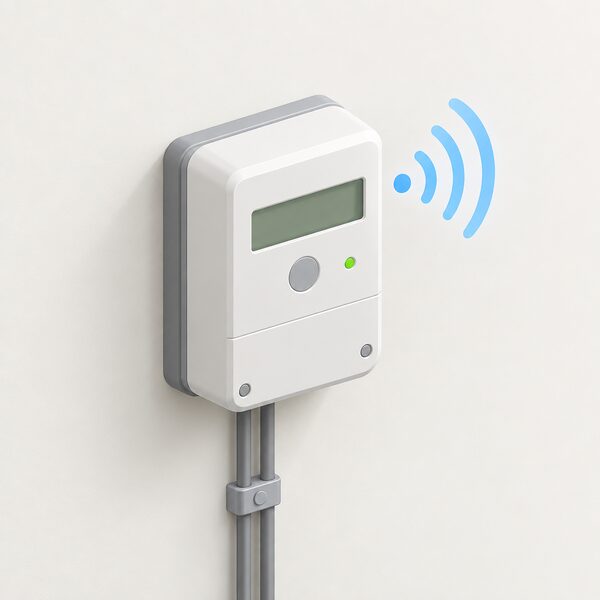
The meter sends meter readings and the technical information needed for billing, meter operation and smart services. It does not record conversations, browsing history, personal activities or details about individual appliances12. Personal details such as name, address and bank account details are not stored on, or transmitted by, the meter8.
Smart meters only give data about how much energy is used17. Readings can only be shared with the energy supplier, and the supplier cannot share them further without permission31. Electricity consumption can be recorded every half hour and transmitted, which is the basis of half-hourly settlement in the wholesale market7.
Households wanting the data for their own purposes, held locally rather than only in a supplier's systems, need a separate route: see consumer access devices and smart meter data.
Accuracy: certified, and the same as a traditional meter
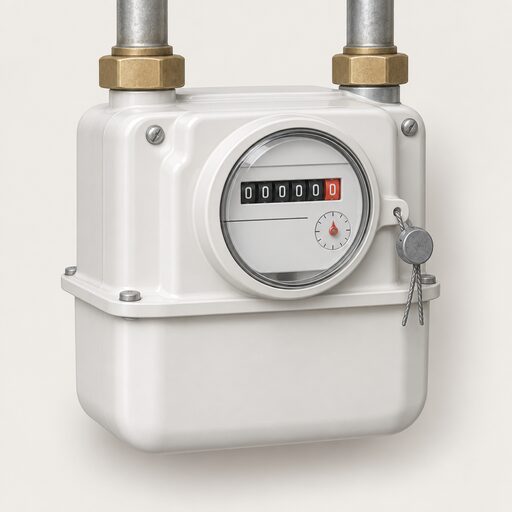
By law, all smart meters must be approved by and certified by the Office for Product Safety and Standards to prove their accuracy13. The Office for Product Safety and Standards ensures that electricity meters are accurate, working closely with energy suppliers32. For measuring electricity or gas usage, smart meters are as accurate as traditional meters13.
Communication failure and measurement failure are different things, and conflating them is the commonest confusion about smart metering. Most smart meters operate exactly as they should, and of those that do not, they still accurately measure energy use33. A meter that has lost its link records consumption correctly; what stops is the automatic reading. The remedy in that case is a manual reading, not a new meter.
The Smart Metering Installation Code of Practice also requires that companies properly explain how the smart meters work, and outline how households can use the data available to them to improve their energy efficiency34. Accuracy disputes have a formal route through the supplier and, ultimately, meter examination32. See smart meter standards and accuracy.
What a smart meter costs, and why it will not save money by itself
There is no direct cost for a smart meter, and expenses are recouped through energy bills over time1. Installation and maintenance are covered by standing charges, as with traditional meters14, and installation is provided at no extra charge by the supplier22.
The saving question needs care. Citizens Advice puts it plainly: a smart meter will not automatically save money9. It does not automatically save energy, although it can help a household manage usage more easily35. Smart meters do not directly reduce electricity or gas unit prices. What they change is information: near real-time feedback on the display, accurate rather than estimated bills, and eligibility for tariffs that price by time. A household that looks at the display, identifies waste and acts can save; a household that does not will see the same consumption billed more accurately. Figures on typical savings are discussed on how much a smart meter can save and smart meter cost.
Tariffs and flexibility: dual-rate and time-of-use options
A smart meter gives access to more flexible tariffs, including dual-rate tariffs2. Smart meters are compatible with Economy 7 tariffs and fixed rate tariffs, and can enable newer time-of-use tariffs, allowing a change of tariff without changing the meter36. Time-of-use tariffs use the smart meter to log electricity use and charge different rates during different time windows37.
That capability is the main technical reason a household interested in energy independence would want one. Shifting a battery charge, an immersion heater or an electric vehicle into a cheap window only pays if the meter can tell the supplier when the energy was used. Customers need a smart meter to get all the benefits from new flexible energy tariffs38, and access to time-of-use tariffs brings cheaper rates during off-peak hours and incentives for using energy on high-supply days1. The trade-off is that the same mechanism allows higher prices at peak times. See smart meters and time-of-use tariffs and household flexibility and reward schemes.
Smart mode, dumb mode and switching supplier
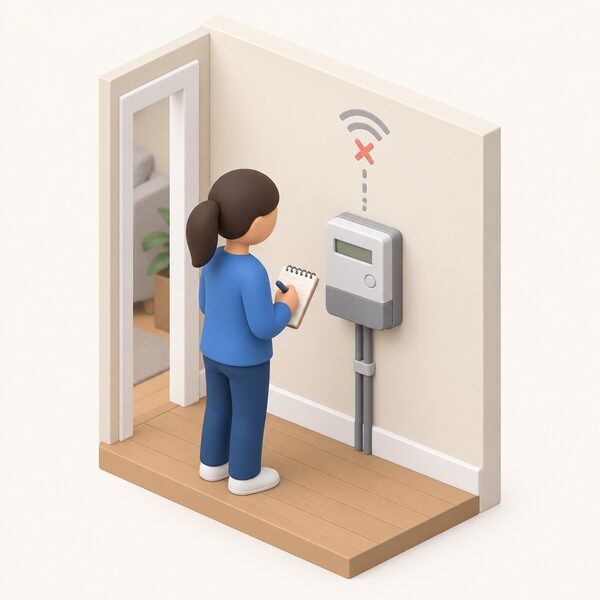
A meter in "dumb" mode still measures but no longer reports. Ofgem lists the situations in which a meter is not operating in smart mode: it loses connection with the supplier, it loses connection after a change of supplier, or it was installed without being connected to the national communication system39. Citizens Advice adds two common triggers: having an older type of smart meter and switching supplier, or a supplier going out of business40.
Where a supplier fails, the meter may not work in smart mode with the new supplier, and readings may have to be taken manually and submitted; the meter may work in smart mode again after a change of tariff or supplier41. First-generation SMETS1 meters are the usual cause: they can lose their smart functions on switching, although the majority have now been reconnected to the smart meter network. Second-generation meters keep all their smart functions across suppliers with no interruption8.
A meter can also be deliberately set to work in dumb mode, with all communications switched off43. More at why a smart meter is in dumb mode.
Faults and fixes: who is responsible
The supplier is responsible for installing the meter and for making sure it works properly9. If a smart meter stops working, the supplier handles maintenance and will fix or replace the meter as needed1, and should send someone to look at the problem43. The two common symptoms are that a meter stops recording energy used, or no longer sends readings to the supplier2.
Compensation rules apply to some failures. Under the smart meter Guaranteed Standards, if an installation fails due to a fault within the energy supplier's control, the consumer receives compensation44. Ofgem intends to review the outcomes of those standards in the first quarter of 2027. Citizens Advice has recommended closing the accountability gap between energy suppliers and the DCC so that suppliers are held accountable when smart metering equipment does not work, including changes to DCC contracts if needed45. The practical point for a household is that there is one point of contact, the supplier, regardless of which part of the chain has failed. See smart meter faults and troubleshooting.
The rollout: who can get one, and by when
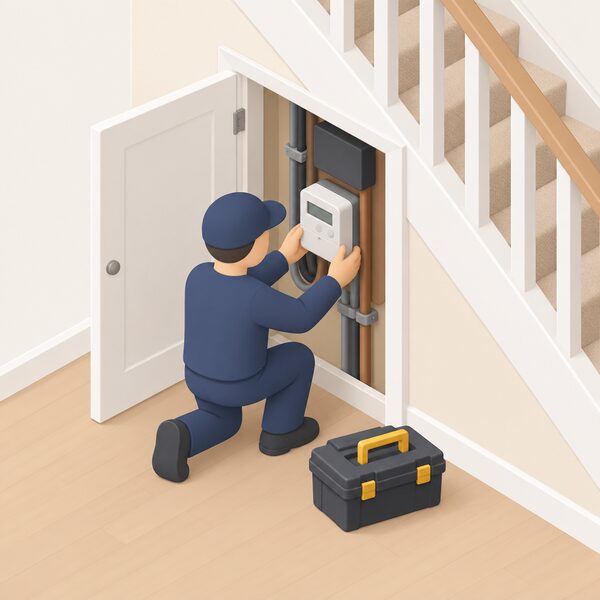
Energy suppliers have been rolling out smart meters since 201246. A four-year Rollout Framework ran from 1 January 2022 to 31 December 2025, setting installation obligations on suppliers47, and the DCC refers to completing the rollout by the end of 203048. Once government considers the rollout complete, responsibility for smart metering passes to Ofgem and the Smart Energy Code governance46.
Coverage is not universal. The National Audit Office recorded the government's proposal for 80% of homes to have smart meters by the end of 2025, and noted that a technical solution allowing smart meters to function in more than 99% of homes was expected from July 202349. Smart meter uptake rose from 62% in August and September 2023 to 68% in January 202550.
Installation is not compulsory. A household offered one can refuse51, and there is currently no requirement for suppliers to install a smart meter on request, although a household that wants one can contact its supplier15. Any household that pays for energy, whether owning or renting, should be able to book an installation where the meter is expected to work at the property3. Which? notes that in practice most energy companies no longer stock traditional meters, so a meter due for replacement is usually replaced with a smart one52. Arrangements differ across the UK: Northern Ireland has its own position, covered on smart meters in Northern Ireland, alongside pages for Scotland and Wales.
Renting, solar panels and moving house
Renters who pay the gas or electricity bills can choose to have a smart meter installed53. The Energy Ombudsman states that a private renter can choose one if the bills are in their name or they prepay for energy, after checking the tenancy agreement and letting the landlord know15. There may be rules in a tenancy contract about how energy is supplied, including the type of meter that can be fitted53. Where a tenant has no smart meter, readings are estimated; with one, readings go to the supplier automatically so the landlord does not need to estimate54. See monitoring in flats and rented homes.
Solar is not a barrier: smart meters are designed to be able to work with solar panels, and the supplier should be able to offer one as part of the rollout53. Export arrangements are covered on export metering and limitation.
On moving, the in-home display stays. It is designed to work with the smart meter at that property and will not normally work elsewhere, so it is left for whoever moves in55; the same applies to tenants moving out of a rented home56. On arrival at a new address, seeing current energy use on the display indicates the meter is in smart mode55.
What it means for a household's independence
A smart meter adds no generation, no storage and no control. It removes the dependence on estimated billing and on someone reading a dial, and it opens the door to tariffs that reward shifting consumption, which is the precondition for a battery or heat pump being run economically. Set against that, it introduces dependence on the DCC network and its mobile or radio coverage, on the supplier for maintenance and for the display, and on the supplier's systems for the data itself, since readings can only be shared with the supplier and cannot be passed on without permission31. For a household that wants its own consumption data held locally, the meter is a starting point rather than a solution; the wider picture is set out in the guide to smart meters and home energy management and on smart meters, monitoring and energy independence.
Sources56 cited
- Smart meters, Welsh Government Climate Action Wales, 2026
- Get help with your smart meter, Ofgem, 2026-09-17
- Smart meters: your rights and expectations, GOV.UK, 2025-08-08
- How do smart meters save energy?, Smart DCC, 2026
- How do smart meters send readings?, Smart DCC, 2026
- Do you have to have a smart meter by law?, Smart DCC, 2026
- How half-hourly settlement will help cut energy bills, Ofgem, 2017-07-26
- Myth busting smart meter problems, Smart Energy GB, 2026-09-17
- Getting a smart meter installed, Citizens Advice, 2026-09-17
- An introduction to smart meters and prepay, Smart Energy GB, 2026-03-16
- How to get a smart meter, Smart DCC, 2026
- How do smart meters work?, Smart Energy GB, 2026-08-27
- How accurate are smart meters?, Smart DCC, 2026
- Smart meter costs: are smart meters free?, Smart Energy GB, 2026-03-16
- Smart meters, Energy Ombudsman, 2026-09-20
- Automatic meter readings, Smart Energy GB, 2026-04-07
- What is a smart meter: easy read, Smart Energy GB, 2026-03-16
- The in-home display, Smart Energy GB, 2026-08-19
- Household Energy Efficiency statistics detailed release, GOV.UK, 2023-03-30
- Supporting energy security, Smart Energy GB, 2026-04-08
- Understanding your home energy usage, ivie, 2026-09-20
- Do I already have a smart meter?, Smart Energy GB, 2026-03-16
- Can a smart meter cut off power?, Smart Energy GB, 2026-04-24
- Smart energy explained, Smart Energy GB, 2026-04-24
- The accessible in-home display, Smart Energy GB, 2026-03-16
- Problems getting to or topping up your prepayment meter, Citizens Advice, 2026-09-17
- Understanding smart meters, National Energy Action, 2026-06-12
- Benefits for you: smart meters and carers, Smart Energy GB, 2026-08-19
- Prepayment meters consumer guidance, Ofgem, 2026
- Smart facts: can a smart meter cut off power, Smart Energy GB, 2026-03-16
- Smart Energy GB FAQs, Smart Energy GB, 2025-08-08
- Electricity meter accuracy disputes, GOV.UK, 2014-03-13
- Are smart meters accurate?, Smart Energy GB, 2026-03-16
- Smart meters explained, Uswitch, 2026-07-29
- Benefits for prepay customers, Smart Energy GB, 2026-08-19
- What is Economy 7?, Smart Energy GB, 2026-04-07
- Five top tips from Which? to cut your energy bills, Welsh Government Climate Action Wales, 2026-03-18
- Energy flexibility, Smart Energy GB, 2026-08-17
- Smart meter performance, Ofgem, 2026
- Fixing problems with your smart meter's in-home display, Citizens Advice, 2026-09-17
- What happens if your energy supplier goes out of business, Ofgem, 2026
- Switching supplier with a smart meter, Smart Energy GB, 2026-03-16
- Do I have to accept a smart meter?, Which?, 2026-05-12
- Final decision: smart meter Guaranteed Standards of Performance, Ofgem, 2026-01-30
- The state of smart: consumer experiences of smart meters, Citizens Advice, 2026-02-03
- Update on the rollout of smart meters, UK Parliament Public Accounts Committee, 2023-10-20
- Supplier smart metering installation targets, Ofgem, 2026-09-17
- Supporting customers with non-communicating smart meters, Smart DCC, 2026
- Update on the rollout of smart meters: summary, National Audit Office, 2023-06-14
- What drives consumer satisfaction with energy suppliers, Ofgem, 2025-07
- Guide to smart meters, Energy Saving Trust, 2026-07-15
- Smart meter installation, Which?, 2026-02-26
- Can I get a smart meter?, Smart Energy GB, 2026-03-16
- What your landlord can charge for energy, Citizens Advice, 2026-09-17
- Moving house energy checklist, Energy Saving Trust, 2026-05-01
- Smart meters for renters, Smart Energy GB, 2026-03-16
 The Full Smart Meters GuideDo smart meters really save you money, and how do you use one to cut your bills?
 Meter Standards and AccuracyHow UK smart meters are certified for accuracy, how their readings become a bill, what happens when a meter stops communicating, and how a metering or billing dispute is escalated to a supplier and then to the Energy Ombudsman.
 In-Home DisplaysWhat does the little screen that came with a smart meter actually tell you, and what can you do when it stops working?
 Can a Smart Meter Be Hacked?Can someone break into your smart meter, see your personal details or switch off your power?
 How Smart Meters CommunicateSmart meters send readings without using your home wifi or broadband, so they still work if your internet goes down.
 Take Control of Your EnergyHow do you read your own energy use and keep hold of your meter readings?