
In this answer
Short answer
Yes. A meter reading taken on the day you leave and the day you arrive is what splits one household's energy use from the next, and it is the single most useful thing a moving household can do. Without it, the supplier estimates, and an estimate can charge more than the energy actually used1.
The routine is short. Take final readings at the property you are leaving and contact the previous supplier to close the account there2. At the new property, find out who supplies it, tell that supplier you have moved in, and submit readings with photographs as evidence3. Where the home is on a metered estate supplied by LPG rather than mains gas, the incoming resident is advised to notify the LPG supplier as soon as possible that they are the new occupant4.
What this buys a household is a clean boundary: a closing figure on the old account and an opening figure on the new one, both dated. What it does not remove is dependence on the supplier to accept and apply those figures, and on the meter itself to be the thing both sides agree on.
Why meter readings matter on moving day
A meter reading is the only shared number between two households, two accounts and often two suppliers. Everything else in a move, the completion statement, the tenancy agreement, the council tax letter, describes the property. The reading describes the energy.
The consequence of skipping it is specific. If no readings are sent, the supplier has to estimate how much energy has been used, which could lead to a charge higher than the true figure1. That estimate then becomes the opening position for the next occupier, and separating the two periods afterwards depends on goodwill and paperwork rather than measurement.
There is a second reason the timing matters. A meter reading is also required on the day of a supplier switch, because the switchover process includes taking a reading on the day it takes effect8. A house move and a supplier change often happen together, so the same reading can serve both purposes if it is dated and kept.
For a household's energy independence, this is the low-cost end of the spectrum: no equipment, no contract, no installer. It is also the point at which a household is most exposed, because a move is exactly when an account changes hands and when an unchallenged estimate can follow you to a new address. The reading is the household's own record, held independently of the supplier's system.
What to record before you leave
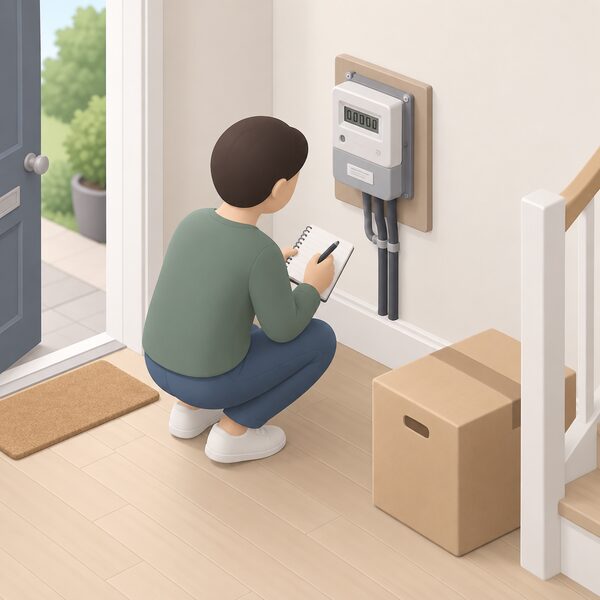
The leaving routine has three parts: read, photograph, notify. Take final meter readings from the previous property and contact the previous supplier to close the account at that address2. The reading should be taken on the day you leave, not the day you pack, because the heating, hot water and appliances may still run in between.
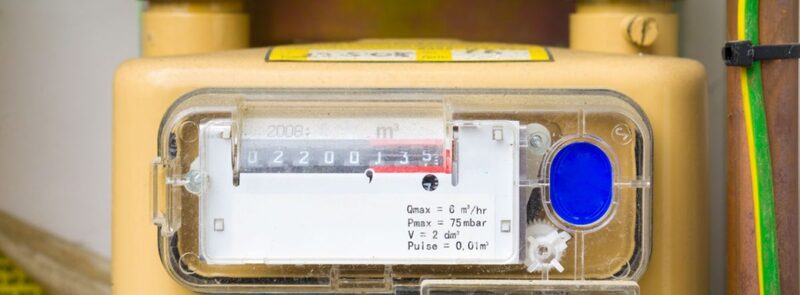
Record the meter serial number as well as the register. This matters more than it looks. In a case examined by the Energy Ombudsman, a meter had been exchanged around six and a half months previously with an installation reading of 00000, and three months later the consumer provided an online reading of 000569. When a meter is exchanged, the register restarts, and a reading without the serial number can be matched to the wrong physical meter.
If the property has a smart meter with an in-home display, the display stays behind. After moving out, the in-home display is left in the property because it is connected to that property's smart meter10. It is not a personal device and it will not follow you.
What to record when you arrive
On arrival, the order is: identify the supplier, notify them, then read. Setting up gas and electricity in a new home follows the same sequence: find out who your energy supplier is, contact them to say you have moved in, and submit meter readings with pictures as evidence3. A newly built home follows the same pattern: identify the supplier, notify them that you have moved in, and submit readings regularly3.
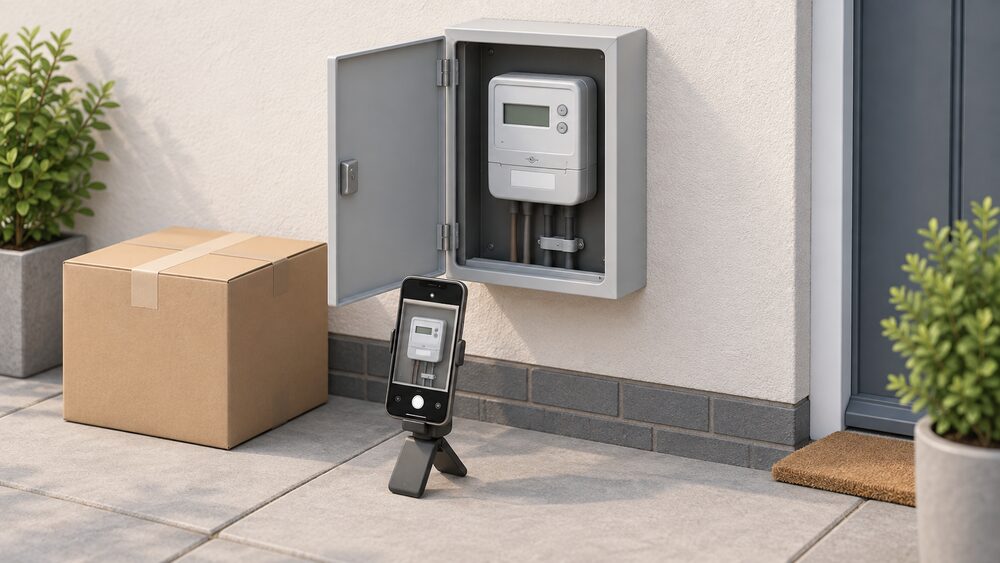
Finding the meter is usually straightforward. In a house, meters are typically in the basement, loft, garage or outside in a mounted box3. Flats vary more, and communal cupboards are common. The serial number is printed on the meter body, and it is the identifier to quote when registering.
Photographing the meter when first moving into a property is advised, alongside contacting a supplier to complete registration7. The photograph should show the register, the serial number and enough context to identify the meter. It is worth keeping with the tenancy or completion paperwork, because disputes tend to surface months later rather than on the day.
Who to notify: suppliers and the new occupier
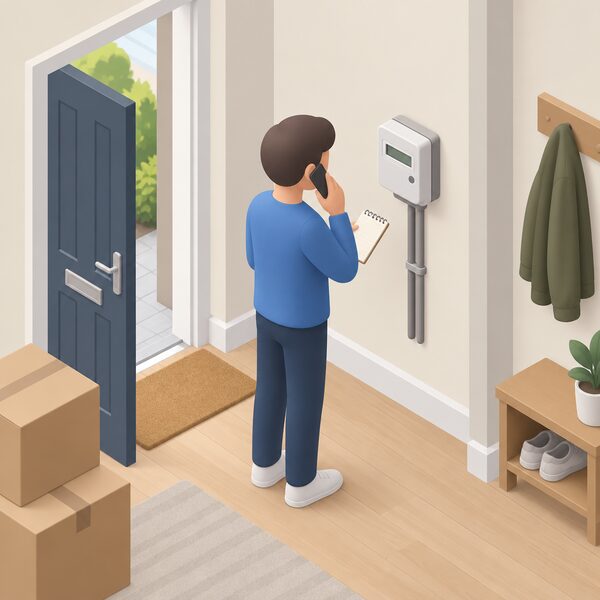
Two notifications matter: the supplier you are leaving and the supplier you are joining. The outgoing supplier needs the closing reading and the date you ceased to be responsible. The incoming supplier needs the opening reading and the date you became responsible. Where the property is on a metered estate supplied by LPG, residents are advised to notify the LPG supplier as soon as possible that they are the new occupant4.
Landlords have a separate duty that affects what a new tenant receives. A copy of the electrical installation condition report must be supplied to a new tenant before they occupy the premises14. That is a safety document rather than an energy one, but it is part of the same handover and is worth asking for.
Where a meter has to be re-fitted as part of a supply move, the electricity supplier must attend the same day to re-fit the electricity meter, after which power is ready to go15. That is the network side of a move, and it is arranged through the supplier rather than the household.
| What to do | When | Who |
|---|---|---|
| Read and photograph the meter | Day you leave | Outgoing occupier2 |
| Close the old account | On leaving | Previous supplier2 |
| Identify the supplier | On arrival | New occupier3 |
| Notify the supplier and submit readings | On arrival | New occupier3 |
| Notify the LPG supplier | As soon as possible | New occupant on a metered estate4 |
Smart meters and moving home
A smart meter changes the routine but does not remove it. Smart meters send readings to the supplier automatically, at least once per month5, and automatic readings can be monthly, weekly, daily or even half-hourly16. A smart meter automatically sends electricity and gas readings to the supplier17, and readings are usually sent every 30 minutes or so6.
The exception is the move itself. You normally do not need to give a meter reading if you have a smart meter, but you might need to if you switched suppliers, moved, or the supplier cannot take automated reads18. More sharply, a meter may not work in smart mode when you move to the new supplier, and manual readings submitted to the new supplier may be needed instead6.
Switching with a smart meter is possible, but the new supplier might not offer all smart meter services such as remote meter readings, and the meter may need replacing19. That is the dependence that remains: the automation belongs to a supplier relationship, not to the property, and it can lapse at exactly the moment the household changes hands.
"Meter readings should be sent automatically by your smart meter to your energy supplier"
If the readings are disputed
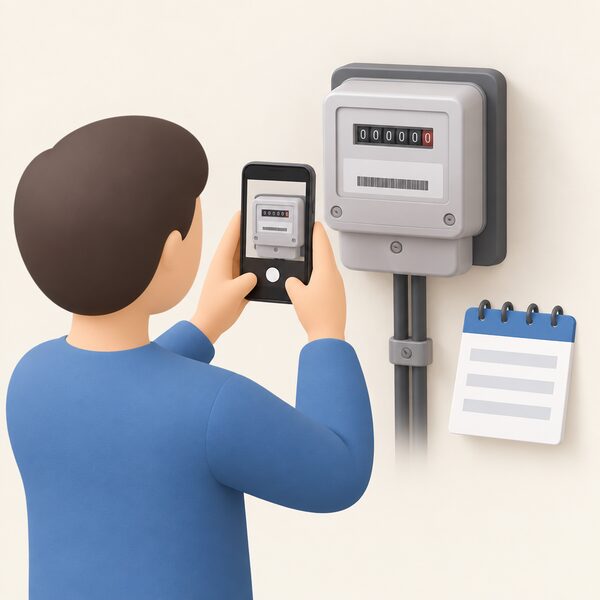
Disputes usually come from an estimate standing in for a reading. The Energy Ombudsman case described above is the pattern: a meter exchanged, an installation reading of 00000, and a consumer reading of 00056 three months later, with the gap between them disputed9. A dated reading and a serial number resolve most of these.
If a smart meter is suspected of being faulty, the supplier should promptly investigate, resolving the issue themselves or with third parties and keeping the consumer informed20. That is the route for a meter that appears to be recording wrongly, as distinct from a billing dispute about an estimate.
Where a supplier has failed, the position changes. If a supplier goes out of business, the account is transferred under the supplier of last resort arrangements, and the closing and opening readings still matter because they set the boundary between the old account and the new one6. A household that has kept its own readings is in a stronger position than one relying on the failed supplier's records.
For a household's independence, the reading is the one piece of the energy relationship that is entirely within the household's control. It costs nothing, it needs no permission, and it is the record that survives a change of supplier, a change of occupier and a change of meter.
Sources20 cited
- How to submit a meter reading, Uswitch, 2026-04-23
- How to understand your energy bill, Energy Saving Trust, 2024-11-08
- A step-by-step guide to setting up gas and electricity in a new home, Energy Helpline, 2026-09-20
- Metered estates: what are my supply options, Liquid Gas UK, 2026-09-20
- Smart meters vs home energy monitors, Smart Energy GB, 2026-08-17
- What happens if your energy supplier goes out of business, Ofgem, 2026
- Theft of gas, Cadent Gas, 2026-09-20
- What happens to credit if I switch?, Uswitch, 2026-05-29
- Billing case studies, Energy Ombudsman, 2026-09-20
- Smart meters for renters, Smart Energy GB, 2026-03-16
- If you live in a home with a business energy contract, Ofgem, 2026
- Move your gas or electricity meter, Citizens Advice, 2026-09-20
- Domestic and homeowners connections help and support, NESO, 2026-09-17
- Electrical safety standards in the private and social rented sectors, GOV.UK, 2025-11-01
- What happens after I apply, UK Power Networks, 2026-09-17
- How to get a smart meter, Smart DCC, 2026
- Get help with your smart meter, Ofgem, 2026
- Understanding energy bills, StepChange, 2026-09-20
- Problems with services, Isle of Anglesey County Council, 2025-10
- Smart meters: your rights and expectations, GOV.UK, 2025-08-08
 Moving Home Energy AccountsMoving home means you get a new energy supplier whether you choose one or not, so who supplies your new place and what happens to your old account?
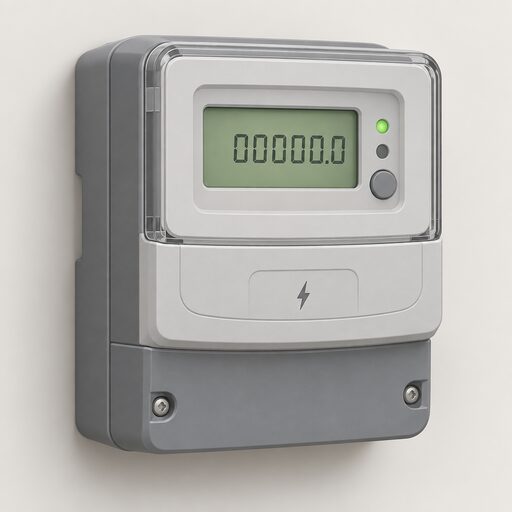 Take Control of Your EnergyHow do you read your own energy use and keep hold of your meter readings?
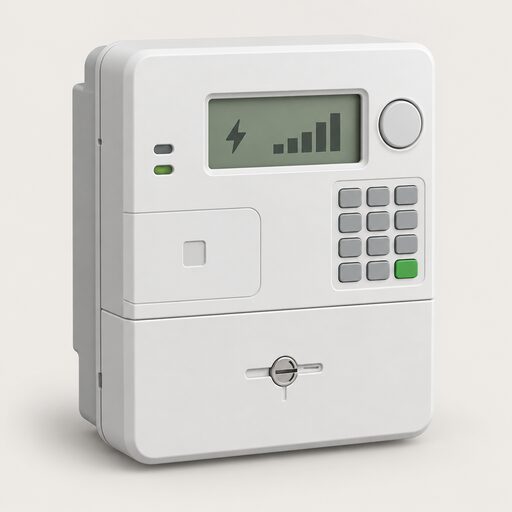 Who Owns Your Home Energy DataYour smart meter records how much gas and electricity you use, and that information belongs to you, not your supplier.
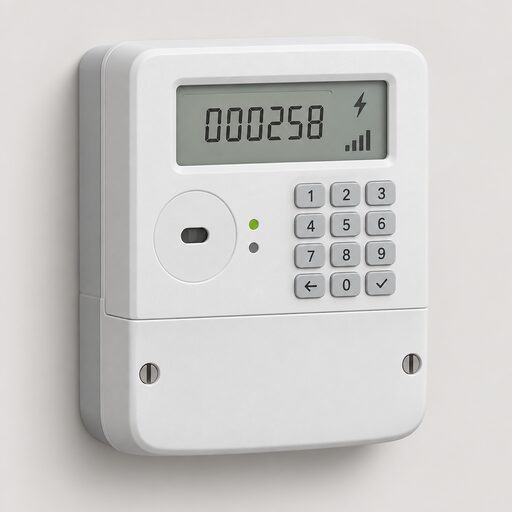 Moving Home Energy ChecklistThe immediate energy tasks on moving in: finding the supplier and meters, taking opening readings, checking whether the meters are smart, setting up billing, prepayment top-ups, the Priority Services Register, and your rights as a buyer or renter.
 Take a Meter ReadingWhich numbers do you actually read on a gas or electricity meter, and which ones do you ignore?
 Behind-the-Meter SystemsWhere does your meter sit, and what does that mean for the solar panels or battery you put in at home?